
Your lavender reference smells right in the sample bottle, but the filled cartridge comes back too floral, too dry, or barely recognizable. Gold Coast Terpenes supplies botanically derived, strain-inspired terpene blends that give product developers a starting aroma map, but matching the finished product still requires controlled blending and hardware testing.
For formulation, strains with linalool are sensory references, not fixed recipes. Linalool can create a prominent floral opening, soften the middle, or connect fruit notes with an earthy, spicy foundation. Its usual formulation role is a floral middle note, although the surrounding blend can make that contribution more immediately noticeable.
These seven formulation paths address different targets: lavender-led floral, grape and berry, grape dessert, tropical, earthy, creamy, and layered dessert. Treat those descriptions as development targets, not verified chemical specifications for every flower batch or supplier blend.
Gold Coast Terpenes describes its blends as THC-free, SC Lab-tested, and formulated without VG, PG, PEG, or MCT. Before commercial use, request current documentation for the exact material, confirm its suitability for your application, and review labeling requirements in the intended market. A strain name can organize the development project. It can't replace a lot-specific certificate of analysis.
1. How Do You Build a Lavender-Inspired Terpene Profile for Cannabis Product Formulation?
Build a Lavender-inspired profile around a clearly recognizable floral contribution, then add enough herbal body and peppery warmth to prevent a thin, perfume-like finish. Linalool is the floral lead, even though its structural role remains closer to a middle note than a volatile citrus top note.
Gold Coast Terpenes describes its blends as 100% botanically derived rather than cannabis-derived. Its guide to high-linalool strain references provides a contextual starting point, but the supplied blend's analysis should determine your actual formulation.
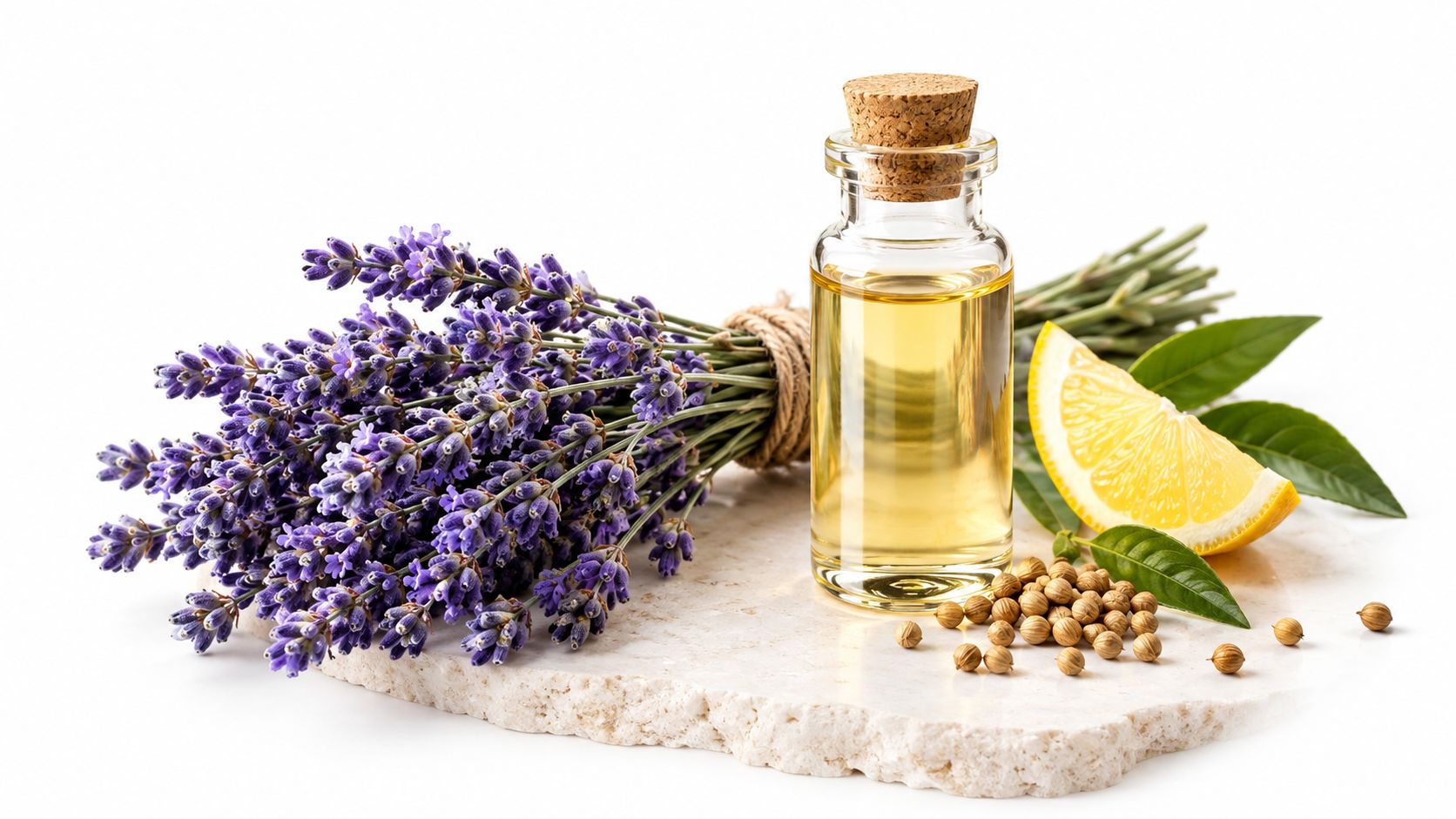
Published profile tables list Lavender at approximately 0.20%–0.50% linalool, a flower-profile reference rather than a cartridge dosing recommendation, according to these linalool cultivar composition ranges. Don't transfer that flower percentage directly into a finished distillate formula.
Establish the Floral Lead Without Losing Body
Use a restrained limonene contribution for the opening, linalool for the recognizable floral middle, and myrcene with beta-caryophyllene for body and warmth. These are proposed architectural roles, not a claim that every Lavender batch contains the same proportions.
For a floral cartridge pilot, compare the retained reference with the finished oil before and after filling. If the cartridge smells predominantly like lavender fragrance, reduce the floral contribution before adding more base material.
- Dosing control: Adjust one component at a time, using the supplier's application guidance rather than an assumed universal load.
- QC check: Record absolute linalool concentration and its share of the complete terpene profile.
- Application fit: Use this architecture when floral clarity matters more than fruit intensity.
Practical rule: A recognizable lavender opening isn't enough. The finished cartridge also needs a balanced middle and finish.
2. How Do You Formulate a Granddaddy Purple-Inspired Grape and Berry Blend for Vape Cartridges?
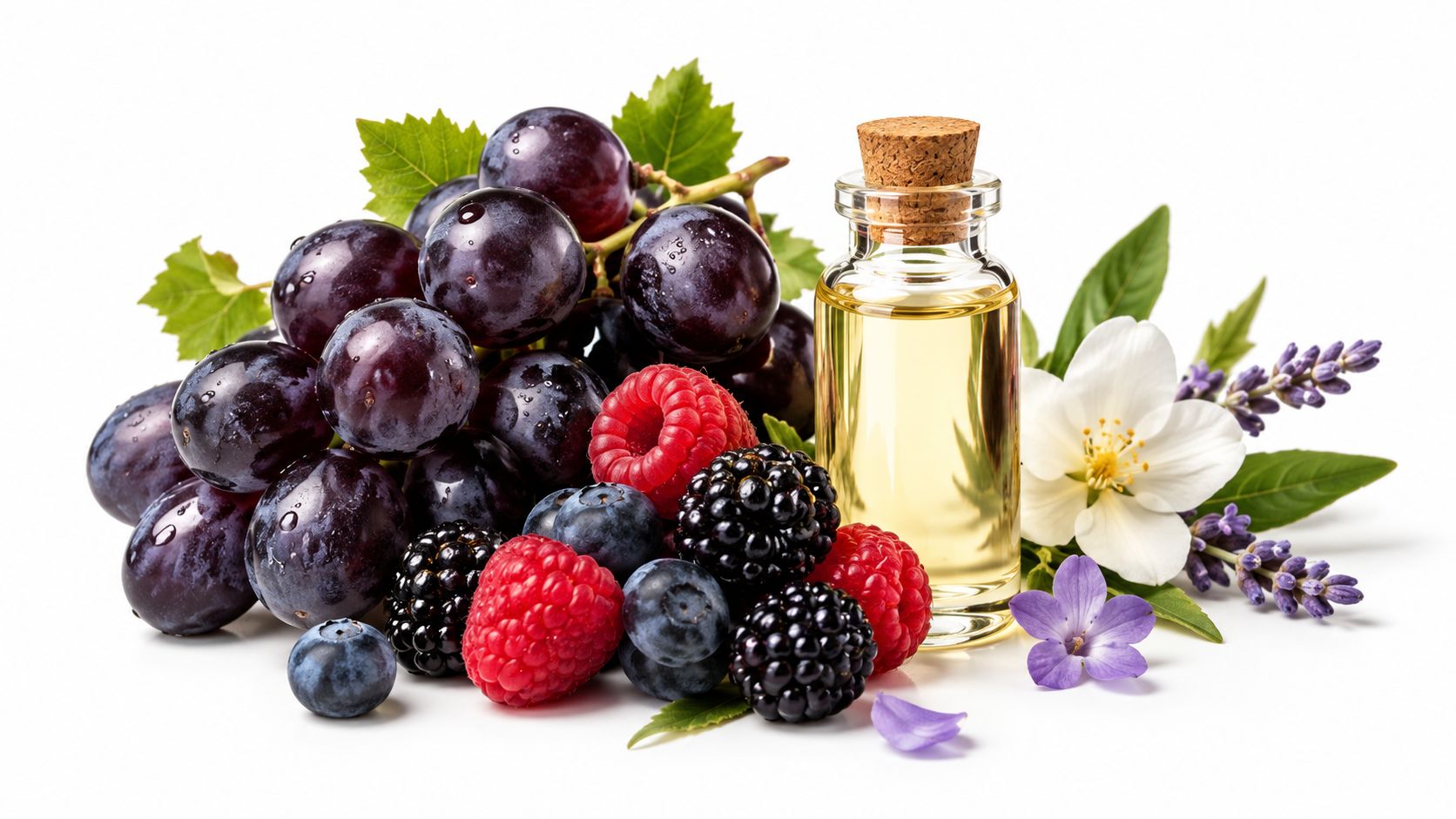
Use linalool as a supporting floral middle note, not the grape lead, in a Granddaddy Purple-inspired cartridge profile. Build the fruit identity first, then use an earthy foundation and a restrained floral contribution to extend the finish.
A practical development architecture places the grape-and-berry impression at the top, a myrcene-supported body beneath it, and beta-caryophyllene toward the dry, woody base. Linalool should connect those layers without turning the product into a floral cartridge with a fruit label.
Gold Coast Terpenes supplies botanically derived blends, allowing developers to work with non-cannabis-derived aroma materials. Its linalool reference guide is useful context for that ingredient, but it doesn't replace the selected blend's composition sheet.
Preserve Fruit Identity Through the Finish
Consider a regional cartridge brand matching a retained grape reference. The development team should first evaluate the supplier blend without modification, then test whether a small linalool adjustment improves continuity between the fruit opening and earthy finish.
Keep total terpene loading constant during that comparison. Otherwise, a panel may prefer the stronger sample without identifying whether the linalool adjustment improved flavor accuracy.
- Sensory check: Score fruit recognition, floral intrusion, dryness, and finish separately.
- Hardware check: Compare the intended cartridge with the retained reference under a documented operating protocol.
- Purchasing check: Request the current minimum order quantity, sample options, and reorder specification before approving bulk material.
The catalog link labeled Elevated Strains points to an Apple Fritter flavor page. It's a separate catalog reference, not evidence of Granddaddy Purple equivalence.
3. How Do You Build a Purple Punch-Inspired Terpene Profile for Distillate?
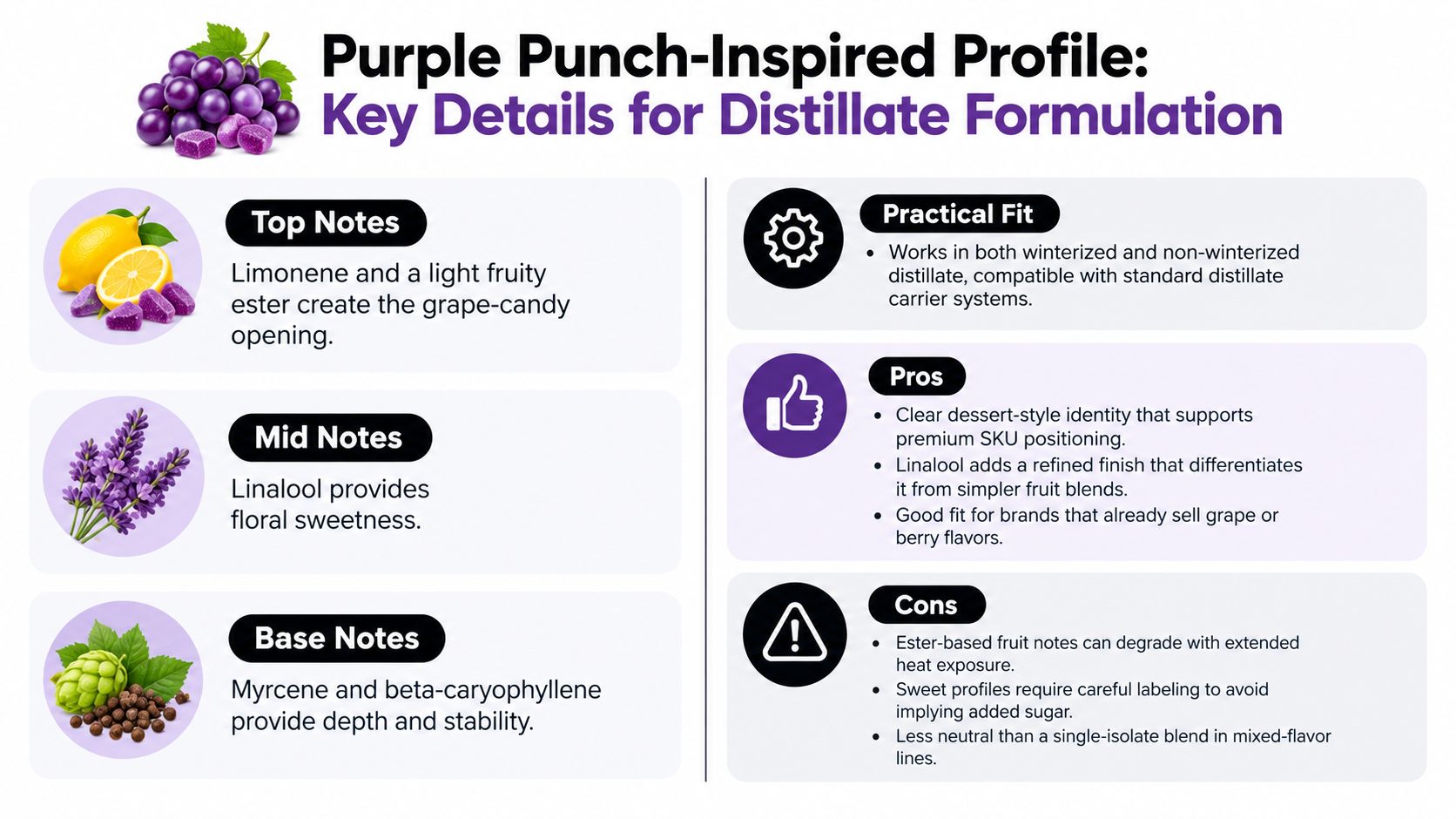
Build a Purple Punch-inspired distillate profile by placing linalool between the grape opening and the rounded dessert finish. The floral layer should connect the profile, not increase sweetness indiscriminately.
For this development target, use a grape-forward opening, a restrained floral middle, and myrcene with beta-caryophyllene as the supporting foundation. Don't assume those base materials will preserve the whole profile through processing. Confirm the finished composition after mixing and filling.
The Gold Coast Terpenes linalool formulation guide describes 0.5%–2% of the total terpene blend as a practical starting range for linalool, with the dominant sensory profile established before incremental adjustment. That denominator matters: a percentage of the terpene blend isn't the same as a percentage of finished cartridge oil.
Separate Blend Composition From Finished-Oil Loading
A distillate manufacturer developing a grape-dessert cartridge can prepare a baseline blend and a floral-adjusted version at the same finished-oil loading. Compare both against the reference rather than assuming that a more intense floral finish is a closer match.
Add linalool late in the sensory development sequence, after the fruit and foundation are established. That sequencing helps identify its contribution; it isn't proof that late addition prevents thermal degradation.
Specify both the composition of the terpene blend and its loading in the finished oil. Without both, another operator can't reproduce the formula reliably.
Tie the pilot record to the distillate lot, terpene lot, mixing conditions, cartridge hardware, and analytical results. Reject a formulation that matches only in the neat blend.
Gold Coast Terpenes also lists a flavor named 24k gold punch. The name alone doesn't establish a Purple Punch match or a particular linalool concentration.
4. How Do You Formulate a Forbidden Fruit-Inspired Tropical Profile for Cannabis Products?
Use a bright fruit opening, a floral middle, and a restrained spicy base for a Forbidden Fruit-inspired formulation. Linalool works best here as a bridge between citrus brightness and the deeper finish, rather than the dominant aroma.
Gold Coast Terpenes includes Forbidden Fruit among its strain-inspired references. For a tropical cartridge project, evaluate that reference against the intended sensory target instead of assuming the name specifies its exact composition.
A proposed architecture uses limonene for citrus lift, linalool for floral continuity, and beta-caryophyllene for the foundation. Those roles help organize development, but they don't mean the individual terpenes alone establish an authentic tropical-fruit identity.
Compare Tropical Brightness With Grape-Dessert Depth
An extraction lab extending a fruit cartridge line can compare the tropical target with a grape-dessert reference. The supplied illustration below represents Purple Punch-inspired architecture, not a Forbidden Fruit analytical profile.
- Dosing approach: Screen the complete blend at conservative, supplier-supported loadings before changing individual components.
- Flavor check: If floral aroma obscures the fruit opening, reduce linalool rather than compensating with more citrus.
- Process check: Evaluate filled hardware after the documented manufacturing heat cycle.
Published industry guidance identifies 45–50°C for distillate integration, below 35°C for live-resin terpene add-back, and process exposure above 60°C as a potential linalool-loss event, according to this thermal handling formulation resource. Treat these as processing references, not universal validation limits.
Keep commercial messaging sensory-focused. The Gold Coast Terpenes discussion of high-linalool profiles shouldn't substitute for evidence supporting any proposed therapeutic claim.
5. How Do You Build a Do-Si-Dos-Inspired Earthy Terpene Blend for Vape Cartridges?
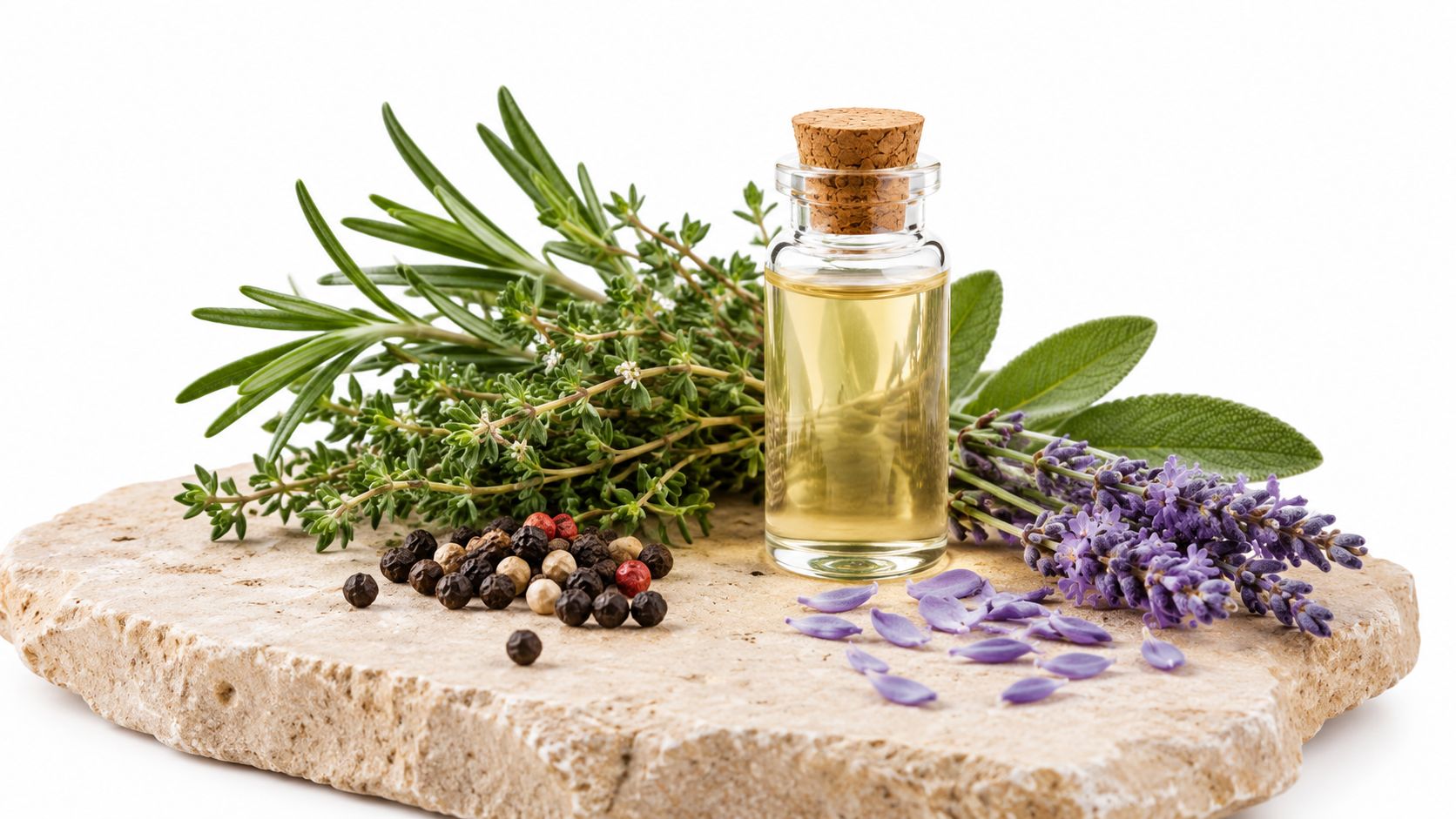
Establish the earthy, peppery foundation first, then use linalool to round the middle of a Do-Si-Dos-inspired cartridge profile. The floral contribution should soften the foundation without replacing it.
For this formulation target, beta-caryophyllene supplies the proposed warm base, linalool adds a floral middle, and limonene provides a restrained opening. A dough-like or sweet sensory impression is a matching objective, not proof that these components individually reproduce that character.
Traditional genetic labels won't resolve the formula. A German-market analysis of 140 medicinal cannabis flowers found that nine terpenes, including linalool, accounted for more than 86% of observed terpene-profile variation, while overall profiles didn't differ significantly among indica, sativa, and hybrid categories, according to the medicinal cannabis chemical-profiling study.
Correct the Base Before Adding More Floral Material
Consider a cartridge brand whose earthy reference becomes dry and pepper-heavy in its selected hardware. Test a reduced base contribution before increasing linalool, because adding floral material may conceal the imbalance in the bottle without correcting the finish.
Keep the cannabinoid matrix and hardware unchanged during that comparison. A different oil matrix introduces another variable and makes the sensory result harder to interpret.
- Dosing control: Build the base gradually, then introduce linalool as a rounding component.
- QC check: Compare the complete terpene ratios, not just whether linalool appears on the COA.
- Application fit: Use this architecture for grounded dessert-adjacent cartridges, not overtly fruit-led products.
Development caution: If the panel describes both heavy pepper and obvious lavender, the answer may be less of both, not another ingredient.
6. How Do You Replicate a Gelato-Inspired Dessert Terpene Profile in Distillate?
Use a retained sensory reference to define a Gelato-inspired profile, then balance citrus lift, floral continuity, and an earthy foundation. Creaminess is a perception target, not a verified property established by adding linalool.
A practical architecture assigns limonene to the opening, linalool to the middle, and myrcene with beta-caryophyllene to the supporting base. The challenge is to obtain a rounded finish without letting the citrus become sharp or the floral layer become perfume-like.
Gold Coast Terpenes supplies strain-inspired blends and isolated compounds that can support this kind of reference-led development. Confirm the composition of the chosen material before deciding which isolate, if any, needs adjustment.
Match the Reference Before Optimizing Intensity
For a vape manufacturer developing a creamy dessert cartridge, compare the unmodified supplier blend with controlled citrus-adjusted and floral-adjusted pilots. Don't change the base simultaneously, because the panel needs to identify which adjustment moves the formulation toward the reference.
Commercial guidance places botanical terpene additions around 3%–10% of finished formulations, while separately describing linalool near 1%–2% of the finished formulation as a practical sensory range in this linalool formulation overview. Those figures describe a different denominator from the blend-level guidance above and aren't an inhalation-safety approval or a default recipe.
- Formula record: State whether each concentration refers to the neat blend or finished oil.
- Sensory check: Assess citrus sharpness, floral intrusion, body, and finish against the retained reference.
- Storage control: Follow supplier storage instructions and document opening dates and handling.
Avoid treating a stronger sample as a more accurate sample. For distillate applications, the commercially useful formula is the one the team can reproduce in the intended cartridge without adding unsupported flavor or performance claims.
7. How Do You Formulate a Wedding Cake-Inspired Vanilla-Earth Profile for Distillate?
Build the earthy foundation first, then layer a restrained floral middle and citrus opening for a Wedding Cake-inspired distillate formulation. Linalool supports the dessert architecture; it isn't a vanilla substitute.
Use limonene as the proposed top note, linalool with myrcene through the middle, and beta-caryophyllene at the base. If vanilla character is essential to the specification, require evidence that the selected blend provides it rather than inferring it from the strain-inspired name.
A manufacturer preparing a limited-release dessert cartridge can begin with a retained reference and evaluate whether the finished product needs more floral continuity or less earthy weight. Keep those adjustments separate.
Verify the Finished Product, Not Just the Input
Linalool concentration varies substantially across cannabis material. Published measurements ranged from approximately 0.023% in Mamma Thai to 0.57% in White Cookies, according to this research on terpene variation across cannabis genetics. That variability supports defining the replication target analytically rather than treating a cultivar name as a formulation specification.
Heating also changes the exposure question. A peer-reviewed study testing linalool and other terpene materials under concentrate-vaping conditions detected degradation products including methacrolein, isoprene, benzene, aldehydes, and acids, as reported in this terpene thermal-degradation research.
- Dosing approach: Set the base, then adjust floral and citrus contributions independently.
- QC check: Record mixing temperature, hold time, post-fill composition, and hardware conditions.
- Release decision: Require sensory agreement with the reference and a product-specific testing plan.
A compliant input COA doesn't establish the safety or flavor consistency of the heated finished product. For this layered dessert target, resist increasing total terpene loading because a room-temperature sample lacks intensity.
Comparison of 7 Linalool-Inspired Strain Profiles
| Terpene profile | 🔄 Formulation complexity | ⚡ Resource and testing needs | 📊 Expected sensory outcome | ⭐ Ideal use case and key advantage |
|---|---|---|---|---|
| Lavender-inspired | Low; adjust linalool in 0.5–1% steps | Small pilot; verify floral balance | Soft lavender, floral, lightly citrus-coriander | Floral cartridges; clear, repeatable identity |
| Granddaddy Purple-inspired | Moderate; balance myrcene and linalool | Test across cartridge hardware and heat conditions | Grape and berry with floral depth and a dry finish | Grape-forward carts; familiar flavor at relatively low loads |
| Purple Punch-inspired | Moderate; control fruit esters and sweetness | Pilot batch; limit extended heat exposure | Grape candy, floral sweetness, structured base | Dessert-style distillate; refined finish without a purely syrupy character |
| Forbidden Fruit-inspired | Moderate; control limonene and linalool ratios | Test at multiple loads and in target hardware | Tropical citrus with floral, layered depth | Premium carts or other validated formats; distinct from single-note citrus |
| Do-Si-Dos-inspired | Moderate; dose caryophyllene conservatively | Pilot and sensory panel; validate hardware | Earthy, peppery, herbal, lightly sweet | Grounded, dessert-adjacent carts; persistent, heat-stable base |
| Gelato-inspired | Moderate; tune limonene and linalool against a reference | Reference sample, pilot batches, and light-protected storage | Creamy, citrus-sweet, lightly floral | Dessert-positioned distillate; perceived sweetness without ester sweeteners |
| Wedding Cake-inspired | Moderate to high; coordinate three note layers | Reference sample, batch QC, and heat-cycle checks | Creamy, earthy, lightly floral with citrus lift | Premium distillate carts or dab-style products; flexible, layered profile |
How Do You Build From a Controlled Sensory Target?
The strongest linalool-forward formulation isn't the one with the most linalool. It's the one in which linalool occupies the intended aromatic position and remains balanced in the finished product.
Compare each profile against a retained reference, evaluate the intended hardware, and document every ratio adjustment. Review lot-specific certificates before scaling, and distinguish input composition from post-processing composition and aerosol exposure.
A retrospective analysis indexed 478 distinct cannabis chemovars and recorded 3,495 linalool observations, reinforcing that linalool occurs across a broad commercial chemical profile rather than belonging exclusively to a few named cultivars, according to this commercial cannabis chemovar analysis. Use strain references to organize flavor matching, but use analytical targets to control production.
Choose a Supplier Against the Manufacturing Specification
For botanical versus cannabis-derived terpenes, ask suppliers to document origin rather than relying on the strain-inspired name. Botanical and nature-identical labeling also require clear sourcing documentation; don't assume those terms are interchangeable.
The best terpene supplier for a vape brand is the one that can support its particular specification. Gold Coast Terpenes offers botanically derived blends, isolated compounds, a Mixing Calculator, wholesale programs, and lab documentation, but buyers should confirm current terms and documents for the exact purchase.
- Commercial terms: Request minimum order quantities, bulk pricing, sample quantities, lead times, and change-notification procedures.
- Technical documents: Review the COA, composition information, safety documentation, and recommended application limits.
- Labeling review: Confirm ingredient-origin language, strain-inspired naming, and market-specific requirements with qualified compliance support.
Don't turn floral aroma into a relaxation promise. Linalool's neurological and pain-related evidence remains mainly preclinical, with well-designed human trials lacking, as discussed in this review of linalool's neurological evidence.
What Should Buyers Know Before Purchasing Linalool-Forward Terpenes?
Choose materials against a documented sensory target, composition specification, and finished-product testing plan. The answers below distinguish flavor development from unsupported assumptions about strain names, dosing, and safety.
Does a strain-inspired name guarantee elevated linalool?
No. Request the lot-specific terpene analysis and compare both absolute linalool concentration and its proportion within the complete profile.
Should botanical or cannabis-derived terpenes guide the purchase?
Choose according to sourcing requirements, flavor targets, documentation, and applicable labeling rules. Gold Coast Terpenes describes its blends as botanically derived, so buyers should verify that origin against current product documents.
Can a terpene calculator determine a safe cartridge formula?
A calculator scales quantities; it doesn’t validate inhalation safety or hardware compatibility. Use the Gold Coast Terpenes Mixing Calculator alongside supplier guidance, analytical testing, and a product-specific development protocol.
What should a brand request before ordering bulk terpenes?
Request current minimum order quantities, sample terms, lot documentation, lead times, and formulation support. Confirm those details with Gold Coast Terpenes before moving from a pilot blend to production purchasing.
Gold Coast Terpenes offers strain-inspired botanical blends, isolated compounds, and formulation resources for developing linalool-forward cartridge and distillate profiles. Visit Gold Coast Terpenes to compare formulation references and request current documentation, sample options, and wholesale terms before buying terpenes for your next pilot.