
Your distillate is clean, the hardware is already selected, and the brand brief calls for an Ice Cream Cookie strain-inspired terpene blend. The first trial smells sweet in the vial, then turns flat in the cartridge. The vanilla disappears, the cookie note becomes generic, and the gas either collapses or arrives as a sharp edge that overwhelms the cream.
That failure usually isn't caused by a lack of terpene content. It comes from treating a strain card as a finished formula instead of translating it into a structure that can survive dilution, heat, and vapor delivery. For product teams, the useful question isn't only what the Ice Cream Cookie strain smells like. It's how to rebuild its cookie dough, creamy dessert, citrus, and gas relationships in a repeatable system for distillate, live resin, and finished vape cartridges.
Why the Ice Cream Cookie Profile Matters in Formulation
A cart developer may combine cookie, cream, and OG-style gas notes, yet still miss the target. The blend can turn syrupy before filling, lose its lighter dessert character under heat, or leave the gas sitting above the profile instead of supporting the finish.
For formulation, Ice Cream Cookies works better as an aromatic brief than as a strain card. Reports commonly associate it with Gelato 33 and Wedding Cake and describe a dense, resin-forward dessert cultivar. Potency figures vary across listings, so they should not become a dosing target or a substitute for aroma testing. The useful information is the direction of the profile: baked sweetness, cream, spice, and gas with enough structure to avoid a generic candy result.
The aroma brief has several jobs:
- Cookie dough needs warmth and body, not bright citrus alone.
- Cream and vanilla may feel full in the liquid and become faint after vaporization.
- Gas and spice establish identity, but they can dominate when the base is thin.
- Fresh top notes add lift and often have the shortest useful life in a heated cart.
Practical rule: Build around the notes that must remain recognizable after vaporization, not the materials that smell strongest in the mixing vessel.
Volatility creates the main formulation mismatch. Light materials can bloom immediately and then fade, while deeper compounds continue shaping the vapor. Adding more of a disappearing note may improve the vial evaluation, yet produce an unbalanced liquid and still fail to restore the intended flavor in the cartridge.
A terpene profile formulation guide can help organize a strain-inspired formula by role. Treat the cultivar as a rebuild brief: define the phenotype direction, assign top, mid, and base functions, then test those functions in the intended carrier and hardware. Vanilla and delicate cream notes deserve particular scrutiny because their liquid impact may overstate their performance after heating, while the cookie body and restrained gas structure usually need to carry more of the finished impression.
This approach keeps the strain reference useful without pretending that a single listing describes every cut or that a strong vial aroma predicts a durable cart profile.
Lineage and Phenotype Context for Rebuilders
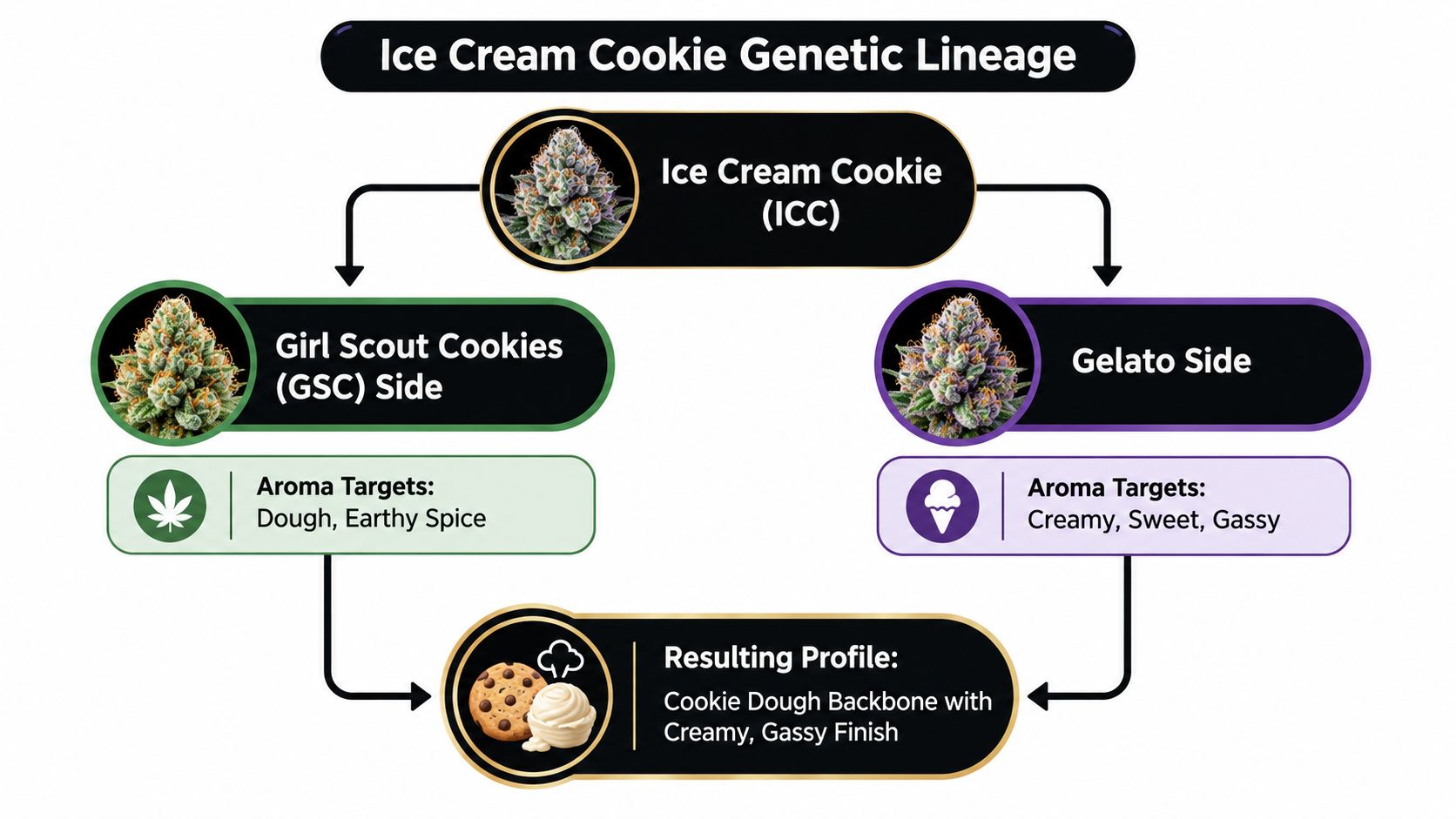
Lineage sets the starting brief, not the finished formula. Ice Cream Cookies is associated with Seed Junky Genetics, with Gelato 33 and Wedding Cake commonly cited in its background. That places it in the modern cookie-and-dessert family, while individual cuts can still shift toward gas, cream, spice, or dough. Treat those reports as direction, then confirm the sensory target on the actual material.
Read the parent contributions as aroma jobs
The Girl Scout Cookies side supports cookie dough, earthy spice, and a darker backbone. In a rebuild, that contribution is structural. Too little leaves the dessert accord reading like candy, while too much muddies the cream and suppresses lift.
The Gelato side points toward softer cream, sweetness, and gas. Its role is to decide whether the profile reads as a baked dessert with depth or a sharp cookie accord that has sweetness added afterward. Keep those functions separate during bench work so one heavy material does not stand in for the entire parent influence.
A Biscotti and cookie strain guide is useful for comparing cookie-family references, but similar names do not make profiles interchangeable. Pull out shared jobs, such as dough, spice, cream, and gas, then reset their balance for the Ice Cream Cookie target.
Choose the phenotype before choosing the load
A gas-forward phenotype needs a firm caryophyllene-led foundation, with enough citrus to open the vapor and restrained floral softness to prevent a harsh finish. The result should announce gas early, then leave cookie structure behind.
A cream-forward phenotype keeps gas present while giving linalool, creamy materials, and sweet citrus more responsibility. It fits a dessert-oriented SKU more readily, but the dough and spice framework must remain strong or the cart becomes flat.
That choice changes the build order. For gas-forward work, soften the top without reducing impact. For cream-forward work, prevent vanilla and lactone-style materials from covering the cultivar's edge. Elevated Strains offers a separate dessert-oriented comparison point, not a substitute for a phenotype-specific sensory target. Evaluation should happen in the intended distillate carrier and hardware, because a pleasant liquid profile can lose its defining edge after heating.
Dominant Terpenes and Top Mid Base Note Structure
Treat the Ice Cream Cookie profile as an arrangement, not a list. The documented potency range varies substantially across listings, with reported total THC around 19% to 26% and some panels near 20% to 28% Seeds Here Now's strain review. That variance reinforces a broader point for rebuilders: cultivar labels describe a family of expressions, so the terpene formula needs a declared sensory direction.
The table below is a practical starting framework for a strain-inspired terpene blend for distillate. The ranges are formulation guidance, not verified measurements of the flower's native terpene content. Keep the first bench trial conservative and adjust one structural problem at a time.
Ice Cream Cookie Terpene Structure
| Note Position | Terpene | Role | Suggested Range |
|---|---|---|---|
| Top | Limonene | Sweet citrus lift and opening brightness | 8% to 14% of the terpene blend |
| Top | Pinene | Freshness and aromatic separation | 2% to 5% of the terpene blend |
| Top | Terpinolene | Airy, herbal-fruity lift | 1% to 4% of the terpene blend |
| Mid | Beta-caryophyllene | Peppery gas, spice, and cultivar definition | 18% to 28% of the terpene blend |
| Mid | Linalool | Soft floral cream and rounded sweetness | 6% to 12% of the terpene blend |
| Mid | Myrcene | Weight, body, and continuity between layers | 8% to 15% of the terpene blend |
| Mid | Valencene | Sweet citrus depth and fruit polish | 2% to 6% of the terpene blend |
| Base | Humulene | Dry wood, hop-like depth, and restraint | 3% to 8% of the terpene blend |
| Base | Myrcene | Dense body and longer finish | 4% to 10% of the terpene blend |
| Base | Caryophyllene | Persistent spice and gas support | 5% to 12% of the terpene blend |
| Base | Vanilla and creamy isolate materials | Cookie, custard, and soft dessert persistence | Build by sensory threshold |
These roles follow a practical top, mid, and base model. A terpene flavor chart is useful when checking whether an isolate is adding lift, filling the middle, or extending the finish.
What usually fails under heat
The lightest top materials often announce themselves in the vial and then recede during the draw. Terpinolene and pinene can provide useful lift, but they shouldn't carry the whole identity. Limonene is more dependable as a recognizable opening note, yet excess citrus can turn the profile into lemon candy and push the cookie impression away.
Caryophyllene and myrcene generally provide more persistence, but they can also make the formula feel dense or pepper-heavy. Linalool helps connect creamy materials to the mid palate, while humulene can keep the base from becoming overly sweet. Evaluate the vapor, not just the liquid, and change one structural issue per trial. That process rule is also emphasized in a formulation resource covering dessert-forward cartridge profiles heat behavior guidance for Ice Cream Cake vape formulation.
Translating the Profile to Distillate and Live Resin Carts
The same Ice Cream Cookie formula behaves differently in distillate and live resin. Distillate gives you a relatively clean canvas, which is useful for rebuilding the profile, but it can expose every imbalance in the terpene architecture. Live resin carries native aroma and texture, yet its background compounds can compete with a carefully built cream-and-cookie accord.
Carrier comparison
| Terpene or Note | Distillate Cart Behavior | Live Resin Cart Behavior | Reinforcement Strategy |
|---|---|---|---|
| Limonene | Provides clear opening lift but can dominate if overused | Blends with native citrus and may sharpen the profile | Use as a measured top-note anchor |
| Terpinolene | Can feel bright in the liquid and fade quickly in vapor | Native complexity may make it less obvious | Support it with pinene or restrained citrus |
| Linalool | Helps restore cream and softness | Can round harsh edges but may mute native detail | Add only when the mid palate feels thin |
| Caryophyllene | Gives gas and spice persistence | May compound existing sharpness | Use as a structural accent, not a blanket fix |
| Myrcene | Adds body and length | Can make an already dense resin feel heavy | Increase only when the finish lacks weight |
| Vanilla and creamy materials | Need careful support because they can recede after heating | Can clash with sulfurous or highly resinous notes | Test in vapor and mask selectively |
Avoid using fixed loading assumptions as a substitute for testing. The verified reference material supports evaluating vapor behavior and adjusting one problem at a time, but it doesn't establish a universal terpene percentage for every distillate or cartridge system.
Hardware changes the sensory result
Ceramic hardware can preserve mid-note detail better than an aggressively driven coil, but the correct setting depends on the cartridge, oil viscosity, airflow, and battery. Higher heat can strip delicate cream and floral notes, while insufficient heat may under-deliver the heavier gas and cookie components.
For live resin, don't automatically add more botanical terpene. Native sulfur compounds and resin-derived sharpness can clash with vanilla, so selective masking is safer than indiscriminate over-terping. A profile that smells accurate in the blend may become harsh once native resin character and hardware heat enter the equation.
Guidance on live resin and distillate comparison can help frame the carrier decision, but the final judgment belongs to the finished cart. Pull samples through the intended hardware, record the first impression, middle draw, and finish, then revise only the layer that failed.
Pairing Strategies With Gold Coast Terpenes Blends
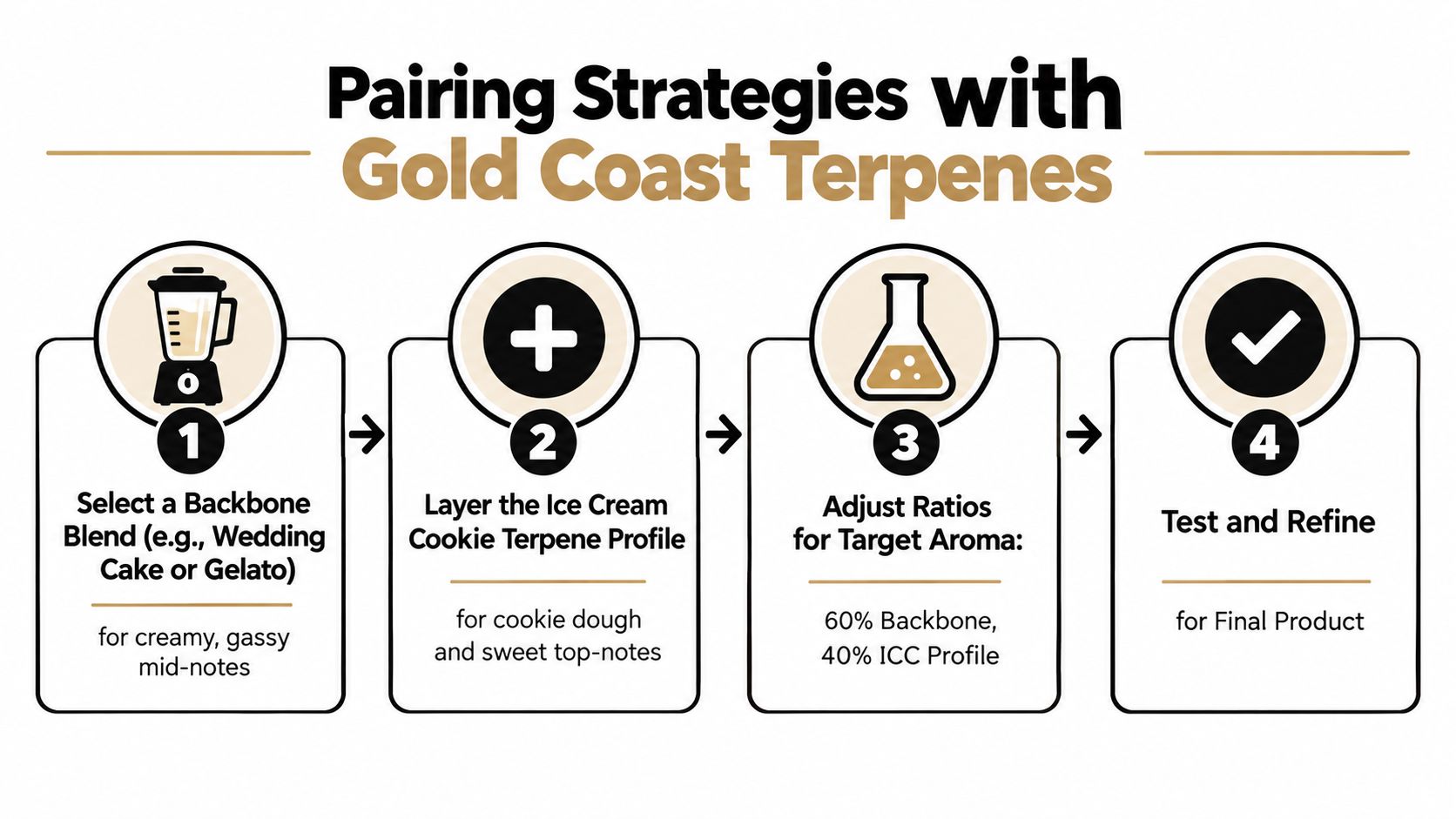
A practical rebuild starts with a backbone. For Ice Cream Cookie, a Wedding Cake or Gelato-style blend can supply creamy and gassy middle notes before you add isolates. That approach is more controlled than trying to construct the entire dessert profile from individual materials with no reference point.
Add the cookie character in layers. Vanilla-specific isolates or a Cake Batter-style blend can increase the baked dessert impression, but sweetness without spice and body often reads as confectionery rather than dough. A small Sour Diesel or OG Kush-style accent can restore the gas note that weakens during vaporization, especially when the first trial feels soft and indistinct.
Use this as a sample internal ratio for the terpene blend, not as a guaranteed finished-product formula:
- 60% dessert-leaning backbone, such as a Wedding Cake or Gelato direction.
- 25% cream and vanilla isolate layer, adjusted for persistence rather than vial intensity.
- 15% gas-forward accent blend, selected to sharpen the finish without covering the cookie note.
The infographic's 60% backbone and 40% Ice Cream Cookie profile framing represents a separate pairing concept. Keep that distinction clear in your worksheet. One ratio describes a broad backbone-to-profile experiment, while the three-part ratio above divides the complete aromatic blend into dessert, cream, and gas functions.
Run the bench trial as a controlled comparison
Make a small pilot with the same distillate, hardware, and fill process used for production. Compare the backbone alone, the backbone with the cream layer, and the complete formula with the gas accent. That sequence shows whether a problem comes from the dessert base or from the final balancing note.
Gold Coast Terpenes offers botanical-derived blends and isolated compounds that can be used for this type of profile work. For a formulation team, the relevant value is component control, not a promise that one blend will reproduce every phenotype.
Dilution must follow the hardware and oil system. PEG or MCT may be considered only where the cartridge design, compliance requirements, and validated formulation call for them. Don't add a diluent to rescue a terpene imbalance. First correct the aroma structure, then confirm viscosity and fill performance in the intended device.
Ideal Use Cases and Functional Positioning
Ice Cream Cookie fits a sensory-led dessert profile. Creamy vanilla, caryophyllene-like spice, and a dense aromatic base support an evening-oriented product identity, provided the positioning comes from sensory evidence and product design rather than medical or therapeutic promises.
Concentrates give this architecture more room to develop. Live badder, sugar wax, and other high-terpene extracts can show the bright opening, creamy middle, and gassy finish with less compression than a poorly tuned cartridge. They are not automatically superior. Each format still requires heat, handling, and sensory evaluation.
Cartridges can carry the same identity when hardware is treated as part of the formulation. A strain-specific 510 device with late-evening visual language may support the SKU, while sleep-adjacent accessory partnerships need compliance review and must avoid implying a medical effect.
The product brief should also specify which notes must survive use. Cream and vanilla can soften under heat, while peppery spice and gas may become more prominent in vapor. Test the filled device, not only the oil, before approving the positioning.
Keep claims tied to measurable product facts
Avoid inflated THC language when the aroma brief is underdeveloped. Ice Cream Cookie is generally described as THC-dominant, but listings vary by batch and database. Finished-product copy should therefore rely on the tested batch record rather than broad strain reputation.
A defensible description can name cream, vanilla, cookie dough, peppery spice, and gas. Identify whether those notes come from native extract, added botanical terpenes, or both. Gas chromatography can confirm chemical composition, while a trained sensory panel can assess whether the vapor matches the intended brief.
Specific copy is stronger than implied effects. State what the product smells and tastes like, identify the carrier, and describe the finish. Avoid “cured gas” when the actual signature depends on a cream-forward base and a measured spice accent. This keeps the cultivar's formulation identity clear without turning sensory language into an unsupported promise.
Lab Safety Notes and Formulation Quality Control
Terpene handling requires the same discipline as any concentrated aromatic material. Use nitrile gloves, eye protection, appropriate vapor-rated respiratory protection, and effective ventilation. Keep isolates away from ignition and heat sources, and remember that a small container can still hold a highly concentrated material that shouldn't be handled casually.
Dilute or prepare concentrated materials using a controlled workflow before opening multiple stock containers. Label every working vessel, verify the identity and lot record, and keep the formulation bench separate from food or consumer-product preparation areas. Food-grade status isn't enough for inhalation use. Every ingredient needs documentation appropriate to the intended route of administration.
Check the blend before it reaches hardware
Use a short quality-control sequence:
- Weighing verification: Confirm each addition against the worksheet and have a second person review critical entries where the workflow allows.
- Viscosity observation: Check whether the finished oil moves and fills consistently in the selected cartridge system.
- Color and clarity: Record unexpected darkening, haze, separation, or visible particulate matter.
- Shake stability: Run a short shake test, then observe whether the blend remains uniform before filling.
- Vapor evaluation: Sample the actual vapor, because the liquid profile can't predict every heat-driven change.
The temptation to chase a stronger aroma by pushing total terpene content higher usually creates a worse product. A crowded formula can feel harsh, flatten the cookie note, and make the intended gas character indistinguishable from general irritation. Set a ceiling for each SKU based on sensory performance, hardware behavior, and internal safety review, rather than copying a loading assumption from another product.
Require finished-cart testing through an appropriate third-party laboratory using GC-MS or GC-FID where applicable to your program. Keep documentation that maps each finished batch to its terpene input record, carrier lot, hardware specification, and test result.
Quality-control standard: If you haven't evaluated the vapor phase, you haven't finished evaluating the formula.
Common failures include skipping vapor-phase analysis, using food-grade ingredients instead of inhalation-appropriate materials, storing terpene stocks near heat, and changing several layers at once during troubleshooting. A better process isolates the fault. Change the top, mid, or base structure, document the result, and retain the sample so the team can compare sensory drift over time.
Gold Coast Terpenes provides strain-specific blends and isolated compounds for cartridge, concentrate, and cannabis product formulation, including the components needed to build a cream, cookie, and gas profile with controlled layering. Visit Gold Coast Terpenes to review the available formulation resources and start a documented bench trial for your next Ice Cream Cookie-inspired product.