
A clear cartridge does not automatically mean a better cartridge. In formulation work, clarity is a processing signal, not a purity certificate, and if you treat it like one you'll miss the true levers that change flavor, viscosity, and fill consistency. The stronger question behind why is my cart clear is usually, what got removed, what stayed behind, and what did that do to the oil's sensory profile.
A lot of brands chase a glassy look because it photographs well and reads as “clean” to buyers. That visual shortcut is risky. The oil can be clear because it was refined aggressively, because the terpene load is low, because carriers were added, or because storage and handling changed the batch after fill. For formulators, the job isn't to worship color, it's to decide whether that color matches the target SKU.
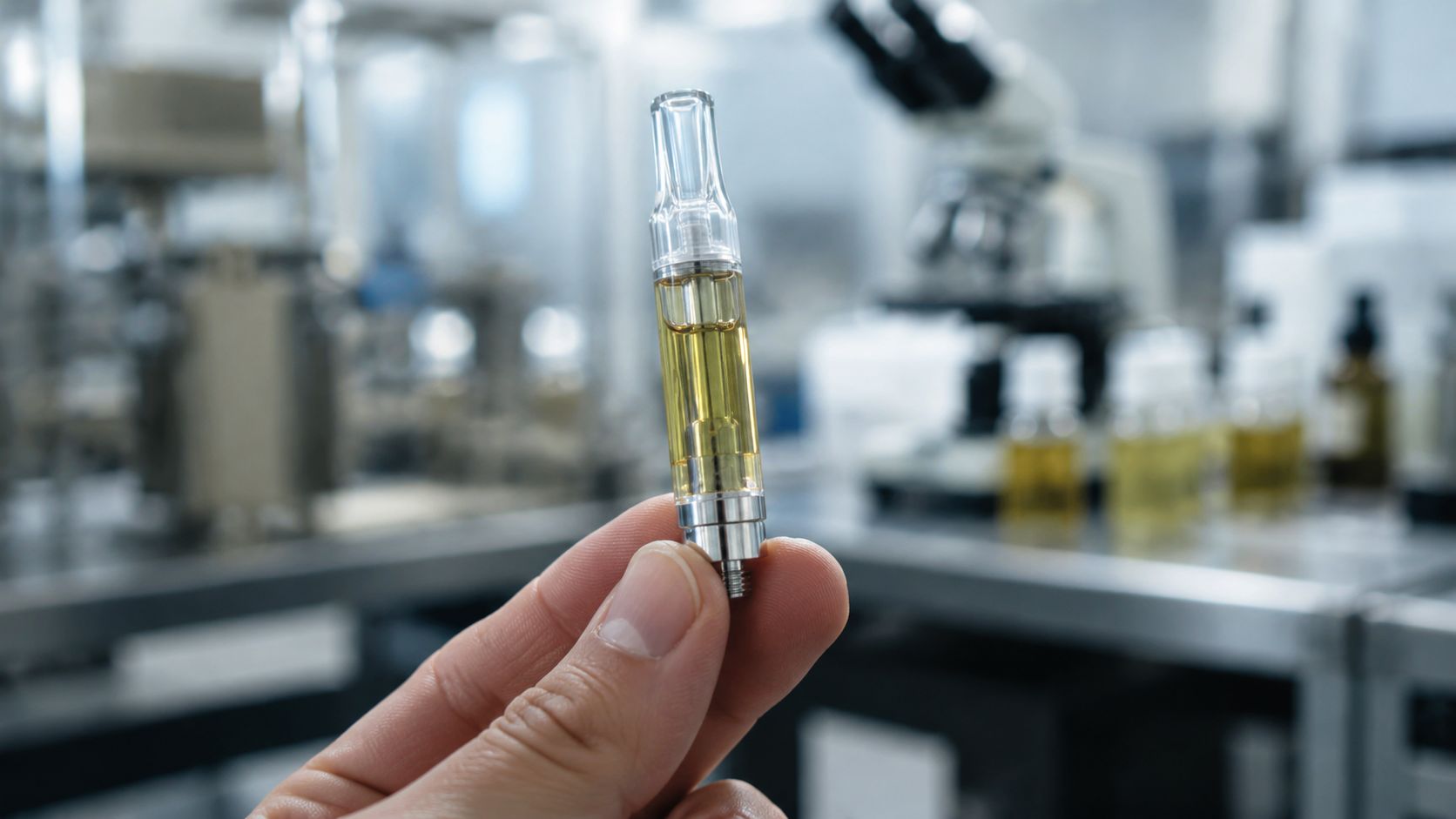
Clear Oil Does Not Always Mean Better Oil
A crystal-clear cart can look premium, but in production it usually says more about refinement depth than about quality. Winterization, wiped-film distillation, and aggressive filtration remove waxes, pigments, and plant solids, and those are the same materials that would have left the oil amber or golden in the first place. The color disappears because the heavier material disappears too.
That trade-off is useful in some formulas and wrong in others. A cleaner visual profile can fit a distilled base, especially when the final product is built around a tightly controlled terpene system. The same clarity can also hide terpene loss, oxidation, or over-processing if the batch was pushed further than the formulation required.
Practical rule: judge clarity as one variable in a broader formulation spec, not as the spec itself.
The better habit is to ask whether the oil's appearance fits the intended sensory target, filling behavior, and QA package. If it does, the clarity is a result of the process. If it does not, the clarity is a warning sign, not a win.
A more relevant comparison for formulators is a batch that looks clean but loses aroma after hot-fill or extended holding. The oil may still pass visual inspection, yet the terpene profile has already shifted, and the cartridge will finish flatter than the bench sample. That is the same kind of false comfort that appears in a clear distillate profile, where the surface looks right and the underlying composition has moved. For a practical reference point on clear distillate behavior, see this clear distillate THC overview from Gold Coast Terpenes.
If you are building a terpene-forward SKU, a light golden hue may fit the product better than a polished, nearly colorless base. The right question is whether the oil still delivers the aroma, mouthfeel, and performance your brand promised. That is the standard worth defending.
How Distillation and Winterization Strip Color
Winterization is usually the first step that removes visible color from the system. Cold ethanol washing drops out waxes, lipids, and heavier plant material, then filtration pulls those solids before the oil reaches a cartridge-ready stage. That is useful if the goal is a cleaner visual profile. It also means some native color disappears early if you wanted to keep it.
Wiped-film distillation goes further. It separates compounds by volatility and leaves heavier plant compounds behind, so the output usually looks much clearer than the input. That clarity makes distillate easier to handle for repeatable cartridge filling, but it also moves the material farther from the original extract character. For a closer look at how extraction methods have changed over time, see the evolution of terpene extraction techniques.
A formulation team still has to decide how much purification the SKU needs. A nearly colorless base can make sense for products where the customer expects minimal aroma and very consistent behavior. Products built around strain-inspired terpene blend design usually need a different endpoint, because over-refinement strips away the visual and sensory cues that make the oil feel complete.
A clearer oil is often a narrower oil. You may gain predictability, but you usually give up some of the texture that makes a formulation feel finished.
Post-distillation filtration can clean up the appearance again, but that final pass should be intentional. If the batch already meets spec, another round of filtration may remove more of the minor compounds that help the oil feel cohesive. In practice, the right target is not “as clear as possible.” It is clear enough for the intended product, and no clearer than necessary.
For teams comparing extraction paths, the process choices matter as much as the starting material. A distillate meant for a neutral base and one meant for replicating flavor of a cultivar should not be refined to the same endpoint. The more color you strip out, the more deliberate the terpene and carrier strategy has to be to bring the profile back into balance.
How Terpenes and Carriers Affect Oil Appearance
Terpenes do more than carry aroma. They also change how oil looks, feels, and moves through the cart, which is why a formulation can shift from nearly water-clear to a soft gold when the blend changes. Monoterpene-heavy profiles usually read lighter and brighter, while richer sesquiterpene fractions can bring deeper tones and a heavier sensory impression. The visual result is not a defect, it is a signal about composition.
Carriers make that reading less straightforward. Clear diluents such as PG/VG or MCT can wash out color and reduce viscosity, but they also change how the oil behaves under heat and wicking conditions. In a cartridge, appearance, flow, and flavor are linked decisions, so a clear batch can still be poorly balanced if the carrier choice is wrong.
For formulators comparing carrier options, how to thin distillate for cartridges is only one part of the decision. The bigger question is whether the added diluent supports the oil's intended texture, flavor release, and hardware performance, or merely makes the batch look cleaner on the bench.
| Formulation Input | Color Impact | Viscosity Effect | Sensory Outcome |
|---|---|---|---|
| Higher terpene load | Can add a light yellow or amber cast | Usually thins the oil | Stronger aroma and more defined top notes |
| Monoterpene-forward blend | Often stays lighter | Lowers viscosity moderately | Brighter, more volatile first impression |
| Sesquiterpene-rich blend | Can deepen color slightly | Often feels more substantial | Fuller mid-palate and longer finish |
| Clear carrier like PG/VG | Dilutes visible color | Lowers viscosity sharply | Softer flavor, less native extract character |
| MCT-style dilution | Can mute color and body | Thins the base | More neutral profile, less strain expression |
When I evaluate terpene profile for vape cartridges, I look at whether the blend supports the intended use case, not whether it makes the oil look clean. A terpene-forward formula can be the right choice even if it leaves the oil slightly golden, because that color may reflect a more honest sensory structure. That is especially true for brands trying to avoid the flatness that comes with over-dilution.
If you are testing options, a terpene sample, a strain pack, or a terpene blend from Gold Coast Terpenes can give you a cleaner comparison than guessing from color alone. The point is to tune the formula, not bleach it.
Diagnostic Checks for Clear or Colorless Batches
When a batch turns out unexpectedly clear, start by asking whether the clarity is uniform or suspicious. A good cart should look consistent from top to bottom, without sediment, haze bands, or oil separation. If the oil is clear but uneven, the issue is usually not “better refinement.” It's process drift, formulation mismatch, or instability.
The first pass is visual, then tactile, then analytical. A simple bench inspection can tell you whether the batch is behaving like a finished product or like a mixture that hasn't fully settled. If the appearance changes after a warm hold, a cool hold, or a short centrifuge check, that shift matters more than the original color alone.
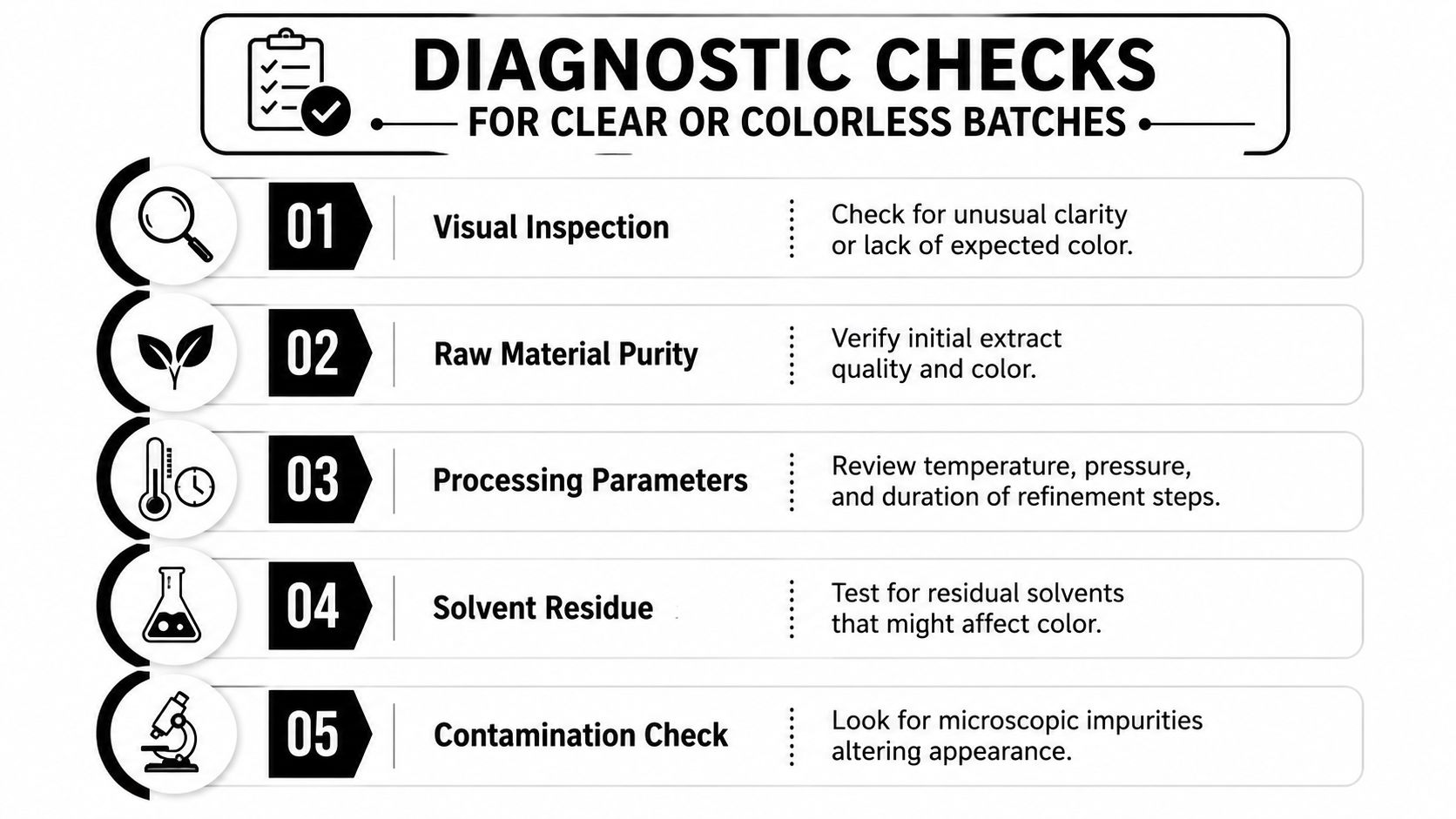
What to check first
- Visual inspection. Look for uniformity, streaking, or a level change after the cart rests.
- Raw material purity. Compare the batch against the starting extract, because the input color sets the ceiling.
- Processing parameters. Review the temperature, pressure, and hold time used in refinement.
- Solvent residue. Confirm that residual processing material isn't affecting the final appearance.
- Contamination check. Inspect for microscopic impurities or unexpected particulate matter.
Lab methods matter here too. GC/MS helps confirm terpene profile and compound presence, while FTIR can help identify broad chemical signatures that shouldn't be there. Those tools are more useful than color judgment because they tell you what's in the oil, not just what it looks like.
If the batch is clear but the intended aroma is missing, treat the appearance as a symptom of over-processing until proven otherwise.
The goal is not to make every batch dark. It's to determine whether the clarity came from a deliberate formulation choice or from a material loss event. That distinction decides whether you adjust the recipe, the process, or the specification.
Storage and Supply Chain Effects on Color Stability
A cart can look right at fill and look wrong by the time it reaches retail. Heat exposure, UV light, oxidation, and temperature cycling all change oil behavior during shipping and storage, and those changes can darken, cloud, or occasionally clarify the final appearance. The batch didn't necessarily become “better” or “worse.” It aged under conditions that changed the chemistry.
Terpene ratios matter here because volatile components don't all move the same way. Blends with more reactive or lighter fractions can shift faster, which means two oils filled on the same day can diverge in appearance if they're stored differently. That's why appearance tracking belongs in shelf-life work, not just in the formulation notebook.
For packaging, the usual choice is not cosmetic. Amber glass helps reduce light exposure better than clear packaging, and that matters when the goal is to preserve a stable visual profile through the supply chain. If a brand insists on clear presentation, the storage protocol has to do more work elsewhere, because the packaging no longer shields the product from the same degree of light stress.
You can also learn a lot from the failure pattern itself. If the oil darkens gradually, oxidation is a likely contributor. If it clouds after a temperature swing, the issue may be temperature behavior rather than formulation failure. If the appearance changes after the product sits, the batch may need a tighter storage spec or a different terpene balance. Oxidation control guidance for terpene handling is relevant here because the same chemistry that protects aroma also helps preserve appearance.
The practical takeaway is simple. A brand owner should track appearance at fill, after transit, and after shelf exposure. If those three checkpoints don't match, the formulation spec is incomplete. Color stability is part of product integrity, not a cosmetic afterthought.
Formulation Adjustments to Restore Color and Flavor
If a batch is too stripped down, the fix usually starts with the terpene system, not with more processing. A strain-inspired terpene blend can restore aroma, improve mouthfeel, and give the cart a more natural hue without making it muddy. In cartridge work, terpene concentration is often kept in the 5-15% range, but the right point inside that window depends on viscosity, target strain character, and hardware tolerance.
I prefer to build the blend in layers. Top notes carry the first impression, usually the brighter, more volatile fraction. Mid notes shape the body of the aroma. Base notes give the finish and help the profile feel anchored instead of thin. If the oil looks too clear and tastes flat, the problem may be that the base notes were underbuilt, not that the distillate was insufficiently purified.
Practical adjustments that usually work
- Raise terpene density carefully. Add small increments, then recheck clarity, flow, and aroma rather than dumping in a larger charge at once.
- Use superior strain profiles. Those can emphasize unusual fruit, dessert, or resin notes without relying on blunt dilution.
- Apply gentle conditioning. Low, controlled heat can improve homogeneity, but only if it stays below the point where volatile compounds flash off.
- Document every change. Track weight, mixing order, hold time, and appearance so the next batch can be compared against the same baseline.
Some teams also use tools that support the same workflow without overcomplicating it. A terpene calculator, batch log, and material comparison sheet will do more for repeatability than visual guesswork ever will. If you need a source for THC-free, cartridge-focused options, Gold Coast Terpenes is one supplier that provides strain-specific profiles and isolated compounds for formulation work.
The main goal is balance. You want enough color and aroma to show that the profile has depth, but not so much that the oil becomes unstable or hard to fill. That's a formulation decision, not a cosmetic compromise.
Building a Quality Framework Beyond Visual Clarity
Clear oil is not a quality badge. It can come from heavy refinement, aggressive winterization, or a terpene package that has been stripped back so far that the batch looks cleaner than it really is. A lightly colored oil can still be the better formulation if it preserves the intended aroma, texture, and cartridge performance. The right QC framework starts with lab verification, adds terpene profiling, and finishes with sensory testing.
The lab side sets the baseline. COAs should confirm cannabinoid content, terpene ratios, and contaminant screening so the team knows what the batch contains before anyone tries to judge it by eye. Visual clarity still has value, but it does not tell you whether the profile matches the formulation record or whether a cutting agent is present but hard to spot.
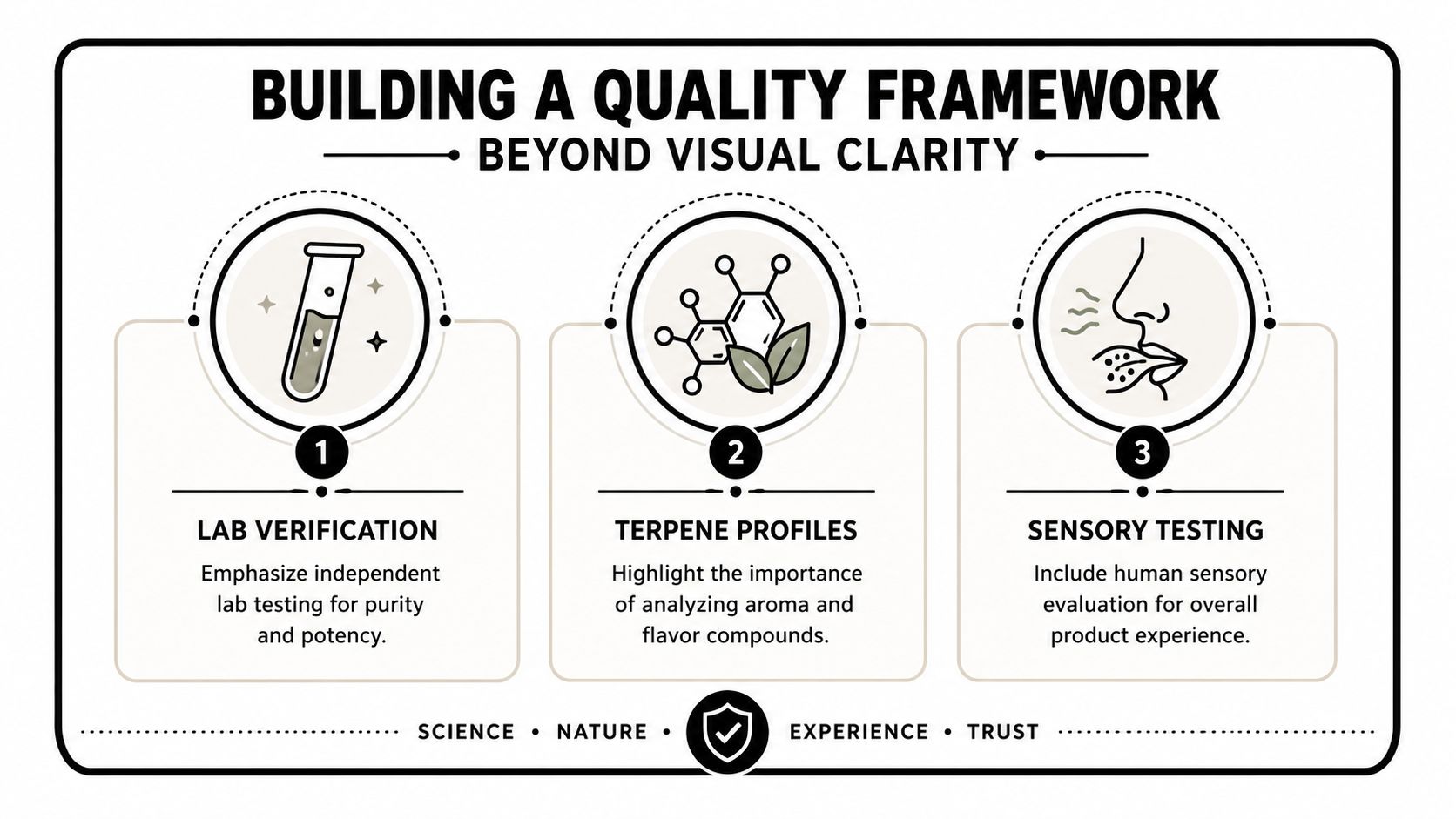
What a better framework looks like
Lab verification should answer whether the batch is clean, potent, and aligned with the formulation record.
Terpene profiles should answer whether the aroma compounds match the target cultivar or flavor direction.
Sensory testing should answer whether the oil performs in the cart the way the brand expects.
That third step carries more weight than many teams admit. A cart can look excellent and still taste thin, disconnected, or overly muted. A product that tastes and performs well, even if it carries a slight golden tint, usually tells the more credible quality story because the experience matches the label.
Brands should communicate quality the same way. Lead with lab data, terpene composition, and sensory consistency. Do not use “clear” as a proxy for safety or excellence. Buyers who work with carts every day know better, and retailers do too.
If you are building formulations that need more flavor accuracy, more repeatability, and less guesswork around appearance, Gold Coast Terpenes can supply strain-specific profiles and isolated compounds for cartridge development and distillate adjustment. Visit Gold Coast Terpenes to compare terpene options, review formulation resources, and build a cartridge oil that matches the product you want to make.