
Most advice about Rainbow Belts focuses on flower quality and jar appeal, but that misses the part formulators need. A cultivar that can look loud on a menu can behave very differently once it's turned into resin, distillate, or a cartridge-ready blend, and that's where accuracy is won or lost.
For cartridge work, Rainbow Belts matters because it gives you a clean blueprint for a strain-inspired terpene blend with real commercial utility. The profile sits in the THC-heavy, resin-forward lane, and that makes it useful not just for consumer recognition, but for rebuilding aroma, mouthfeel, and finish in a tank without flattening the character that made the flower popular in the first place.
Why Rainbow Belts Matters Beyond the Flower
A lot of strain pages treat Rainbow Belts like a flower-only story. That's a narrow read. In production, the cultivar becomes more interesting after you stop asking whether it photographs well and start asking how its chemistry behaves once it's extracted, concentrated, and rebuilt for vapor use.

Rainbow Belts is a THC-dominant Type I cultivar with verified certificates of analysis from 2021 to 2024 showing 24% to 29% total THC by weight, with standout lots exceeding 30% THC. Total cannabinoids typically fall between 26% and 33%, while CBD stays below 0.5%, so the chemistry is clearly skewed toward psychoactivity rather than a balanced THC:CBD expression, according to the strain guide at Joint Commerce. That same source places Rainbow Belts above the U.S. dispensary flower average of 19% to 22% THC in 2022 to 2024, which is one reason it gets attention from hash makers and cartridge teams alike.
Why extractors keep coming back to it
The practical reason is resin behavior. Several guides describe Rainbow Belts as a modern standard for solventless extraction because its resin clarity and terpene density survive processing better than many candy-leaning hybrids, and that matters when you're building a cartridge profile from scratch. When a cultivar brings strong starting material, the final oil doesn't need as much corrective flavor work, only careful reconstruction.
Practical rule: if the source flower already carries a loud candy-fruit signature, the cart formula should rebuild that signature in layers, not bury it under one oversized top note.
The commercial opportunity is here, not in another generic flower review. Rainbow Belts gives formulators a reference point for how high-THC flower reads before and after concentration, and that's a more useful starting position for SKU development than treating every strain like a consumer-side tasting note.
Genetics and Classification of Rainbow Belts
Rainbow Belts is best handled as a hybrid cultivar, not as a rigid indica or sativa label. Published strain guides split on the ratio, with one source placing it at 60/40 and another describing it as 50/50 balanced. The takeaway for product development is simple, the profile isn't built around a single dominant mood cue, so the flavor shouldn't be built around one dominant note either.
What the classification means in a cart
For cartridge replication, the classification debate matters because it affects how you balance brightness and finish. A profile that leans too hard on fruit candy will read thin. A profile that leans too hard on gas or berry will lose the lifted, confectionary opening that makes Rainbow Belts recognizable in the first place.
That's why this cultivar works better as a layered formulation exercise than as a one-note mimic. The front end needs sparkle, the middle needs softness, and the base needs enough weight to keep the profile grounded after the first few pulls. If any one layer dominates, the cart starts drifting away from the cultivar instead of toward it.
A practical formulation frame looks like this:
- Top note: fruit brightness that reads quickly on inhale.
- Mid note: soft floral or candy roundness that keeps the profile from feeling sharp.
- Base note: a heavier finish that prevents the blend from collapsing into generic citrus.
- Texture: enough depth to make the vapor feel like a true strain expression, not flavored distillate.
The hybrid label also explains why Rainbow Belts can feel balanced in one format and much heavier in another. In flower, the aroma can present as lively and approachable. In concentrate or cart form, that same genetic structure can read denser, more immersive, and sometimes more sedating if the formula overemphasizes the wrong end of the profile. That's the formulation trap.
The Dominant Terpene Profile and Flavor Architecture
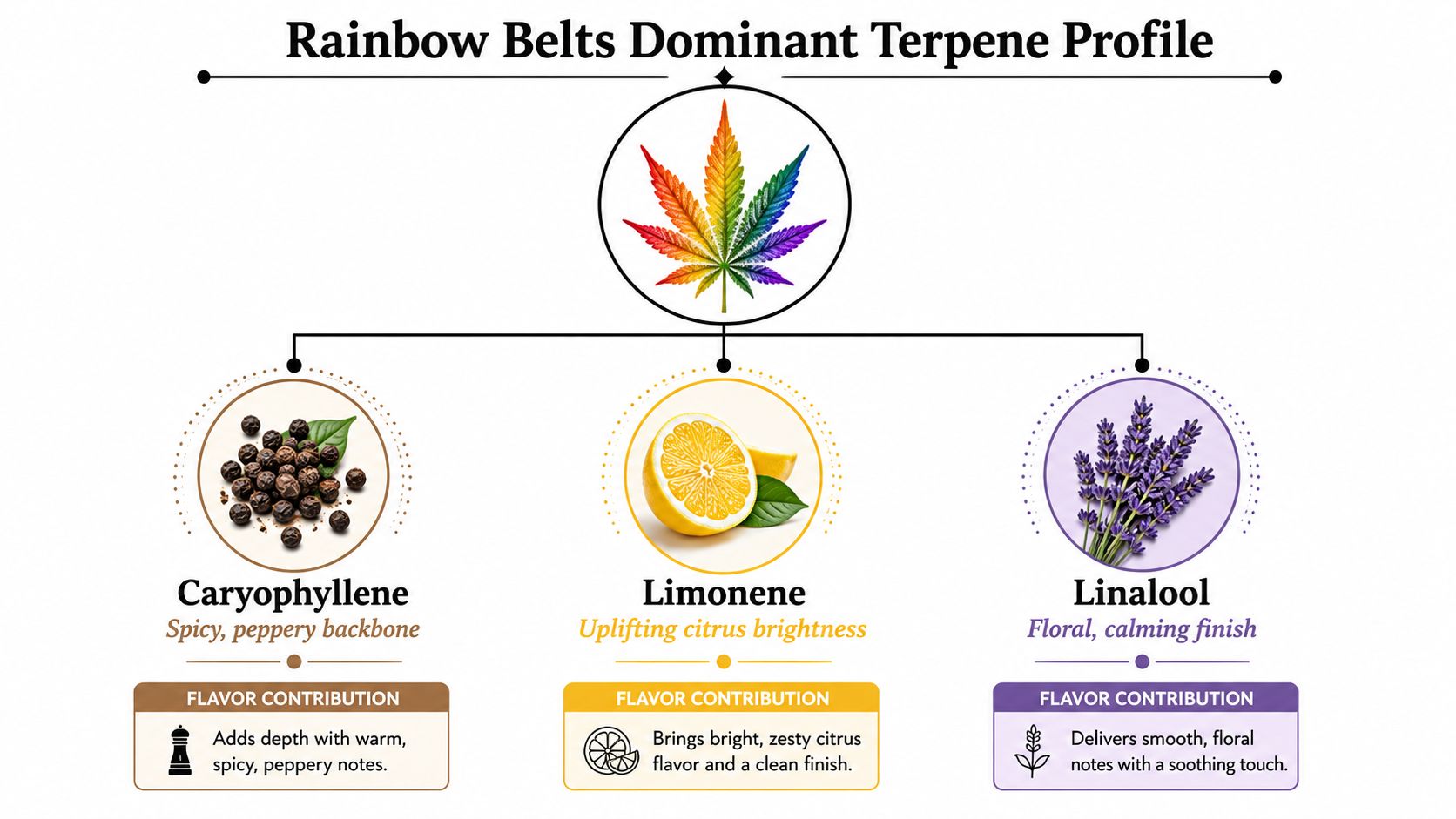
Published strain guides consistently point to caryophyllene, limonene, and linalool as the dominant terpene set for Rainbow Belts, with one source describing the profile as caryophyllene-dominant and another listing the same three compounds as the leading terpenes, as noted in PAX's Rainbow Belts strain journal. For formulators, that trio is the backbone of a workable terpene profile for Rainbow Belts weed strain products.
How the three-note structure reads in vapor
Caryophyllene gives the profile its spice and pepper backbone. In a cartridge, it keeps the blend from turning into pure candy. That matters because sweet-forward profiles can smell good in the bottle and still fail in use if they don't have enough base structure.
Limonene supplies the citrus lift. It's the part that makes Rainbow Belts feel bright at the top of the inhale, and it's usually the first note that tells a user they're not just vaping generic fruit terps. If this element is underbuilt, the cart may still taste pleasant, but it loses the opening snap that defines the strain.
Linalool adds floral softness and a subtle sweetness in the middle. It's easy to overuse linalool in candy-inspired formulas, which turns the blend perfumey. Used carefully, it smooths the transition between the citrus top and the spicy base.
A useful way to think about the architecture:
- Top note, limonene, citrus brightness and lift.
- Mid note, linalool, floral sweetness and roundness.
- Base note, caryophyllene, spice, pepper, and depth.
A profile like this fails when the layers aren't distinct. If the top, middle, and base all blur together, the cart tastes generic even when the ingredients are technically correct.
The best Rainbow Belts-inspired carts don't chase one loud terpene. They recreate the transition between notes. That's what gives the finished oil a strain identity instead of a candy flavor label.
Recommended Gold Coast Terpenes Pairings for Rainbow Belts
Rainbow Belts is one of those profiles that exposes weak formulation fast. If the base oil already carries enough character, a single-terpene correction may be enough to tighten the top note or shore up the finish. If the oil is muted, a pre-blended profile usually gets you closer with less trial and error. The terpene flavor chart is useful here because it helps keep those decisions consistent from batch to batch.
Start with the role, then choose the ingredient
For a tight rebuild, Limonene is the first isolate I would reach for when the top note needs more lift. Beta-Caryophyllene is the better choice when the finish feels too thin or the candy note drops off too quickly. Myrcene can add body, but it should stay in support, because Rainbow Belts reads as layered fruit and spice, not tropical blunt force.
That same logic applies when you move from isolates to pre-blended profiles. A candy-forward base inspired by Forbidden Fruit works well when the goal is softer fruit depth, while Blue Dream can bring a brighter, more familiar lift if the batch needs airiness. They are not interchangeable. One feels richer and more dessert-like, the other tends to read more open and familiar.
For formulators who want nuance without building every note from scratch, the Elevated Strains approach is useful for reinforcing rarer fruit and dessert accents. That matters with Rainbow Belts because the profile lives or dies on whether the fruit reads as candy-like instead of just sweet.
A practical decision tree looks like this:
- Use isolates when the oil already has identity and only needs correction.
- Use a strain-inspired blend when the oil is bland and needs a full aroma map.
- Use an accent collection when you want to sharpen the dessert and fruit edges without overpowering the backbone.
For additional strain-inspired profiles to consider, see our top terpene picks.
The biggest mistake is stacking too many sweet notes and forgetting the finish. Rainbow Belts should feel vivid, not syrupy. It also should not smell like a generic fruit cartridge with a cannabis label attached.
Extraction Methods and Cartridge Formulation Guidance
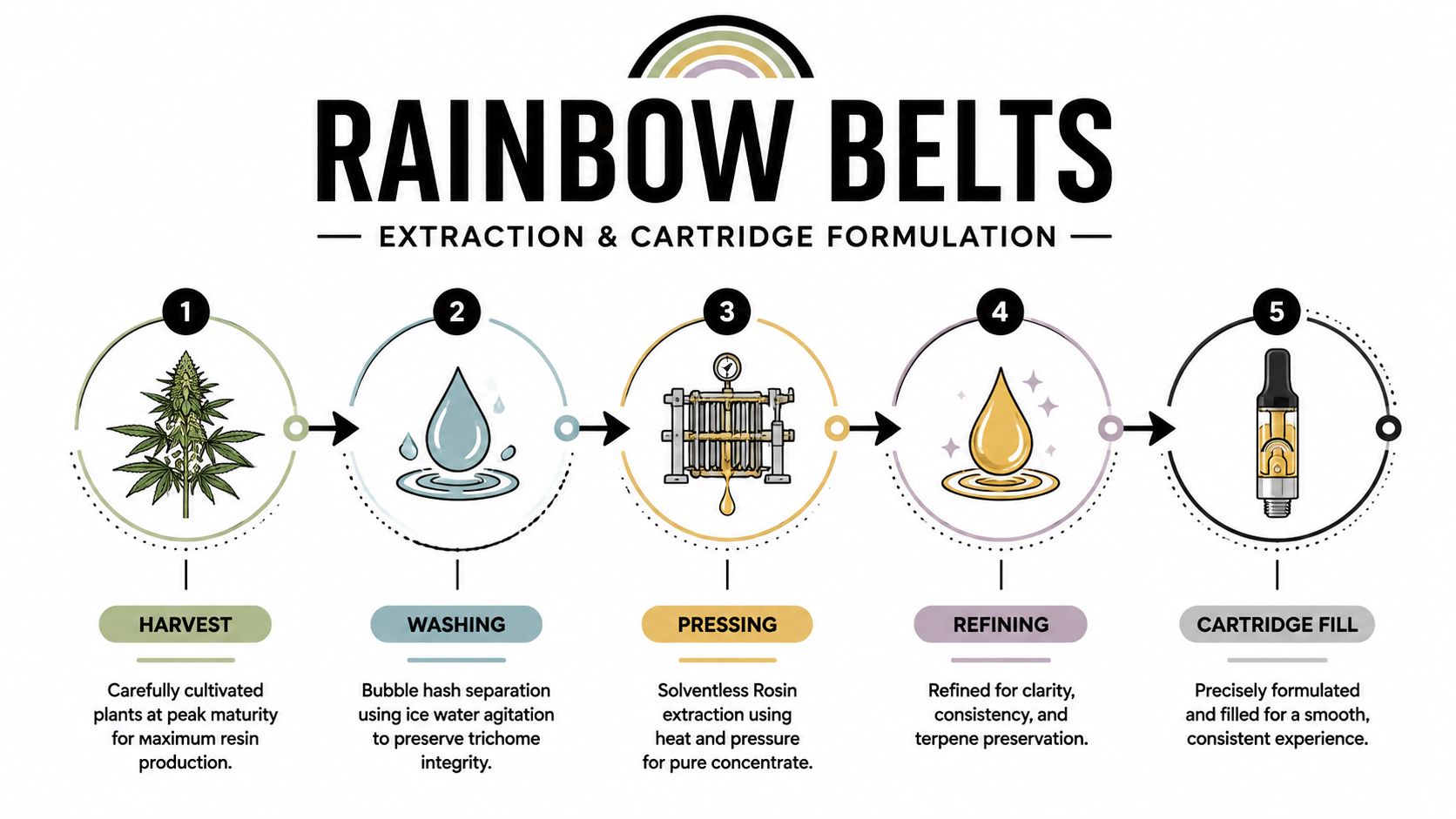
Rainbow Belts earns its reputation in solventless circles because the starting flower brings dense resin and enough terpene character to survive processing without losing the cultivar's identity. That's why it keeps showing up in rosin conversations. If the wash is clean and the source material is strong, the finished oil already has a head start.
Why the format changes the profile
The main formulation problem is that extraction compresses flavor. Flower can carry a nuanced, volatile expression that gets harder to preserve once it's turned into concentrate, and cart hardware then adds another layer of heat and airflow that can reshape the nose again. In other words, the same cultivar can feel balanced in flower and much more intense, even heavier, in cartridge form.
The supporting brief notes that premium flower often tests around 24% to 29% THC, while concentrates can push cannabinoid density much higher, and some extract guides note terpene levels of 4% to 12% in extracts. That's the technical reason Rainbow Belts can stop feeling “daytime-friendly” once it's rebuilt into a cart. The same cultivar can come across as denser and more sedating when concentration amplifies the weight of the finish.
What to watch in the tank
For distillate-based carts, the practical job is viscosity management and flavor integrity. If the oil is too thick, the blend won't wick cleanly. If the terpene load is too aggressive, the profile can separate into sharp top notes with no middle, which is exactly how you lose the Rainbow Belts signature.
Stability matters just as much. Monoterpene-heavy profiles are more vulnerable to storage and heat stress, so the finished product should be treated as a sensitive system, not a static flavor add. The less time the oil spends warm and exposed, the more likely it is to preserve the candy-bright opening that defines the strain.
How to make cannabis concentrates is the kind of process reference that helps teams think through where flavor is gained, and where it gets stripped away.
Formulation shortcut: if the extract already has a loud base, keep the terpene addition restrained and focused on rebuild, not overhaul.
The process flow matters too, harvest quality, washing, pressing, refining, then cartridge fill. Each step can either protect the Rainbow Belts character or smear it into something less specific. That's why the best carts made from this cultivar tend to start with extraction discipline, not just flavor selection.
Lab Data and Compliance Considerations for Extractors
Lab data has to match the sensory target, or the cart drifts. Rainbow Belts gives formulators a chemistry-heavy profile with a clear ceiling for how the finished product should read, so the sheet is not just paperwork, it is the reference point for deciding how far the oil can be pushed before it stops tasting like Rainbow Belts.
| Lab metric | Verified range | Formulation meaning |
|---|---|---|
| Total THC | 24% to 29%, with standout lots over 30% | Strong source material, useful for concentrated formats |
| Total cannabinoids | 26% to 33% | High-density starting point |
| CBD | Below 0.5% | Type I, THC-dominant chemistry |
| Dispensary flower average | 19% to 22% THC | Rainbow Belts sits above common retail flower levels |
Those figures are consistent with the strain guide from Joint Commerce strain guide. The practical point is simple, this cultivar starts high and stays high, so the concentrate can outpace the flower very quickly if the blend is not controlled.
What the lab sheet should tell you
A THC-dominant Type I profile means you are not dealing with a balanced cultivar that needs equal attention on both cannabinoid sides. You are working with a psychoactivity-forward base, and that should shape cart design from the start, especially if the formula still needs to stay approachable. Concentration does more than raise effect, it can change how sweetness, spice, and finish present on the palate.
For compliance, consistency is the bigger issue. Solvent-based material needs a tight residual solvent program, and terpene inputs should be verified clean, with no extra diluents that create avoidable risk. A COA certificate of analysis belongs in the workflow because Rainbow Belts rewards teams that read the numbers before they start blending.
The cart that tests clean but tastes off usually failed earlier in the process, not at fill.
Rainbow Belts also works as a pressure test for product teams. If a formulation can hold its profile without turning harsh, thin, or overly heavy, the process is probably solid enough to scale.
Cultivation Highlights for Extractors and Formulators
Growers who supply extraction-grade Rainbow Belts need to think beyond visual appeal. The flower can look excellent and still miss the mark for a cartridge team if the resin is underdeveloped or the cure has pushed too much aroma off the plant. Extraction starts in the garden, and the material decides how much of the cultivar survives into the final oil.
What matters before harvest
Resin production is the first priority. Formulators want flower that carries enough trichome structure to translate well in wash or press, with terpene preservation protected through drying and curing. If the plant is handled too hot or too long, the bright citrus edge fades and the finished cartridge loses the lift that makes Rainbow Belts recognizable.
Harvest timing matters too. The goal isn't just maturity, it's retaining the parts of the profile that give the strain its candy-spice balance. A lot of growers can produce pretty flower. Fewer can produce extraction-grade input that still smells like itself after processing.
A grower relationship should be built around a few checks:
- Resin integrity, because weak gland heads won't give formulators enough to work with.
- Drying discipline, because rough post-harvest handling strips the top notes first.
- Cure consistency, because the profile should stay stable from batch to batch.
- Selection mindset, because not every attractive phenotype is the best extraction phenotype.
The best Rainbow Belts material tends to come from teams that understand the downstream use case. They know the flower isn't ending its life on a shelf. It's going into a process where every handling choice changes the final aroma map.
Gold Coast Terpenes supplies 100% natural, lab-verified terpene blends and isolates that fit this exact kind of work, from strain-inspired cart profiles to extraction support and flavor rebuilding. If you're formulating a Rainbow Belts cartridge, visit Gold Coast Terpenes to source terpene components that help you dial in the profile with more control and less guesswork.