
You're usually not trying to invent a new flavor from scratch. You're trying to solve a tighter problem, make a cartridge taste like a polished functional beverage, keep the batch repeatable, and avoid the flat, generic note stack that comes from leaning too hard on a pre-made strain profile.
That's where the happiest hour drink becomes a useful formulation target. The term itself traces back through a long commercial evolution, from naval morale events to bar culture and finally to a pricing window tied to 3:00 to 6:00 pm in modern usage, with the term's middle-century shift into discounted-drink meaning helping lock in the social and sensory cues most brands now recognize (Britannica, Thrillist). For product teams, that matters because consumers aren't responding to a strain label here, they're responding to a familiar flavor cue, a time-of-day cue, and a value cue.
If you're building for vape cartridges or distillate, a beverage-inspired profile gives you a cleaner brief than a strain name ever will. Instead of asking a mixer to “make it fruity,” you can define what should happen in the first inhale, what should sit in the middle, and what should linger after the draw.
Why Beverage-Inspired Terpene Blends Outperform Generic Strain Mimicry
A lot of failed cartridge briefs start with a strain name and end with a compromise. A terpene profile built around a beverage target is easier to execute because the sensory goal is already structured. You're not chasing a vague cultivar memory, you're rebuilding a known sequence of top, mid, and base notes.
That difference matters in a lipid matrix. Distillate doesn't behave like an aqueous drink, so the aroma has to be assembled with more discipline. A bright top note that feels lively in a beverage can vanish if it's over-diluted or buried under heavy base notes, while a flat pre-mixed strain profile often locks you into someone else's balance choices. If you want a profile that reads like the happiest hour drink, you need the freedom to tune the opening, the body, and the finish separately.
Why custom architecture wins in commercial production
Custom blending is also a better business decision when brand differentiation matters. A pre-formulated strain-inspired profile can get you close, but it usually gives you less control over consistency across SKUs, especially if you're trying to keep a line coherent across cartridges, distillate, and adjacent formats. A bespoke build is easier to document, easier to revise, and easier to explain to a production team.
Practical rule: if the target is a functional beverage, build the flavor like a beverage. Don't force it through a strain template and hope the finish behaves itself.
For teams that want a deeper foundation before they start ratio work, a clean reference point is a basic terpene blend overview that separates aroma architecture from marketing language. That distinction is what keeps a formulation brief from drifting into generic “fruit cocktail” territory.
A beverage-inspired approach also lines up with how buyers think about value. The 2014 American Express and Technomic study cited in the brief found that the top two reasons Americans go to happy hour are great prices on food and drink (Thrillist). That doesn't just describe bar behavior, it explains why a tight, recognizable flavor cue works so well in cannabis and hemp products. Consumers understand the experience quickly, and operators can reproduce it without reinventing the wheel every time.
Deconstructing the Happiest Hour Drink Flavor and Functional Architecture
The formulation brief for the happiest hour drink is useful because it already names the working materials. The product page identifies a 100 mg caffeine + terpene shot built with alpha-pinene, linalool, terpinolene, and beta-caryophyllene, and says it is intended to feel focused and jitter-free while remaining THC/CBD-free. That gives formulators a workable sensory map, not just a marketing descriptor.
Mapping the note stack
Alpha-pinene reads as a sharp, lifted top note. In a cartridge or distillate, it helps the first impression feel clean and brisk instead of syrupy. Terpinolene plays a similar opening role, but with more aromatic complexity, so the profile feels modern rather than flat.
Linalool belongs in the mid-palate. It softens the edges and keeps the aroma from becoming too piercing. Beta-caryophyllene functions as the base note, giving the profile a grounded finish that holds the blend together after the brighter materials have flashed off.
The ordering matters because it translates a beverage cue into a cartridge-friendly structure. A functional drink can get some help from water, acidity, sweeteners, and carbonation. Distillate does not offer those supports, so a terpene that feels refreshing in liquid can read harsher, narrower, or more brittle in oil if the mid notes do not cushion it.
The reverse failure is common too. Too much base-note material and the blend turns heavy from the first inhale. That is why beta-caryophyllene deserves respect and restraint at the same time, because it strengthens structure while also hiding nuance if the formula leans too far into the bottom end.
A good beverage-inspired cart does not taste like a loose mix of pleasant notes. It tastes like the right thing first, then the right thing again on the exhale.
For reference work, a terpene flavor chart is still useful, but only if you treat it as a mapping tool, not a recipe. The chart helps place each material in the stack. The formulation still has to respect how those compounds behave once they are suspended in oil instead of water.
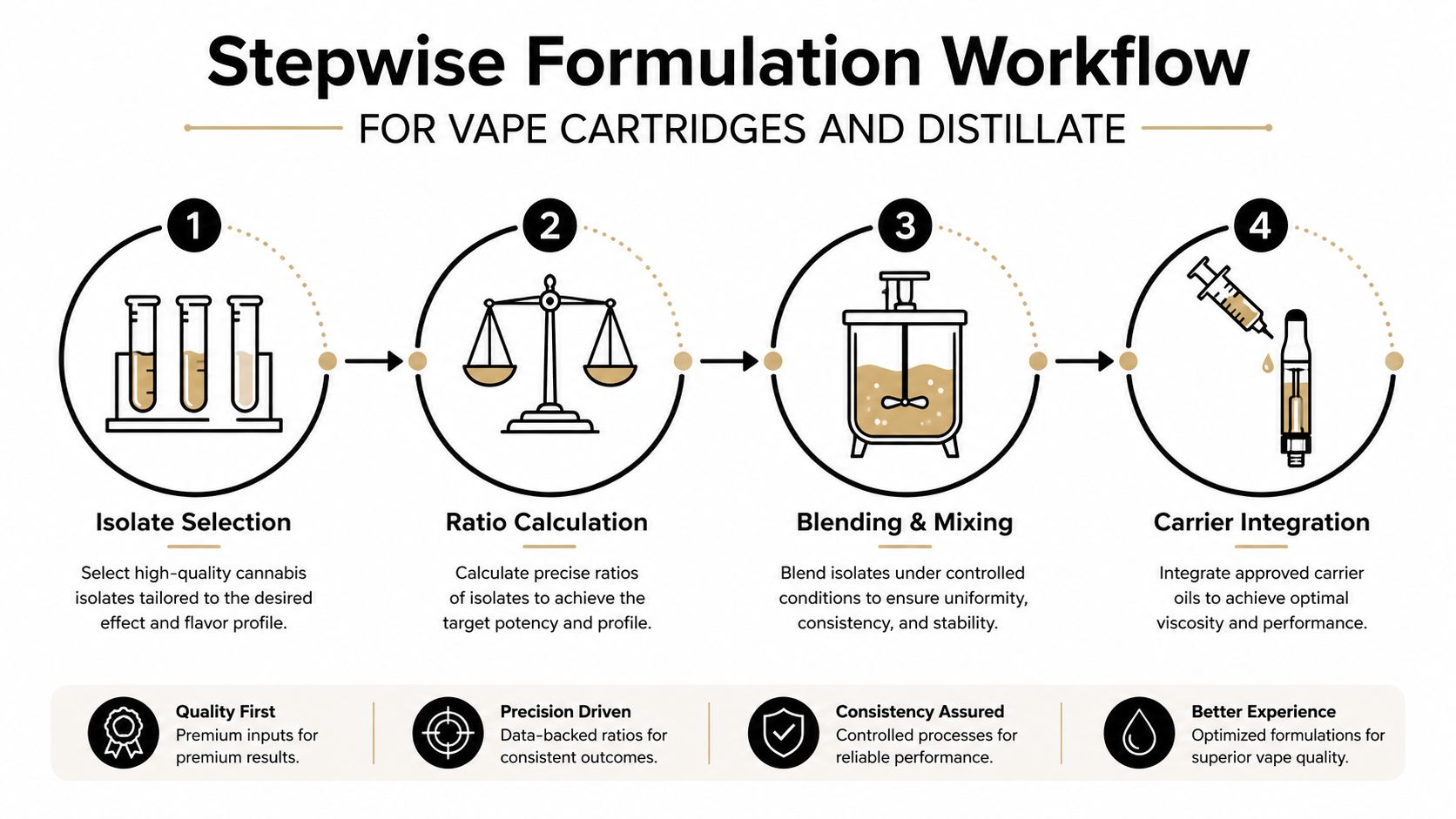
Stepwise Formulation Workflow for Vape Cartridges and Distillate
The cleanest way to build the happiest hour drink profile is to treat it like a controlled bench trial, not a guess. Start with the sensory target, then choose isolates or single-source terpenes that can carry that target in a vape matrix. The goal is not maximum aroma. The goal is the right aroma at the right moment.
A useful workflow begins with the top note, because that's what the user notices first. Build the opening around alpha-pinene and terpinolene, then bring in linalool to round the center, then use beta-caryophyllene as the structural finish. That sequence matters because a top-heavy formula can seem lively at bench temperature but fall apart during filling or after settling.
Bench trial discipline
Keep the first trials small and document everything. Measure the terpene load against the distillate base you use, not against a theoretical ideal. If the carrier oil is too thick, the top note can read muted during mixing and then spike after the product sits. If the carrier is too thin, the bright notes can seem aggressive right out of the gate.
A strong habit is to mix, rest, and retest before scaling. That rest period gives you a more honest read on integration, especially in a profile that depends on contrast between crisp and rounded notes. If the blend smells balanced on the stir plate but goes flat after curing, your ratio is probably too dependent on the opening notes.
Common mistakes to avoid
- Overloading the top notes. The first aroma may seem appealing, but it often flashes off during filling and leaves the blend thin.
- Letting the base dominate too early. Beta-caryophyllene can anchor the profile, but too much of it buries the beverage character.
- Skipping rest time. Freshly mixed oil often lies. Let it settle before judging the final sensory read.
- Changing more than one variable at once. If you alter terpene ratio, fill temperature, and carrier viscosity together, you won't know what fixed the problem.
For a production-minded walkthrough on emulsifying flavor into oil, a practical distillate mixing guide is a better companion than a strain blog. It keeps the conversation on process, where the actual quality gains happen.
Comparing Terpene Sources and Blend Strategies for Commercial Production
Source choice drives the ceiling of the formula. If you're replicating a beverage-inspired profile, isolate-based blending usually gives you the cleanest control because each material can be assigned a job. Pre-formulated strain-inspired profiles are faster to deploy, but they often import a flavor identity you didn't ask for.
The other major decision is botanical-derived versus cannabis-derived input. For a non-cannabis beverage target, botanical sources often align more naturally with the flavor brief because the sensory reference point itself is outside cannabis culture. That doesn't make cannabis-derived materials wrong, it just means they're often better reserved for projects where cultivar character is the brief, not a bright beverage impression.
| Terpene Sourcing Strategies for Beverage-Inspired Profiles | ||
|---|---|---|
| Criterion | Isolate-Based Custom Blend | Pre-Formulated Strain-Inspired Profile |
| Flavor accuracy | Best when you need a specific top, mid, and base note balance | Faster starting point, but less exact for beverage replication |
| Batch consistency | High, because each component can be measured and adjusted | Good for quick runs, but harder to fine-tune without changing the whole blend |
| Regulatory cleanliness | Easier to document component by component | Simpler at the purchase level, but less transparent in how the flavor was built |
| Development speed | Slower at first, stronger once the recipe is locked | Faster to prototype, weaker for exact sensory targeting |
| Scale flexibility | Better for line extensions and SKU families | Better for short runs and general use |
| Best use case | Formulating a branded beverage-inspired cartridge or distillate | Quick launch concepts that don't need a precise flavor replica |
A pre-formulated option can still be useful as a rough scaffold. The problem is that it often bakes in assumptions from strain mimicry, which can pull the result away from the crisp, functional drinking cue that makes the happiest hour drink so commercially interesting. If the target is a refreshment cue, the build should stay disciplined around aroma role, not cultivar mythology.
For teams choosing between commercial paths, a CDT versus BDT comparison is worth keeping on hand. It's one of the few decisions that changes not just flavor, but also how directly you can translate a beverage brief into a cartridge-friendly formula.
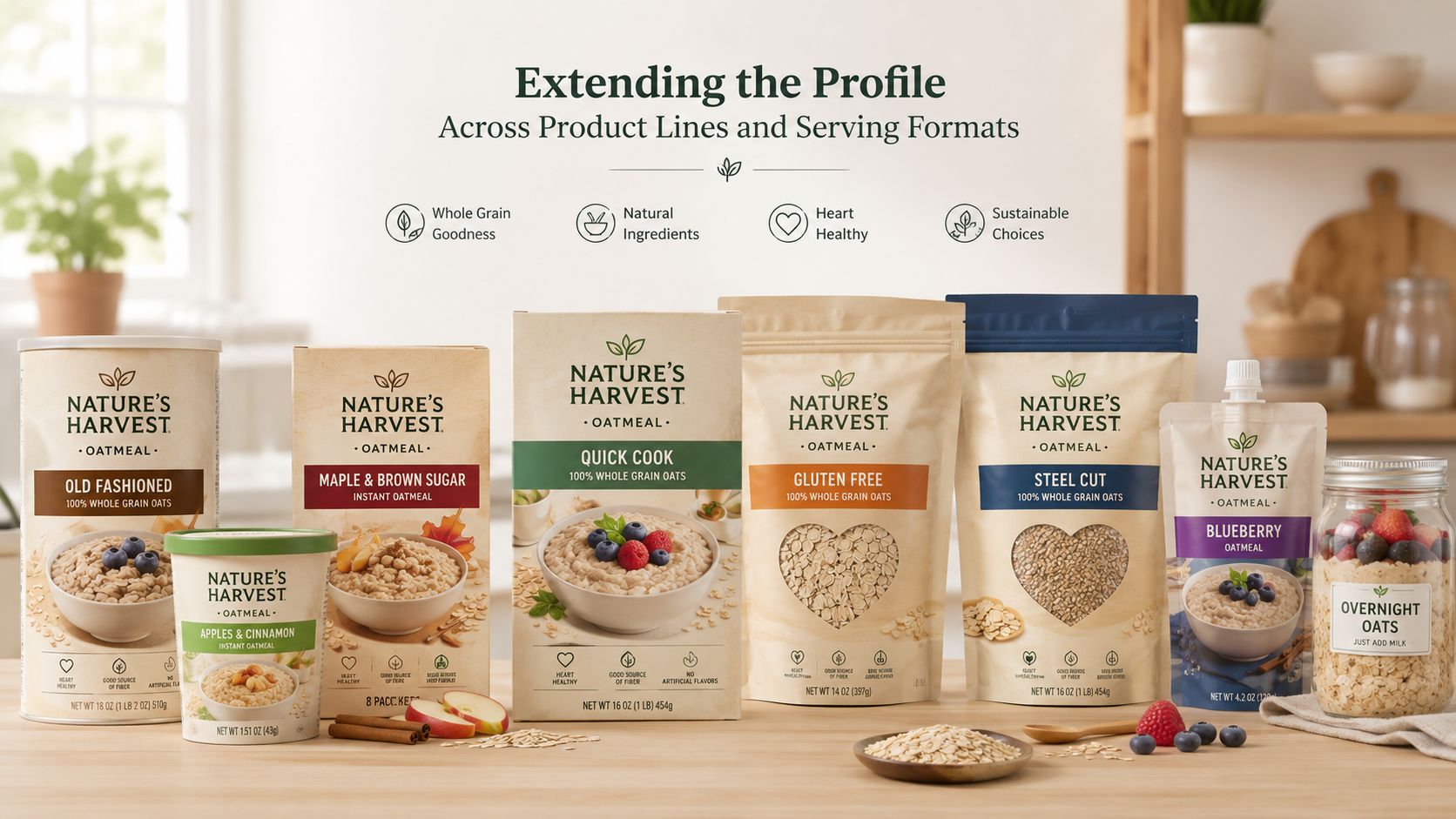
Extending the Profile Across Product Lines and Serving Formats
Once the cartridge version works, the value comes from carrying the same flavor architecture into other formats. The top, mid, and base note balance can move into tinctures, oil-based products, and mocktail-style cannabis beverages, but each carrier changes how the blend presents itself. In oil, the finish stays on the palate longer. In a beverage emulsion, the top note has to survive a different delivery path and still register cleanly.
The recipe should stay recognizable while the implementation shifts. A tincture can tolerate a softer opening because ethanol or oil already changes perception. A mocktail-style SKU usually needs more emphasis on the first aromatic hit so the profile does not get flattened by sweetener or dilution. The core idea stays intact, but the matrix decides how loudly each terpene should speak.
Building a product family without rebuilding the profile
Minor cannabinoid pairing can help at the product strategy level if the flavor brief stays in control. A profile that already reads as focused and bright does not need extra sensory noise layered onto it. Complementary flavor modifiers should support the lift, not compete with it.
A clean product family usually follows the same rule set:
- Keep the top note recognizable. Consumers should know it is the same flavor identity across SKUs.
- Adjust the mid-palate for matrix type. A tincture can be softer, while a beverage needs more clarity.
- Let the base note support, not dominate. The finish should feel integrated, not heavy.
- Match the delivery format to the promise. An oil-based format should not behave like a carbonated drink.
Practical rule: one sensory identity can support multiple products, but each format needs its own balance point.
That is the fastest way to turn a successful blend into a line extension strategy. The goal is not to rebrand the same oil over and over. The goal is to build a stable flavor signature that can move across formats without losing its recognizable character.
Quality Control and Scaling Checklist for Consistent Batch Output
Scaling a beverage-inspired terpene blend is mostly about protecting the ratio logic you already proved at bench. The batch that smelled perfect in a small vessel can shift once you change vessel geometry, fill temperature, or hold time. That's normal, but it only stays normal if the team documents the changes and responds to them consistently.
The product page for the Happiest Hour says the shots are third-party tested, made with food-grade terpenes, and produced in FDA-registered facilities (Happiest Hour). It also gives a simple use direction, drink the full shot 15 to 20 minutes before the desired effect (Happiest Hour). For formulators, the important takeaway is not the consumer instruction itself. It's that timing and integration matter, and that no published clinical trial data or response-rate statistics are provided on the cited product pages, so performance claims beyond the stated product positioning would be speculative.
Production-floor checklist
Before a run moves from bench to scale, verify the following:
- Material identity. Confirm each terpene component matches the intended role in the blend.
- Incoming documentation. Keep testing records and batch identifiers tied to the formula version.
- Mix order. Add components in the same sequence every time.
- Temperature control. Keep the blend within the process window you validated at bench.
- Rest time. Allow the finished oil to integrate before final sensory evaluation.
- Fill behavior. Watch for top-note loss during transfer and adjust handling if needed.
- Post-fill review. Recheck aroma after curing, not just immediately after filling.
A final production check should compare the finished batch against the bench reference, not against memory. Human perception drifts quickly in a busy room. Written notes do not.
For teams that want a tighter development system, a process resource like how to mix distillate with terpenes should live beside your batch records, not in a browser tab someone closes halfway through a run. That's how you keep a profile like the happiest hour drink commercially stable instead of intermittently good.
If you're building beverage-inspired cartridges, distillate blends, or a broader flavor line, Gold Coast Terpenes can help you source the terpene components and formulation tools that keep the profile consistent from bench sample to production. Visit Gold Coast Terpenes to explore terpene blends, isolates, and practical formulation resources for your next build.