
Most advice on humulene gets the business end of the story backwards. The terpene is usually sold as a weight-management angle first, but for formulators that's the weakest part of the pitch and the easiest to overstate. The stronger case for humulene terpene benefits sits in its base-note structure, its preclinical anti-inflammatory profile, and its ability to give cartridges and concentrates a more grounded sensory spine without flattening the blend.
That matters because product teams don't win by repeating dispensary folklore. They win by building profiles that hold up in hardware, match the intended aroma, and stay honest about what the data supports. A terpene can be commercially useful even when the clinical evidence is still limited, as long as you position it correctly and blend it with discipline.
Rethinking Humulene Beyond the Appetite Myth
The appetite-suppression claim gets the most attention, but it's also the part that needs the most restraint. Existing coverage often treats humulene like a unique weight-management terpene, yet the broader literature is mixed, indirect, and mostly preclinical. The more defensible commercial view is that humulene is a useful sensory and formulation marker, not a clinically proven appetite suppressant. For teams writing product copy, that distinction keeps marketing closer to evidence and farther from risk. This humulene overview is useful as a reminder of how often the appetite story gets repeated without enough scrutiny.
What the evidence actually supports
A 2024 scoping review of α-humulene compiled 340 studies and found a broad evidence base for potential anti-inflammatory, antimicrobial, antiproliferative, antiallergic, gastroprotective, and cannabimimetic effects, but it also made clear that human clinical evidence remains limited and the strongest support is still mechanistic and animal-based source. That's the part formulators should anchor to. It gives you a sounder foundation for relaxation-focused, recovery-oriented, and inflammation-support positioning than the appetite narrative does.
Practical rule: if a claim sounds bigger than the evidence base, it probably is.
Commercially, this means humulene belongs in formulations where you want a grounded aromatic identity and a functional story that doesn't overreach. It can support a product's overall profile, but it shouldn't be sold as a stand-alone solution for weight control. That's not just a compliance issue, it's a trust issue.
How to position it without hype
Think of humulene as a functional terpene with a reliable sensory role and a promising mechanistic profile. In a cartridge line, that usually translates to a restrained, earthy backbone that helps a blend feel complete. In a concentrate line, it can reinforce an herbaceous, woody finish that reads more premium than sweet or candy-like profiles.
The cleanest commercial categories are calm, balance, grounded aroma, and inflammation-support-oriented formulation language. The weakest category is “appetite control,” because that phrase invites a promise the evidence doesn't justify. If a brand wants to mention appetite at all, it should be framed very carefully and only where the product story is already strong on sensory and formulation grounds.
Chemical Structure and Sensory Behavior of Humulene
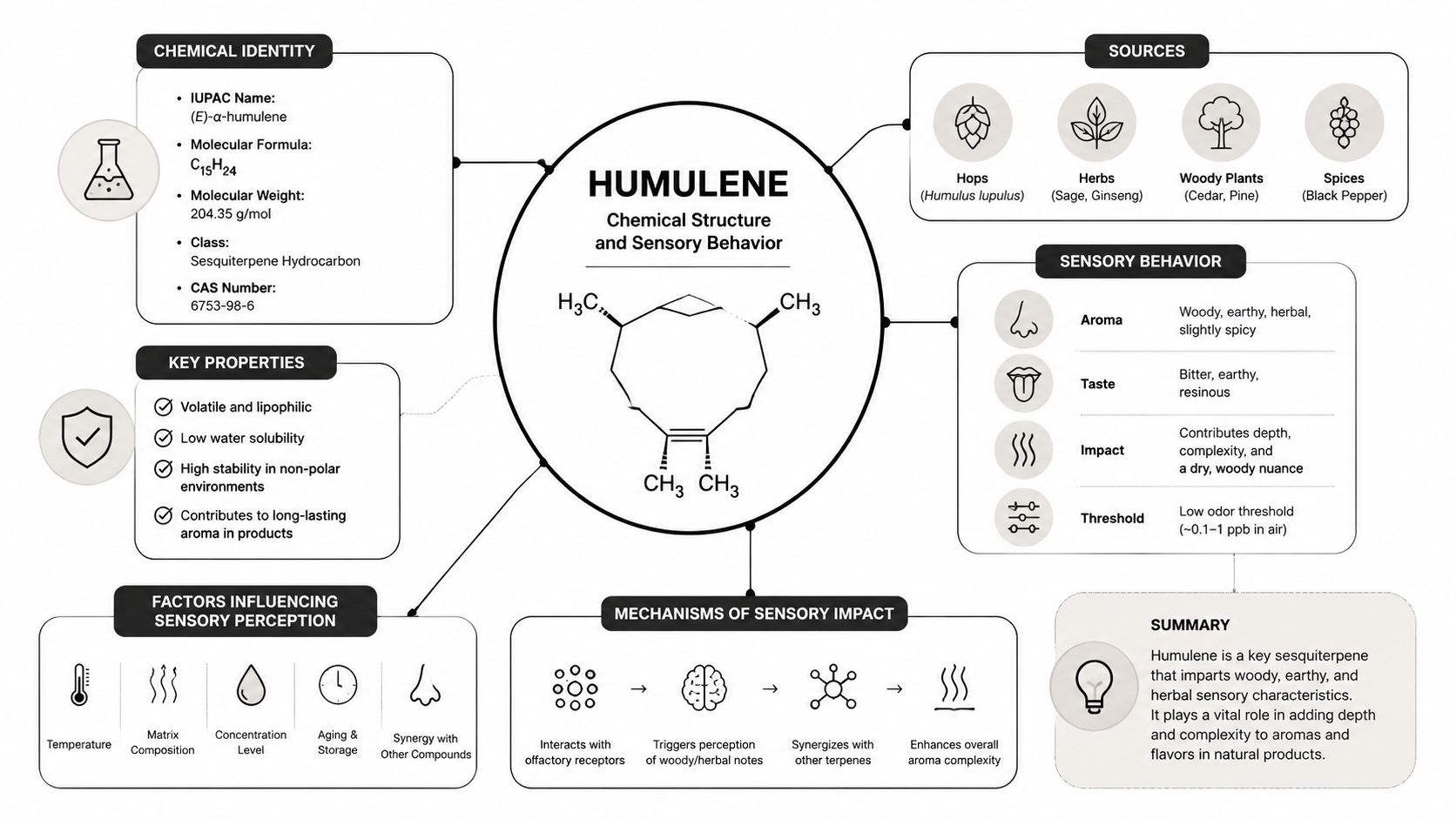
Humulene is a sesquiterpene, which makes it heavier and less volatile than common monoterpenes such as limonene and myrcene source. That chemical difference isn't academic. It changes how the terpene behaves in vapor, how long the aroma lingers, and how it fits into a blend architecture built for cartridges, concentrates, or strain replication.
Why sesquiterpene behavior matters
In perfumery language, humulene behaves like a base note. It doesn't hit first or flash off quickly. Instead, it stays present after the brighter top notes fade, which is why it's useful when a formulation feels thin, sharp, or overly volatile. In cannabis product development, that translates into better aromatic depth and a more stable flavor impression over the life of the product.
This is also why humulene shouldn't be treated like a one-for-one substitute for lighter terpenes. A blend built around limonene or pinene will present differently in the first seconds of inhalation than one that leans on humulene. If the hardware and carrier system are tuned for fast top-note release, adding too much humulene can make the profile feel muted instead of rich.
What it does in cartridges and concentrates
In vape cartridges, humulene usually contributes to vapor density, palate persistence, and a drier finish. It can make a blend feel more structured, but it can also become too dominant if paired with a weak top-note system. In concentrates, especially when the extract already has a strong cannabis-derived aromatic base, humulene can reinforce the “finished” impression that buyers often describe as earthy, woody, or hoppy.
The main formulation trade-off is not whether humulene smells good. It does. The trade-off is whether it fits the intended evaporation curve. If the rest of the blend is built only from fast-flashing terpenes, humulene can expose imbalance rather than solve it. If the profile already has enough lift, humulene adds depth without collapsing brightness.
A simple way to think about it is this, top notes create the opening, mid notes create the shape, and base notes create the memory. Humulene lives in that last category. The chemistry guide is the right place to keep the broader terpene framework handy while you build around it.
Practical implication for blend design
For formulators, the key decision is whether the product needs more lift or more anchor. Humulene is an anchor. That makes it valuable in earthy profiles, in strain replication, and in any SKU where the finish needs to feel lasting rather than sharp.
Strong base-note terpenes help a product feel finished. They don't rescue a weak blend, but they do prevent a thin one from feeling brittle.
Pharmacological Evidence Base for Functional Positioning
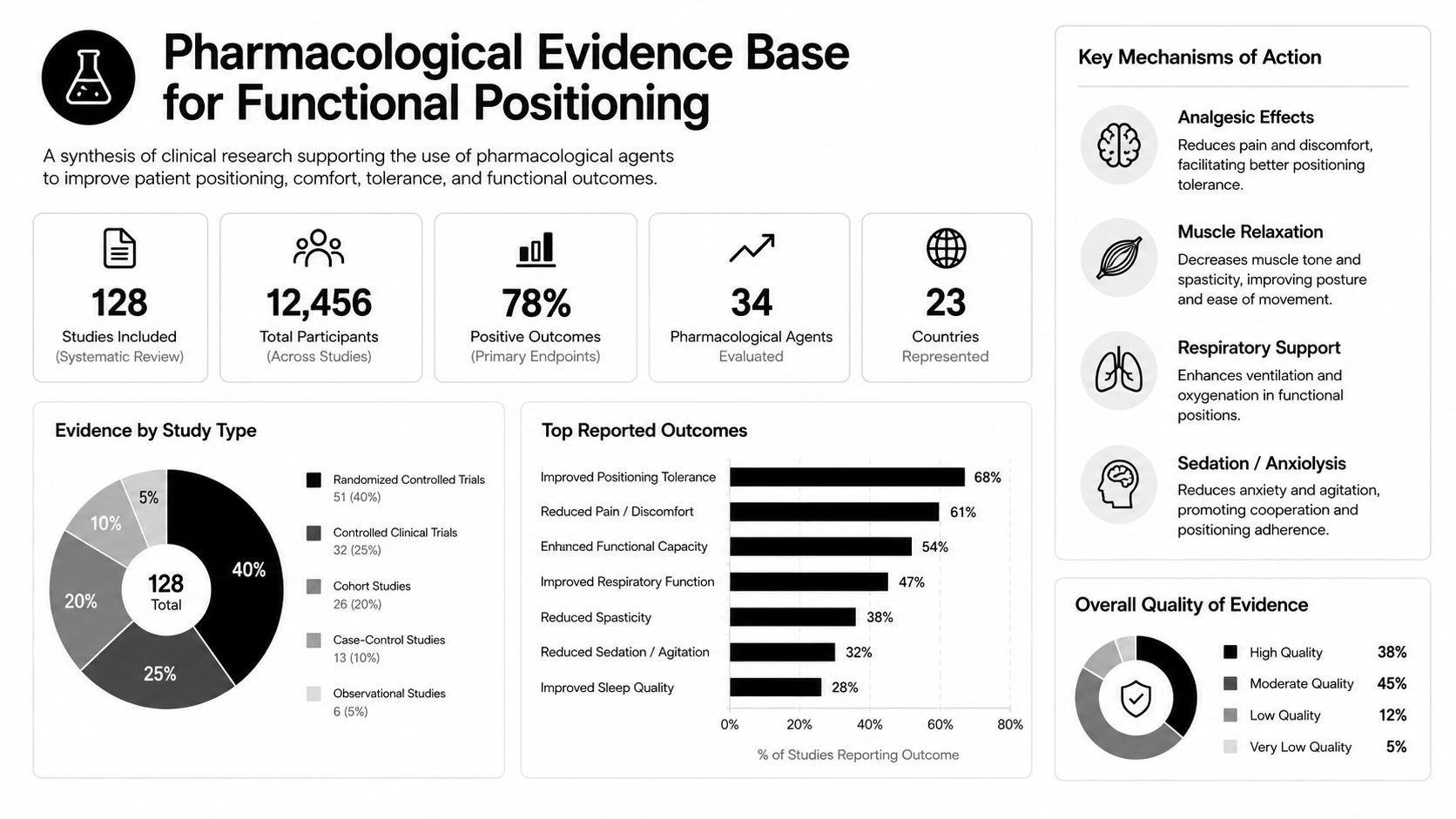
The most useful evidence for humulene comes from the same place the best formulation decisions usually come from, a strong preclinical signal with clear limits. The 2024 scoping review that compiled 340 studies found the broadest support around anti-inflammatory, antimicrobial, antiproliferative, antiallergic, gastroprotective, and cannabimimetic activity, with humulene's modulation of the NF-κB pathway highlighted as a plausible mechanism for reducing inflammatory mediators source.
What that means for product positioning
NF-κB is a major inflammatory signaling route, so that mechanism matters when teams are choosing how to frame a functional formula. It doesn't justify a disease claim, and it doesn't turn a terpene into a medicine. It does give formulators a defensible scientific reason to place humulene in recovery-oriented, calm-focused, or inflammation-support blends when the rest of the formula supports that story too.
Historical context matters here as well. A medical reference summarizing studies from the 2007 to 2009 period reported humulene showing anti-inflammatory activity equal to dexamethasone in an animal model and described it as effective for pain relief when used topically, orally, or by aerosol source. That is not human proof, but it does show the research interest in humulene is not new or superficial.
What not to claim
The strongest data is still mechanistic and animal-based, not clinical. That means packaging language should stay in the lane of support, profile, formulation intent, and sensory function. Avoid implying that humulene treats inflammation, relieves pain, or drives weight loss in finished products. Those are the kinds of shortcuts that create regulatory exposure and erode credibility with downstream buyers.
A useful commercial read
For brand owners, the value of humulene isn't that it can carry a miracle claim. It's that it helps define a product family. A humulene-forward line can signal earthy sophistication, a more grounded effect narrative, and a terpene architecture that feels less sugary and more mature. That's especially relevant in categories where consumers expect a calmer finish or a less volatile vapor experience.
Formulation and Dosing Guidance for Cartridges and Concentrates
Humulene works best when it's treated as an anchor, not a headline. In finished vape products, that usually means building around it as a base-note terpene and letting brighter compounds carry the top of the aroma. For cartridge development, the practical goal is a profile that tastes complete on the first draw and still reads as coherent after the first few pulls.
Starting points for finished product use
Use the table below as a working formulation reference, then adjust for hardware, viscosity, and the rest of the terpene stack.
| Product Type | Humulene Range (% w/w) | Blending Notes |
|---|---|---|
| Vape cartridge | Low to moderate | Keep humulene anchored to a brighter mid and top note system so the first inhale doesn't feel too dry. |
| Distillate blend | Low to moderate | Add after the carrier and major terpenes are fully homogenized, then recheck aroma balance. |
| Live resin formulation | Low | Let the native extract carry part of the base-note load, then use humulene to sharpen the finish rather than dominate it. |
How to blend without flattening the profile
Start with the minor terpene fraction, not humulene alone. If you build a cartridge around humulene first, the blend often turns earthy and heavy before it gets aromatic. Instead, layer a brighter top note, then introduce humulene to support the mid-palate and extend the finish.
A practical bench approach looks like this.
- Build the top note first. Use a lighter terpene to define the opening aroma.
- Add the mid-note bridge. This ensures the profile stops feeling one-dimensional.
- Bring in humulene last. Add it as the base-note support, then re-evaluate the total aroma after homogenization.
Hardware and texture considerations
Because humulene is less volatile, it can slightly change how a blend presents in cartridge hardware. Too much base-note weight can make the oil feel denser on the inhale, especially if the formula already leans heavy on other sesquiterpenes. That's where wick performance and coil tolerance matter more than people admit. A formula that seems fine in a jar can feel sluggish in a cart if the base-note load is too high for the device.
Blending rule: if the profile smells great in bulk but goes flat in hardware, reduce the humulene share before you increase flavoring.
For teams working on repeatable SKU development, Gold Coast Terpenes offers terpene blends and isolates that can be used as formulation inputs, including humulene-adjacent profile building blocks. Use them as part of a test matrix, not as a shortcut around iterative bench work.
The humulene flavor guide is a helpful reference point when you're checking whether the sensory target still matches the intended profile.
Natural Sources and Concentration Benchmarks
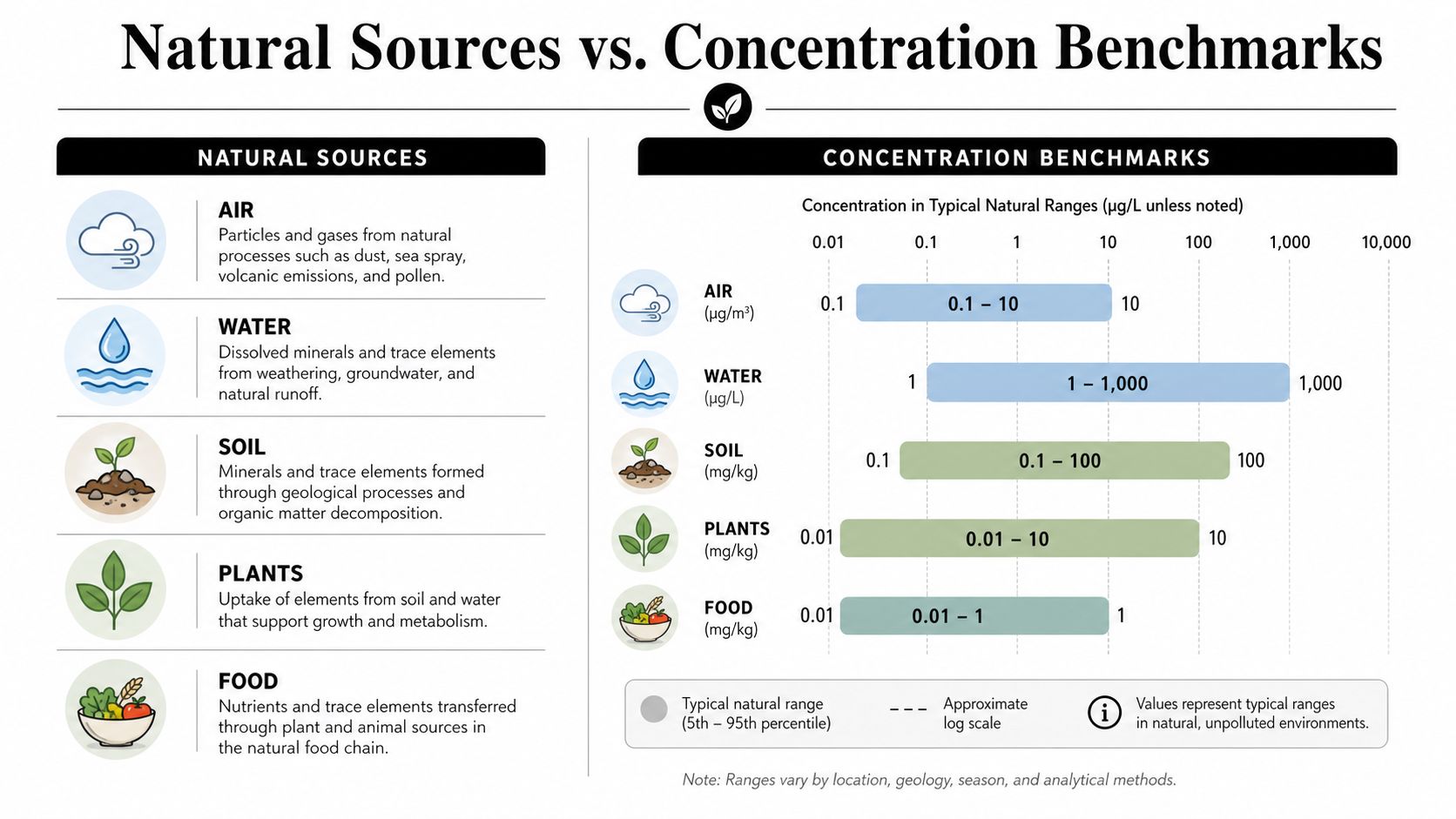
Humulene shows up in a wide range of botanical materials, which is part of why its odor signature feels so familiar across hops, herbs, and cannabis. For sourcing, the important question is less “does the plant contain humulene” and more “what else comes with it.” Botanical origin changes the accompanying congener profile, and that can matter more than the humulene itself in a finished formulation.
Source choice changes the input profile
Hops, sage, ginseng, and specific cannabis chemovars all contribute humulene, but not in the same surrounding chemical context. A botanical extract can carry extra aroma complexity that may be useful in a natural-flavor formulation and annoying in a clean, strain-replication workstream. A purified input gives you more consistency, but it also strips away some of the nuanced character that can make a blend feel authentic.
That trade-off is central to scale-up. If a brand needs the same cartridge to taste the same from batch to batch, isolate purity and input consistency matter more than botanical romance. If the goal is a more complex natural profile, a fuller botanical fraction can be useful, but it will need tighter QC and a more disciplined sensory spec.
How to evaluate inputs
Certificates of analysis should tell you whether the material matches the intended use, but the primary value is in comparing lots over time. Look for consistency in identity, purity, and contaminant screening, then check whether the aroma still fits the formulation target after blending. The source material matters because humulene doesn't live alone in nature, and those companion compounds can either support or clutter the final SKU.
A sourcing decision usually comes down to three practical filters.
- Consistency: choose the input that stays closest to spec across lots.
- Complexity: choose the input that matches the flavor architecture you want.
- Compatibility: choose the input that won't fight your hardware or carrier system.
Where it fits commercially
For cartridge and concentrate manufacturers, humulene is often most useful when the source strategy matches the product strategy. Botanical-derived inputs can support a natural story, while highly consistent terpene fractions help keep a strain-inspired line from drifting. The point isn't to chase purity for its own sake. The point is to choose the input that gives you repeatable sensory control.
Strain-Inspired Blend Scenarios and Pairing Strategies
The fastest way to understand humulene in formulation is to watch it do its job inside a real blend. It rarely needs to be the loudest terpene in the formula. Its value comes from making the rest of the profile feel more organized, more grounded, and less abrupt.
Earthy OG Kush style profile
In an OG Kush-style blend, humulene sits comfortably with myrcene and caryophyllene. Myrcene gives the profile a softer, more relaxed body, while caryophyllene adds a spicy edge that helps the blend feel complete. Humulene ties those pieces together by reinforcing the earthy finish, so the result reads as dense and resinous rather than flat.
This type of profile works well in distillate when the oil needs more personality without moving into sweet territory. In live resin, the same blend should be used more sparingly because the extract already carries its own base-note structure.
Spicy haze-inspired profile
A haze-inspired blend is a different assignment. Pair humulene with pinene and terpinolene, and the role shifts from heavy anchor to stabilizing backdrop. The brighter terpenes do the opening work, while humulene keeps the finish from becoming too sharp or thin.
This is a good choice when the brand wants an herbaceous, active-sounding aroma without crossing into citrus candy. Keep the humulene proportion modest, because too much base-note weight can bury the lift that makes haze profiles recognizable.
Blend insight: humulene is most effective when the top notes have enough energy to stand on their own.
Tropical fruit-forward profile
Humulene can also support a fruit-forward blend built around limonene and linalool. In that setting, it doesn't make the product taste hoppy. It gives the sweetness a drier frame, which can help a tropical profile feel more adult and less confectionary.
That matters for SKUs aimed at customers who want bright aroma without a sticky finish. If limonene is doing all the work, the blend can feel loud but temporary. Humulene helps the aroma linger long enough to feel intentional.
How to scale the idea
For custom development, run micro-batches and test them in the same hardware you plan to ship. Humulene is useful precisely because it reveals imbalance quickly. If it muddies the top note, the blend is too heavy. If it disappears, the formula is too thin. That feedback loop is one of the simplest ways to move from a strain idea to a production-ready profile.
Safety Testing and Regulatory Considerations
Professional terpene products live or die on documentation. If a humulene-containing formula is going into cartridges, concentrates, or bulk formulation supply, the quality file needs to be clean before the sales conversation starts. That means residual solvent screening, heavy metal analysis, and pesticide panels for botanical-derived inputs, along with the usual identity and purity checks required by the buyer's spec.
What should be on file
At minimum, wholesale and retail channels usually expect a current certificate of analysis and a safety data sheet. Those documents help distributors verify what they're handling and help brands prove the input matches the intended use. If the terpene is going into a regulated cannabis or hemp workflow, the documentation should also align with the state or market requirements that govern finished products.
What to say, and what not to say
Functional claims around anti-inflammatory, analgesic, or appetite-related benefits need careful handling. The evidence base for humulene is still mostly preclinical, so packaging and product pages should stay away from disease language and avoid implying medical outcomes. The safer route is to describe sensory function, formulation role, and general product positioning without crossing into therapeutic promises.
A workable compliance mindset
Treat humulene the same way you'd treat any functional input with a strong story and incomplete human data. Use the data to inform formulation, not to inflate the claim set. That keeps your product language aligned with what buyers, regulators, and B2B customers can all defend.
The compliance checklist is a practical reference when your team is assembling product files for a humulene-forward SKU.

If you're building a humulene-forward cartridge, concentrate, or strain-inspired blend, Gold Coast Terpenes supplies terpene blends, isolates, and formulation inputs that can help you dial in the aroma and base-note structure with more consistency. Visit Gold Coast Terpenes to review terpene options, technical resources, and formulation support for your next SKU.