
You're at the bench with a finished distillate, a flavor target that sounds simple on paper, and a cart deadline that doesn't care how many trials you already lost to separation, clogging, or a muted top note. That's where Cherry Cobbler gets interesting for formulation work. It isn't just another dessert name, it's a strain profile with published cannabinoid and terpene markers that can be translated into a cartridge recipe if you treat the lab data like a map, not a label.
The practical value of a Cherry Cobbler strain terpene profile for vape cartridges comes from its repeatable sensory shape, not from chasing every volatile in the original flower. The strain is commonly described as 80% indica / 20% sativa, with a Cookies x Cherry Pie lineage and an average potency often placed at 24%–26% THC in strain databases, while a separate sample on Leafly listed 17% THC and 1% CBG, which shows how much phenotype and grow conditions can move the result in practice (AllBud). That makes the profile relevant for formulating for distillate and replicating flavor of dessert-forward flower in hardware that punishes weak aromatics.
Why Cherry Cobbler Matters for Cartridge Formulators
A Cherry Cobbler order usually shows up after the base oil is already built and the key problem is whether the profile still reads as Cherry Cobbler through a cart. That is a different task from matching flower on a jar label. In a cartridge, the oil has to hold up to heat, wicking, storage, and rough handling, so the flavor has to stay recognizable even when the distillate carries most of the load.
Cherry Cobbler matters because it behaves like a dessert cultivar, not a gassy or pine-led one. Dessert profiles usually depend on a layered sweet front end and a rounded baked midsection, so the formulator has to work with top, mid, and base notes, not just add more terpene. Pine-heavy profiles can tolerate sharper edges. A cherry-pastry profile cannot, because one stray solvent note, too much diesel character, or a harsh terpene spike will pull the whole cart out of shape.
For product planning, that makes the strain useful in live-resin style dessert carts, 510-thread all-in-ones, and infused disposables where the first puff has to tell the same sensory story every time. It also explains why shortcut blends fail. If the top note is too thin, the cart tastes like generic fruit. If the mid is too aggressive, it turns peppery and loses the cobbler character.
Practical rule: replicate the marker compounds, not the full lab report. The lab sheet tells you what the flower measured. The cart has to deliver the same story under heat.
A Cherry Cobbler-inspired build works best when the base oil is clean and neutral enough to let the flavor speak, but not so stripped that the profile feels hollow. For a pastry-forward reference point, compare it with the Cherry Pie terpene profile, because Cherry Cobbler's flavor logic makes more sense beside its dessert-line relatives.
Genetics, Potency, and the Sensory Baseline
A Cherry Cobbler cart starts with the published cultivar profile, because that profile sets the ceiling for what the blend has to carry. The common description is Cookies x Cherry Pie, with an 80% indica / 20% sativa lean and a potency range often placed at 24%–26% THC (AllBud). In practical formulation terms, a THC-forward base oil needs enough flavor mass to stay noticeable under that cannabinoid load.
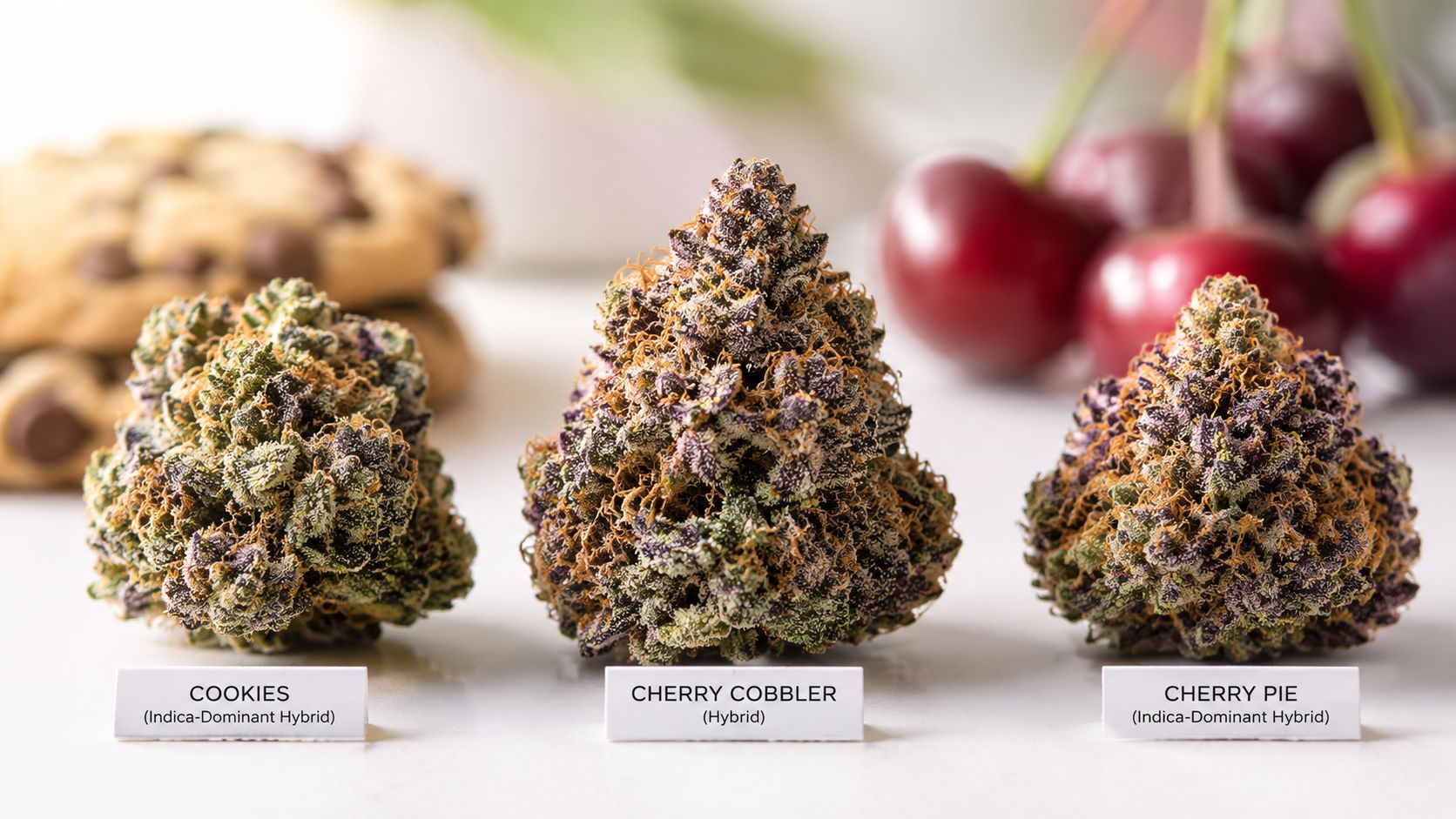
That potency level puts pressure on the flavor system. A stronger cannabinoid base tends to mute weak aromatics, so a light terpene overlay gets buried fast. The practical risk is simple, the cart still tests as strong, but the sensory read lands flat, thin, or vaguely sweet instead of clearly dessert-driven.
What the lineage tells the nose
Cookies genetics usually push sweetness, baked dough, and a dense dessert body. Cherry Pie adds the fruit side, but the useful part for a cart maker is the pastry-fruit tension, not a candy cherry shortcut. That lineage points the profile toward stone fruit, pie crust, and sweet cherry skin, with less room for pine or fuel to take over.
A formulator can use that baseline as a quick filter. A blend that reads like citrus soda is drifting away from the strain's character. A blend that smells like burnt sugar with no fruit lift has too much weight in the middle, and it will come apart in hardware. The sharper the hardware runs, the faster that imbalance shows up.
The sensory target stays straightforward. Cherry Cobbler wants a sweet, cherry-forward opening, a warm baked mid, and a soft, lingering dessert finish. It does not want a sharp conifer top, and it does not want diesel trying to pass as pastry. That is the point of checking flower maturity, because aromatic quality in the input material shapes the finished cart, as covered in trichomes and when to harvest.
A Cherry Cobbler cart should read like baked cherry and warm crust, not like a fruit cleaner with THC.
Terpene Profile Breakdown with GC-MS Targets
Cherry Cobbler's analytically useful signature sits in the same three-compound cluster across multiple references, beta-caryophyllene, limonene, and myrcene. One lab report measured 24.5% THC alongside 4.7 mg/g beta-caryophyllene, 3.4 mg/g limonene, and 2.8 mg/g beta-myrcene (Hytiva). Another guide places total terpene content around 1.5% to 3.0% by weight, with caryophyllene often at 0.3% to 0.8% and limonene at 0.2% to 0.6% (Joint Commerce).
How to assign note positions
Beta-caryophyllene is the mid note. It brings the peppery, baked spice line that keeps a dessert profile from reading as syrupy. In cart work, it gives the blend structure, and because it shows up consistently in Cherry Cobbler references, it belongs in the center of the formula rather than at the edges.
Limonene belongs in the top note. It adds the bright fruit lift that keeps the profile from settling into flat dough. Used carefully, it can suggest cherry skin and zest without turning the cart into a citrus product.
Myrcene carries the base. It deepens the body, pushes the aroma toward pastry and ripe fruit, and gives the finish some weight. It also tends to make the profile feel softer, which is useful in a dessert SKU but risky if you overdo it.
Cherry Cobbler Terpene Targets in a Finished Cart
| Compound | Target % in Cart | Aroma Role | Note Position |
|---|---|---|---|
| Beta-caryophyllene | Moderate presence | Pepper, baked spice, dough crust | Mid |
| Limonene | Low to moderate presence | Bright fruit lift, cherry skin, top freshness | Top |
| Myrcene | Low to moderate presence | Ripe fruit depth, pastry body, soft finish | Base |
A lab-facing way to read those targets is simple. The cart should preserve the caryophyllene-led spine, keep limonene high enough to register on the first pull, and let myrcene round the edge without turning the oil muddy. If the GC-MS output shows limonene dominating while caryophyllene is thin, the blend will drift toward candy fruit. If myrcene overwhelms everything, the cart will feel heavy and dull.
For analytic workflow, use chromatography testing guidance when you want the blend to land on repeat instead of luck. The point is to verify that the finished oil preserves the same dominant signals in a cartridge-friendly form.
Building a Distillate Recipe with Isolates and Strain Blends
A workable Cherry Cobbler cart starts with a winterized high-cannabinoid distillate base, then layers in a strain-inspired terpene blend to establish the core aroma, and finally uses isolates to trim the GC-MS shape. That division matters because no single input does every job cleanly. The blend gives the cartridge its recognizable family resemblance, while the isolates let you correct the edges without tearing the formula apart and rebuilding it from zero.
A lab-first formulation should be built around the published profile, not around a vague dessert label. If the target data point shows strong beta-caryophyllene with enough limonene to stay bright and myrcene to soften the finish, the recipe needs to reflect that balance in the tank, not just on paper.
A bench-friendly starting point
For a first-pass 510 cart, I'd stay in the 5% to 8% total terpene window and build the rest as distillate. That range usually gives enough aromatic lift for the profile to register in hardware without thinning the oil so much that it starts misbehaving. Push higher than that and the cart can turn harsh, seep at the seals, or read as over-fragranced after heat stress.
A practical starting batch for 200 mL is straightforward. Use a high-cannabinoid distillate base, then add a Cherry Cobbler-inspired blend as the main flavor driver, such as the strain profile option offered by Gold Coast Terpenes, and then fine-tune with beta-caryophyllene, limonene, and myrcene isolates as needed. If the blend already sits close to the target, one correction may be enough. For a fuller walk-through of ratio handling, see the distillate and terpene mixing guide.
Blend-only versus isolate-driven
A blend-only approach is cleaner when QA bandwidth is limited. It cuts handling time, reduces the number of variables, and usually gives a more forgiving sensory result. The trade-off is control. If the batch lands a little too bright or a little too heavy, there is less room to steer it back.
An isolate-driven approach fits better when the goal is to match a published lab signature. It takes more measuring, more GC-MS verification, and more sensory correction, but it lets you move the formula toward a specific aroma map with more precision. That is the better call when the SKU has to repeat across several production runs and still stay close to the same cherry, pastry, and spice balance.
If the first pull tastes right but the oil feels too thin, fix viscosity in the formulation. The cart either flows or it does not.
In practice, the cleanest build starts with a strain blend, then uses limonene to sharpen the top note, beta-caryophyllene to reinforce the mid, and only then decides whether myrcene should be pushed up or held back. That order keeps the recipe anchored to the lab target instead of chasing flavor by accident.
Winterization, Diluents, and Hardware Compatibility
Not every Cherry Cobbler formula fails for the same reason. Some batches are technically correct and still perform badly because the oil doesn't match the hardware. That's why winterization, diluent choice, and wick behavior matter as much as the flavor itself.
Choosing the base and the cut
A natural cannabinoid source tends to preserve terpene character better, but it can also carry more viscosity variation. An isolated cannabinoid source is easier to standardize, which helps when you're chasing consistent cart fill and burn behavior. The right choice depends on whether you value terpene retention or process repeatability more in that SKU.
Terpenes themselves can act as partial diluents, especially in thick distillate. That helps flow, but it also lowers the oil's resistance to heat, so the hardware can show flavor faster and burn through the top note sooner. If the base still won't move, a true diluent can help, but that comes with a flavor trade-off you need to accept on purpose.
How the hardware reacts
A myrcene-heavy blend can clog ceramic cores more easily at low wattage because it makes the oil feel heavier in the wick path. A limonene-heavy blend can burn hotter in cotton wicks and can make the first hits feel sharper than the formula should. A caryophyllene-rich profile usually behaves more cleanly across 510 form factors, which is one reason it's such a useful mid note for dessert cartridges.
For that reason, hardware compatibility should be treated as a formulation variable, not an afterthought. If the SKU is going into a disposable with a tight airflow path, a lighter cut often performs better. If it's going into a standard 510 with decent wicking, you can usually hold more terpene body.
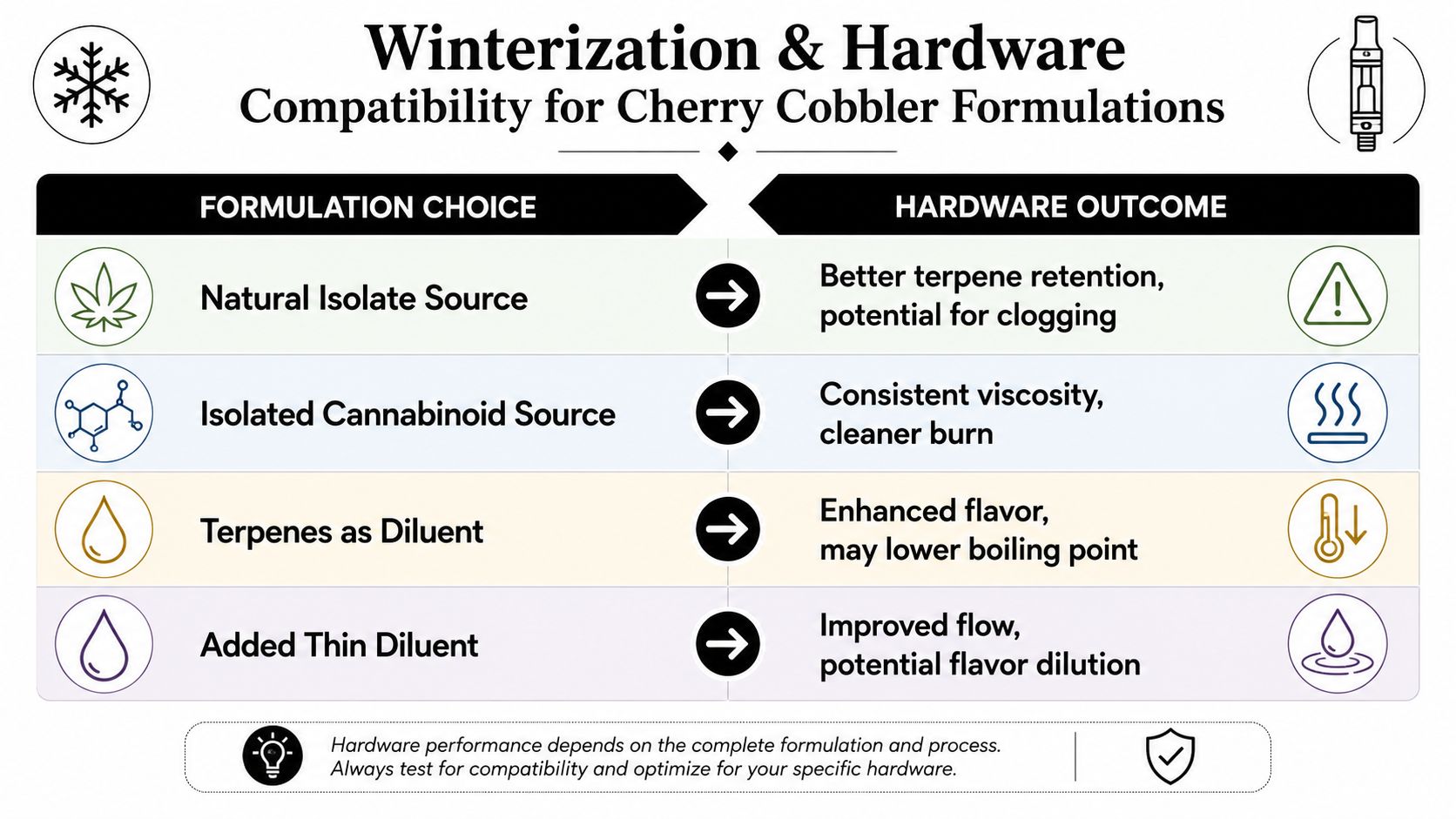
The cleanest decision rule is simple. Choose a heavier terpene build if the hardware is forgiving and the climate is stable. Choose a diluted multi-pass build if you need reliable flow, long shelf stability, and less sensitivity to temperature swings. That's the difference between a cart that looks good at fill and a cart that still tastes right after sitting in a pocket.
Troubleshooting Flavor Drift, Harshness, and Separation
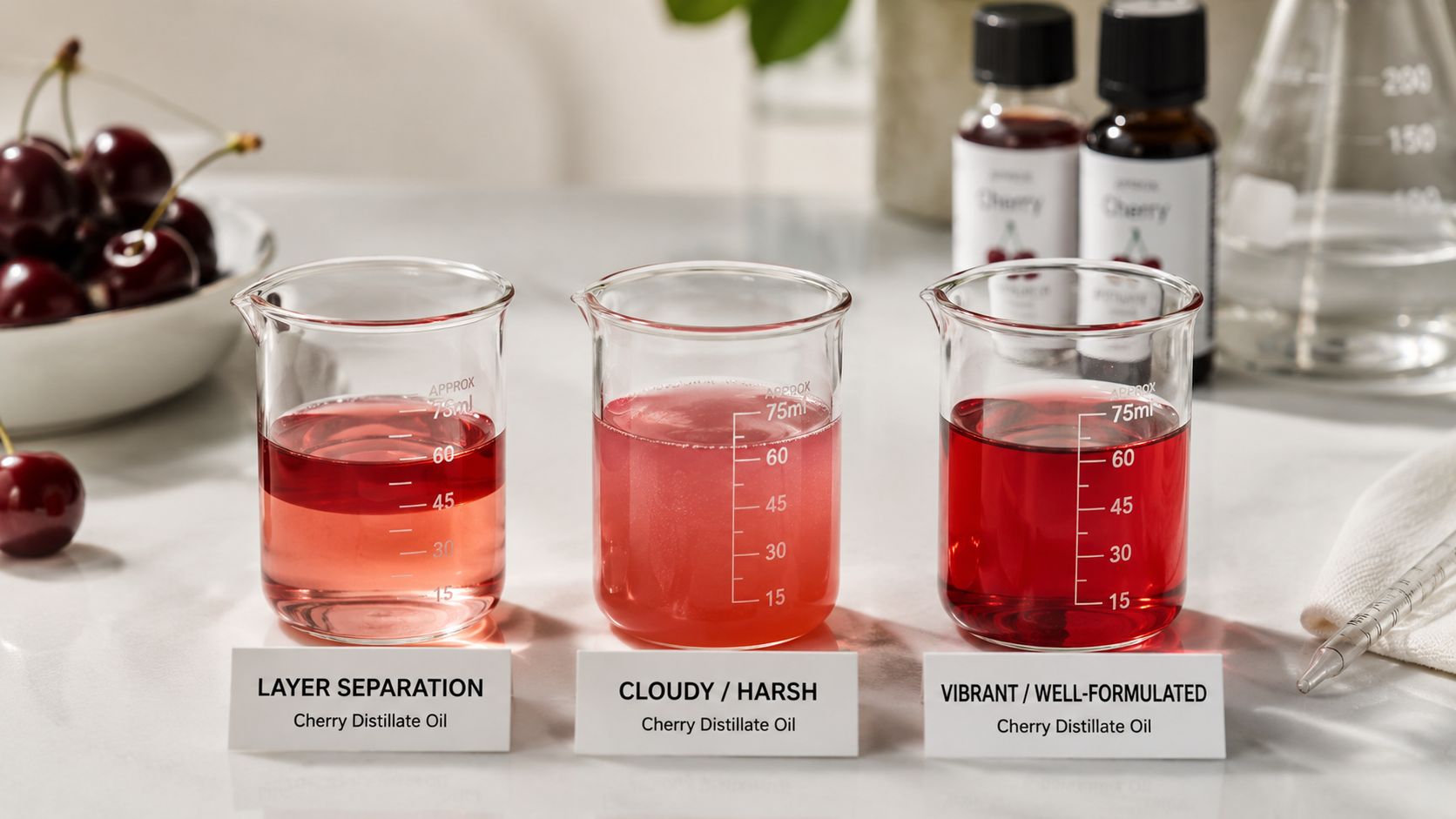
The first ten batches of a dessert-style cart usually fail in the same three ways. The flavor fades, the oil turns cloudy or separates, or the hit gets harsh before the formula looks obviously wrong. Cherry Cobbler is no exception, because its fruit top, spice mid, and pastry base each behave differently under heat and storage.
Read the symptom before you fix the batch
If the cart tastes bright on day one and flat two weeks later, the usual culprit is oxidation in the lighter fruit notes, especially the limonene side of the profile. The fix is not to dump in more top note blindly. Tighten oxygen exposure during mixing, reduce headspace, and check whether the top-note correction was already too aggressive.
If the oil starts to cloud or show separation in cold storage, the issue is often a solubility problem in the heavier portion of the formula. Myrcene can drop out of solution when the build is too cold or the matrix is too crowded. Warm the batch gently, remix thoroughly, and verify whether the terpene load is too high for that base.
If the cart hits harsh at 3.2 V, the cause is often a caryophyllene overload paired with a low-wattage pocketing problem in the hardware. That can make the profile feel peppery in a way that isn't true to the flower. The fix is to back off the mid note slightly and reassess the wick behavior before changing the whole recipe.
One-action fixes that don't waste the batch
- Flavor drift: Reduce air exposure and correct the top note in the next pass, don't keep stacking limonene.
- Separation: Warm, remix, and retest viscosity before blaming the terpene supplier.
- Harshness: Lower the caryophyllene load a little and test the same oil in a different cart body.
A good troubleshooting habit is to change one variable at a time. That sounds basic, but most cartridge defects come from three variables moving at once. When you isolate the fault, the profile becomes predictable again.
Positioning the SKU and Telling the Sensory Story
Cherry Cobbler sells best when the brand story matches the oil's actual behavior. The SKU should read as dessert-forward, indica-leaning, and suited to an evening occasion, with hardware that can handle a fuller oil body without choking the flavor. That positioning fits the published 80% indica / 20% sativa lean and the strain's sweet cherry-pastry identity.
The copy should stay sensory and concrete. Good language sounds like baked cherry, warm pastry, sweet crust, and soft finish. Bad language sounds like strain folklore, medical suggestion, or generic “relaxing vibes” copy that could belong to any cart on the shelf.
A simple briefing note for marketing
Give the branding team the dominant compounds and the aroma logic in one page. Tell them that beta-caryophyllene carries the spice and crust, limonene lifts the cherry top, and myrcene rounds the body. That keeps the package text honest and stops the SKU from drifting into a generic fruit dessert story.
Use a product-page reference, a formulation guide, and a profile comparison as internal support. The Cherry Pie terpene profile, the mixing guide, and the chromatography testing guide give the team enough context to brief the label without pushing the copy into lab-report language.
Brand language should describe what the cart tastes like, not what someone hopes it will feel like.
FAQs on Cherry Cobbler Strain-Inspired Terpene Formulation
What total terpene percentage should I target in a 510 cart? Start in the 5% to 8% range and only move higher if the hardware and shelf tests stay clean. Push much beyond that, and harshness, wicking problems, and leakage become harder to control, especially in dessert profiles that already carry a lot of aromatic body.
What testing should I ask for on the terpene side? Request a full terpene panel, plus residual solvents and pesticide screening from the supplier side. Then compare that output against your own finished-oil checks so you can tell whether the problem sits in the raw material or in the blend process. Use the lab workflow you already set up for chromatography review when you validate the finished cart.
How should I label the SKU? Keep the label sensory and avoid medical claims. Use the dominant compound story only as internal support, then let the package speak in terms like baked cherry, sweet pastry, and dessert finish so the copy matches the cart.
The final call should come from how the oil behaves in hardware. If the flavor stays bright, the draw stays open, and the oil does not separate after filling and storage, the recipe is on the right track.
A CTA for Gold Coast Terpenes. If you're building a Cherry Cobbler cart, start with a strain-inspired blend, verify it against your GC-MS target, and then tune the recipe with isolates or diluents only where the hardware forces you to.