
You're probably in one of two situations right now. Either your team already has a fruit-forward cartridge on the roadmap and the first bench samples came out flat, harsh, or generic, or you're trying to turn a popular flower profile into something manufacturable without creating a batch-to-batch headache.
The jelly rancher strain is a good stress test for formulation discipline. It isn't hard because it's loud. It's hard because the profile sits in a narrow zone between candy, berry, citrus, and spice. Push the blend too sweet and it starts reading like confectionery flavoring instead of cannabis. Push it too earthy and the identity disappears.
For commercial developers, that's the primary job. Not copying dispensary menu language. Building a repeatable aromatic system that survives mixing, filling, storage, and actual hardware.
The Jelly Rancher Blueprint for Product Formulation
Treat the jelly rancher strain like a product spec, not a strain story. The useful starting point is its chassis: Jelly Rancher is a 70% sativa and 30% indica cross of Notorious THC x Very Cherry, with average THC content ranging from 27% to 28% according to AllBud's Jelly Rancher listing.
That matters because the profile people expect from this cultivar is not heavy, gassy, or sedative in character. The commercial translation is straightforward. If your base oil, terpene load, or hardware setup drags the blend toward dense resin, cooked sugar, or woody finish, you're no longer building a faithful jelly rancher strain-inspired terpene blend for vape cartridges. You're building a different SKU that only borrows the name.
Read the genetics like a formulation brief
Notorious THC contributes potency and intensity. Very Cherry points you toward the fruit axis. The 70/30 split tells you where to position the final sensory result. You want lift in the aroma, a bright opening in the first draw, and enough depth underneath to keep the blend from tasting thin.
For formulators, that means three decisions come early:
- Choose a neutral distillate base that won't bury fruit notes.
- Build aroma in layers rather than relying on a single dominant sweet terpene.
- Control finish, because the aftertaste is where failed candy profiles usually collapse into pepper, bitterness, or generic botanical sweetness.
A lot of teams skip that first step and jump straight into mixing isolates. That's usually a mistake. If the base oil already has a loud residual note, your terpene blend has to fight it, and the result often tastes crowded instead of accurate.
What works and what doesn't
Here's the practical trade-off.
| Approach | What it does well | Where it breaks |
|---|---|---|
| Neutral oil plus layered terpene blend | Preserves candy-fruit definition | Can feel too light if base notes are underbuilt |
| Heavier native oil plus fruit-forward terpene top notes | Adds realism and depth | Often muddies the opening aroma |
| Sweet-leaning botanical profile without cannabis structure | Smells bold on first sniff | Tastes artificial in a cart |
Practical rule: Build jelly rancher strain formulations from structure first, sweetness second.
If you need a refresher on how cultivar chemistry maps to aroma design, the breakdown in Terpenes in weed is useful because it keeps the focus on terpene function instead of consumer mythology.
The baseline most teams miss
The strain's high-THC identity shapes user expectation even before the cart is tested. Buyers expect a profile that feels sharp, clear, and fruit-led in aroma delivery. In product terms, that means your blend should open clean, stay recognizable under heat, and avoid the syrupy finish that makes fruit carts blur together on a shelf.
That's the blueprint. Before you decide ratios, decide the lane. Jelly Rancher should read as fruit candy built on cannabis depth, not candy flavor poured over cannabis oil.
Decoding the Jelly Rancher Strain Terpene Profile
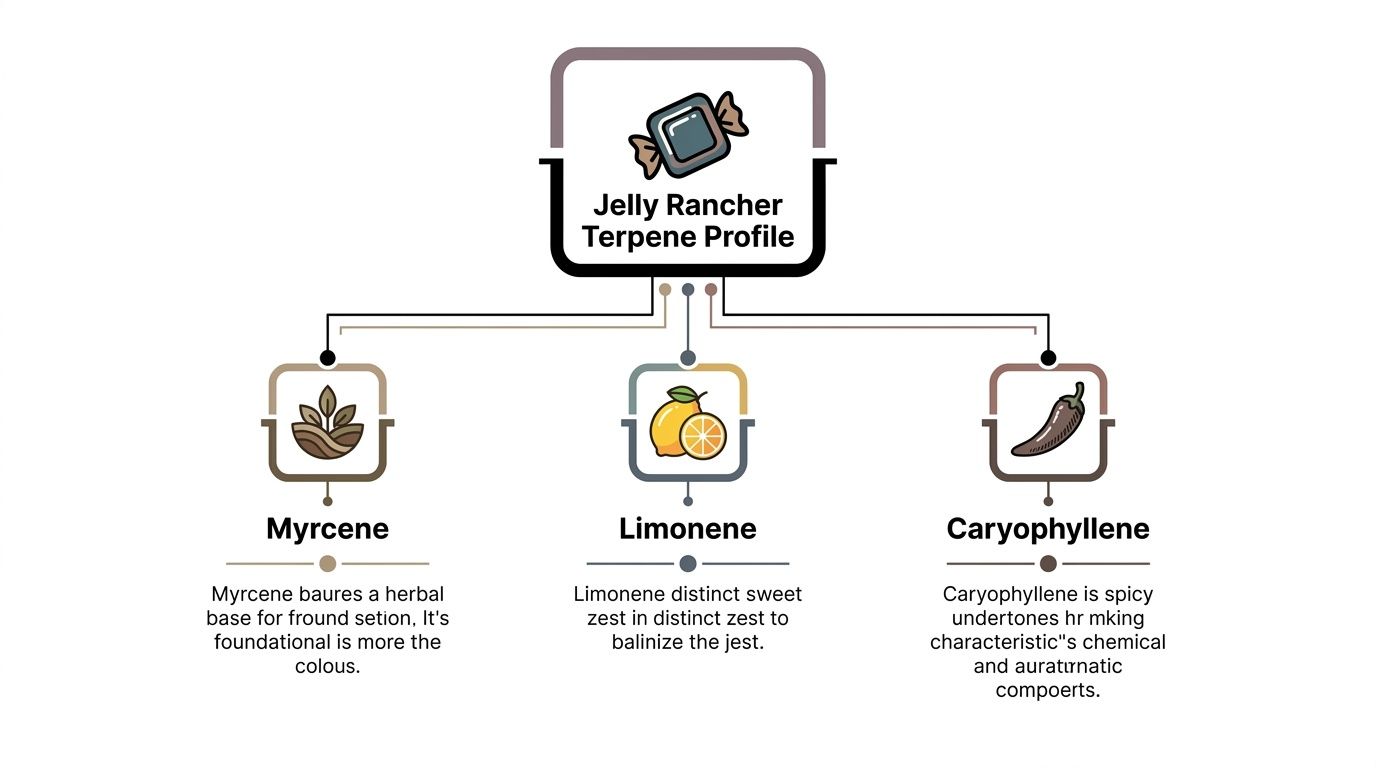
The jelly rancher strain is easier to replicate once you stop calling it “sweet” and start mapping its note structure. The verified core is clear: the profile is dominated by caryophyllene, with myrcene and limonene supporting it, and the profile is associated with euphoria and focus among 68% of Leafly users in the strain listing on Leafly's Jelly Rancher page.
For formulation work, the effect language isn't the important part. The important part is what the chemistry suggests about sensory hierarchy. Caryophyllene gives the blend its anchor. Myrcene rounds the middle. Limonene pulls the top open.
Top notes, middle notes, base notes
Think about the profile the same way a flavor chemist thinks about a beverage aroma.
| Note layer | Main role in a jelly rancher strain-inspired terpene blend | Risk if overused |
|---|---|---|
| Top note | Bright candy-citrus lift, fast recognition | Volatilizes quickly and can feel perfumy |
| Mid note | Fruit body, softness, blend cohesion | Can turn jammy or dull |
| Base note | Cannabis realism, spice, depth, finish | Can dominate and mute fruit identity |
Limonene sits in the top-note role. It gives the first impression of zest and candy brightness. In the wrong ratio, it turns the profile into generic citrus.
Myrcene works more like a mid-note bridge here. It helps convert a sharp opening into a rounded fruit body. Without that bridge, the blend often smells correct from the bottle but tastes hollow in vapor.
Caryophyllene is the base note that keeps the profile from reading like non-cannabis flavoring. It adds peppery depth and dry structure. That's why jelly rancher strain formulations often fail when teams try to “clean up” the spice too aggressively. Remove too much base note and the profile loses credibility.
A good Jelly Rancher replica should smell like candy from a distance and like cannabis on exhale.
The aroma map that actually helps in R&D
When people describe this cultivar as berry, citrus, and candy-like, they're describing a combined impression, not one terpene doing all the work. The blend is successful when the layers arrive in sequence.
A useful sensory map looks like this:
- Opening inhale: citrus brightness, sweet fruit edge
- Mid-palate vapor: strawberry and cherry-like softness
- Finish: dry spice, light earth, cannabis realism
That sequence matters more than any one note. If the finish arrives too early, the product tastes harsh. If the top lingers without a grounded finish, the cart tastes artificial.
Why this profile is commercially useful
Fruit-forward strain profiles are common. Fruit-forward profiles with recognizable cannabis structure are harder to manufacture. That's why this cultivar is a useful benchmark for a formulation guide for jelly rancher strain profiles for cannabis product formulation.
The most practical reference point for teams trying to sharpen their sensory vocabulary is this guide on how terpene strain profiles define cannabis strains. It helps explain why two “berry” profiles can perform very differently once they're heated in hardware.
If your bench sample only smells fruity, it's incomplete. If it only tastes spicy and resinous, it's off target. Jelly Rancher sits in the tension between those two outcomes.
A Formulation Guide for Replicating Jelly Rancher Flavor
Fruit-forward vape development usually fails in one of three places. The first sample is too citrus-heavy. The second overcorrects into dense berry syrup. The third gets closer on aroma but falls apart in the cart because the profile wasn't built for manufacturing.
That's why the jelly rancher strain works better as a layering exercise than as a single-flavor target.
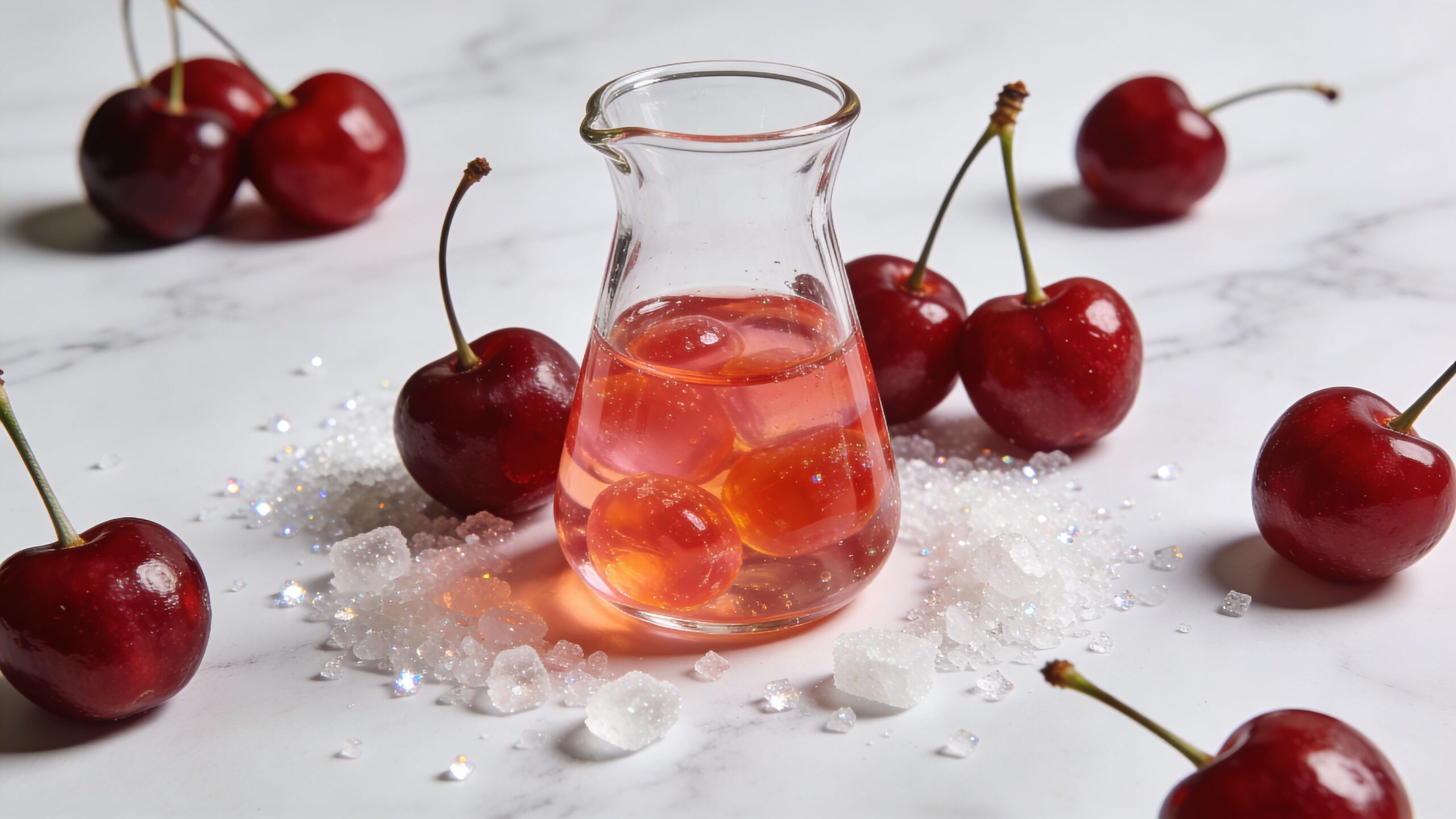
Demand also supports the effort. A market summary cited in the Joint Commerce guide reports nearly 30% growth in user preference for fruit-forward profiles in regional U.S. markets, driven by cherry-grape candy aroma and berry, citrus, and cotton candy flavors in this style of cultivar, as noted in the Joint Commerce strain guide.
Start with structure, not sweetness
The verified data gives one useful formulation benchmark for mimicking the profile: 40-50% caryophyllene isolate, 20% limonene, and 15% myrcene as a starting frame in a terpene blend associated with Jelly Rancher-style aroma construction. Use that as a directional prototype, not a universal final formula.
That range works because it respects the note hierarchy:
- Caryophyllene first for dry, peppered cannabis structure
- Limonene second for top-end sparkle
- Myrcene third for body and fruit roundness
The remaining share should be treated as adjustment space for nuance, not an excuse to stuff in more sweetness. Cultivation groups that miss this profile do so by trying to “flavor” their way into recognition.
Bench approach for first-pass samples
For a jelly rancher strain-inspired terpene blend for distillate, I'd test in small controlled variants rather than one heroic formula.
Sample A leans true-to-strain. Keep caryophyllene near the higher end of the benchmark and let fruit sit on top of cannabis depth.
Sample B is the retail-facing version. Slightly softer base, brighter opening, cleaner finish.
Sample C is the shelf test sample. Same aromatic direction, but tuned for heat stability and repeated pulls rather than first-hit drama.
That last sample often wins. Not because it smells the loudest in a jar, but because it still tastes coherent after filling, storage, and use.
Don't evaluate this profile only on cold aroma. Jelly Rancher has to survive heat without turning into generic sweet vapor.
A ratio tool helps here. If your team is iterating multiple versions, a terpene mixing calculator for exact ratio planning makes it easier to document changes instead of relying on handwritten adjustments that nobody can reproduce later.
Build versus buy
There are two sensible paths.
| Path | Best use case | Main advantage | Main trade-off |
|---|---|---|---|
| Build from isolates | Internal R&D teams tuning a house style | Full control over note balance | More bench time, more drift risk |
| Use a strain-specific blend | Production teams prioritizing repeatability | Faster scale-up and fewer interpretation errors | Less room for custom signature changes |
A supplier option such as Gold Coast Terpenes fits the second path because it provides THC-free, strain-specific terpene blends and isolates for cartridges and concentrates. That's useful when you need a stable starting point, then want to make small brand-level adjustments around the edges instead of rebuilding the profile from zero.
Here's a useful reference clip before you lock your first commercial version:
What improves the profile and what ruins it
What usually improves it:
- A dry, cannabis-true finish that keeps the candy note believable
- Moderate top-note brightness instead of exaggerated citrus
- A rounded middle so the flavor doesn't disappear after the first pull
What usually ruins it:
- Overloading sweet fruit accents until the profile tastes synthetic
- Removing too much caryophyllene in an attempt to make it smoother
- Judging success by bottle aroma alone instead of vapor performance
For commercial launch, the target isn't “most flavorful.” It's most recognizable after processing.
Optimizing Formulations for Distillate and Vape Cartridges
A strong bench blend can still fail in production if the cart setup cooks off the top notes or if the oil system is too thick to wick consistently. That's where jelly rancher strain replication gets practical. The profile is fragile at the top and unforgiving at the finish.
Extractor-side data gives one important clue. Jelly Rancher's high-resin flower is associated with 85-92% terpene retention post-purge in BHO and live rosin workflows, according to the cultivation summary on GrowDiaries' Jelly Rancher page. For formulators, that makes it a strong model for flavor-driven vape products, because the target profile is already tied to good terpene carry-through.
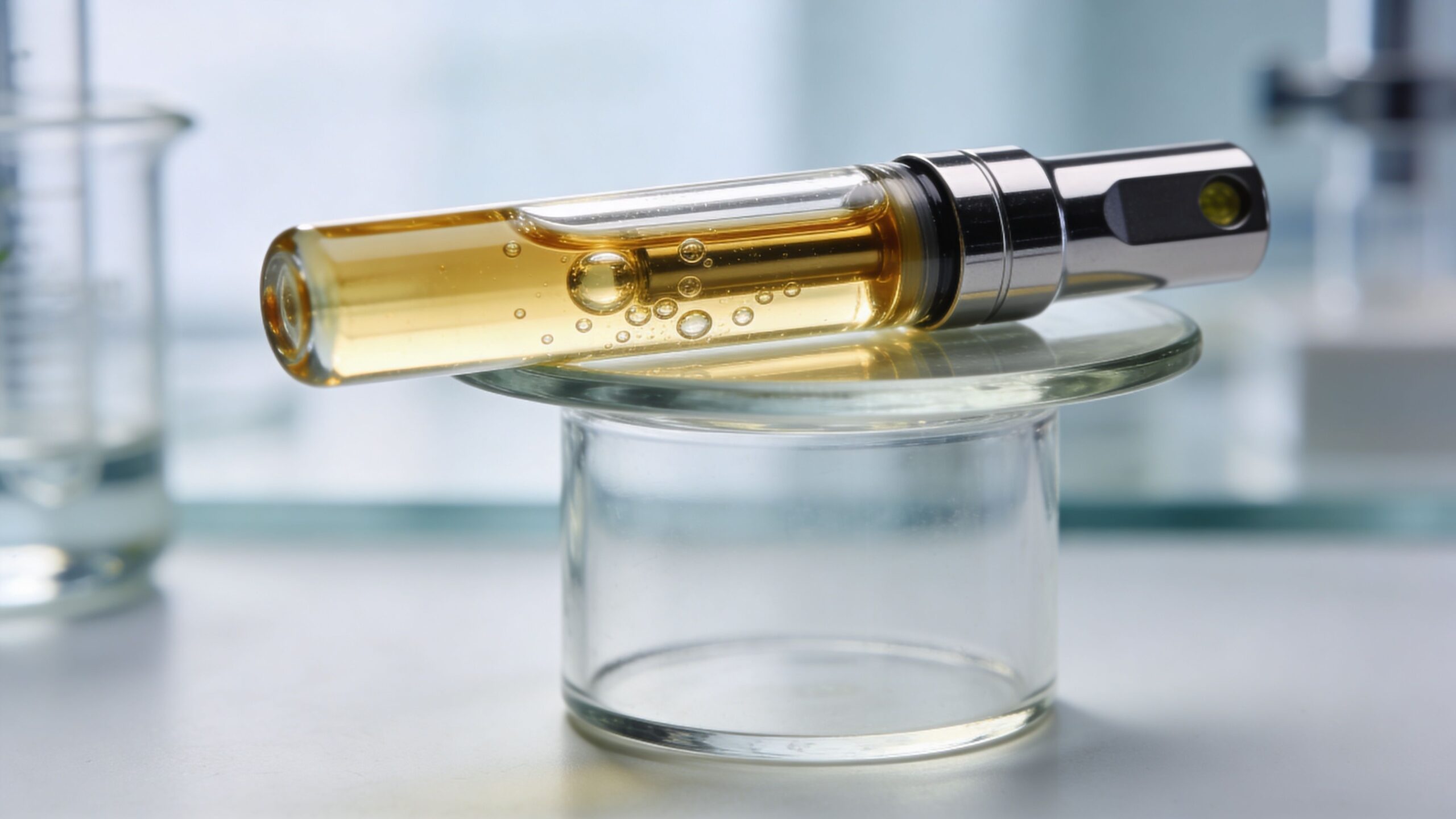
Hardware decides whether your top notes survive
If you're building a fruit-heavy profile, hardware isn't a packaging choice. It's part of the formula.
Ceramic coil cartridges usually make more sense for this aromatic direction because they deliver more even heating and reduce the chance of scorching the bright notes early. A cart that runs too hot can flatten limonene-led brightness and pull the blend toward pepper and cooked sweetness.
That doesn't mean every ceramic setup performs well. Some run clean but underdeliver flavor density. The right choice is the hardware that preserves note separation across repeated pulls, not just the hardware that gives the biggest first hit.
The first puff sells the profile. The fifth puff decides whether the customer buys it again.
Viscosity and dilution choices
Teams still lose good terpene work by trying to force flow with the wrong additives. If the goal is a jelly rancher strain-inspired terpene blend for vape cartridges, adding VG, PG, or MCT usually creates more problems than it solves. Those materials can interfere with clarity, mute note definition, or introduce a finish that doesn't belong in the profile.
A cleaner route is to tune the oil with terpene content, processing temperature, and filling conditions rather than loading in non-native diluents. Pure, uncut terpene blends have an operational advantage in these instances. You get aroma contribution and flow adjustment from the same ingredient system.
For teams troubleshooting oil movement, this guide on thinning distillate for cartridges is relevant because it frames viscosity as a formulation variable, not just a filling problem.
Mixing and holding practices
Homogenization matters more with fruit-led profiles because sensory imbalance shows up fast. If one part of the batch gets extra top note and another gets extra base, your packaged product won't just vary slightly. It will taste like two different SKUs.
Use disciplined handling:
- Warm only as much as needed to get a uniform blend
- Mix until visually and aromatically consistent
- Minimize open exposure time so volatile notes aren't lost before filling
- Fill promptly once the blend is homogeneous
A short internal hold can be useful for evaluating separation risk, but long open-air bench time isn't. This profile rewards speed and controlled handling.
What to protect during scale-up
Three things are worth guarding:
| Priority | Why it matters for Jelly Rancher-style carts |
|---|---|
| Top-note retention | Keeps the fruit-candy identity intact |
| Mid-note cohesion | Prevents a hollow or thin vapor profile |
| Dry finish | Maintains cannabis realism and brand credibility |
A cart can pass viscosity checks and still fail commercially if the flavor turns muddy after storage. The winners are the formulas that keep their opening brightness while holding a clean, dry finish under real use conditions.
Ensuring Quality and Compliance When Scaling Production
Small-batch success doesn't mean much if lot three tastes different from lot one. With the jelly rancher strain, that risk is high because the profile depends on balance, not brute force. Slight drift in aroma can move the product from cherry-candy cannabis to generic fruit within one production cycle.
The quality workflow has to connect incoming materials, batch records, retained samples, and final verification. If any of those pieces are weak, consistency becomes guesswork.
Build a reference standard
Every production profile needs a gold standard retain. That can be a benchmark batch your team has approved for aroma, taste, and hardware performance. Future lots should be checked against that standard, not against memory.
Use a simple evaluation framework:
- Cold aroma check for blend identity before fill
- Filled cart sensory check for actual vapor performance
- Retain sample review after storage to watch for drift
- Documentation review so changes in raw materials are visible
This matters even more if you work with full-spectrum inputs. Source material variability can shift the background note enough to change how the added profile reads.
Post-harvest handling still matters
If you're building from or boosting naturally expressive material, preservation starts before formulation. Grower observations tied to Jelly Rancher note that its terpene preservation depends on careful post-harvest handling, with drying at 18-21°C and 45-55% RH cited as a useful range in the 420 Magazine Jelly Rancher review discussion.
That's relevant for product developers because poor drying or rough handling can strip out the very volatile notes you later spend time and money trying to rebuild. It's easier to preserve aroma than to fake natural complexity back into the oil.
If your source material is sloppy, your terpene blend becomes a repair job instead of a design choice.
Compliance and commercial readiness
The compliance side should be boring. That's the goal. Certificates of analysis for incoming terpenes, internal batch documentation, and finished-product testing should all be routine parts of release, not emergency paperwork after production.
For brands shipping across multiple markets, legal review also needs to account for the terpene ingredient system itself, not just cannabinoid content. This overview of terpene legality and market use is a practical reference point when teams need to align formulation decisions with broader compliance requirements.
The scalable workflow
The best production systems for strain-inspired profiles are usually simple.
| Stage | What the team should lock down |
|---|---|
| Incoming raw materials | Identity, documentation, sensory acceptance |
| Bench formula | Version control and approved target profile |
| Pilot batch | Mixing method, fill behavior, hardware compatibility |
| Release batch | Final sensory check against retained standard |
That workflow prevents the most common scaling error. A brand gets one excellent pilot, then production introduces small undocumented substitutions that slowly erase what made the profile recognizable in the first place.
For jelly rancher strain formulation, quality control isn't separate from flavor accuracy. It is flavor accuracy.
If you're building a jelly rancher strain-inspired terpene blend for vape cartridges, distillate, or broader cannabis product formulation, Gold Coast Terpenes offers THC-free strain profiles, isolates, and formulation resources that can help streamline prototype work and support more consistent manufacturing.