
To accurately replicate the flavor of the Zkittlez Pie strain, you must treat its profile not as a simple recipe, but as a complex architectural blueprint. A cross between the candy-like Zkittlez and the rich, doughy Georgia Pie, this profile presents a multi-layered sensory challenge for formulators, blending sweet fruit, rainbow candy, and a distinct creamy, baked-goods finish.
Understanding the Zkittlez Pie Terpene Profile for Formulation

As a product developer, your primary task is deconstruction. The objective is to translate this complex consumer experience into a stable, consistent, and commercially viable formula. Achieving an authentic replication of the Zkittlez Pie flavor profile requires more than combining common terpenes; it demands a functional understanding of how specific aromatic compounds synergize to construct the final profile.
This profile gained significant market traction in the late 2010s, capitalizing on the demand for "dessert strains." The original Zkittlez, an award-winner celebrated for its unique terpene expression, presented agronomic challenges, making it a prime candidate for breeding projects aimed at improving cultivation viability while preserving its prized aroma.
The Genetic Blueprint
Breeders sought to retain the iconic candy aroma of Zkittlez while introducing a more robust plant structure and a complementary flavor foundation. The introduction of "Pie" genetics (from strains like Georgia Pie or Cherry Pie) was the solution. This genetic hybridization accomplished two key objectives for cultivators and, consequently, for formulators:
- Aromatic Complexity: The Pie lineage introduced a doughy, spicy, and often creamy base that balanced the bright, fruity top notes of Zkittlez. This created a more sophisticated and memorable profile with significant market differentiation.
- Agronomic Improvement: Pie family genetics often contribute to better plant structure and higher yields, making the Zkittlez Pie cross a more reliable and commercially scalable option. Its cultivation success led to widespread recognition, creating built-in consumer demand for products that accurately capture its flavor. The strategic selection behind this strain mirrors other essential breeding concepts, like differentiating between a male weed plant vs a female, where specific genetic outcomes are paramount.
This backstory is not trivia—it is a functional roadmap. It signals that a successful Zkittlez Pie formulation requires a dual approach: capturing the bright candy top notes from its Zkittlez parentage while building the warm, baked-good base from its Pie lineage.
Translating Genetics to Chemistry
The sensory experience of the Zkittlez Pie strain is a direct result of its specific terpene composition. The primary terpenes, such as Limonene and Beta-Caryophyllene, serve as the structural pillars of the flavor. Limonene provides the characteristic bright, citrus-candy burst, while Beta-Caryophyllene contributes the warm, spicy notes reminiscent of pie crust.
However, the profile's authenticity lies in its minor compounds. Less-dominant terpenes and other aromatic molecules fill in the olfactory gaps, adding notes of ripe fruit, floral undertones, and creamy vanilla. Understanding the functional role of each compound—whether it acts as a volatile top note, a grounding base note, or a body-defining middle note—is the critical first step. Mastering this balance allows for the creation of an authentic Zkittlez Pie terpene blend suitable for any product matrix, from vapes to edibles, ensuring a consistent and genuine consumer experience.
Deconstructing the Flavor and Aroma Blueprint
Breaking down the Zkittlez Pie profile is less about a list of ingredients and more about understanding a functional recipe. Each terpene plays a specific role, and for a formulator, recognizing this role is the difference between a product that is merely "sweet" and one that perfectly replicates the Zkittlez Pie experience.
This structure is best understood using the concept of aromatic notes: top notes for initial impact, middle notes that form the core identity, and base notes that provide depth and a lasting finish. This framework is your guide to building a consistent, high-quality flavor from batch to batch.
The Aromatic Layers Explained
The initial burst of bright, fruity candy that defines Zkittlez Pie is delivered by its top notes. These are the most volatile terpenes, creating the first impression for the consumer but also dissipating the fastest.
- Limonene: This is the primary top note, delivering the powerful rainbow candy and citrus punch that defines the initial sensory experience.
- Ocimene: As a supporting top note, Ocimene adds sweet, slightly herbal complexity, preventing the Limonene from appearing one-dimensional and enhancing the authenticity of the fruit notes.
Once the initial candy blast subsides, the middle notes emerge. These terpenes constitute the heart of the profile, bridging the bright opening with the warm, lingering finish.
- Beta-Caryophyllene: This is the key to the "Pie" element. It introduces a warm, spicy, and peppery character analogous to a fresh-baked pie crust. It is essential for an authentic profile.
- Linalool: To soften the spicy edge of Caryophyllene, Linalool contributes gentle floral and sweet fruit notes. It acts as a harmonizing agent, smoothly connecting the candy top notes to the pastry base.
Finally, the base notes anchor the entire profile. As the least volatile terpenes, they provide a rich foundation that completes the flavor journey.
- Myrcene: This terpene establishes a subtle, earthy foundation with a hint of musk, grounding the profile, preventing it from becoming overly sweet, and adding a touch of classic cannabis character.
- Humulene: Working in tandem with Beta-Caryophyllene, Humulene contributes a woody and earthy quality similar to hops, reinforcing the "baked goods" foundation.
For product developers, this hierarchy is a functional roadmap. When building a Zkittlez Pie strain-inspired terpene blend, you are not just mixing a list of ingredients. You are strategically layering these notes to control the customer's sensory journey from the first sniff to the final exhale.
Practical Application for Product Development
With a clear understanding of this structure, you can troubleshoot formulations with precision. If a test batch of vape cartridges presents as too earthy, the Myrcene concentration likely needs reduction. If the signature candy pop is absent, a slight increase in Limonene can restore the desired top note.
This level of control is a hallmark of professional formulation, and it begins with deconstructing the profile into its functional components.
The table below provides a starting blueprint for building your Zkittlez Pie formula, mapping each key terpene to its role and typical concentration. This is your starting point, whether working with individual terpene isolates or a complete blend.
Zkittlez Pie Terpene Profile Breakdown for Formulation
| Terpene | Aromatic Contribution | Note Classification | Typical Concentration Range |
|---|---|---|---|
| Beta-Caryophyllene | Warm, spicy, peppery, woody | Middle Note | 0.4% – 0.8% |
| Limonene | Bright citrus, sweet candy, fruity | Top Note | 0.3% – 0.6% |
| Myrcene | Earthy, musky, ripe fruit | Base Note | 0.2% – 0.5% |
| Linalool | Floral, sweet, light citrus | Middle Note | 0.1% – 0.3% |
| Humulene | Woody, earthy, hoppy | Base Note | 0.1% – 0.2% |
This blueprint provides the architectural plan to build a stable, authentic, and appealing product. By mastering how these notes interact, you can ensure every batch captures the true Zkittlez Pie essence, which is fundamental to building brand loyalty. For a deeper dive into terpene science, consult our comprehensive terpene guides.
Formulating Zkittlez Pie for Vape Cartridges
Achieving the ideal Zkittlez Pie strain flavor for vape cartridges is a delicate balance. The goal is to translate its candy-and-pastry profile into a liquid formulation that is stable, reliable, and authentic from the first puff to the last. This requires a methodical approach to concentration, viscosity, and hardware compatibility.
The first variable to establish is your terpene concentration. For most cannabinoid distillates (THC, CBD, Delta-8), the optimal range is between 5% and 8% terpenes by weight. We recommend starting R&D batches at 5%. This provides a solid baseline for flavor intensity without risking the harshness or chemical instability associated with over-dilution.
Choosing Your Formulation Path
With a target concentration established, there are two primary methods for building your Zkittlez Pie blend for a vape cartridge.
- Building from Isolates: This path offers maximum control for formulators aiming to create a signature version of the profile or needing to make micro-adjustments for specific hardware. You can precisely tweak the ratios of individual terpenes like Limonene, Beta-Caryophyllene, and Linalool.
- Using a Pre-Blended Profile: For formulators prioritizing consistency and speed-to-market, a professionally formulated Zkittlez Pie strain-inspired terpene blend is the most efficient route. These blends are pre-optimized for authenticity, eliminating guesswork and ensuring batch-to-batch uniformity.
Regardless of the path chosen, the art lies in layering the aromatic notes correctly to build the complete sensory experience.

This process is analogous to building a musical chord: start with the bright, citrusy top notes, fill out the profile with the sweet middle notes, and anchor it all with an earthy, grounding base.
Managing Viscosity and Hardware
Beyond flavor, viscosity is the most critical factor for vape performance. Terpenes act as natural solvents, thinning thick cannabinoid distillates. The final viscosity of your oil dictates how well it performs in a given piece of vape hardware.
A common formulation error is overlooking the relationship between terpene percentage and cartridge wicking. Oil that is too thick (insufficient terpenes) will not saturate the wick, resulting in dry, burnt hits. Oil that is too thin (excess terpenes) can flood the coil or leak from the cartridge.
To mitigate these issues, test your final blend in the exact hardware intended for market. Cartridges vary in aperture hole size and wick material (ceramic, quartz), each with a specific optimal viscosity range.
A simple testing protocol:
- Step 1: Create Small Test Batches: Formulate small (1-gram) test batches at varying concentrations, such as 5%, 6.5%, and 8%, to evaluate the full range.
- Step 2: Fill Test Cartridges: Fill several units of your chosen hardware with each test oil.
- Step 3: Let it Rest: Allow filled cartridges to sit upright for at least 24 hours. This critical step allows the oil to fully saturate the wick and will reveal any potential leaking issues.
- Step 4: Conduct Performance Testing: Evaluate each cartridge for vapor production, flavor clarity, and smoothness. A successful Zkittlez Pie formulation will produce a smooth, flavorful vapor without any burnt or chemical off-notes.
This methodical process ensures your product not only tastes authentic but also functions reliably. This focus on flavor and function is equally vital for other profiles with powerful aromatic signatures, as detailed in our guide on the Sour Diesel strain. Ultimately, matching oil viscosity to hardware is what delivers a premium user experience and builds brand trust.
Advanced Formulation for Concentrates and Distillates
Formulating for high-value concentrates like live resin, shatter, or wax requires a higher level of precision than standard vape cartridges. The process is one of careful infusion designed to preserve the delicate compounds that define the Zkittlez Pie profile.
This is as much about preservation as it is about introduction. The signature bright, candy-like pop of Zkittlez Pie comes from highly volatile terpenes like Limonene, which are notoriously fragile. Mishandling during infusion will result in a flat or muddy final product that lacks the desired initial burst of flavor.
Temperature Control and Infusion Methods
Temperature is the single most critical variable to control. Excessive heat is the fastest way to degrade terpenes and destroy your flavor profile. The objective is to identify the lowest possible temperature that allows for a complete and homogenous mixture.
For hydrocarbon extracts (BHO) or solventless concentrates (rosin), this means gently warming the base material only enough to achieve workability. Never add terpenes to a hot, freshly purged extract.
- For Shatter or Wax: Gently warm the slab to a pliable, taffy-like consistency, staying well below 130°F (54°C). Slowly fold the terpenes in, avoiding whipping, to minimize oxygen exposure.
- For Live Resin: This matrix already contains a significant amount of native terpenes. Your goal is enhancement. Introduce your Zkittlez Pie blend at room temperature or with minimal heat to preserve both the added terpenes and the existing ones.
- For Distillate: Although highly refined, the same principles apply. Warm the distillate only until it is fluid enough for proper mixing, typically around 100-120°F (38-49°C). Introduce terpenes slowly using a low-shear mixer.
A critical piece of formulation knowledge: terpene degradation is not binary; it is a gradual process. Even moderate heat applied for an extended period can "cook off" the most volatile aromas. The mantra must always be low and slow.
Post-Processing and Homogenization
After terpene addition, achieving a uniform mixture without compromising flavor is the next challenge. Aggressive, high-shear mixing can introduce excessive oxygen, leading to oxidation and a significantly reduced flavor shelf life.
Instead, utilize gentle methods. For small-scale R&D, a magnetic stirrer on a low setting or careful manual folding is often sufficient. For scaled production, consider low-shear mixers or ultrasonic homogenizers, which create stable emulsions with minimal heat or oxygen exposure. The goal is simple: ensure the first dab delivers the exact same Zkittlez Pie experience as the last.
Layering Flavors and Cannabinoid Ratios
True advanced formulation extends beyond flavor mimicry to flavor optimization for a specific product matrix. The Zkittlez Pie profile can be strategically paired with specific cannabinoid ratios to accentuate certain notes.
For example, pairing the Zkittlez Pie strain-inspired terpene blend with a high-CBG distillate can produce a unique entourage effect where the characteristics of CBG are complemented by the terpene profile, resulting in a differentiated product. Investigating how cannabinoids and terpenes interact is what separates standard products from exceptional ones. Our guide on the benefits of D-Limonene is an excellent resource for exploring these powerful synergies.
Mastering these techniques helps avoid common issues like poor shelf stability and provides a significant competitive advantage.
Bringing Your Zkittlez Pie Product to Market
A perfectly executed formulation is a technical achievement, but it does not guarantee commercial success. For a profile as distinct as Zkittlez Pie, marketing must do more than describe; it must tell a story that creates a sensory expectation before the consumer opens the package.
The key is to replace generic industry jargon with the language of flavor. Product descriptions must be compliant yet compelling, connecting with the palate of a discerning consumer. This is how you bridge the gap between a great product and a commercial success.
Telling the Right Story
Frame your marketing copy as a guided sensory experience. Instead of listing ingredients, describe the flavor journey the consumer will undertake. This builds anticipation and sets an accurate expectation.
When describing a Zkittlez Pie product, guide them through the experience:
- The Initial Flavor: Lead with the bright, explosive top notes. Example: "The experience begins with a burst of rainbow candy and sharp, sweet citrus."
- The Flavor Evolution: Describe how the taste develops on the palate. Example: "That candy rush then melts into the creamy, warm flavor of a fresh-baked pastry."
- The Lasting Finish: Anchor the experience with the deep base notes. Example: "It finishes with a warm, spicy note and a hint of rich earthiness."
This is not just evocative language; it is accurate communication. It is the difference between saying "tastes like candy and pie" and creating a vivid, precise picture: "an authentic taste of rainbow fruit candy layered over a warm, buttery pie crust."
Finding Your Place on the Shelf
The market positioning of your Zkittlez Pie product line directly influences consumer perception and demand. Your positioning must be authentic to your brand while highlighting the unique attributes of your formulation.
You are not merely selling a product; you are creating an identity for it. Whether positioned as an exclusive, limited-run drop or a new staple in your dessert line, that story must be consistent across all touchpoints, from packaging to digital marketing.
Two effective strategies to consider:
- The Premium Dessert Line: Position the product as a high-end, indulgent treat. This is a natural fit for Zkittlez Pie and attracts consumers seeking complex, sophisticated flavors. Marketing should emphasize craftsmanship, quality, and the rich, multi-layered experience.
- The Limited-Edition Drop: Market your product as an exclusive, small-batch creation. This strategy leverages consumer FOMO (fear of missing out) to create urgency, drive immediate sales, and generate significant buzz. It is also an excellent method for testing new profiles.
By linking meticulous lab work to a thoughtful market strategy, you ensure your Zkittlez Pie strain-inspired terpene blend not only performs well but sells well. For brand owners ready to advance their knowledge, understanding the function of individual isolates is the next step. Our library of terpene guides is an ideal resource. Ultimately, translating technical perfection into a sensory experience that consumers value is the secret to building a durable brand.
Getting Your Terpenes: Purity, Compliance, and Handling
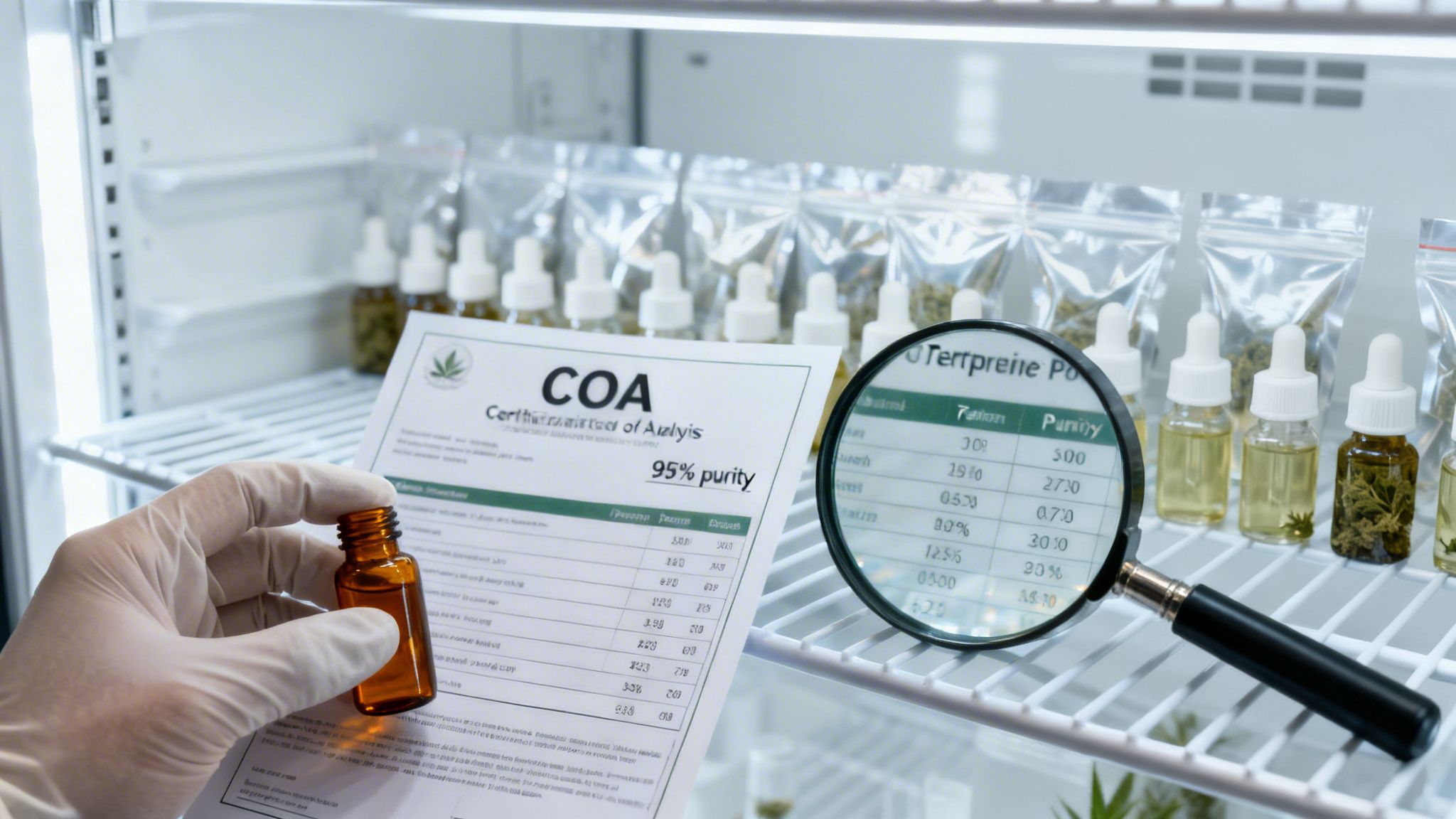
The quality of your Zkittlez Pie products is fundamentally dependent on the quality of your raw materials. An excellent formulation is rendered useless by subpar terpenes. Sourcing is not about finding the lowest price; it is about partnering with a supplier who provides pure, compliant, and verifiable compounds.
Your brand reputation and consumer safety are at stake. Therefore, every batch of terpenes must be accompanied by a comprehensive Certificate of Analysis (CoA). The CoA is a non-negotiable quality guarantee.
How to Read a Certificate of Analysis
A CoA is the technical dossier for your terpenes, and its proper interpretation is a critical skill for any formulator. When sourcing for a Zkittlez Pie blend, you must scrutinize the CoA for specific data points that confirm quality and safety. An oversight here can lead to off-flavors, safety issues, or product recalls.
Key areas to analyze:
- Purity and Profile Breakdown: The CoA must detail the precise concentration of each terpene in the blend. This verifies that the ratios of Limonene, Beta-Caryophyllene, and other key compounds align with the authentic Zkittlez Pie strain signature.
- Absence of Diluents: The analysis must confirm the absence of cutting agents. A reputable supplier's CoA will explicitly state that the blend is free from VG, PG, PEG, and MCT oil, which are unsuitable for quality vape and concentrate formulations.
- Contaminant Testing: This is the critical safety check. The report must show passing results for heavy metals (e.g., lead, arsenic), residual solvents, and pesticides.
A CoA is your legal and ethical shield. If a supplier cannot or will not provide a recent, third-party-verified CoA for the specific lot you are purchasing, it is a major red flag. Do not proceed.
Storage and Handling Best Practices
Once you have sourced high-purity terpenes, you must protect that investment. Terpenes are volatile, and the delicate top notes that define the Zkittlez Pie profile—particularly those from compounds like Limonene—are the first to degrade if handled improperly. Poor storage will cause your flavor and profits to evaporate. To learn more about this crucial terpene, read our guide on the benefits of D-Limonene.
To maintain the freshness and potency of your Zkittlez Pie blend, adhere to these strict protocols:
- Control Temperature: Store terpenes in a cool, stable environment. A refrigerator set between 35-40°F (2-4°C) is ideal. Never freeze terpenes, as this can cause crystallization and separation of isolates within a blend.
- Eliminate Light Exposure: UV light rapidly degrades fragile terpene molecules. Store containers in a dark location or use amber or other opaque packaging to block light.
- Minimize Oxygen Contact: Oxygen is the primary enemy of terpene stability. Seal containers tightly immediately after use. For long-term storage, consider blanketing the container's headspace with an inert gas like nitrogen or argon to displace oxygen.
Adherence to these handling procedures is as crucial as the formulation itself. It ensures the Zkittlez Pie blend crafted in the lab is the same one your customers experience, protecting your brand's reputation for quality and consistency.
Frequently Asked Questions
When formulating with a specific strain profile, several practical questions inevitably arise. Here are answers to common queries from formulators working with a Zkittlez Pie terpene blend.
What’s the Best Starting Terpene Percentage for a Vape Cart?
For most cannabinoid distillates, the optimal range is between 5-7% terpenes by weight.
We recommend starting your initial test batch at 5%. This establishes a solid performance and flavor baseline. From there, you can incrementally increase the percentage to achieve a more robust flavor profile. This range is standard because it delivers full, authentic flavor without introducing harshness or causing hardware failures.
Can I Use the Zkittlez Pie Profile in Edibles?
Yes, but the process is critical. The volatile terpenes that create the Zkittlez Pie aroma will degrade at high temperatures.
To preserve the flavor, the terpene blend must be added after any major heating steps in your production process.
- For baked goods: Mix the terpenes into your fat source (butter, MCT oil, coconut oil) only after it has cooled.
- For gummies: Stir the blend into the gummy slurry during the cooling phase, just before pouring into molds.
How Do I Keep the Fruity Top Notes From Fading?
This is a common challenge with terpene-rich profiles. Preserving volatile top notes like Limonene depends on two factors: temperature and oxygen.
During mixing, use the lowest possible temperature that allows for a homogenous blend. Post-production, packaging is critical. Use airtight, light-proof containers and store finished products in a cool, dark environment. This is the most effective way to protect delicate aromas from degradation and ensure a long, flavorful shelf life.
Ready to create a consistent, high-quality product that captures the authentic flavor of the Zkittlez Pie strain? Explore our lab-verified, strain-specific terpene blends at Gold Coast Terpenes.