
If you’ve ever stopped to smell a rose or enjoyed the bright, lemony scent of geranium, you’ve experienced geraniol. This terpene is nature’s go-to for creating sweet, floral aromas, often with a subtle hint of citrus fruit.
For cannabis product formulators, geraniol is far more than just a pleasant scent. It’s a workhorse—a critical middle note that helps build complex, memorable, and consistent flavor profiles for vape cartridges and other formulated products.
What Is Geraniol and Why Is It a Formulation Staple?
From a technical standpoint, geraniol is a monoterpene alcohol found everywhere from roses and lemongrass to a wide variety of cannabis cultivars. But for a formulator, it's the isolate you reach for when you need to add body and character to a blend for distillate or other oil-based products.
Think of it this way: geraniol prevents a flavor profile from falling flat. It fills the sensory gap, rounding out sharp notes and adding a sophisticated floral foundation. Without it, a blend can smell too harsh or one-dimensional. With it, you can craft beautiful floral bouquets, enhance fruit flavors, and perfectly mirror the authentic terpene profile of a sought-after strain for replication projects.
Geraniol At-a-Glance for Formulators
For those of us focused on cannabis product formulation, the technical specs are where the magic really happens. This table breaks down the key properties that make geraniol so reliable in the lab for vape and distillate applications.
| Property | Specification | Significance in Formulation |
|---|---|---|
| Chemical Type | Acyclic Monoterpene Alcohol | Its alcohol group improves polarity and blending capabilities with other terpenes. |
| Molar Mass | 154.25 g/mol | Influences its volatility and interaction within a blend, placing it as a middle note. |
| Boiling Point | ~230 °C (446 °F) | Ensures stability during cartridge heating and contributes to a sustained flavor release. |
| Sensory Profile | Sweet, Floral, Rose, Citrus | Ideal for creating nuanced floral profiles and rounding out sharp citrus or pine notes. |
| Solubility | Soluble in oils and ethanol | Blends seamlessly into cannabis distillates and common carrier liquids without separation. |
Understanding these properties is the key to predicting how geraniol will behave in your distillates and concentrates, ensuring a stable and predictable final product.
The Art of the Middle Note
In flavor creation, we classify aromas in terms of notes—top, middle, and base—based on how quickly they evaporate. Geraniol's role as a middle note is what makes it an absolute MVP for any formulator.
Middle notes are the heart of a blend. They emerge after the initial top notes fade and form the main body of the sensory experience, providing depth and balance that connects the entire profile.
Without a strong middle note like geraniol, your blend can feel disjointed. Imagine the bright, zesty burst of a top note like limonene fading away, leaving behind only the heavy, earthy tones of a base note like myrcene. Geraniol acts as the bridge, creating a smooth, complex, and elegant transition between the two.
This ensures your product delivers a rich, layered experience from the first draw to the last. For a more detailed look at how these components work together in strain-inspired terpene blends, our Terpene Formulation Guide is an essential resource.
Decoding the Sensory and Chemical Profile of Geraniol
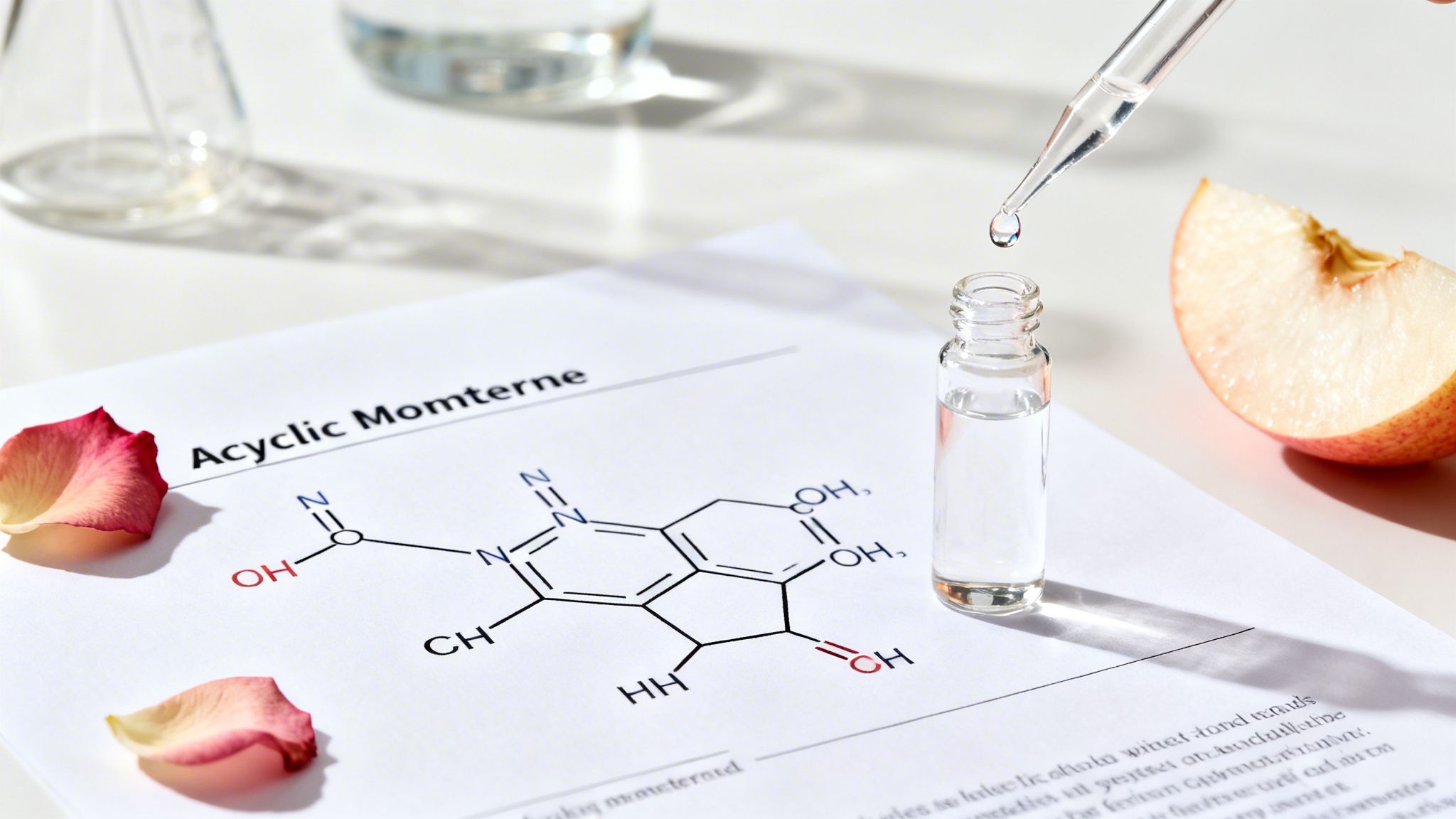
To master using geraniol, you must look past its basic definition and get into its sensory and chemical details. On the nose, it's a mix of rose, geranium, and a sweet, almost jam-like fruitiness. This complexity is a valuable tool for adding depth to your blends, especially when replicating authentic, strain-specific profiles for vape cartridges.
As we've mentioned, geraniol acts as a middle note. Think of it like the main melody in a song—it provides the body and character that keeps a blend from feeling flat or one-dimensional. Understanding this role is the first step to using it professionally.
From there, it’s time to dig into the chemistry. Understanding geraniol’s structure separates an amateur from a seasoned formulator, as it tells you exactly how it will behave in your final product.
The Impact of Chemical Structure
Geraniol is an acyclic monoterpene alcohol. While technical, the important part for any formulator is the "alcohol" tag. The presence of an alcohol functional group (-OH) makes geraniol more polar than hydrocarbon terpenes like limonene or myrcene.
This increased polarity is a huge advantage in formulation. It means geraniol dissolves easily into common bases like cannabis distillate, creating a stable and uniform mixture. You won’t have to worry about it separating out or causing inconsistent flavor in your vape cartridges.
Ultimately, a predictable, stable blend is the cornerstone of a successful product line. When your customers know they’re getting the same incredible flavor every time, you build the trust and loyalty that grows a brand.
For the formulator, geraniol’s chemical identity is a promise of reliability. Its alcohol structure ensures it integrates smoothly into oil-based formulations, preventing the common pitfall of terpene separation and guaranteeing a consistent sensory experience for the end-user.
This reliability makes it a go-to isolate when you need to scale up production without compromising on quality. It simply plays well with others, which is exactly what you need when crafting complex terpene profiles.
Boiling Point and Vaporization Dynamics
A terpene’s boiling point is a make-or-break statistic for anyone developing products for vaporization. Geraniol has a relatively high boiling point of around 230°C (446°F), which offers several key benefits for vape cartridge performance.
- Sustained Flavor Release: Because it requires more heat to vaporize, geraniol's flavor doesn't flash off on the first hit. It persists throughout the session, delivering a more rounded and lasting taste.
- Profile Stability: Its high boiling point acts as an anchor for the entire blend. It helps hold onto more volatile top notes, ensuring the full, intended flavor profile comes through with every draw.
- Hardware Compatibility: This temperature is right in the sweet spot for most modern vape hardware, ensuring efficient vaporization without scorching the terpene and creating off-flavors.
This thermal stability is precisely why geraniol is so effective at creating rich, enduring floral and fruit notes. It gives you the control to design a better product, avoiding the burned, fleeting tastes common with less stable compounds.
For formulators ready to put these ideas into practice, our high-purity Geraniol isolate delivers the consistency you need for predictable, repeatable results. To help nail your ratios, our terpene mixing calculator is an indispensable tool for combining isolates with confidence.
How Geraniol Shapes Popular Strain-Inspired Terpene Blends
Some terpenes announce their presence loudly, but geraniol is more subtle. It’s rarely the dominant terpene in a strain’s profile, yet its impact is unmistakable. For anyone creating custom blends, understanding geraniol’s role is the secret to nailing the authentic floral and fruity notes that define many classic cultivars.
Think of it as both a booster and an aromatic bridge. It amplifies other, more delicate notes while also connecting different aromas into one cohesive profile. Strains like Harlequin or Agent Orange owe their standout character to geraniol. It’s the hidden component that rounds out the profile, adding a soft, sweet complexity.
From Ancient Perfumes to Modern Formulations
Geraniol's role as a prized aromatic isn't new. Ancient Egyptians used geraniol-rich citronella oils in perfumes as early as 2000 BCE. Modern production took off after World War II, thanks to new synthetic methods using myrcene. Today, over 90% of the global supply is created through advanced biotech fermentation.
By 2026, the food and beverage industry was projected to hold a 35% market share of geraniol use, a trend that's great news for vape and extract brands. This surge means more access to high-quality terpenes perfect for building true-to-strain flavors in cartridges. This history provides a clear roadmap for crafting vibrant profiles, like using geraniol to enhance the classic synergy between limonene and myrcene in strain-inspired terpene blends for Green Crack or OG Kush. You can find more details on the growing geraniol market at credenceresearch.com.
The Role of Geraniol in Specific Cultivars
To see its magic in action, let’s examine how geraniol helps shape a few well-known strain profiles. In every case, it’s about teamwork with other terpenes.
- Harlequin: This cultivar is known for its sophisticated aroma. Geraniol adds a gentle, sweet floral layer that beautifully softens the earthy, musky foundation laid down by myrcene.
- Agent Orange: Famous for its bright citrus scent, this strain’s signature aroma comes from the interplay between limonene and geraniol. Limonene delivers that initial sharp orange hit, but geraniol follows up with a sweet, floral depth that prevents the profile from being one-note sour.
- Black Cherry Soda: In this profile, geraniol works to amplify the fruity, berry-like notes. It adds a floral undertone that turns a simple fruit scent into a complex, layered dessert flavor.
Geraniol is the formulator's secret weapon for authenticity. It lets you move past generic "fruity" or "floral" and build the specific, recognizable notes that define a premium strain.
Working with isolated geraniol provides incredible control over these subtle but crucial aromatic details. It allows you to recreate sought-after natural profiles with a level of consistency unattainable from raw plant extracts alone. Being able to fine-tune a blend this way is how you create signature products that deliver a reliable, repeatable experience. For more on this, check out our guide on replicating the Sour Diesel profile specifically.
Practical Formulation Techniques for Vapes and Distillates
Let's get into the practical application: using geraniol in your vape and distillate formulations. This is where a real understanding of geraniol pays off, directly impacting your product's quality and consistency. Its true value shines when used with finesse to hit specific flavor and aroma targets.
The journey from a plant to a finished product illustrates how this works.
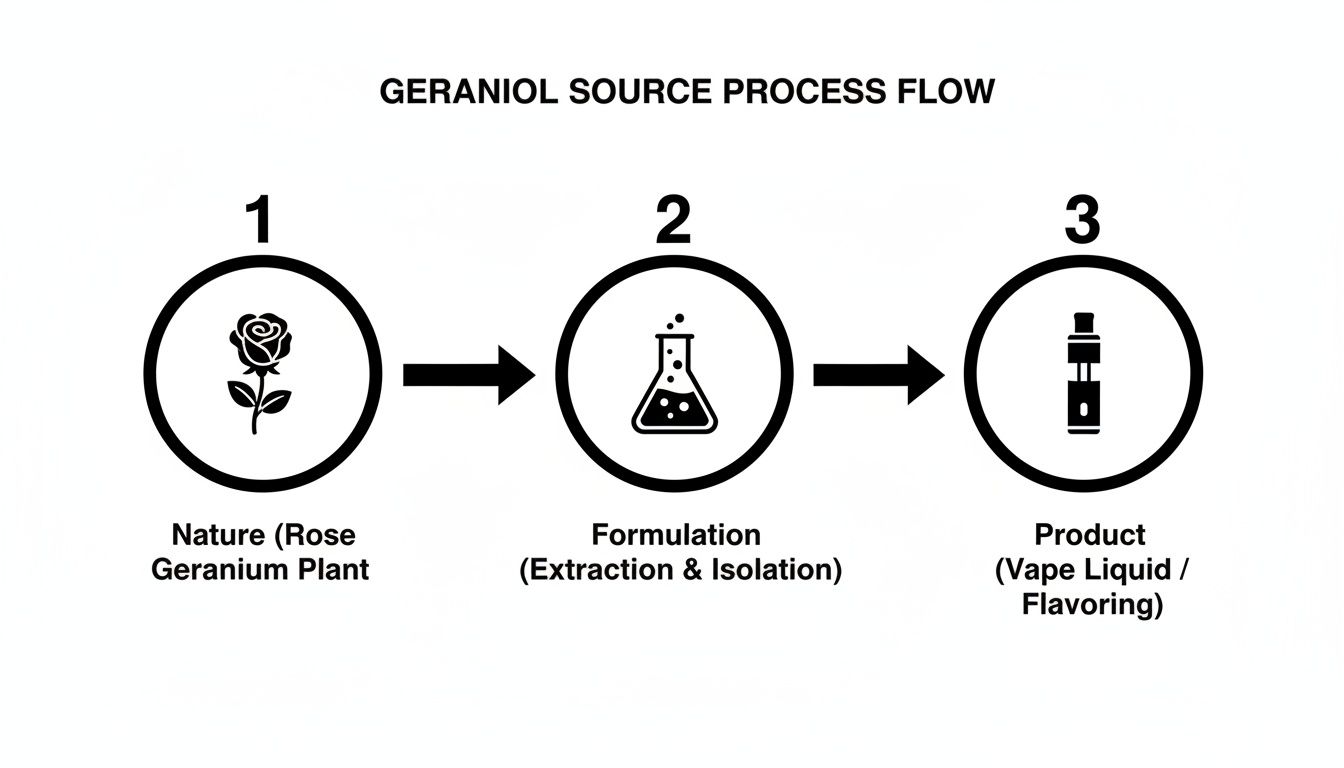
As you can see, isolating geraniol gives you complete control over its concentration. This is a game-changer for creating consistent, scalable products.
Finding the Sweet Spot: Usage Rates
Geraniol is a powerhouse, so a little goes a long way. The key is to treat it as an enhancer, not the main event. Overuse can quickly shift a blend from a lovely floral bouquet to a soapy, perfumey profile that steamrolls other terpenes.
For most blends using a base like winterized distillate or live resin, stay between 0.25% and 2% geraniol by total volume. Always start at the low end of that range. You can add more, but you can’t take it out once it’s in the mix.
Formulator’s Tip: The perfect amount of geraniol is the concentration you almost can’t identify. It should lift and round out the other terpenes seamlessly, creating a single, cohesive profile instead of shouting its own name.
Think of it like salting food—just enough to make all the other flavors pop. Getting this right is what separates a decent product from a truly great one.
Best Practices for Blending
Achieving a perfectly smooth and stable blend comes down to a solid, repeatable process. Geraniol dissolves beautifully in cannabis oils, which simplifies the job, but following these steps will ensure consistent results every time.
- Do the Math First: Always start by calculating your exact ratios. Use a terpene mixing calculator to input your total volume and desired percentage. This eliminates guesswork and prevents costly mistakes.
- Warm It Up Gently: Slightly warm your cannabis concentrate (e.g., distillate) to around 40-50°C (104-122°F). This lowers its viscosity for easier mixing without degrading cannabinoids or other delicate terpenes.
- Mix and Homogenize: Slowly add your pre-measured geraniol and other terpenes to the warm concentrate. Use a magnetic stirrer or mix thoroughly by hand for at least two to five minutes to achieve a completely uniform solution.
- Let It Rest: After mixing, allow the blend to sit for a few hours. This gives the terpenes time to fully marry into the oil base, leading to a smoother, more unified flavor profile in the final product.
Following this process means every cartridge will deliver the exact experience you designed.
Unlocking Synergies in Your Formulations
Geraniol's real magic is how it interacts with other terpenes. It acts as a perfect middle note, bridging the gaps between different aromas and boosting other compounds to create a profile that’s more than the sum of its parts.
Here are a few classic pairings and the effects they create:
- With Limonene: Geraniol is brilliant at smoothing out the sharp, zesty edges of limonene. It can turn a basic citrus note into a much more sophisticated orange blossom or sweet lemon candy flavor.
- With Myrcene: When you pair geraniol with the earthy, fruity notes of myrcene, it can amplify those sweet, jammy qualities. This is a fantastic combination for creating rich berry or tropical fruit profiles, adding a floral lift that keeps the blend from feeling too heavy or musky.
- With Pinene: The fresh, woody scent of pinene can sometimes be aggressive. Geraniol helps soften that intensity, adding a rosy undertone that creates a more balanced "rose garden" or "forest floor" aroma.
By combining terpenes thoughtfully, you move from just copying flavors to true flavor architecture. This is how you develop the signature SKUs that make your brand stand out.
Sourcing High-Purity Geraniol for Commercial Success
When you're scaling a brand, consistency is paramount. Customers return because they know exactly what to expect, and that begins with the quality of your raw materials. For an impactful isolate like geraniol, sourcing high-purity product from a trusted supplier isn't just a good idea—it's fundamental to your success.
The market for geraniol is exploding, which makes choosing the right partner even more critical. Valued at USD 15.81 billion in 2024, the global market is expected to reach USD 28.41 billion by 2032, growing at a CAGR of 7.6%. This growth is fueled by demand across cosmetics, food, and especially cannabis, where formulators use it to build authentic profiles for strains like Blue Dream and Forbidden Fruit.
With North America currently making up 35% of that market, as reported by maximizemarketresearch.com, the pressure is on to deliver clean, natural, and reliable products.
Why Purity and a Reliable Partner Matter
Working with a dependable supplier like Gold Coast Terpenes takes the guesswork out of your production. You’re not just buying an ingredient; you’re buying peace of mind. Here’s what that looks like in practice:
- Absolute Purity: Our isolates are certified free from common diluents like vegetable glycerin (VG), propylene glycol (PG), or MCT oil. You get nothing but pure geraniol, ensuring the final character of your product is exactly what you designed.
- Verified Safety: Every batch we sell is backed by third-party lab reports that confirm its profile and safety. This documentation isn't just for your records; it's essential for compliance and building trust with your own customers.
- A Supply Chain That Grows With You: Nothing stalls momentum like running out of a key ingredient. Our supply is built for scale, so you can plan new product launches and bigger production runs without worrying about stockouts or quality drops.
As a formulator, your job is to create. Our job is to handle the risk. A reliable supply of pure, safe, and consistent ingredients lets you focus on innovation, knowing your brand's reputation is protected.
Cutting corners with unverified sources often backfires. Impurities can introduce off-flavors, cause product separation, or fail to deliver the promised experience.
The Modern Advantage in Sourcing
Not long ago, obtaining high-quality botanical isolates like geraniol was either incredibly expensive or frustratingly inconsistent. Thankfully, strides in biotechnology have completely changed the landscape for formulators.
Microbial fermentation is a prime example. This process uses microorganisms as miniature factories to biosynthesize terpenes in a controlled setting. The result is a geraniol isolate chemically identical to its plant-derived counterpart but produced without the unpredictability of weather, pests, or crop failures. This technology makes top-tier geraniol more affordable and accessible than ever, allowing brands of any size to work with premium ingredients.
Of course, advancements in traditional cultivation are also helping optimize plant-based expressions. If you're curious about that side of the industry, you might find our article on the differences between the male weed plant vs female interesting.
In the end, choosing a high-purity, food-grade geraniol from a supplier you can count on is one of the best investments you can make. It's the foundation for creating products that are precise, repeatable, and memorable.
Answering Your Top Questions About Geraniol Formulation
We get great questions from formulators working to get their blends just right. To help you nail your next product, we've compiled some of the most common ones we hear in the lab.
How Should I Store Pure Geraniol Isolate?
Proper storage is non-negotiable for preserving geraniol's delicate floral aroma. Like most pure terpenes, geraniol is sensitive to light, heat, and air, all of which cause degradation over time.
Always keep it sealed tight in an amber glass container to block UV light. The ideal storage location is a cool, dark place, like a refrigerator, at a temperature between 2-8°C (36-46°F). This slows down degradation, preserving the terpene's full profile for as long as possible.
Can Geraniol Be Used in Tinctures and Edibles?
Absolutely. Geraniol is a fantastic choice for edibles and tinctures, especially since it’s GRAS (Generally Recognized as Safe). Its sweet, rosy, fruit-like flavor can add a unique and sophisticated dimension.
Just remember the golden rule of formulating with powerful isolates: less is more. Its flavor is potent and can easily dominate if not used carefully. We suggest starting with very low concentrations—often well below 0.1%—and tasting as you go. It mixes well with both oils and ethanol, making it a versatile tool for your formulation kit.
Pro Tip: Think about flavor pairings. Geraniol excels at amplifying berry, citrus, and stone fruit notes, creating a more complex and sophisticated taste experience in edible and tincture formulations.
What Are Signs of Overuse in a Vape Blend?
You'll know it when you smell it. The most common sign of too much geraniol is a fragrance that comes across as soapy, overly perfumey, or like potpourri. It completely masks the natural cannabis notes you worked to preserve.
From a taste perspective, an excess amount creates a harsh, almost astringent floral hit that is unpleasant. A great blend uses geraniol as a background harmony, not the lead singer. If its aroma is the only thing you can detect, it's time to dial back the concentration for your next batch.
For more in-depth tips and tricks, check out our complete Terpene Formulation Guide.
Ready to put this knowledge into practice? At Gold Coast Terpenes, we supply the lab-tested, high-purity isolates and strain-inspired terpene blends you need to create top-tier products every single time. See our full collection and find your inspiration at https://www.goldcoastterpenes.com.