
For product formulators, valencene is an essential isolate for building sophisticated citrus-forward profiles. It’s prized for its sweet, juicy orange aroma that serves as a stable mid-note in complex formulations. As a sesquiterpene, its larger molecular structure provides superior stability compared to more volatile monoterpenes, anchoring the entire flavor profile in a vape, concentrate, or edible. Leveraging valencene is key to creating complex, premium products with staying power.
The Role of Valencene in Product Formulation
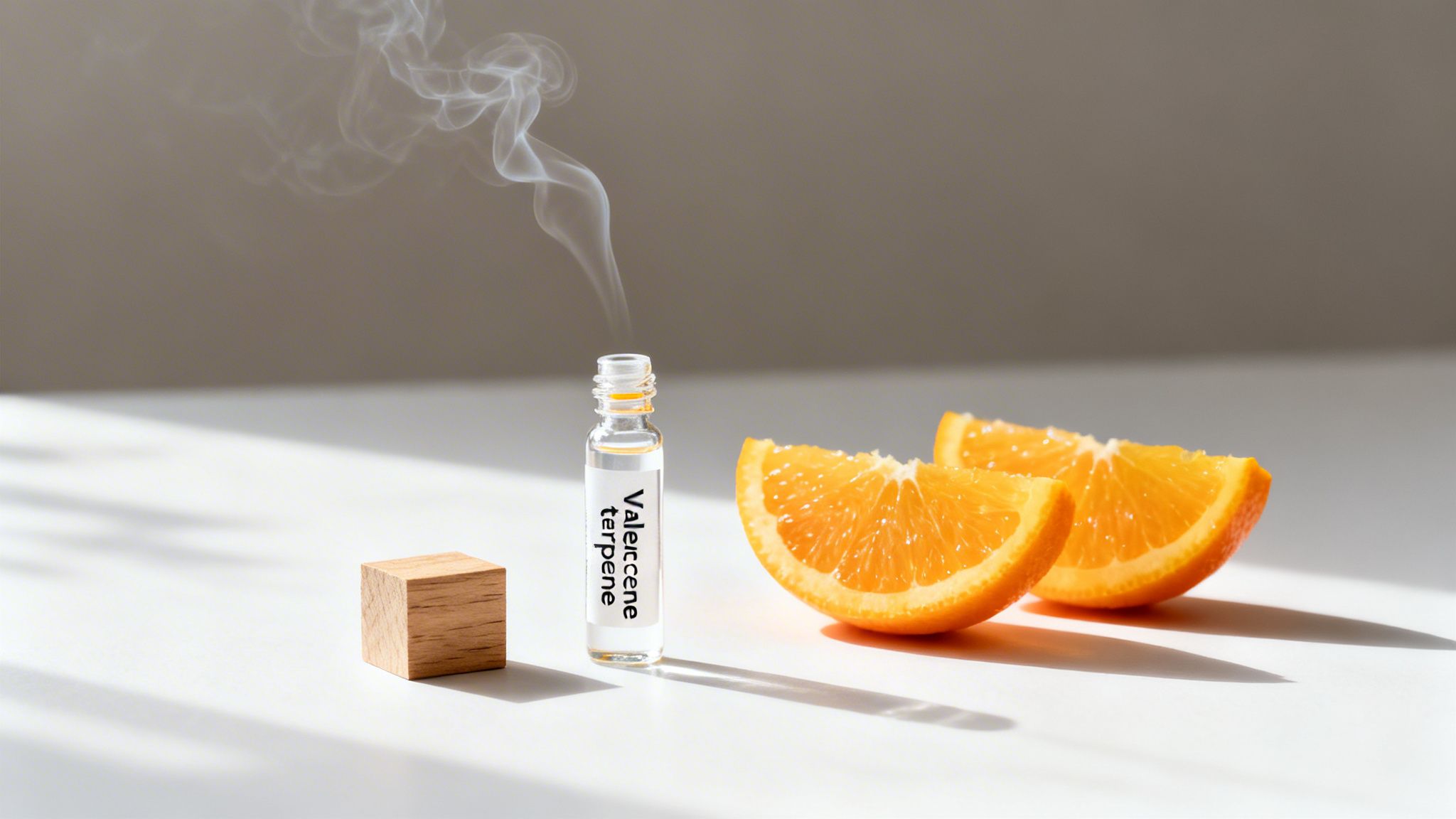
When formulating cannabis products, understanding the practical valencene terpene effects is a matter of strategic product design. This sesquiterpene, named for the Valencia oranges from which it is commonly derived, is an ingredient that can significantly enhance a product’s sensory appeal and perceived effects, directly influencing customer satisfaction and brand loyalty.
Its primary function in a formula is to establish a sweet, juicy orange mid-note. This provides greater stability and longevity than highly volatile monoterpenes like limonene, which can flash off quickly during processing or use. Valencene persists, lending the flavor profile a lasting, full-bodied character.
Driving Product Differentiation
Valencene’s specific aromatic profile is an effective tool for differentiating products in a competitive market. Its sweet, almost zesty character is noticeably less sharp and acidic than other citrus isolates. This results in a smooth, premium taste that can elevate a standard distillate to a high-end offering.
For formulators, this means you can effectively mask undesirable off-notes in base extracts, accurately replicate the profiles of popular citrus-heavy strains, and develop proprietary blends that define a brand.
Key Formulation Applications
Incorporating valencene can solve common formulation challenges and unlock new product development opportunities. On a technical level, its utility is most apparent in these areas:
- Masking Off-Notes: Its robust citrus scent is highly effective for covering the earthy or grassy flavors sometimes present in raw extracts.
- Strain Replication: For accurately recreating the profiles of strains like Tangie or Agent Orange, valencene is an essential component.
- Creating Signature Blends: By adjusting its concentration, formulators can create unique, flavor-forward vape cartridges that become a brand’s signature.
Ultimately, adding valencene to your formulary is a strategic decision to improve flavor, stability, and the overall consumer experience. Its ability to contribute to an uplifting, focused sensory experience—without making medical claims—adds significant functional value to any product line.
Valencene's Technical Profile: Aromatic and Chemical Properties
To effectively leverage valencene in product development, it’s critical to understand its chemical and aromatic properties. At its core, valencene is a sesquiterpene, a heavier and more complex molecule than monoterpenes.
This greater molecular weight is a significant formulation advantage. It makes valencene a stable, long-lasting mid-note that resists rapid volatilization. It serves as a reliable aromatic backbone, providing a persistent sweet orange character that anchors the entire experience. For vape cartridges and concentrates, this consistency is a mark of quality. A solid grasp of these fundamentals is a game-changer for anyone working with the chemistry of terpenes, leading to more predictable and successful formulations.
Beyond Standard Citrus: A Unique Aromatic Signature
While many terpenes offer a citrus aroma, valencene stands apart. Its profile is specifically juicy and zesty, reminiscent of ripe Valencia oranges, with a subtle woody undertone that adds sophistication. This distinguishes it from an isolate like limonene, which tends to present as sharper and tarter.
By balancing these nuances, formulators can build premium, well-rounded citrus flavors that taste authentic and complex, not one-dimensionally sour. Mastering these distinctions is how to achieve true-to-strain accuracy and develop novel products.
For brand builders, this unique aromatic signature is a direct path to elevating a product's perceived quality. When a consumer experiences a smooth, sweet orange flavor without an acidic bite, it signals a more refined, premium product.
Sourcing and Advanced Formulation Opportunities
The quality of your final product is dictated by the quality of your raw materials. When purchasing this terpene, always insist on a high-purity valencene isolate accompanied by a Certificate of Analysis (CoA). The CoA is your verification that the batch is free from contaminants like pesticides, heavy metals, or residual solvents that can compromise flavor and safety.
Furthermore, valencene presents opportunities for advanced formulation. It is the natural biosynthetic precursor to nootkatone—the compound responsible for grapefruit's characteristic aroma. For a skilled formulator, this is an opportunity to move beyond simple blending and explore biosynthetic flavor creation to craft truly unique grapefruit notes. This is how to develop proprietary, memorable profiles that competitors cannot easily replicate.
Now, let's shift from theory to application. Understanding valencene is one thing; using it to create a top-tier vape or concentrate is where technical skill meets artistry.
Establishing Ratios: Your Starting Point
When first incorporating valencene, a good starting point is a concentration between 1-3% of the total formula weight. This range is typically sufficient to impart a bright, juicy orange character without overpowering the base oil's profile.
Best practice is to begin on the low end. Formulate a small test batch at 1%. Evaluate its interaction with your specific distillate. From there, you can incrementally increase the concentration until the target flavor profile is achieved.
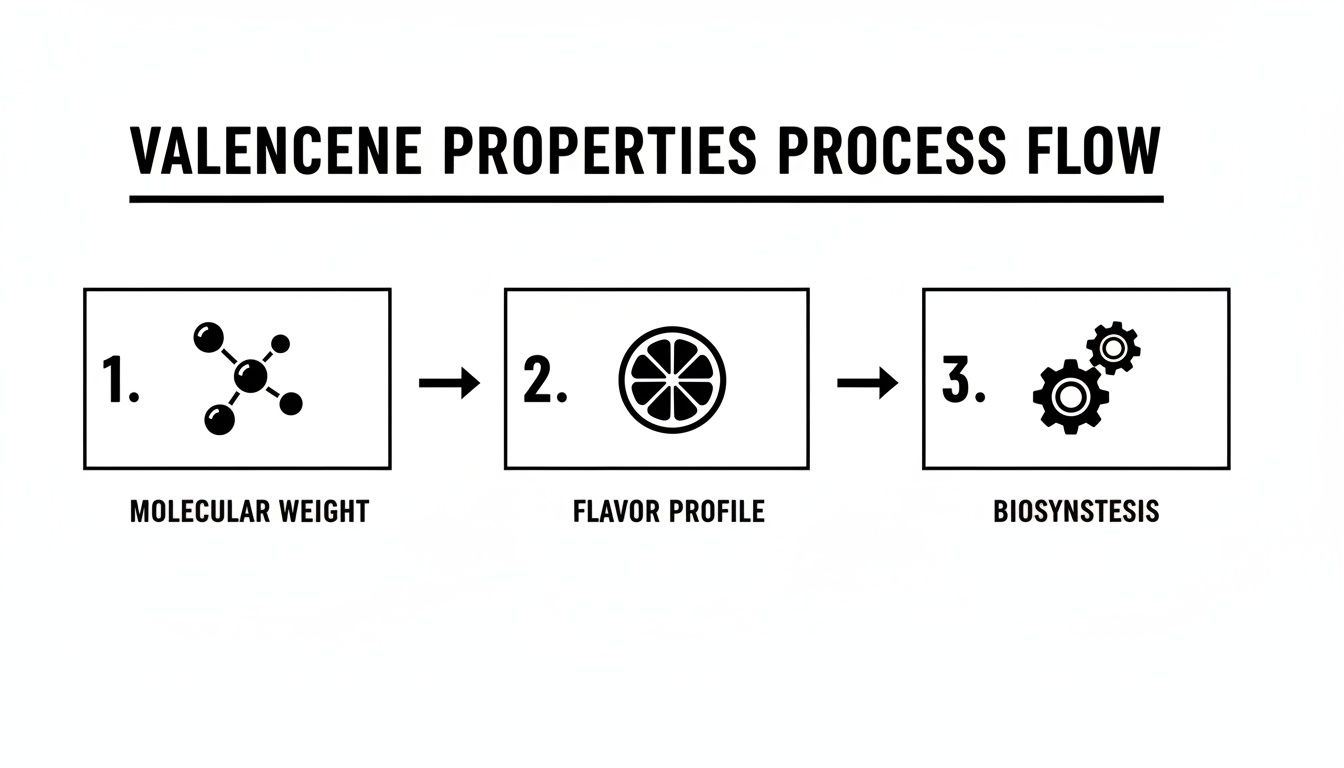
As a sesquiterpene, valencene's heavier molecular weight is a key advantage in formulation. It helps the flavor persist, acting as a stable and long-lasting mid-note in any blend.
Managing Solubility and Viscosity
From a technical standpoint, valencene is highly manageable. It dissolves readily into cannabinoid oils and common diluents, mixing cleanly without cloudiness or separation. This results in a visually appealing, professional-grade product.
Valencene also functions as an effective viscosity modifier for thick distillates. For oil that is too viscous for modern vape hardware, a small addition of valencene can improve flow, preventing clogs and ensuring a consistent user experience. Exercise caution not to over-dilute; concentrations exceeding 5-7% can thin the oil excessively, potentially leading to leaks in some hardware.
Creating Signature Flavor Pairings
This is where formulation becomes an art. While effective as a standalone isolate, valencene’s true potential is realized when paired with other terpenes to create complex, novel profiles.
Here are a few classic combinations for inspiration:
- For a Tropical Fusion: Combine valencene with myrcene. Myrcene contributes a ripe, earthy mango note that complements valencene’s sweet orange. The result is a rich, tropical profile with broad market appeal.
- For a Sophisticated Bouquet: Pair valencene with linalool. The soft, lavender-like floral notes from linalool provide an elegant contrast to the citrus, creating a sophisticated and aromatic blend suitable for a premium product line.
- For a Classic Haze Profile: Blend valencene with terpinolene. This combination yields the sharp, zesty, almost electric citrus-and-pine profile characteristic of many Haze strains, resulting in an energetic and multi-layered aroma.
The table below provides a structured approach to these combinations.
Valencene Flavor and Effect Pairing Guide for Formulation
Use this table to strategically pair terpenes with Valencene, creating targeted sensory profiles and functional effects in your cannabis products.
| Target Effect | Complementary Terpenes | Resulting Aroma/Flavor Profile | Ideal Application |
|---|---|---|---|
| Uplifting & Energetic | Limonene, Terpinolene | Sharp, zesty citrus with hints of pine and spice. | Sativa-leaning vape carts, daytime concentrates. |
| Relaxing & Calming | Linalool, Myrcene | Sweet orange with soft floral and earthy mango notes. | Indica-leaning blends, evening vape formulas. |
| Creative & Focused | Pinene, Caryophyllene | Bright orange and grapefruit with a crisp, peppery finish. | Hybrid formulations, products for creative tasks. |
| Exotic & Tropical | Myrcene, Ocimene | A complex fusion of sweet orange, mango, and herbal mint. | Limited-edition drops, fruit-forward live resins. |
Building these unique blends is how you transition from simple mixing to engineering a signature consumer experience. For a deeper dive into the fundamentals of blending, consult our guide on how to use terpenes. Mastering these pairings will differentiate your products in a crowded marketplace.
Building Popular Strains with Valencene Blends
The iconic sweet orange character of strains like Tangie and Agent Orange is largely defined by valencene. It’s the powerhouse terpene behind some of the most commercially successful citrus profiles. For formulators, mastering its use is key to both replicating classic strain profiles and innovating new ones.
When a customer seeks a specific strain, they are pursuing a specific sensory experience—a particular taste and effect. Valencene delivers the unmistakable sweet, juicy orange foundation they expect. The first step in delivering this experience is data analysis. A Gas Chromatography (GC) report provides a quantitative map of the terpene ratios, guiding precise replication.
The Art of Strain Reconstruction
Recreating a strain is more like being a chef than a chemist; it's about building layers of flavor, not just adding the most dominant ingredient. While valencene is often the primary mid-note, it requires a supporting cast of top and base notes to create a complete profile.
Consider a classic Tangie profile. Valencene provides the foundational orange sweetness, but other terpenes shape its final character:
- Myrcene: Adds a touch of ripe, mango-like sweetness, rounding out the sharp citrus edges for a fuller, more natural feel.
- Caryophyllene: A hint of peppery spice from caryophyllene provides depth and a more complex finish.
- Pinene: Lifts the entire profile, with a touch of fresh pine making the aroma feel brighter and more energetic.
Using high-purity isolates for each component allows for the meticulous reconstruction of this aromatic symphony. The objective is a final product sensorially indistinguishable from the original flower.
A successful strain replication is more than a technical achievement; it is a tool for building brand loyalty. When your Tangie vape tastes identical with every batch, you establish consumer trust. This is where diving into GC reports and working with precise strain-specific terpene blends for formulation provides a significant competitive advantage.
Creating "Strain-Inspired" Signature Blends
Replication is just the starting point. Valencene is an incredible tool for innovation. By taking a well-known profile and adding a unique twist, you can create "strain-inspired" blends that differentiate your brand.
For example, a “Tangie Boost” or “Agent Orange Reserve” can be created by increasing the valencene concentration by 1-2% above the original strain's specification. This small adjustment amplifies the sweet citrus notes, delivering a more intense, flavor-forward version of a classic.
This strategy allows you to offer something familiar yet elevated—an exclusive experience that customers can only get from your brand.
Boosting Product Value with Synergistic Effects
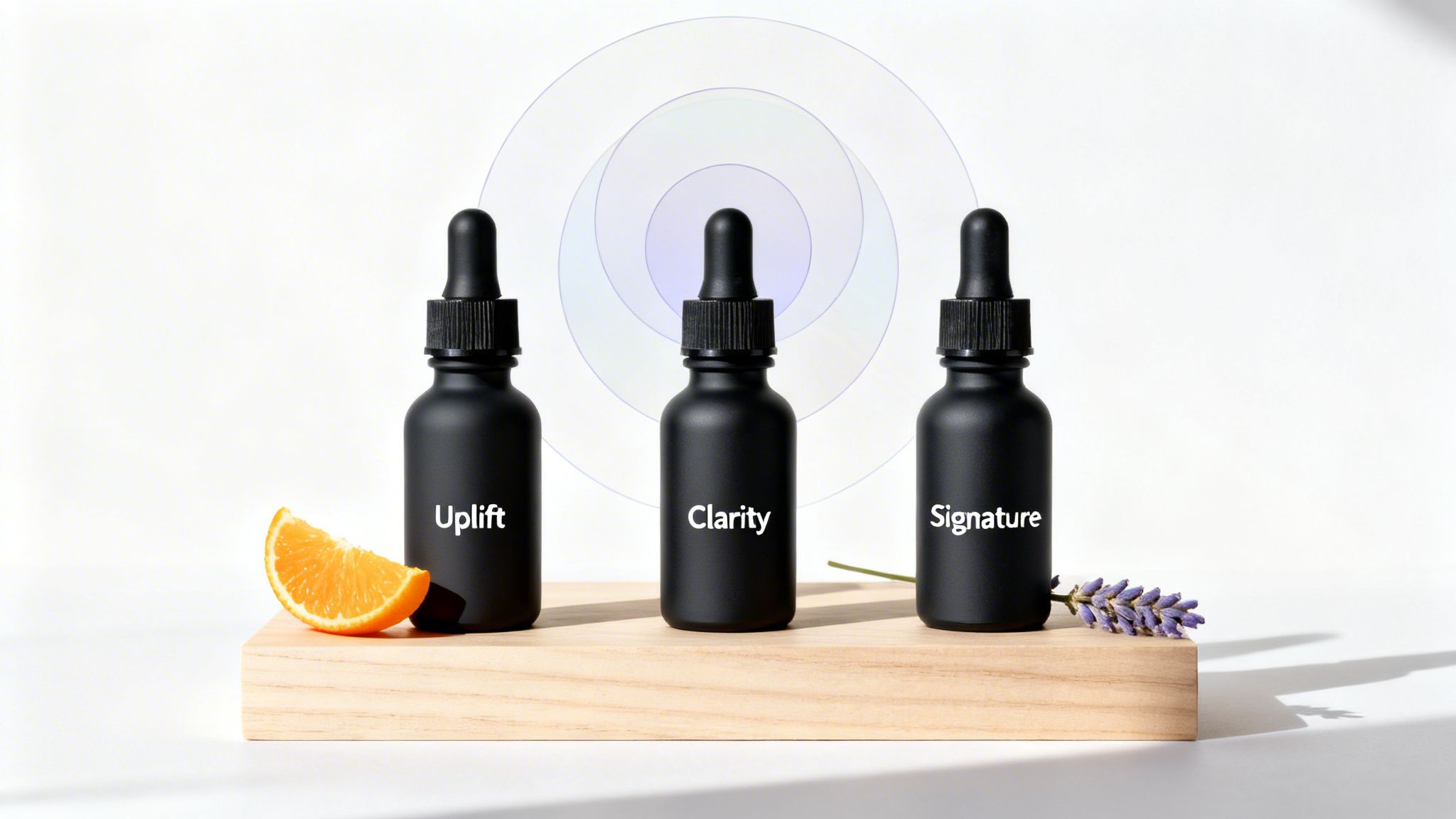
While valencene’s bright, juicy orange flavor is a valuable asset, its true power for product developers lies in synergy. This is the transition from flavor enhancement to engineering specific, marketable experiences.
These powerful valencene terpene effects exemplify the entourage effect in action. By understanding how valencene interacts with other compounds, you can create functional, premium products designed to meet specific consumer needs. This is the difference between simply masking off-notes and building a SKU that commands a higher price point by delivering a targeted result.
Engineering Targeted Product Experiences
The concept of terpene synergy is evolving from industry lore to data-backed science. An increase in terpene research provides formulators with a clearer playbook. Studies indicate that valencene, when combined with other active ingredients, can amplify their effects.
For example, one study found that specific valencene mixtures increased anti-inflammatory activity by 30% compared to control groups. This type of data is invaluable for product development.
As a product developer, this enables you to intentionally build SKUs around concepts consumers are actively searching for—such as 'Uplift,' 'Clarity,' or 'Focus.' It represents a strategic shift from generic strain names toward function-first product lines that connect directly with consumer intent.
When you highlight these specific valencene terpene effects in your marketing, you are not just selling a vape cartridge; you are offering a curated experience. This positions your products as sophisticated, purpose-driven goods that earn attention and loyalty in a crowded market.
Key Synergistic Pairings for Formulation
Knowing which compounds work best with valencene is the key to unlocking these enhanced effects. Based on research and our own formulation experience, a few combinations are particularly powerful for creating specific outcomes:
For Mood Elevation: The interplay between valencene and limonene is a classic pairing. Combining these two citrus giants creates a bright, energetic profile ideal for a daytime or 'Focus' blend, resulting in a vibrant, noticeably mood-lifting experience.
For Anti-Inflammatory Support: Evidence suggests valencene can amplify CBD's natural anti-inflammatory properties. A formulation that intentionally pairs these two can be effectively marketed as a 'Recovery' or 'Soothe' product, targeting the wellness-focused consumer segment.
For Modulating THC: In some behavioral models, valencene has been shown to reduce THC-induced anxiety by up to 25%—without diminishing the primary effects. This makes it an incredibly useful tool for THC-forward products, helping create a more balanced and enjoyable experience.
These interactions are at the core of why the entourage effect is so compelling for formulators. To explore this topic further, see our guide to unlocking synergy with terpenes and the entourage effect. Mastering these pairings provides precise control over the final experience your products deliver.
Ensuring Safety and Quality in Your Formulations
For professional formulators, safety and quality are non-negotiable; they are the foundation of a trusted brand. When working with terpene isolates like valencene, this commitment starts with sourcing. While valencene is ‘Generally Recognized as Safe’ (GRAS) by the FDA for use in food, this designation applies only to high-purity material.
Your supplier relationship is therefore critical. Partner with a supplier who provides complete transparency, which means never accepting a batch of terpenes without a Certificate of Analysis (CoA). The CoA is your definitive proof of purity and safety.
What to Look for on a CoA
When reviewing a CoA, you are verifying that the valencene is free from contaminants that could harm consumers or damage your brand's reputation. Confirm the absence of:
- Pesticides: No residual agricultural chemicals should be present.
- Heavy Metals: Verify the absence of lead, arsenic, mercury, and other toxic metals.
- Residual Solvents: The report must show that no solvents from the extraction process remain.
- Purity Percentage: High purity ensures consistent flavor and reliable valencene terpene effects in every batch.
Sourcing pure valencene is only the first step; proper storage is equally important. Terpenes are volatile and can degrade when exposed to heat, light, or oxygen.
To preserve its bright, sweet orange aroma and prevent oxidation, always store valencene in a cool, dark environment, preferably in airtight, amber glass containers. This simple practice protects its aromatic integrity and extends its shelf life, ensuring every batch you produce meets your high standards.
Adhering to these best practices is not merely about quality control; it is about protecting your customers, ensuring product consistency, and building a reputable brand. For more detailed guidance, our cannabis product formulation resources provide comprehensive information.
Common Questions from the Formulation Lab
When incorporating a new terpene, numerous technical questions arise. Here are answers to common inquiries from formulators regarding the use of valencene, based on our hands-on lab experience.
How Much Valencene Should I Use in a Vape Cartridge?
As a general guideline, a starting range of 1% to 3% valencene by weight is effective for most distillate-based vape formulations. We recommend beginning with a small test batch at the low end of this range, around 1%, to assess its flavor intensity and impact on the oil's viscosity.
From there, you can incrementally increase the concentration toward 3-5% if you desire a more prominent orange flavor. Exceeding 5% is generally unnecessary, as the flavor can become overly sharp, and you risk over-thinning the oil for some hardware. Always use a terpene mixing calculator for precise ratios.
Is Valencene Effective for Masking Off-Flavors in Distillate?
Valencene is one of the most effective tools for this purpose. It excels at masking the earthy or grassy notes sometimes present in raw cannabis and hemp distillates. Its bright, sweet citrus aroma is potent enough to cut through these undesirable flavors, resulting in a cleaner, more marketable taste.
To maximize its effectiveness, blend it with complementary terpenes. A small amount of myrcene can add fruity depth, while linalool can introduce a soft floral note. This layering technique creates a truly complex profile and is key to unlocking the full spectrum of valencene terpene effects.
Will Valencene Cause Crystallization or Clogging in Vapes?
You should not encounter crystallization issues with valencene. It demonstrates excellent solubility in cannabinoid oils and is not known to cause such problems. In fact, it often provides a benefit.
As a liquid sesquiterpene, it functions as a mild diluent, helping to reduce the viscosity of overly thick distillates. This can improve cartridge performance by preventing clogs and ensuring consistent wicking. The fundamental rule remains: always use high-purity, lab-tested ingredients and conduct stability tests on your final blend to ensure compatibility with your chosen hardware.
Ready to formulate with one of the most versatile citrus terpenes available? Explore our lab-verified valencene isolate at Gold Coast Terpenes and start building premium, flavor-forward products today. Visit https://www.goldcoastterpenes.com to get started.