
In a market saturated with products chasing general effects, a significant commercial opportunity remains underserved: formulations engineered specifically for anti-nausea applications. While many brands offer vague "relief" products, few have developed a formulation that delivers a predictable, repeatable experience for this specific consumer need. This guide provides a technical framework for formulators to capture this market and build significant brand loyalty.
Why Nausea-Focused Formulations Are a Commercial Opportunity
The demand for effective nausea relief is substantial and crosses multiple consumer demographics. For product formulators and manufacturers, this represents a clear business case, not a niche pursuit.
By moving beyond generic strain replication and formulating with intent, you can engineer products that solve a specific problem. This strategy shifts the value proposition from simply flavoring a distillate to creating a functional product with a defined purpose—a critical differentiator in today's crowded marketplace.
The Data Supporting Formulation
Anecdotal reports have long suggested a connection, but recent data provides a solid foundation for product development. One large-scale study analyzing over 2,200 self-reported sessions found that 96.4% of participants reported nausea relief within one hour.
On average, symptom intensity dropped by nearly four points on a 10-point scale. This is a significant and, importantly, rapid effect. You can review the powerful data on cannabis and nausea relief to inform your R&D.
For a formulator, this data is a green light. It confirms a verifiable market need and points directly to the commercial potential of products engineered for this specific outcome.
Key Takeaway for Formulators: Consumers are increasingly seeking solutions, not just high-potency products. A formulation carefully constructed with specific terpenes can command a premium price point and build lasting brand equity.
Moving from Flavor to Function
Most brands compete on strain names and flavor profiles. While important, this approach overlooks the larger opportunity in functional formulation. Focusing on a specific outcome allows for a deeper connection with target consumers and builds a product line that stands for efficacy and predictability.
Consider the strategic advantages:
- Targeted Marketing: A product designed with specific terpenes for nausea enables sharp, compliant, and relatable messaging that speaks directly to a motivated audience.
- Brand Differentiation: While competitors market "OG Kush," you can offer a "Citrus Ginger Soothe" blend, clearly communicating its intended purpose and sophisticated formulation.
- Customer Retention: When a product delivers a consistent and effective experience, customers return. They are no longer just purchasing a vape cartridge; they are purchasing a reliable tool.
This entire approach hinges on formulating with high-purity isolated terpenes. It provides absolute control over the aroma, flavor, and the intended effect profile. For those new to these foundational compounds, our Terpenes 101 guide provides a solid starting point. Now, let's translate this opportunity into a viable product.
Selecting Terpene Isolates for an Anti-Nausea Blend
When constructing a blend to target nausea, you are not merely mimicking a strain; you are an architect, selecting individual compounds to create a specific, reliable effect. The key to this process is moving past pre-made profiles and working with high-purity, lab-verified isolates.
This methodology is about control. By using pure, individual terpenes, you ensure precise knowledge of your formulation's composition. This is how you guarantee product consistency, safety, and repeatable performance—the bedrock of your brand's reputation.
Limonene: The Bright, Protective Top Note
For any anti-nausea blend, Limonene is a cornerstone isolate. Its zesty, citrus aroma provides an immediate, clean lift that serves as the aromatic hook. However, its role extends beyond sensory appeal.
Functionally, Limonene is noted for its gastroprotective properties, which can help shield the stomach lining. It delivers a dual benefit: the aroma signals a soothing, settling experience, while the compound itself provides a functional backbone.
Beta-Caryophyllene: The Anti-Inflammatory Anchor
With Limonene as your top note, you need a solid foundation. This is the role of Beta-Caryophyllene. Its warm, peppery scent adds aromatic depth, but its primary power is biological.
This is the only known terpene that also functions as a dietary cannabinoid, directly engaging the body's CB2 receptors. This is significant because these receptors play a key role in regulating inflammation, a common trigger for nausea. By interacting with this pathway, Beta-Caryophyllene provides a deep, foundational effect that complements the immediate sensory impact of other terpenes.
By combining these isolates, you are building a multi-pronged formulation. Instead of relying on a single mechanism, you're creating a synergistic blend where each component works in concert, delivering a more complete and reliable experience.
Pinene: The Sharp, Clarifying Mid-Note
To unify the blend, Pinene is an ideal mid-note. Its sharp, herbal, pine-like scent bridges the gap between Limonene’s bright citrus and Caryophyllene’s deep spice, resulting in a more complex and sophisticated final aroma.
Beyond its aromatic contribution, Pinene brings its own anti-inflammatory properties to the formulation. Anecdotally, it is also associated with a sense of clarity. For a consumer experiencing nausea, a feeling of fogginess is common. A blend that soothes without inducing heavy sedation is the gold standard, and Pinene helps achieve that balance.
Putting these three together creates a powerful, synergistic foundation. Research highlights Limonene's gastroprotective qualities, while studies show Beta-Caryophyllene can modulate inflammation by activating CB2 receptors. When you add Pinene, known for its own anti-inflammatory potential, you have a formula built on sound scientific principles. You can read more on how key terpenes interact to fight inflammation and nausea to deepen your technical understanding.
Understanding the specific role of each isolate is what separates basic flavor mixing from intelligent product design. To learn what to look for when sourcing your materials, check out our guide on the 3 most popular terpene isolates.
How to Blend Terpenes for Nausea in Distillate
With your isolates selected, the next step is turning raw ingredients—cannabinoid distillate and terpene isolates—into a finished product. This stage merges precision chemistry with sensory science.
The objective is a perfectly homogenous mixture. Terpenes must be evenly distributed throughout the distillate without being degraded by excessive heat. Errors in this process lead to inconsistent flavor, aroma, and effects, quickly eroding customer trust. Your process must be robust, repeatable, and scalable.
Foundational Ratios for a Nausea-Focused Blend
While every brand requires a unique signature, a solid foundational ratio is essential. For a blend targeting nausea, we recommend starting with a core ratio built around the key isolates previously discussed. This provides a synergistic base that is both effective and aromatically pleasing.
Consider this your starting blueprint:
- 40% Limonene: The dominant top note, providing a bright, clean citrus scent and its well-documented gastroprotective properties.
- 30% Beta-Caryophyllene: The spicy, woody base note that grounds the blend and interacts with CB2 receptors to help address inflammation.
- 15% Pinene: A crisp, herbal mid-note, adding complexity and a sense of clarity to the experience.
This leaves a remaining 15% for creative formulation. This is where you can layer in other isolates in smaller percentages to build a unique signature. A touch of Linalool, for example, can add a soft floral note for enhanced calming effects. A small amount of Humulene can amplify the earthy, hoppy character of the Caryophyllene.
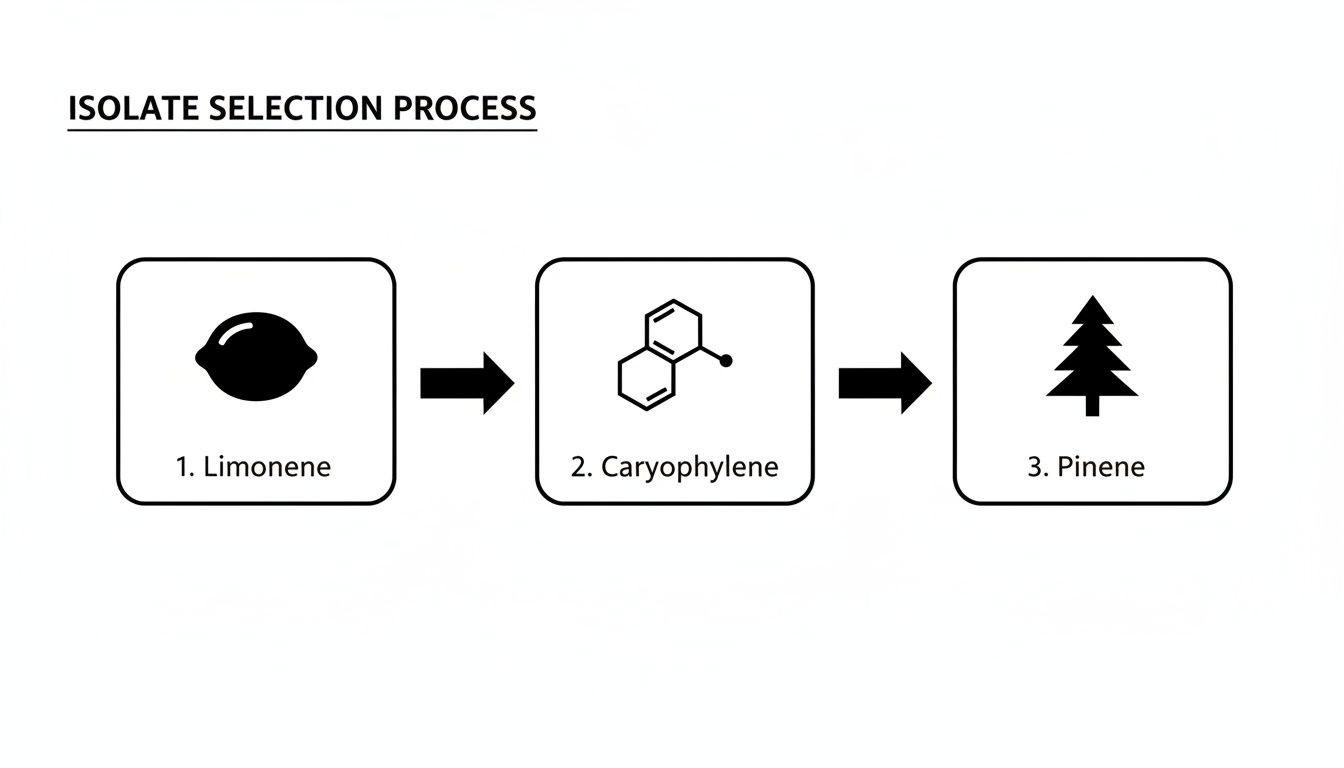
The key takeaway is to build your formula around a functional trio of terpenes first. Once that core is established, you can introduce supporting isolates to dial in the perfect aromatic profile.
Calculating and Mixing a Batch
In product formulation, precision is paramount. Before mixing, calculations must be exact. Most formulators operate within a total terpene concentration of 5% to 10% by weight. For a nausea-focused vape cartridge, we find that starting at 6-7% is the optimal range.
Let's walk through a 100-gram test batch with a 7% terpene concentration.
First, calculate the total terpenes needed: 100g of distillate × 0.07 = 7g of total terpene blend.
Next, break that down using your isolate ratios:
- Limonene: 7g × 0.40 (40%) = 2.8g
- Beta-Caryophyllene: 7g × 0.30 (30%) = 2.1g
- Pinene: 7g × 0.15 (15%) = 1.05g
- Other Isolates: 7g × 0.15 (15%) = 1.05g
Use a calibrated scale that measures to at least two decimal places (0.01g). First, combine all individual isolates into a glass beaker to create the 7-gram master blend. Mix thoroughly before adding to the distillate.
Pro-Tip: Always start with small test batches. It is far more cost-effective to tweak a 100-gram sample than to discover a formulation error in a multi-kilo production run. Document every step meticulously.
Proper Mixing Techniques for Homogeneity
The final step is combining your terpene blend with the winterized distillate. The technique involves using gentle, consistent heat to lower the distillate's viscosity just enough for homogenous mixing.
Gently heat your distillate in a sealed glass container to 120-140°F (50-60°C). Do not exceed 150°F, as you will begin to degrade volatile top notes like Limonene and Pinene, altering your final flavor and aromatic profile.
Once the distillate is fluid, pour in your pre-mixed terpene blend. Stir thoroughly with a glass rod or a magnetic stirrer on a low setting for at least 15-20 minutes to ensure complete homogenization.
After mixing, allow the blend to rest and cool for 24 hours. This resting period is critical, allowing the flavors and aromas to fully integrate. Only after this step will you have a true representation of the final product profile before filling cartridges.
Building a Unique Aromatic Profile for Product Differentiation
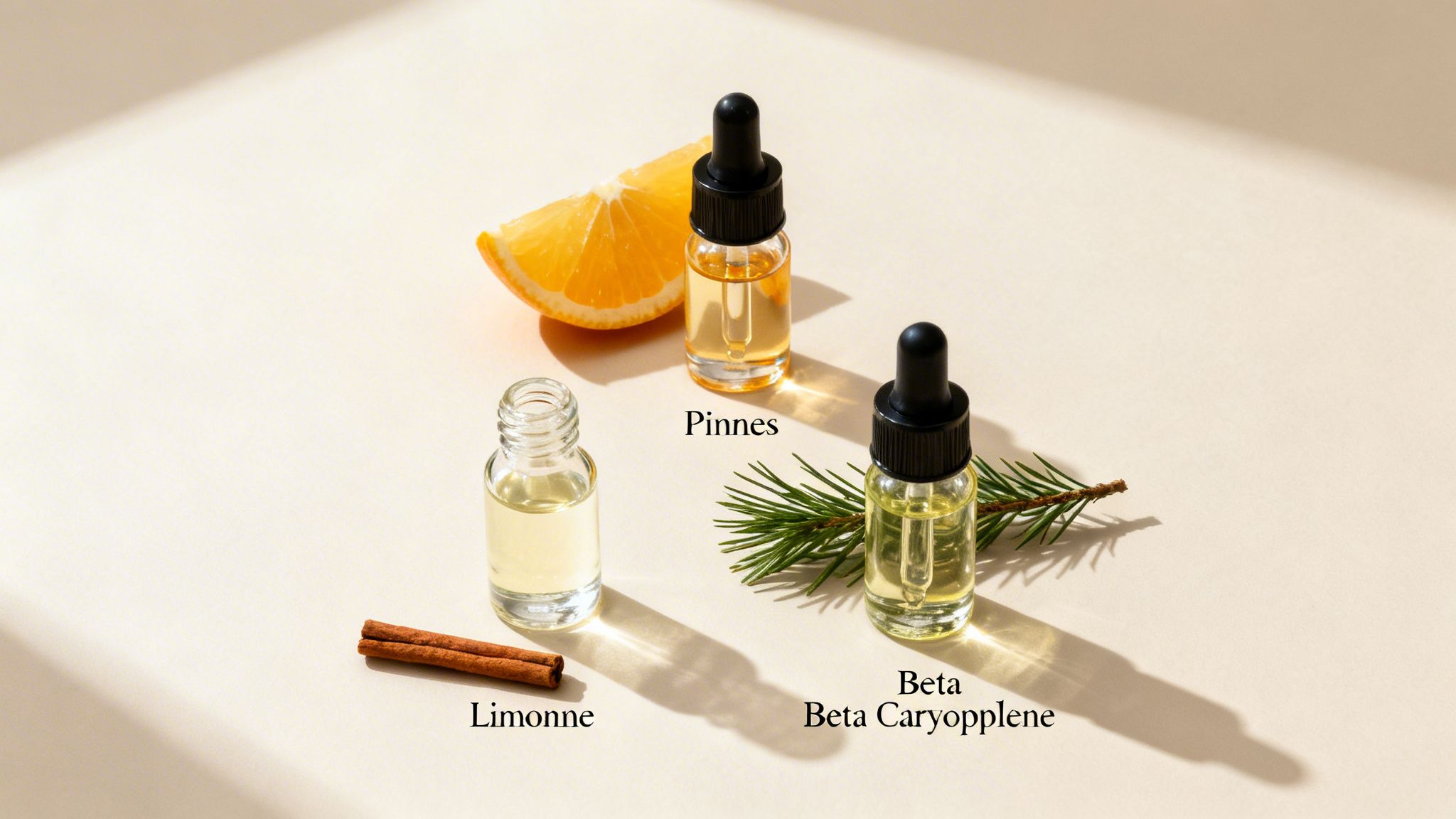
An effective product is necessary, but a poor sensory experience will hinder customer retention. For a consumer experiencing nausea, the aromatic profile is even more critical. The objective is not just to blend effective isolates, but to create a sophisticated aroma that signals comfort and quality from the first interaction.
Adopt a perfumer's methodology by layering top, mid, and base notes. Each layer unfolds at a different rate, creating a memorable experience that differentiates your product. A well-constructed profile doesn't just smell pleasant—it tells a story and reinforces the product’s purpose.
Designing the Aromatic Journey
In the foundational blend, our core isolates already serve specific aromatic roles. Understanding their placement is key to creating a profile that feels intentional and premium.
Top Note (Limonene): This is the aromatic hook. Limonene delivers a bright, sharp citrus burst that feels clean and invigorating—an immediate freshness that is highly desirable when feeling queasy.
Mid-Note (Pinene): As the citrus begins to mellow, Pinene introduces its crisp, herbal, and clean scent. It is the heart of the blend, connecting the bright top note to the deeper base and preventing the aroma from feeling one-dimensional.
Base Note (Beta-Caryophyllene): This is the anchor. The warm, spicy, and woody character of Beta-Caryophyllene provides a grounding, comforting finish. Its lower volatility means it lingers, providing staying power and a lasting impression of warmth.
This layered approach gives your blend a dynamic character, a significant upgrade from a single, flat scent. You can explore further pairings by referencing a terpene flavor chart to see how different aromas synergize.
From Blueprint to Signature Scent
With the core structure established, the final 15% of your formulation is your opportunity to create a unique signature.
For instance, in developing a "Ginger-Citrus Soothe" vape cartridge, you would start with the base: 40% Limonene, 30% Beta-Caryophyllene, and 15% Pinene. You then use the remaining 15% allocation to add unique character.
To achieve a spicy-sweet ginger note, you could introduce a small percentage of a ginger-like isolate. You might also add Humulene, which has an earthy, hoppy profile that complements the spicy Beta-Caryophyllene, making the base even richer and more complex.
A memorable aromatic profile is a powerful differentiator. In a crowded market, a product that smells as good as it functions is far more likely to build a loyal customer base. The "Ginger-Citrus Soother" concept moves beyond a generic blend and becomes a specific, branded experience.
This method allows you to craft a flavor that is both effective and unforgettable. You are no longer just making a generic anti-nausea product; you are creating a complete sensory experience. This level of detail communicates quality and gives consumers a compelling reason to choose your product repeatedly.
Ensuring Safety and Marketing Compliance
A superior formulation is only half the equation. Bringing that product to market safely and responsibly is what distinguishes a short-lived product from a trusted brand. For formulators working with terpenes for nausea, navigating safety protocols and marketing regulations is paramount.
Your product's integrity is built on its ingredients. Every terpene isolate and blend must be accompanied by a Certificate of Analysis (COA). This is non-negotiable proof that the raw materials are free from pesticides, heavy metals, and residual solvents. If a supplier cannot provide a batch-specific COA, do not proceed.
The Art of Compliant Language
A primary challenge in this industry is communicating product benefits without making prohibited medical claims. The line is fine, and a single misstep on a label or website can trigger regulatory scrutiny.
Mastering compliant language is essential. This means shifting focus from promising a cure to describing an experience. Instead of stating your product "stops nausea"—a clear medical claim—use language that suggests comfort and a pleasant sensory journey.
The key is not what you can't say, but how creatively you use what you can. Describe the comforting aromatic profile or the soothing experience it provides. Your role is to guide the consumer, not to prescribe a medical treatment.
While you cannot make claims on packaging, your formulation should be informed by science. The anti-nausea effects of certain compounds are well-documented. Early research on synthetic THC, for instance, showed it produced a 71% rate of complete nausea absence in patients, far surpassing the placebo. You can see the data from these foundational antiemetic studies to understand the scientific basis for these effects.
This knowledge informs your formulation, while your marketing language maintains compliance.
Compliant Language for Marketing Your Product
| Instead Of (Medical Claim) | Use This (Compliant Language) |
|---|---|
| "Stops nausea and vomiting" | "A comforting aroma for uneasy moments" |
| "Treats morning sickness" | "A settling blend designed for a soothing start to your day" |
| "Antiemetic formula" | "Features a profile of terpenes known for their grounding, earthy notes" |
| "Cures motion sickness" | "A crisp, refreshing scent perfect for travel" |
Compliant language is about suggestion, not statement. You are painting a picture of comfort, allowing the product's quality and the customer's experience to speak for themselves.
Final Product Testing for Consistency
Sourcing clean terpenes is the first step; testing your final product is the last. Final product testing is the only way to guarantee batch-to-batch consistency and build brand trust. This final COA confirms your formulation's precision and ensures no contaminants were introduced during production.
This is your ultimate promise of quality to customers and partners. It proves that a product from batch #101 offers the exact same experience as one from batch #102. That reliability is what drives customer loyalty.
Finally, stay current on the legal framework surrounding terpenes. For a solid overview, you can review our guide that answers the question, are terpenes legal?. Treating safety and compliance as core business functions is how you build a powerful, enduring brand.
Common Formulation Questions, Answered
With the scientific framework established, we now address practical questions that arise during the formulation process. Here are answers to common queries from formulators developing anti-nausea products.
What is a good starting terpene percentage for a nausea-relief vape cart?
For a vape cartridge formulated for nausea relief, the optimal total terpene concentration is between 6% and 8% by weight.
We recommend starting at the lower end of this range, around 6%. A consumer experiencing nausea is often sensitive to overpowering flavors and aromas. A 6% concentration is typically sufficient to deliver the desired effects and a pleasant aroma without being overwhelming.
From this baseline, create small test batches at 7% and 8% to determine if the increased intensity improves the user experience or becomes too harsh.
Should I pre-batch my nausea-focused terpene blend?
Yes. Pre-batching your terpene blend is a best practice for ensuring consistency and streamlining your production workflow.
Creating one large master batch of your signature anti-nausea profile eliminates the minor variations that can occur when measuring individual terpenes for each production run. This simple step guarantees product uniformity.
Store your master blend in an airtight, amber glass container in a cool, dark place. For production, simply measure the total amount of the pre-made blend required for your distillate batch. This saves time and reduces the margin for error.
What other terpenes pair well with Limonene and Beta-Caryophyllene?
While Limonene and Beta-Caryophyllene are the primary functional isolates, several other terpenes can add nuance and further functionality to your blend, even in small percentages.
- Linalool: Known for its calming, floral scent, Linalool is excellent for addressing the anxiety that often accompanies nausea, adding a layer of relaxation to the experience.
- Humulene: As an isomer of Beta-Caryophyllene, Humulene contributes an earthy, hoppy note that deepens the blend's grounding base while offering its own unique benefits.
- Myrcene: This common terpene adds a subtle fruity, earthy aroma and is well-known for its relaxing effects, making it a suitable choice for a blend intended for evening use.
A superior formulation is synergistic. Introducing small amounts of terpenes like Linalool or Myrcene creates a product that is more complex, more effective, and differentiated from simpler, two-note blends.
How does my cannabinoid distillate choice affect the formulation?
The cannabinoid distillate is not merely a carrier; it is a critical component of the final product's effect profile. The same terpene blend will produce a vastly different product when combined with a high-THC distillate versus a high-CBD or a balanced 1:1 base.
Always consider your target consumer and the intended product outcome. A high-THC base will leverage THC's own powerful antiemetic properties, resulting in a potent, psychoactive product. Conversely, a CBD-dominant distillate creates a non-intoxicating option that focuses more on the inflammation and anxiety associated with nausea. Your terpene blend must complement the cannabinoid profile to achieve the desired effect.
Ready to begin formulating your own signature blends? At Gold Coast Terpenes, we provide the highest-purity, lab-verified isolates and strain-inspired profiles to bring your product vision to life. Explore our full catalog at https://www.goldcoastterpenes.com and build a product your customers can trust.