
This guide is a technical deep dive for product formulators looking to leverage the Sour Apple strain terpene profile for cannabis product formulation. Born from a cross of Sour Diesel and Cinderella 99, its profile is a proven performer. We're here to translate that iconic aroma into a practical, repeatable formula for developing successful commercial products, particularly vape cartridges.
Translating the Sour Apple Profile for Commercial Products
For product manufacturers, the Sour Apple profile is more than just a catchy name—it's a reliable sensory profile with established market appeal. Its staying power comes from the precise balance of sharp, green apple notes against a classic gassy diesel finish. This is a profile that excels in applications like vape cartridges, where flavor accuracy is paramount for brand differentiation.
Instead of general strain information, we're going straight to commercial application. We’ll deconstruct its chemical signature to provide a clear roadmap for replicating the flavor of Sour Apple accurately. The goal is to empower formulators to create products that deliver an authentic experience, batch after batch.
Formulation Goal: The objective isn't merely mimicking a flavor. It's about engineering a stable, scalable, and market-ready product. This requires understanding how each terpene contributes to the overall sensory experience, from the initial tangy top note to the earthy base notes that provide a complete finish.
This technical breakdown is your foundation for creative formulation while maintaining precision. We’ll be focusing on a few key areas:
- Aroma & Flavor Deconstruction: Pinpointing the top, middle, and base notes that define the profile.
- Terpene Blueprint: Identifying the dominant compounds and their ideal ratios for accurate replication.
- Practical Formulation: Applying the profile to common carriers like distillates for vape cartridges.
By mastering the components of a Sour Apple strain-inspired terpene blend, you can ensure your products have a distinct competitive edge. Of course, this starts with sourcing high-quality isolates and blends. Our guide on where to buy terpenes is a valuable resource for optimizing your procurement strategy. This approach moves beyond simple flavor matching into strategic product design.
Deconstructing the Signature Sour Apple Aroma and Flavor
The primary driver of the Sour Apple strain's commercial success is its distinct aroma and flavor. For a product formulator, executing this profile correctly is non-negotiable. A failure in sensory accuracy can alienate the target consumer before they even engage with the product.
What makes it unique is not a single, flat apple scent. It's a complex, layered experience, and to build it correctly, you must understand each component's role.
The first sensory impression is the unmistakable sharp, tangy top note. This is analogous to the bright, almost sour rush of a crisp Granny Smith apple. This is the profile's "hook" and the source of its name recognition.
Building the Aromatic Foundation
However, the profile's depth comes from what follows the initial fruit burst. Immediately behind it, a more pungent, gassy character provides the profile's backbone. This is the Sour Diesel lineage expressing itself, adding a familiar fuel-like funk.
This diesel layer is what separates the profile from a simple candy flavor. It grounds the profile, adds complexity, and provides the classic cannabis signature that experienced consumers recognize. Without it, the flavor would be overly sweet and one-dimensional.
Finally, the base notes tie the entire experience together. These are more subtle, typically earthy with a hint of sweetness, and they smooth out the sharp edges of the apple and diesel. This foundation is what creates a pleasant, lingering finish, resulting in a complete, full-bodied experience.
The key to successful formulation is understanding how these top, mid, and base notes interact. They are not merely mixed; they are layered to create a specific sequence of sensations. The sharp apple must present first, followed by the diesel, and rounded out by the earthy base.
A Sensory Blueprint for Formulation
Think of this structure as your blending roadmap. Each layer has a specific function, and achieving the correct balance is the secret to a successful final product.
When you're working with individual terpene isolates to build this profile from scratch, this map is your guide to recreating the authentic Sour Apple experience. For a closer look at how specific terpenes create these layers, our comprehensive terpene flavor chart is an essential resource for any formulator.
Mastering this interplay is what will make your product stand out. It’s the difference between a generic "apple" flavor and a true-to-strain Sour Apple that consumers will seek out by name.
The Core Terpene Blueprint for Sour Apple Formulation
Nailing the Sour Apple profile is all about translating its iconic aroma into a consistent, repeatable formula. To achieve that signature tangy, gassy, and earthy character accurately, you must know which terpenes are performing the primary functions. This is not about guesswork; it's about building from a chemical blueprint.
The aroma can be viewed as a sensory journey. It begins with crisp apple, shifts to pungent fuel, and finishes on a rich, earthy base.
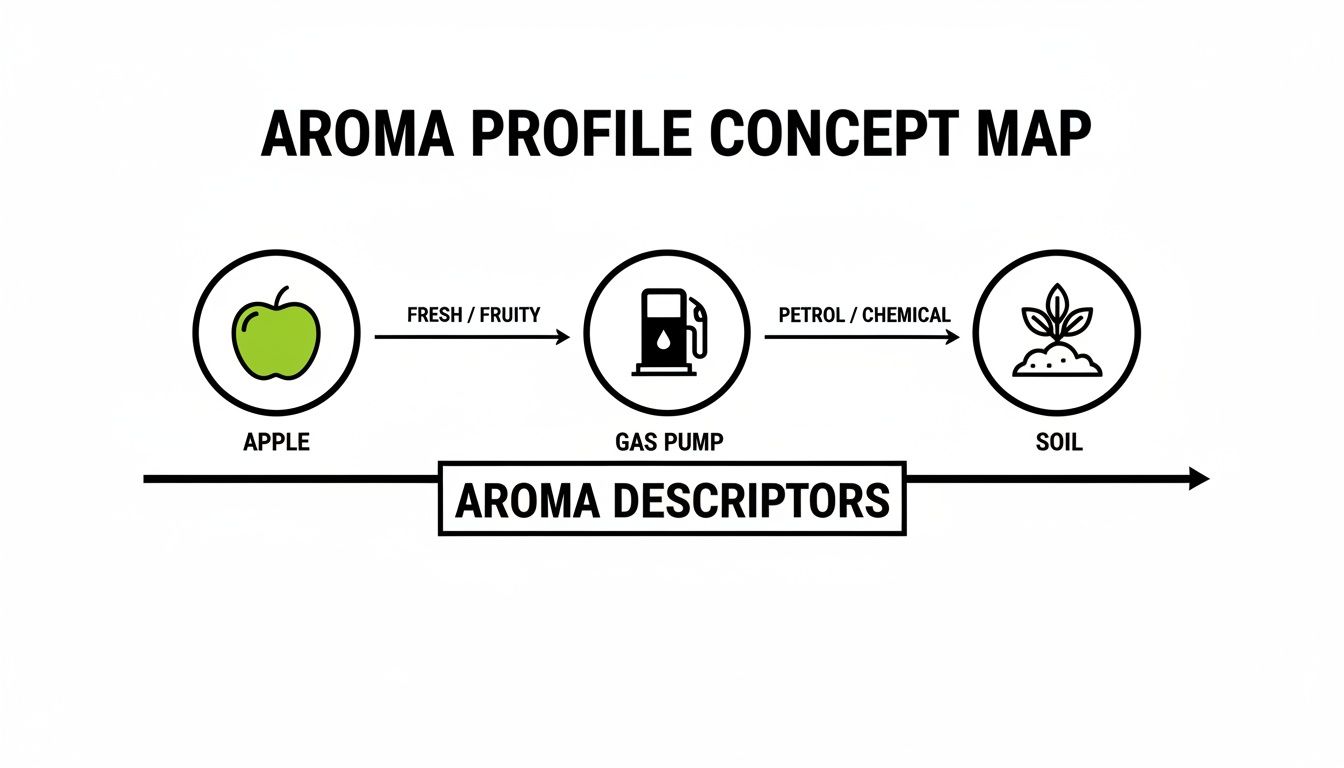
As a formulator, your job is to guide the consumer through this exact sensory experience. Let's break down the components needed to do so.
The Main Players: Primary Terpenes and Their Roles
The core of the Sour Apple profile is built on a trio of primary terpenes. Each one plays a specific role, much like notes in a musical chord.
Limonene (Top Note): This is the primary driver of the profile's identity. Limonene delivers the unmistakable sharp, sour apple punch at the forefront. It's the first aromatic perceived and gives the strain its name.
Beta-Caryophyllene (Mid Note): This terpene introduces complexity. Beta-Caryophyllene acts as the bridge, contributing a spicy, peppery character that reflects the strain's diesel heritage. It prevents the profile from becoming one-dimensionally sweet.
Myrcene (Base Note): Myrcene provides the foundation. It offers a subtle, musky earthiness that anchors the brighter top and mid notes. This terpene smooths the overall profile and creates a satisfying, lingering finish.
When you're formulating with a Sour Apple strain-inspired terpene blend, think of it as a balancing act. Limonene provides the initial impact, Beta-Caryophyllene adds robust spice, and Myrcene ties it all together for a cohesive experience.
This specific terpene combination isn't an accident. It perfectly reflects the strain's reported effects, which contributed to its initial market success. For a deeper dive into its market history, you can find more on the Sour Apple strain's market reception.
Building a Precise Formulation
Achieving an authentic Sour Apple profile requires more than just mixing the three primary terpenes. The nuance is in the details. To create a truly authentic experience, you must incorporate the secondary terpenes—the supporting cast.
Minor contributors like Alpha-Pinene and Humulene add subtle hints of pine and hops that make the final product feel complete and full-bodied. Without them, the blend can feel hollow or incomplete. If you are refining your understanding of these compounds, our guide to the properties of different terpenes is a fantastic resource for building foundational knowledge.
To streamline your development, we've outlined a blueprint. This table breaks down the key terpenes, their role in the aroma, and the concentration ranges we've found work best for a classic Sour Apple profile.
Sour Apple Terpene Profile Blueprint
| Terpene | Aromatic Contribution (Note) | Typical Percentage Range | Sensory Description |
|---|---|---|---|
| Limonene | Dominant Top Note | 30% – 40% | Bright, sharp citrus, sour green apple |
| Beta-Caryophyllene | Dominant Mid Note | 15% – 25% | Spicy, peppery, gassy fuel |
| Myrcene | Dominant Base Note | 10% – 20% | Earthy, musky, slightly fruity |
| Alpha-Pinene | Secondary Note | 5% – 10% | Fresh pine, sharp, clean |
| Humulene | Secondary Note | 3% – 8% | Woody, hoppy, subtle earth |
| Terpinolene | Tertiary Accent | 1% – 5% | Complex, floral, herbal, lime |
Use this blueprint as your starting point. Whether building a blend from isolates or refining a pre-made one, these ratios provide the control to hit your specific sensory target with high fidelity. This is how you ensure consistency and maintain brand quality.
Practical Formulation for Distillates and Vape Cartridges

Now for the hands-on application. Integrating a terpene profile into a high-potency distillate requires precision. The objective is to infuse the vibrant Sour Apple strain terpene profile without creating a harsh or unstable final product. This is more than adding terpenes to oil; it's about engineering a smooth, consistent experience for distillate infusions.
The most critical variable is your mixing ratio. For most vape cartridge formulations, a terpene concentration between 5% and 10% by weight is the industry standard. We recommend starting low. A 5-7% mixture is an excellent starting point to establish the baseline flavor. This is typically sufficient to achieve a bold Sour Apple taste that is smooth on inhalation. Exceeding 10% risks creating a product that is overpowering, tastes chemical, and causes throat irritation.
Achieving a Stable Homogenization
Once your ratio is determined, the next crucial step is homogenization. This process prevents terpene separation and ensures a uniform distribution, eliminating "hot spots" in your oil. A perfectly homogenized batch means every cartridge filled will have the exact same sensory profile—a non-negotiable for brand consistency and consumer trust.
Effective homogenization relies on two factors: gentle heat and thorough agitation.
- Temperature Control: Your distillate must be a workable viscosity. Gently warming it to 40-60°C (104-140°F) is ideal for proper mixing. Exceeding this range can cause the more volatile terpenes, like Limonene, to degrade, which will compromise the signature apple aroma.
- Mixing Equipment: For R&D and small test batches, a magnetic stirrer on a hot plate is sufficient. For production scale-up, an overhead mixer or dedicated homogenization equipment is necessary to ensure every part of the terpene blend is evenly integrated into the distillate.
For formulators, the final product must be perfectly uniform. An inconsistent mix can lead to negative customer feedback and damage brand reputation. The aim is a stable solution where the terpene blend and distillate are fully integrated.
Overcoming Common Formulation Hurdles
During vape formulation, two common challenges are crystallization and viscosity issues. High-purity cannabinoid distillates, particularly those high in CBD or THCa, have a tendency to crystallize over time, especially when exposed to cold temperatures.
While the Sour Apple terpene profile itself does not cause crystallization, using a high-quality, professionally formulated Sour Apple strain-inspired terpene blend is recommended, as these are designed for maximum compatibility and can help minimize such issues.
If the final mixture is too viscous for your specific cartridge hardware (a frequent problem), the solution is straightforward. A flavorless, natural terpene diluent can be used to thin the oil. A small amount, typically 1-5%, is usually sufficient to improve wicking without significantly diluting the flavor profile. We cover this and other practical techniques in our full guide on how to use terpenes.
Walkthrough: Formulating a 1kg Batch
Let's apply this to a real-world example. Assume you are preparing a 1kg batch of distillate with a target terpene concentration of 7%.
- Total Batch Weight: 1,000 grams
- Terpene Weight (7%): 1,000g * 0.07 = 70 grams of Sour Apple terpenes.
- Distillate Weight: 1,000g – 70g = 930 grams of cannabinoid distillate.
First, gently heat the 930g of distillate until it is fluid. Once at temperature, slowly add the 70g of the Sour Apple terpene blend while the mixer is engaged. Allow it to mix thoroughly for at least 15-30 minutes to ensure complete homogenization before filling your cartridges.
What Growing Sour Apple Teaches Us About Its Flavor
To accurately capture the essence of Sour Apple in a formulation, it is useful to understand the plant itself. Cultivation practices have a massive impact on its final chemi-cal expression—especially the terpenes that create its signature tangy, fruity profile. For product developers, this horticultural knowledge provides a roadmap to an authentic final product.
Sour Apple is known for being a stable and efficient cultivar, which is excellent news for formulators. This means the terpene and cannabinoid profiles from a well-managed harvest are consistent and documented. A professional terpene blend aims to capture that peak expression, giving you a reliable sensory target.
Dialing in Terpene Production
Optimal Sour Apple chemotypes are not accidental. Skilled growers manipulate the environment to maximize terpene synthesis. This is what gives the flower its powerful aroma and rich flavor.
Key environmental factors include:
- Humidity: During the flowering stage, maintaining humidity between 40-50% is crucial. This helps prevent mold while encouraging the plant to produce resinous trichomes where terpenes are synthesized.
- Temperature: Managing temperature, often by introducing slightly cooler nights, can trigger the development of more complex aromatic compounds, adding depth to the final profile.
- Growing Methods: Growers often use advanced techniques to maximize output.
The data demonstrate the strain's efficiency. Indoor yields regularly reach 500-550g/m² with a rapid flowering time of 8-9 weeks. This output is a result of its hybrid genetics, which respond well to methods like Sea of Green (SOG) or Screen of Green (ScrOG). These techniques can increase yields by another 30-50% over standard cultivation.
The plant's chemical profile makes it ideal for creating popular products like vape carts. For a deeper look at its cultivation performance, consult this comprehensive Sour Apple strain guide.
The Formulator's Edge: A high-quality terpene blend is not a random mixture of aromatic compounds. It is a chemical snapshot of a perfectly cultivated plant at its peak expression, capturing the nuanced notes that result from expert horticulture.
Understanding this context helps one appreciate what goes into a top-tier, strain-specific profile. When you use a blend designed to replicate these ideal conditions, you are essentially leveraging the "best of the harvest" in a stable, liquid form. This ensures your products deliver the authentic and consistent experience that builds brand loyalty.
Your Sour Apple Formulation Questions, Answered
When dialing in a new product, certain technical questions inevitably arise. To help you accelerate your development process, we've compiled answers to the most common questions we receive regarding our Sour Apple strain-inspired terpene blend.
What’s the Best Starting Percentage for This Blend?
For most vape applications, such as cartridges, an excellent starting point is 5-7% terpenes by weight. This range is the sweet spot for delivering an authentic Sour Apple flavor and aroma without introducing harshness.
If a more pronounced flavor is desired, you can increase the concentration towards 10%. It is critical to conduct small test batches first to evaluate performance. Always use a calibrated digital scale and ensure thorough mixing—consistency is paramount for scalability.
My Sour Apple Vape Tastes a Little Harsh. How Do I Fix It?
Harshness in a vape formulation is a common issue with clear solutions. It is almost always attributable to one of two factors: an excessively high terpene ratio or improper mixing.
First, verify your calculations. If your terpene concentration exceeds 10%, this is the likely cause. If the ratio is correct, you may have a formulation that is sensitive to one of the spicier isolates, such as Beta-Caryophyllene. Consider dialing back that specific component slightly.
Another professional technique is to introduce a flavorless diluent. A product like our Terpene Diluent at a low concentration of 1-2% can significantly smooth the overall experience. Finally, check your hardware. Overheating the oil can scorch the terpenes and create an acrid taste, so ensure your battery is set to an appropriate temperature.
Can I Use This Sour Apple Profile in Other Products Besides Vapes?
Absolutely. The Sour Apple strain profile is highly versatile and performs well in a wide range of applications beyond vapes.
- Edibles: For products like gummies or chocolates, introduce the terpenes into the oil or fat base after high-heat steps are complete. This preserves the volatile top notes.
- Tinctures: This blend is effective for masking the natural, sometimes earthy taste of carrier oils like MCT or hemp seed oil, improving the final product's palatability.
- Topicals: In a lotion, balm, or salve, the fresh, tangy aroma creates a premium, refreshing user experience.
Note that usage rates for non-inhalable products are significantly lower. For any non-vape application, begin with a concentration below 1% and adjust upward based on sensory evaluation.
Ready to formulate a product with a distinct market advantage? Our Sour Apple Strain-Inspired Terpene Blend provides the authentic, reliable profile you need to craft exceptional products.
Shop the Sour Apple Profile Now