
For cannabis product formulators, the Pineapple Express profile is a proven commercial asset. Its enduring popularity stems from a bright, tropical flavor and a balanced, sativa-leaning profile that has consistent consumer appeal. This makes it a strategic choice for developing vapes, distillates, and other infused products intended for high-velocity sales. However, successful replication requires a technical understanding of its terpene architecture.
Why Formulators Rely on the Pineapple Express Profile
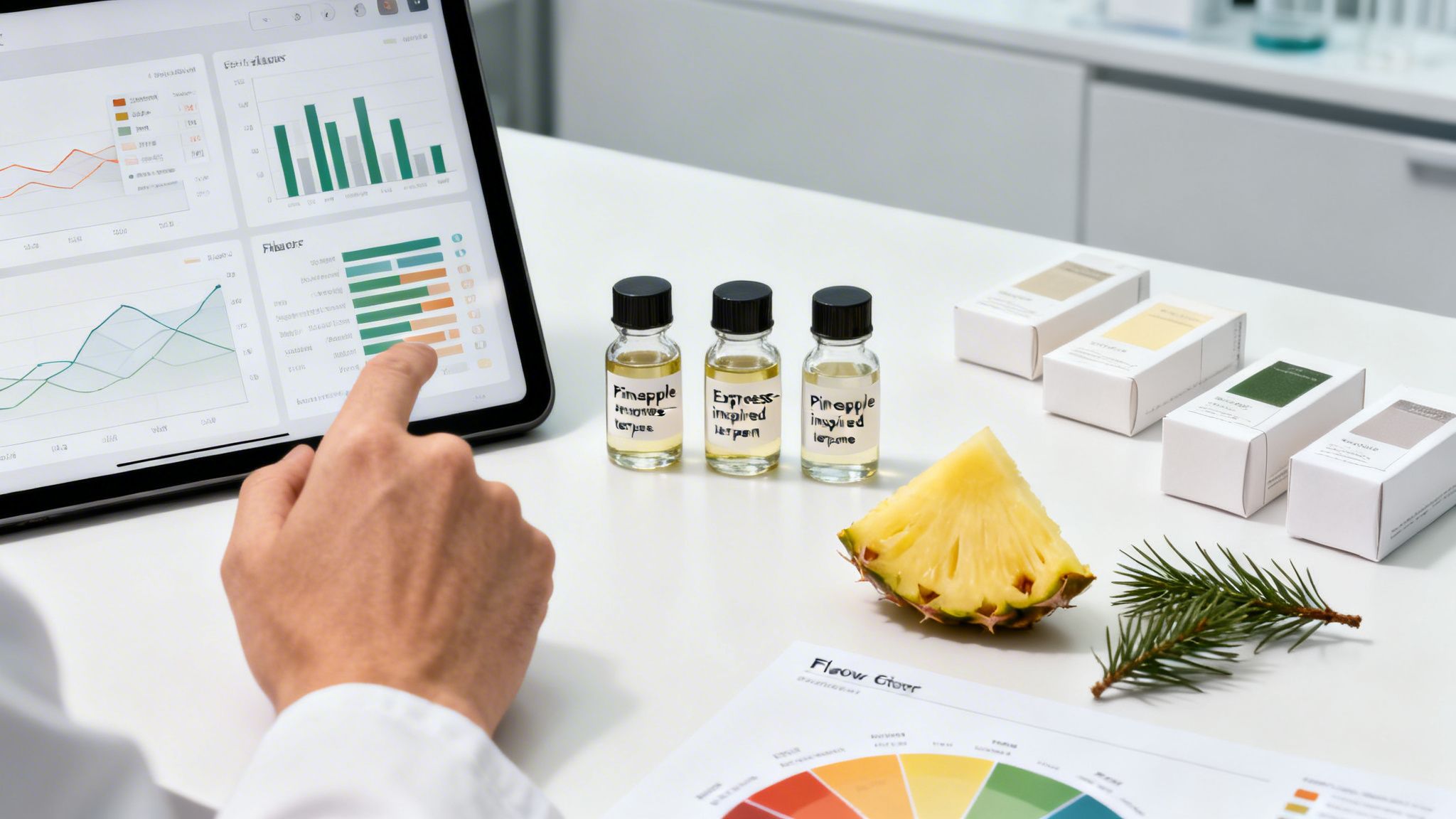
While countless strain profiles trend and fade, Pineapple Express has remained a fixture in product development. This is not incidental. Its market longevity is a direct result of its consistent performance and widespread name recognition, which creates built-in demand for any product featuring it. The strain’s pop culture origins have translated into tangible market value that continues to drive sales today.
Driving Product Success with a Legendary Profile
For formulators, the core value of the Pineapple Express profile lies in its crowd-pleasing aroma and flavor. Its characteristic notes of tropical fruit, fresh pine, and subtle spice are highly effective at masking the earthy or grassy off-notes common in certain distillates.
This makes the Pineapple Express terpene profile an invaluable tool for product formulation. It is ideal for elevating base cannabinoid oils, ensuring a clean, premium flavor that meets market expectations.
This functional versatility enables the creation of a diverse product range that consistently delivers a high-quality sensory experience. From vape cartridges designed for an energetic effect to edibles with a distinct tropical flavor, the profile is exceptionally adaptable.
Translating Recognition into Revenue
The "Pineapple Express" name carries significant weight in the marketplace. When consumers see it on a label, they have a preconceived notion of the flavor and experience, reducing the need for extensive consumer education and marketing spend. This built-in brand recognition can accelerate a new product's path to profitability.
By mastering the replication of this iconic terpene blend, formulators tap into a pre-primed market. A precise formulation delivers:
- Instant Consumer Trust: Leveraging a familiar and positively regarded strain name.
- Predictable Sales Velocity: Capitalizing on a profile with proven, year-round demand.
- Enhanced Product Value: A premium flavor experience justifies a premium price point.
For any formulator building a competitive product line, understanding terpene selection and blending is critical. Deconstructing what makes this profile effective provides the blueprint not only for replication but also for informed innovation. For a deeper dive into this subject, explore the art of strain selection and how it impacts product development.
Replicating the Flavor of Pineapple Express: A Terpene Map
To accurately replicate the essence of Pineapple Express in a manufactured product, one must understand its terpene signature. This goes beyond combining generic fruit aromas; it requires constructing a balanced, layered profile where each terpene isolate performs a specific role.
The aromatic structure of Pineapple Express is built upon a core trio of terpenes: Myrcene, Caryophyllene, and Pinene. The precise ratio of these isolates is what distinguishes a convincing formulation from a simplistic imitation.
Myrcene: The Tropical Foundation (Base Note)
Every robust flavor profile requires a solid foundation, and for Pineapple Express, that foundation is Myrcene. This terpene provides the deep, juicy pineapple body and ripe sweetness that defines the strain.
As a base note, Myrcene provides the rich, fruity foundation upon which the other aromatic layers are built. As a heavier molecule, its sweet, mango-like aroma provides staying power. Insufficient levels will result in a thin, sharp-tasting product. Conversely, an excess will overpower the brighter notes, creating a cloying, heavy flavor.
The flowchart below illustrates how these core terpenes synergize to build the strain's signature aroma.
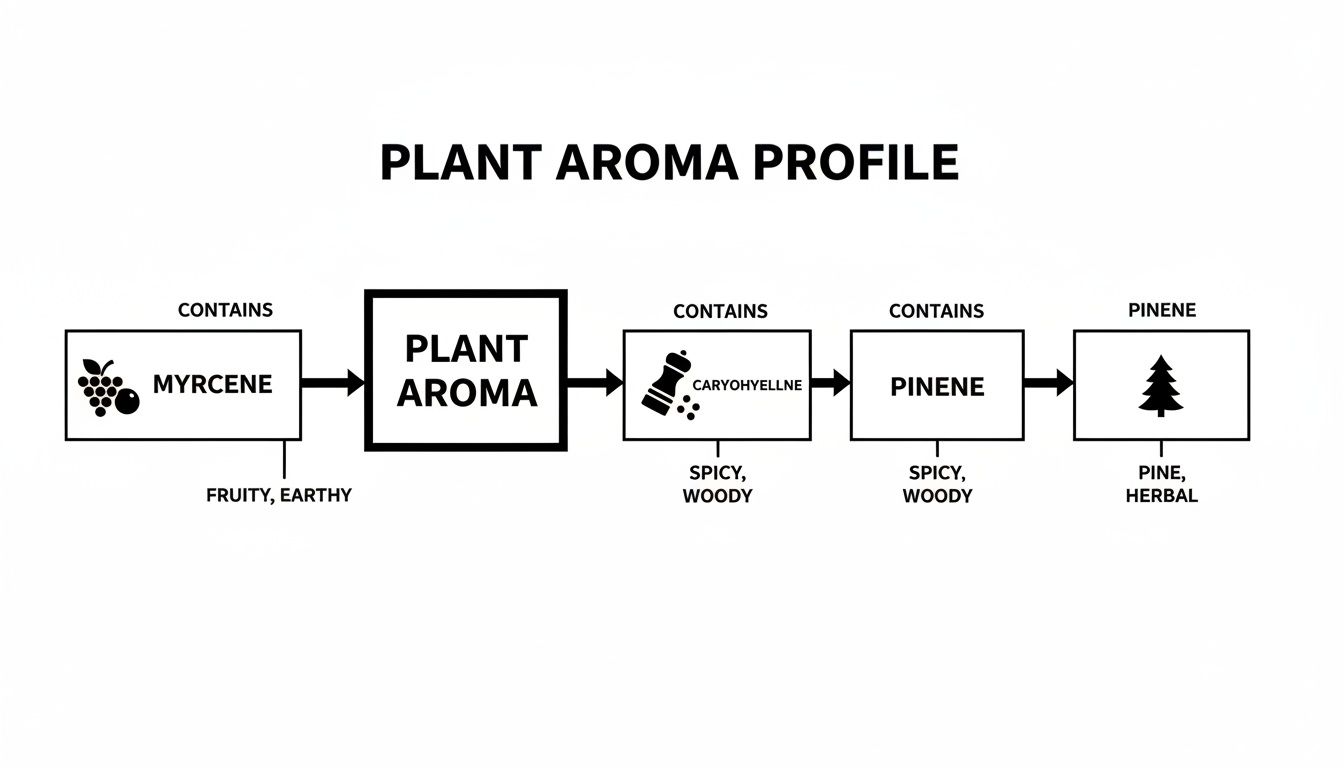
The fruity base from Myrcene, the spicy middle notes from Caryophyllene, and the bright, herbal lift from Pinene work in concert to create a complete and dynamic sensory experience.
Caryophyllene: The Spicy Counterpoint (Middle Note)
The profile is not purely fruit-forward. Beta-Caryophyllene adds a crucial layer of spicy complexity. If Myrcene represents the sweet pineapple flesh, Caryophyllene acts as a counterpoint of black pepper and cedar.
This middle-note terpene prevents the profile from becoming overly sweet or one-dimensional. It introduces a warm, woody, and clove-like character that bridges the gap between the fruity base and the sharp pine top notes. For formulators, Caryophyllene is a key balancing agent, adding a sophisticated edge that enhances the overall profile.
Pinene: The Bright, Zesty Finish (Top Note)
The final primary component is Pinene. Both Alpha- and Beta-Pinene function as top notes, delivering the initial aromatic impression. They provide a fresh, energetic burst of pine and a clean, herbal finish.
This is the "express" element in the Pineapple Express profile. Pinene lifts the entire blend, preventing it from feeling heavy and giving it a memorable, refreshing quality. Without it, the aroma would be flat and muted.
To provide a clearer schematic for formulation, the functional roles of these primary terpenes are outlined below.
Pineapple Express Dominant Terpene Formulation Roles
| Terpene | Note Category | Aromatic Contribution | Functional Influence |
|---|---|---|---|
| Myrcene | Base Note | Ripe, fruity, tropical sweetness with earthy undertones. | Anchors the profile, providing a rich, full-bodied foundation. |
| Caryophyllene | Middle Note | Warm, spicy, and woody with hints of pepper and clove. | Adds complexity and depth; balances the sweetness of the base notes. |
| Pinene | Top Note | Sharp, fresh pine with a clean, herbal brightness. | Lifts the overall aroma, providing an energetic and zesty initial impression. |
While this core trio establishes the architecture, secondary and tertiary terpenes are essential for achieving an authentic profile. These minor isolates add nuance and realism.
- Limonene: Adds a distinct pop of citrus, akin to fresh lime.
- Humulene: Contributes a subtle earthy, hoppy bitterness that complements Caryophyllene.
- Linalool: Introduces a soft, floral hint that smooths any sharp edges.
By carefully layering these compounds, you transition from a simple flavor to a complete sensory experience. To analyze how these ratios are implemented in a professionally crafted blend, you can explore our Pineapple Express strain-specific terpenes as a reference for your own formulation work.
Formulating Pineapple Express for Vape Cartridges
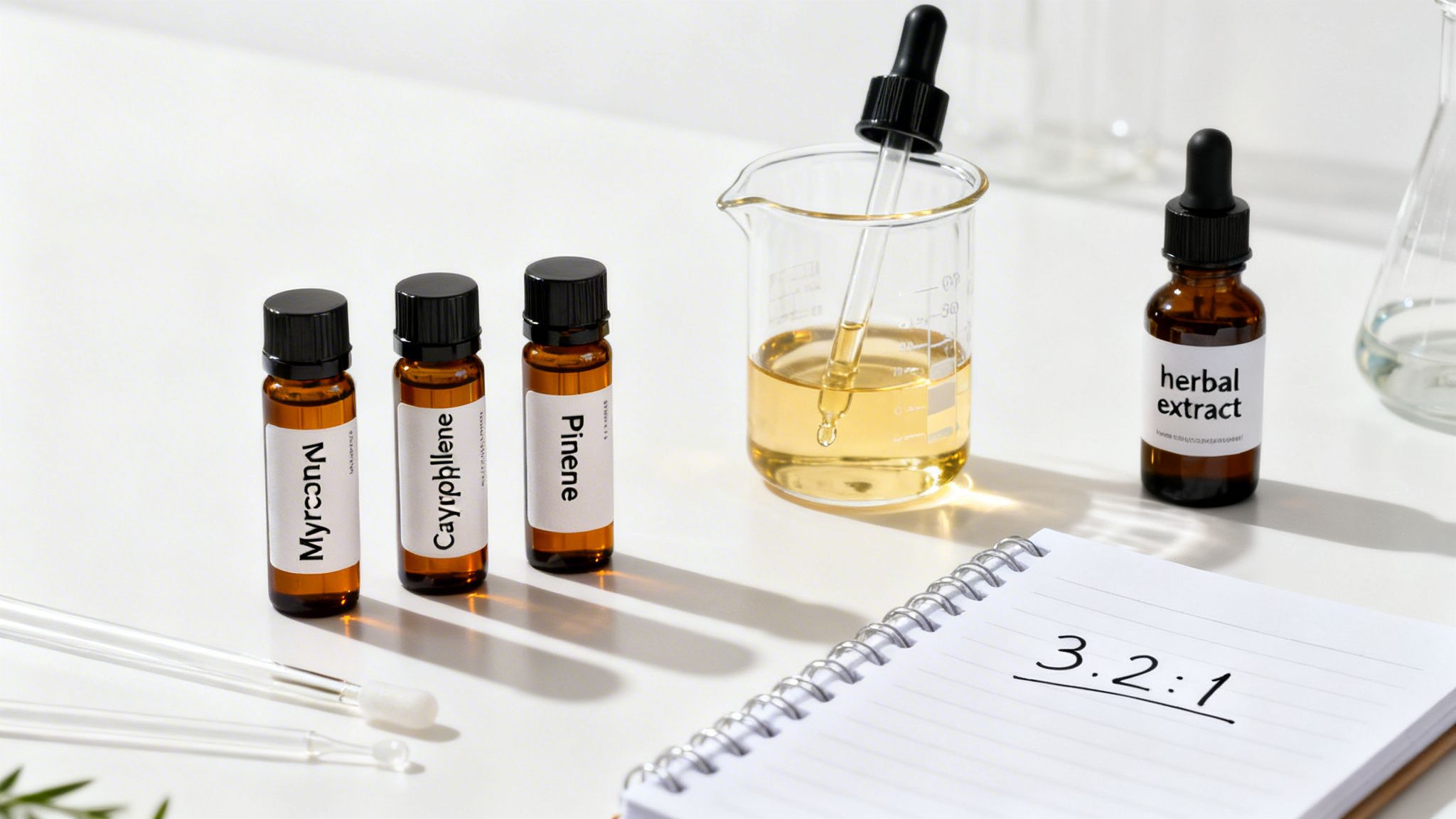
With the blueprint established, we move to practical application. Recreating a strain profile like Pineapple Express is an exercise in precision and sensory balancing. This section outlines a methodical approach to building this iconic profile for vape and distillate applications.
The process is analogous to a perfumer building a fragrance; you begin with the base, allow the components to marry, and then layer in the more volatile top notes.
Establishing the Profile Foundation
Every successful Pineapple Express formulation begins with a rich, tropical core dominated by Myrcene. Its characteristic sweet, mango-like aroma forms the bedrock of the entire profile, providing its signature fruity body.
However, Myrcene alone can present as one-dimensional. Caryophyllene is introduced as a middle note to provide a crucial spicy and woody counterpoint, preventing the blend from becoming cloyingly sweet. It functions as the bridge connecting the fruity base to the zesty top notes, creating a more sophisticated and layered aroma.
A validated starting ratio for these base and middle notes is approximately 3 parts Myrcene to 2 parts Caryophyllene. This combination yields a robust foundation that is fruity upfront with a warm, peppery finish—the ideal canvas for subsequent additions.
Once these two isolates are mixed, allow them to homogenize. This step provides a clear sense of the core profile, making it easier to accurately judge the impact of the top notes.
Layering the Top Notes for Vibrancy
With a solid foundation in place, the next step is to introduce the bright, energetic top notes that define the "express" character. Pinene and Limonene are the primary drivers here, delivering the fresh, sharp finish.
Pinene adds a clean, herbal lift, while Limonene contributes a distinct citrus note. The balance is critical. An overabundance of Pinene can result in a "pine cleaner" aroma, while too much Limonene will create a generic citrus flavor that masks the pineapple character.
A well-balanced starting framework for the complete profile often resembles:
- Myrcene: 3 parts
- Caryophyllene: 2 parts
- Pinene: 1 part
- Limonene: 0.5 parts
This is a baseline, not a rigid formula. From here, incremental adjustments can be made. To achieve a sharper, more citrus-forward aroma, increase the Limonene fractionally. To enhance the sweet, tropical finish, a slight increase in Myrcene may be warranted. If you need to review lab best practices, consult our guide on how to use terpenes safely and effectively in your lab.
Integrating with Distillates and Concentrates
Once the terpene blend is finalized, it must be integrated into the cannabinoid base (e.g., THC, CBD, or Delta-8 distillate). This stage presents challenges related to achieving a smooth, stable, and homogenous final product.
To ensure a clean mixture, gently warm both the distillate and the terpene blend before combination. This step lowers the viscosity of the oil, facilitating thorough mixing. The use of a magnetic stirrer or low-shear mixer is essential to ensure even distribution of the terpenes.
Common issues like separation or "hot spots" (pockets of high terpene concentration) are nearly always due to inadequate mixing. A well-homogenized batch not only delivers consistent flavor but also guarantees a stable product with a longer shelf life. Always conduct small-scale test batches to validate flavor and performance before committing to a full production run.
Advanced Techniques for Premium Distillate Flavoring
Matching the dominant terpenes of Pineapple Express will produce a recognizable product. However, creating a formulation that stands out in a competitive market and commands a premium price requires a more advanced approach. The key lies in leveraging minor terpenes to build layers of sophistication that mimic the authentic complexity of the original flower.
Elevating the Profile with Minor Terpenes
While Myrcene, Caryophyllene, and Pinene form the structural foundation, the artistry of premium formulation lies in the strategic use of minor terpenes. These compounds add the nuance and depth that sophisticated consumers can discern.
Consider these isolates as tools for a next-level Pineapple Express blend:
Humulene: As an isomer of Caryophyllene, Humulene introduces a dry, hoppy character essential for balance. It mitigates the syrupy sweetness of Myrcene, preventing a "candy-like" flavor and grounding the profile with an earthiness characteristic of fresh produce.
Linalool: This is a finishing agent for achieving a smooth, elegant profile. Linalool contributes a soft floral note, reminiscent of lavender, which tempers any sharp, zesty edges from Pinene. The result is a cleaner, more refined experience on the palate.
Terpinolene: Often a signature of classic Sativa profiles, Terpinolene can add a complex, multi-faceted aromatic lift. Its scent profile is a mix of fruit, flowers, and pine. A trace amount can elevate the entire blend, adding a bright energy that aligns with the strain's reputation.
Flavor Masking and Distillate Enhancement
From a practical standpoint, a key function of a bold terpene blend is its ability to remediate problematic distillates. Most formulators have encountered base material with undesirable off-notes—be they grassy, earthy, or sulfurous from certain extraction or conversion processes.
The assertive profile of a Pineapple Express terpene blend is a workhorse for this application.
Its powerful tropical and citrus top notes can effectively mask these unwanted flavors. The critical factor is dosage; the concentration must be sufficient to cover imperfections without making the final product taste artificial or harsh. When executed correctly, this technique can transform a challenging base oil into a high-margin finished good.
For more strategies on this topic, our guide on selecting the best terpenes for distillate offers further solutions for common flavor challenges.
Ensuring Consistency and Validating Results
Creating one successful batch is an achievement; replicating it perfectly across thousands of units is what builds a brand. Process control is paramount for ensuring consistency and maintaining consumer trust.
Follow these lab-validated best practices for batch-to-batch uniformity:
Measure by Weight, Not Volume: This is a non-negotiable standard. Always use calibrated scales for measuring terpenes. Volumetric measurements are subject to temperature-induced fluctuations, whereas weight is a constant. This is the single most effective step for eliminating variability.
Run Sensory Panels: Before scaling up, pull a sample for sensory analysis. Compare it in a blind evaluation against a retained "gold standard" sample from a previously perfected batch. A small, trained panel can provide immediate feedback on whether the aroma and flavor meet the target.
Document Everything: Maintain meticulous batch records. Log lot numbers for the distillate and terpenes, precise mixing times, temperatures, and all other process variables. This data is indispensable for troubleshooting any future production deviations.
Mastering these techniques elevates the process from simple flavoring to true sensory engineering—a level of detail that justifies a premium price and fosters brand loyalty.
How to Nail Your Formulation with Accuracy and Consistency
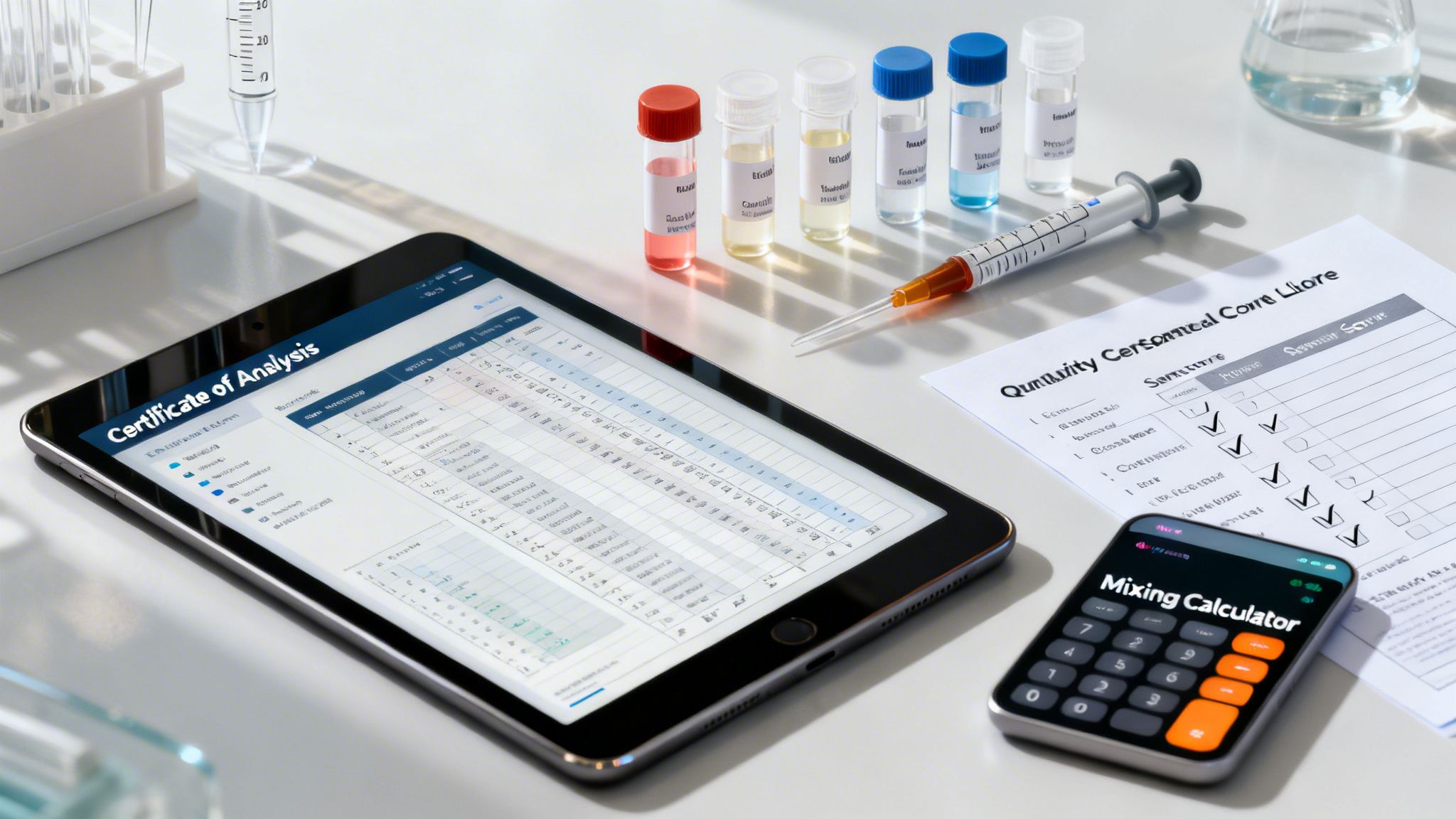
When formulating products inspired by the Pineapple Express strain, the differentiator between an amateur blend and a professional one is precision. Successful replication is not a matter of guesswork but of data-driven methodology, which is essential for building brand trust and ensuring product consistency.
The process should begin with a quantitative analysis of a high-quality flower sample. The most critical tool for this task is a Certificate of Analysis (CoA), which provides the exact terpene percentages from a lab-tested sample, creating a clear, data-backed target for your own formulation.
Turning a CoA Into a Working Recipe
A CoA should be viewed as more than a compliance document; it is a roadmap to replicating the Pineapple Express experience. The terpene analysis section provides a list of every detected terpene and its concentration, typically expressed as a percentage of the total terpene profile.
The formulator's job is to translate these percentages into a practical mixing formula. For example, if a CoA reports a profile of 40% Myrcene, 25% Caryophyllene, and 15% Pinene, this provides a validated starting point for the blend. This data-first approach removes ambiguity and anchors the formulation process in scientific evidence.
However, a single CoA represents only one data point. It is crucial to consider the real-world variables that influence a strain's final aromatic expression.
Factoring in Cultivation and Extraction Variables
A flower’s terpene profile is not static; it is significantly influenced by upstream processes.
- Cultivation Conditions: Agronomic practices—including light spectrum, nutrient inputs, and curing methods—have a profound impact on terpene development. An outdoor-grown Pineapple Express cultivar may express a different terpene ratio than one grown indoors.
- Extraction Method: The technique used to extract cannabinoids and terpenes from the plant biomass is also a critical variable. CO2 extraction may result in the loss of more volatile terpenes compared to hydrocarbon or ethanol-based methods, which preserve them differently.
Due to these variables, relying on a single CoA is insufficient. The best practice is to analyze multiple CoAs from different cultivators and labs. This allows you to identify common patterns and establish an average baseline for your Pineapple Express strain-inspired terpene blend, resulting in a more authentic and robust final profile.
Using In-House Sensory Panels to Fine-Tune
Once a test batch has been formulated based on CoA data, it requires human validation. Analytical equipment can confirm the chemical composition, but only a sensory panel can determine if the blend accurately replicates the experience of Pineapple Express.
Implementing a sensory panel is a straightforward process aimed at refining the formulation from a good approximation to an accurate replication.
- Select the Panel: Assemble a small group of trusted individuals with sensitive palates and familiarity with the target profile.
- Establish a "Gold Standard": Retain a sample from a perfect batch to serve as the control for all future sensory testing. This is your benchmark for quality.
- Conduct Blind Tests: Provide the panel with unlabeled samples of the new batch and the gold standard for side-by-side comparison of aroma and flavor.
- Ask Specific Questions: Guide the feedback with targeted inquiries, such as, "Does this sample have the same sharp pine finish as the control?" or "Is the tropical sweetness as prominent in the new batch?"
This qualitative feedback is invaluable for finalizing the formula. To streamline the initial calculations and ensure your ratios are accurate, use our terpene mixing calculator to convert percentages into precise measurements for any batch size.
Common Questions on Pineapple Express Formulation
Formulating with a classic profile like Pineapple Express presents unique challenges. Achieving the perfect balance is what distinguishes a forgettable product from one that generates consistent re-orders.
This section addresses common hurdles formulators encounter, covering topics from dosing and flavor balancing to troubleshooting production issues. The goal is to provide practical, actionable advice to help you succeed in your next product run.
What Is the Recommended Starting Dosage for This Blend?
When adding a Pineapple Express strain-inspired terpene blend to a vape cartridge, a starting concentration between 4% and 6% by weight is recommended. This range is generally effective for most distillates (THC, CBD, Delta-8) without overpowering the base oil.
It is always advisable to start at the lower end of the range. Formulate your initial test batch at 4%. This provides a baseline for evaluating flavor and smoothness. If the profile is too subtle, you can incrementally increase the concentration by 0.5% in subsequent tests until the target sensory profile is achieved.
A critical caution: increasing concentration does not always improve quality. Exceeding 8-10%, depending on the base oil and hardware, can introduce a harsh, chemical-like flavor and may cause throat irritation, leading to a negative consumer experience. Finding the optimal balance is essential.
How Can I Emphasize Tropical Notes Over Pine?
This is a frequent formulation challenge. The goal is to ensure the juicy, tropical fruit notes are prominent, but the sharp, piney characteristics of Pinene can sometimes dominate the profile. If your blend is aromatically skewed towards pine instead of fruit, several adjustments can be made.
To enhance the sweet, pineapple-like quality, you must adjust the ratio of Myrcene to Pinene. Increase the percentage of Myrcene in your formula. As the base note, Myrcene is foundational to the sweet, mango-like aromas that define the "pineapple" aspect of the profile.
Concurrently, you must reduce the sharp top notes. Methodically decrease the concentration of both Alpha-Pinene and Beta-Pinene. This will soften the woody, herbal intensity and allow the fruitier base and middle notes to become more prominent. For further nuance, a trace addition of a fruity ester or a terpene isolate like Geraniol can effectively round out the tropical bouquet.
How Do I Fix a Blend That Is Separating?
Terpene separation from a distillate base is a frustrating but common issue, typically caused by a mismatch in viscosity between the terpene blend and the cannabinoid oil.
First, address temperature. Gently warming both the distillate and the terpene blend to a consistent temperature—between 40°C and 50°C (104°F and 122°F)—is a crucial first step. This lowers the viscosity of both liquids, greatly improving their miscibility.
Next, ensure proper homogenization.
- Mechanical Agitation: Use a high-shear mixer or a magnetic stirrer to vigorously integrate the two components.
- Mixing Duration: Do not rush this step. Allow for a mixing duration of 15 to 30 minutes to ensure the terpenes are fully dissolved and evenly distributed throughout the oil.
If separation persists after these steps, you may be facing a more fundamental polarity issue. In these rare instances, the addition of a natural emulsifying agent at a low concentration (0.5% to 1%) may be considered. However, any new ingredient requires a full round of R&D testing, as it can alter the product's flavor, performance, and regulatory status. Always validate changes on a small scale before committing to a full production batch.
Ready to formulate a best-in-class product with unmatched consistency and flavor? The expert-crafted profiles at Gold Coast Terpenes provide the precision you need. Explore our lab-verified, strain-specific blends and isolates to elevate your next creation. Shop our full collection today.