
For cannabis product formulators, replicating the iconic New York Diesel flavor profile is a challenge of precision and aromatic architecture. It requires more than a simple list of ingredients; it demands a perfumer's approach to deconstruction. To successfully formulate vape cartridges or infused products, you must understand the precise terpenes that build its signature grapefruit and lime character, balanced by a subtle, gassy finish.
This guide provides the technical breakdown necessary to source a reliable New York Diesel store or supplier and accurately replicate this profile for commercial product development.
Deconstructing The New York Diesel Terpene Profile for Formulation
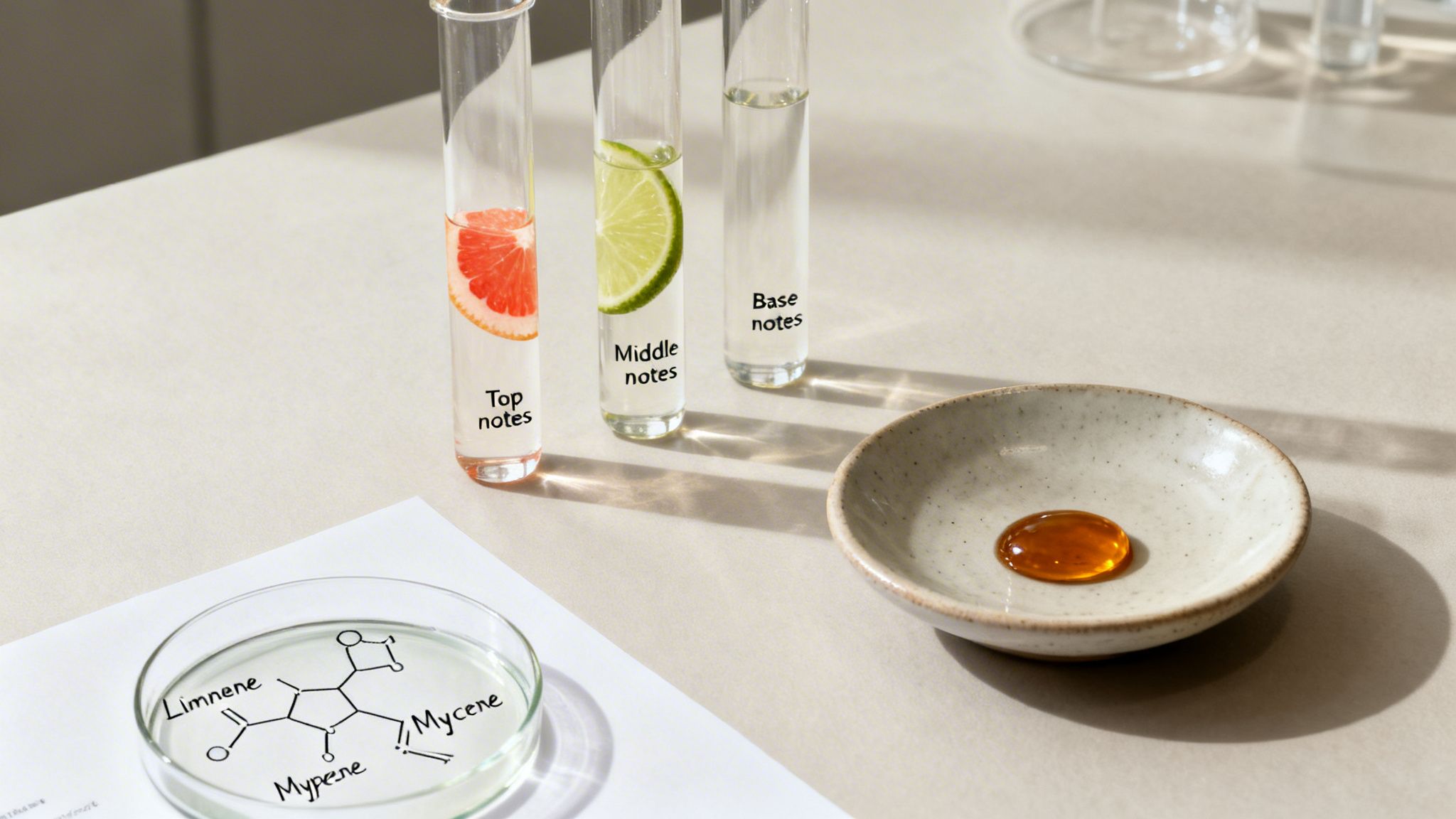
To engineer a product that delivers an authentic New York Diesel experience, you must understand how its key aromatic compounds function together. The profile is not a random mixture; it is a balanced structure built with dominant, secondary, and tertiary terpenes that function as top, middle, and base notes.
This is the same methodology used in high-end fragrance development. Top notes provide the initial aromatic impact, middle notes form the core of the profile, and base notes deliver a deep, lasting character. A successful New York Diesel formulation leverages this exact structure.
Mapping The Aromatic Architecture
The profile is defined by its sharp, energizing citrus notes grounded by a distinct gassy undertone. This complexity is the result of specific terpenes performing their structural roles. The primary isolates are what give New York Diesel its instantly recognizable character and are the first aromatic compounds a consumer will notice.
- Limonene: As the undisputed star, Limonene delivers the powerful punch of grapefruit and zesty lime. A highly volatile monoterpene, Limonene is the quintessential top note, defining the initial bright, citrusy blast that is central to this profile.
- Myrcene: Often present in high concentrations, Myrcene contributes a subtle, earthy sweetness that balances the sharpness of Limonene. It acts as a bridge, connecting the bright top notes to the heavier middle and base notes while adding a hint of tropical fruitiness that rounds out the formulation.
A common formulation error is an over-reliance on Limonene. While it is the primary citrus driver, an excessive concentration creates a one-dimensional, "lemon cleaner" aroma that lacks the authentic complexity of the target profile. Balance is critical for accuracy.
Building Depth With Middle And Base Notes
Beyond the initial citrus impression, the art of replicating a New York Diesel blend lies in its secondary terpenes. These compounds create the unique "diesel" or "fuel" quality and give the profile its stable, lingering finish. They are the supporting cast that elevates the entire formulation.
Beta-Caryophyllene is a crucial middle note. As a larger sesquiterpene, it is less volatile than Limonene and contributes a peppery, spicy, and woody aroma. This is the compound most responsible for the classic "fuel" character, adding warmth and depth that prevents the blend from becoming overly sweet or citrus-forward.
To visualize how these components function in a formulation, here is a breakdown of the key isolates and their roles.
New York Diesel Terpene Profile For Product Formulation
| Terpene | Aromatic Contribution | Flavor Note | Formulation Role |
|---|---|---|---|
| Limonene | Bright, sharp citrus | Grapefruit, Lime | Top Note |
| Myrcene | Earthy, sweet fruit | Mango, Herbal | Mid/Bridge Note |
| Beta-Caryophyllene | Spicy, peppery wood | Clove, Black Pepper | Mid/Base Note |
| Pinene | Fresh, clean evergreen | Pine, Rosemary | Top/Mid Note |
| Humulene | Hoppy, earthy | Hops, Wood | Base Note |
This table illustrates how each terpene contributes not just an aroma, but a structural role in the final blend.
Other minor terpenes also contribute to the profile's complexity:
- Pinene: Usually present in smaller amounts, it adds a hint of fresh pine that provides a clean, pungent counterpoint to the other notes.
- Humulene: Working in synergy with Caryophyllene, Humulene provides a hoppy, earthy character that shores up the blend's foundation.
Mastering this architectural approach is fundamental to replicating complex profiles. It empowers you to select the correct isolates and blends from a supplier, ensuring your final product is an authentic replication, not just an approximation. This same gassy-citrus logic applies to related cultivars; for example, you can see the parallels in our detailed guide to the aromatic structure of Sour Diesel terpenes and how those blends are constructed.
How To Vet A New York Diesel Strain-Inspired Terpene Blend Supplier
Your final product is only as good as its raw ingredients. When replicating the New York Diesel profile, selecting a trustworthy supplier is the most critical variable. It is the decision that separates an authentic, consistent product from one that fails to meet quality standards. The market is saturated with suppliers, many of which do not meet the purity or consistency standards required for commercial manufacturing.
A robust vetting process is your primary defense—protecting your brand, capital, and end-users. A quality supplier is not a vendor; they are a strategic partner. Your first and most important request should always be a current, batch-specific Certificate of Analysis (COA). A generic COA not tied to the specific lot number you intend to purchase is an immediate disqualifier.
Scrutinizing Certificates Of Analysis
A comprehensive COA verifies two things: what is in the blend, and just as critically, what is not. When reviewing the COA for a New York Diesel terpene blend, you must analyze more than just the terpene percentages.
First, verify purity and the absence of contaminants. The lab report must clearly demonstrate the blend is free from:
- Heavy Metals: Ensure arsenic, lead, mercury, and cadmium levels are well below acceptable safety limits.
- Pesticides: A full-panel pesticide test is non-negotiable for any inhalable or ingestible product.
- Residual Solvents: Leftover solvents from manufacturing can compromise flavor and pose safety risks.
- Diluents/Cutting Agents: The blend must be 100% pure terpenes. Confirm there is no VG, PG, PEG, MCT, Squalane, or any other diluent.
Once purity is confirmed, analyze the terpene breakdown. The COA should list the dominant terpenes you expect in a New York Diesel profile—Limonene, Myrcene, and Beta-Caryophyllene—along with their specific concentrations. If the ratios are inconsistent with the target zesty, fuel-like aroma, or if a key terpene is missing, the blend will not produce an authentic result.
Any supplier that is hesitant to provide a batch-specific COA or provides incomplete documentation is not a viable partner. Transparency is paramount for ingredients intended for inhalation or ingestion. Verify everything.
Botanical vs. Cannabis-Derived Terpenes
A key technical discussion with any potential supplier is the origin of their terpenes. You will encounter two primary types: botanically-derived (often called "food-grade") and cannabis-derived. Both are viable for formulation, but they have different implications for manufacturing.
Botanically-Derived Terpenes: These terpenes are individually isolated from various botanical sources—such as Limonene from oranges or Pinene from pine trees—and then precisely blended to replicate a specific strain's profile. The primary advantages are consistency, scalability, and cost-effectiveness. A quality manufacturer can produce an identical New York Diesel blend every time, with zero THC and simplified legal compliance.
Cannabis-Derived Terpenes (CDTs): These are extracted directly from the New York Diesel cannabis plant. While they offer a complex aroma due to trace minor compounds, they have significant drawbacks for commercial production. CDTs are expensive, exhibit high batch-to-batch variability, and present regulatory challenges as they may contain trace amounts of THC.
For most brands focused on scalability, botanically-derived terpenes offer the optimal balance of authentic flavor and operational reliability. A high-quality botanical blend is functionally indistinguishable from a CDT profile to the end-user but provides a stable, predictable, and compliant raw material. Our guide on where to buy terpenes provides further detail on evaluating supplier types.
Formulating with New York Diesel Terpenes for Vape Cartridges
Executing the formulation for a classic profile like New York Diesel is where technical knowledge translates into a successful product. Precision is required to achieve the signature sharp, gassy-citrus flavor without degrading the concentrate or creating an unstable final product.
When formulating for vape cartridges with high-purity distillate, your mixing ratio is the most critical decision. It dictates flavor intensity, oil viscosity, and the overall end-user experience.
Establishing Your Starting Ratio
A common error is treating all distillates identically. Your starting ratio for a New York Diesel blend depends entirely on the base cannabinoid oil. A highly refined, flavorless distillate requires a different approach than a darker, more flavorful oil with its own inherent character.
For a standard, high-potency THC distillate, a starting point of 5% to 7% terpenes by weight is recommended. This range is typically sufficient to allow the New York Diesel profile to dominate without introducing harshness.
- For highly refined or CRC (Color Remediation Column) extracts: These are effectively blank canvases. They have been stripped of native terpenes, so you may need to start at the higher end of the range, around 7-8%. For a flavor-forward cartridge, this can be pushed to 10%.
- For less-refined or full-spectrum distillates: These oils retain some of their original flavor. Start with a lower concentration, perhaps 4-5%, to complement the existing notes rather than overpowering them.
These are starting points. Optimal formulations are developed through iterative testing. Always create small test batches at varying concentrations (e.g., 5%, 6%, 7%) before committing to a full production run.
Of course, this is contingent on using high-purity terpenes. Vetting your supplier is the non-negotiable first step.
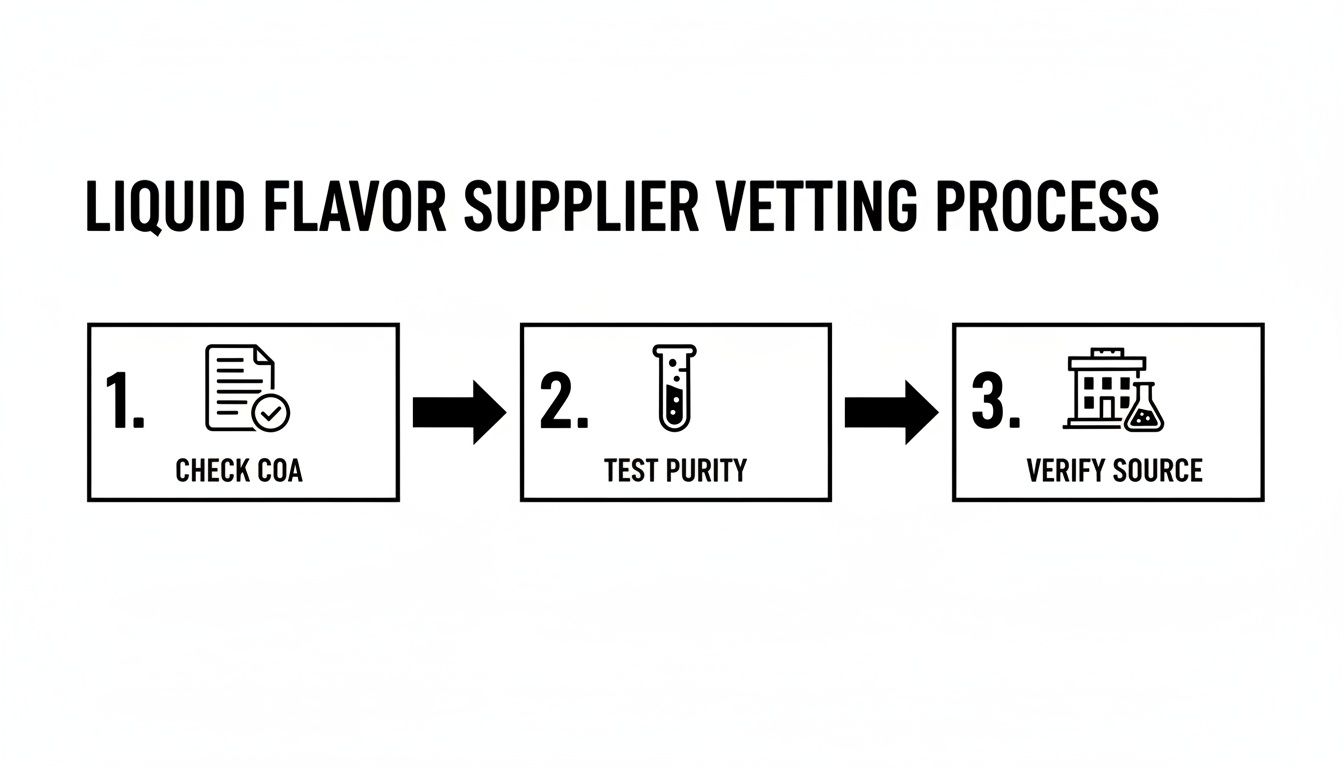
This process—verifying the COA, testing the product, and understanding the source—is your essential quality control checklist. Consistency begins with your raw materials.
Homogenization Technique And Temperature Control
Proper homogenization is as important as the ratio itself. Simply stirring terpenes into room-temperature distillate will result in an inconsistent product with "hot spots" of intense flavor. The objective is complete homogenization, where every drop of oil is uniformly infused.
Heat is your primary adversary. Terpenes are volatile, especially the bright top notes like Limonene that define the NYD profile. Overheating will cause them to vaporize, resulting in "terp burn"—a harsh, unpleasant taste that ruins the intended flavor.
A proven method for a safe, effective mix:
- Gently warm your distillate in a sealed container to 120-140°F (50-60°C). This reduces the viscosity to a workable, honey-like consistency. A hot plate with an overhead stirrer is ideal.
- Remove the distillate from the heat source entirely. This is a critical step to prevent terpene degradation.
- Add your pre-measured New York Diesel terpene blend to the warm distillate.
- Mix thoroughly but gently. A magnetic stirrer or an overhead mixer on a low setting will create a vortex that folds the terpenes into the oil without introducing excess air. Mix for at least 5-10 minutes.
For formulators frequently dialing in new blends, using a mixing ratios calculator can significantly improve workflow efficiency and ensure mathematical accuracy.
Troubleshooting And Scaling Up
Issues can still arise even with a refined process. If the finished oil separates or the flavor degrades after a few days, it is almost always due to poor homogenization or temperature shock. Gently re-warming the batch and re-mixing can often resolve the issue.
Once you have a successful test batch, scaling up requires exact replication. Maintain all variables: mixing times, temperatures, and ratios. Disciplined record-keeping is what separates consistently excellent brands from the rest.
Managing Supply Chain Costs And Logistics
When budgeting for your New York Diesel terpene blend, the price per ounce is only the starting point. Many formulators are caught off guard by the hidden costs of logistics and shipping—variable expenses that can erode profit margins if not properly managed.
Sourcing from a quality New York Diesel store is not sufficient; you must also implement a strategic supply chain plan to mitigate these variable costs.
The Impact Of Fuel Prices On Your Bottom Line
The most significant variable is freight, and freight costs are directly tied to fuel prices. Terpenes purchased in bulk are transported by truck, and the cost of diesel fuel dictates the shipping expense.
This is a major operational expense. For example, in early 2026, geopolitical issues caused the average price of diesel in New York to jump from $3.99 to $5.63 per gallon in under a month.
That is a 41% increase. This volatility means your cost of goods can fluctuate dramatically even if your supplier's prices remain stable. More details on how these surges affect business logistics can provide further context.
A sudden spike like that can add hundreds or thousands of dollars to a single bulk shipment. If this possibility is not accounted for in your pricing model, the cost is absorbed directly from your profit margin. Building a resilient business requires planning for these shocks.
Strategies To Mitigate Shipping Expenses
While global oil markets are uncontrollable, your purchasing and shipping strategies are not. It comes down to strategic procurement and collaborating with your supplier to achieve efficiencies.
Practical strategies to reduce shipping expenses include:
Bulk Purchasing: Most suppliers offer significantly better pricing on larger volumes. Purchasing a 64 oz or gallon-sized container instead of multiple smaller bottles lowers your unit cost and reduces the frequency of freight charges.
Leverage Shipping Thresholds: Identify suppliers with free shipping minimums. Planning restocks to meet that threshold can eliminate shipping fees entirely.
Order Consolidation: Instead of placing separate orders for your New York Diesel profile and Limonene isolate, purchase them simultaneously. Bundling all materials into a single shipment is always more cost-effective than multiple separate deliveries.
By combining these tactics, you can establish a purchasing rhythm that minimizes logistics costs and adds predictability to your budget. A good supplier partner will work with you to determine the most economical shipping solutions.
Testing for Safety, Stability, and Compliance
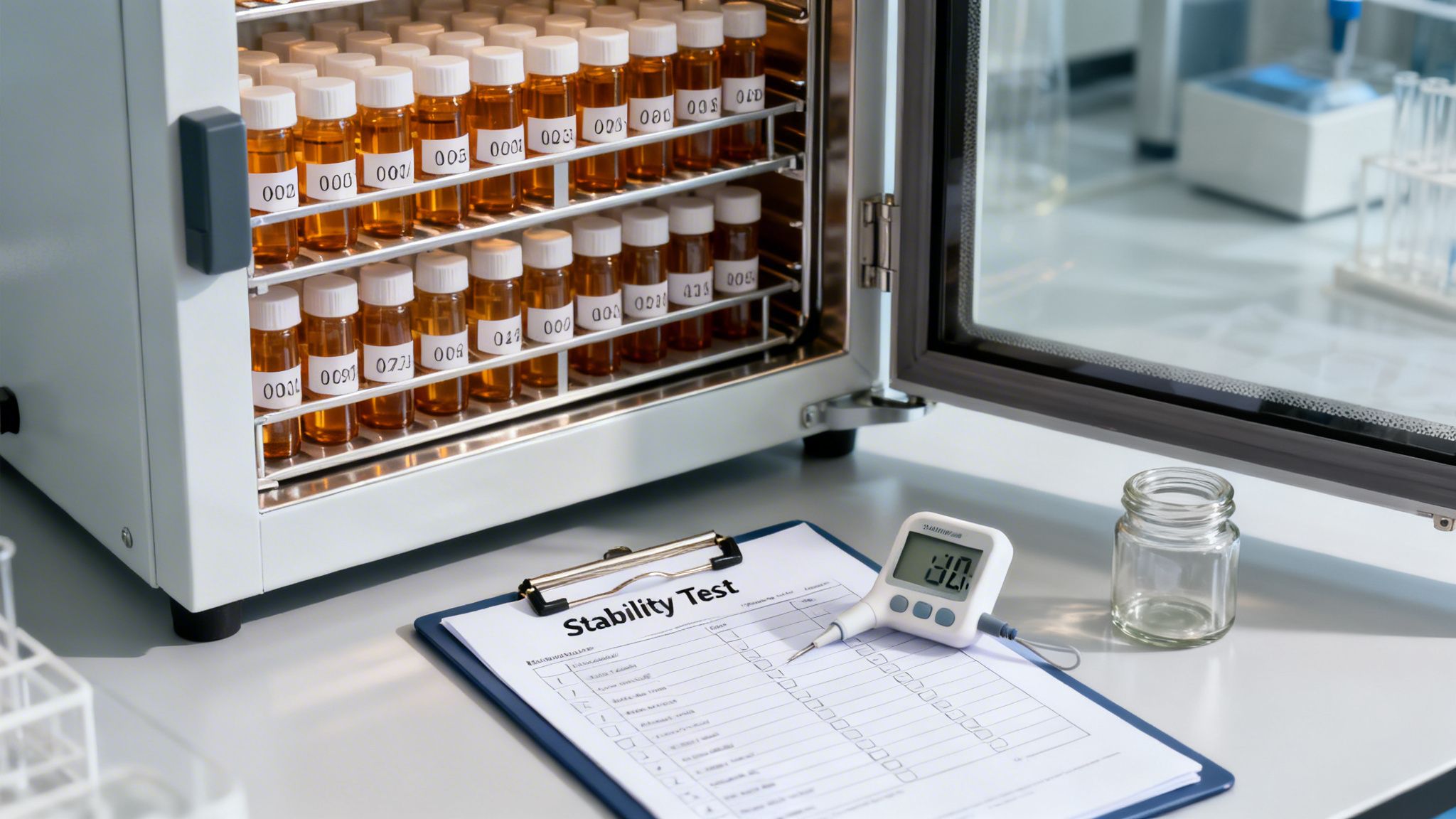
Once you have perfected the New York Diesel formulation, the final product must be validated for safety, stability, and compliance. This phase is not merely a regulatory formality; it is essential for protecting your customers, brand reputation, and business viability.
Will Your Product Stand the Test of Time? Stability Testing
Stability testing is how you predict a product's shelf life. It assesses how your New York Diesel-infused oil will perform under the real-world conditions it will encounter from production to consumption. The goal is to identify potential failure points before they become customer-facing issues.
Monitor these key indicators:
- Color and Clarity: Observe for darkening, haziness, or cloudiness, which can indicate oxidation or degradation of terpenes and cannabinoids.
- Separation: Look for terpenes "falling out" of solution, often appearing as an oily slick or distinct layers. This signals poor homogenization or an incorrect ratio.
- Viscosity: Track any noticeable changes in the oil's thickness, which can impact vape performance and suggest underlying chemical changes.
- Aroma and Flavor: The most critical test. Confirm that the signature grapefruit and fuel aroma remains stable and does not fade or develop off-notes.
A simple and effective method is to prepare a small batch of sample cartridges. Store them in varied environments: one at room temperature, another in a warm location (e.g., an incubator at 30-40°C), and a third exposed to light. Evaluate them at regular intervals (1 week, 1 month, 3 months) and document all changes.
The Paper Trail: Documentation and Compliance
In this industry, documentation is your shield. Meticulous record-keeping is non-negotiable and provides your best defense against compliance inquiries. Each production batch requires a clear, traceable history from raw ingredients to finished goods.
Your batch documentation file must include:
- Certificates of Analysis (COAs): For both the base distillate and the terpene blend.
- Safety Data Sheets (SDS): For every ingredient. To formulate safely, you must understand the properties of each component. Our guide on the MSDS for Limonene provides a good example of what to look for.
- Batch Production Records: Internal logs detailing exact mixing ratios, temperatures, homogenization times, and all ingredient lot numbers.
Labeling requirements for terpene-infused products vary significantly by state. It is 100% your responsibility to ensure your packaging is compliant in every market you serve. Some jurisdictions require a full list of added terpenes, while others have strict rules on warning labels and font sizes. A single error can lead to product recalls or fines. Consulting with legal counsel to develop compliant packaging templates is a prudent investment.
Troubleshooting Your New York Diesel Formulation
Formulating with a classic profile like New York Diesel can present unique challenges. Here are solutions to common issues faced by product developers.
Finding the Sweet Spot: Mixing Ratios for Distillate
There is no single magic number; the optimal starting ratio depends on your base concentrate. For most THC distillates, a range between 5% and 8% terpenes by weight is a sound starting point.
The nature of your oil is the primary variable. For highly refined or CRC-treated extracts lacking native character, lean toward the higher end of that range, such as 7% or 8%. For a very flavor-forward product, some brands go as high as 10-12%.
Conversely, for less-processed oils with existing flavor, start lower, around 4-5%, to complement the inherent notes rather than overpowering them. Regardless of the starting point, always conduct small test batches before committing to a production run.
How to Keep That Bright Flavor From Fading
Preserving the bright top notes of the New York Diesel profile is a matter of temperature control. Terpenes are highly volatile. Overheating will vaporize these delicate citrus aromas, leaving a flat and harsh flavor.
The correct technique is to never heat terpenes directly. Gently warm your distillate until it is workable—typically around 120-140°F (50-60°C). Remove it from the heat source before adding the terpenes. Then, mix thoroughly but gently to achieve full homogenization without introducing excess heat or oxygen.
A common mistake is leaving the vessel on the hot plate while stirring in the terpenes. This will degrade volatile compounds like Limonene. Always remove the distillate from the heat first.
Botanical vs. Cannabis-Derived: What's the Real Difference?
The terpene source is a critical decision impacting consistency, cost, and legal compliance. When sourcing from a New York Diesel store or supplier, you will encounter two primary types:
- Botanically-Derived Terpenes: These are created by blending individual terpene isolates from various botanical sources to precisely match the NYD profile. This method offers excellent batch-to-batch consistency, scalability, and is 100% THC-free, which greatly simplifies compliance.
- Cannabis-Derived Terpenes (CDTs): These are extracted directly from the New York Diesel plant. While they may contain unique minor compounds from a specific harvest, they are also expensive, exhibit high batch-to-batch variability, and can contain trace cannabinoids that create regulatory hurdles.
For most brands seeking a consistent, scalable product, a high-quality botanical blend offers the optimal balance of authentic flavor and operational stability.
How Can I Make the Grapefruit Note Pop?
To enhance the sharp, signature grapefruit aroma, you can supplement your blend with a small amount of pure Limonene isolate. Limonene is the monoterpene responsible for the zesty kick of citrus.
Exercise extreme caution—a light touch is essential. Start by adding a minuscule amount, such as 0.25% of the total formula's weight. Create a small test batch, allow it to settle, and then conduct a sensory evaluation. Over-application will disrupt the profile's balance, resulting in an artificial aroma. A small addition goes a long way.
Ready to formulate with a New York Diesel profile that is authentic, consistent, and designed for commercial manufacturing? At Gold Coast Terpenes, we specialize in lab-verified, strain-inspired blends engineered for formulators who demand precision. Shop our New York Diesel strain-inspired terpene blend today.