
When developing a new vape cartridge or concentrate, selecting a flavor profile is a critical business decision. Rather than gambling on an unproven profile, leveraging a legendary strain like King Louis OG offers a direct line to established market demand.
Using its classic terpene profile provides a stable, predictable, and commercially proven foundation for any new vape, distillate, or other cannabis-derived product. This guide is for formulators, brand owners, and extractors looking to leverage this iconic profile for commercial success.
Why the King Louis OG Terpene Profile for Formulation?
For product developers, strain profile selection is a strategic decision rooted in market viability. While new strains emerge constantly, legacy profiles like King Louis OG offer unparalleled reliability and instant consumer recognition. Its value lies in the consistency derived from its rock-solid OG Kush and LA Confidential genetics.
This lineage provides a stable genetic blueprint that consistently produces a familiar terpene mix of pine, earth, and diesel. For a brand owner or extractor, that consistency is a significant manufacturing asset.
The demand for classic OG profiles remains robust. When you launch a product based on the King Louis OG flavor, you’re not taking a risk on an unproven profile. You are tapping into a dedicated customer base actively seeking its pungent, classic aroma and reliable characteristics.
A Strategic Advantage in Product Development
Working with a King Louis OG profile is less about chasing fleeting trends and more about leveraging a known winner. The name alone handles significant marketing lift, reducing the resources needed to educate consumers on a new, obscure strain. When a formulator puts "King Louis OG" on a vape cart, the target audience already understands the intended experience.
This built-in reputation provides several key advantages:
- Reduced Market Risk: Tapping into the proven demand for OG strains is a far safer commercial bet than launching an unfamiliar flavor profile.
- Predictable Formulation: The terpene profile for King Louis OG is well-documented, enabling precise and repeatable replication. This ensures batch-to-batch consistency. Our guide on how to use terpenes effectively offers foundational knowledge for this process.
- Competitive Differentiation: In a saturated market, a perfectly executed classic can differentiate a brand more effectively than another trendy, short-lived flavor.
Bridging a Legacy Profile with Modern Products
The appeal of King Louis OG translates perfectly into today's manufactured products. Its strong, distinct flavor profile holds up exceptionally well to the heat of vaporization and mixes seamlessly with various cannabinoid distillates, including THC, CBD, or Delta-8. This makes it a workhorse for high-volume production.
Ultimately, recreating this iconic strain is about delivering a product that feels both timeless and high-end. By starting with a quality, botanically derived King Louis OG terpene blend, brands can confidently build a product line that customers will trust. The objective is clear: turn its legendary status into a profitable, consistent product that honors its gassy, pine-rich heritage.
A Blueprint for Replicating the Flavor of King Louis OG
To accurately capture the iconic King Louis OG profile, one must understand the chemical architecture behind its sensory experience. Correctly balancing the constituent terpenes is what separates a passable product from a truly authentic one.
This blueprint deconstructs the strain's flavor architecture into its core components, providing a clear path for replicating the flavor of King Louis OG for cannabis product formulation. This is a guide to building flavor from a technical foundation.
The profile is built upon a foundation of three dominant terpenes: Myrcene, Limonene, and Beta-Caryophyllene. These three are the primary drivers, creating the classic piney, earthy, and gassy aroma that defines the OG family.
The Primary Terpene Trio
First, Myrcene serves as the heavy, earthy base note. It provides the musky, slightly fruity character that anchors the entire profile. In our analysis, a true King Louis OG blend is dominated by Myrcene, often comprising 40-60% of the total profile. It is the key to the rich, deep notes of pine and spice that are characteristic of the strain.
Next, Limonene acts as the bright, citrusy top note that provides the initial aromatic impression. Though used in smaller quantities than Myrcene, its sharp, zesty scent cuts through the earthiness, adding a necessary layer of fresh complexity. Without it, the profile would feel flat and overly heavy.
Finally, Beta-Caryophyllene functions as the spicy, peppery middle note. It bridges the heavy Myrcene base and the bright Limonene top. This terpene delivers the warm, woody kick essential to any "OG" strain, rounding out the profile with a lingering, spicy finish.
This chart puts into perspective why this strain has such staying power, analyzing its drivers from genetics to market appeal.
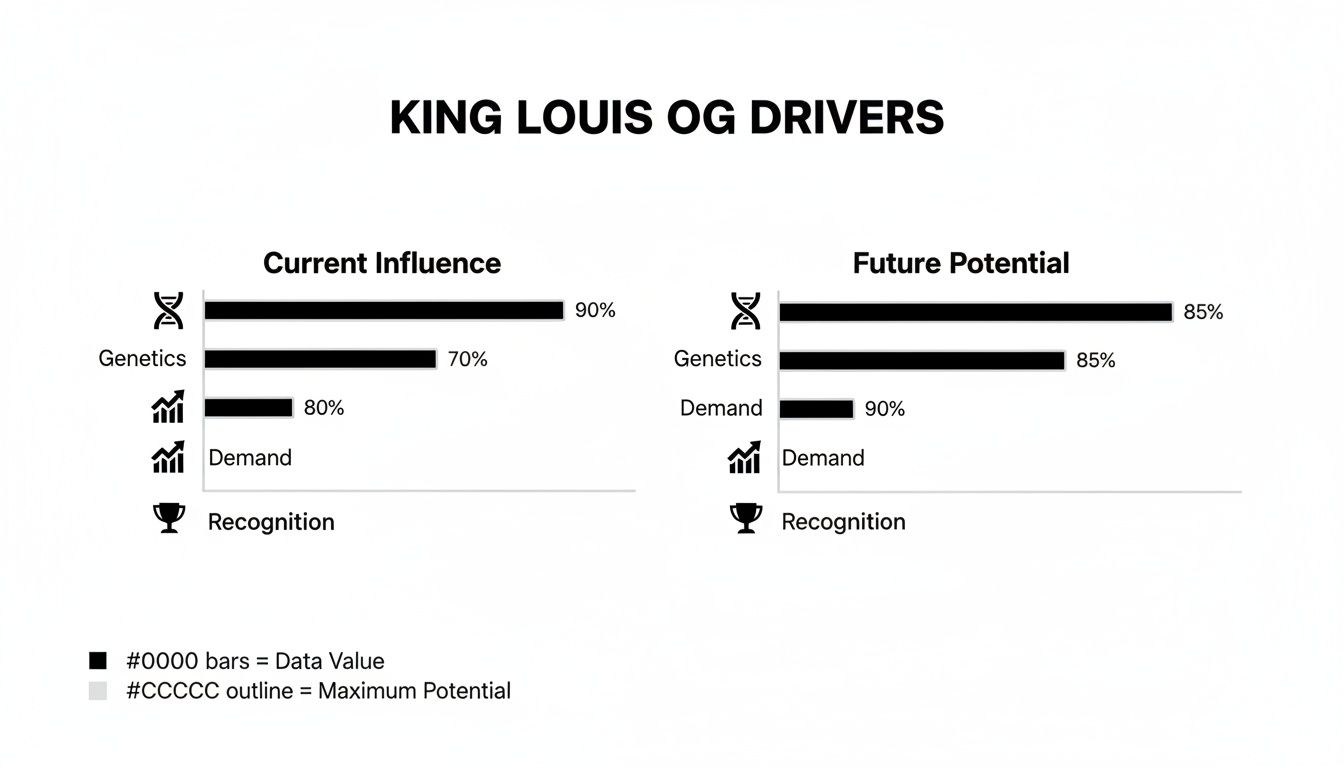
As shown, the strain's stable genetics and consistent consumer demand make it a reliable choice for any product formulator.
The table below breaks down how these key players come together. We’ve outlined their typical concentrations and, more importantly, their functional role as a top, middle, or base note in the final blend.
Primary Terpene Breakdown for King Louis OG Formulation
| Terpene | Typical Concentration (%) | Aroma Contribution | Formulation Note (Top/Mid/Base) |
|---|---|---|---|
| Myrcene | 40 – 60% | Earthy, musky, herbal, slightly fruity | Base |
| Limonene | 10 – 20% | Sharp citrus, zesty, fresh | Top |
| Beta-Caryophyllene | 5 – 15% | Spicy, peppery, woody, clove-like | Middle |
Understanding this structure is crucial. You are not just mixing ingredients; you are layering aromatic compounds to create a specific sensory journey for the end-user.
Secondary and Tertiary Terpenes
While the main trio does the heavy lifting, authenticity is achieved through the supporting cast of secondary and tertiary terpenes. These compounds are present in much smaller amounts but are critical for achieving the correct nuance.
- Alpha-Pinene & Beta-Pinene: These are responsible for the sharp, fresh-cut pine scent. They work with Limonene as top notes to drive home the forest-like aroma OGs are famous for.
- Humulene: A close relative of Caryophyllene, Humulene adds a hoppy, woody, and slightly earthy layer. It’s a middle note that builds complexity and gives the blend a more robust character.
- Linalool: Only a touch of Linalool is found in this profile, but its faint floral hint can be a game-changer. As a subtle top note, it can soften the harsher diesel and pine notes, adding a touch of elegance.
A successful King Louis OG formulation is an exercise in balance. The goal is not just to combine the right ingredients, but to layer them correctly so the top, middle, and base notes express themselves at the appropriate moments.
Mastering how to layer these compounds allows for the creation of a vape or concentrate that delivers an authentic experience from initial aroma to final taste. For a visual guide on how different terpenes create specific aromas, our terpene flavor chart is an excellent technical resource.
Ultimately, crafting a precise King Louis OG strain-inspired terpene blend comes down to this layered, architectural approach. Get it right, and your product will be recognized for its accuracy and quality.
Formulation Guide for King Louis OG Terpene Blends
Attempting to build a classic strain profile from individual isolates is a significant R&D undertaking, consuming considerable time and capital. A more efficient approach is to start with a professionally manufactured King Louis OG strain-inspired terpene blend. This method provides superior batch-to-batch consistency and bypasses extensive development work.
Think of it as starting with a solid foundation. The signature pine, earth, and diesel notes are already perfectly balanced. The formulator's job simplifies to optimizing dilution ratios and viscosity for specific hardware and concentrates.

Achieving Correct Dilution Ratios
The key to a successful formulation is identifying the "sweet spot" for your dilution ratio. The exact percentage depends on the base material—whether it's a high-potency THC distillate, a broad-spectrum CBD oil, or a Delta-8 concentrate. The goal is a flavor that is potent and true-to-strain, but never harsh or overpowering.
For most vape cartridges, a 5-7% terpene concentration by weight is an excellent starting range for a bold profile like King Louis OG.
- Start at 5%: This is a safe yet effective ratio that allows the signature earthy and piney notes to come through clearly without being overwhelming. It is an ideal benchmark for initial test batches.
- Adjust up to 7%: For a more forward, punchy flavor, slowly increase the concentration. This works especially well for thicker distillates that can mute terpene expression.
- Above 8%: Use caution. Pushing beyond this point can over-thin the final product, cause hardware leakage, and create a harsh, unpleasant vapor experience.
Always calculate ratios by weight, not volume. Terpenes and cannabinoid oils have different densities, making volumetric measurements a source of inconsistency. Measurement by weight is non-negotiable for quality control and scalable production.
Proper Mixing Techniques for Homogenous Blends
Once the ratio is determined, proper mixing is critical. Simply adding terpenes to cool, viscous distillate will result in an uneven, poorly distributed blend prone to separation.
For a perfectly smooth and stable blend, follow these steps:
- Gently Heat Your Concentrate: Warm the cannabinoid distillate to 100-140°F (38-60°C). This lowers its viscosity for easier mixing. Avoid excessive heat, which can degrade both cannabinoids and terpenes.
- Introduce the Terpene Blend: While the concentrate is warm and fluid, add the pre-measured King Louis OG terpene blend.
- Mix Thoroughly but Gently: Use a magnetic stirrer or a stainless steel tool to mix for several minutes until the liquid is fully homogenized, with no visible separation or "swirls."
- Allow to Settle: Let the mixture rest for several hours (overnight is ideal) before filling cartridges. This allows entrapped air bubbles to escape and ensures complete homogenization.
Our data shows that the King Louis OG profile—dominated by Myrcene at ~50% and Caryophyllene at ~12%—is a versatile workhorse. This specific blend is a match for over 50 other OG-style strains and can achieve up to a 30% flavor boost in distillates. Lab results also show that using pure, botanically derived terpenes can extend a product's shelf-life by 15-20% without fillers like PG or VG.
By following these guidelines, you can reliably create top-shelf products for distillate that nail the authentic King Louis OG experience. For a deeper dive into handling terpenes, be sure to check out our guide on how to use terpenes.
Advanced Formulation: Customizing a King Louis OG Blend
Once you've mastered using a pre-made King Louis OG strain-inspired terpene blend, the next step is to customize that profile to create a signature product. This is where a formulator can create true product differentiation.
Moving beyond a stock blend elevates the process from assembly to craftsmanship. A pre-made blend is a high-quality base; advanced formulation is using a palette of pure terpene isolates to mix a precise, proprietary final product.
Fine-Tuning a Base Blend with Isolates
The most efficient way to customize is by "nudging" a base King Louis OG blend in a desired direction with targeted additions of individual terpene isolates. This avoids the complexity and expense of building a profile from scratch.
Here are a few practical examples:
Amplify the Pine: To emphasize the sharp, classic "OG" top note, a small addition of Alpha-Pinene or Beta-Pinene isolate is effective. A concentration of just 0.5% can bring that fresh forest aroma to the forefront.
Sharpen the Citrus: To brighten a profile that feels too heavy, a small amount of additional Limonene will lift the entire blend, adding a zesty kick that cuts through the earthy base without compromising the core OG character.
Deepen the Earthy Foundation: To create a richer, muskier profile, a touch of isolated Myrcene will anchor the blend, enhancing the herbal, earthy foundation and adding a new layer of complexity.
Optimizing for Viscosity and Hardware Performance
Flavor is not the only variable in customization. A critical aspect of vape product development is matching the oil's viscosity to the chosen hardware. A blend that is perfect for one cartridge may clog, leak, or burn in another.
There is no universal "perfect" viscosity. It is entirely dependent on hardware specifications. A thick oil in a ceramic-core cartridge might require a higher terpene percentage, such as 7-8%, to flow properly. The same oil in a simple wick-based disposable might only need 4-5%.
Terpenes are effective natural diluents. By skillfully adding them, a formulator gains precise control over the oil's final consistency. This ensures proper wicking, prevents dry hits, and delivers smooth, flavorful vapor. To dial in percentages with precision, you can use our mixing calculator.
Ensuring Long-Term Stability and Safety
When formulating custom blends, you assume full responsibility for product safety and stability. Concentrated terpenes are powerful solvents and must be handled in a well-ventilated area with appropriate PPE, including gloves and safety glasses.
Stability is equally important. Improperly mixed blends can lead to terpene "fallout," where they separate from the cannabinoid oil over time. This ruins the flavor profile and can create "hotspots" of concentrated terpenes, resulting in a harsh and unpleasant consumer experience.
To prevent this, always homogenize blends thoroughly, using gentle heat to facilitate mixing. Allow the blend to rest and fully integrate before filling. It is also prudent to run small-batch stability tests by setting aside a few finished units for several weeks to observe for any separation. This quality control step is essential for producing a safe, reliable, and top-tier product.
Capturing the Full Sensory Experience of King Louis OG
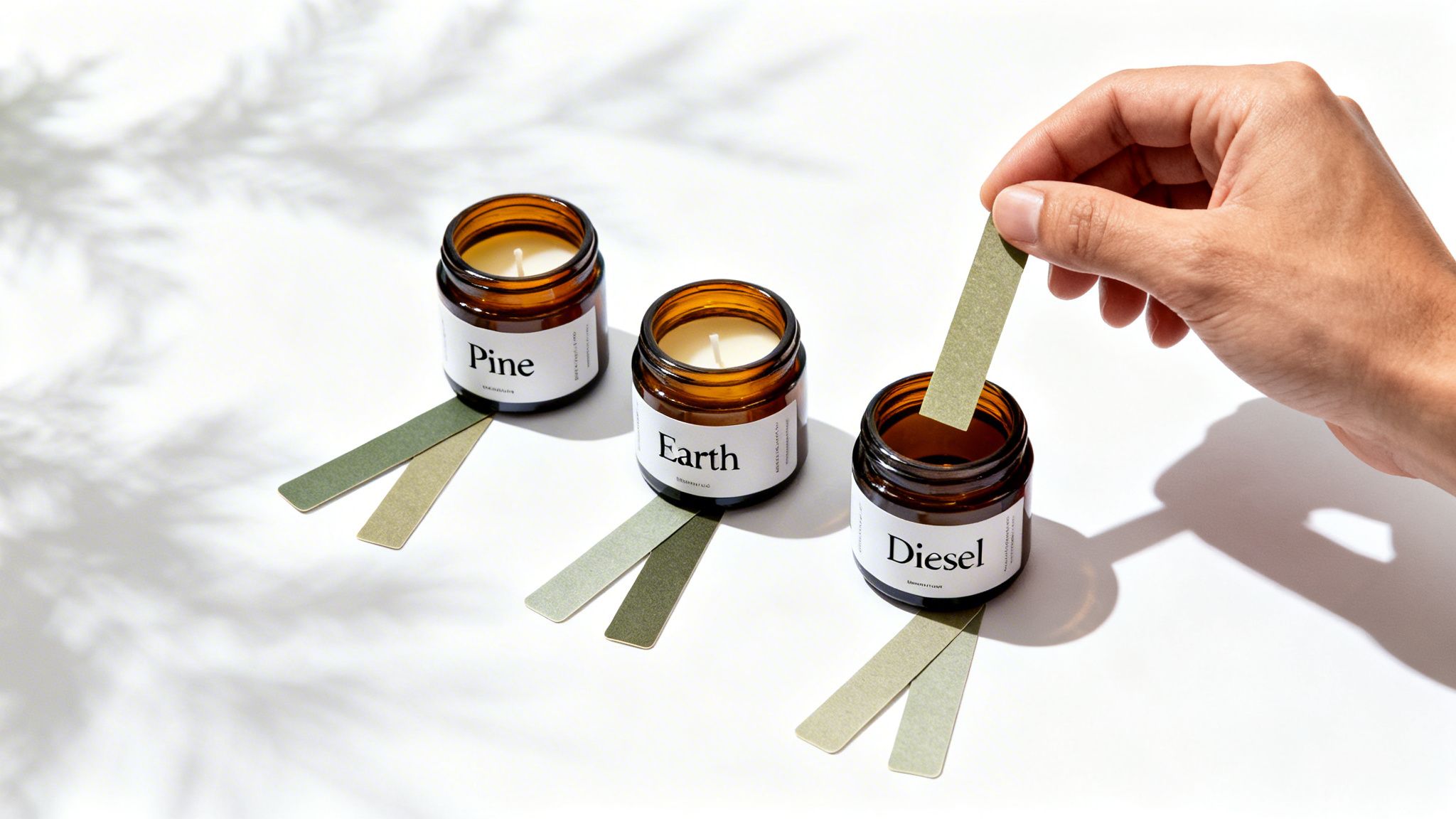
While flavor is key, capturing a strain's entire aromatic personality is what defines a premium product. For King Louis OG, this means recreating its unmistakable, room-filling aroma—the powerful, pungent fusion of pine, damp earth, and gassy diesel.
The secret is in the interplay between the terpenes in a King Louis OG strain-inspired terpene blend. Myrcene provides the heavy, earthy foundation. Caryophyllene adds the spicy, woody structure. Limonene and the Pinenes act as the bright top notes, cutting through the funk with pops of citrus and fresh pine. When balanced correctly, the result is an instantly recognizable aromatic signature.
Testing Protocols for Authentic Aroma Delivery
A blend may smell perfect in the beaker, but the true test is its performance in the final product. To ensure an authentic experience, the aroma must be evaluated at every consumer touchpoint.
A multi-point sensory check is the only way to guarantee a true-to-strain experience:
- In-Package Aroma: What is the first impression upon opening the packaging? The scent should be authentic and inviting, not artificial or overpowering.
- Pre-Activation Aroma: For a vape cart, what is the aroma at the mouthpiece before activation? A "dry-pull" test should provide a subtle preview of the pine and earth to come.
- Vaporized Aroma: This is the moment of truth. When the oil is vaporized, does it fill the air with the classic, funky OG smell? This is the signature experience that validates the formulation for a connoisseur.
An authentic King Louis OG product should announce its presence upon use. The goal is to create an aromatic profile so accurate that anyone familiar with OG genetics recognizes it from the ambient aroma alone. This powerful recognition is a key driver of repeat purchases.
Ensuring the Full Sensory Payoff
Ultimately, the complete sensory experience is where a formulation proves its value. A product that faithfully reproduces every aspect of King Louis OG—from the taste on inhale to the classic aroma it leaves in the room—builds significant brand trust. It demonstrates a commitment to quality that experienced consumers recognize.
This is precisely why formulating a King Louis OG profile for vape cartridges demands meticulous attention to detail. The hardware, concentrate, and terpene blend must work in perfect harmony to deliver that iconic sensory impact. Explore our full lineup of strain-specific terpene profiles to find the right building blocks for your next product.
By focusing on replicating the full aromatic signature, you move beyond simple flavor mimicry into the realm of true product craftsmanship. That dedication to authenticity makes a product unforgettable and ensures your King Louis OG delivers on its royal promise.
Taking Your King Louis OG Product to Market
Building a product around the King Louis OG profile is a sound commercial strategy. The strain's name recognition within the OG Kush family provides immediate market credibility, reducing the burden of consumer education.
Beyond brand recognition, the King Louis OG profile is a formulator's asset. Its well-documented and stable genetic profile translates to less guesswork in the lab and greater consistency in scaled production, particularly when working with distillate.
Sourcing and Verification are Paramount
The success of your product and the reputation of your brand depend entirely on the quality of your raw materials. Sourcing high-purity, lab-tested terpenes is not an optional step; it is the foundation of your product. Compromising on sourcing risks introducing impurities, creating inconsistent flavor, and eroding customer trust.
To ensure your formula is authentic, safe, and compliant, follow these protocols:
- Demand a Certificate of Analysis (CoA): Never purchase a terpene blend without a current CoA. This document verifies purity and confirms the absence of contaminants like pesticides, heavy metals, and residual solvents.
- Prioritize Botanical Sources: Choose botanically derived terpenes that accurately capture the strain's natural complexity. Synthetic flavorings cannot replicate this nuance, and experienced users can easily detect the difference.
- Vet Your Supplier: Partner with a supplier known for quality, consistency, and transparency. A reliable supplier is an extension of your own quality control team.
Ultimately, a premium King Louis OG product is a function of precision and quality. By leveraging its powerful brand equity and refusing to compromise on sourcing, you are positioned not just to enter the market, but to lead it.
Scaling Production
Once your formulation is perfected and a trusted supplier is secured, it is time to scale. The OG family of genetics is not a passing trend; it has proven market longevity. This stable demand makes a King Louis OG-inspired product an ideal candidate for scaling from pilot batches to full production.
To leverage this iconic profile effectively, consider bulk purchasing of your terpene blend. This can help secure better pricing and ensure a consistent supply chain to meet demand. For those ready to scale, our King Louis OG terpene profile provides the essential, high-quality starting point. This is a strategic approach to meet market demand and build a lasting brand on the foundation of a true cannabis icon.
Common Questions About Formulating with King Louis OG
Even with a detailed guide, specific challenges can arise during formulation. Here are answers to common questions from formulators working with the King Louis OG profile.
What Is the Ideal Terpene Percentage for a King Louis OG Vape Cartridge?
For most distillate-based vape cartridges, the optimal range for King Louis OG is 5-7% terpenes by weight. We recommend starting at the lower end (5%) to allow the signature pine and heavy earth notes to express clearly without harshness.
For particularly viscous concentrates or for a more potent flavor expression, you can incrementally increase the concentration towards 7%. Be cautious above this range, as it can lead to over-thinning of the oil, hardware failure, and a harsh vapor experience. Always conduct small test batches to optimize for your specific concentrate and hardware.
How Can I Enhance a Muted OG Flavor in My Formulation?
A weak or muted flavor is a common issue. First, verify that your dilution ratio is correct and that all calculations were performed by weight, not volume.
If your measurements are accurate, the next step is to amplify the core "OG" notes. A small addition of isolated Myrcene can enhance the deep, funky, earthy base. Concurrently, a touch of Beta-Caryophyllene will amplify the classic spicy, peppery notes that define the OG experience. The goal is not to change the flavor, but to fine-tune it, making the primary notes in your King Louis OG strain-inspired terpene blend more prominent.
Pro Tip: This is analogous to adjusting an audio equalizer. You are not changing the song, but rather boosting the bass (Myrcene) and mids (Caryophyllene) to give the entire track a richer, fuller sound.
Can This Terpene Blend Be Used in Products Other Than Vapes?
Absolutely. The terpene profile for King Louis OG is highly versatile. It is effective for adding authentic aroma and flavor to concentrates like shatter, crumble, and wax. It can also be used to infuse tinctures, topicals, and even cannabis beverages.
For these non-inhalable applications, the usage rate is typically much lower, often starting between 1-3%. The final percentage depends on the product matrix and the desired intensity of the King Louis OG character.
When you’re ready to begin formulation, Gold Coast Terpenes provides the lab-tested, high-purity terpene blends and isolates necessary to create consistent, authentic, and commercially successful products. Explore our full collection and find the building blocks for your next market leader at https://www.goldcoastterpenes.com.