
The legendary effects associated with the Jack Herer strain—creative energy and clear-headed bliss—are why this profile is a commercial juggernaut. It is a go-to for daytime products that promise focus and a mental lift, moving it well beyond the typical recreational market and into the realm of functional product formulation.
Translating the Jack Herer Terpene Profile Into a Formulation Strategy

As a product formulator, you understand that the "Jack Herer effect" is not a vibe—it's chemistry. It's the result of specific cannabinoids and a very distinct terpene blend working in synergy. By understanding that synergy, you can strategically replicate that experience in vape cartridges, concentrates, and other infused products.
This guide will break down that experience, moving past high-level marketing descriptions and into the actionable science of formulation. The goal is to pinpoint what drives the strain's signature functional effect and then provide a blueprint for rebuilding it with precision.
The Commercial Value of a Functional Terpene Profile
When you successfully formulate with the Jack Herer terpene profile, you are creating a powerful commercial asset. Brands that consistently deliver its sought-after clear-headed energy are tapping into a market willing to pay a premium for a predictable, functional experience.
This makes the Jack Herer profile essential for any brand targeting:
- Productivity-focused professionals seeking a boost for work or creative sessions.
- Daytime consumers looking for alertness and clarity without sedative effects.
- Discerning customers who recognize and demand an authentic, strain-specific experience.
The ability to reliably recreate these targeted effects is what separates a generic "sativa" vape from a premium, strain-specific product that builds brand loyalty. Your product ceases to be a commodity and becomes a solution.
From Plant to Product: A Formulator's Perspective
The replication process begins with analyzing the core components of the classic Jack Herer experience. While its sativa-dominant genetics lay the groundwork for a cerebral effect, the terpene profile is what truly shapes and refines it. That profile is your blueprint.
Think of yourself as a flavor chemist reverse-engineering a complex formula. The original cultivar provides the ingredient list and ratios. Your job as a formulator is to source high-purity ingredients and combine them to recreate the final masterpiece. A deep dive into the terpene profile for cannabis product formulation is the critical first step.
By understanding the chemical architecture behind Jack Herer, you can create products that don't just mimic the name, but consistently deliver the uplifting, focused experience consumers expect. This guide will provide the technical knowledge to turn the strain's famous traits into a winning formulation strategy, starting with its core chemical drivers.
The Chemical Blueprint Behind Jack Herer's Signature Effect
To consistently replicate the Jack Herer experience in your products, you must look past the strain’s sativa genetics and analyze its chemical composition. That clear, creative, and energetic feeling is not a happy accident; it’s the direct result of a specific synergy between cannabinoids and terpenes.
Understanding this chemical recipe allows you to move from guesswork to precise engineering. The goal isn’t just to approximate the Jack Herer effect—it’s to rebuild it from the ground up, ensuring batch-to-batch consistency.
Cannabinoid Potency as The Engine
First, the foundation of the Jack Herer experience is its cannabinoid content. Modern Jack Herer flower consistently analyzes with THC levels between 18-24%. This high THC concentration is the engine, providing the raw power for its signature cerebral lift.
Developed in the Netherlands in the mid-1990s, this Sensi Seeds sativa-dominant hybrid was created by crossing a Haze with Northern Lights #5 and Shiva Skunk. The breeders sought two outcomes: a potent head high and significant resin production. Because the strain’s potency is so reliable, it has become a benchmark for formulators and extractors.
This is a non-negotiable part of the formula. Attempting to create a Jack Herer product with THC levels well below this range will result in an underwhelming experience. No matter how precise your terpene blend, you cannot achieve the characteristic energetic effect without a sufficient cannabinoid foundation.
Think of your base distillate or concentrate as the canvas. A high-potency base is required to give the terpenes a powerful medium to modulate. Starting with a weak concentrate and hoping the terpene blend will do all the heavy lifting is a recipe for a disappointing product that fails to deliver on its promise.
Terpenes as The Steering Wheel
If THC is the engine, terpenes are the steering wheel, directing that raw cannabinoid energy toward a focused, creative, and uplifting experience. Three key terpenes are the main architects behind this effect.
The Key Terpenes Driving The Effect:
- Terpinolene: This is the star of the profile. As the dominant terpene in Jack Herer, Terpinolene is the primary driver of its signature energetic feeling. Its unique aroma—a complex blend of pine, herbs, and floral citrus—is the unmistakable marker of an uplifting sativa.
- Pinene: As a crucial supporting isolate, Pinene contributes to the "clear-headed" focus. It adds a crisp, fresh pine aroma and works synergistically with Terpinolene to mitigate potential mental fog from the high THC content.
- Beta-Caryophyllene: This terpene acts as the anchor. It provides a spicy, peppery undertone that grounds the brighter notes of Terpinolene and Pinene. Its unique interaction with the endocannabinoid system adds a smooth, well-rounded quality to the overall experience.
The presence of these three terpenes is not enough; their specific ratios are what create the signature effect. This is the secret for any formulator looking to deliver a classic "Jack" experience consistently. To delve deeper into the science, explore the chemistry of terpenes in our detailed guide. Mastering these ratios is the core skill required to build authentic, effective products that live up to the Jack Herer name.
Mastering The Terpene Profile For Jack Herer Formulation
To accurately replicate the Jack Herer experience in your products, it's essential to approach formulation like a perfumer—through the art of layering. Achieving the iconic profile isn't just about mixing ingredients; it's about systematically building the aroma, flavor, and effect from the ground up.
While THC provides the raw power, the terpenes steer the experience toward the signature uplifting buzz Jack is known for. This synergy is non-negotiable.
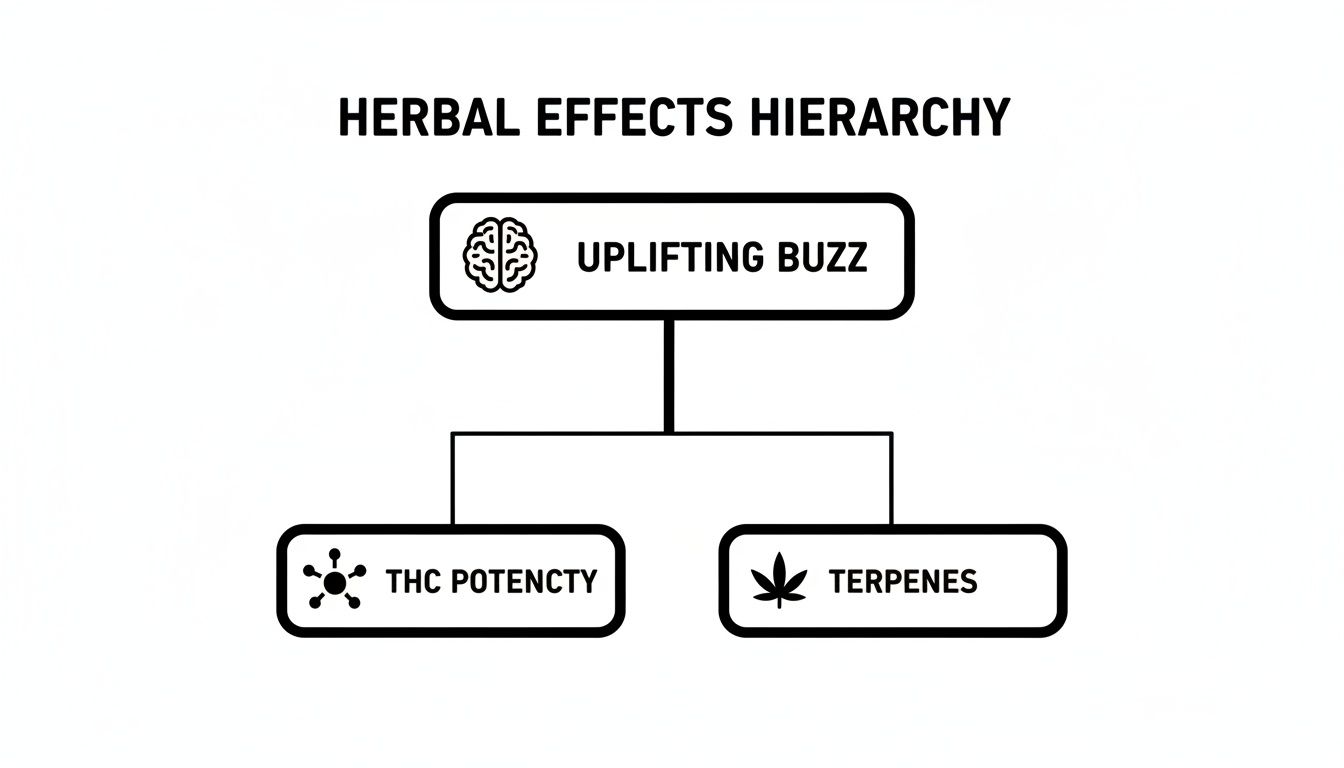
Think of it this way: THC is the engine, but the terpenes are the steering wheel and the throttle. Without the right terpene blend, you simply have unfocused potency, not the targeted, clear-headed energy that defines this profile's commercial appeal.
Building The Scent: Top, Middle, and Base Notes
The aroma of Jack Herer unfolds in distinct stages, a characteristic determined by the different evaporation rates (volatility) of its key terpenes. To build an authentic profile, you must layer them correctly as top, middle, and base notes.
- Top Notes: These are the most volatile compounds, detected first. They are light, sharp, and evaporate quickly.
- Middle Notes: Emerging just after the top notes, these form the "heart" of the aroma, defining the profile's main character.
- Base Notes: These are the heaviest, least volatile compounds. They anchor the entire blend, providing depth and a lasting finish on the palate.
For Jack Herer, this structure creates the classic "fresh pine forest after a rain" aroma that gradually yields to a spicier, earthier flavor. Omitting one of these layers results in a profile that feels flat and one-dimensional.
The Formulation Blueprint For Jack Herer
Here is a breakdown of where Jack Herer's most important terpenes fit within this structure. This serves as a starting point for building a strain-specific blend from isolates.
This practical guide outlines each terpene's role in the aroma, its contribution to the overall effect, and a recommended starting concentration for your formulation.
Jack Herer Terpene Formulation Blueprint
| Terpene | Aromatic Note | Functional Contribution | Recommended Starting % |
|---|---|---|---|
| Terpinolene | Top Note | Drives the signature energetic, cerebral rush. Provides the sharp, piney-citrus aroma that defines the initial sensory experience. | 30-40% |
| Alpha-Pinene | Middle Note | Contributes to the "clear-headed" and focused feeling. Adds a crisp, woody pine aroma that forms the core of the profile. | 10-15% |
| Beta-Caryophyllene | Base Note | Grounds the blend with a spicy, peppery undertone. Balances the brighter top and middle notes for a smooth, well-rounded finish. | 8-12% |
| Myrcene | Base Note | Adds a subtle herbal, earthy sweetness. Works in the background to prevent the profile from becoming too sharp or astringent. | 5-10% |
| Limonene | Top/Middle Note | Enhances the citrus element of Terpinolene. Contributes to the uplifting mood without overpowering the core pine-spice character. | 3-7% |
Consider this table the foundation of your recipe. Start with these ratios and adjust based on your concentrate. For example, a live resin with some native terpenes will require a different formulation than a winterized distillate.
The energetic effect of this profile is a primary selling point. To dive deeper into crafting these kinds of effects, consult our guide on the best terpenes for energy and focus. By mastering the art of blending these terpenes, you can create products that consistently deliver the invigorating experience associated with Jack Herer.
How to Formulate a Jack Herer Strain-Inspired Terpene Blend for Vape Cartridges
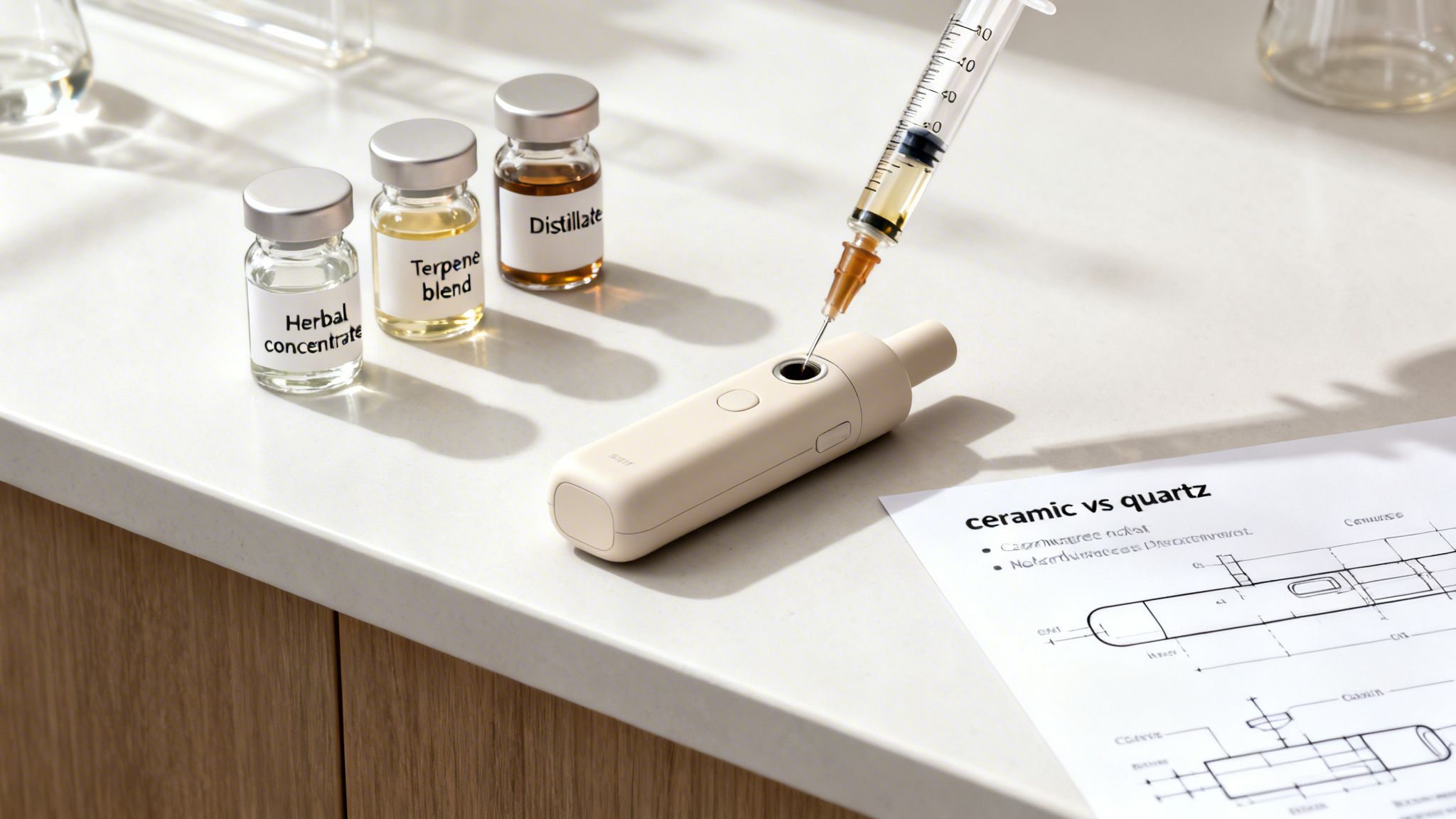
Translating the Jack Herer terpene profile into a commercially viable vape cartridge is where formulation craft meets technical execution. The objective is to consistently deliver that signature clear-headed effect, free from the harshness or off-flavors that compromise a product's reputation.
This process is more complex than simply adding a terpene blend to an oil. Factors ranging from the type of distillate used to mixing ratios and cartridge hardware will ultimately determine the success of the final product. A premium terpene blend cannot salvage a poorly executed formulation.
Starting with the Right Base Concentrate
The quality of your starting concentrate sets the stage for the entire formulation. For a strain profile like Jack Herer, known for its bright and uplifting characteristics, a clean, neutral base is non-negotiable.
Highly refined, winterized distillates are the industry standard for this reason. These oils have had extraneous fats, waxes, and lipids removed, providing a blank canvas. This purity allows the Jack Herer strain-inspired terpene blend to express itself without interference.
Using a darker, less-refined oil introduces "background noise." The inherent murky, plant-like notes will clash with the crisp pine and spice you are trying to feature, resulting in a generic-tasting product rather than a strain-specific experience.
Managing Viscosity and Mixing Ratios
A primary challenge in vape formulation is achieving optimal viscosity. On its own, distillate is typically too viscous to vaporize effectively in standard cartridge hardware. Terpenes serve as both the flavor engine and a natural diluent.
Nailing the ratio is critical to avoid common failures:
- Insufficient Terpenes: The oil remains too thick, leading to poor wicking. This causes dry hits and burnt coils, resulting in a harsh, acrid user experience.
- Excessive Terpenes: The mixture becomes too thin, increasing the risk of cartridge leakage. This also makes the vapor unpleasantly harsh, with an overpowering, chemical-like flavor.
As a solid rule of thumb, start with a terpene ratio of 5-7% by weight. For a 10-gram batch of distillate, this equates to adding between 0.5 and 0.7 grams of your Jack Herer terpene blend.
Always mix your blend into the distillate gently, using low heat (around 100-120°F or 38-49°C). This ensures proper homogenization without vaporizing the volatile terpenes. For a deeper dive, our guide on how to properly use terpenes covers more advanced techniques.
Choosing the Right Hardware
The cartridge itself is the final piece of the formulation puzzle. The coil material significantly impacts how terpenes are heated and, consequently, how they taste.
- Ceramic Coils: These are the gold standard for flavor-forward formulations. Ceramic provides a slow, even heat that helps preserve the complex pine and spice notes in the Jack Herer profile, resulting in a smoother, more authentic flavor.
- Quartz Coils: These heat up faster, which can be a detriment. Quartz can run hot, potentially scorching the most volatile top-note terpenes like Terpinolene and Pinene. This destroys the very character and effect you have worked to create.
For a premium Jack Herer cartridge, a quality ceramic coil is almost always the superior choice. It is the best way to ensure your customers experience the full-bodied flavor and uplifting effects you engineered.
Fine-Tuning Your Formulation For Product Differentiation
Mastering the classic Jack Herer profile is the entry point. True market differentiation comes from innovation. Once you have perfected the baseline formula, you can begin crafting unique variations that appeal to different consumer segments and establish a signature for your brand.
The original Jack Herer plant is known for its distinct phenotypes, each with subtle variations in aroma and effect. This concept can guide your formulation strategy, allowing you to create unique versions that retain the unmistakable Jack Herer essence.
Creating Signature Blends with Isolates
This is where your creativity as a formulator comes to the forefront, and terpene isolates are your primary tools. Instead of relying solely on a pre-mixed profile, isolates allow you to amplify, soften, or introduce new notes to your base Jack Herer blend, giving you surgical control over the final sensory experience.
By adjusting key terpenes, you can develop proprietary blends that deliver targeted effects and unique flavor profiles.
It is analogous to a mixologist perfecting a signature cocktail. A classic Old Fashioned is excellent, but a splash of a unique bitter or a different type of sugar can make it a house specialty. Isolates provide that same power to put your own stamp on a classic profile.
Here are two concrete examples of how to modify the core Jack Herer profile for distinct product applications.
Example 1: The "Citrus Haze" Variation
Objective: Create a bright, zesty version of Jack Herer that emphasizes its Haze lineage. This profile is ideal for a "morning motivation" or "afternoon pick-me-up" product.
- Action: Amplify the Limonene.
- Method: Maintain your core Jack Herer ratio, but introduce an additional 2-3% Limonene isolate to the total terpene blend. This will sharpen the citrus notes and enhance the aromatic "pop."
- Result: A vibrant, lemon-pine flavor that dials up the energetic effect. This "Citrus Haze" interpretation of the profile is perfect for consumers seeking a sharp, clear-headed, and mood-lifting experience.
Example 2: The "Mellow Focus" Variation
Objective: Gently smooth out Jack Herer's racy sativa edge for a more relaxed, yet focused, experience. This is ideal for an all-day vape that won't induce anxiety.
- Action: Carefully increase the Myrcene.
- Method: Add an extra 1-2% of Myrcene isolate to your base blend. Subtlety is key; excessive Myrcene will tip the balance toward sedative effects, defeating the purpose.
- Result: The additional Myrcene adds a grounding body sensation that tempers the cerebral rush from the Terpinolene. The outcome is a "Mellow Focus" effect: clear-headed and productive, but with an underlying sense of ease.
Mastering these small, strategic adjustments is what distinguishes a good formulator from a great one. It is how you transition from replicating strains to creating memorable products that command brand loyalty.
Ensuring Quality Control And Safety In Your Formulations
Accurately replicating the flavor of Jack Herer is a significant achievement, but it is only half the battle. The other, more critical, half is ensuring every product you ship is clean, stable, and safe. In a market where brand trust is paramount, rigorous quality control is what separates a top-shelf brand from a liability.
It starts with raw materials. Your terpene supplier must be reputable and provide lab-verified documentation for every batch. You need a Certificate of Analysis confirming they are free from contaminants like solvents, pesticides, and heavy metals. Without it, you are operating blind and putting your brand at risk.
Equally important is what you exclude from your blend. The industry has seen the damage caused by dangerous diluents like Vitamin E acetate. To protect consumers and your brand, you must commit to never using cutting agents like VG, PG, PEG, or MCT oil in any inhalable products.
Your Safety And Quality Checklist
Building a reputation for quality requires a disciplined, repeatable process. Use this checklist to ensure every batch meets your standards.
- Verify Your Sources: Always demand a Certificate of Analysis (COA) for every terpene blend or isolate. No COA, no purchase.
- Handle With Care: Concentrated terpenes are powerful chemicals. Always work in a well-ventilated space and wear appropriate personal protective equipment (PPE), including gloves and safety glasses.
- Store Properly: Terpenes degrade when exposed to light, heat, and oxygen. Protect your inventory by storing them in a cool, dark place in tightly sealed containers.
- Test Your Final Product: Send finished goods for third-party lab testing. This final verification confirms potency, terpene profile accuracy, and ensures no new contaminants were introduced during production.
Avoiding Common Formulation Pitfalls
How you handle ingredients is as important as the ingredients themselves. Terpenes are volatile, and simple mistakes can degrade flavor or compromise safety. For example, using the wrong type of plastic equipment can lead to degradation and contamination.
It is also our responsibility as formulators to be aware of potential adverse reactions. While sensitivities are rare, they do occur. Get an overview of potential terpene side effects to learn how to create products that are effective for the widest possible audience. Adhering to these safety protocols is how you build the trust that turns a one-time buyer into a loyal customer.
Got Questions About Formulating Jack Herer? We've Got Answers.
Attempting to capture the classic Jack Herer experience in a formulation brings up common technical hurdles. Let's address the most frequent questions from formulators.
How Much Terpene Blend Should I Use for My Distillate?
This is a critical formulation question. While the optimal ratio depends on your starting material and hardware, a solid guideline for vape cartridges is 5–8% terpenes by weight.
- Below 5%, the oil will likely be too viscous, impeding wicking and causing a burnt, unpleasant taste. The flavor and effects will also be muted.
- Above 8%, the mixture becomes too thin, leading to leaky cartridges. The flavor can also become sharp, perfumey, and harsh on the throat.
Start your test batches at 6%. From there, you can adjust the percentage based on hardware performance and desired flavor intensity.
Can I Replicate the Effects Without Terpinolene?
Technically, you can create a pine-and-spice blend without it. But it will not deliver the Jack Herer experience.
Terpinolene is the primary driver of the signature energetic, cerebral effect. Without it, the experience falls flat, resulting in a product that feels dull and significantly less stimulating than what consumers expect from the name.
If you cannot source Terpinolene, you are better off formulating a different sativa-dominant profile, such as one inspired by Green Crack or Durban Poison. Do not market a product as Jack Herer if it cannot deliver that core, electric experience.
Why Does My Jack Herer Formulation Taste Harsh?
Harshness is a common formulation problem, but it is rarely the fault of high-quality terpenes alone. Before discarding your blend, investigate these three common culprits:
- Over-saturation: The most frequent error is simply using too high a concentration. Is your terpene percentage above 8%? Dial it back into the 5-7% sweet spot.
- Hardware Incompatibility: Low-grade hardware can ruin flavor. Cartridges with coils not designed for terpene vaporization (like some older quartz coils) can scorch the oil, creating an acrid taste. Always use quality ceramic coils to preserve flavor integrity.
- Overheating During Mixing: If you overheat your distillate and terpenes during homogenization, you will boil off the most volatile aromatic compounds. What remains is an unbalanced, harsh-tasting mixture. Keep mixing temperatures low and be gentle.
Troubleshooting these three variables will help you achieve the smooth, flavorful vapor that defines a premium product.
Ready to formulate a true-to-strain Jack Herer profile that commands market attention? Gold Coast Terpenes provides lab-verified, strain-specific terpene blends and isolates to help you build exceptional products with confidence. Explore our full range of profiles and formulation resources today.