
When formulating a product targeting migraine-related symptoms, getting caught up in the indica or sativa for migraines debate is a common misstep. For product developers, success hinges on understanding the functional chemistry of a cultivar, not its folk classification. The most effective products are built by targeting specific mechanisms—like neuro-inflammation and vasodilation—with precise terpene isolates and strain-inspired terpene blends.
Indica Vs Sativa: A Framework For Migraine Formulation
For brand owners and formulators, the "indica or sativa" conversation is primarily marketing shorthand. It fails to address the biochemical core of what makes a product effective. While consumers might associate "indica" with relaxation and "sativa" with energy, a formulator's expertise lies in knowing why those effects occur. The answer is almost always found in the dominant terpenes.
This is especially true when creating products for the migraine market. Instead of selecting a strain, the strategic approach is to first identify the primary symptom you intend to address. This decision tree illustrates the thought process.
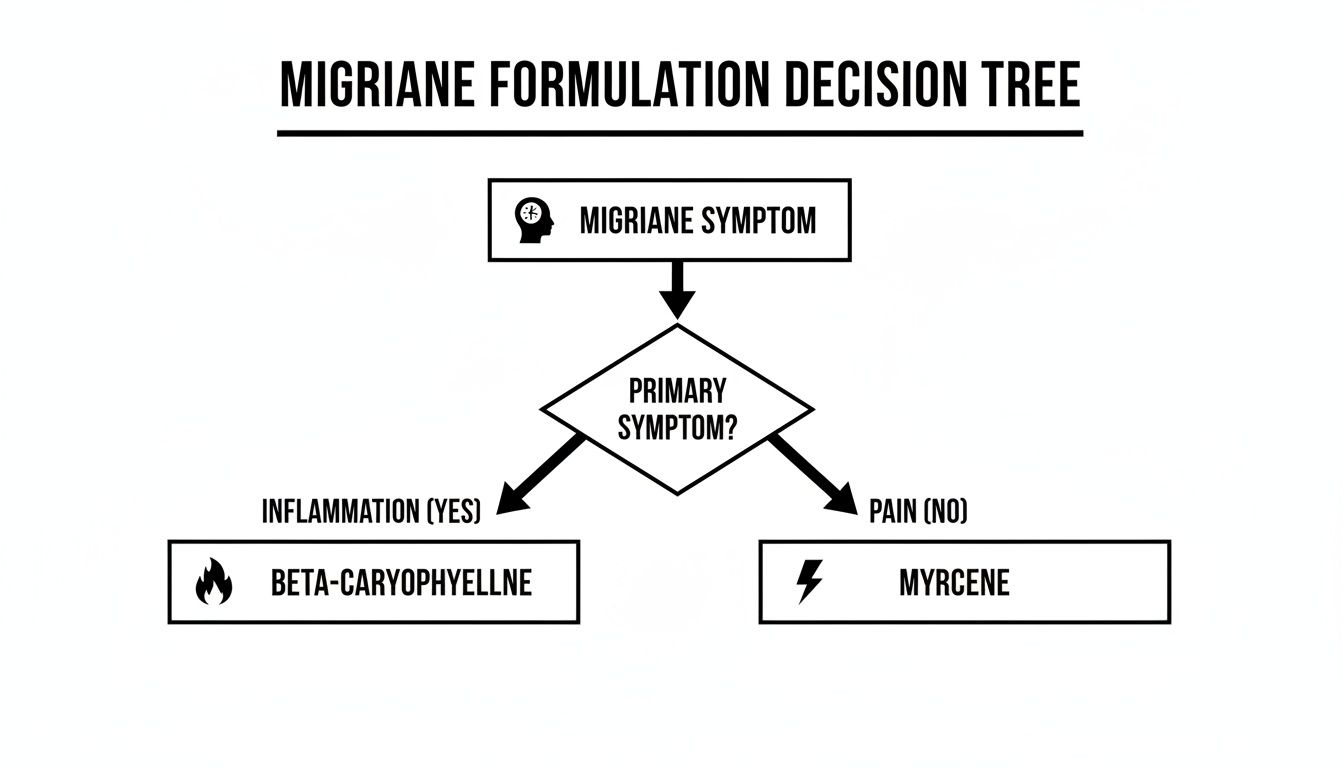
As shown, the path from symptom to solution is clear: target inflammation with Beta-Caryophyllene and pain with Myrcene. This is a much more direct and reliable methodology than guessing with broad indica or sativa labels.
Shifting From Classification to Chemistry
The legacy indica/sativa model is unreliable. Decades of crossbreeding mean a cultivar labeled "sativa" could easily possess a terpene profile dominated by Myrcene, an isolate typically associated with "indica" effects.
If your goal is to create a calming vape blend for migraine inspired by a cultivar like OG Kush, you should not focus on its indica heritage. You should focus on its high concentrations of Myrcene, Limonene, and Beta-Caryophyllene.
Key Insight for Formulators: You aren't trying to replicate a plant; you're trying to replicate a functional effect. The most direct path to a successful migraine-focused product is building it from the ground up with specific, quantifiable terpene isolates and blends.
This approach provides superior consistency and control over the final product's effects—a significant advantage in a competitive market. Once you understand the chemical drivers behind a strain's properties, you can create more effective and marketable vape cartridges. If you need a refresher on the fundamentals, our Terpenes 101 guide is an excellent resource.
Formulation Blueprint: Indica Vs Sativa Terpene Dominance For Migraine Targets
To put this chemistry-first approach into practice, let's examine how typical terpene profiles break down and what that means for formulating for migraines. The table below is not a rigid set of rules, but a high-level guide to help deconstruct popular profiles for your own product development. Using a high-quality Myrcene isolate, for instance, gives you precise control over your formulation’s sedative foundation.
| Formulation Target | Typical Indica-Leaning Profile (e.g., OG Kush inspired) | Typical Sativa-Leaning Profile (e.g., Green Crack inspired) | Relevance to Migraine Formulation |
|---|---|---|---|
| Primary Terpene | Myrcene (Earthy, Musky) | Terpinolene or Limonene (Fruity, Citrus) | Myrcene is a foundational base note for its sedative and analgesic properties, making it a primary target for pain-dominant migraines. |
| Secondary Terpenes | Limonene, Beta-Caryophyllene | Beta-Caryophyllene, Myrcene | Beta-Caryophyllene is critical for both profile types due to its anti-inflammatory action via CB2 receptor interaction. |
| Primary Functional Goal | Sedation, Pain Relief, Anti-Inflammation | Mood Elevation, Focus, Anti-Nausea | Formulations can blend these goals, using indica-leaning bases for pain and sativa-leaning top notes for nausea and mood. |
| Best-Fit Application | Nighttime use, acute pain management | Daytime use, managing associated symptoms like fatigue or nausea | Product lines can be segmented for different use cases, expanding market reach. |
This blueprint demonstrates how to move beyond simple labels. By understanding which terpenes drive specific effects, you can build a versatile product line that offers targeted support for specific migraine symptoms and scenarios, giving your brand a clear competitive edge.
When formulating a product for migraines, the primary functional drivers extend beyond THC or CBD alone. Cannabinoids set the stage, but the terpenes direct the effects. For formulators, the indica or sativa for migraines debate is secondary to understanding which terpenes work synergistically to deliver specific outcomes.
Think of building a blend like layering notes in perfumery. You have your base, mid, and top notes, each playing a specific role. A well-constructed vape or concentrate uses this principle to address migraine symptoms from onset to lingering effects. Moving past basic strain profiles lets you build a smarter, more targeted product.
Foundational Base Notes for Lasting Effects
Base notes are the anchor of your formula. They provide the deep, lasting effects users seek when a migraine is at its peak. These compounds are less volatile, so their effects are more sustained. For any serious migraine blend, Myrcene is a go-to isolate.
With its earthy, musky scent, Myrcene is the powerhouse behind the sedative, body-relaxing sensation often associated with "indica" cultivars. It is essential in a blend designed to address the intense, throbbing pain of a migraine. It grounds the entire experience with a strong foundation of physical comfort.
Another key base note is Linalool, the terpene known for its floral, lavender-like aroma. Migraines can be triggered or worsened by stress, and that's where Linalool's value lies. It works in concert with Myrcene to deepen the blend’s overall calming effect.
Mid Notes: The Functional Core of the Blend
As the initial effects of the top notes diminish, the mid notes become more prominent. They are the heart of your formula’s functional action. For a migraine product, one mid-note is absolutely essential: Beta-Caryophyllene.
Beta-Caryophyllene is unique. It functions as a cannabinoid by directly engaging CB2 receptors, which are part of the body's system for managing inflammation. This makes it a direct tool for addressing the neuro-inflammation that is a root cause of migraine pain.
By including a high-quality Beta-Caryophyllene isolate, you’re targeting a core migraine mechanism without adding psychoactivity. It's the ingredient that makes a product truly functional, not just generally "calming."
With its peppery, spicy profile, Beta-Caryophyllene is non-negotiable. Its ability to specifically target inflammatory pathways gives your product a clear advantage and purpose.
Top Notes for Immediate Impact and Mood Modulation
Top notes are what the user experiences first. They’re the most volatile terpenes, delivering an immediate aroma and a fast-acting effect upon inhalation. While they fade quickly, they play a vital role in managing acute symptoms like nausea and mood shifts associated with a migraine. The star player here is Limonene.
Limonene’s bright, citrusy aroma delivers an instant mood lift, which can be invaluable when combatting the irritability or low feelings of a migraine attack. It’s also well-known for its anti-nausea properties, making it a critical addition for users dealing with an upset stomach.
This is where the art of layering comes in. By combining a relaxing, Myrcene-heavy base with an uplifting Limonene top note, you create a product that offers both immediate mood support and deep, long-lasting pain relief. This is a far more sophisticated and effective approach than using a one-note strain profile. Mastering this technique, and using a tool like our terpene mixing calculator to ensure precision, will help you develop vape cartridges that truly meet the complex needs of this consumer segment.
Why Indica-Dominant Profiles Often Lead Migraine Formulations
When you're developing a product for the migraine market, available evidence points overwhelmingly toward indica-leaning terpene profiles. This is not about legacy dispensary wisdom; it’s about the functional chemistry. The composition of these profiles aligns perfectly with the goals of combating a migraine.
The indica or sativa for migraines debate simplifies once you focus on the end goal: what do you need the product to do?
Formulators tackling migraines are aiming for three main outcomes: pain reduction, sedation, and anti-inflammatory action. As it happens, indica-dominant profiles—with their high concentrations of certain terpenes—are practically built to deliver on all three.
The Power of Sedative and Analgesic Terpenes
Examine the terpene profiles typically associated with indica. You'll almost always find Myrcene and Linalool playing a prominent role. Myrcene is a heavy-hitter for sedation, which is crucial for mitigating the sharp, pulsing pain of a migraine.
Linalool then provides a calming, anti-anxiety effect. This is equally important, as it helps manage the stress and tension that can either trigger a migraine or exacerbate an existing one. Together, they create a powerful synergy that does more than just mask pain—it addresses the entire experience.
This focus on indica-leaning profiles is backed by research. Studies have shown that medical cannabis can cut migraine frequency significantly, with indica strains consistently singled out as a preferred option. One notable study observed monthly migraines dropping from 10.4 to 4.6, and indica profiles were found to be 51% more effective at providing relief than other types. You can dig into these compelling cannabis research findings to see the data for yourself.
This data is a green light for formulators. It indicates that building a product that mimics the chemical signature of effective indica strains is a sound, evidence-based strategy for any vape or concentrate brand.
Replicating Efficacy with Terpene Isolates
The real opportunity here isn't just to copy an indica strain but to re-engineer its best qualities for consistent, targeted effects. When you understand why these profiles work, you can build a better one from the ground up using pure isolates.
Let's use a classic indica like Forbidden Fruit as a blueprint. It's known for its deep relaxation. Here’s how you could reverse-engineer that experience for a migraine-focused vape cartridge:
- Myrcene: Start with a high concentration of Myrcene to lock in that sedative and pain-relieving foundation. Using a pure Myrcene isolate gives you a clean and potent base to build on.
- Beta-Caryophyllene: Add a healthy dose of this terpene to address neuro-inflammation by activating CB2 receptors. This is a key mechanism that many potent indica strains naturally leverage.
- Limonene & Linalool: Finally, layer these in as mid and top notes. They help with the nausea and mood swings that often accompany a migraine, all while rounding out the flavor profile with pleasant floral and citrus hints.
This approach gives you total control over the end product, ensuring every batch provides the exact same targeted effect. You're no longer just answering the "indica or sativa" question; you're moving into precise, effects-based formulation. The result is a product that works predictably, building brand trust. By focusing on the "why," you can create a product that stands out because it was designed with intention.
Developing Hybrid Formulations For Balanced Migraine Relief
While indica-leaning blends are a solid starting point for pain, true innovation lies in creating hybrid formulations that tackle the full spectrum of migraine symptoms. The "indica or sativa for migraines" debate becomes irrelevant when you begin targeting multiple symptoms simultaneously.
A purely sedative product might dull pain but can leave the user non-functional. By carefully combining the deep relaxation of an indica-style base with the brighter, anti-nausea effects of certain sativa-leaning terpenes, you can create a far more effective and versatile product. The objective is to manage pain without inducing overwhelming drowsiness.
Using Terpenes to Create a Balanced Effect
The key to a great hybrid lies in understanding how to layer terpenes for a specific result. This isn't just mixing isolates; it's about building a blend where terpenes work synergistically to address several symptoms at once. This is how you transition from copying a strain to creating a unique and effective product.
A classic and highly effective strategy is to combine the sedating power of Myrcene with the mood-lifting and stomach-settling properties of Limonene.
- Myrcene (Base Note): This terpene provides the foundation for pain and muscle relief, directly targeting the physical discomfort of a migraine. It anchors the blend in powerful physical comfort.
- Limonene (Top Note): With its bright citrus scent, Limonene offers an immediate mood lift, which is a game-changer for fighting the depression and nausea that so often come with migraines.
- Beta-Caryophyllene (Mid Note): This terpene acts as the bridge, delivering sustained anti-inflammatory benefits that attack neurogenic inflammation—a core driver of migraine pain.
This combination creates a product that offers serious pain relief while helping the user stay functional. To get started building your own custom hybrid blends, you can explore our full range of pure Terpene Isolates.
Following the Clinical Evidence for Cannabinoid Ratios
Strong clinical evidence also supports this combined approach. As a formulator, you can use this research as a blueprint. Since terpenes are known to steer the effects of cannabinoids, matching the terpene environment of clinically proven cannabinoid ratios is a very smart strategy.
A groundbreaking 2026 study showed how well a hybrid profile can work. Researchers tested a vaporized cannabis flower with a low dose of 6% THC and 11% CBD. The results were compelling: 67% of users felt a major reduction in pain within two hours, and 35% were completely pain-free.
This specific THC:CBD combination worked much better than THC alone (47% pain relief) or a CBD isolate (31% relief, on par with placebo). This is a perfect example of the entourage effect in action, where the full spectrum of compounds, guided by terpenes, delivers a far superior result. You can dive into the full study and see how hybrid profiles provide effective migraine treatment to help guide your next formulation.
This research gives formulators a clear path forward. By analyzing the terpene profiles of strains known to have these balanced THC:CBD ratios, you can craft terpene blends that push your cannabinoid base toward a similar, highly effective outcome. It changes the question from a simple "indica or sativa?" to a more sophisticated one: "How do we create the precise biochemical balance for maximum effect?"
Creating Strain-Inspired Terpene Blends For Migraine Vapes
Let's transition from theory to practice. Building an effective vape product for migraines is not about applying an "indica" or "sativa" label. It’s about precision engineering—creating a specific recipe of terpene isolates that delivers a reliable, targeted experience every time.
Here, we'll walk through how to build custom terpene blends from scratch. I’ll provide two distinct starting points: a heavy "indica-style" blend for severe pain and a more functional "hybrid" blend for daytime relief. This is how you move from copying existing strains to developing unique products that solve a real problem for your customers.
Recipe 1: Indica-Leaning Migraine Blend
This first recipe is for debilitating, full-blown migraine attacks where the sole objective is powerful pain relief and sedation. Think of it as the "lights out" blend. It’s designed to mimic the deep, body-heavy relaxation of classic indica profiles, making it ideal for nighttime or when a user can fully rest and recover.
The foundation is a heavy dose of Myrcene, which handles the heavy lifting for sedation and pain relief. We then support that with a solid amount of Beta-Caryophyllene to target neuro-inflammation directly.
To round it out, a touch of Linalool brings its well-known calming and anti-anxiety effects. The result is a profile built from the ground up for comfort and rest. To get these ratios just right, using a tool like our terpene mixing calculator is crucial for consistency.
Recipe 2: Balanced Hybrid Blend
Migraines don't always occur at convenient times. For customers who need to remain functional during the day, a purely sedative blend can be a hindrance. This balanced hybrid recipe is built to provide significant pain and inflammation relief without heavy drowsiness.
We still use Myrcene and Beta-Caryophyllene as the core functional ingredients, but we dial back their concentrations. The key difference here is bringing Limonene to the forefront.
Limonene’s bright, uplifting properties help to counteract potential sedation and address common migraine-related symptoms like nausea and low mood. A small amount of Alpha-Pinene is also included to promote alertness and help clear the head, creating a well-rounded product suitable for daytime application.
This approach offers a more nuanced solution that acknowledges the "indica or sativa for migraines" debate often finds its answer somewhere in the middle. It creates a product with much broader market appeal.
Sample Terpene Formulations for Migraine-Focused Products
The table below lays out the percentages for the two blends we've just discussed. Consider these proven starting points. You'll want to tweak these ratios based on your distillate and the specific effect you're aiming for. The goal is to create a team of terpenes where each isolate has a clear job, working together to produce a powerful synergistic effect. If you need to source these ingredients, you can find them in our catalog of pure Terpene Isolates.
Sample Terpene Formulations for Migraine-Focused Products
| Terpene Isolate | Function (Note) | Indica-Leaning Blend (Percentage) | Balanced Hybrid Blend (Percentage) |
|---|---|---|---|
| Myrcene | Sedation, Analgesia (Base) | 40-50% | 25-35% |
| Beta-Caryophyllene | Anti-Inflammatory (Mid) | 20-25% | 20-25% |
| Limonene | Mood, Anti-Nausea (Top) | 5-10% | 20-30% |
| Linalool | Calming, Anti-Anxiety (Mid) | 15-20% | 5-10% |
| Alpha-Pinene | Alertness, Anti-Inflammatory (Top) | – | 5-10% |
| Other Trace Terpenes | Aroma & Synergy | 5-10% | 5-10% |
When you're ready to mix, a total terpene concentration of 5-8% by weight in your distillate is an excellent starting point. Always begin on the lower end of that range. Run small test batches to check the viscosity, flavor, and hardware performance before committing to a large production run. This methodical approach is key to ensuring a stable, high-quality product.
Common Questions in Migraine Product Formulation
When creating products for the migraine market, you encounter unique technical challenges. It’s one thing to discuss "indica or sativa for migraines," but another entirely to build a precise, effects-based formulation. Let's tackle the questions we hear most often from formulators and provide straightforward, actionable answers to aid your R&D and manufacturing processes.
My goal here is to provide the technical know-how to create products that are not only effective and reliable but also stand out in a crowded market. We’ll cover must-have ingredients, how to approach THC-free products, and the technical details of making a great vape cartridge.
Which Terpene Isolates Are Most Critical for a Migraine Formulation?
While a full, complex bouquet of terpenes can refine a product, a successful migraine formulation is built on a few non-negotiable isolates. If you're serious about developing an effective blend, you must start with these three.
First is Myrcene. Think of it as the foundational sedative and pain-relieving note, especially for anything intended to have an "indica" feel. It’s what delivers the deep physical relaxation users seek during an acute migraine attack. Without it, you’re missing the core analgesic component.
Next, you must include Beta-Caryophyllene. Its ability to bind directly to CB2 receptors is unique, giving it a powerful anti-inflammatory action without any psychoactivity. This makes it an essential tool for targeting the neuro-inflammation at the root of much migraine pain.
Finally, you need Limonene. It’s a vital top note that helps lift the user's mood, which often declines during a migraine. It also helps with the nausea that frequently accompanies the experience. A migraine formulation without a smart balance of Myrcene, Beta-Caryophyllene, and Limonene is incomplete.
How Does the Indica vs. Sativa Debate Impact THC-Free Products?
This is an excellent question. When working with THC-free or compliant hemp products, the "indica or sativa" concept boils down to one thing: the terpene profile. Without THC driving psychoactive effects, the terpenes are left to direct the entire experience, steering cannabinoids like CBD, CBG, or CBN.
In this context, you aren’t replicating a high; you’re architecting a functional outcome. Your terpene blend is arguably the single most important factor in how the end-user will perceive your product.
For a THC-free "indica" blend, you’ll want to lean heavily on terpenes like Myrcene and Linalool to promote relaxation and sedation, which beautifully complements the calming nature of CBD. Conversely, a "sativa" blend would feature more Limonene and Pinene to create a more uplifting and focused feeling. It's a deliberate formulation choice that allows you to shape the effects of your non-psychoactive cannabinoid base. Our library of Terpene Isolates provides all the building blocks you need for this precise work.
What Are Key Technical Considerations When Adding Terpenes to Distillate?
Crafting vape cartridges for the migraine market demands more than just a good recipe; the technical details separate a premium product from a disappointing one. Here are three things you must get right for quality, consistency, and stability.
Dilution Ratio: Precision is everything. A good starting point for most distillates is a terpene concentration of 5-7% by total weight. Too much, and you'll get a harsh taste and viscosity issues. Too little, and you won't deliver the intended flavor or effect.
Homogenization: Achieving a perfectly uniform mixture is crucial. The standard practice is to gently heat your winterized distillate to around 60-70°C (140-158°F) before adding the terpenes. This lowers the oil's viscosity, making it easy to stir the terpenes in thoroughly and avoid "hot spots" of concentrated flavor in the final carts.
Stability and Storage: Terpenes are volatile. Some, like Limonene, are especially prone to degradation when exposed to heat, light, and oxygen. Once you’ve mixed your blend, proper sealing and storage in a cool, dark place is critical to preserve the profile you worked so hard to create.
For getting your measurements just right, a reliable tool is a must-have. Our free Terpenes Mixing Calculator can help you nail your target ratios batch after batch.
At Gold Coast Terpenes, we're here to provide the lab-verified profiles and pure isolates you need to build exceptional products with total confidence. Take a look at our catalog and resources to start creating your next best-seller.