
For cannabis formulators, the term "indica for sleep" is both a market opportunity and a technical misnomer. While consumers associate "indica" with relaxation, industry professionals know that this botanical classification is an unreliable predictor of a product's sensory profile. For developing a consistent, effective product line, relying on folklore is not a viable strategy.
The reality is that a plant's lineage as indica or sativa reveals very little about its chemical composition. For brand owners and manufacturers, success hinges on moving beyond these outdated labels and focusing on the molecular blueprint: the terpene profile.
Moving Beyond the "Indica for Sleep" Formulation Myth

For decades, dispensary-level education has been simplified: indicas are for relaxation, while sativas are for energy. This binary, while accessible for consumers, is a gross oversimplification with no place in professional product development. As a formulator, your brand’s reputation is built on consistency and predictability—outcomes that cannot be achieved by chasing a botanical label.
The desirable sensory characteristics of a classic "indica" are not derived from the plant's leaf structure but from its specific molecular output. To reliably formulate a product associated with relaxation, the focus must shift from plant genetics to replicable chemistry.
The Scientific Framework for Product Formulation
Modern product development demands a molecular-level strategy. Instead of relying on a plant designated as "indica" to possess the desired characteristics, formulators deconstruct the chemical profiles of successful cultivars and rebuild them with scientific precision.
This is where the entourage effect becomes a critical formulation concept. The synergistic interaction between cannabinoids and terpenes dictates the final sensory experience, with terpenes acting as the primary architects of a product's aroma and flavor.
By leveraging precise terpene blends, formulators can:
- Engineer a target aroma that consumers associate with relaxation, such as earthy, sweet, or floral notes.
- Modulate the sensory profile of base cannabinoids like THC, CBD, or CBN in finished products.
- Guarantee batch-to-batch consistency, ensuring a repeatable customer experience every time.
This approach is not just a matter of scientific integrity; it's a sound business strategy. The global sleep aids market is enormous, valued at $83.64 billion in 2025 and projected to hit $162.61 billion by 2034. Consumers are actively seeking effective alternatives, creating a substantial opportunity for well-formulated products. You can explore the full sleep aids market report for a deeper analysis of this market.
Consumer Myths vs. Formulation Science
This table clarifies the distinction between common consumer beliefs and the technical realities guiding professional product development.
| Consumer Myth | Formulation Reality |
|---|---|
| "Indica" always means relaxing. | A strain's effects are dictated by its unique terpene and cannabinoid profile, not its botanical classification. |
| All strains with the same name are identical. | Genetic drift and cultivation variables mean two cultivars with the same name can have vastly different chemotypes. Consistency is achieved through formulation. |
| High THC content dictates potency. | Terpenes like myrcene and linalool are the primary drivers of sedative-like aromas and sensory profiles. |
| Sativas are always energizing. | A "sativa" cultivar rich in linalool or myrcene could easily produce a relaxing sensory experience, contradicting consumer expectations. |
The key takeaway is that the Certificate of Analysis (COA), not the strain name, is the source of truth for creating effective and repeatable products.
By focusing on the terpene blend for a sleep formulation rather than the "indica" label, you gain complete control over your product's aroma, flavor, and consistency. This is the essential shift from cannabis folklore to modern formulation science.
Ultimately, crafting a compelling "indica-inspired" experience requires thinking more like a chemical architect than a botanist. It involves using terpenes and cannabinoids as building blocks to construct a predictable, effective, and high-quality product.
The Core Terpenes for Sleep-Associated Formulations
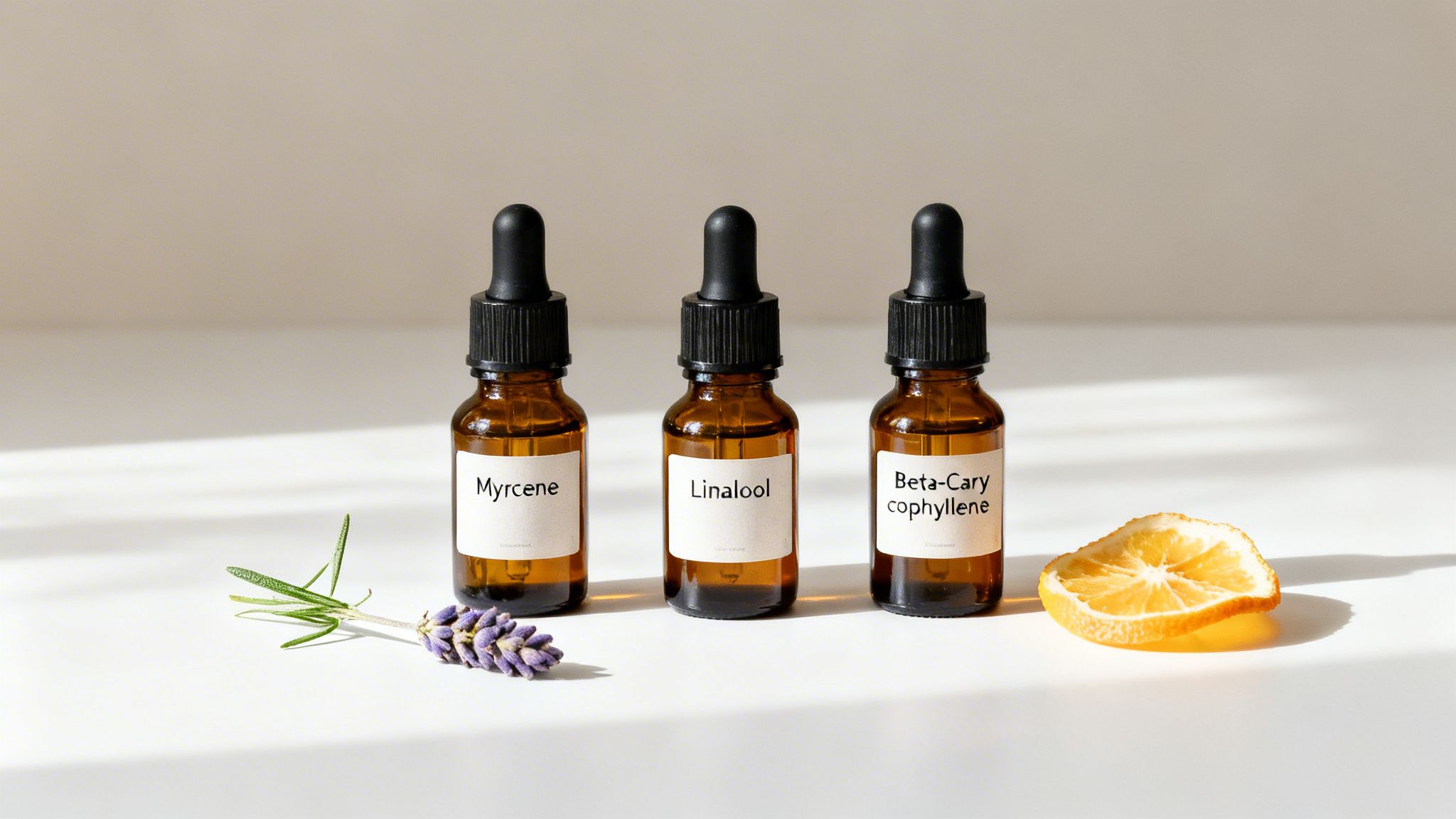
While dozens of terpenes contribute to a strain's final profile, a select few consistently appear in cultivars known for their relaxing aromatic qualities. When formulating a product targeting the sleep vertical, these isolates are your foundational components. They create the aromas consumers instinctively associate with unwinding and rest.
Mastering the blend of these core terpenes allows you to engineer a specific sensory journey. It is akin to fragrance architecture, using top, mid, and base notes to construct a complex experience—from the initial aroma upon opening the package to the lingering flavor of a vape.
Let's deconstruct the three most important terpenes from a formulator's perspective: Myrcene, Linalool, and Beta-Caryophyllene.
Myrcene: The Earthy Base Note
When formulating a classic "indica-inspired" profile, Myrcene is the non-negotiable starting point. As the ultimate base note, it provides a heavy, earthy, and musky foundation upon which the rest of the profile is built. Its aroma is often described as clove-like with sweet, fruity undertones reminiscent of mango.
In many well-known relaxing strains, Myrcene is the dominant terpene, often comprising over 0.5% of the plant's total weight. This dominance is what anchors the entire sensory profile.
- Aroma Profile: Earthy, musky, herbal, slightly fruity.
- Formulation Role: As the base note, it imparts a "heavy" aromatic quality central to the traditional indica sensory experience. It is excellent for smoothing out the sharper notes of other terpenes.
- Common Cultivars: Found in high concentrations in benchmark cultivars like OG Kush and Granddaddy Purple.
Myrcene delivers the authentic sensory signature consumers expect from products designed for relaxation. It is the foundation of any effective indica-inspired terpene profile.
Linalool: The Floral Mid-Note
If Myrcene provides the earthy foundation, Linalool is the calming heart of the blend. Functioning as a mid-note, it introduces a soft, floral complexity that balances Myrcene's heavy earthiness. It carries the unmistakable aroma of lavender, adding a clean, sweet, and slightly woody character.
Linalool is typically present in smaller concentrations than Myrcene, but its impact on the perceived "calmness" of an aroma is significant. It can shift a profile from merely "earthy" to "tranquil."
For formulators, Linalool is a strategic tool. It is added to soften a blend and introduce a more sophisticated, spa-like quality. It is what makes a product smell soothing, not just potent.
Incorporating Linalool allows for the creation of a more nuanced product that appeals to a broader audience. While not a primary flavor driver like Limonene—detailed in our guide to D-Limonene's benefits—Linalool’s aromatic contribution to calming blends is unmatched.
Beta-Caryophyllene: The Spicy Top Note
Finally, Beta-Caryophyllene adds a sharp, spicy character that sits atop the other aromas. As a top note, it delivers the peppery, woody scent recognizable from black pepper or cloves. It introduces a warm, invigorating element that cuts through the heavier base and mid-notes.
This unique quality adds a layer of complexity and prevents the final product from smelling one-dimensional. In a sleep-focused blend, Beta-Caryophyllene provides the initial aromatic punch that captures attention, just before the softer notes of Linalool and Myrcene emerge.
Understanding how these three core terpenes interact allows for precise formulation. A successful sleep-associated blend is not a random mixture; it is a carefully composed aromatic symphony where each terpene has a specific role.
How to Replicate a Strain Profile for Product Development
A Certificate of Analysis (COA) is not just a compliance document; it is the exact chemical blueprint of a successful cultivar. For product developers, the ability to read and translate this data into a repeatable formula is a critical skill for creating strain-inspired terpene blends.
By deconstructing the COA for a classic sleep-associated strain like Granddaddy Purple, you can extract the precise ratios needed to build a consistent and authentic product. This data-driven approach is how you move beyond simple, one-note flavors and begin crafting complex profiles that build brand loyalty.
Deconstructing a Certificate of Analysis
A COA provides a quantitative snapshot of a strain's chemotype, listing the exact percentages of cannabinoids and terpenes. The terpene section is your formulation guide. It's essential to analyze not just the terpenes present, but their relative concentrations.
Typically, a few dominant terpenes will appear at the top, followed by a long tail of minor terpenes in trace amounts.
- Identify the Top 3-5 Terpenes: These constitute the core of the strain's profile. For a heavy “indica,” Myrcene will almost always be dominant, often followed by Beta-Caryophyllene and Linalool.
- Calculate the Ratios: This is the key to authenticity. If Myrcene is at 0.8% and Linalool is at 0.4%, their ratio is 2:1. This proportion is more critical than the absolute percentage because it dictates the final aroma and flavor.
- Account for Minor Terpenes: Terpenes listed below 0.1% may seem insignificant, but they are the "seasoning" that makes a profile authentic. Omitting them can result in a blend that tastes synthetic or incomplete.
This data-first methodology removes guesswork from the formulation process. While many formulators understand the basics, the old indica vs. sativa debate can still create confusion. Our guide on whether Sour Diesel is an indica or sativa explores how terpenes define a strain's character.
From Ratios to a Working Formula
Once the terpene ratios are mapped out, the next step is to convert them into a practical recipe for your product, such as a vape cartridge or tincture. This involves translating the percentages from the COA into a mixing formula for your terpene blend.
Example: Reverse-Engineering Granddaddy Purple:
- Analyze the COA: A lab report might show Myrcene (0.7%), Beta-Caryophyllene (0.3%), and Linalool (0.15%).
- Determine the Ratio: The relationship here is approximately 4.7 : 2 : 1 (Myrcene : Beta-Caryophyllene : Linalool).
- Build the Blend: To create a 100ml batch of this terpene concentrate, you would mix approximately 61ml of Myrcene, 27ml of Beta-Caryophyllene, and 12ml of Linalool isolates. The minor terpenes would then be added in precise, smaller amounts to complete the profile.
This method yields a repeatable formula that captures the strain's essence. The finished terpene blend is then added to your cannabinoid distillate at your target concentration (typically 5-8%).
Market Opportunity for Precision Formulations
Executing this level of precision is not merely a technical exercise; it's a significant market opportunity. The global CBD nutraceuticals market was valued at $12.45 billion in 2025 and is projected to grow at a CAGR of 17.6% from 2026 onward. While pain management represents the largest segment, sleep-focused products are a close and rapidly expanding second. You can discover more insights about the CBD nutraceuticals market for a full breakdown.
By building precise, data-driven sleep formulations, you are not just selling a product—you are offering a reliable solution to a large and motivated consumer base.
Formulating Terpene Blends for Distillate Vape Cartridges
With your target terpene profile defined, the next stage is integrating it into a stable, high-quality vape cartridge. The objective is to homogenize the viscous cannabinoid distillate with your terpene blend to create a smooth, consistent experience.
This process is more complex than simple mixing. Cannabinoid distillate has a high viscosity, similar to cold honey. Adding terpenes at room temperature without proper technique will result in an inhomogeneous, separated mixture, leading to product failure and damaging your brand's reputation for quality.
Determining Optimal Terpene Concentration
The first critical parameter is the terpene concentration. For most vape formulations, particularly those designed to have a relaxing, "indica-inspired" profile, the industry standard is between 5% and 10% terpenes by total weight.
- Below 5%: The flavor and aroma will be too subtle, overshadowed by the raw taste of the distillate.
- Above 10%: The blend becomes overly thin, increasing the risk of cartridge leakage. It can also produce a harsh vapor that causes throat irritation.
A starting point of 7% or 8% is recommended for initial test batches. This can then be optimized based on your specific distillate and vape hardware. Our strain-inspired terpene blends provide a validated foundation for R&D.
The Homogenization Process: A Step-by-Step Guide
Proper homogenization is essential for product stability and quality. This requires heat and agitation to ensure the distillate and terpenes are fully integrated.
- Heat the Distillate: Gently warm your distillate to 60-70°C (140-158°F). This significantly reduces its viscosity, making it workable. A magnetic stirring hotplate is the ideal tool for this step.
- Measure Terpenes Precisely: While the distillate is warming, accurately measure your terpene blend. For a 100-gram batch at an 8% concentration, you will need exactly 8 grams of terpenes and 92 grams of distillate.
- Introduce Terpenes Slowly: Once the distillate reaches temperature, begin stirring at a low to medium speed. Slowly add the terpenes into the vortex created by the magnetic stirrer. A rapid addition will cause the terpenes to pool on the surface.
- Ensure Thorough Mixing: Continue stirring the mixture for a minimum of 15-30 minutes. This step is crucial for complete homogenization and prevents future separation.
- Cool the Mixture: After mixing, allow the blend to cool to room temperature. The final product should be a uniform, translucent liquid with no cloudiness or separation.
This workflow—from COA data to ratio calculation to final liquid blend—establishes a repeatable system for production.
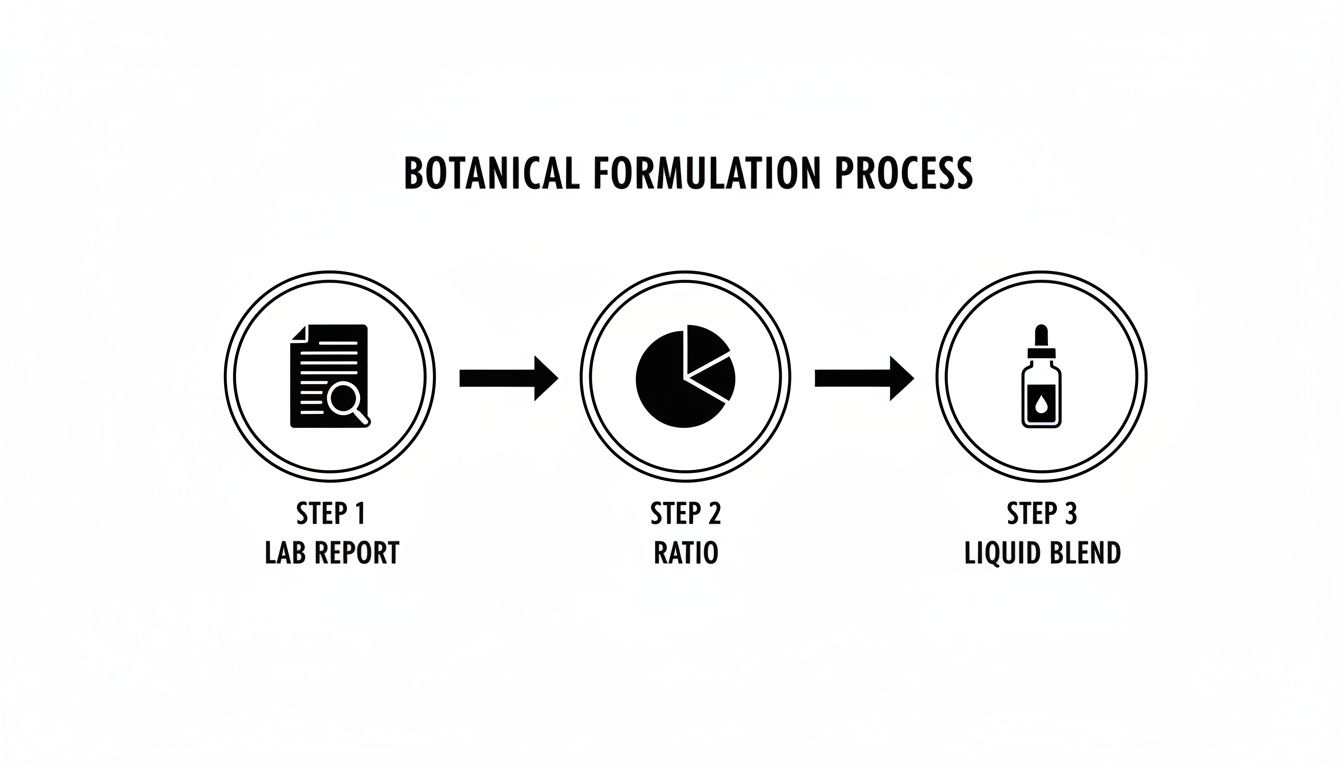
It is a process-driven approach that ensures quality and consistency.
Avoiding Common Formulation Issues
Even with a robust process, issues like crystallization and separation can occur. Both are preventable with proper technique.
Crystallization: This phenomenon, where the oil appears cloudy or sugary, often occurs with high-purity cannabinoid isolates (e.g., CBD, CBG) that tend to revert to their solid state. Maintaining correct ratios and ensuring complete homogenization helps keep cannabinoids fully dissolved in the solution.
Separation: This is almost always a result of inadequate mixing. If oily layers form in your cartridges, it indicates that the terpenes and distillate did not fully integrate. Review your heating temperatures and mixing duration to correct the issue.
Mastering this process allows for scalable production, ensuring that every "indica for sleep" vape cartridge meets the same high standard. For more technical details, our cannabis product formulation guides offer advanced resources.
Using Cannabinoids to Enhance Terpene-Driven Formulations
While terpenes are the architects of a product's aroma and flavor, cannabinoids provide the foundational effects. A superior indica for sleep formulation is not just about an authentic terpene profile; it's about the synergy between terpenes and cannabinoids. The goal is to pair the right cannabinoid base with a terpene blend that amplifies the intended sensory experience.
For example, combining a relaxing, Myrcene-dominant terpene profile with a minor cannabinoid like CBN in a clean distillate base creates a product far more targeted than either component alone. This is how brands move from manufacturing commodity products to crafting specialized SKUs that command brand loyalty and premium pricing.
Differentiating with Cannabinoid-Terpene Pairings
In a saturated market, product differentiation is paramount. Your most powerful tool for creating a unique brand identity is your terpene selection, especially when working with common cannabinoid bases like broad-spectrum distillate or isolates. Without a thoughtful terpene blend, a CBN vape is functionally identical to a competitor's.
However, introducing a specific strain-inspired terpene blend for vape cartridges transforms that same CBN vape into a unique product. It gains a compelling aroma, a memorable flavor, and a nuanced sensory experience that consumers can connect with.
Cannabinoids and terpenes allow for the creation of a product matrix where a single cannabinoid base can serve as the foundation for multiple, distinct SKUs. One batch of distillate can become a "Lavender Kush" vape pen rich in Linalool and a "Midnight Mango" tincture heavy on Myrcene, each targeting a different consumer preference.
This is an efficient production strategy and a sophisticated method for brand positioning. It enables the development of a diverse product portfolio without requiring a complete overhaul of the manufacturing process for each new product.
Strategic Formulation with Minor Cannabinoids
While THC and CBD dominate the market, minor cannabinoids represent the new frontier for innovative formulators. Cannabinol (CBN) has become the standard for sleep-focused products.
- CBN + Myrcene: A classic combination. The earthy, grounding notes of Myrcene paired with CBN create the heavy, deeply relaxing profile consumers associate with sleep aids.
- CBD + Linalool: For consumers seeking a gentler experience, pairing CBD with the floral, calming aroma of Linalool can produce a product geared toward stress relief and relaxation without a powerful sedative feel.
The market opportunity is substantial. The market for CBD products for sleep was valued at $2 billion in 2025 and is projected to reach $7 billion by 2033, growing at a CAGR of 15%. This growth is driven by consumer demand for natural sleep solutions. To capture this market, brands must offer premium, differentiated products. You can explore more data on the growing CBD for sleep market to understand the full scope of this trend.
Example Sleep Formulation Concepts
The table below outlines several product concepts, demonstrating how altering the cannabinoid or terpene focus creates distinct products with unique market positions.
| Product Concept | Primary Cannabinoid | Key Terpenes | Target Aroma Profile |
|---|---|---|---|
| "Deep Rest" Vape | CBN | Myrcene, Linalool | Earthy and musky, with a hint of floral sweetness. |
| "Tranquil Night" Tincture | Broad-Spectrum CBD | Linalool, Beta-Caryophyllene | Soft, lavender-forward with a peppery spice finish. |
| "Sunset" Gummies | Delta-8 THC | Myrcene, Beta-Pinene | Sweet, ripe mango with a fresh touch of pine. |
Each concept utilizes a precise chemical profile to deliver a consistent and unique sensory experience. This is the modern, scientific approach to product design. For more advanced techniques, our guides on cannabis product formulation are an excellent resource.
Ensuring Consistency in Sleep Product Formulations
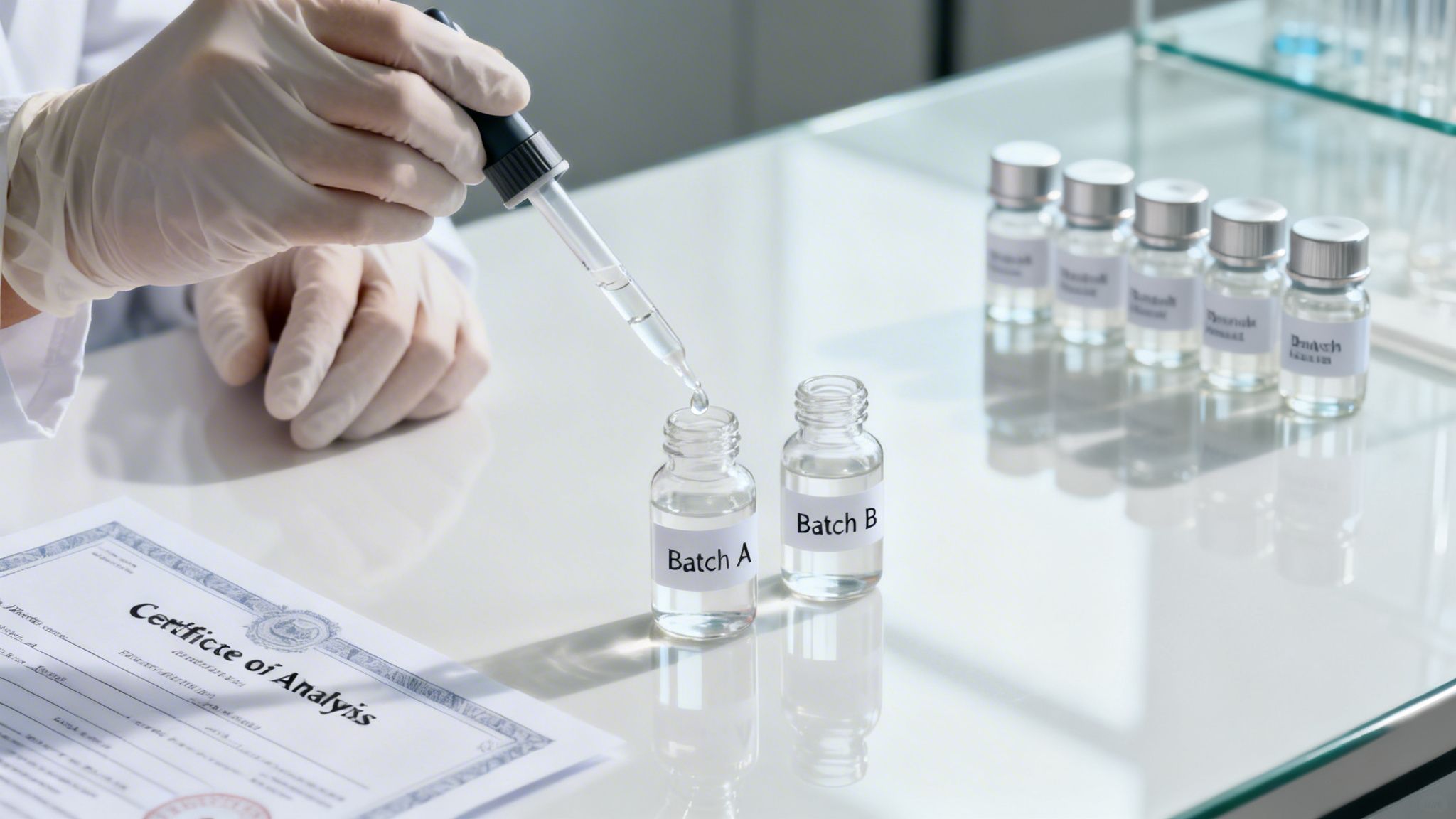
For a formulator, brand trust is the most valuable asset. Customer loyalty is built on predictable, repeatable experiences. However, when working with cannabis-derived terpenes, delivering that predictability is a significant challenge.
A single cultivar's chemical profile can vary dramatically between harvests due to environmental conditions, curing methods, and genetic expression. This unpredictability makes it nearly impossible to maintain consistency in finished products.
Batch-to-batch variability is a critical risk for any brand. A customer who purchases a "sleep" vape one month may find its flavor and aroma completely different the next. This inconsistency erodes consumer trust. Formulating with unreliable source materials is an untenable long-term strategy.
The Superiority of Botanical Terpene Blends
This is precisely why industry-leading formulators rely on botanically derived, precision-engineered terpene blends. This approach eliminates the variability inherent in agricultural products, providing a scientifically accurate and endlessly repeatable formula. The result is the exact same aromatic and flavor profile, every single time.
This strategy de-risks the entire production process.
- Guaranteed Consistency: Every batch of terpenes delivers identical ratios, ensuring your product's sensory profile never wavers.
- Scalable Production: Move from pilot batches to large-scale production runs with confidence, free from sourcing challenges or profile drift.
- Purity and Safety: Botanically derived blends are free from pesticides, heavy metals, and other contaminants that can compromise product integrity and brand reputation.
For a deeper understanding of natural plant variability, our guide on differentiating between male and female cannabis plants provides valuable context.
Quality Control and Brand Protection
Using lab-verified, botanically-derived terpenes is not just about product quality; it's about risk management. Every blend we produce is accompanied by a Certificate of Analysis, confirming its purity and precise composition. This documentation simplifies your internal quality control and builds a foundation of safety and reliability.
For a product line built around the indica for sleep concept, consistency is paramount. Consumers seeking relaxation need an experience they can depend on. Engineered terpene blends are the only way to deliver on that promise with unwavering accuracy, converting first-time buyers into loyal customers.
Partnering with a dedicated terpene supplier is a strategic decision that gives you direct control over one of the most critical variables in your formulation. It allows you to focus on building a brand that consumers trust.
Frequently Asked Questions in Sleep Product Formulation
Even with a well-defined plan, specific questions arise during development. Here are answers to some of the most common inquiries from formulators working on sleep products.
What is the optimal terpene concentration for a sleep-focused vape?
For most vape cartridges targeting the sleep category, a terpene concentration between 5% and 8% by total weight is ideal. This range provides a rich, full-bodied flavor without producing harsh vapor.
The best practice is to conduct small pilot batches to dial in the perfect ratio for your specific distillate and hardware, ensuring optimal viscosity and performance before scaling production.
Should I formulate with terpene isolates or use a pre-made blend?
The choice depends on your R&D resources and product goals. Both approaches can yield a successful indica for sleep formulation.
Formulating a proprietary profile from individual isolates like Myrcene and Linalool provides complete creative control. Conversely, starting with professionally crafted, strain-inspired terpene blends can significantly accelerate your development timeline by providing a proven, complex foundation.
How can I prevent terpenes from separating from my distillate?
Separation is almost always an issue of improper homogenization. The key is to manage viscosity and ensure a thorough mixing process.
Begin by gently warming your cannabinoid distillate to approximately 60-70°C to reduce its thickness. Using a magnetic stirrer, slowly introduce your terpene blend into the vortex. Allow the mixture to homogenize for at least 15-30 minutes to ensure full integration. This step is the most effective way to prevent separation and produce a stable, uniform oil.
At Gold Coast Terpenes, we provide the lab-verified, botanically-derived terpenes necessary to craft effective and consistent sleep formulations. Explore our full catalog of strain profiles and isolates to begin developing your next market-leading product.