
Cannabis concentrate production is a process of precision, defined by two primary pathways: solventless or solvent-based extraction. This decision is a critical business variable, dictating final product characteristics, operational costs, and market positioning.
Successful formulation requires a deep understanding of the starting biomass and mastery of post-extraction refinement. This knowledge is the foundation for creating the consistent, high-potency products that drive commercial success.
A Professional Roadmap for Cannabis Concentrate Production
The journey from biomass to a finished concentrate is a multi-stage process. The primary strategic decision is the choice between solvent-based and solventless extraction methodologies. This single choice impacts capital expenditure on equipment, laboratory safety protocols, and the final chemical profile of the extract.
Solventless methods, such as rosin pressing or ice water extraction, are valued for their ability to preserve the full-spectrum profile of the source material. Conversely, solvent-based extractions utilizing hydrocarbons, CO2, or ethanol are the industry standard for high-volume operations. They are engineered for scale, producing large quantities of crude oil suitable for distillation and subsequent formulation into products for vape cartridges and edibles.
The Concentrate Production Pathway
The following diagram illustrates the complete production workflow, from cultivation to final product. Note the critical decision point where the extraction methodology is selected.
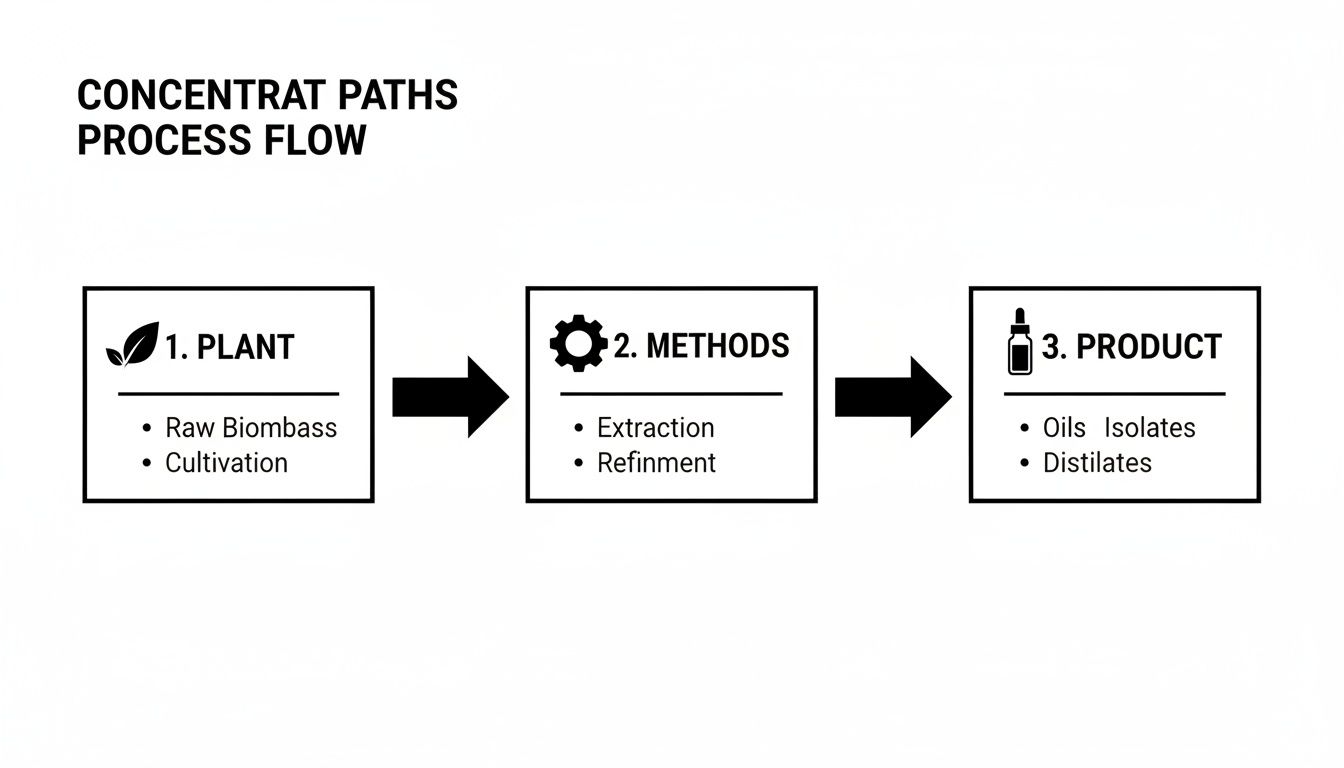
Regardless of the chosen path, the objective remains constant: to isolate target compounds (cannabinoids and terpenes) from the plant matrix.
The market for these isolated compounds is expanding rapidly. The global cannabis concentrates market is projected to grow from $6.17 billion in 2023 to $44.35 billion by 2032, representing a compound annual growth rate of 24.5%. In established markets, concentrates constitute over 30% of total cannabis sales, indicating a significant opportunity for skilled producers.
To assist in navigating this landscape, let's delineate the core differences between the two primary extraction philosophies.
Extraction Methodologies at a Glance
This table provides a high-level comparison of the major extraction methods, detailing their mechanisms and resulting product applications.
| Extraction Method | Primary Mechanism | Common End Products | Pros | Cons |
|---|---|---|---|---|
| Solvent-Based | Using a chemical solvent (e.g., butane, ethanol, CO2) to dissolve cannabinoids and terpenes. | Shatter, Wax, Crumble, Live Resin, Distillate | Highly efficient, scalable for large volumes, allows for precise cannabinoid isolation. | Requires significant capital investment in C1D1 labs, strict safety protocols, and post-processing for solvent remediation. |
| Solventless | Using mechanical and physical forces (heat, pressure, water, ice) to separate trichomes. | Rosin, Bubble Hash, Kief | Perceived as "cleaner" by consumers, captures a full-spectrum profile, lower barrier to entry for small-scale operations. | Lower yields, more labor-intensive, final quality is highly dependent on the quality of the input biomass. |
The selection of a method should align with specific business objectives, available capital, and the desired product portfolio. There is no universally superior method—only the most appropriate method for a given operation.
Starting Material: The Foundation of Quality
The principle of "garbage in, garbage out" is an immutable law in extraction. The quality of the final product is directly correlated with the quality of the input biomass.
For example, producing a premium, terpene-rich live rosin necessitates the use of fresh-frozen flower with high trichome density. Conversely, for large-scale distillate production, high-quality trim can serve as a cost-effective source of cannabinoids.
A critical factor often overlooked by new operators is genetics. The process begins with selecting appropriate cultivars. Understanding the difference between male and female plants and their influence on trichome production is fundamental to sourcing effective biomass.
The starting material establishes the quality ceiling for any product. No amount of post-processing can compensate for substandard biomass. Strategic sourcing is a key competitive advantage, ensuring the input material meets the specifications required for vape cartridges, dabs, or other formulated products.
Setting Up a Safe and Compliant Extraction Lab
A laboratory is more than just a facility; it is a controlled environment that dictates product quality, operational efficiency, and personnel safety. A successful lab build-out requires a dual focus on acquiring the correct equipment for your intended product line and integrating rigorous safety protocols into the lab’s design and daily operations.
The Right Tools for the Job: Solventless vs. Solvent-Based Labs
Your equipment requirements are determined by your chosen extraction methodology. A solventless lab presents a lower barrier to entry regarding safety infrastructure and capital cost. A solvent-based facility, however, demands a substantial investment in specialized, explosion-proof environments.
Your Solventless Lab Arsenal:
- Ice Water Hash Systems: These systems separate trichomes from biomass using ice, water, and agitation. While small-scale operations can use manual setups, commercial volume requires automated washing machines designed for consistent, large-batch processing.
- Freeze Dryers: A non-negotiable component for producing high-grade hash rosin. Freeze dryers (lyophilizers) remove water via sublimation, preserving delicate terpenes and preventing microbial growth far more effectively than air-drying. This is a critical step for quality assurance.
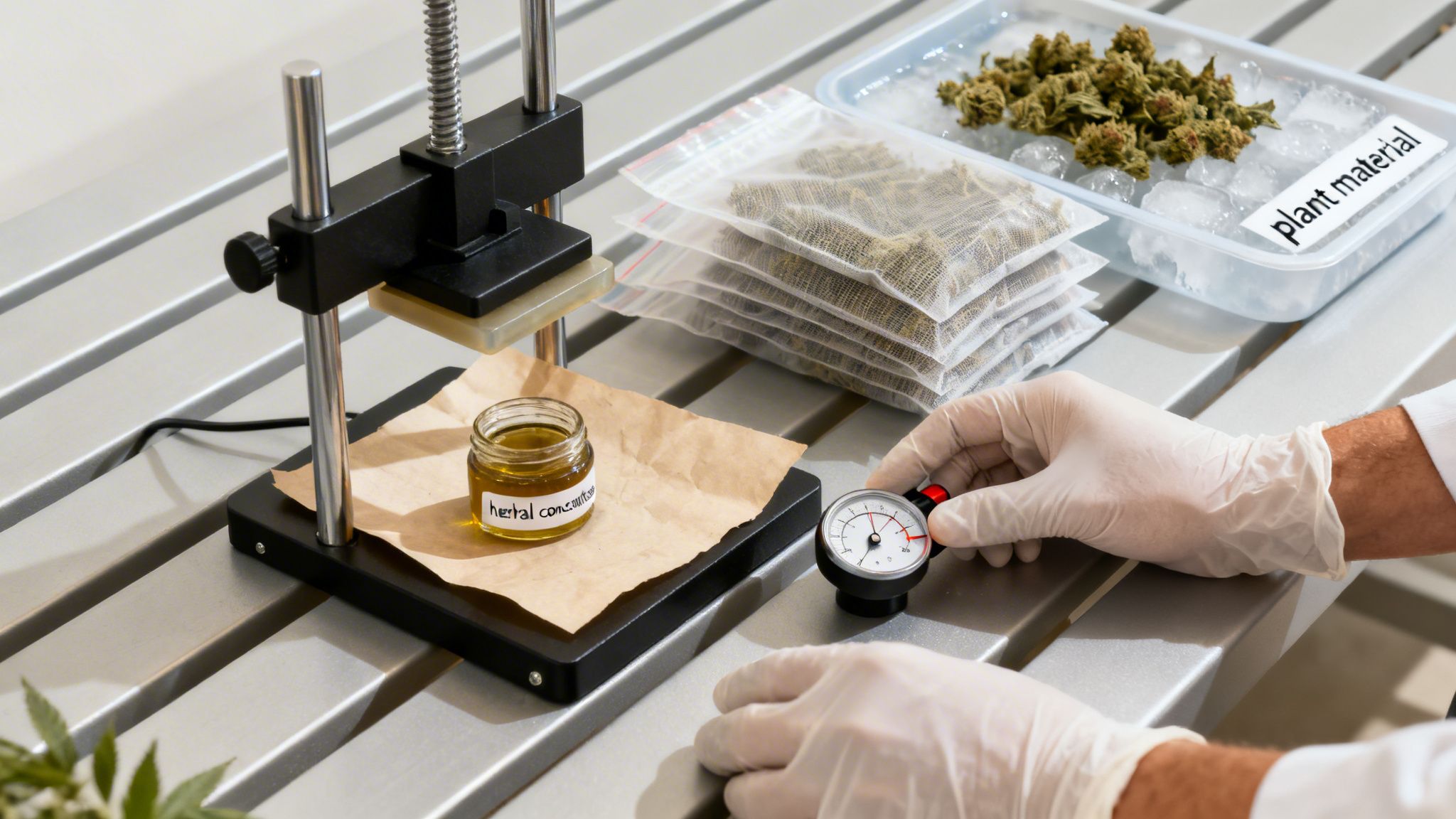
- Rosin Presses: These machines apply controlled heat and pressure to extract resin from hash or flower. High-quality pneumatic or hydraulic presses provide the granular control over temperature and pressure necessary to achieve specific product consistencies, such as budder or sauce.
Gearing Up for a Solvent-Based Operation:
- Closed-Loop Extractors: The industry standard for hydrocarbon (BHO, PHO) and ethanol extraction. These sealed systems allow for the solvent to wash over the biomass and then be recovered for reuse, critically containing flammable vapors.
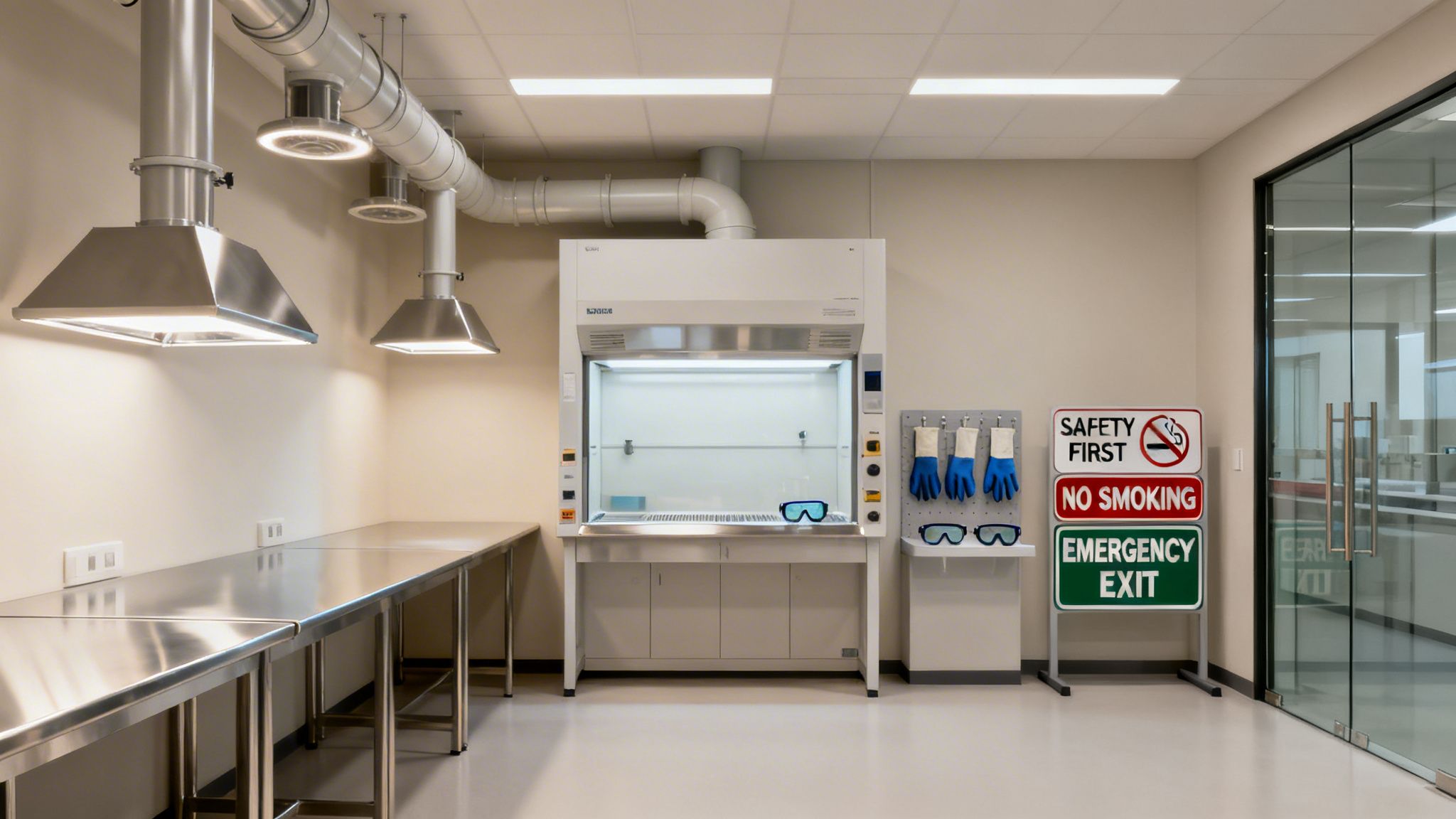
- C1D1/C1D2 Booths: When working with flammable solvents like butane, propane, or ethanol, a Class 1, Division 1 (C1D1) or Class 1, Division 2 (C1D2) classified room is a legal and safety mandate. These are engineered environments with explosion-proof electrical fittings, high-volume ventilation, and gas detection systems.
- Evaporators (Rotary or Falling Film): For ethanol extraction, efficient solvent recovery is essential. Rotary evaporators (rotovaps) and falling film evaporators are used to separate the ethanol from the crude oil post-extraction.
- Vacuum Ovens: This is the final solvent remediation step for products like shatter or wax. By combining controlled heat with a deep vacuum, these ovens lower the boiling point of the solvent, allowing for its removal without degrading cannabinoids and terpenes.
Safety and Compliance Can’t Be an Afterthought
Operational protocols are as crucial as the equipment itself. Daily procedures are the primary defense against accidents and regulatory scrutiny.
An advanced C1D1 booth is rendered ineffective without robust Standard Operating Procedures (SOPs). Team training and adherence to established protocols are paramount for risk mitigation.
Every laboratory must integrate these fundamentals into its core operations:
- Personal Protective Equipment (PPE): The baseline includes safety glasses, nitrile gloves, and lab coats. Operations involving solvents or powders require additional protection, such as respirators and flame-resistant clothing.
- Ventilation and Airflow: Proper air handling is critical. A correctly designed ventilation system continuously exhausts potentially flammable vapors and introduces fresh air, preventing dangerous atmospheric concentrations.
- Standard Operating Procedures (SOPs): All processes must be documented. Clear, written SOPs for every task, from material packing to equipment cleaning, ensure consistency, support quality control, and formalize safety measures.
- Emergency Plans: Develop and drill clear protocols for fires, chemical spills, and medical emergencies. This includes readily accessible fire extinguishers, safety showers, and eyewash stations. Regular drills ensure that personnel can respond effectively under pressure.
Establishing a laboratory is a significant capital investment. However, the most critical investment is in fostering a culture of safety and compliance from the outset.
Getting Serious with Solvents
For commercial-scale production, solvent-based extraction is the dominant methodology. These techniques enable the processing of substantial biomass volumes, creating the crude oil that serves as the precursor for a vast range of products, including vape cartridges and edibles. In contrast to the mechanical nature of solventless methods, these processes use chemical solvents to efficiently dissolve and extract cannabinoids and terpenes.
The three primary solvents are butane (and other hydrocarbons), CO2, and ethanol. Each possesses distinct properties that influence lab requirements, workflow, cost structure, and final product characteristics.
Butane Hash Oil (BHO): The Terpene Hunter
Hydrocarbon extraction is the preferred method for producing high-terpene extracts like live resin, budder, and shatter. The low boiling points of hydrocarbons like butane and propane are a significant advantage, allowing for solvent purging at low temperatures, which preserves the volatile terpenes that define a strain’s aromatic profile.
The process involves passing chilled liquid butane through a column packed with cannabis material. The solvent dissolves the target compounds, and the resulting solution is collected. This solution is then gently heated under vacuum to reclaim the butane, leaving behind the cannabis concentrate.
The key to high-quality BHO is temperature control. Conducting the extraction at sub-zero temperatures makes the process highly selective. It effectively extracts cannabinoids and terpenes while leaving behind undesirable compounds like waxes and chlorophyll, resulting in a cleaner and more flavorful extract.
Carbon Dioxide (CO2): The Precision Tool
CO2 extraction is recognized for its safety, cleanliness, and precision. As a non-flammable solvent, CO2 mitigates many safety risks. Its primary advantage is its "tunability." By manipulating temperature and pressure, CO2 can be brought to a supercritical state, where it exhibits properties of both a liquid and a gas.
This supercritical fluid is a highly effective solvent. Operators can "tune" its solvating power to target specific compounds. A common technique is fractional extraction, where low pressure is first used to extract a light, terpene-rich fraction, followed by higher pressure to target heavier cannabinoids. This provides a level of control ideal for crafting full-spectrum oils or high-purity crude for distillation. The initial capital outlay for CO2 systems is high, but the precision is a key benefit for many product formulations.
Ethanol Extraction: The Bulk Producer
For high-volume cannabinoid extraction, ethanol is the industry standard. It is exceptionally efficient at stripping cannabinoids from large quantities of biomass, making it the method of choice for producing crude oil for the distillate market.
Optimal ethanol extraction is conducted at cryogenic temperatures (e.g., -40°C or lower). This minimizes the co-extraction of undesirable compounds like waxes, lipids, and chlorophyll. Even with cold extraction, ethanol-derived crude typically requires additional post-processing steps like winterization and filtration to prepare it for high-purity applications. For cost-effective scale, however, its efficiency is unmatched.
Market data supports the growth of these methods. The cannabis market trends report from BCC Research highlights that extraction technologies like BHO and CO2 consistently produce concentrates with 80-99% cannabinoid potency. A common commercial strategy involves using hydrocarbon extraction for terpene fractions, which are then reintroduced into highly purified, flavorless distillate for vape products.
Cleaning Up Your Crude
Regardless of the solvent used, the initial output is a raw "crude oil" containing residual solvent that must be removed. This final, mandatory remediation step is known as purging and is typically performed in a vacuum oven.
The combination of low heat and a strong vacuum lowers the solvent’s boiling point, allowing it to evaporate without thermally degrading the valuable cannabinoids and terpenes. A properly purged extract is the precursor to final product formulation, where flavor can be precisely controlled with a specific strain-inspired terpene blend.
Mastering the Craft of Solventless Extraction
Solventless extraction represents the premium tier of the concentrate market. This methodology relies on pure mechanical separation, using only water, ice, heat, and pressure to isolate trichome heads. For formulators and brands, solventless products like ice water hash and live rosin offer the most authentic expression of the source cultivar.
These products are sought after for their full-spectrum cannabinoid and terpene profiles. Success in this category requires exceptional starting material and meticulous processing techniques.
From Biomass to Bubble Hash
The solventless process begins with ice water extraction to produce bubble hash. The objective is to use ice-cold water and gentle agitation to mechanically separate the trichome heads from the plant material. These resin glands, being denser than water, sink and are collected in a series of micron-graded filter bags.
The quality of the input biomass is paramount. For premium bubble hash, fresh-frozen flower—harvested at peak maturity and immediately cryogenically frozen—is the industry standard. This process preserves the volatile terpenes that define a "live" product profile.
The washing process is a nuanced technique:
- Agitation: The fresh-frozen material is gently stirred in an ice water bath. Over-agitation can rupture plant cells, contaminating the hash with chlorophyll and other inert plant materials.
- Filtration: The trichome-laden water is drained through a series of mesh bags with progressively finer screens. The highest quality hash is typically collected in the 73µ to 120µ range.
- Drying: This is a critical quality control point. Incomplete drying leads to microbial growth. The industry standard is a freeze dryer, which uses a deep vacuum and low temperatures to sublimate water, preserving the hash's color and terpene profile without heat degradation.
Pressing Live Rosin: The Golden Touch
High-quality, fully dried bubble hash (often referred to as "full melt") can be further refined into live rosin using a rosin press. This machine applies precise heat and pressure to extract the resinous oil from the hash.
This market segment has seen significant growth. The use of rosin presses, capable of producing a solventless concentrate often exceeding 70% THC, has increased by 300% in U.S. legal markets since 2018. This trend, as noted in a cannabis extract market report, is driven by consumer demand for product purity.
Achieving optimal rosin quality depends on a finely tuned balance of temperature, pressure, and duration. These parameters must be adjusted based on the specific characteristics of the input material; there is no universal formula.
Dialing In Rosin Consistency and Cure
The final texture of the rosin is determined by post-press handling and curing techniques.
- Temperature is Key: Pressing at lower temperatures (160-190°F) optimizes terpene preservation and typically results in a lighter-colored, batter-like consistency. Higher temperatures (190-220°F) increase yield but can darken the product and lead to a more viscous, sap-like texture.
- The Art of the Cure: Post-press curing is crucial for developing the final texture. A cold cure involves sealing the fresh rosin in a container at a cool temperature (40-60°F), allowing for slow cannabinoid nucleation and resulting in a smooth, badder-like texture. In contrast, a warm cure uses gentle heat to promote the separation of terpenes and cannabinoids, creating a "jam" or "sauce" consistency with a liquid terpene layer over THCa crystals.
Mastery of these techniques allows for the creation of a diverse product line from a single hash batch, providing a clean, potent base for premium vape cartridges or dab-ready concentrates. To achieve specific flavor profiles, a thorough understanding of cannabis chemistry is essential, a topic covered in our terpene formulation guide.
Turning Crude Oil into Market-Ready Products
The acquisition of crude oil is a preliminary step; the value is created during post-extraction refinement. This stage transforms raw extract into the stable, purified, and consistent products required for the commercial market.
Post-processing bridges the gap between raw extraction and consumer-ready goods. It is the essential process for converting potent but unrefined oil into the high-purity base required for vape cartridges and other formulated products. Mastery of these refinement techniques is non-negotiable for any professional concentrate manufacturer.
This process involves several key purification stages. Each is designed to remove undesirable compounds and isolate the target cannabinoids and terpenes extracted initially.
The Cleanup Crew: Winterization and Filtration
Crude oil, particularly from ethanol or warmer CO₂ extractions, contains undesirable compounds like fats, waxes, and lipids. These components result in a cloudy appearance, a harsh flavor profile, and can cause hardware failure in vape cartridges.
Winterization is the standard remediation process.
The crude oil is dissolved in a polar solvent, typically food-grade ethanol, and then chilled to sub-zero temperatures for 24 to 48 hours. The cold temperature causes the fats and waxes to precipitate out of the solution.
The chilled mixture is then passed through a series of fine micron filters, which capture the solidified lipids. The resulting product is a clarified, dewaxed oil.
Winterization is a critical quality control step. Bypassing this process results in product instability, poor aesthetics, and a negative consumer experience. A properly winterized oil is the necessary precursor for high-quality distillate.
Distillation: The Path to Pure Cannabinoids
For many formulators, especially in the vape sector, the primary objective is a high-potency cannabinoid base devoid of flavor and aroma. This is achieved through distillation. Using equipment such as a short-path or wiped-film distillation system, the winterized oil is heated under a deep vacuum.
This combination of heat and vacuum separates compounds based on their respective boiling points. Volatile terpenes vaporize first and can be collected separately. As temperatures increase, the target cannabinoids (e.g., THC, CBD) vaporize, and this vapor is re-condensed and collected as a purified liquid.
The end product is a clear, viscous, golden oil with cannabinoid potency often exceeding 90%. This distillate serves as a blank canvas for formulation.
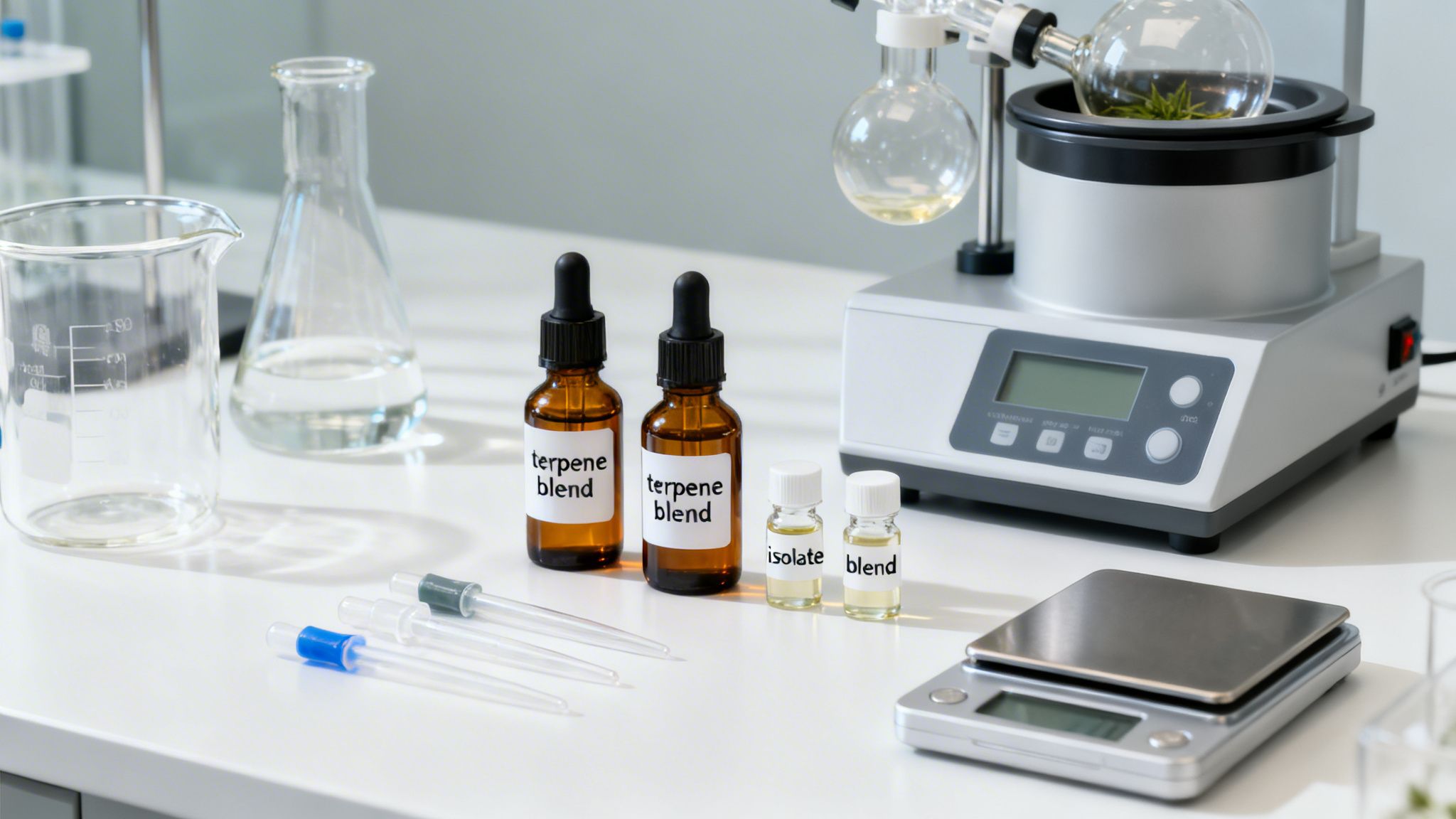
The Final Touch: Terpene Formulation for Flavor and Effect
While effective at isolating cannabinoids, distillation removes all native terpenes. The result is a potent but one-dimensional product lacking the characteristic aroma, flavor, and nuanced effects of the source cultivar.
Reintroducing terpenes is a critical step where formulators add significant value. This is not merely flavoring; it is the precise reconstruction of a strain’s sensory profile.
A strategic terpene formulation achieves several objectives:
- Flavor and Aroma: It re-establishes the signature organoleptic profile that defines specific cultivars. For a deeper analysis of a classic profile, review our guide on the characteristics of the Sour Diesel strain.
- Viscosity Control: Terpenes function as a natural diluent, reducing the viscosity of thick distillate to the optimal level for vape cartridge hardware without the need for cutting agents like PG or VG.
- Crafting the Effect: Specific terpene blends can be used to modulate the product's overall experience, allowing for the formulation of products with more focused effects.
A Practical Formulation Scenario
Consider the formulation of an Indica-style vape cartridge inspired by the Blue Dream cultivar.
The base material is a 92% THC distillate. The target is a final product with a 7% terpene concentration. For a 100-gram batch, the formulation is:
- 93 grams of THC distillate
- 7 grams of a Blue Dream strain-specific terpene blend
The classic Blue Dream terpene profile is dominated by Myrcene (base note), with significant contributions from Alpha-Pinene (top note) and Beta-Caryophyllene (mid note). The synergy between these terpenes and the THC is what creates the characteristic Blue Dream experience.
The mixing process must be precise:
- Gently warm the distillate to approximately 40-50°C (104-122°F) to reduce its viscosity.
- Accurately measure and add the 7 grams of the terpene blend to the warmed distillate.
- Thoroughly mix using a magnetic stirrer to ensure complete homogenization without introducing excessive air.
- Allow the mixture to settle before filling cartridges.
This process transforms a flavorless, high-potency cannabinoid base into a finished product with a distinct flavor profile and a targeted consumer experience, converting bulk oil into a branded, market-ready item.
Common Questions from Concentrate Formulators
Practical application in the lab inevitably leads to technical questions that go beyond theory. Below are common challenges faced by formulators and direct, experience-based solutions.
What Is the Biggest Challenge When Scaling Concentrate Production?
The primary challenge is consistency. Maintaining product uniformity across multiple batches is the single greatest difficulty in scaling from pilot to commercial production. Minor variations in biomass, extraction parameters, or purging conditions can cause significant product drift.
Mitigating this requires rigorous process control:
- Implement and enforce SOPs. Strict, documented Standard Operating Procedures for every process step are essential for repeatability.
- Utilize analytics. In-house or third-party HPLC testing is necessary to verify the potency and purity of each batch. Visual inspection is insufficient for quality assurance.
- Use standardized terpene blends. For formulated products, this is non-negotiable to ensure identical flavor and aroma profiles in every unit.
Mastering these variables is fundamental to building brand equity and consumer trust.
How Do I Choose Between BHO, CO2, and Ethanol Extraction?
The decision should be driven by two factors: desired end product and available capital. Each solvent is suited for specific applications.
A breakdown for decision-making:
- Hydrocarbon (BHO/PHO) is the optimal choice for high-terpene extracts like live resin and sauce. Its low boiling point excels at preserving volatile aromatics but requires a significant capital investment in a C1D1-rated facility.
- CO2 offers a clean, non-flammable, and highly tunable process. It is well-suited for producing high-quality crude oil for distillation. While the equipment is expensive, the level of precision is unmatched.
- Ethanol is the industry workhorse for high-volume production. It is the most efficient solvent for creating large quantities of crude for a distillation pipeline, though it necessitates more intensive post-processing to remove co-extracted compounds like chlorophyll.
Your business plan dictates your solvent choice. A brand focused on high-flavor dab products will likely choose BHO. An operation designed to produce thousands of vape cartridges per week will find an ethanol-to-distillate workflow to be the most viable path.
Why Is Terpene Reintroduction Necessary for Distillate?
Distillation is highly effective at isolating cannabinoids, yielding a clear oil with over 90% THC potency. However, this purification process removes all native terpenes.
The resulting distillate is potent but lacks flavor, aroma, and the nuanced effects associated with the original cultivar.
Reintroducing a precisely formulated terpene blend is critical for three reasons:
- Restores Organoleptic Profile: This recreates the sensory experience that consumers expect.
- Controls Viscosity: Terpenes act as a natural diluent, reducing the viscosity of the distillate to an optimal level for modern vape hardware. Certain isolates, like D-Limonene, also offer unique functional properties. You can learn more about the functional properties of terpenes in our guide.
- Shapes the Experience: The reintroduction of specific terpenes allows formulators to modulate the end-product's effects, mimicking the "entourage effect" of the original strain profile.
Can I Make High-Quality Concentrates from Trim?
Yes. While premium flower is necessary for top-tier products like live rosin, high-quality trim is a valuable input material. The key is to use "sugar leaf" trim, which has a high density of trichomes, rather than fan leaves.
For large-scale distillate production, trim is often the most cost-effective biomass source. A robust extraction and distillation process effectively isolates the target cannabinoids, regardless of whether they originated from A-grade flower or trichome-rich trim.
Ready to perfect your formulations with reliable, high-quality terpenes? Gold Coast Terpenes provides lab-verified, strain-inspired blends and isolates designed for professional extractors. Achieve consistent flavor, aroma, and viscosity in every batch.