
Ghost Train Haze is more than an award-winning sativa cultivar; it's a benchmark for complex flavor formulation. Its iconic hazy citrus and pine aroma is driven by a specific terpene signature, making its profile one of the most sought-after for commercial product development. For formulators, mastering this profile means delivering a sensory experience with a proven market track record.
Why the Ghost Train Haze Terpene Profile Matters in Formulation
For developers of vape cartridges, concentrates, and other infused products, the Ghost Train Haze terpene profile represents a significant commercial opportunity. The goal is not simply to mimic a pleasant aroma, but to engineer a precise, recognizable sensory experience that commands consumer recognition. This profile serves as a reliable blueprint for creating premium products with strong market pull.
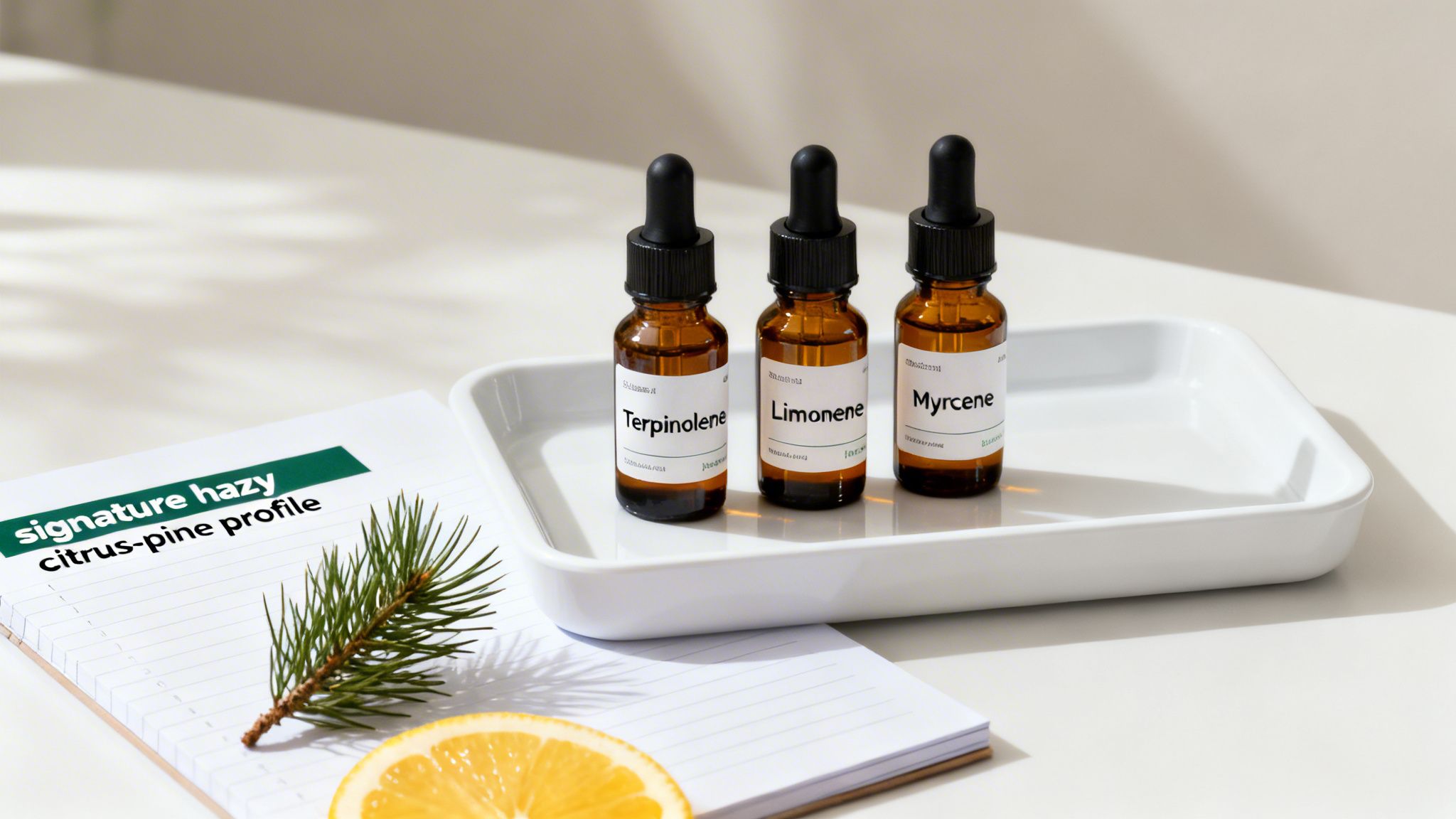
What makes it an ideal target for formulation? The aroma is distinct and potent. Unlike subtle, generic profiles, this is a bold, complex blend that experienced consumers can identify instantly. Replicating the flavor of Ghost Train Haze accurately is a direct path to building brand loyalty and product differentiation.
The Powerhouse Terpene Trio
The core of this profile is the interplay between its three dominant terpenes. Understanding the function of each is the first step for any formulator looking to replicate its character. This is the foundation of our formulation guide.
- Terpinolene: This is the undisputed star of the show. It's responsible for the signature "hazy," complex floral-citrus scent that makes Ghost Train Haze unique. High levels of Terpinolene are what separate this profile from hundreds of other citrus-heavy blends.
- Limonene: Working in concert with Terpinolene, Limonene contributes the sharp, sweet citrus punch. It brightens the entire profile, delivering an immediate wave of fresh lemon and grapefruit notes.
- Myrcene: Myrcene serves as the anchor. It provides a crucial earthy, slightly herbal foundation that grounds the brighter top notes. Without it, the citrus and haze would be too sharp and lack depth.
This trio creates a layered sensory experience. It sidesteps the one-dimensional character of simpler citrus blends and offers a more complete and satisfying aromatic journey.
For formulators, the task isn't just to combine these three terpenes. The art is in achieving the precise ratio required to capture the authentic Ghost Train Haze character—a bright, hazy top note supported by a subtle, earthy base.
Commercial Application and Advantages
Successfully replicating the Ghost Train Haze profile provides an immediate competitive advantage. The name carries significant market recognition, which can reduce the marketing lift required to launch a new product. When a customer sees "Ghost Train Haze" on a vape cart, they have a pre-existing expectation of quality and a specific flavor.
Using a high-quality, strain-specific terpene blend also ensures batch-to-batch consistency, which is critical for building consumer trust. On a practical level, this profile is highly effective at masking the off-notes common in certain distillates, transforming a basic extract into a premium, flavor-forward product. Mastering this profile is a direct route to creating authentic products for which there is active market demand. To understand the building blocks, explore our terpene product pages.
Mapping the Sensory Experience for Product Formulation
To successfully replicate the Ghost Train Haze profile for distillate, one must approach the task like a perfumer, not just a mixer. The experience is not a single, flat flavor; it's a layered sequence of aromas that unfold over time. Breaking this sequence down into top, middle, and base notes provides a practical roadmap for accurate formulation.
This layered approach is essential. Simply combining the dominant terpenes in their reported ratios will not suffice. The result will be technically correct but experientially hollow. Understanding how each layer interacts is the key to building a profile that is dynamic and true to the original cultivar.
Top Notes: Bright and Hazy
The initial impression of Ghost Train Haze is a sharp, energetic rush of sweet haze and zesty citrus. These are the most volatile compounds, defining the profile's first impression upon inhale.
- Terpinolene: As the primary top note, Terpinolene delivers the unmistakable "hazy," floral, and slightly piney character. Its complex aroma sets the stage for the entire experience.
- Limonene: Working alongside Terpinolene, Limonene adds a bright, zesty punch of fresh lemon peel, making the initial impression feel sharp and uplifting.
These top notes are the product's first handshake. They must be vibrant and clear. If this initial burst is missed, the entire profile will feel muted.
Middle Notes: The Earthy and Herbal Heart
As the initial citrus blast subsides, the middle notes emerge. These compounds are less volatile than the top notes and form the "body" of the flavor profile. They are crucial for adding depth and preventing the blend from being a one-note citrus bomb.
The transition from top to middle notes is where skilled formulation becomes apparent. The middle notes should gently ground the bright top notes, creating a smoother, more well-rounded experience. Myrcene is the main player here, introducing a subtle earthy, herbal quality that balances the initial sharpness. It is the bridge connecting the bright beginning to the rich finish.
Base Notes: The Pine and Spice Foundation
Finally, the base notes provide the lasting impression. These are the heaviest, least volatile terpenes that linger on the palate and create a memorable finish. They are the foundation holding the entire sensory structure together.
In formulation, base notes are the anchor for flavor longevity. While top notes capture attention, base notes create the lasting, satisfying finish that drives repeat use. They complete the story of the profile.
The primary base note here is Alpha-Pinene, which contributes a clean, fresh pine aroma that complements the initial haze and citrus. Alongside it, Beta-Caryophyllene adds a subtle touch of warm spice—akin to black pepper—that brings complexity and depth to the finish. This combination leaves a clean, resinous aftertaste that solidifies the authentic Ghost Train Haze experience.
By understanding and constructing these layers—from the initial hazy citrus pop to the final piney spice—you can move beyond merely mimicking a lab report. You can engineer a Ghost Train Haze strain-inspired terpene blend for your vape cartridges that is not just accurate, but dynamic and complete.
Ghost Train Haze Sensory Profile Breakdown
This table maps the key terpenes in each layer and explains their specific role in creating the full Ghost Train Haze experience for commercial formulation.
| Sensory Note | Primary Terpenes | Aroma and Flavor Description | Role in Formulation |
|---|---|---|---|
| Top Notes | Terpinolene, Limonene | Sharp, hazy, floral, and bright citrus (lemon, grapefruit). | Creates the immediate, attention-grabbing first impression. Defines the profile's signature invigorating character. |
| Middle Notes | Myrcene, Beta-Pinene | Subtle earthy, herbal, and mild pine notes. | Acts as a bridge, grounding the sharp top notes and adding body and depth to the overall profile. |
| Base Notes | Alpha-Pinene, Beta-Caryophyllene | Fresh pine, warm spice, and a clean, resinous finish. | Provides the lasting impression and a complex aftertaste, ensuring flavor longevity and a complete sensory experience. |
The art of formulation lies not in any single terpene, but in the symphony they create. Achieving the correct balance between the bright top, grounding middle, and lasting base notes is paramount.
Decoding the Core Terpene Signature for Replication
To create a Ghost Train Haze product that meets market expectations, one must look past the general aroma and into the chemistry. The profile is defined by a specific trio of terpenes, with Terpinolene playing the lead role. Nailing the concentration and role of each is critical for authenticity.
The secret to a believable Ghost Train Haze profile is achieving the perfect balance in this ratio. A slight deviation can result in just another generic citrus blend.
This concept map breaks down how the top, middle, and base notes integrate to build the cultivar's intricate herbal profile.
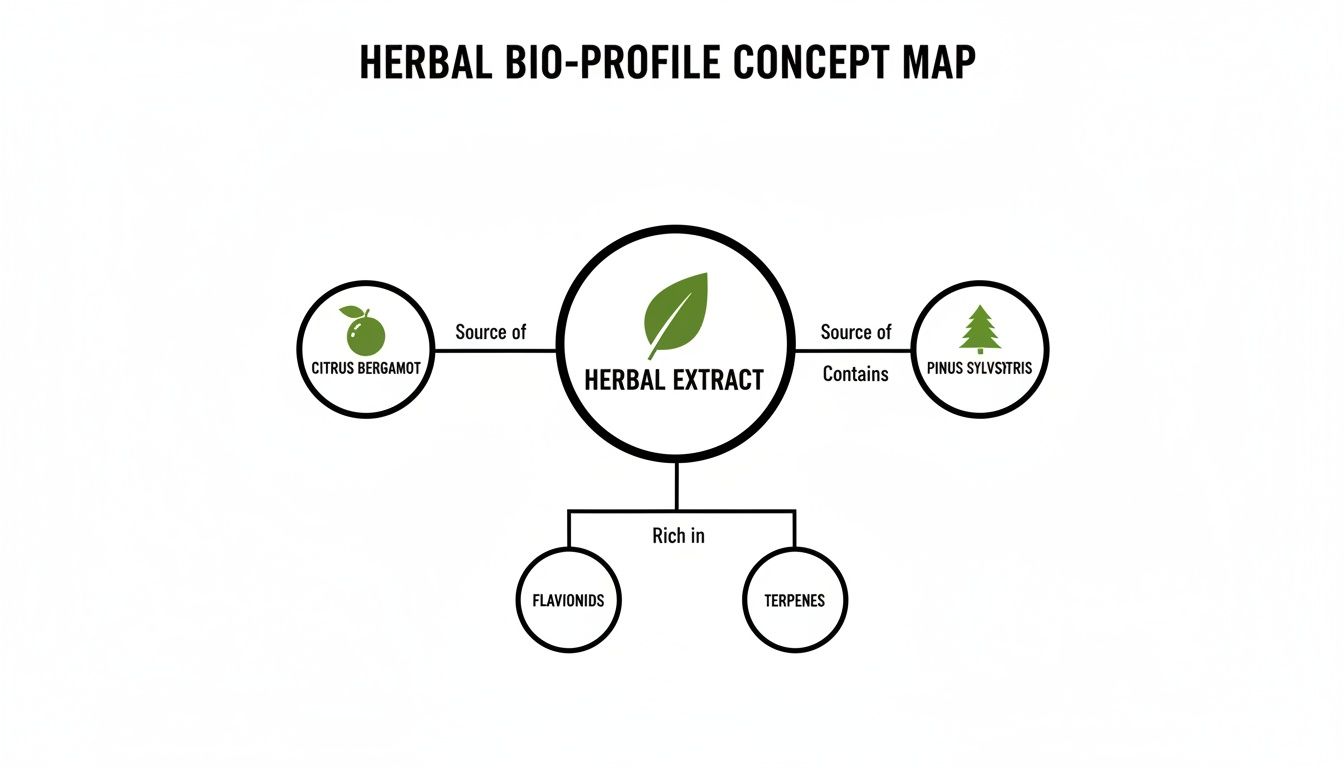
As illustrated, the bright citrus top notes transition to herbal middle notes, which are then anchored by deep piney base notes, creating a structured sensory experience.
Terpinolene: The Hazy Driver
Terpinolene is the most important terpene in the Ghost Train Haze profile. While many cultivars are dominant in Limonene or Myrcene, few are Terpinolene-dominant, which is what makes this profile iconic.
Terpinolene typically constitutes 30% to over 50% of the total terpene content. It delivers a complex aroma that is floral, herbal, citrusy, and piney simultaneously. This multi-layered scent creates the classic "hazy" quality. In formulation, it is the primary top note that sets the first impression. Achieving the correct Terpinolene level is non-negotiable for authenticity.
Limonene: The Citrus Edge
Working in tandem with Terpinolene is Limonene, which delivers the sharp, sweet citrus punch. Its function is to brighten the entire profile, adding a clean, zesty lift that prevents the hazy notes from becoming muddled or overly floral.
Limonene is usually the second most abundant terpene, often accounting for 15% to 25% of the blend. It provides the fresh lemon and grapefruit peel notes that make the initial aroma feel energetic and inviting. Insufficient Limonene will cause the profile to lose its invigorating spark.
For formulators, the art lies in the interplay between Terpinolene and Limonene. Terpinolene should lead with its unique hazy character, while Limonene provides the brilliant, sharp highlight that elevates the entire experience.
Myrcene: The Earthy Foundation
While Terpinolene and Limonene define the top notes, Myrcene provides the foundation. This monoterpene, known for its earthy, musky aroma, acts as the perfect bridge from the bright top notes to the deeper base notes.
Myrcene is typically the third terpene in concentration, ranging between 10% and 20%. Its primary role in a Ghost Train Haze formulation is to add body and prevent the profile from feeling thin. It introduces a subtle herbal undertone that rounds out the citrus, creating a smoother and more complete sensory journey.
This foundational role provides depth and a satisfying finish. Understanding how different plant compounds interact is a core formulation skill. Diving deeper into how genetics shape these profiles can be explored by learning the differences between male vs female cannabis plants. By mastering the balance of these three core terpenes, you can move beyond simple imitation and truly replicate the experience, crafting a Ghost Train Haze blend that is both authentic and consistent.
Guide to Formulating for Vape Cartridges
Replicating the Ghost Train Haze profile is only the first step. Successfully incorporating it into a vape cartridge requires technical skill. Whether working with THC, CBD, or Delta-8 distillates, the objective is a stable, flavorful product that accurately represents the target profile. This process blends chemistry and art to ensure the bright, hazy notes are expressed without creating harshness or instability.
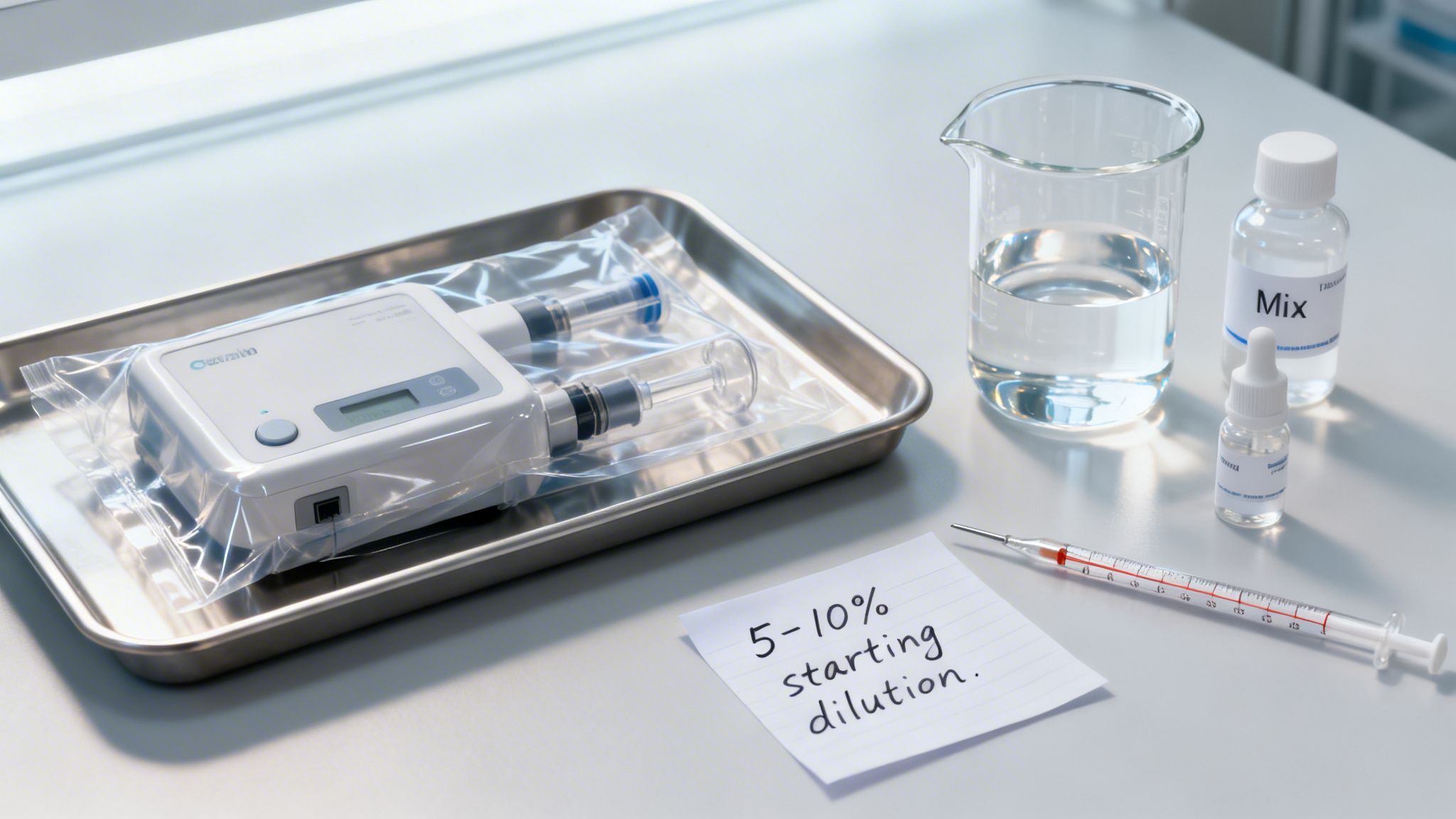
First, characterize your starting material. Each batch of distillate has unique properties, including viscosity and subtle base flavors. A highly refined, clear distillate will behave differently than a darker, more viscous extract. Your formulation must account for these variations to achieve the desired flavor intensity and ensure proper cartridge wicking.
Achieving Correct Dilution Ratios
The dilution ratio is a critical variable in vape formulation, controlling flavor, viscosity, and product stability. Too low a terpene concentration results in a weak flavor. Too high, and the vapor can be harsh and the product may become unstable.
For a potent and layered profile like Ghost Train Haze, the optimal range is typically between 5% and 10% terpenes by weight.
- 5-7% Ratio: This is an excellent starting point for less viscous distillates or for a more subtle flavor expression. It ensures smooth oil flow in most standard hardware.
- 8-10% Ratio: This higher percentage is often necessary for highly viscous distillates (those nearly solid at room temperature) to achieve the correct viscosity for wicking. This range also delivers the bold, prominent flavor that showcases the profile's citrus-pine complexity.
Pro Tip: Always begin with small test batches. Formulate samples at 6%, 8%, and 10% to evaluate the interaction between the Ghost Train Haze profile and your specific distillate before committing to a large production run.
This profile's reputation is built on its sensory impact. The original cultivar's genetics—a cross of Ghost OG and Neville's Wreck—result in high resin yields ideal for extraction, making it a preferred choice for premium vape manufacturers.
Mixing and Stepping for a Flawless Finish
Proper homogenization is required to ensure even terpene distribution throughout the oil, guaranteeing consistent flavor from the first use to the last.
For best results, gently warm your distillate (between 40-60°C or 104-140°F) to reduce its viscosity before adding the terpenes. Use a magnetic stirrer or an overhead mixer on a low setting to slowly blend them. Aggressive mixing can introduce air bubbles or degrade delicate top-note terpenes like Limonene.
After mixing, the blend requires a steeping period to allow the terpenes and cannabinoids to fully homogenize, creating a smoother, more unified flavor profile.
Allow the mixture to rest in a sealed, dark container for 24 to 48 hours at room temperature. This waiting period significantly improves the final product, eliminating any "raw" or sharp terpene notes.
The bright, pungent notes of a good strain-inspired terpene blend like Ghost Train Haze are excellent for masking subtle off-flavors in the base distillate. Unlike more muted profiles, its powerful citrus and pine notes can elevate a standard extract into a premium product. This technique is also common with other aromatic profiles, as discussed in our guide to the Sour Diesel profile.
The table below offers baseline ratios for common distillate types. Always test and adjust based on your specific material.
Ghost Train Haze Formulation Starting Ratios for Distillate
| Distillate Type | Recommended Terpene Percentage | Target Viscosity (mPa·s) | Key Formulation Note |
|---|---|---|---|
| THC Distillate (High-Purity) | 5% – 7% | 2000 – 4000 | Tends to be less viscous; start low to avoid an overly thin final product. |
| CBD Distillate | 6% – 8% | 3000 – 6000 | Often thicker and may have a slight inherent flavor to mask. |
| Delta-8 THC Distillate | 7% – 10% | 4000 – 8000+ | Extremely viscous at room temp; requires a higher terpene ratio for proper wicking. |
| Broad-Spectrum/CRD | 8% – 10% | 5000 – 9000 | Can be very thick due to minor cannabinoids; GTH's strong profile helps cover earthy notes. |
These ratios are a guide. Fine-tuning for your specific hardware and desired consumer experience is where excellence is achieved.
Advanced Formulation: Customization Techniques
Once the classic Ghost Train Haze profile is mastered, the opportunity for product innovation begins. This involves moving beyond replication and into creating a proprietary blend that differentiates your brand. By using individual terpene isolates to modify the base profile, you can develop a signature formulation.
This process is akin to a chef refining a classic recipe. By adding precise amounts of specific isolates to a Ghost Train Haze base, you can craft a unique version tailored to your brand identity.
Enhancing Key Aromas
The stock Ghost Train Haze profile is known for its hazy citrus and pine notes. These can be selectively amplified using isolates.
- Emphasize Pine: To enhance the fresh, forest-like finish, a small addition of Alpha-Pinene is effective. Adding 0.5% to 1% more Alpha-Pinene to the total blend can lift the base notes, creating a sharper, cleaner pine aroma without disrupting the overall balance.
- Intensify Citrus: To boost the bright, zesty top notes, a small increase in Limonene can make the initial impression more vibrant. For a unique twist, consider the characteristics of D-Limonene specifically to introduce a sweeter, more distinct orange character.
These subtle modifications of a proven profile are what create a memorable, signature product.
Adding Layers of Complexity
Beyond amplifying existing notes, new, subtle layers of complexity can be introduced. This is how a truly unique formulation is created, by incorporating minor terpenes that add nuanced background notes.
A proprietary blend is a key competitive asset. By documenting experiments and testing isolate additions, you are not just mixing flavors—you are developing intellectual property that can become a cornerstone of your product line.
To add subtle depth, consider these isolates:
- A Hint of Floral: A small amount of Linalool (e.g., 0.25% to 0.5%) can introduce a soft, lavender-like floral note that complements the complex aroma of Terpinolene, creating a more sophisticated experience.
- A Touch of Spice: To round out the warm, peppery notes from Beta-Caryophyllene, a trace amount of Humulene is an excellent choice. It contributes a hoppy, woody character that complements the spicy base notes and gives the profile a more robust foundation.
A Framework for Systematic Experimentation
A methodical approach is crucial for success. Random additions will lead to inconsistent results and wasted material.
- Establish a Baseline: Start with a high-quality, pre-made Ghost Train Haze blend as your control for a consistent starting point.
- Formulate a Hypothesis: Select one terpene isolate to test with a clear goal, e.g., "Adding 0.5% Alpha-Pinene will enhance the pine character of the finish."
- Create Small Test Batches: Work with small samples (e.g., 10ml). Create several variations to compare: the control, a +0.5% batch, and a +1.0% batch.
- Document Everything: Log all ratios, measurements, and sensory observations. Note how the aroma changes immediately after mixing and again after a 24-hour steep.
- Evaluate and Iterate: Evaluate each batch to determine which meets the objective. The perfected blend then becomes the new baseline for subsequent experiments.
This systematic process removes guesswork and enables the development of a proprietary, consistent, and superior version of the Ghost Train Haze profile.
Finalizing Your Ghost Train Haze Formulation
Successfully replicating the Ghost Train Haze profile in a product provides a significant market advantage by tapping into a well-known cultivar with strong brand recognition. Consumers actively seek its classic hazy, citrus-pine flavor. Delivering that experience consistently is key to building a loyal customer base.
Formulating this profile requires both technical knowledge to balance the ratios of Terpinolene, Limonene, and Myrcene, and sensory acumen to understand how the top, middle, and base notes interact. This guide provides the blueprint for achieving that balance.
Positioning for Success
Accuracy is paramount. A vape cartridge that authentically captures the Ghost Train Haze experience is a premium offering that stands out. This profile can elevate a standard distillate into a top-tier SKU.
To ensure quality and consistency, starting with a professionally crafted, lab-tested terpene blend is the most efficient approach. A high-quality strain-inspired terpene blend provides a solid, repeatable foundation, saving significant R&D time and resources.
When you focus on the details—from sensory notes to technical application—you position your products to meet and exceed market demands. The Ghost Train Haze name carries weight; delivering on its promise builds brand reputation.
The final step is partnering with a reliable terpene supplier who understands the specific challenges of formulating for vape cartridges. Explore our complete terpene product pages to find the ideal blend and begin bringing this iconic profile to your customers.
Common Technical Questions in Ghost Train Haze Formulation
Here are answers to common technical questions that arise when working with the Ghost Train Haze terpene profile.
What is the optimal dilution rate for THC distillate?
For a high-viscosity THC distillate, a starting concentration between 7% and 10% terpenes by weight is recommended. This range typically provides sufficient viscosity reduction for proper wicking in most vape hardware. Always conduct small test batches to fine-tune the ratio for your specific distillate and cartridge hardware.
How can the citrus or 'hazy' notes be enhanced?
To amplify the 'hazy' aroma, add a small amount of Terpinolene isolate—starting at approximately 0.5% of the total volume. For a brighter citrus note, a similar addition of Limonene isolate is effective. The goal is subtle enhancement of the existing strain-inspired terpene blend, not overpowering it.
Are there stability concerns with this profile in vape carts?
Yes, this is a valid concern. Terpinolene is more susceptible to oxidation than many other terpenes, which can alter the flavor profile over time. To ensure stability, store finished oil in airtight, light-proof containers. Avoid excessive heat during mixing and ensure complete homogenization. These practices will help preserve the intended flavor throughout the product's shelf life in your formulation for vape cartridges.
Can this profile be used in products other than vapes?
Absolutely. While it excels in vaporizers, the bright, potent flavor of Ghost Train Haze is effective in other applications. In tinctures, it can mask the earthy notes of hemp extract. For edibles, a much lower concentration is necessary, as the flavor can easily become overwhelming. For any new product line, sensory panel testing is recommended to determine the optimal flavor balance.
Ready to create products that consistently deliver the authentic Ghost Train Haze experience? At Gold Coast Terpenes, we provide the lab-tested, strain-specific blends and isolates you need for precise and repeatable results.