
For cannabis product formulators, the name "Forbidden Fruit" is more than just a popular strain—it's a proven roadmap to a best-selling product. Its complex, layered flavor profile is a consistent crowd-pleaser, making it a perfect target for replication in manufactured goods like vape cartridges and edibles.
Why Formulators Value the Forbidden Fruit Terpene Profile
In a crowded market, flavor isn't just a feature; it's a critical differentiator that drives customer loyalty and repeat purchases. The Forbidden Fruit profile offers a significant commercial edge by delivering a sensory experience with established market demand. It’s a smart, strategic asset for any formulator looking to reduce R&D risk.
The profile's value starts with its genetics. As a cross between Cherry Pie and Tangie, Forbidden Fruit has a sophisticated aromatic structure. It perfectly blends the deep, sweet berry notes of Cherry Pie with the sharp, vibrant citrus punch of Tangie. The result is a multi-layered profile that’s both complex enough for connoisseurs and instantly appealing to a broad audience.
A well-replicated Forbidden Fruit profile is key to batch-to-batch consistency. It enables you to deliver the same high-end flavor experience every time, which is absolutely critical for building brand trust and earning repeat business.
A Strategic Choice for Product Development
For extractors and manufacturers, working with a well-known profile like this is a low-risk, high-reward move. You aren't guessing what consumers want; you're leveraging a flavor that already has massive market recognition. This is especially true when formulating for vape cartridges, where an authentic, satisfying flavor separates top-shelf brands from the rest.
This profile excels in formulation for a few key reasons:
- Broad Market Appeal: The blend of tropical fruit, citrus, and sweet berry resonates with a huge range of consumers.
- Excellent Masking: The profile is robust and pleasant enough to effectively mask the subtle off-notes sometimes present in distillates, leading to a cleaner-tasting final product.
- Incredible Versatility: It holds up beautifully across different applications—vape distillates, edibles, tinctures, and more. This ensures your brand can maintain a consistent and recognizable flavor signature across an entire product line.
Now, let's take a quick look at the profile's key attributes in a simple table. This is a handy reference for understanding its core characteristics and how they apply directly to your formulation work.
Forbidden Fruit Profile Attributes for Formulators
| Attribute | Specification | Relevance for Formulation |
|---|---|---|
| Dominant Aromas | Tropical Fruits (Mango, Passionfruit), Sweet Cherry, Fresh Citrus (Tangerine) | Provides a complex, multi-layered flavor that has wide consumer appeal and creates a premium sensory experience. |
| Underlying Notes | Pine, Earthy Musk | Adds depth and authenticity, preventing the flavor from tasting artificial or one-dimensional. |
| Genetic Lineage | Cherry Pie x Tangie | Inherits a proven "dessert-meets-citrus" profile, a combination with a strong track record of market success. |
| Market Position | Established, High-Demand | Reduces R&D risk by leveraging a profile with existing brand recognition and a dedicated consumer following. |
| Ideal Applications | Vape Cartridges, Live Resin, Edibles, Tinctures | Versatile and stable across various product matrices, allowing for a consistent brand flavor across multiple SKUs. |
| Key Terpene Character | Myrcene-dominant with significant Limonene & Caryophyllene | Creates a balanced aromatic structure and contributes to its robust, full-bodied flavor. See breakdown below. |
This table shows why Forbidden Fruit isn't just a flavor, but a complete package. It delivers on aroma, market demand, and formulation flexibility, making it a reliable choice for developing standout products.
Capitalizing on a Proven Winner
Forbidden Fruit emerged in the mid-2010s when the market was developing a strong preference for terpene-heavy, dessert-like strains. It became an instant sensation, driving sales and inspiring countless products.
For formulators today, a high-quality strain-inspired terpene blend is the most direct route to recreating that success. It gives you the power to craft potent, compliant products that nail the iconic tropical cherry and citrus flavor consumers expect.
Ultimately, choosing the Forbidden Fruit profile is a sound business decision. It removes guesswork from development by starting with a flavor that has a long history of success, giving your brand a clear path to launching a premium product.
Understanding the Flavor Blueprint for Formulation
To create a truly convincing strain-inspired terpene blend, you must understand how each aromatic component works. The Forbidden Fruit profile is a layered experience built from the ground up with specific base, mid, and top notes.
It all starts with its family tree. The strain is a cross of Cherry Pie and Tangie, and that genetic pairing is what gives the profile its unique and commercially successful character.
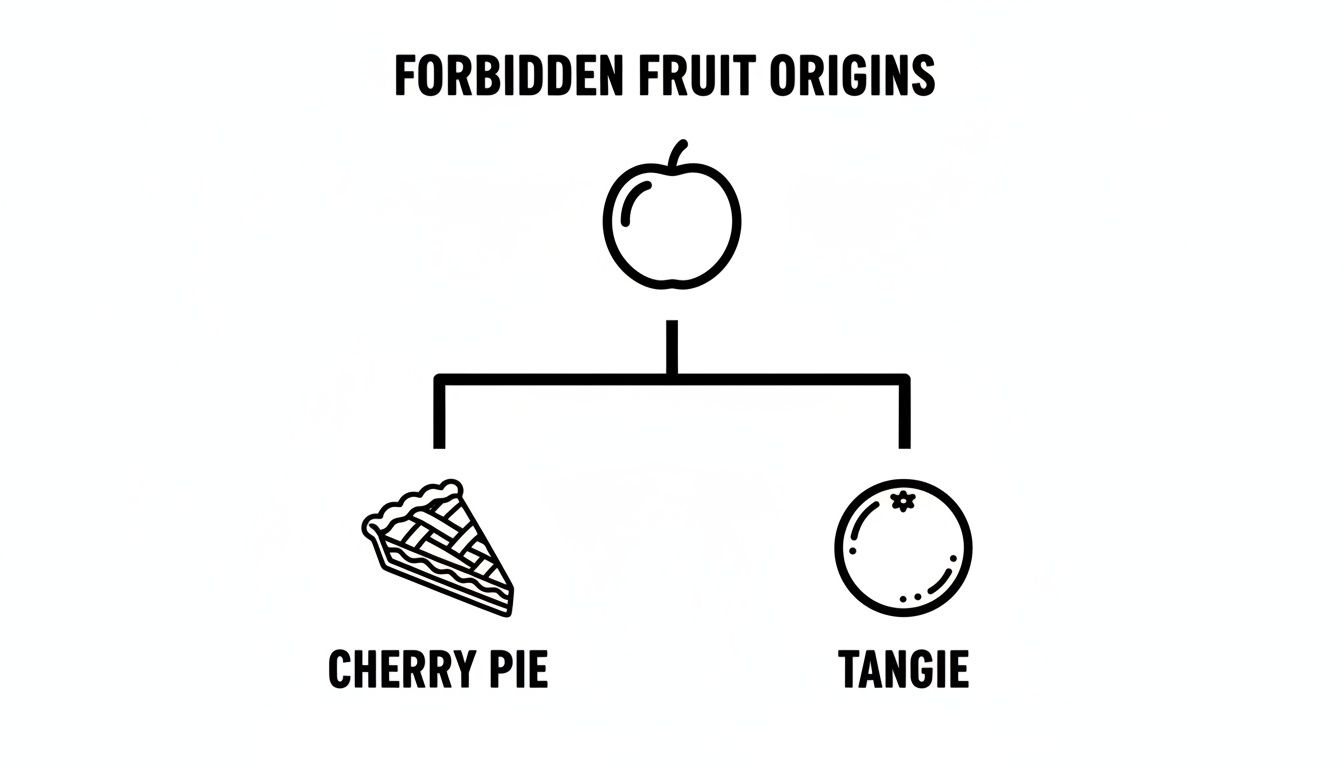
The combination of deep, sweet cherry notes from one parent and bright, sharp citrus from the other is what consumers love. Getting this blueprint right is the first step in replicating the flavor of Forbidden Fruit accurately.
The Key Players: A Terpene Breakdown
Forbidden Fruit's complexity comes from the interplay of its dominant terpenes. Myrcene, Caryophyllene, and Limonene are the main three, but their specific roles in the aromatic structure create the signature experience.
To help formulators, we've organized the primary terpenes into a technical guide that maps out their roles and sensory contributions.
Primary Terpene Breakdown for Flavor Formulation
| Terpene | Typical % Range | Aromatic Role (Note) | Sensory Descriptor |
|---|---|---|---|
| Myrcene | 35% – 45% | Base Note: The heavy foundation that adds body and smoothness. | Ripe mango, musky sweetness, earthy undertones. |
| Caryophyllene | 15% – 25% | Mid Note: The spicy heart that adds complexity and warmth. | Peppery spice, warm wood, similar to cloves. |
| Limonene | 10% – 20% | Top Note: The bright, volatile note that defines the first impression. | Sharp tangerine peel, zesty citrus pop. |
This table provides the technical targets. Now, let’s discuss how they contribute to the profile in practice.
The Foundation and the Heart
First, Myrcene acts as the solid foundation of the entire profile. It provides Forbidden Fruit's rich, earthy, and musky-sweet base, anchoring the lighter fruit notes. Think of the deep sweetness of an overripe mango; that’s Myrcene providing the weight. Without it, the flavor would feel thin and incomplete.
Next, Beta-Caryophyllene serves as the mid-note. This is the bridge between the earthy base and the citrusy top, adding a layer of warm, peppery spice. It’s the sophisticated hint of black pepper or clove that cuts through the sweetness and adds dimension. This terpene is essential for cannabis product formulation because it prevents the profile from becoming a one-note fruit bomb and gives it a more authentic, dynamic character.
Formulation Insight: The key lies in the balance between the sweet Myrcene and the spicy Caryophyllene. This ratio creates the "tropical fruit with a kick" signature. Nailing this balance captures the soul of the Forbidden Fruit profile and avoids an artificial taste.
The Bright Finish
Finally, the top notes are the most volatile compounds and are critical for making a great first impression.
For Forbidden Fruit, that job belongs to Limonene. It delivers an unmistakable burst of sharp, zesty citrus right at the start, like peeling a fresh tangerine. This is the "pop" that makes the profile so fresh and inviting.
For formulators working with vape brands or hemp extracts, getting this signature blend of berry, citrus, and earth right is a game-changer. A well-built profile makes formulating for distillate oils and cartridges much more effective. To dig even deeper, you can find more on how lab-tested isolates lead to compliant, high-quality products in this comprehensive strain guide.
By understanding how to balance these three key terpenes, you move beyond simple imitation. You can build a profile that faithfully captures the complex, sought-after flavor of Forbidden Fruit from the ground up.
A Formulation Guide for This Strain-Inspired Blend
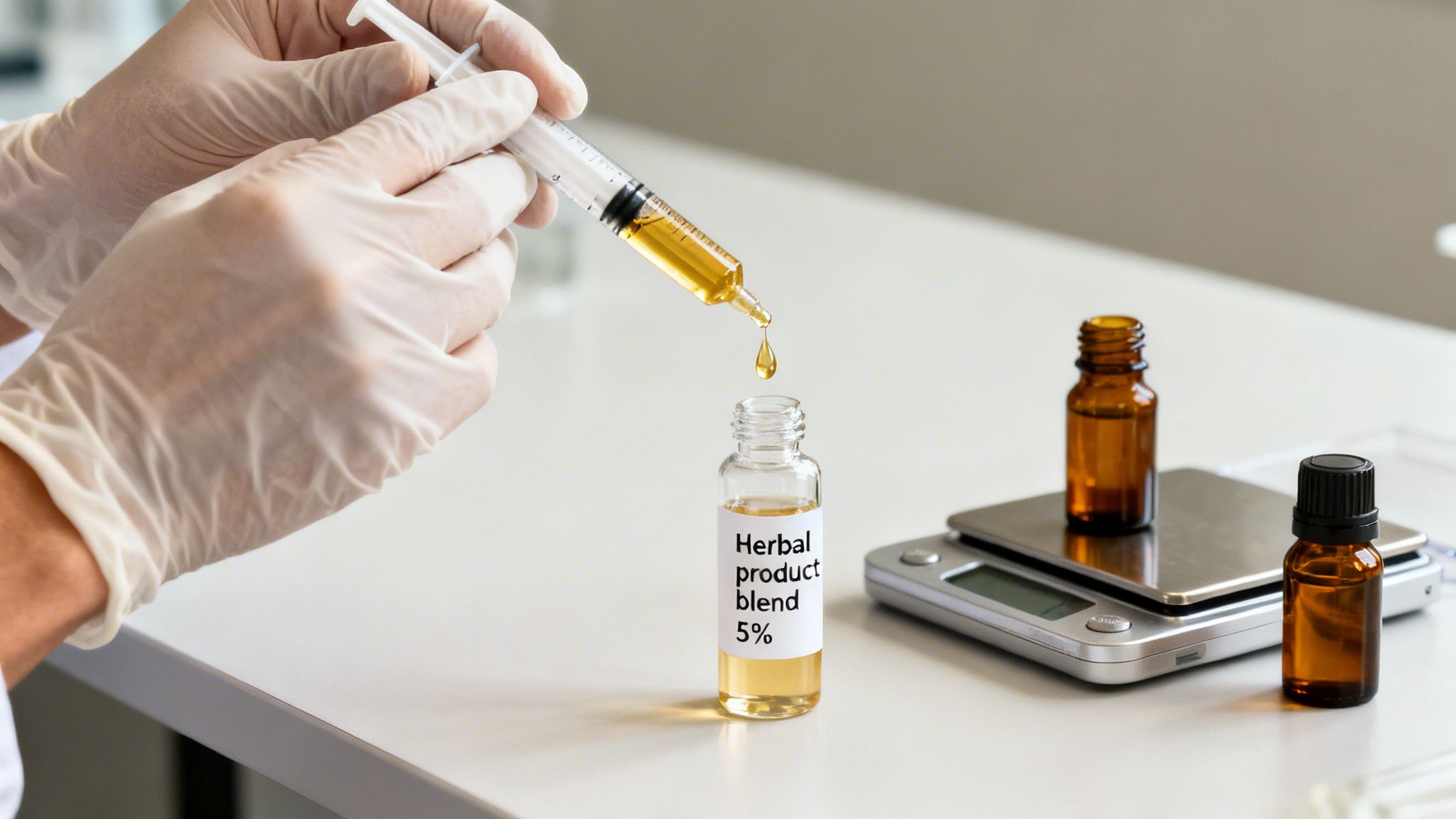
Let's discuss putting this profile to work. Incorporating a botanical terpene blend into a finished product, especially a vape cartridge, is a craft that requires precision and a solid understanding of your starting concentrate.
The goal of formulating is to reintroduce the full, vibrant aroma and flavor lost during extraction. When executed correctly, you achieve not just an authentic taste but also a stable, reliable product.
Recommended Dilution Percentages
There is no single magic number for dilution; the right percentage depends on your base material. Highly refined distillate acts as a blank canvas and requires a more robust terpene concentration to build a rich flavor profile.
- For High-Purity Distillate (THC, CBD, etc.): We recommend starting in the 7% to 10% range by weight. This higher concentration allows the complex fruit and spice notes of Forbidden Fruit to emerge without getting lost in a neutral base.
- For Less Refined Extracts (e.g., Crude, Full-Spectrum): For these, you can use a lower concentration. Start between 5% to 7% by weight. These extracts often retain some of their native terpenes, so you are primarily enhancing what is already present. Too high a concentration risks an overpowering, harsh flavor.
Formulator's Tip: Never skip the test batch phase. Create small, precisely measured samples at different percentages—for example, 5%, 7%, and 9%—to identify the sweet spot for your specific concentrate. What works for one batch of distillate might need adjustment for the next.
To ensure accuracy and simplify calculations, our online terpene mixing calculator is an invaluable tool. It helps you lock in exact ratios, which is critical for batch-to-batch consistency.
Homogenization for Stability and Consistency
This is arguably the most crucial step in producing a top-tier vape cartridge. Simply stirring terpenes into a thick concentrate is insufficient. It results in "hot spots"—pockets of intense flavor next to areas with none—creating an inconsistent and poor user experience.
The key is to gently heat your concentrate to reduce its viscosity, allowing the terpenes to mix in completely and evenly.
Step-by-Step Homogenization Process:
- Gentle Heating: In a sealed, lab-grade container, warm your concentrate to between 120-150°F (50-65°C). A magnetic stirrer on a hot plate is ideal for this. Avoid excessive heat, as it can degrade cannabinoids and volatilize the delicate terpenes.
- Precise Measurement: Use a calibrated scale to weigh your Forbidden Fruit blend and add it to the warmed concentrate. Do not estimate.
- Thorough Mixing: Keep the magnetic stirrer running for at least 5-10 minutes. The goal is a completely uniform solution with no visible streaks or swirls.
- Cooling and Settling: Allow the mixture to cool slowly to room temperature before filling cartridges. This final step helps ensure the blend remains perfectly homogenous.
Mastering this process guarantees that every puff delivers the consistent, authentic flavor you designed.
Advanced Pairing for SKU Differentiation
While the Forbidden Fruit profile is excellent on its own, it also serves as a great foundation for creating unique product lines. By adding specific terpene isolates, you can accentuate certain notes and develop signature SKUs that help your brand stand out. This is an effective way of replicating the flavor of the classic strain while adding your own proprietary twist.
- To Enhance the Citrus Pop: A small addition of Limonene (0.5% to 1%) can make the tangerine note more prominent, creating a sharper, zestier profile for a "Forbidden Citrus" blend.
- To Deepen the Berry Notes: To lean into the Cherry Pie genetics, a touch of a fruity ester or another berry-forward terpene can create a richer, jammier "Forbidden Berry" experience.
- To Boost the Spicy Undertones: Adding an extra 0.5% of Beta-Caryophyllene will amplify the warm, peppery notes, giving your formulation a more complex and spicy finish.
These small adjustments are all it takes to build a diverse product lineup from one solid base, allowing you to cater to different consumer preferences while maintaining a strong brand identity.
Getting Technical: Formulating with Distillates and Concentrates
You’ve produced a pure, potent cannabinoid distillate—but it's also a blank slate. The processes that ensure purity, like distillation and winterization, strip out the natural terpenes that define a strain's character.
This is where the craft of formulation comes in. By reintroducing a botanical blend like our Forbidden Fruit profile, you can transform a neutral base into a premium product. You’re not just adding flavor; you’re engineering a complete sensory experience.
Achieving Optimal Viscosity for Vape Hardware
Anyone who has tried to fill a vape cartridge with raw distillate knows it is often too viscous for standard hardware. This can lead to dry hits, burnt coils, and a poor consumer experience. Historically, formulators used cutting agents like VG, PG, or MCT oil to solve this.
Today, we know there is a better way. Terpenes are not just for aroma—they are also excellent natural diluents.
A strain-inspired terpene blend like our Forbidden Fruit profile serves a dual purpose. It thins your concentrate to the ideal consistency for smooth, consistent vaporization while simultaneously delivering authentic flavor. This allows you to offer clean, potent products without the controversial additives that modern consumers actively avoid.
A Note from the Lab: The goal is to find the optimal balance. You need enough terpenes to ensure proper oil flow but not so much that the flavor becomes overwhelming or harsh. For most distillates, a concentration between 7% and 10% provides both excellent flavor and ideal viscosity.
Rebuilding an Authentic Flavor Profile
Pure distillate doesn't just lack flavor; it lacks complexity. A superior terpene profile reconstructs the entire sensory experience of the original flower, which is especially important for a nuanced strain like Forbidden Fruit.
Our profile is built layer by layer to bring that signature experience back to life:
- The Bright, Fruity Opening: The initial impression is dominated by top notes of citrus and fresh mango, driven by compounds like Limonene.
- The Jammy, Sweet Middle: Next, the deeper berry notes emerge, a rich character inherited from its Cherry Pie parent.
- The Dank, Earthy Finish: Finally, heavier terpenes like Myrcene and Caryophyllene provide the classic musky, spicy foundation that gives the flavor its staying power.
When you reintroduce this kind of layered profile, you're not making a generic "fruit-flavored" vape. You're giving consumers an authentic taste of the Forbidden Fruit strain, creating a more sophisticated and satisfying product. It’s the difference between a simple melody and a full orchestra.
Turning Good Products into Great Brands
Ultimately, these techniques are about creating value. The market is saturated with one-note flavors. A product that performs flawlessly and genuinely captures the complex taste of a famous strain like Forbidden Fruit instantly stands out as a premium choice.
When you are formulating for distillate using high-purity, botanically sourced terpenes, you signal a commitment to quality. You eliminate fillers, guarantee a superior user experience, and deliver a flavor profile with proven market demand. For a deeper dive into the science and art of terpenes, our complete guide to terpenes is an essential resource for any serious formulator.
That commitment is what builds brand loyalty and justifies a top-shelf price point.
Ensuring Quality and Compliance in Your Formulations
In this industry, trust is paramount. When you're creating a product like a Forbidden Fruit strain-inspired vape, your brand's reputation hinges on the safety and quality of your ingredients. Sourcing terpenes from a reliable supplier is the most critical step in protecting your brand and your customers.
At Gold Coast Terpenes, we build every profile from the ground up using only 100% natural, food-grade ingredients. This means every blend, including our Forbidden Fruit profile, is made from high-purity compounds derived directly from botanical sources. This is how we achieve an authentic, true-to-strain flavor while prioritizing end-user safety.
Rigorous Testing for Unwavering Confidence
Verifiable, third-party lab testing is non-negotiable. We subject every batch of our terpenes to a strict analytical process to confirm its purity and consistency. These tests validate the exact makeup of our blends, providing you with the documentation needed to stand behind your products with complete confidence.
Think of it this way: for a formulator, this transparency is your best insurance policy. It means you can guarantee your customers a clean, reliable, and consistent experience every single time, which builds brand loyalty and minimizes your liability.
Our analyses provide a crystal-clear breakdown of each profile. You get the peace of mind that comes from knowing you’re working with ingredients that meet the highest quality and safety standards.
Formulating for Global Compliance
Navigating the legal landscape of cannabis and hemp products is a major challenge for any brand. Botanical terpenes offer a significant advantage, allowing you to create products for a global market without legal complications.
Our Forbidden Fruit blend, like all our other profiles, is formulated to be completely clean. We guarantee it is free from prohibited substances, so your final product is ready for broad distribution.
Our blends are always free from:
- THC and all other cannabinoids
- VG (Vegetable Glycerin)
- PG (Propylene Glycol)
- PEG (Polyethylene Glycol)
- MCT (Medium-Chain Triglycerides)
This clean-label approach allows you to create top-shelf vape carts and other products without the cutting agents that savvy consumers actively avoid. By choosing a blend free from these additives, you're not just ensuring compliance—you're demonstrating a commitment to purity and transparency.
A Foundation of Trust for Your Brand
The quality of your raw materials defines the quality of your finished product. Using a meticulously crafted and rigorously tested strain-inspired terpene blend provides the solid foundation needed to build a brand that consumers trust. It removes the guesswork from cannabis product formulation and lets you focus on innovation and growth.
Partnering with a supplier who is obsessive about these standards means you and your customers can be sure that every product is built on safety, consistency, and excellence. To see the proof for yourself, we encourage you to review the documents and certificates of analysis on our main safety and compliance page. You'll get direct access to everything you need to formulate with absolute peace of mind.
Your Top Formulation Questions Answered
When working in the lab on your Forbidden Fruit strain-inspired terpene blend, technical questions often arise. Here are answers to some of the most common queries from formulators.
What’s the Sweet Spot for Dilution?
This is the most frequent question. For most distillates, whether THC or CBD, a good starting point is between 5% and 8% terpenes by weight.
If you're working with a highly refined or winterized distillate—essentially a blank slate with little native flavor—you should lean toward the higher end, in the 8-10% range. This will impart the full, rich profile needed to stand out.
Remember to always start with small test batches and measure everything with a precision scale. Proper homogenization is absolutely critical to prevent separation and ensure a consistent experience.
Can I Tweak the Forbidden Fruit Blend to Make My Own SKU?
Absolutely. Our Forbidden Fruit profile is an excellent and authentic starting point for your own product development. Adding specific terpene isolates is a fantastic way to develop a signature flavor unique to your brand.
Here are a couple of ideas:
- For more citrus punch: Try adding 0.5% to 1.0% extra Limonene. This can brighten the top note for a "Forbidden Tangerine" or "Tropical Zest" variant.
- For deeper spice: A touch more Beta-Caryophyllene (starting at 0.5%) can amplify the warm, peppery notes for a sophisticated, "Spiced Fruit" finish.
This strategy helps you build a product line that is recognizable yet distinct, carving out a unique space in the market.
What Are the Best Practices for Handling and Storage?
Proper handling is crucial. Terpenes are volatile and sensitive to heat, light, and oxygen. Incorrect storage will degrade the aromas that make the Forbidden Fruit profile so distinctive.
Key Takeaway: Treat your terpenes like any other premium, sensitive ingredient. Always store them in a cool, dark place in their original airtight glass containers to protect them from oxidation and evaporation.
When you're ready to mix, work in a well-ventilated area and recap containers immediately. These simple habits will maintain the stability and potency of your terpene profile.
Does This Profile Work Well with Different Cannabinoids?
Yes, it is incredibly versatile. The Forbidden Fruit blend pairs beautifully with a wide range of cannabinoids, including isolated CBD, CBG, and CBN, as well as broad-spectrum extracts. Its robust and pleasant flavor is especially effective at masking the earthy or harsh off-notes that can accompany raw cannabinoid isolates.
Furthermore, you can use the profile to enhance a product's intended effect. For instance, in a relaxing nighttime product with CBN, the naturally calming aromatics in Forbidden Fruit can synergize with the cannabinoid to create a more cohesive experience. When flavor and function align, you create a superior product.
At Gold Coast Terpenes, we provide the meticulously crafted, lab-tested profiles you need to create top-tier products. Take a look at our full lineup of strain-specific blends and isolates to get started on your next formulation.
Shop the Gold Coast Terpenes Collection