
For product formulators, the question "does sativa make you sleepy?" isn't trivia—it's a critical variable in product development and brand reputation. The expectation is an energizing effect, and delivering anything else undermines consumer trust.
The straightforward answer is no, a well-formulated sativa-style product should not induce sleepiness. The characteristic uplifting effect is a direct result of its chemical profile, specifically its terpene and cannabinoid content. Understanding this chemistry is key to successful formulation.
Why Most Sativa Profiles Don't Cause Sleepiness
For anyone formulating cannabis products, consistency is paramount. Consumers expect a product labeled "sativa" to deliver an uplifting, daytime-appropriate experience. If it causes drowsiness, the product has failed, and brand trust is compromised.
This is why leading formulators are moving beyond simple indica/sativa classifications and focusing on the chemical drivers of effect: cannabinoids and terpenes. The classic "sativa" experience isn't folklore; it's the result of a specific molecular architecture that can be replicated and controlled in a lab environment.
The Role of Cannabinoids and Terpenes in Formulation
The energizing effect of sativa-dominant profiles stems from their distinct chemical fingerprint, primarily defined by two characteristics:
THC Content: It's a common misconception that higher THC levels automatically lead to sedation. In many cases, THC's psychoactive properties can increase alertness and sensory awareness. Research indicates that users often report feeling less sleepy with high-THC products, which are frequently associated with sativa profiles. You can explore the findings on how THC content relates to sleepiness.
Dominance of Uplifting Terpenes: This is the most critical variable for formulators. True sativa profiles are rich in specific terpenes known for their stimulating aromatic properties. Compounds like Limonene, with its bright, mood-associated citrus aroma, and Pinene, which provides a sharp, focus-enhancing pine scent, are the primary architects of a wakeful experience.
For the Formulator: The objective isn't to source a "sativa plant" but to construct a "sativa profile." This involves sourcing and blending specific aromatic compounds to create a predictable, energizing effect in your final vape, edible, or tincture.
By focusing on the Certificate of Analysis (COA) rather than botanical lineage, you can engineer products with precision, ensuring they consistently deliver the bright, clear-headed experience consumers associate with the sativa category.
Sativa vs. Indica Profiles: A Formulator's Quick Reference
This table breaks down the classic archetypes and connects them to the chemical profiles you should be targeting or building for specific product goals.
| Attribute | Typical Sativa Profile | Typical Indica Profile |
|---|---|---|
| Primary Effect | Energizing, Uplifting, Cerebral | Relaxing, Sedating, "Body High" |
| Associated Terpenes | Limonene, Pinene, Terpinolene | Myrcene, Linalool, Caryophyllene |
| Common User Goal | Daytime use, creativity, focus | Nighttime use, sleep aid, pain relief |
| Formulation Goal | Create a stimulating, non-drowsy experience. | Engineer a calming, potentially sleep-inducing effect. |
Use this as a blueprint. When a product brief calls for a classic "sativa" effect, your formulation should amplify terpenes like Limonene while minimizing sedative terpenes like Myrcene. The key to meeting consumer expectations lies in mastering this chemical balance.
While THC is often the focus, its role is complex. In moderate concentrations, THC can stimulate the central nervous system, contributing to a feeling of alertness. However, terpenes are the true directors of the product's experiential profile. For formulators aiming to create an uplifting product, a few key terpenes are non-negotiable.
The Aromatic Team Behind Alertness
The signature energetic quality of a sativa-style product hinges on the correct selection and ratio of terpenes. These compounds work synergistically with cannabinoids like THC to guide the experience away from sedation and toward focused clarity.
The key players for a wakeful formula include:
- Limonene: The source of the bright, citrusy aroma, Limonene is renowned for its uplifting aromatic qualities. In formulation, it serves as a powerful top note, immediately signaling an energetic experience to the consumer.
- Pinene: Occurring as both alpha- and beta-pinene, this terpene has a sharp, clean aroma reminiscent of a pine forest. It is consistently associated with alertness and mental clarity, making it an essential component for any daytime-use blend. For precise product development, you can source high-quality, isolated Pinene for your cannabis product formulation.
A common formulation error is improper terpene ratios. A blend can be rich in Limonene, but if it also contains a high concentration of a sedative terpene like Myrcene, the energizing effects will be neutralized. Balance is paramount.
Building an Energizing Profile from Scratch
This diagram illustrates the core effects targeted when building a classic sativa-style profile.
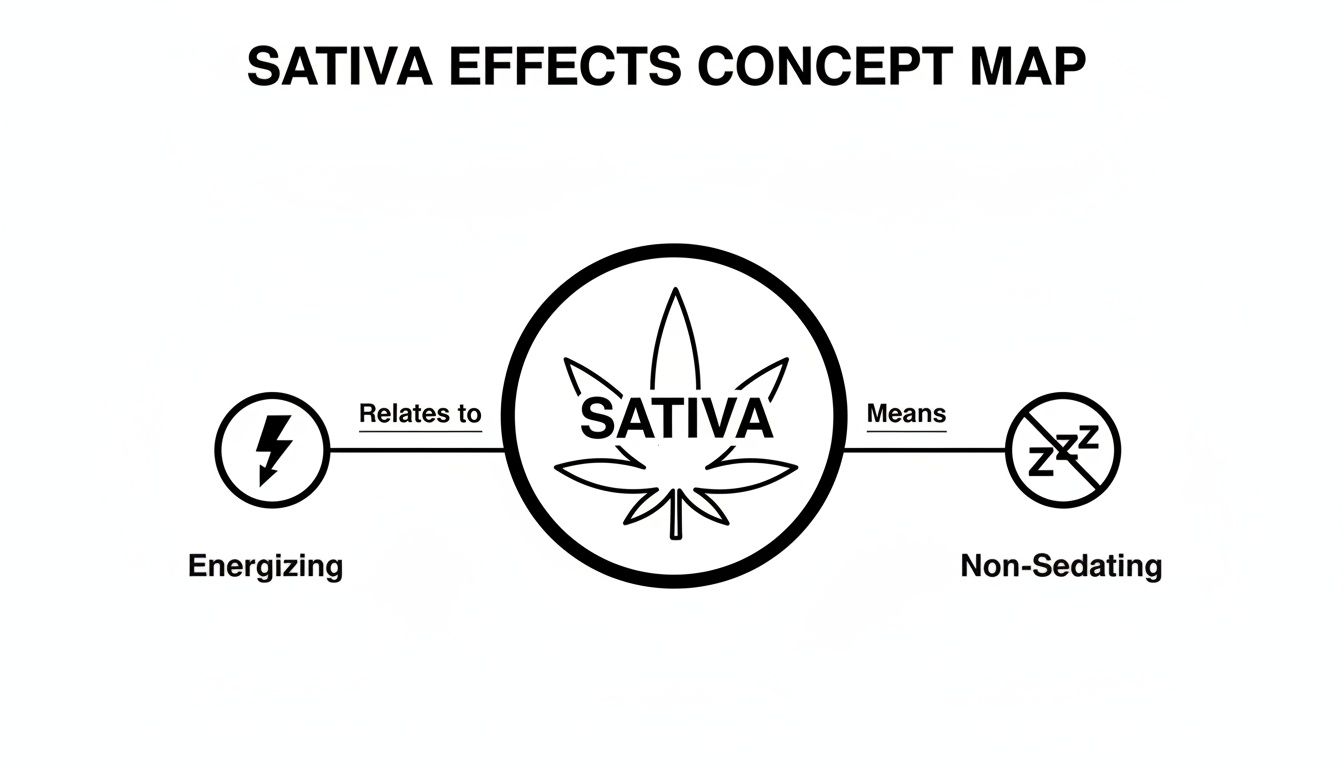
As shown, a true sativa-inspired product must be both energizing and non-sedating. Achieving both is the mark of a successful formulation.
This is a process of deliberate chemical design, combining uplifting terpenes with an appropriate cannabinoid base to create a predictable and repeatable effect. The process starts with a clear product goal, followed by the selection of individual isolates or blends to achieve it. Our in-depth terpene guides provide the foundational knowledge needed to make these choices with confidence.
Mastering these chemical building blocks allows you to engineer energizing profiles from the ground up, delivering a consistent product that meets consumer expectations every time.
How to Formulate Strain-Inspired Terpene Blends
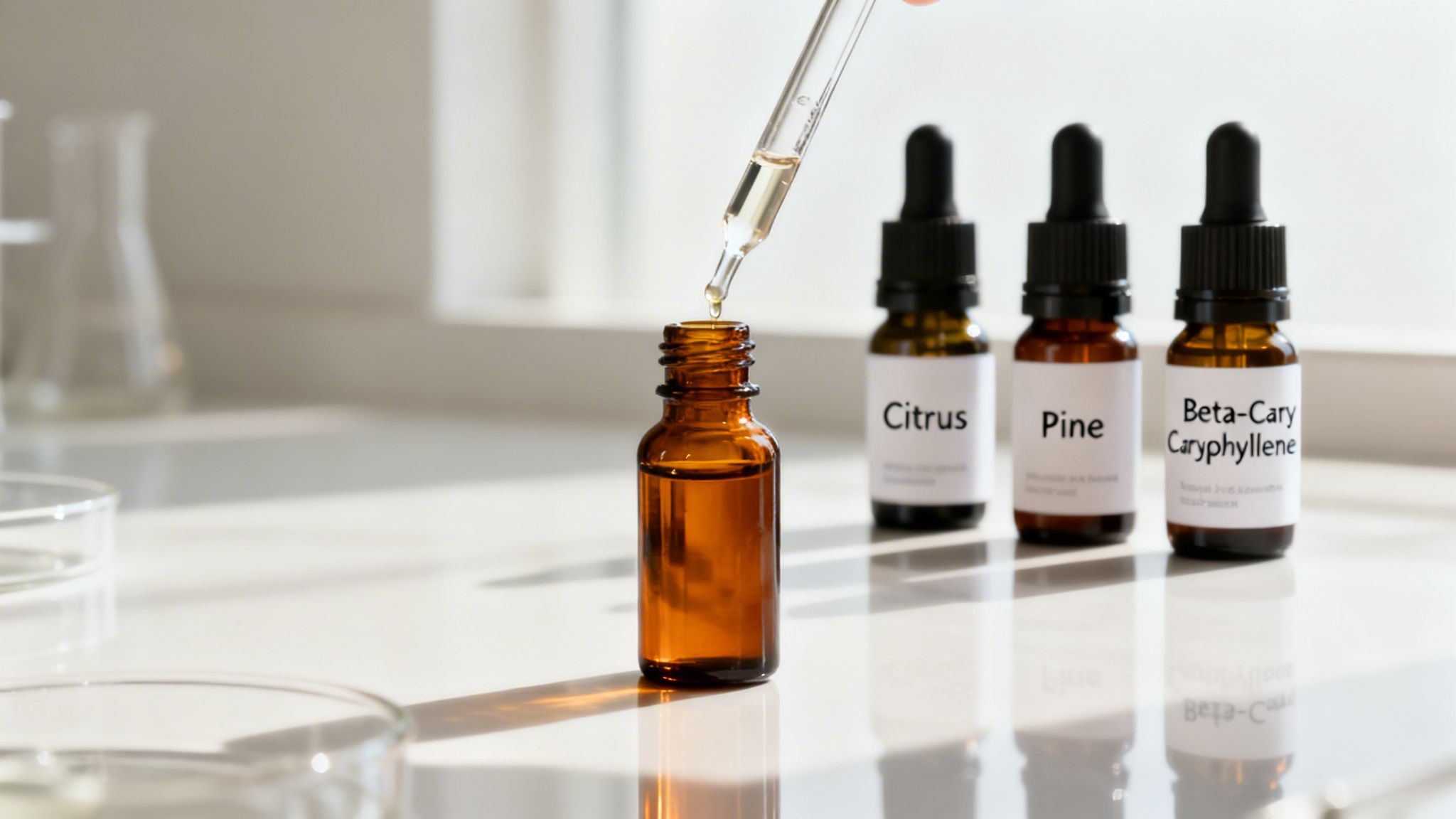
Effective product development requires moving beyond strain names to focus on the underlying chemical fingerprint. To create a vape or concentrate that reliably delivers an energetic effect, you must intentionally construct that effect at a molecular level.
A practical starting point is to analyze classic energizing strains like Durban Poison or Jack Herer. Their reputations are built on their unique terpene compositions. A review of their Certificates of Analysis (COAs) reveals a recurring pattern: a specific combination of dominant and secondary terpenes that produces their signature uplifting effect.
An increasing body of data supports this approach. One review of 18 studies demonstrated that products marketed as sativas were more likely to be energizing when they contained lower levels of myrcene and higher levels of limonene. The botanical classification was less predictive of the effect than the terpene content. For a deeper dive, you can read the full analysis on terpene influence over product effects.
Deconstructing the Profile for Formulation
Think like a perfumer, but for effects. Terpenes function as top, middle, and base notes, and their balance dictates the final experience. For an energizing, sativa-style product, the formulation should be led by bright, volatile top notes.
Top Notes (The Opener): These are the first aromatics to be perceived and are crucial for setting the initial tone. For a wakeful blend, prioritize a high concentration of Limonene and Pinene. They deliver an immediate sense of brightness and focus. Terpinolene is another excellent choice to add a complex, stimulating character.
Middle Notes (The Heart): These terpenes emerge next, providing depth and character to the blend. Beta-Caryophyllene is an ideal middle note for an active profile, adding a touch of spice that complements citrus and pine without inducing drowsiness.
Base Notes (The Anchor): These are the heavier, less volatile terpenes that ground the experience. This is a critical control point in an energizing formula. Minimize or completely exclude sedative base notes like Myrcene and Linalool. An excess of either can overpower the blend and steer the effect toward sedation.
From Blueprint to Bottle
Once the target terpene profile is defined, the blending process begins. Start with a clean, high-quality distillate base, then introduce your chosen terpene isolates or a pre-formulated strain-inspired terpene blend. This stage demands precision.
Formulator's Tip: I recommend building from the top down. Start by establishing your top notes. A 3:2 ratio of Limonene to Pinene creates a solid foundation for an energizing blend. Once this is dialed in, gradually introduce a smaller amount of Beta-Caryophyllene to add body. This methodical approach allows for fine-tuning of both aroma and effect.
The ultimate goal is to leverage the entourage effect to create a predictable experience. By carefully selecting and balancing these aromatic compounds, the question "does sativa make you sleepy?" is answered with a scientifically engineered and definitive "no."
When a Sativa Goes Sideways and Makes You Sleepy
It’s a common and frustrating scenario: a product formulated with a sativa-leaning profile, intended to be uplifting, receives feedback that it’s causing drowsiness. This outcome can damage consumer trust and a brand's reputation.
The question "does sativa make you sleepy?" is not just for consumers; it's a critical quality control query for formulators. If your "Daytime" vape is inducing sleep, it's time to analyze the formulation. There are several key reasons why an "energetic" blend can miss its target effect.
Too Much of a Good Thing: The THC Overload
One of the most frequent culprits is excessive dosage. THC exhibits a biphasic effect, meaning its effects change with concentration—a small amount can have one effect, while a large amount can have the opposite.
At moderate levels, THC can promote the creativity and alertness associated with sativa profiles. However, at very high potencies, it can overwhelm the user's system, leading to fatigue and a "burnt out" sensation.
This is particularly relevant for high-potency products like vape cartridges exceeding 90% THC. While appealing on paper, such concentrations can easily lead to couch-lock, regardless of the terpene profile. The intense initial psychoactive effect can quickly transition to lethargy. Research confirms that high-dose consumption can disrupt the very systems it's meant to influence, overriding the intended effect of the terpene profile. You can discover more insights about THC dosage and its effects on the body to see the data for yourself.
Hidden Sleep Agents in Your Formula
Beyond THC dosage, other compounds in your formulation can hijack the user experience. A profile may be rich in limonene and pinene, but the presence of sedative compounds can overpower the intended energetic effects.
Key compounds to monitor on your Certificate of Analysis (COA) include:
- Myrcene Creep: Even in a product marketed as a sativa, a high concentration of myrcene can act as a powerful sedative. If myrcene is one of the most abundant terpenes in your blend, it will almost certainly mute the stimulating effects of other terpenes.
- The CBN Factor: The presence of Cannabinol (CBN) is another significant red flag. CBN is well-known for its sedative properties, and even small amounts can introduce a drowsy quality that undermines an otherwise uplifting blend.
- The Human Element: Individual user physiology plays a role. A dose that is ideal for a high-tolerance user may be overwhelming for a novice, leading to sedation. While you cannot control for every individual's metabolism, you can formulate for a broader audience by targeting a more balanced potency.
Ultimately, formulating a reliable sativa product is as much about what you strategically leave out as what you put in. It's an exercise in careful curation, not just addition.
Best Practices for Testing and Labeling Your Products
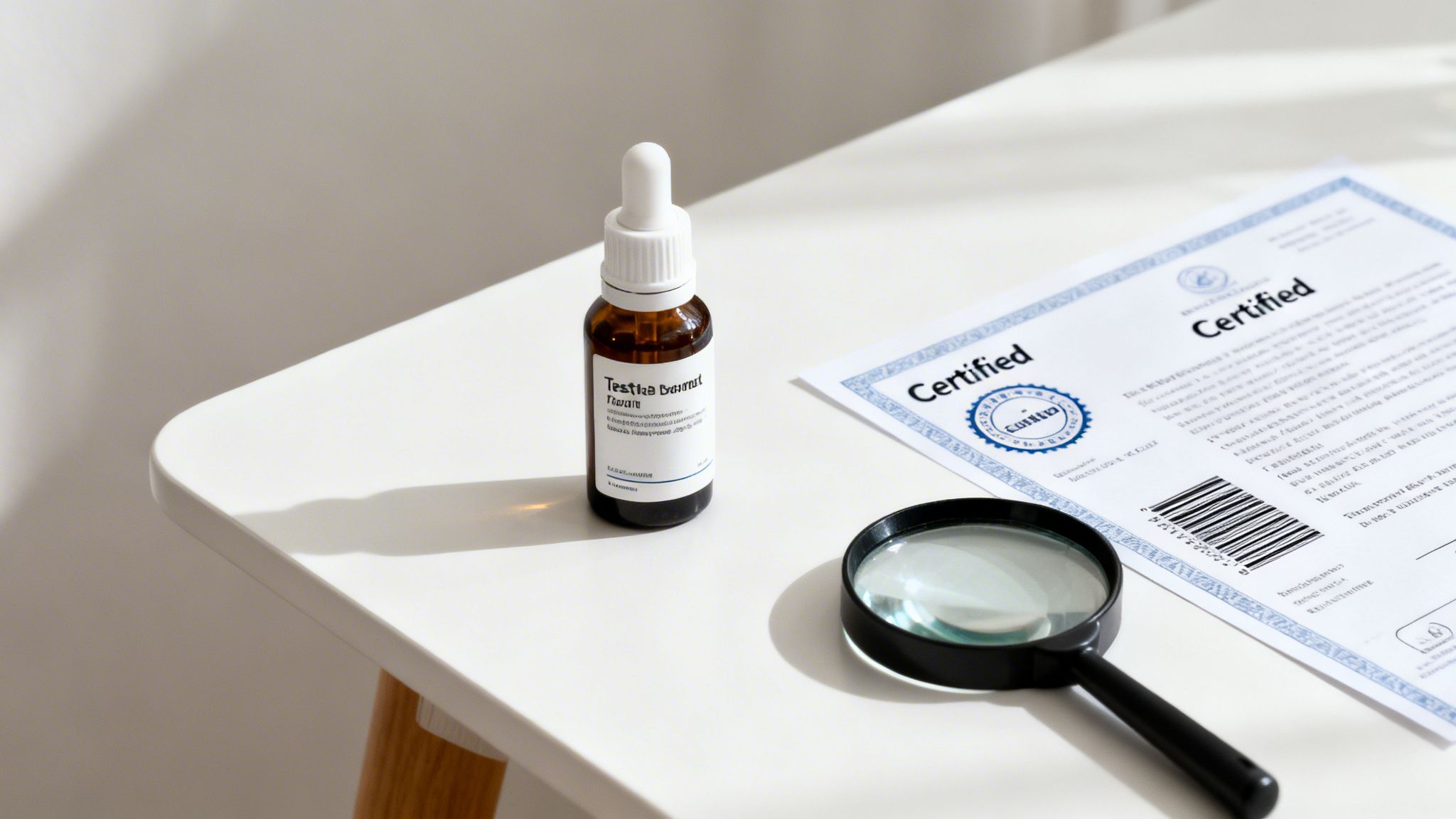
A successful formulation is only half the battle. The final step is translating that complex chemistry into a product that consumers can trust. This is where rigorous testing and transparent, intelligent labeling become critical differentiators.
The process must begin with a comprehensive, third-party lab test. A detailed Certificate of Analysis (COA) is not a mere compliance checkbox; it is your proof of concept. It verifies that the cannabinoid and terpene blend you engineered is present in the final product, providing hard data that your "uplifting" formulation won't induce drowsiness.
Crafting Compliant and Effective Marketing
With COA data in hand, the next challenge is to communicate the product's intended effects without making unsubstantiated medical or health claims that attract regulatory scrutiny.
The solution is to let the ingredients speak for themselves. Instead of making direct claims about energy, use sensory-rich language that alludes to the experience and highlights the key aromatic compounds.
Here’s how to translate technical data into effective marketing copy:
Instead of: "Won't make you sleepy."
Try: "Formulated with a vibrant, stimulating blend of limonene and pinene."
Instead of: "An energizing sativa formula."
Try: "Features bright, zesty citrus notes known for their uplifting aromatic profile."
This approach educates consumers and builds trust by transparently showcasing what’s inside the product. The terpene profile becomes the central selling point. To master this technique, our terpene formulation resources can help you connect specific terpenes to compelling, compliant product descriptions.
The objective is to be transparent and deliver on your promise. When a consumer purchases a vape described with ‘uplifting citrus and pine notes,’ they should receive exactly that—an experience that is bright and clear, not unexpectedly sedating.
Building Trust Through Transparency
In a competitive market, consistency is the ultimate currency. Retailers want to stock reliable products, and consumers reward brands that deliver a predictable experience. By investing in thorough testing and clear labeling, you proactively address the "does sativa make you sleepy?" question with scientific evidence.
Your COA is a public declaration of quality. It demonstrates that you have intentionally controlled for sedative compounds like myrcene and CBN while prioritizing a specific, wakeful terpene profile. This level of detail distinguishes your brand and solidifies your reputation for technical expertise.
Common Questions About Sativa Formulations
As a formulator, your role is to bridge the gap between chemical data and consumer experience. When a partner asks, "Does sativa make you sleepy?" the answer lies in your formulation strategy. Let's address some common challenges in developing sativa-dominant products.
Which Terpenes Should I Add to Distillate for a Non-Sleepy Effect?
When formulating a vape or concentrate from distillate, your terpene selection dictates the final effect. You are not merely adding a "sativa" flavor; you are engineering a profile to promote alertness and suppress sedative qualities.
Your core ingredients for an energizing blend should be:
- Limonene: Your primary tool for creating a bright, mood-lifting aromatic profile. Its zesty citrus aroma is a clear signal of a daytime product.
- Pinene (Alpha and Beta): Essential for a sharp, clean scent that conveys focus and clarity. It cuts through sweetness and adds a stimulating, sophisticated edge.
- Terpinolene: Adds a complex, "hazy," or electric note that is characteristic of many classic sativa cultivars.
Critically, you must manage your Myrcene concentration with extreme care. If its level exceeds 0.5% of the total terpene blend, you risk introducing sedative effects that counteract your primary terpenes. The most reliable method is often to start with a precisely formulated strain-inspired terpene blend to ensure a balanced and effective foundation.
My Sativa Vape Is Making Users Tired. What's Wrong?
Receiving feedback that an "uplifting" sativa vape is causing fatigue is a significant quality control issue. The root cause is almost always identifiable in the product's chemical profile.
First, obtain the full-panel Certificate of Analysis (COA) for the batch in question. Scrutinize it for sedative terpenes appearing in unexpectedly high concentrations. Myrcene is the most common culprit, but high levels of Linalool or Terpineol can also compromise the experience, regardless of the Limonene content.
Second, review the THC potency. A vape with excessively high THC can trigger a biphasic effect, where an initial stimulating rush gives way to fatigue and couch-lock. A more potent formula is not always a more effective one.
Formulator's Insight: Don't neglect to check for Cannabinol (CBN). This minor cannabinoid is known for its drowsy effects. Even trace amounts, which can form as THC degrades over time, can be enough to make a bright sativa profile feel unexpectedly sleepy.
Finally, assess your terpene ratios. The solution may be as simple as increasing the percentage of stimulating terpenes like Limonene to give them a more dominant role in the final effect.
How Do I Market a Sativa's Effects Without Making Medical Claims?
Communicating a sativa product's intended effect without making prohibited medical claims requires a nuanced approach. The strategy is to shift from making claims to describing the sensory experience, linking it directly to the terpene profile.
Let the ingredients tell the story. Instead of claiming the product "gives you energy," paint an aromatic picture that educated consumers already associate with those effects.
- Describe the product as "Built on a vibrant blend of zesty Limonene and crisp Pinene."
- Use evocative aromatic descriptors like "bright lemon," "sharp pine," and "tropical haze" to signal the intended experience.
This method builds greater trust by being transparent about the formulation and empowering customers to make informed choices based on terpene science—all while maintaining regulatory compliance. You can learn more about this strategy in our terpene formulation resources.
At Gold Coast Terpenes, we provide the lab-verified, strain-specific profiles and isolates you need to formulate with precision and confidence. Shop our full collection and start building products that consistently deliver on their promise.