
On their own, isolated terpenes do not get you high. They lack the molecular structure to produce the intoxicating effects associated with cannabinoids like THC.
For formulators, extractors, and brand owners, this simple "no" is where the real work begins. The critical insight isn't whether terpenes are psychoactive, but how they shape the entire product experience. Understanding their function is essential for terpene formulation, strain replication, and developing consistent, high-value products.
The Role of Terpenes in Product Effects
The most important question for a formulator isn't if terpenes get you high, but how they guide the final effect of your product. These aren't just simple flavorings; they are active, functional ingredients that work as powerful effect modulators. Mastering this is the key to creating unique, reliable cannabis products instead of generic distillates.
Imagine a pure cannabinoid distillate, like THC or CBD, as a single instrument playing a loud, powerful note. It's strong, but also one-dimensional. Terpenes are the mixing board, providing the technical control to fine-tune that sound. By adding a specific terpene blend, you can boost certain qualities, dial back others, and sculpt the entire experience.
From Flavoring to Functional Ingredient
The industry has evolved beyond using terpenes merely to make a vape cart taste like a certain strain. Sophisticated formulators now select terpenes specifically for their ability to steer a product’s effects—whether that's toward relaxation, focus, or a burst of energy. This function-first methodology is how you create consistent results that build brand loyalty.
While terpenes don't get you high by themselves, their interaction with cannabinoids is a game-changer for product development. A growing body of research shows that terpenes can produce cannabimimetic behaviors—a scientific term meaning they can mimic some of the effects of cannabinoids. A 2021 study, for example, discovered that common terpenes could induce effects like sedation and analgesia on their own. You can read the full research about these terpene findings to understand the depth of their influence.
For a modern formulator, terpenes are the control knobs. They provide the technical power to turn a base cannabinoid into a sophisticated, targeted product that delivers a reliable and repeatable experience every single time.
Terpene Action Versus THC Action
To execute precise formulations, it's crucial to understand the distinct roles of these compounds. THC is the primary psychoactive agent—it binds directly to the brain's CB1 receptors to produce its characteristic effects. Terpenes, conversely, act as directors, interacting with a host of other receptors and systems to guide the overall effect.
This table breaks down their distinct roles:
| Attribute | Terpenes (Isolated) | THC (Isolated) |
|---|---|---|
| Primary Function | Aromatic, flavor, and effect modulation | Psychoactive effects |
| Direct Psychoactivity | No | Yes |
| Mechanism of Action | Interacts with various receptors (serotonin, dopamine, etc.) | Binds directly to CB1 and CB2 cannabinoid receptors |
| Typical Role in a Product | Shapes the character of the experience (e.g., calming vs. energizing) | Provides the core psychoactive potency |
| Example | Myrcene may contribute a sedative quality; Limonene may contribute an uplifting quality. | A high dose creates a strong intoxicating effect. |
Understanding this separation is crucial. THC provides the power, but terpenes provide the direction. This synergy is what we call the "entourage effect," and it’s the secret behind crafting truly exceptional products. It’s how you can start with the exact same THC distillate and use different strain-inspired terpene blends for vape cartridges to build out an entire product line, each with its own clear purpose.
Ultimately, mastering this relationship is what separates a forgettable commodity from a premium, high-value brand. Your ability to deliver a consistent, predictable experience is your most valuable asset.
Putting the Entourage Effect to Work in Your Formulations
While terpenes on their own won't get you high, the way they interact with cannabinoids is where formulators can truly innovate. This relationship is what we call the entourage effect, a simple but powerful concept: cannabis compounds are more effective together than they are apart. For a formulator, mastering this concept is how you graduate from making generic products to crafting SKUs with specific, repeatable, and marketable effects.
A useful analogy is a band. A cannabinoid like THC might be the lead singer, grabbing all the attention and driving the main psychoactive melody. But the terpenes are the rest of the band—the guitarist, the bassist, the drummer—who shape the song's entire mood and direction. One terpene blend might create an upbeat, energetic punk rock anthem, while another lays down a slow, mellow jazz tune. Without that supporting band, even the most powerful singer is just a voice without a song.
This chart breaks down how cannabinoids and terpenes team up to create the final product experience.
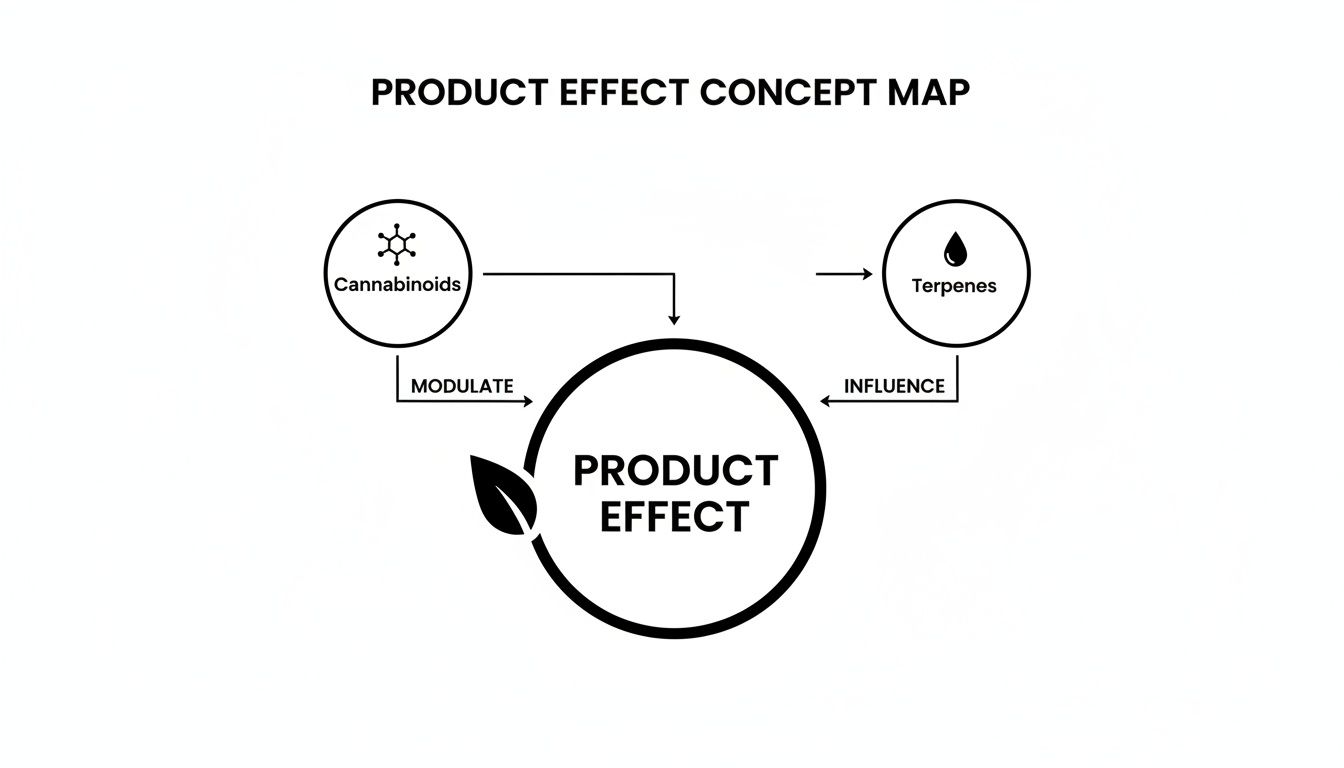
As you can see, the final effect isn't just about one ingredient. It’s about the dynamic conversation happening between your cannabinoid base and the terpene profile you pair it with.
Guiding the Experience with Terpenes
In practice, leveraging the entourage effect means being strategic about your terpene selection. Different terpenes have unique ways of modulating cannabinoids and interacting with the body's own systems, which lets you steer the end-user experience with surprising accuracy. It’s the key to making one vape for evening relaxation and another for daytime focus, even if they both use the same THC distillate as a starting point.
Here are a few well-known examples of this synergy at work:
- Linalool and CBD: Linalool, with its classic floral, lavender-like scent, is known for its calming qualities. When combined with CBD, it can amplify those soothing properties, making it ideal for wellness products designed for relaxation.
- Limonene and THC: With its zesty citrus aroma, Limonene is often associated with a mood boost. Pairing it with THC can help modulate the experience, leading to a more uplifting effect.
- Myrcene and THC: Myrcene is thought to enhance the permeability of the blood-brain barrier, which could allow THC to cross more efficiently, potentially resulting in a faster onset and more intensely sedating effect.
By learning these basic interactions, a formulator can start building a product line that delivers on its promises every time. This isn't guesswork; it's a reliable, science-based method for creating consistent products that brands can trust.
Beyond Strain Copying: Creating Your Own Blends
The entourage effect is exactly why strain replication works. When you nail the exact terpene ratio of a famous strain like OG Kush or Sour Diesel, you can bottle its signature effects in a vape cart or an edible. It’s a great starting point.
But real innovation begins when you move beyond just copying strains and start designing your own proprietary blends. This is your chance to develop a unique product and a signature effect that your competitors can’t easily replicate.
By carefully choosing and balancing specific terpenes, you can create an experience that becomes your brand's calling card. Perhaps it’s a "Creative Flow" blend high in Pinene and Limonene, or a "Night Cap" formula loaded with Myrcene and Linalool. Your command of the entourage effect is what will set you apart. Just as different plants are cultivated for their unique traits, your products can be too. For a closer look at how plant biology shapes the final product, check out our guide on the differences between male and female cannabis plants and their distinct roles.
Understanding Cannabimimetic Properties For Product Development
We’ve all heard about the entourage effect—the idea that terpenes work with cannabinoids to shape an experience. But that's only half the story. It turns out, some terpenes can actually mimic cannabinoids all on their own.
This concept, known as cannabimimetic properties, is a huge deal for anyone creating vape or cartridge formulations. It means terpenes aren't just for aroma and flavor; they are active ingredients that can produce real, measurable effects, much like cannabinoids do.
Recent research from the University of Arizona really brought this home. Scientists found that several common terpenes, when taken alone, could produce effects like pain relief and sedation. How? They were directly interacting with the body's endocannabinoid receptors—the exact same ones THC targets. This discovery completely changes the game for product development.
The big takeaway here is that your terpene blend directly contributes to your product's final effect, not just its taste. This forces a shift from a flavor-first mindset to a function-first methodology.
A Chef’s Approach To Functional Formulation
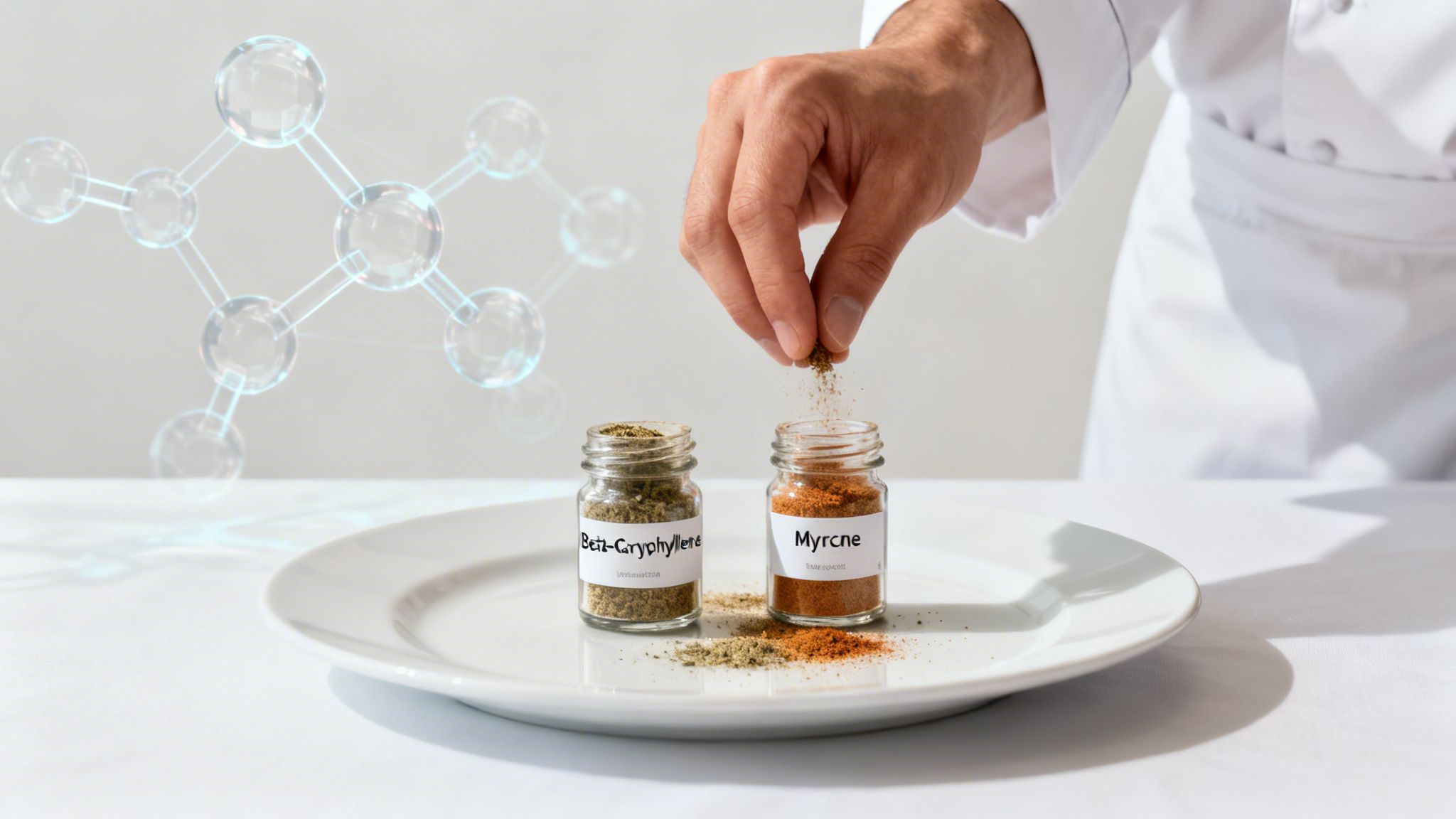
Think about how an expert chef uses spices. A beginner might just sprinkle in some basil for flavor. But a true master knows that spices do more than that—turmeric has certain properties, ginger aids digestion, and cloves have antiseptic qualities. They're building a dish that both tastes incredible and creates a specific physical experience.
That’s exactly how modern formulators should think about terpenes. You’re not just choosing them to copy the smell of a popular strain. You're selecting them to build a desired physiological outcome from the ground up. It’s the difference between simple mimicry and true product design.
This cannabimimetic understanding means that even in a THC-free product, your terpene blend is an active system. It's not just flavoring for a CBD isolate; it’s a functional component that can be engineered to promote relaxation, focus, or other wellness goals.
Applying Cannabimimetic Insights In Practice
Once you realize that certain terpenes can hit the same pathways as cannabinoids, you unlock a whole new level of control. It gives you a scientific foundation for creating blends that deliver consistent and predictable effects, time and time again.
For example, if you know a terpene interacts with CB2 receptors (which are key for immune response and inflammation), you suddenly have a powerful tool for crafting targeted wellness and topical products.
- Beta-Caryophyllene: This is the most famous cannabimimetic terpene. It has the unique ability to bind directly to CB2 receptors, the same mechanism cannabinoids use to help manage inflammation and pain. That makes it an indispensable tool for any product focused on physical relief or recovery. Our formulating guide for Beta-Caryophyllene shows you how to put this powerful isolate to work.
- Myrcene: Often associated with the heavy, "couch-lock" feeling, Myrcene's relaxing effects aren't just about helping THC work better. It has its own interactions within the endocannabinoid system that contribute to that sedating quality.
- Pinene and Limonene: While these two don't bind directly to the main cannabinoid receptors, they influence other neurotransmitter systems. Their interactions can produce uplifting or clarifying effects that mimic the mood-boosting benefits of certain cannabinoid profiles.
When you start formulating with this knowledge, the question is no longer, "do terpenes get you high?" Instead, you’re asking, "How can I use this specific terpene to build the exact functional effect my customers are looking for?" This strategic approach is the very heart of innovative and successful cannabis product formulation.
Formulating Terpenes For Non-Psychoactive Products
While the synergy between terpenes and THC is a cornerstone of formulation, the opportunity in creating products completely free of psychoactive cannabinoids should not be overlooked. The fact that terpenes don't get you high isn't a drawback; it's a significant commercial advantage.
This allows formulators to craft effective, functional wellness products with broad market access, even in regions with strict THC regulations. Terpenes can shift from being modulators to being the primary active ingredients driving the product's function. This enables the development of entire product lines around tangible benefits—such as relaxation or mood enhancement—without the legal and regulatory complexities of THC.
Building Products Around Terpene-Driven Effects
The demand for non-intoxicating wellness products is growing rapidly. Consumers are actively seeking safe, reliable options that offer benefits without cognitive side effects. Terpenes are perfectly positioned to meet this demand, serving as the foundation for a new category of functional products.
Consider the possibilities this opens for your brand:
- Targeted Topicals: Develop potent creams or salves rich in Beta-Caryophyllene and Myrcene to address localized discomfort. These terpenes can interact with receptors directly at the application site, offering targeted effects.
- Functional Tinctures: Design oil-based formulas for specific goals. A blend high in Limonene and Pinene could be marketed for daytime focus, while a mix rich in Linalool could be positioned for evening relaxation. Our deep dive on the benefits of D-Limonene can provide more ideas for mood-focused formulations.
- Aromatherapy Vapes: Formulate THC-free vape cartridges that use terpene blends to deliver calming or uplifting effects through inhalation, offering a fast-acting, non-psychoactive method for mood support.
The Science Backing Terpene-Only Formulations
This is not just theoretical; the concept of terpenes as standalone active ingredients is supported by scientific research, providing a firm foundation for product development and marketing claims.
For instance, a recent federally funded study highlighted terpenes as ‘potential therapeutics for chronic neuropathic pain.’ In the study, a specific terpene dose produced a reduction in pain markers that was "roughly equal" to a small dose of morphine.
Crucially, the researchers noted the terpenes didn’t trigger a reward response in the brain, suggesting they could be potent analgesics without the addictive liability or unwanted side effects of other compounds. Discover more insights about these terpene-pain findings and see what this could mean for your product development pipeline.
This growing body of evidence confirms what leading formulators already know: you can build an entire product line using terpenes as the star of the show. It's about shifting them from a supporting role to the main event.
By leaning into the unique properties of terpenes themselves, you can innovate far beyond the traditional cannabis space. The question "do terpenes get you high?" becomes a key selling point. The answer—a firm and confident "no"—is your entry into the broader wellness market, allowing you to reach a wider audience and build a brand known for safe, effective, and non-intoxicating solutions.
Practical Formulation For Vape Cartridges And Distillates
Scientific knowledge is one thing; successful application in a lab or on a production line is another. For formulators working with vape cartridges and distillates, the fact that terpenes do not get you high is less critical than their practical performance. Every choice, from terpene selection to mixing methodology, directly impacts product quality, safety, and commercial viability.
A well-constructed terpene blend is analogous to a complex fragrance. It requires a solid foundation (base notes), a compelling core (middle notes), and a bright, attention-grabbing opening (top notes).
Building A Balanced Profile
To create an authentic and stable flavor profile, you must layer different types of terpenes deliberately. Combining isolates without considering their volatility will result in a profile that is either flat or fades quickly. A properly balanced formula ensures a consistent sensory experience from the first inhalation to the last.
- Base Notes: These are heavy, less volatile terpenes like Myrcene and Beta-Caryophyllene. They anchor the blend, providing depth and longevity. They are often key drivers of relaxing or sedative effects.
- Middle Notes: Terpenes like Linalool and Humulene form the heart of the profile. They bridge the base and top notes, defining the central character of the strain you’re replicating.
- Top Notes: Highly volatile terpenes like Limonene and Pinene are the first aromatics a consumer perceives. They evaporate quickly but are essential for the initial burst of citrus or pine that characterizes many famous cultivars.
Achieving this balance prevents flavor degradation over time and is the science behind the distinct, memorable characteristics of classic strains. For a deeper look at this principle in a legendary profile, review our breakdown of the Sour diesel strain.
Overcoming Key Production Challenges
Beyond aroma crafting, formulators face significant mechanical and chemical challenges. A well-designed terpene profile is useless if it is incompatible with the vape hardware.
Two of the most common issues are viscosity and homogenization. Raw distillate is often too viscous to wick properly in standard vape cartridges, leading to burnt hits and product failure. Terpenes serve as an effective natural diluent, thinning the oil to the optimal consistency for smooth, steady vaporization.
The target is a viscosity that flows easily into the coil’s wicking ports but is not so thin that it causes leakage. This typically requires a terpene concentration between 5% and 15%, depending on the starting distillate and cartridge hardware.
Equally important is homogenization. Terpenes and cannabinoid oils do not readily mix. Insufficient mixing can lead to "hot spots"—pockets of pure terpenes—that result in a harsh taste and an inconsistent product. Proper homogenization requires mechanical stirring, sometimes with gentle heat, to ensure every unit is identical.
The Non-Negotiable Rule: Sourcing Pure Terpenes
Ultimately, formulation success depends on the quality of your raw ingredients. The market contains low-cost terpenes cut with undeclared, unsafe fillers. Using these poses a direct risk to your brand's integrity and consumer health.
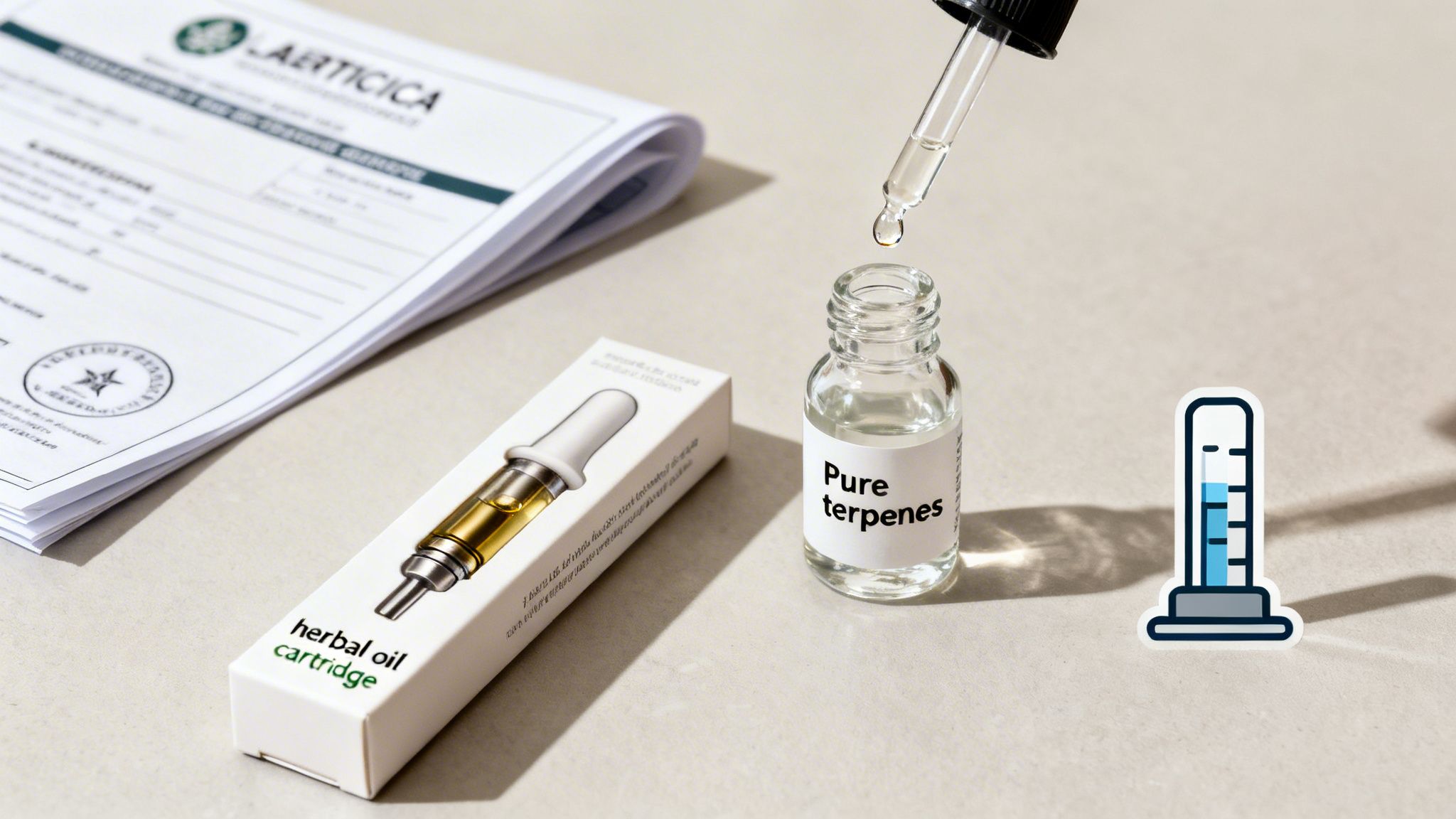
A trustworthy supplier will always provide a detailed Certificate of Analysis (COA) for every batch. This document is your guarantee that the terpenes are pure and free from contaminants that should never be in an inhalable product.
Crucial Contaminants to Avoid:
- Vegetable Glycerin (VG)
- Propylene Glycol (PG)
- Medium-Chain Triglyceride (MCT) Oil
- Vitamin E Acetate
These compounds can create toxic byproducts when heated. Sourcing only lab-verified, pure terpenes is the single most important step in creating safe and effective terpene formulations for distillate. Your commitment to purity protects consumers, limits liability, and solidifies your reputation as a trustworthy brand.
A Product Formulator's FAQ
In the lab, numerous questions arise during batch refinement. Here are answers to common queries from formulators, with practical advice for achieving consistent, high-quality results.
Can Using The Wrong Terpenes Ruin A Distillate Batch?
Yes, absolutely. Selecting the wrong terpenes is one of the fastest and most expensive ways to ruin an entire batch of distillate. This error often stems from attempts to cut costs on raw materials.
The impact is threefold. First, aroma and flavor: a low-quality terpene blend creates an artificial, chemical taste that signals a low-grade product and fails to replicate the authentic character of the target strain.
Second, hardware incompatibility: the viscosity of your terpene blend dictates the final oil consistency. If it's too thick or thin, vape cartridges will fail, resulting in burnt coils, leakage, and negative customer feedback, which can quickly damage a brand's reputation.
Finally, and most critically, is the safety risk. If your terpenes are not lab-verified to be free of cutting agents like VG, PG, MCT oil, or Vitamin E Acetate, you introduce a significant liability. These additives can produce toxic compounds when heated, endangering consumers. Sourcing pure, lab-tested terpenes is not a "best practice"—it is essential for ensuring product safety, consistency, and efficacy.
How Do I Choose Between A Strain Blend And Individual Isolates?
The choice between a pre-formulated strain blend and individual isolates depends on your objective and development timeline. Neither is inherently superior; they are different tools for different applications.
Strain-Specific Blends: These are your solution for consistency and speed-to-market. To reliably replicate the profile of a classic like Blue Dream or OG Kush, a professionally crafted blend is the most efficient path. It is pre-balanced and tested, reducing R&D and ensuring a consistent user experience.
Individual Isolates: This route offers maximum creative control and is typically favored by experienced formulators. Working with individual terpenes like Limonene, Myrcene, or Beta-Caryophyllene allows you to build a completely custom flavor profile from scratch. Isolates can also be used to modify an existing blend, for instance, by adding extra Limonene to enhance an earthy profile with a citrus note.
Many top-tier formulators use a hybrid approach. They start with a high-quality strain blend as a reliable base, then add specific isolates to impart a unique signature. This combines the efficiency of a blend with the creative freedom of isolates.
Does The Entourage Effect Apply To THC-Free Products?
Yes. The entourage effect is a fundamental principle describing the synergy between all cannabis-derived compounds, including terpenes and cannabinoids like CBD. Terpenes are just as crucial for modulating the effects of CBD as they are for THC.
For CBD product formulators, this is a key differentiator. While many brands simply add flavoring to CBD isolate, true innovation lies in using specific terpene profiles to create targeted, functional products.
For example:
- For a calming product, pairing CBD with a terpene blend high in Myrcene and Linalool can enhance its naturally relaxing properties.
- For an uplifting blend, combining CBD with a profile rich in Limonene and Pinene can create a product ideal for daytime focus and energy.
The question "do terpenes get you high" is irrelevant in this context. In THC-free formulas, terpenes are not used to induce intoxication; they work with non-psychoactive cannabinoids like CBD to create a specific wellness experience. This is how you develop products with clear value propositions like 'Calm,' 'Focus,' or 'Sleep'—and build a loyal customer base that trusts your brand to deliver consistent results.
Whether you're recreating a classic strain or crafting a completely new functional blend, the purity and quality of your ingredients are what will make or break your product. At Gold Coast Terpenes, we offer only lab-verified, strain-specific profiles and isolates guaranteed to be free from VG, PG, MCT, and any other harmful diluents. Explore our full line of THC-free terpenes for cannabis product formulation and start building your next great product with confidence.