
For product formulators, the Cherry Pie OG strain is more than a popular cultivar—it's a proven aromatic blueprint for a best-selling product. Its enduring market appeal is rooted in a meticulously balanced profile of sweet cherry, warm baked goods, and a hint of earthiness. Replicating this experience is a primary objective for developers aiming to formulate winning vape cartridges and concentrates.
Why Formulators Target the Cherry Pie OG Terpene Profile
The commercial viability of Cherry Pie OG is not coincidental; it stems from a strategic genetic cross. Understanding its lineage is the first step in replicating the flavor and aroma with technical precision. For a formulator, deconstructing this strain is about reverse-engineering a set of specifications for a product with pre-existing consumer demand.
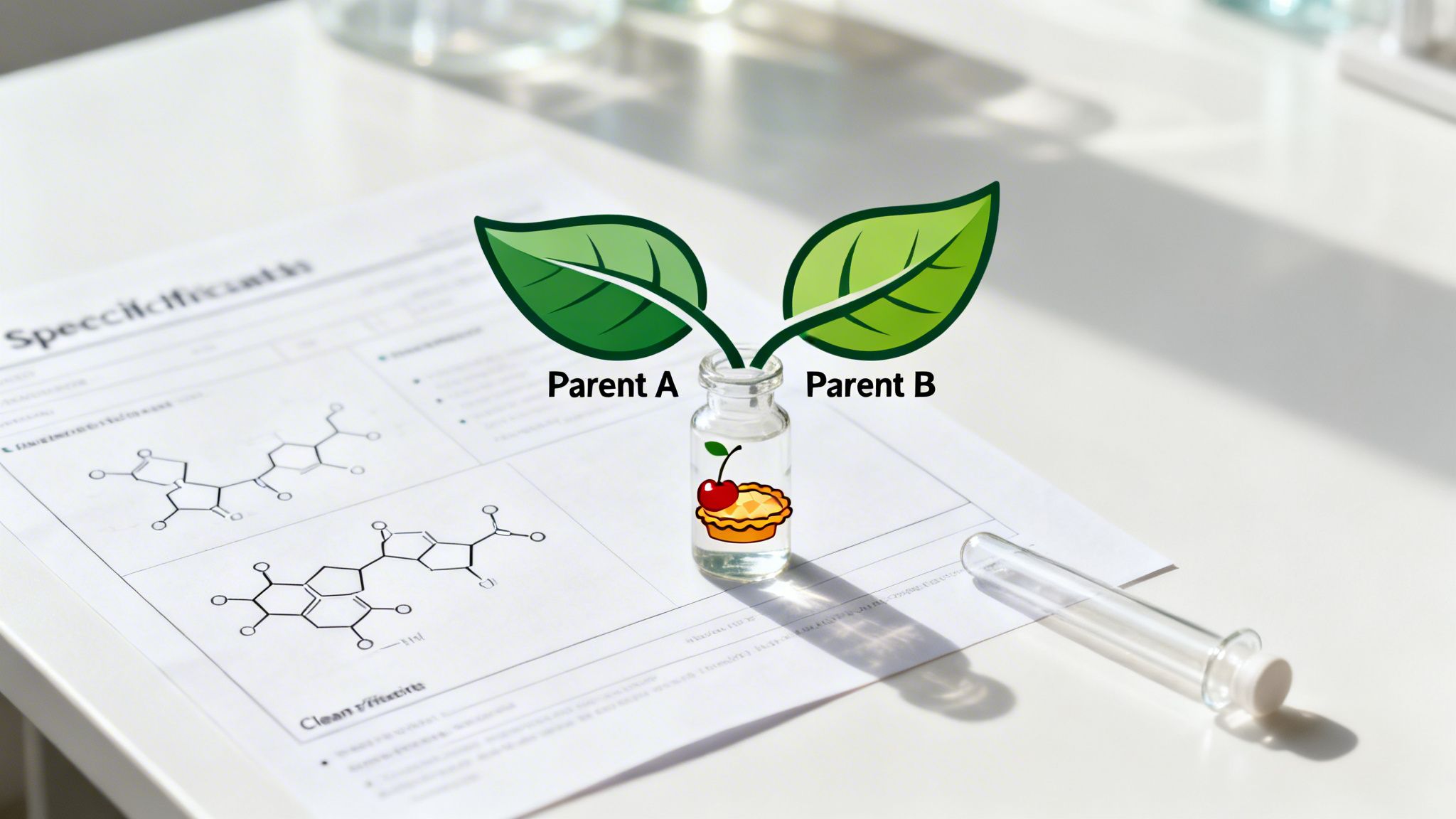
The Genetic Blueprint for Commercial Success
Cherry Pie OG is the result of crossing two legendary cultivars: Granddaddy Purple (GDP) and Durban Poison. Analyzing the contribution of each parent provides a clear roadmap for the aromatic components required for an authentic replication.
- Granddaddy Purple (GDP): This classic indica provides the core of the profile. It establishes a sweet, fruity foundation of dark berries and grapes, which is the source of Cherry Pie OG's signature "cherry" flavor note.
- Durban Poison: As a pure sativa, Durban Poison introduces a critical layer of complexity. It balances GDP's sweetness with spicy, earthy, and pine-like top notes. This is where the "baked pie crust" element originates, adding a sophisticated counterpoint to the fruit base.
This combination demonstrates a masterclass in aromatic balance. GDP delivers the sweet, comforting base notes, while Durban Poison contributes the sharp, sophisticated accents that make the profile distinct and memorable. For a formulator, this is the ingredient list. The primary goal is to recreate this interplay between sweet fruit and savory spice using a well-crafted terpene blend. A deep dive into how to choose cannabis strains based on terpene profiles offers valuable context for this process.
Before detailing the specific terpenes, this table summarizes the key attributes a formulator must target to achieve an accurate and effective product.
Cherry Pie OG Profile At A Glance For Formulators
| Attribute | Specification | Formulation Implication |
|---|---|---|
| Parent Strains | Granddaddy Purple x Durban Poison | Blend must balance sweet, fruity notes (from GDP) with spicy, earthy top notes (from Durban). |
| Typical Profile | 80% Indica / 20% Sativa Hybrid | Target a profile that is aromatically rich and complex, avoiding an overly simplistic or one-note fruit character. |
| Dominant Flavor | Sweet Cherry, Baked Goods, Earthy Spice | The primary experience must be a dessert-like flavor. The cherry note is non-negotiable for authenticity. |
| Dominant Terpenes | Myrcene, Caryophyllene, Pinene | Myrcene provides the fruity base, Caryophyllene adds spice, and Pinene brings fresh, earthy complexity. |
| THC Range (Flower) | 16% – 24% | Indicates that products replicating this strain are expected to be potent, requiring a flavor profile that can stand up to high-purity distillates. |
With these specifications in mind, you have a clear technical target for creating a Cherry Pie OG-inspired product that will perform predictably and consistently.
A History of Market Dominance
This indica-dominant hybrid first appeared in the San Francisco Bay Area in the late 2000s, developed by a breeder known as Pieguy. It quickly became a commercial success. With a typical 80% indica to 20% sativa genetic makeup, its flower delivered potent buds with THC levels ranging from 16% to 24%, with some batches exceeding 25%.
By the early 2010s, Cherry Pie OG had secured its position as a market staple, demonstrating that its unique dessert-like profile had significant commercial longevity.
For product developers, the objective is to capture the essence of this genetic success story in a liquid format. An effective Cherry Pie OG terpene blend delivers the sweet fruitiness from its GDP parentage while balancing it with the spicy, earthy complexity from its Durban Poison heritage.
Replicating the Flavor of Cherry Pie OG: A Formulation Guide
Recreating the signature aroma of Cherry Pie OG is an exercise in perfumery and flavor science. It involves the careful layering of aromatic compounds—top, middle, and base notes—to construct the unmistakable experience of sweet cherries and a warm, buttery pie crust.
Achieving the correct balance is paramount. It distinguishes a generic "fruit" blend from a profile that genuinely captures the aromatic signature of the strain.
Building the Foundation: The Base Notes
Every robust aromatic profile begins with a solid foundation. For the Cherry Pie OG terpene profile, that foundation is Myrcene. As the most abundant terpene in this strain, it contributes a heavy, earthy musk. Its characteristic fruity undertones, a direct nod to its Granddaddy Purple lineage, provide the initial hint of dark berry.
Functionally, Myrcene serves as the anchor for the entire formulation. It provides depth and body, preventing the brighter top notes from smelling thin or sharp. It is the rich, sturdy "crust" that supports the entire "pie" structure.
The Heart of the Pie: Spicy & Savory Mid Notes
Once the base is established, the heart of the profile is layered in with Beta-Caryophyllene. This is where the profile's complexity emerges. Its warm, spicy, and peppery character provides a crucial contrast to the sweet earthiness of the Myrcene.
This is the terpene responsible for the "baked goods" perception. That clove-like, woody note transforms a simple "cherry" flavor into a complex "cherry pie." Precision is critical here: too little Beta-Caryophyllene, and the profile will be flat and overly sweet; too much, and the delicate fruit notes will be overpowered.
For a deeper understanding of how these flavors interact, our terpene flavor and aroma chart is an essential resource for any formulator's toolkit.
Beta-Caryophyllene acts as the spice blend in a baker’s recipe. While not the main ingredient by volume, its presence defines the final product, adding a sophisticated warmth that elevates the entire sensory experience.
The Finishing Touch: Bright & Complex Top Notes
The final layer—the most volatile and first to be perceived—comes from the top notes. In the Cherry Pie OG profile, this role belongs to Pinene. It cuts through the richness with a bright, fresh, and slightly sharp lift.
This crisp, piney scent adds a layer of herbaceous complexity that prevents the profile from becoming cloying or heavy, providing a clean finish that rounds out the aroma. Lab analyses often show that Cherry Pie OG's aroma is 20-30% stronger than average, a distinction largely attributed to this specific terpene trio. For an authentic replication, formulators should target a blend where Caryophyllene comprises approximately 25% of the terpenes, Myrcene 30-40%, and Pinene 10-15%. For more context on cultivar specifics, you can review expert insights on how to grow the Cherry Pie OG strain on blimburnseeds.com.
By understanding how Myrcene, Beta-Caryophyllene, and Pinene interact, formulators can move beyond simple replication and begin to craft an authentic Cherry Pie OG experience that perfectly balances sweet, savory, and fresh notes.
A Step-by-Step Guide: Formulating Cherry Pie OG for Distillate
Translating the aromatic profile of Cherry Pie OG into a finished product requires a systematic and repeatable process. When working with high-purity distillate, success depends on achieving perfect homogenization, preserving delicate flavor compounds, and ensuring final product stability.
This guide outlines the standard operating procedure for creating vape cartridges and other infused concentrates.
The process begins with the base material. It is essential to use a high-quality, fully winterized cannabis or hemp distillate. The removal of waxes and lipids provides a neutral canvas, allowing the complex notes of the Cherry Pie OG strain-inspired terpene blend to be expressed cleanly.
Preparing Your Distillate and Terpenes
The initial—and most critical—step is to gently warm the distillate. Cold, viscous oil is difficult to handle and will not mix evenly, resulting in inconsistent flavor and poor product performance.
- Heat Your Distillate: Place your distillate in a sealed, heat-safe container. Using a hot plate or water bath, gently warm it to a target temperature between 104°F and 140°F (40°C – 60°C). This is the optimal range for reducing viscosity without boiling off terpenes or degrading cannabinoids.
- Measure Your Terpenes: While the oil is warming, precisely measure your Cherry Pie OG terpene blend. For most vape cartridges, a 5% to 7% concentration by weight is the standard. A 5% dilution yields a classic flavor true to the flower, while a 7% dilution delivers a more intense, flavor-forward experience.
Avoid rushing the heating process. Exceeding 150°F (65°C) risks volatilizing the most delicate top-note terpenes like Pinene, permanently altering the profile's bright, fresh character.
The Aromatic Blueprint of Cherry Pie OG
Constructing a flavor profile is analogous to building a fragrance. It requires layering base notes, mid notes, and top notes that work in concert. This is precisely how the Cherry Pie OG profile is engineered.
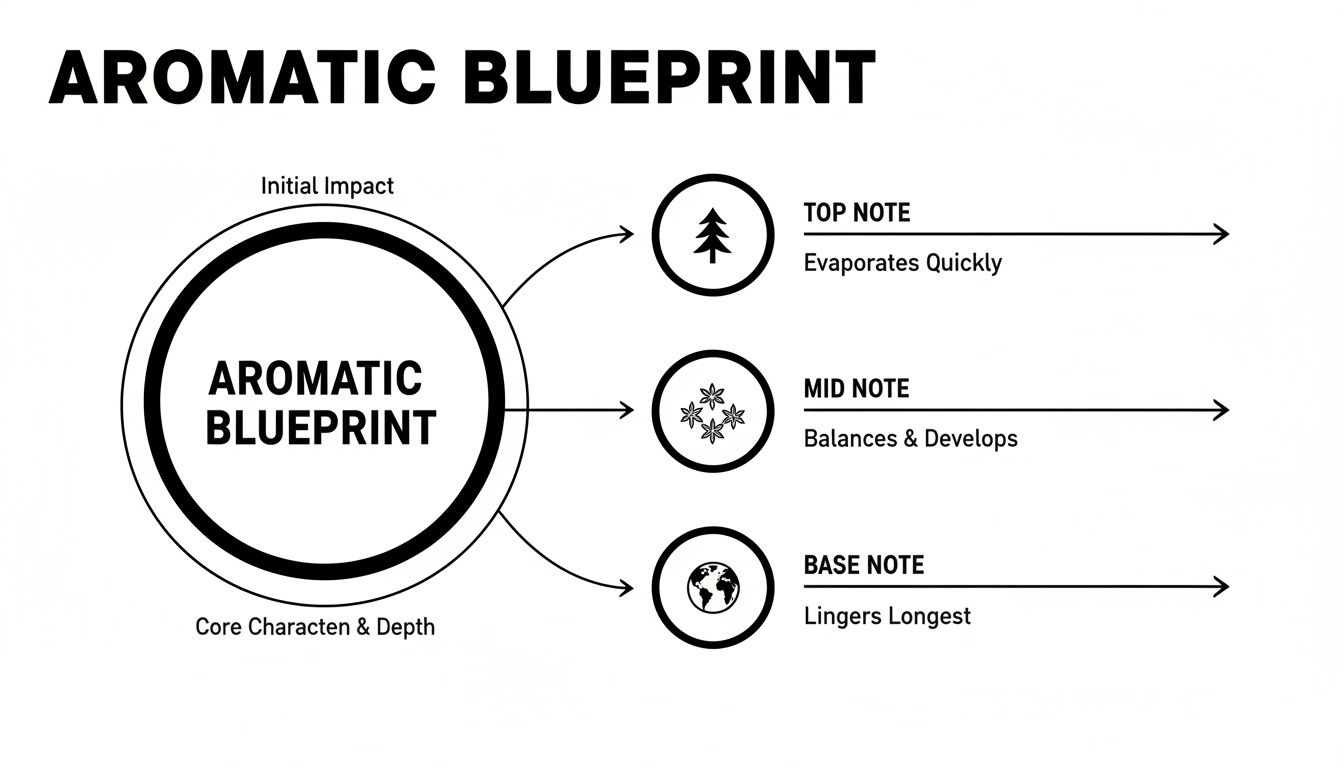
This blueprint illustrates how Myrcene creates an earthy foundation, which supports the spicy mid-note from Caryophyllene, all finished with the bright, sharp scent of Pinene. It is a classic layering technique designed to create a complete and cohesive sensory experience.
The Mixing and Homogenization Process
With the ingredients prepared, the next step is to combine them into a perfectly uniform mixture. This prevents "hot spots"—concentrated pockets of pure terpenes that create a harsh flavor and inconsistent product.
Homogenization is not merely stirring; it is ensuring that every microliter of oil contains the exact same terpene ratio. This guarantees that the first activation of a cartridge tastes identical to the last, a critical factor in product quality and brand reputation.
For optimal results, use a magnetic stirrer and stir bar. Once your distillate reaches the target temperature, slowly introduce the pre-measured terpenes. Set the stirrer to a low-to-medium speed, creating a gentle vortex without splashing or incorporating excess air.
Allow the mixture to homogenize for 15 to 30 minutes. This duration is typically sufficient to fully dissolve the terpenes into the oil. For guidance on different base oils, our guide to terpenes for distillate provides additional tips for process optimization.
After mixing, allow the blend to cool slightly before transferring it to your filling equipment. Following this controlled methodology is key to producing a stable, flavorful, and professional-grade Cherry Pie OG product.
Advanced Formulation Techniques for Cherry Pie OG Vape Cartridges
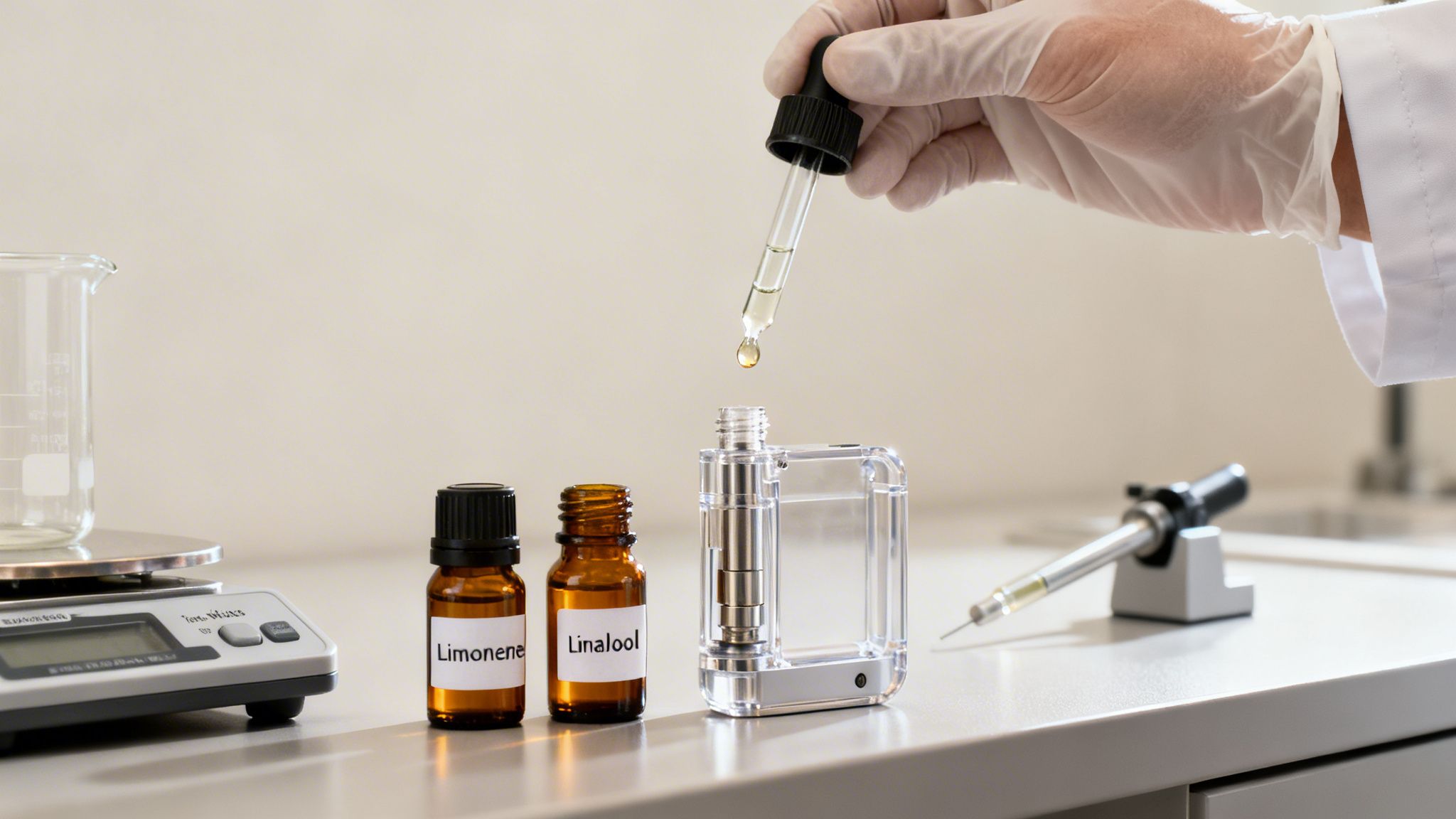
While following a basic recipe can yield a satisfactory Cherry Pie OG vape cartridge, creating a premium product requires a more nuanced approach. Advanced formulation involves moving beyond pre-mixed blends to use isolated terpenes to sculpt the final sensory experience.
This is where a brand can establish a unique market position. By skillfully tweaking the profile, a formulator can highlight specific nuances of the Cherry Pie OG strain, creating a signature version that is proprietary and distinct.
Fine-Tuning The Profile With Isolates
A complete strain profile provides the authentic foundation. The true craft, however, lies in using individual isolates to amplify or introduce specific aromatic notes.
Consider it analogous to a master chef perfecting a sauce. The core recipe provides the base, but a precisely measured addition of a specific spice elevates the dish from good to exceptional.
Here are several techniques to elevate the Cherry Pie OG profile:
- Boost the Fruitiness: While Myrcene establishes the classic berry base, a small addition of Limonene can introduce a bright, zesty twist, cutting through the sweetness and adding a fresh complexity found in select Cherry Pie phenotypes.
- Amplify the Floral Undertones: Due to its Granddaddy Purple genetics, subtle floral notes are present in the profile. A micro-dose of Linalool can bring these forward, creating a more layered and sophisticated aroma.
- Deepen the 'Baked' Character: To enhance the savory "pie crust" flavor, a supplemental dose of Beta-Caryophyllene adds warm, spicy depth, making the entire profile feel richer and more complete.
Mastery of isolates allows a formulator to transition from merely replicating a strain to curating a sensory journey. This is the key to developing a "house blend" of Cherry Pie OG that builds brand loyalty.
When experimenting, using a pre-blended profile as the base ensures authenticity. Isolates can then be used to subtly guide the flavor in a proprietary direction.
Optimizing Your Formulation with Isolates
| Isolate To Add | Targeted Nuance | Recommended Starting Ratio |
|---|---|---|
| Limonene | Bright, zesty citrus top note | 0.25% – 0.5% of total volume |
| Linalool | Soft, lavender-like floral hint | 0.1% – 0.3% of total volume |
| Beta-Caryophyllene | Warm, spicy, "baked goods" depth | 0.5% – 1.0% of total volume |
These ratios are starting points. The methodology is to add isolates in micro-increments, mix thoroughly, and evaluate. It is always possible to add more, but impossible to remove.
Balancing Flavor, Viscosity, and Hardware
An ideal flavor profile is rendered meaningless if the cartridge burns, clogs, or leaks. Successful formulation requires balancing terpene concentration, oil viscosity, and hardware specifications.
The total terpene percentage is the primary control for viscosity; a higher concentration results in a thinner oil. While a 5-7% concentration is suitable for most hardware, a "flavor-forward" product might push this to 8-10%. In such cases, hardware with smaller intake apertures may be necessary to prevent coil flooding.
Conversely, a thicker oil requires a cartridge with larger intake holes to ensure proper wicking and prevent dry, burnt activations. To adjust viscosity without altering flavor, a high-quality, flavorless, terpene-derived diluent can be used. This allows for precise tuning of the oil’s thickness to match the hardware, ensuring every activation is smooth and delivers the intended flavor of your cherry pie og strain-inspired blend.
For precise calculations, our terpene mixing calculator is an invaluable tool for dialing in percentages accurately.
How to Ensure Consistency and Scalability
Developing a successful test batch of a cherry pie og strain-inspired product is only the initial step. The primary challenge for any professional operation is replicating that experience with perfect consistency across thousands of units. For brand building, consistency is not a feature—it is a core requirement.
This introduces a critical decision: using cannabis-derived terpenes versus botanically-derived, lab-formulated blends. Sourcing terpenes directly from the plant introduces significant variability due to factors like soil composition, harvest timing, and curing methods. This presents a major obstacle to scalability.
The Foundation of a Scalable Product
The only method to deliver an identical sensory experience every time is to use precision-formulated, lab-verified terpene blends. These are constructed from the ground up using individual, high-purity botanical isolates. Each component is measured to the microgram, creating a repeatable recipe for the Cherry Pie OG profile without agricultural variables.
The formula becomes a fixed blueprint, not a moving target. A vape cartridge purchased in June will have the same flavor and aroma as one purchased in December, which is the foundation of brand loyalty.
Sourcing a consistent terpene blend de-risks the entire production line. It provides total control over the product's flavor and aroma, which is the cornerstone of building consumer trust.
This has global market implications. Balanced hybrid profiles are gaining significant traction worldwide. In Europe’s medical market, for example, prescriptions for balanced hybrids increased by 35% between 2020 and 2025. Consistency is crucial for capturing this expanding market.
Implementing Quality Control Checkpoints
To ensure consistency during scale-up, robust quality control (QC) checkpoints must be integrated into the workflow.
Establish Your 'Gold Standard' Sample: Create one ideal batch of your finished Cherry Pie OG oil. This serves as the sensory benchmark against which all future production runs will be compared. Store it in a cool, dark, airtight environment to preserve its integrity.
Inspect All Incoming Materials: Verify all raw materials upon receipt. Every new drum of distillate and bottle of terpenes should be inspected before use. For terpenes, this involves a simple organoleptic test: compare the scent to your gold standard. Any deviation is a red flag that can prevent a large batch from being compromised.
Test During Production: After mixing a new batch but before filling, pull a small sample. Compare its aroma, color, and clarity directly against your gold standard. This is a critical step to identify mixing errors or incorrect ratios before they lead to significant financial loss. Use our terpene mixing ratios calculator to verify percentages.
Evaluate the Final Product: Pull several filled cartridges from each production run for final QC analysis. This ensures that the hardware and filling process have not introduced any issues and that the end-user experience aligns with the product specification.
Making these checkpoints a mandatory part of your SOP creates a system that guarantees every unit is a perfect representation of your brand. This is how to build a resilient operation that protects your reputation and secures customer retention.
Common Questions About Formulating Cherry Pie OG for Cannabis Product Formulation
Formulating with a complex profile like Cherry Pie OG can present unique technical challenges. Achieving its iconic notes with precision requires a deep understanding of terpene behavior. Here are common questions from formulators, with practical solutions.
What Is The Ideal Mixing Temperature For Cherry Pie OG Terpenes?
Temperature control is paramount for preserving the delicate aromatic compounds in the Cherry Pie OG profile. To achieve a smooth, homogeneous mixture, gently warm your distillate to a range between 104°F and 140°F (40°C – 60°C).
This temperature range is the optimal sweet spot. It effectively reduces the oil's viscosity to allow for seamless blending without applying enough heat to degrade the profile.
Crucially, do not allow the temperature to exceed 150°F (65°C). Higher temperatures will volatilize the most delicate top notes, particularly the bright and fresh Pinene. The loss of these compounds will result in a flat, one-dimensional final profile. For safety and best results, always mix in a well-ventilated area using a magnetic stirrer on a low setting for 15-30 minutes to ensure full homogenization.
How Can I Enhance The 'Baked Crust' Note In My Formulation?
The savory "baked crust" note is a challenging yet defining characteristic of an authentic Cherry Pie OG profile. This specific flavor attribute arises from the interaction between earthy Myrcene and spicy, peppery Beta-Caryophyllene.
To amplify this note without overpowering the sweet cherry elements, precision is key. Rather than increasing the overall terpene percentage, add a small amount of Beta-Caryophyllene isolate to your existing blend.
Start with a micro-dose, such as 0.25% of your total terpene percentage. This subtle adjustment can introduce a noticeable warmth and depth, creating a more authentic baked-good finish and a more complete profile. As a rule, always test such modifications in small batches before scaling to production.
Why Do My Finished Cherry Pie OG Carts Taste Harsh?
Harshness in a finished cartridge is a common but solvable issue, typically rooted in one of three factors: excessive terpene concentration, impure distillate, or incompatible hardware. With a rich profile like the cherry pie og strain, achieving a balance between robust flavor and a smooth user experience is critical.
- Terpene Concentration: A total terpene concentration between 5% and 7% is the industry standard for this profile, delivering excellent flavor without causing irritation. Pushing the concentration beyond 8% is a frequent cause of harshness and throat irritation.
- Distillate Purity: Ensure your base oil is of high purity. It must be fully winterized and properly purged of residual solvents. Any remaining ethanol or butane will impart a harsh, chemical taste that undermines even the highest-quality terpenes. A cleaner starting material yields a smoother final product. Our guide to terpenes for distillate offers more detail on this topic.
- Hardware Mismatch: Verify that your cartridges are appropriate for your oil's final viscosity. If the oil is too thin for the cartridge's intake holes, it can flood the coil and burn. Conversely, if the oil is too thick, the wick cannot saturate quickly enough, leading to dry, burnt hits.
Can I Use This Strain-Inspired Terpene Blend In Other Products Besides Vapes?
Yes. While our strain profiles are optimized for the high-heat environment of vaporization, they are highly versatile. The key variable to adjust is the dosage rate based on the final application.
For products intended for oral consumption, such as tinctures, edibles, or beverages, a significantly lower concentration is required to avoid an overpowering or bitter taste.
A standard starting point for edibles and tinctures is a terpene concentration at or below 0.5% by weight. In these applications, the goal is to provide a distinct flavor accent, not the intense aroma characteristic of an inhalable product.
This profile is also effective in topicals like lotions and salves, where it can contribute a signature scent to enhance the user experience. For specific guidance, always consult a reliable formulation chart or use our terpene mixing calculator to determine appropriate dosing for non-inhalable products.
How Do I Prevent The Cherry Flavor From Fading Over Time?
Flavor stability is a critical quality metric for any consumer brand. The sweet "cherry" notes in the Cherry Pie OG profile are susceptible to degradation from exposure to light and oxygen.
To protect the integrity of your finished product, proper storage and packaging are non-negotiable.
- UV Protection: Store both bulk finished oil and filled cartridges in a cool, dark environment. Direct sunlight and intense artificial light can accelerate the degradation of sensitive terpene molecules.
- Airtight Sealing: Oxygen is a primary driver of flavor degradation. Ensure bulk oil is stored in airtight containers with minimal headspace. For retail products, select high-quality cartridges and packaging that provide a robust seal to prevent oxidation before the product reaches the consumer.
Adhering to these protocols will significantly extend the flavor shelf life of your product, ensuring the last activation is as flavorful as the first and distinguishing your brand as a professional-grade operation.
Ready to create a Cherry Pie OG product that stands out for its authentic taste and quality? Gold Coast Terpenes provides the lab-verified, precision-blended terpene profiles you need to achieve perfection at scale. Explore our complete collection of strain profiles and start building your next best-seller today.