
When discussing the difference between a male weed plant vs female, the entire conversation for a product formulator boils down to one essential fact: unpollinated female plants are the ones that produce dense, resinous flowers loaded with cannabinoids and terpenes. Male plants, on the other hand, produce pollen.
This isn't just a trivial botanical detail; it's the most critical factor that dictates whether a cannabis crop has any commercial value for extraction and product development.
Why Plant Sex Matters in Cannabis Product Formulation
For formulators creating cannabis products—be it vape carts, tinctures, or edibles—understanding the differences between male and female plants is non-negotiable. It is the foundation of quality control, sourcing strategy, and achieving formulation targets.
A female plant’s chemical output is a world away from a male’s. This massive difference directly shapes a final product's potency, aroma, and consistency. This guide will analyze these differences from a technical and commercial angle, moving past basic cultivation to focus on what it means for a formulator. The goal here is to provide the insight to properly vet raw materials and create superior products.
This infographic lays out the core visual differences between male and female cannabis plants.
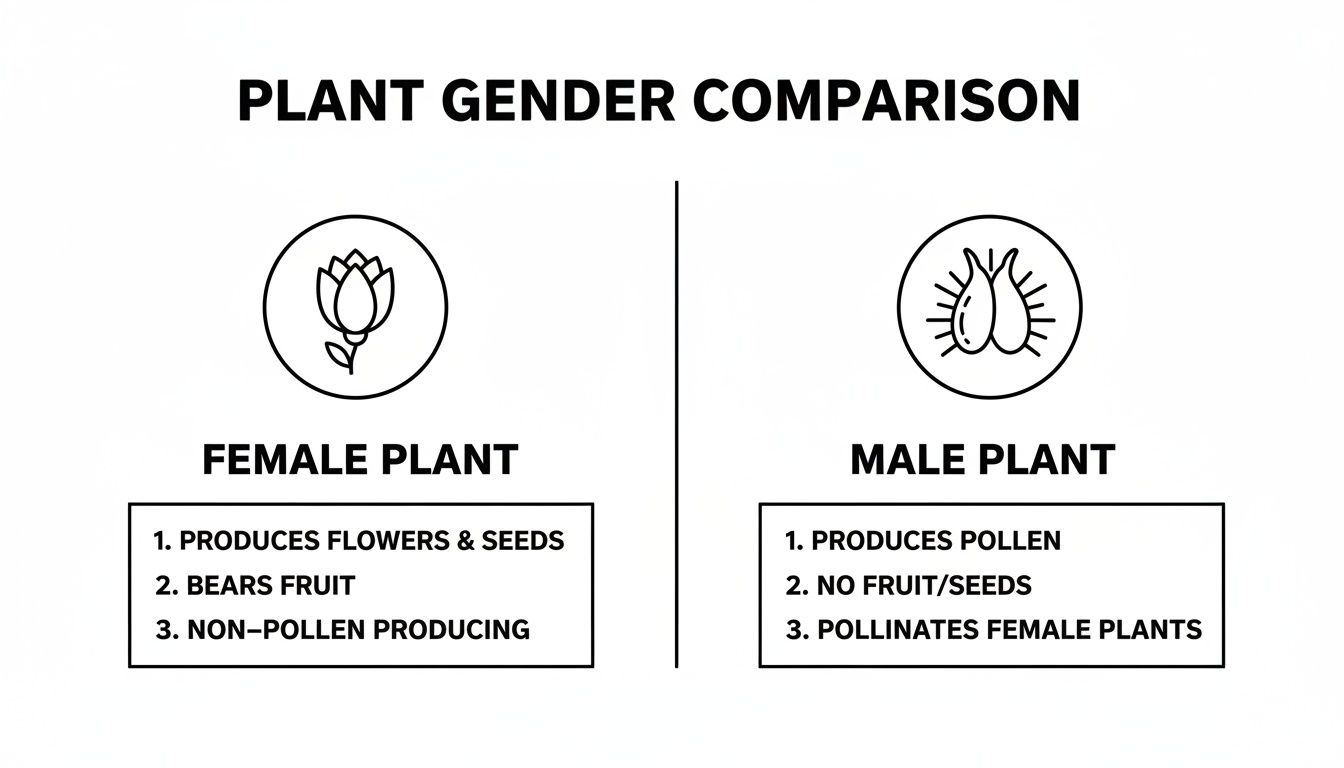
As you can see, the female's ability to produce coveted flower buds is the main event. Males lack these structures, which perfectly illustrates their different botanical roles: one makes the valuable compounds, the other makes pollen.
At-A-Glance Comparison For Product Formulators
For anyone formulating terpene-driven products or cannabinoid-based extracts, understanding the specific outputs of each plant sex is crucial for sourcing and quality control. This table breaks down the most important distinctions that directly impact product development.
| Attribute | Female Plant (Unpollinated) | Male Plant | Relevance To Formulation |
|---|---|---|---|
| Primary Output | Resin-rich flower buds (calyxes) | Pollen sacs | Females are the sole source of commercially viable biomass for extraction. |
| Trichome Density | Extremely high | Very low to negligible | High trichome density is essential for efficient terpene and cannabinoid extraction. |
| Cannabinoid Content | High (15-30%+) | Extremely Low (<1%) | Directly impacts the potency and economic viability of the final extracted oil. |
| Terpene Complexity | Rich and diverse profiles | Minimal and simple profiles | Essential for authentic flavor replication in strain-inspired terpene blends. |
The takeaway is clear: the stark differences in cannabinoid and terpene production mean that for high-quality, potent, and aromatic formulations, there is no substitute for unpollinated female biomass.
Key Takeaway: For extraction and formulation, male plants offer negligible value in terms of active compounds. Sourcing exclusively from unpollinated female crops—known as sinsemilla—is the only path to ensuring high cannabinoid concentrations and a complex, desirable terpene profile.
Mastering these plant-level distinctions is fundamental. To explore cannabis botany further, you can review our guide on cannabis plants.
Chemical Profiles and Plant Structure: What Really Separates Male and Female Cannabis
For a formulator, the "male vs. female plant" discussion reduces to one factor: chemical output. The physical differences between the plants directly control the quality and value of the raw material used for extraction. While they are the same species, they take two different developmental paths. One becomes a factory for high-value compounds, and the other dedicates itself entirely to producing pollen.
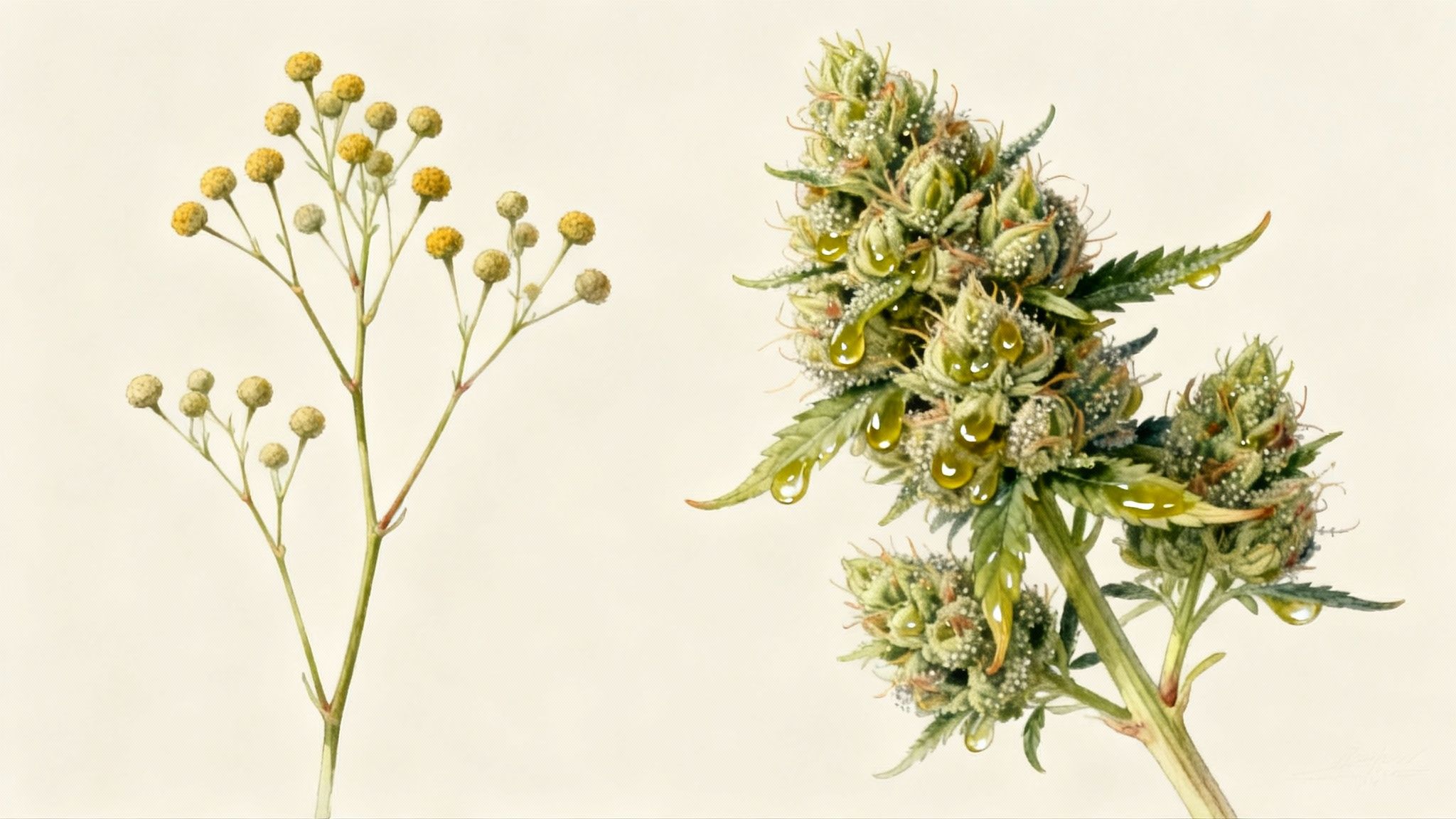
The most noticeable difference is in their reproductive structures. Female plants grow dense clusters of calyxes—small, teardrop-shaped pods designed to catch pollen. More importantly, these calyxes are blanketed in trichomes, the microscopic resin glands that produce nearly all the cannabinoids and terpenes. An unpollinated female, known as sinsemilla, directs its energy into growing large, resin-coated flowers, which maximizes both trichome density and chemical complexity.
Male plants, conversely, develop clusters of small, bell-like sacs filled with pollen. There are almost no trichomes on these structures, rendering them useless for creating potent extracts. Males also tend to grow taller and with less dense foliage than females, an evolutionary adaptation to help wind carry their pollen more effectively.
The Massive Chemical Divide
Those physical differences indicate the huge chemical gap between the sexes. For product manufacturers, the female plant's value comes from its rich, complex chemical profile—a profile that male plants almost completely lack.
The difference in cannabinoid levels is significant. It’s common for unpollinated female flowers to test anywhere from 15-30% total cannabinoids. Male plants rarely exceed 1%. For an extractor, this massive gap is critical. It dictates yield, efficiency, and whether a batch is financially viable.
The same principle applies to terpenes. Female plants develop a diverse and powerful array of these aromatic compounds for defense and pollinator attraction. This is the complex scent and flavor profile that formulators aim to capture. Male plants produce a much simpler, weaker terpene profile that lacks the depth needed for high-end products.
Why It’s All About the Trichomes
Any commercial conversation about male vs. female cannabis plants ultimately returns to the trichomes. These resin glands are the biochemical engines where all the target compounds are synthesized.
Here’s a quick breakdown of trichome distribution:
- Female Plant: The highest concentration of trichomes is found on the female flower’s calyxes and the small "sugar leaves" surrounding them.
- Male Plant: While male plants have some basic, non-glandular trichomes, they lack the capitate-stalked trichomes that are rich in cannabinoids and terpenes.
- The Extractor's Bottom Line: The density and maturity of the trichomes on female plant material directly impact the final yield and quality of the oil. This affects everything from the potency of a distillate to the aromatic integrity of live resin.
Understanding these basic differences is non-negotiable when sourcing cannabis for extraction. To refine formulations further, it is necessary to understand the individual compounds inside those trichomes. To get started, you can learn more about the building blocks of aroma in our comprehensive Terpenes 101 guide. This knowledge ensures every decision, from biomass selection to final product blending, is grounded in the botanical facts that define quality.
The Economic Impact on Raw Material Sourcing
As a formulator, the botanical differences between male and female cannabis plants are not just an academic curiosity—they have a direct and significant impact on the bottom line. These distinctions create economic realities that affect the entire supply chain, and understanding them is key to a smart raw material sourcing strategy. Every choice a grower makes affects the cost, quality, and availability of the biomass relied upon for extraction.
The primary economic driver is efficiency. A field of unpollinated female plants is a crop where 100% of the resources—water, nutrients, light, and labor—are channeled directly into producing high-value, resinous flowers. This is the gold standard for producers of raw materials for high-end terpene and cannabinoid extracts.
The High Cost of Cultivating Non-Feminized Crops
When a grower uses non-feminized (or "regular") seeds, they are operating with a significant budgetary variable. These seeds produce a roughly 50/50 split of male and female plants, which introduces waste and financial strain into the process. Every male plant identified and removed is a sunk cost.
Consider the resources one male plant consumes before it's culled:
- Nutrients and Water: For weeks, that male plant consumes the same expensive inputs as a productive female, but with zero return on investment.
- Space and Canopy Management: It occupies valuable real estate in the cultivation facility—space that a flower-producing female could have used.
- Labor Costs: It requires significant time and a trained eye to meticulously inspect plants, identify males early, and remove them before they can release pollen.
This inefficiency drives up the cost of goods sold (COGS) for the cultivator, a cost which is passed down to extractors and formulators. Historically, this 50:50 ratio meant growers would lose half their crop after investing weeks of resources. Considering a female plant might yield anywhere from 1 to 8 ounces of high-value flower while a male yields zero, every male in the ground represents a massive opportunity cost.
Feminized Seeds and Sourcing Consistency
The arrival of feminized seed technology was a significant advancement for commercial cannabis cultivation. By carefully stressing female plants to produce pollen, breeders can create seeds that are over 99% guaranteed to grow into female offspring.
This breakthrough provides huge economic advantages that directly benefit formulators:
- Maximized Yield Per Square Foot: Cultivators can fill their facilities with productive, flower-bearing plants, which dramatically boosts total biomass output.
- Reduced Labor and Risk: The painstaking process of manual sexing is largely eliminated. This saves countless hours of labor and removes the risk of a single mistake leading to a seeded, devalued crop.
- Predictable Harvests: Feminized crops are far more consistent and predictable, which makes supply chain forecasting much more reliable.
As a formulator, it is a strategic advantage to source biomass from growers who use feminized seeds or clones from female mother plants. This is the best way to ensure a consistent, high-quality raw material that is free from the seeds and lower potency associated with pollination.
This level of consistency is paramount when replicating specific terpene profiles and achieving target cannabinoid levels in products. When biomass is reliable, the formulation process is smoother, and final products are more predictable. By understanding these upstream economics, formulators can make smarter purchasing decisions and build stronger partnerships with suppliers.
As operations scale, securing a dependable supply of high-quality botanicals becomes critical. Exploring options for wholesale terpenes is the next logical step to guarantee formulations stay consistent batch after batch.
How Pollination Impacts Terpene Profiles for Formulation
In commercial cultivation, a single male plant is a serious financial threat. The primary danger is accidental pollination, which can ruin the chemical profile of an entire crop destined for high-end extracts. For formulators, understanding this risk is critical, because it directly impacts the quality and aromatic profile of the source material.
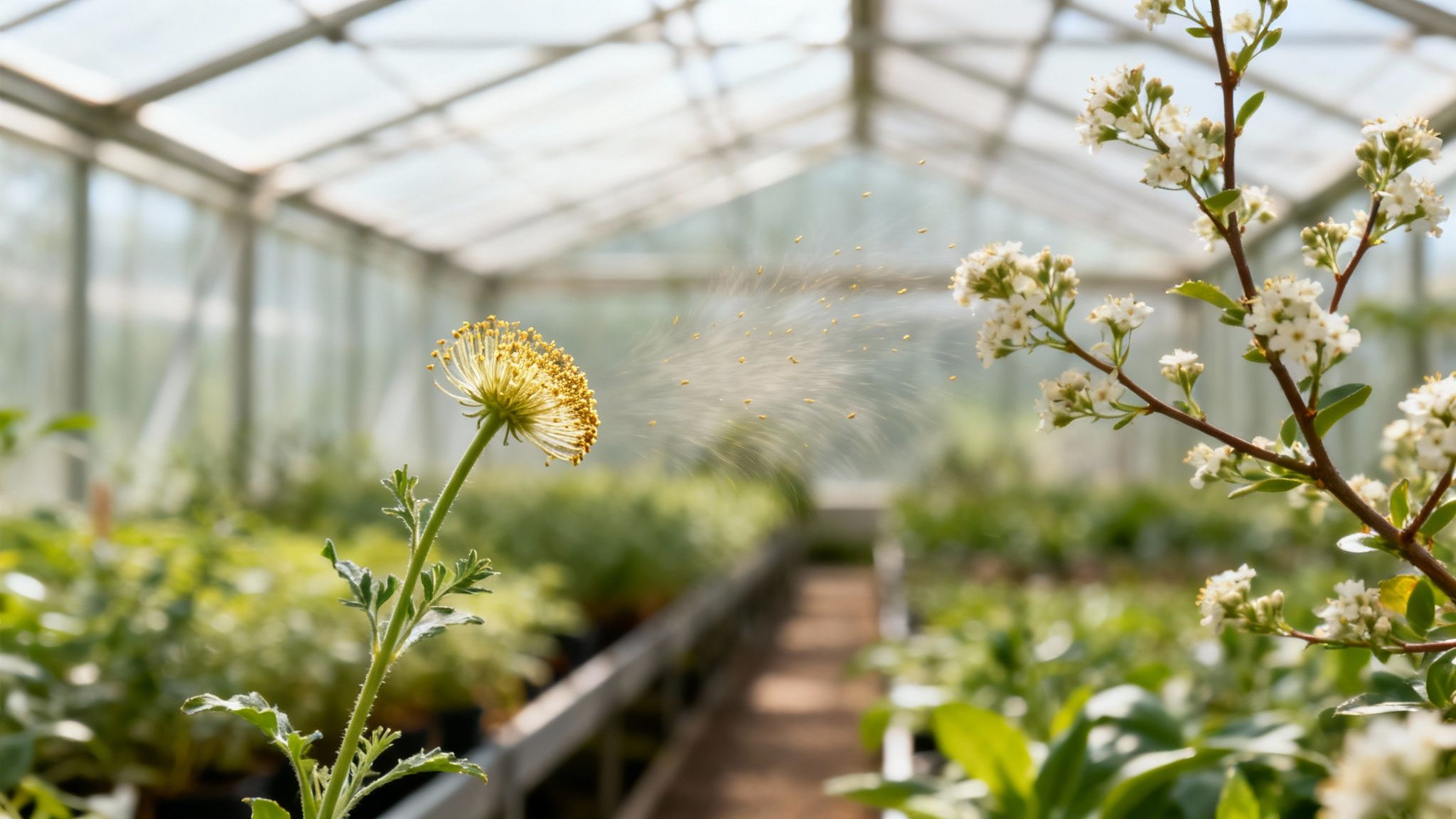
Once a male plant matures, it releases a cloud of fine pollen that travels on the slightest air current. When that pollen lands on the pistils of a female plant, fertilization occurs. That single event triggers a massive metabolic change in the female. Her biological priority switches from resin production to seed production, which is a disaster for the final chemical output.
The Plant's Energy Shifts Away From Terpenes
An unpollinated female plant, or sinsemilla, is a biochemical factory. It directs its energy into creating large, dense flowers loaded with trichomes. These trichomes produce cannabinoids and, most importantly for formulators, the rich spectrum of natural terpenes in cannabis. This is the plant operating at peak performance for extraction purposes.
Pollination halts this process. The plant immediately begins rerouting its resources—sugars, nutrients, and energy—away from the trichomes and into developing seeds. This shift has several immediate, negative impacts on the biomass intended for extraction:
- Reduced Trichome Production: The plant largely ceases production of new, resin-packed trichomes as it diverts energy elsewhere.
- Lower Cannabinoid & Terpene Levels: Existing trichomes can begin to degrade. Production of valuable compounds like myrcene, limonene, and caryophyllene stops. The final terpene profile becomes weak and one-dimensional.
- Increased Seed Weight: The harvested biomass will contain seeds, which are useless for extraction as they contain virtually no cannabinoids or terpenes.
What This Means for Formulation: An extract from a pollinated crop will be less potent and lack aromatic depth. It will not possess the authentic flavor of the intended strain. This may require additional post-processing or the addition of botanical terpenes to correct the batch, driving up costs and lowering quality.
The Real-World Damage to Your Biomass
The fallout from accidental pollination is not a minor inconvenience; data shows a massive loss. When male plants pollinate a hemp crop grown for cannabinoids, that crop loses roughly 50% of its biomass and 30% of its total cannabinoid content. The steep drop occurs because the female plants stop producing large, resinous flowers and begin producing seeds instead. This agricultural data can be explored further at Medicinal Genomics.
This reduction in quality is a significant problem for anyone creating a consistent product. When purchasing biomass, payment is based on total weight. If a large portion of that weight is useless seeds and the remaining flower is chemically diluted, the cost per gram of usable compounds increases dramatically.
This is why proficient growers invest heavily in prevention. They use feminized seeds (which are over 99% female) and have strict protocols for inspecting crops to identify and remove any male or hermaphroditic plants before they can release pollen. As a formulator, it is essential to source from suppliers who can demonstrate these quality controls are in place. It's the best defense against inconsistent, low-grade material that will compromise product goals.
The Male Plant's Role in Shaping Genetics for Strain Replication
In any commercial cultivation facility, a male cannabis plant is viewed as a liability to be removed quickly. But in genetic development and breeding, the male is essential. For formulators working to match specific strain profiles, understanding the male's role provides a deeper appreciation for where unique cultivars originate.
While female plants produce the resinous flowers, male plants are the architects of future possibilities. They are the cornerstone of any serious breeding program, holding the genetic keys to creating the next generation of commercially valuable strains.
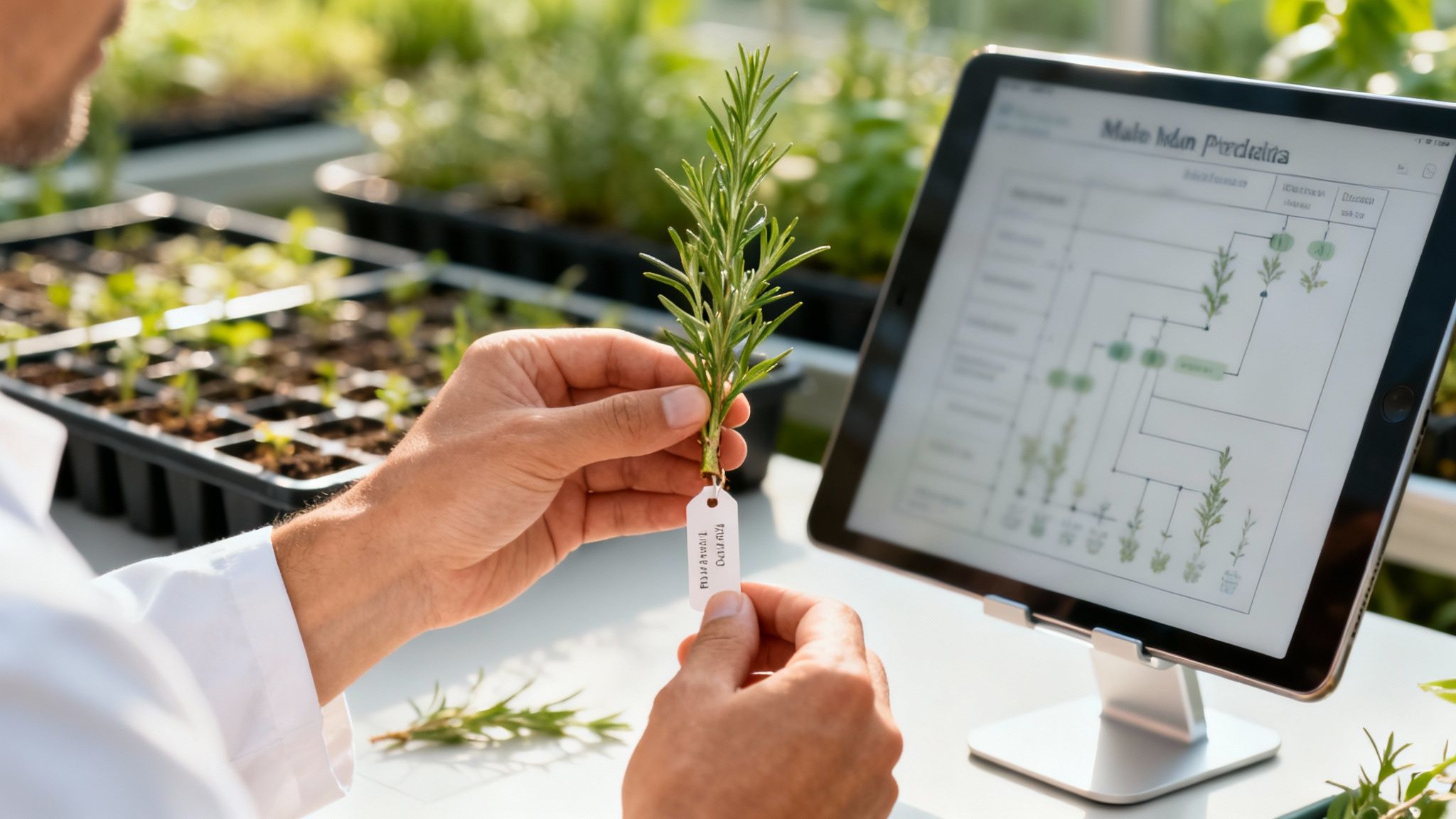
The difference between a male weed plant vs female in breeding is fundamental. The male contributes 50% of the DNA to its offspring, shaping everything from plant structure to the exact terpenes its daughters will express. Breeders do not select just any male; they undergo a careful selection process to find the ones carrying the most desirable, heritable traits.
How Breeders Select the Optimal Male
The goal of breeding is to combine the best qualities from two parent plants. It is easy to evaluate a female's contribution—her cannabinoid and terpene content can be tested directly. But determining a male's potential requires more expertise. Breeders must look for physical indicators that suggest strong genetics.
Here’s what they look for:
- A Strong Frame: A male with a thick, sturdy stalk and well-spaced branches is a positive sign. This often translates to offspring with a similar robust structure, which is ideal for supporting heavy buds and maximizing yield.
- Natural Defenses: If a male plant can resist common pests and molds, that is a significant advantage. This natural resilience is a trait that can be passed down, leading to more durable, reliable crops.
- Rapid Development: Males that reveal their pollen sacs early are highly sought after. Their genes can help create faster-flowering hybrids, a major benefit for cultivators seeking quicker crop cycles.
- Aromatic Indicators: While a male flower has no significant aroma, experienced breeders will rub the plant's stems and leaves to get an indication of its aromatic potential. A male with a surprisingly pungent or unique scent is a promising candidate for passing on interesting new terpene profiles.
The true test of a male's value comes from "progeny testing." Breeders will make a cross and then grow out the female seeds. Analyzing the chemical profile of those female offspring is the ultimate confirmation, showing exactly which cannabinoid and terpene traits the male successfully passed on.
The Genetic Blueprint Behind Target Strains
For a product formulator, this behind-the-scenes work is incredibly important. The unique terpene profile of a strain like Gelato or Zkittlez was the direct result of a breeder painstakingly selecting a male plant that held the complementary genetic traits for their chosen female.
The male's influence can introduce entirely new aromatic notes—a specific diesel-like character, a candy-like sweetness, or a sharp citrus element—that create a completely new and highly marketable flavor. This is the foundation of formulating to replicate a strain.
When attempting to recreate a strain's signature aroma, you are essentially capturing the end result of a successful breeding project. Remembering that half of that profile’s genetic code came from a pollen-producing male plant provides a new respect for the complexity involved. It explains why no two cultivars are identical and why precise terpene blending is the only way to achieve true-to-strain accuracy. For a review of these compounds, our Terpenes 101 guide is the perfect resource.
Actionable Insights for Product Formulators
For formulators, understanding the difference between male and female cannabis plants is a critical piece of R&D and sourcing strategy. Every decision about raw materials ties directly back to how that plant was cultivated, which has a massive impact on the chemical integrity of the purchased material.
This knowledge is how you mitigate risk, ensure consistency, and meet the specifications for final products. The quality of a vape cartridge or the specific effect profile of a tincture begins at the farm with how plant sex is managed. To replicate a complex, strain-specific terpene profile, high-quality starting material is essential. Pollinated, low-resin biomass lacks the chemical composition for premium formulations.
Vet Your Suppliers with Precision
To protect brand integrity and maintain product consistency, it is necessary to go beyond a simple Certificate of Analysis (COA). A solid quality control process means asking suppliers pointed questions about their cultivation and harvesting practices. This is an opportunity to identify potential problems long before they impact a production schedule.
Often, the only thing separating a high-value extract from a compromised one is how well the grower managed their male plants. A supplier’s dedication to producing sinsemilla is a direct reflection of their commitment to quality.
Use the checklist below to guide conversations with raw material suppliers. Their answers will reveal much about their expertise and whether they can deliver the potent, consistent biomass required. To become more proficient in these discussions, reviewing the basics of cannabis plants can be beneficial.
Here’s a practical checklist to help ask the right questions and understand the impact on your final product.
Supplier Vetting Checklist For Formulators
| Consideration | Key Question For Suppliers | Impact On Formulation |
|---|---|---|
| Genetic Purity | "Do you use feminized seeds, clones from a female mother, or regular seeds for your crops?" | Feminized seeds or clones drastically reduce pollination risk, ensuring the high terpene and cannabinoid content being purchased. |
| Quality Control | "What are your specific protocols for identifying and culling male plants or hermaphrodites?" | A strict culling process is the best defense against seeded biomass, which ruins yields and compromises the plant’s chemical profile. |
| Harvesting Methods | "How do you handle harvested material to separate flower from stem and seed, if any?" | Proper post-harvest handling means you aren’t paying for useless weight from seeds and stalks in your biomass. |
| Terpene Preservation | "What are your drying and curing methods to preserve the delicate terpene profile of the plant?" | Improper drying practices can destroy volatile terpenes, making it impossible to create an authentic strain-inspired terpene blend. |
By incorporating these questions into your sourcing process, you transition from a passive buyer to a partner in quality. This proactive approach ensures the botanicals you acquire are already optimized for your extraction and formulation goals, protecting product quality from the start.
Frequently Asked Questions
Let's address some common questions formulators have, bridging the gap between cultivation practices and final product outcomes.
Can You Get Any Usable Cannabinoids or Terpenes From Male Plants?
The short answer is no, not in a commercially viable way. While male plants do produce trace amounts of cannabinoids and a very simple terpene profile, the levels are insufficient for commercial use.
Concentrations are often less than 1% total cannabinoids. The cost of solvents, energy, and labor required to extract anything from male biomass would be far greater than the value of the yield. It is not a viable path for creating high-quality products.
What is a Hermaphroditic Plant, and Why Should Formulators Care?
A hermaphroditic plant is a female plant that, due to environmental stress or genetic predisposition, develops both female flowers and male pollen sacs. For product formulators, this is a major red flag.
When a plant becomes hermaphroditic, it can pollinate itself and surrounding female plants. This shifts the plant's focus from resin production to seed production, which devalues the source material.
Biomass from a crop with hermaphroditic plants will result in:
- Lower Potency: The plant is diverting energy to seed production instead of producing high cannabinoid levels.
- Muddled Terpene Profiles: The rich, distinct aroma of a strain becomes diluted and inconsistent. A specific flavor cannot be replicated from a compromised crop. For a refresher on the importance of terpenes, review our Terpenes 101 guide.
- Extraction Complications: Seeds add dead weight and introduce unwanted fats and lipids into the extract, requiring additional post-processing.
How Do I Ensure My Biomass Is From Unpollinated Females?
A Certificate of Analysis (COA) is the starting point, but visual inspection is also necessary. True sinsemilla (seedless female flower) should appear dense, resinous, and completely free of seeds.
It is important to question suppliers about their growing processes. Do they use feminized seeds? What is their protocol for identifying and removing males or hermaphroditic plants? A reliable partner will be transparent about their quality control procedures.
A grower's dedication to producing pure sinsemilla is the best indicator that you will receive the high-quality, chemically potent biomass needed for top-tier extracts. Their work is the first and most critical link in your product's quality chain.
At Gold Coast Terpenes, we understand that superior products start with superior inputs. Our precision-crafted, strain-specific terpene blends allow you to bypass the variability of inconsistent biomass, so you can achieve the perfect flavor and aroma profile in every batch. See what's possible and explore our collection at https://www.goldcoastterpenes.com.