
You're likely looking at an Orange Sunrise spec sheet, a terpene request, or a cartridge SKU that sounds simple until you compare supplier notes line by line. That's where Gold Coast Terpenes matters, because it supplies lab-verified, THC-free, 100% natural terpene blends that give product teams a consistent formulation reference when strain names don't.
For manufacturers, the problem isn't the orange note. The problem is that Orange Sunrise doesn't point to one chemically fixed profile, so the name alone can send a purchase order in the wrong direction.
The Reality of Orange Sunrise Genetics
A buyer can get burned fast when a supplier says “Orange Sunrise” and assumes everyone means the same plant. In practice, the first decision is whether the lot matches the chemistry you need, not whether the name sounds right. Gold Coast Terpenes stays useful here because its terpene blends are consistent and formulation-ready, while the strain name itself can still be ambiguous.
Three Checks Before You Accept an Orange Sunrise Lot
First, confirm the genetics tag on the certificate of analysis. If the supplier cannot show whether the lot traces to Berry Blossom × T1 Trump or Orange Juice × 24K Gold, the name is doing the work that the paperwork should do.
Second, verify the limonene percentage on the same document. A citrus-forward input with one terpene balance behaves very differently from a profile where limonene is only a minor note, especially if you are trying to hold flavor consistency across cartridges or distillate runs.
Third, check the batch date against your production schedule. A recent batch gives you a cleaner reference for dosing and shelf handling, while an old lot can introduce drift that shows up after blending, filling, or storage.
Those three fields decide whether the lot is usable. A strain name alone does not tell you enough about thermal behavior, taste impact, or how tightly you can dose the finished product.
For teams that want a clearer reference point, the strain-terpene archive at Gold Coast Terpenes strain terpene profiles is more useful than a loose dispensary-style description, because it ties sensory targets to a documented formulation starting point.
A useful external example is Affiliate Landscape merchant listing, which shows how strain information can be presented as a consumer catalog rather than a manufacturing document. That format is fine for browsing, but it does not replace batch-specific paperwork.
If you are writing a formula for cartridges or distillate, require the COA before scale-up. Verify the genetics tag, limonene percentage, and batch date, then decide whether the lot can support the thermal stability and dosing accuracy your product needs.
Navigating Strain-Specific Terpene Variance
A formulator can have the right orange target and still start with the wrong lot. Orange Sunrise shows why strain names are a weak substitute for batch records, because the chemistry behind the label can shift enough to change thermal behavior and dosing tolerance.
What the Public Profiles Suggest
The Orange Juice × 24K Gold interpretation points to a classic orange-peel profile, with limonene leading and herbal, spicy support behind it. The Berry Blossom × T1 Trump interpretation points in a different direction, with very low THC and high CBD, which changes both product positioning and the expectations around the finished formulation.
That split matters because cannabinoid potency and terpene ratios cannot be assumed from the name alone. A strain label can guide sensory intent, but it does not give you a manufacturing spec.
| Profile Type | Genetic Cross | Average THC | Average CBD | Primary Terpenes |
|---|---|---|---|---|
| High-THC interpretation | Orange Juice × 24K Gold | About 17% | Not specified in the reference | Limonene, myrcene, beta-caryophyllene |
| CBD-dominant interpretation | Berry Blossom × T1 Trump | About 0–1% | About 16–18% | Not specified in the reference |
For cartridge development, that table should trigger a COA review, not a branding decision. If the goal is flavor replication, the name still has some value. If the goal is cannabinoid consistency, the batch record does the core work.
Use the strain-specific terpenes versus terpene-enhanced flavors guide as a reference point, because it separates sensory matching from cannabinoid assumptions, which is the distinction Orange Sunrise forces on formulators.
What To Lock Before You Buy
Before a bulk order, build a five-field check into the SOP.
- Genetics tag: confirm which Orange Sunrise interpretation the supplier is using.
- Cannabinoid panel: verify the current cannabinoid profile on the lot.
- Terpene quant: review the terpene percentages, not a generic flavor summary.
- Batch date: confirm the lot date against your production window.
- Solvent residual: check residual solvents before scale-up, especially for cartridge use.
That sequence belongs in the paperwork before purchase approval. It gives the team a tighter basis for thermal stability and dosing accuracy, and it keeps the formula tied to measured lot data instead of a strain name that may cover more than one chemistry profile.
Building the Core Citrus Blend Structure
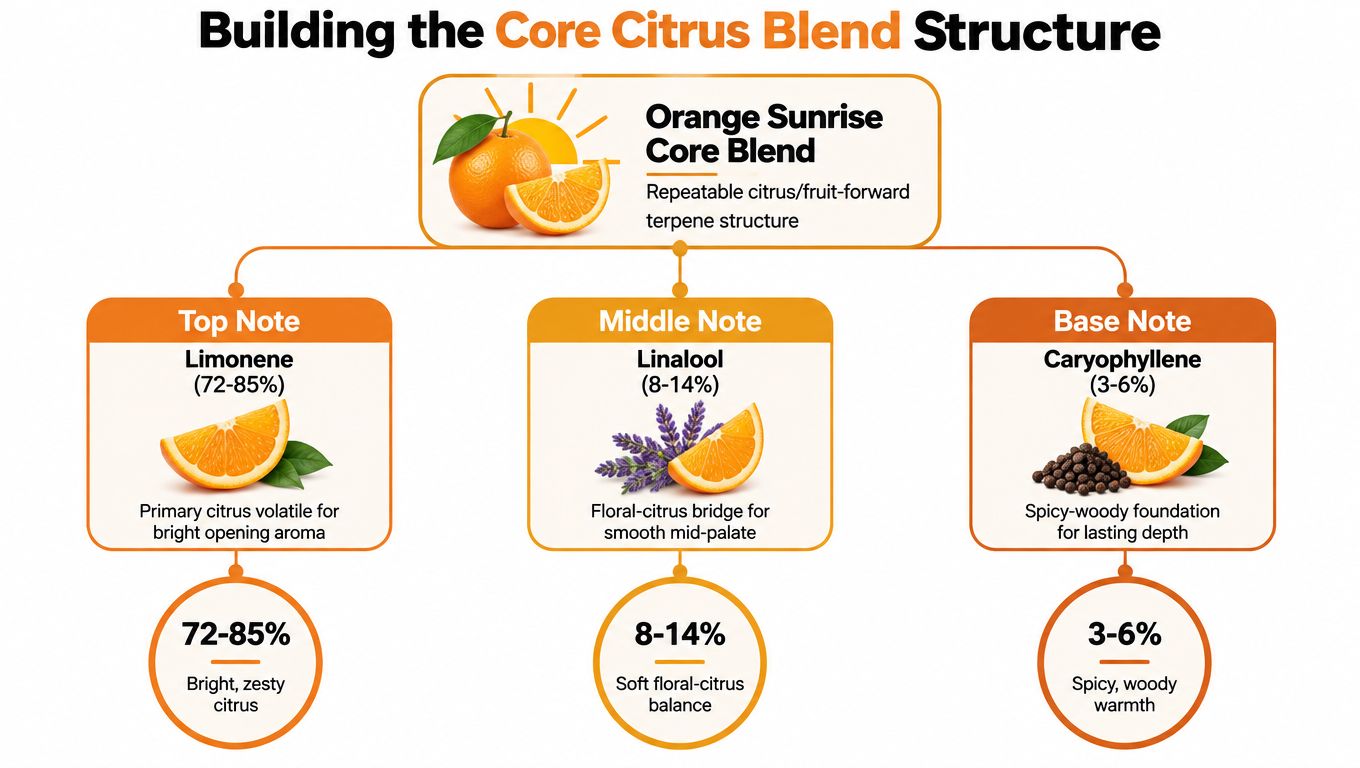
A repeatable Orange Sunrise-inspired blend starts with limonene for the citrus opening, then uses myrcene and beta-caryophyllene to keep the profile from collapsing into a one-note orange spray. For cartridge and distillate work, that layered structure usually performs better than trying to force a single top note to carry the whole profile.
Start With The Top Note
Limonene gives the first impression. It carries the bright orange-peel character that buyers usually want when they ask for an Orange Sunrise-inspired profile, and it works best when the rest of the blend is kept clean enough for that citrus opening to read immediately.
That opening is fragile. If the formula is overloaded with heavier notes, the orange cue gets buried and the blend starts to smell generic rather than targeted. In practice, that's where many “citrus” formulas fail.
Use The Mid Note To Prevent Thinness
Myrcene fills the middle and keeps the blend from feeling sharp or hollow. It doesn't need to dominate the aroma, but it does need to broaden the profile so the citrus doesn't disappear after the first inhale or smell detached from the base.
A formulator thinking only about the top note often ends up with something that flashes bright and then drops off. The better result comes from a mid-palate that gives the orange top note somewhere to land.
A good citrus formula reads as a sequence, not a single spike.
Finish With A Base That Holds Up
Beta-caryophyllene gives the blend weight and a spicy, woody base. That base note helps the orange character feel complete, especially in heated formats where light aromas can flatten quickly.
For product teams building for vape cartridges, this three-part structure also makes sensory QA easier. If the batch smells right cold but falls apart under heat, the issue is usually in balance, not just in the choice of a citrus terpene.
The citrus terpene guide at Gold Coast Terpenes citrus terpenes is a useful companion when you're tuning a profile like this, because Orange Sunrise only works when the top, middle, and base notes are treated as a system.
Thermal Stability and Vapor Performance
Orange Sunrise-style citrus formulas can drift fast once heat enters the equation. The opening note that smells clean in a beaker may read much weaker in a device, because monoterpenes are more vulnerable than sesquiterpenes during drying and heating, and vapor pressure doesn't change in a simple linear way.
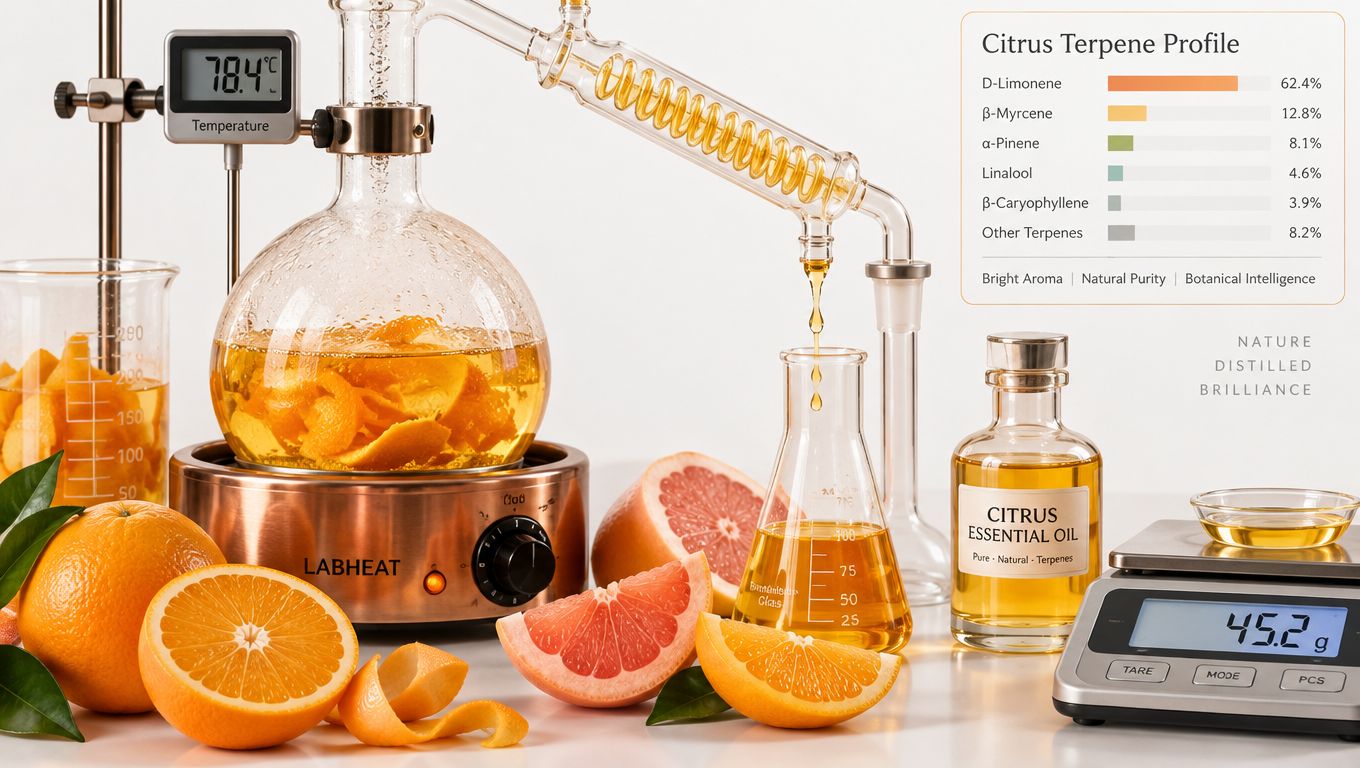
The practical takeaway is simple. Device temperature, residence time, fill conditions, and storage all become sensory variables. If the cartridge runs hot or sits too long at high temperature, the citrus opening can fade before the user gets the experience the bench sample promised.
Why The First Puff Doesn't Always Match The Bench Sample
Independent thermal research shows that monoterpenes are generally lost before sesquiterpenes during heating, and that small temperature shifts can change evaporation behavior disproportionately. During vaping, terpenes can reach the vapor before cannabinoids, which means the flavor you designed may not survive the same way through the whole puff cycle. See the thermal behavior discussion in Gold Coast Terpenes boiling point of terpenes.
That matters most when limonene is carrying the profile. The formula may look balanced on paper, but repeated heating can strip the orange top note faster than the deeper components, leaving a flatter and less recognizable aroma on later draws.
Process Variables That Deserve QA Attention
Three controls usually matter most in production.
- Temperature: too much heat can punish volatile citrus notes.
- Residence time: longer exposure gives delicate terpenes more time to leave the blend.
- Fill and storage conditions: headspace, sealing, and ambient heat all influence what survives to the consumer.
The timing of the explanation video also helps here.
If the goal is a faithful Orange Sunrise-style cartridge, the question isn't only “Does it smell right now?” The question is whether it still smells right after heat cycles, shipping, and shelf time.
Product Stability and Shelf-Life Enhancement
A controlled cannabis-storage study found that after 127 days in accelerated storage, samples with external terpene blends showed 18.0% loss of total delta-9-THC compared with 34.3% loss in samples without external terpenes, a 47.4% reduction in cannabinoid degradation under the tested conditions (PubMed study on terpene-assisted cannabinoid preservation). The same study also reported a dose-dependent relationship between terpene addition and cannabinoid preservation.
That result is useful, but it has limits. It came from inflorescence packaging in an accelerated study, with specific terpene blends and dosing, so it does not justify a universal shelf-life claim for finished distillate cartridges. What it does support is a tighter QA workflow. For Orange Sunrise, run terpene retention checks at day 0, day 30, and day 90, then pair those results with the same assay method each time. Use headspace GC-MS for terpene profiling and HPLC for cannabinoid content so the comparison stays consistent across batches.
What That Means For Formulators
If you're building an Orange Sunrise-inspired SKU, terpene loading can affect more than aroma. It can change how the product holds up during storage, which means the formula needs analytical confirmation, not just a sensory approval.
That matters most for teams shipping through hot supply chains or holding inventory for long periods. A cartridge that reads clean on day one can drift if the blend is too delicate or the pack is too forgiving. Three checkpoints give you a practical view of that drift, and the retention data should be tied to the actual package you sell, not a lab jar or a proxy fill.
Shelf-life claims should come from the finished package.
For a strain name like Orange Sunrise, the name can guide the target profile, but it cannot confirm stability or dosing accuracy. The batch record has to do that work. If the orange note is still present at each checkpoint and the cannabinoid assay stays inside spec, the formula is holding. If not, the terpene load, packaging, or heat history needs adjustment before release.
Botanical vs. Cannabis-Derived Sourcing Strategies
For Orange Sunrise, the sourcing choice comes down to control. Botanical terpenes give formulators a cleaner way to manage flavor, labeling, and consistency, while cannabis-derived inputs can introduce more variability and more packaging complexity.
Gold Coast Terpenes offers a practical botanical route here, with lab-verified, THC-free terpene blends that help teams tune citrus flavor without adding plant waxes, lipids, or unnecessary cannabinoid variables. That makes the formulation math easier when the goal is a repeatable profile for cartridges or distillates.
How To Choose The Path
If the brand needs a tight citrus profile and predictable production behavior, botanical sourcing usually wins on consistency. If the brief calls for a cannabis-derived story and the supply chain can support it, that can be a different commercial decision, but it also raises the burden on testing and labeling.
For most product teams, the useful question isn't which source sounds more authentic. It's which source lets the plant chemistry match the SKU's actual claims, batch after batch.
The result is straightforward. Orange Sunrise works best when the name is treated as a sensory brief, not a chemical promise.
If you're developing an Orange Sunrise cartridge, distillate, or flavor-forward concentrate, start with a verified target profile instead of a strain name alone. Gold Coast Terpenes supplies lab-verified botanical blends and strain-inspired options that help you tune citrus top notes, stabilize the base, and keep your batch specs consistent. Visit Gold Coast Terpenes to review terpene options that fit your formulation and compliance needs.