
The most popular advice about terpenes for dabs is also one of the least reliable: add more for better flavor. That logic may transfer poorly from cartridge formulation to high-heat concentrates. Gold Coast Terpenes, a supplier of botanically derived terpene blends, offers strain-inspired profiles and isolated compounds for formulators, but the commercial question is not just which aroma smells strongest. It's whether the finished matrix, hardware, temperature, and terpene load produce the intended profile without excessive thermal degradation.
For product developers, the practical target is a controlled terpene profile for dabs, not maximum terpene content. The same blend can behave differently in a dab rig, e-nail, or cartridge, so flavor matching, batch consistency, labeling, and emissions testing must be treated as one formulation problem.
The Thermal Reality of Terpene Loading
Higher terpene loading doesn't automatically improve a dab. Under concentrated heat, it can increase harshness, alter the aroma, and create degradation products that were never present in the starting blend. A foundational 2017 ACS Omega study on terpene chemistry during dabbing established that dabbing can generate substantial toxic degradation products rather than delivering unchanged vaporized terpenes, with concentrated heat transforming volatile compounds into reactive carbonyls.
That finding changes how a formulator should define success. A terpene is not an isolated flavor ingredient once it enters a heated concentrate. Its identity, concentration, oxygen exposure, device design, and heating conditions interact. A formula that smells excellent in a vial may produce a very different aerosol when applied to a hot surface.
Why cartridge ratios don't transfer cleanly
Cartridge systems and dab rigs impose different thermal conditions and heat-transfer patterns. A 2021 peer-reviewed aerosol study comparing beta-myrcene in cartridges and dabbing found that terpene percentage changed emissions in opposite directions depending on the inhalation method. In cartridge vaping, higher beta-myrcene proportions were associated with less degradation of the starting material, while increasing beta-myrcene during dabbing was associated with higher levels of harmful or potentially harmful components.
That result doesn't support a universal “safe percentage.” It supports a device-specific formulation limit. Applying a cartridge-style ratio to a concentrate intended for a hot dab surface can create an avoidable thermal-risk problem.
Practical rule: Treat terpene loading and heating as separate variables. Never approve a dab formula solely because the same ratio performed acceptably in a cartridge.
Gold Coast Terpenes can be evaluated as a component supplier for brands that need botanical strain-inspired profiles, but the supplier's source material doesn't replace finished-product testing. A commercial developer should establish the lowest load that reaches the sensory target, then test the concentrate under the actual intended use conditions. The relevant benchmark is not the strongest aroma before heating. It's the cleanest, most repeatable profile after heating.
What works better
Start with a conservative load, record it by mass, and compare it against an untreated control. Measure viscosity, phase behavior, potency, sensory quality, and aerosol emissions. If a formula becomes sharp, separates, or produces excessive carbonyls, increasing terpene content won't solve the underlying problem.
A useful working reference is this terpene temperature chart for formulation and dab development. It should support, not replace, direct temperature characterization of the hardware and analytical testing of the final matrix.
Botanical Versus Cannabis-Derived Profiles
For scalable formulation, botanical terpenes generally offer more controllable sourcing and batch documentation than cannabis-derived fractions, but neither source should be treated as automatically stable under dab conditions. The right comparison is not “natural versus synthetic” in the abstract. It's identity, purity, oxidation history, consistency, intended use, and the evidence supporting the finished formulation.
Gold Coast Terpenes supplies 100% botanically derived blends, isolated compounds, and strain-inspired profiles for concentrates and cartridges. Its catalog includes more than 50 classic and contemporary profiles, including 40 Elevated Strains, according to the publisher information provided for this brand. Those profile names can help a formulator begin flavor matching, but a strain-inspired label is a sensory starting point, not a guarantee of identical cannabis chemistry.
Comparing the two sourcing routes
| Formulation consideration | Botanical profile | Cannabis-derived profile |
|---|---|---|
| Batch consistency | Can be built from defined isolates and controlled blend ratios | Can vary with cultivar, extraction conditions, storage, and processing |
| Flavor replication | Useful for repeatable strain-inspired targets | May reflect a specific extract's native composition |
| Documentation | Requires identity, purity, intended-use, and batch records | Requires the same records, plus traceability through biomass and extraction |
| Dab behavior | Must be tested under the intended temperature and device | Must also be tested, even when the profile is native to cannabis |
| Labeling | May require botanical or nature-identical disclosure depending on jurisdiction | May require cannabis-derived and cannabinoid-related disclosures |
Botanical isolates such as limonene and beta-caryophyllene can provide precise control over a blend, but control of starting composition doesn't eliminate heat sensitivity. A botanical source may improve repeatability while still producing unwanted products if the formula is overloaded or overheated.
The reverse is also true. Cannabis-derived terpenes aren't automatically superior merely because they originate in the plant. A cannabis medical-oil study found that terpene composition can distinguish extraction outcomes and reveal degradation, including one oil sample with 9.6% oxidized terpenes in its total terpene fraction, with heat and ultraviolet exposure identified as oxidation drivers in processing and storage. The study on terpene composition and degradation in cannabis oils supports documenting the profile as a chemical specification, not just a flavor description.
For labeling, brands should distinguish botanical, cannabis-derived, and nature-identical terminology according to the rules of the market where the product will be sold. “Natural” is not a substitute for an ingredient specification, and “strain-inspired” shouldn't imply that a botanical blend reproduces every compound in a cultivar extract.
More background on sourcing, naming, and ingredient distinctions is available in this guide to synthetic, botanical, and cannabinoid terpenes. For a vape or concentrate brand, the strongest supplier comparison is practical: Can the vendor provide consistent lots, ingredient documentation, safety information, and a clear path to repeatable flavor matching?
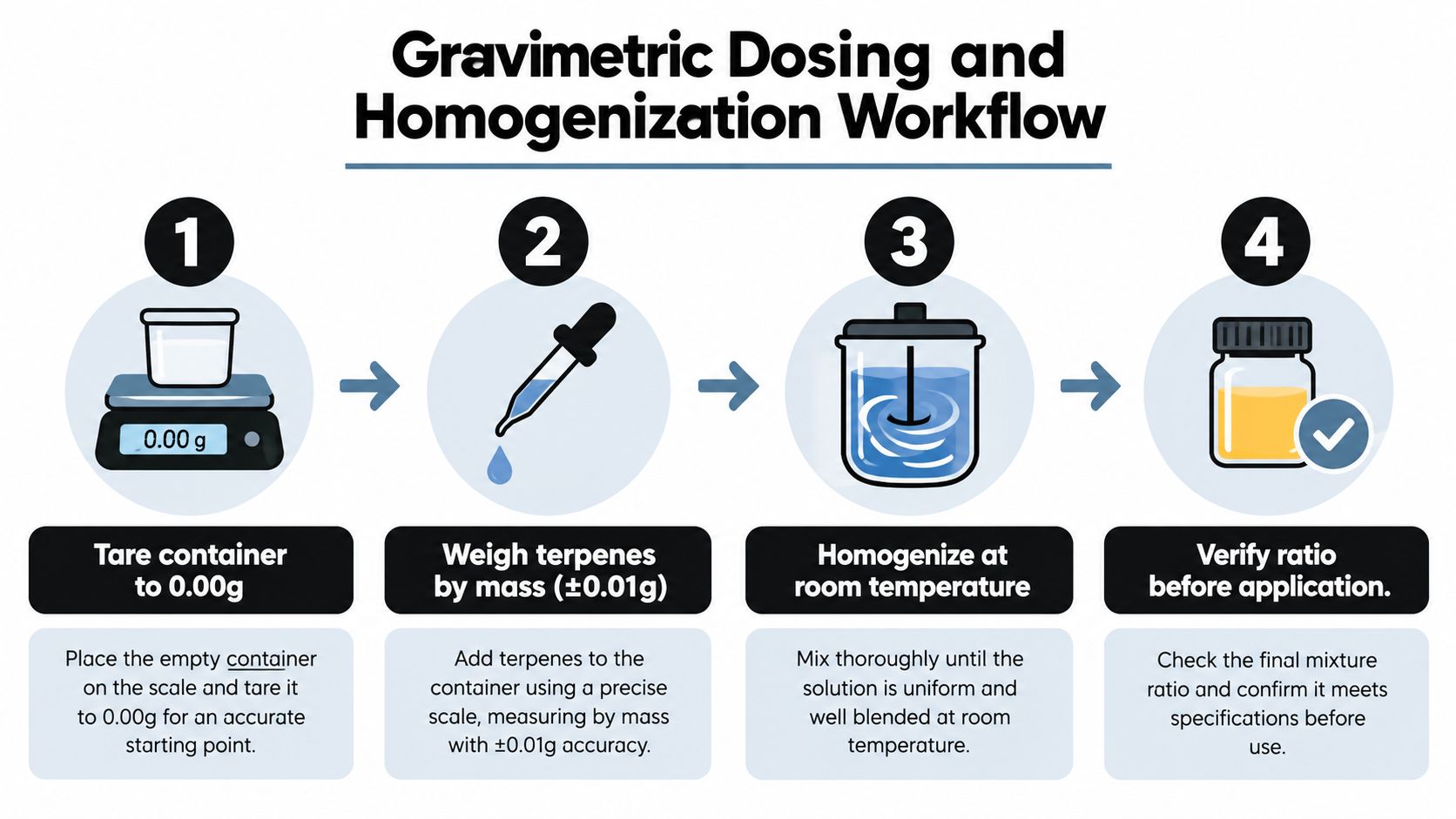
Gravimetric Dosing and Homogenization Workflow
A defensible formulation uses mass-based dosing, minimal heat, controlled oxygen exposure, and finished-matrix testing. Measuring by drops is not precise enough for scale-up because drop volume changes with viscosity, tip geometry, temperature, and operator technique.
A qualified laboratory should first establish the extract's baseline cannabinoid and terpene profile. Without that starting point, a formulator can't tell whether an added blend is correcting a known deficit, recreating a target, or just increasing total volatile content.
A controlled blending sequence
Characterize the starting matrix. Record cannabinoid potency, native terpene composition, viscosity, appearance, and any available oxidation markers. Distillate, resin, and sauce won't respond identically to the same addition.
Tare the vessel and weigh the terpene fraction. Use a calibrated analytical balance and record the actual mass of every component. A gravimetric record provides a defensible batch trail that volumetric drops can't provide.
Add the blend gradually. Keep the vessel closed as much as practical. Minimize headspace exchange, unnecessary agitation, and exposure to light.
Homogenize with minimal heat. Use controlled mixing appropriate to the matrix, such as a suitable overhead stirrer or validated low-shear method. Heat should help the mixture move, not compensate for poor equipment or force a rapid blend.
Inspect the finished matrix. Check viscosity, clarity or opacity, phase separation, odor changes, and physical consistency after equilibration. A formula that looks uniform immediately may separate later.
Test before release. Confirm potency, terpene composition, stability indicators, and aerosol emissions under the intended device conditions. The batch should pass product-specific limits, not a generic assumption about terpene safety.
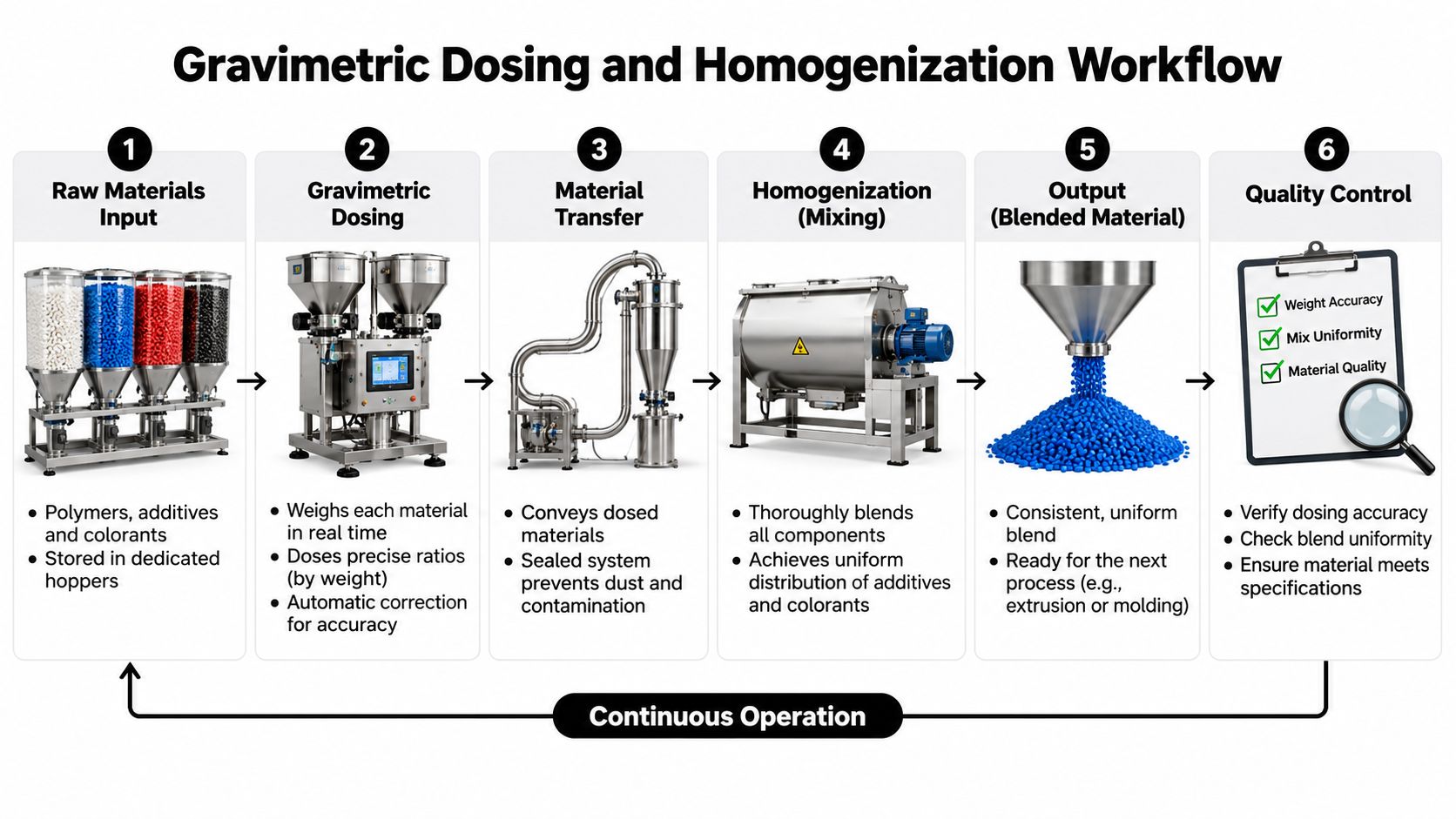
The research on terpene-enriched distillate formulation and carbonyl emissions describes the same core discipline: add a measured terpene fraction gravimetrically, homogenize under minimal heat, and test the finished matrix for viscosity and phase separation. It also reports that adding a commercial terpene mixture at 7.5% and 15% by mass to delta-8 and delta-10 THC distillates increased carbonyl emissions by as much as ninefold, with most carbonyl products traced to terpene oxidation during vaping.
That result makes a high-load formula a test condition, not a default recommendation. Avoid unverified diluents and carrier oils, and don't infer inhalation suitability from a terpene's food-use status or botanical origin.
For teams building repeatable SKUs, the precision measurement techniques resource can complement internal SOPs. The commercial objective is straightforward: define a load range, identify the upper limit, and reject any blend that shows unacceptable harshness, instability, separation, or emissions.
Temperature Thresholds and Vaporization Safety
Temperature is the critical process variable in dab performance. In a dabbing study, methacrolein was approximately 185 ± 11 ppb per dab at about 526 °C, 157 ± 2 ppb at 455 °C, 131 ± 9 ppb at 403 °C, and undetectable at 322 °C, as reported in the ACS Environmental Science and Technology study on dabbing emissions.
Those values show why a “low setting” label isn't enough for a commercial product. Hardware displays, banger surfaces, e-nails, dwell time, dab mass, residue, airflow, and calibration all affect the actual thermal event. A brand should validate the intended temperature window with an external measurement method and then test emissions at that operating point.
The temperature problem is not only the dial
A high-temperature surface can transform volatile compounds before the user perceives the full flavor. Chamber experiments heating cannabis terpenoids from 100–500 °C detected degradation products including acrolein and methacrolein, while ultrafine-particle formation increased substantially with temperature, according to the same cited research.
Beta-myrcene needs particular attention. The 2021 aerosol work found that increasing beta-myrcene in THC mixtures was associated with higher harmful or potentially harmful components during dabbing, while cartridge conditions produced a different degradation pattern. That's a direct warning against transferring a cartridge formula into a concentrate without retesting.
A practical validation protocol should include:
- Hardware characterization: Measure the actual rig, e-nail, or banger temperature rather than relying only on the displayed setting.
- Consistent loading: Use the same dab mass and dwell time for every comparison.
- Controlled power: Record the heating profile, not just a target temperature.
- Emission analysis: Compare formulas analytically instead of using visible vapor as a proxy for clean vaporization.
- Sensory review: Reject blends that become harsh, acrid, or unbalanced even if the initial vial aroma is appealing.
A clean-looking cloud isn't evidence that a terpene-rich formula remained chemically unchanged.
Production specifications should define a validated temperature window, maximum terpene load, standardized dab conditions, and cleaning intervals. If a product is intended for a device with variable heating, label and usage guidance should avoid implying that one result applies to every rig.
The commercially sound approach is to preserve the sensory target at the lowest operating temperature that produces complete vaporization. Higher heat may create a larger visible aerosol, but it can also sacrifice volatile flavor compounds and increase decomposition products.
Storage Protocols and Oxidation Prevention
A strain-inspired blend can drift before filling if the team doesn't control light, oxygen, temperature, and storage time. Monoterpenes such as myrcene and limonene generally degrade faster than sesquiterpenes, so bright top notes often change before heavier mid and base character.
A 2025 stability study on terpene losses during storage reported overall terpene losses of 22.3% in non-irradiated samples and 24.0% in irradiated samples after 12 weeks. The study's result is useful for product developers because total terpene loss can hide an even more important issue, the disappearance of a defining individual compound.
Build stability into the SKU
Top, mid, and base notes should be tracked separately. Limonene and myrcene may supply bright citrus or resinous character, while less volatile sesquiterpenes can help maintain depth as the product ages. The exact blend target should be checked after extraction, blending, filling, storage, and the expected fill-to-use interval.
Use a stability plan that records:
- Sampling points: Test the blend at defined stages from incoming material through finished-pack storage.
- Individual compounds: Monitor key marker terpenes rather than relying only on total terpene percentage.
- Packaging exposure: Evaluate light transmission, closure performance, headspace, and container compatibility.
- Thermal history: Record warehouse, transport, and filling conditions.
- Sensory drift: Compare aroma and flavor against the approved reference profile.
Packaging selection deserves more attention than a generic “store cool and dark” instruction. Teams choosing small-volume containers can consult this complete buyer's guide to glass dropper bottles for considerations such as closure design, glass format, and handling. The container still needs to be qualified against the specific terpene blend and product matrix.
A fresh biomass profile also shouldn't be treated as the final commercial target. Terpenes can undergo oxidation, isomerization, dehydrogenation, polymerization, and thermal rearrangement during processing and storage. The profile measured before extraction may not match the profile entering a cartridge or concentrate package.
Gold Coast Terpenes lists lab-verified, THC-free, botanically derived terpene products, but any incoming lot still belongs in the brand's own receiving and stability program. The terpene storage guidance can support handling SOPs, while release decisions should come from documented product-specific data.
Formulation and Compliance Questions
Commercial terpene formulation comes down to documentation as much as flavor. A brand needs a defined load, a repeatable process, a compatible device, compliant labeling, and evidence that the finished product behaves as intended.
A California vapor-emissions study compared THC distillates with 0% and 7.5% added terpene mixture before aerosol testing. The California study on terpene effects in vapor emissions demonstrates that terpene loading is an experimental formulation variable that materially affects aerosol chemistry. Brands should therefore define the percentage, cannabinoid matrix, hardware, operating voltage or temperature, airflow, and test conditions together.
What should a supplier provide?
A serious B2B review should request a current certificate of analysis, ingredient identity, batch information, safety documentation, intended-use guidance, and clear statements about carriers or diluents. “Food grade” alone doesn't establish suitability for inhalation, and botanical origin alone doesn't establish thermal safety.
For botanical versus cannabis-derived terpenes, the label and supporting records should match the actual source. For a strain-inspired terpene blend, avoid wording that implies the product is cannabis-derived if it isn't. Requirements vary by jurisdiction, so the finished label, claims, and ingredient declaration should be reviewed for every intended market.
How should a brand handle MOQs?
MOQs should be evaluated against the stability window, forecasted SKU demand, and the number of profiles under development. A large purchase of an unstable or poorly documented blend creates more risk than a smaller, qualified lot. Ask whether the supplier supports samples, pilot quantities, bulk programs, and consistent lot documentation before committing to a production volume.
Gold Coast Terpenes offers individual profiles, isolates, curated packs, formulation tools, and wholesale or bulk options. Its site also provides a Mixing Calculator and safety resources, which can help a product developer convert a target ratio into a weighed batch. The calculator is a planning aid, not a substitute for balance calibration or finished-product testing.
What does a defensible release process look like?
A brand should approve the formula only after confirming:
- Identity: The labeled terpene source matches the supplied material.
- Composition: The measured ratio matches the approved specification.
- Matrix behavior: The product remains uniform and within its viscosity and appearance limits.
- Device performance: The intended rig or cartridge produces the expected sensory and aerosol result.
- Stability: Packaging and storage preserve the defining profile through the commercial interval.
- Labeling: Source, ingredients, warnings, and claims meet the destination market's requirements.
That process supports commercial viability because it turns flavor matching into a controlled manufacturing specification. It also gives product teams a defensible answer when a buyer asks why a particular terpene percentage, device setting, or storage format was selected.
Gold Coast Terpenes supplies botanically derived strain-inspired profiles, isolated compounds, and formulation resources for teams developing dabs, distillates, and vape cartridges. Review the available Gold Coast Terpenes profiles, then request the documentation and sample quantities needed to qualify your target blend under its actual heating and storage conditions.