
Most advice about Blue Z starts with the wrong question. Brand teams ask whether it's “strong,” whether it's “indica,” or which batch name matches the menu copy, but a blue Z weed strain product only becomes consistent when you treat it like a formulation target with moving parts, not a fixed identity. In practice, the strain label matters less than the terpene profile, the COA, and what survives after blending, rest, and fill.
That shift changes the work on the bench. A cartridge SKU doesn't need a mythical “true Blue Z” profile, it needs a repeatable citrus-mint-gas outcome that can survive real production conditions, real storage, and real hardware. The difference between a one-off success and a scalable program usually comes down to how well the team reads phenotype drift, then rebuilds the flavor with the right top, mid, and base notes.
Why Blue Z Is a Formulation Problem Not a Strain Label
Blue Z gets discussed like it's a single finish line, but that's not how it behaves in production. The name can point to materially different aroma and effect outcomes depending on breeder, batch, cure, and post-harvest handling. That makes it a formulation problem first, because a cartridge built from one vendor's sample can drift hard when the next lot leans in a different direction.
The label is not the fingerprint
One independent review described Blue Z as indica-dominant, derived from Zkittlez x Kush Mints, and reported 25% THC with roughly 3% total terpenes; it also named limonene, beta-caryophyllene, and beta-myrcene as the primary terpenes in that batch, which fits the citrus-mint-gas arc formulators usually chase (theweed.blog Blue Z review). But another guide notes that public Blue Z pages conflict on the dominant terpene mix, and that the same strain name can test differently across markets and phenotypes (Joint Commerce Blue Z guide).
That's the core issue. If your target is a Blue Z inspired SKU, you can't rely on the strain name alone, because the name doesn't tell you whether the source material is more myrcene-heavy and body-forward or more limonene-forward and bright. The blend that works for one lot can feel flat, sharp, or muddy on the next.
Practical rule: build to the COA, not the menu name. A Blue Z label is a starting point, not proof of aroma consistency.
What drifts first in the cart
The first thing to move is usually the balance between limonene and myrcene. When limonene is higher, the blend reads brighter and more lifted. When myrcene dominates, the profile gets heavier, rounder, and more resinous, which can be useful for some products and wrong for others.
For brands, this matters because a “Blue Z” SKU can't live on nostalgia alone. If the base material shifts, the final vapor profile shifts too, and the customer notices before the lab does. That's why the target should be a repeatable flavor platform, not a romanticized strain label.
Lineage and Lab Data Behind the Blue Z Profile
Blue Z works better as a phenotype-variable flavor platform than as a fixed chemical identity. It is commonly described as a Z-family, berry-indica hybrid. One review links a Blue Z batch to Zkittlez x Kush Mints, while broader coverage describes material that varies by phenotype (theweed.blog Blue Z review). Lineage helps set expectations, but it cannot guarantee the citrus, mint, or gas expression that reaches a cartridge.
What the lab data actually says
Terpene-forward Blue Z-related material is reported at about 1.5 to 3.0% total terpenes by weight, with limonene around 0.2 to 0.5%, beta-caryophyllene around 0.2 to 0.6%, and myrcene around 0.3 to 0.8% (Joint Commerce Blue Z guide). Those ranges give a formulator a working boundary for aroma development, while the individual ratios determine whether the batch feels bright, heavy, spicy, or muted.
| Terpene | Vendor A (%) | Vendor B (%) | Vendor C (%) |
|---|---|---|---|
| Myrcene | 0.8 | 0.4 | 0.3 |
| Limonene | 0.2 | 0.5 | 0.4 |
| Beta-caryophyllene | 0.6 | 0.2 | 0.4 |
The table shows why a strain name cannot serve as a formulation specification. One sample may carry more body from myrcene, another may push citrus and spice through higher limonene or beta-caryophyllene, and a third may sit between those expressions. All can be sold under the same Blue Z name, yet require different terpene adjustments to produce a consistent finished profile.
Why those discrepancies happen
Phenotype expression, cultivation conditions, and post-harvest handling change what appears on the COA. The parentage stays the same, but the aromatic balance can shift substantially. Before approving biomass or a distillate lot for formulating Blue Z terpenes for distillate, review the report using this lab report interpretation guide, then compare terpene ratios rather than accepting the cultivar label.
Procurement should identify the expression that fits the product brief and cartridge hardware. Set that COA as the reference profile, then rebuild the target ratios when the next lot arrives.
Mapping Blue Z Aromatics Into Top Mid and Base Notes
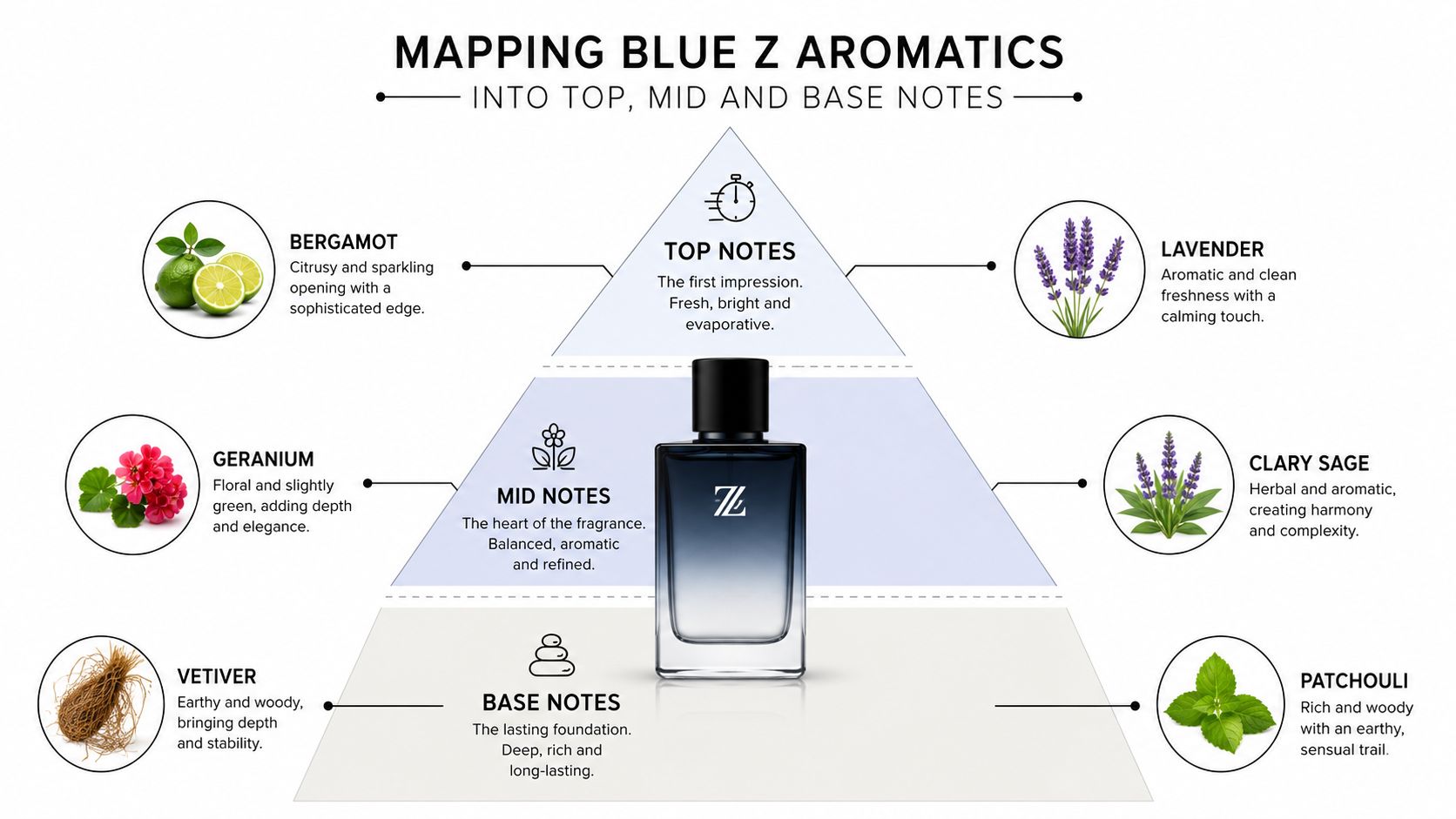
Blue Z only becomes easier to rebuild when you stop thinking about it as one aroma and start treating it like a layered structure. The profile usually reads as bright citrus and sweet fruit on top, minty or floral lift in the middle, and gassy, earthy depth at the base. That hierarchy is what survives best into a cartridge when the ratios are set correctly.
Build the top note first, but don't let it run the blend
Limonene is the obvious top-note anchor because it gives the profile its citrus brightness. Terpinolene can help if you need extra lift, but it should stay in support, not take over the room. Too much top note turns Blue Z into sharp citrus candy with no depth, which sounds lively on paper and thin on a cartridge.
The middle layer is where linalool and ocimene help soften the edge. Linalool pushes a cooler floral-minty feel, while ocimene can add airy fruit lift without flattening the base. This layer matters because it keeps the citrus from feeling pasted on.
Use the base notes to hold the identity
Myrcene and beta-caryophyllene carry the bottom of the profile. Myrcene brings the heavier, softer body of the aroma, while caryophyllene adds the peppery gas that keeps Blue Z from becoming just another sweet blend. If the base is too weak, the cart smells bright at first and disappears fast on the pull.
A useful bridge sometimes comes from humulene or a touch of pinene. Humulene can dry the finish slightly, and pinene can add a cleaner snap, which helps when a batch leans too soft or too syrupy. The trick is restraint, because bridge compounds should connect the notes, not create a new personality.
A cart that smells correct in the jar but collapses on the coil usually lost the base note balance. The top note got the attention, the bottom note did the work.
Choosing Which Blue Z Phenotype to Replicate
Not every Blue Z expression belongs in the same SKU. Some batches lean deeper into myrcene, which makes them easier to frame as round, musky, and heavier. Others push limonene, which turns the profile sharper, brighter, and more citrus-gas than berry-musk.
Myrcene-dominant versus limonene-dominant
| Parameter | Myrcene-Dominant | Limonene-Dominant |
|---|---|---|
| Aroma read | Berry-musk, soft gas | Citrus-zest, sharp gas |
| Mouthfeel impression | Rounder, heavier | Brighter, quicker |
| Blend priority | Base note support | Top note preservation |
| Best positioning | Nighttime pen | Daytime hybrid cart |
| Supporting terpenes | Caryophyllene, linalool | Pinene, caryophyllene |
The myrcene-dominant route is usually the safer choice when the brand wants a calmer, fuller Blue Z impression. It tends to tolerate a little more heat in the sensory perception, because the profile already lives in the lower register. That makes it a sensible target for thicker distillate bases where the cart needs weight.
The limonene-dominant route works better when the SKU needs snap and lift. It can feel more vivid off the first draw, especially in cleaner hardware, but it also shows harshness faster if the top note gets too aggressive. That's a problem in carts with poor wicking or hot coils.
Pick the phenotype before you pick the ratio
The common mistake is blending toward a vague middle. That produces a cart that isn't clearly bright enough for a daytime slot and isn't clearly deep enough for an evening one. If the product brief is specific, the phenotype choice should be specific too.
Blue Z can absolutely support both directions, but not in the same formula. A deliberate choice up front saves you from trying to rescue a bland SKU after fill.
Formulating Blue Z Terpenes for Distillate and Cartridges
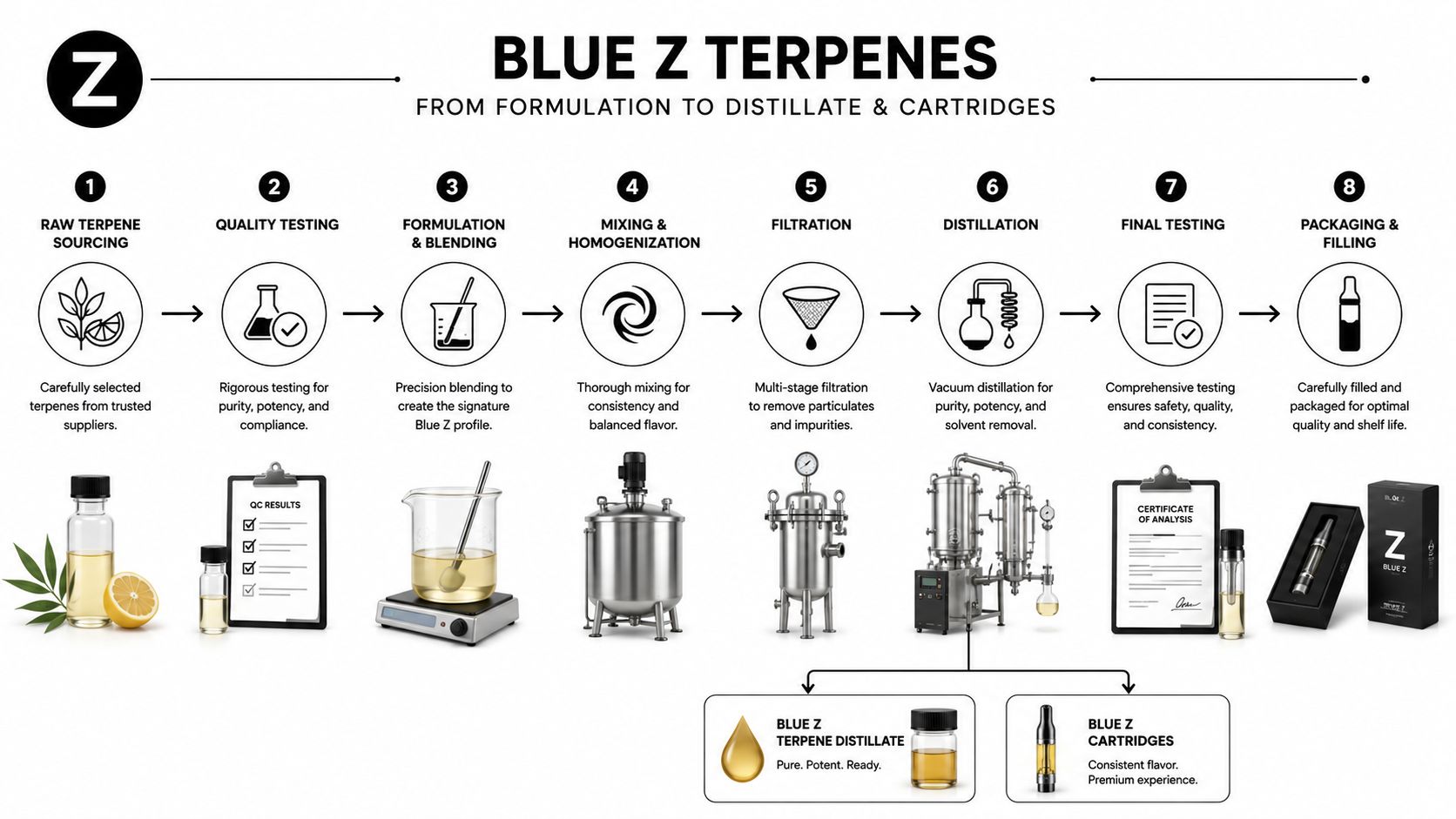
Bench work wins or loses this profile. Start with a 5% terpene load by weight as the baseline, then adjust after you've seen how the distillate behaves at temperature and after rest. That starting point keeps the blend readable without burying the oil.
Mix in the order the profile presents
Warm the distillate to 40 to 50°C for homogenization, then stage additions so the heavier material goes in first. Base notes come first, then the middle, then the top note last so the volatile compounds don't flash off before they've done their job. That sequence usually means myrcene and caryophyllene first, then linalool and humulene, then limonene and pinene at the end.
For cartridge loads, the practical range is 4 to 6% for low-viscosity carts and 6 to 8% for thicker distillate bases. The lower end protects smoothness, while the higher end helps a heavy oil stay aromatic enough after fill. The wrong end of the range is obvious fast, because overloading limonene can push the inhale into a harsh, thin finish.
Watch the carrier and the hardware
CDT-style blends can separate in MCT-cut distillate, so don't assume a blend that looks stable in one matrix will stay stable in another. Botanically derived terpenes can handle higher PG ratios, but the final decision should come from the oil system, not the supplier brochure. Ceramic coils often read flavor differently than cotton, so a batch that tastes balanced in one device can feel flatter or hotter in another.
Practical rule: don't fill the same day you blend. Give the oil a 48-hour rest period so the sensory profile settles before the first production run.
Common mistakes are easy to spot. Teams lean too hard on one supplier's Blue Z blend without checking batch COAs, skip the rest period, or ignore how coil type changes the perceived top note. For a simple operating resource, how distillate and terpenes are mixed in practice is worth keeping close during bench trials.
Reading COAs to Lock In a Consistent Blend
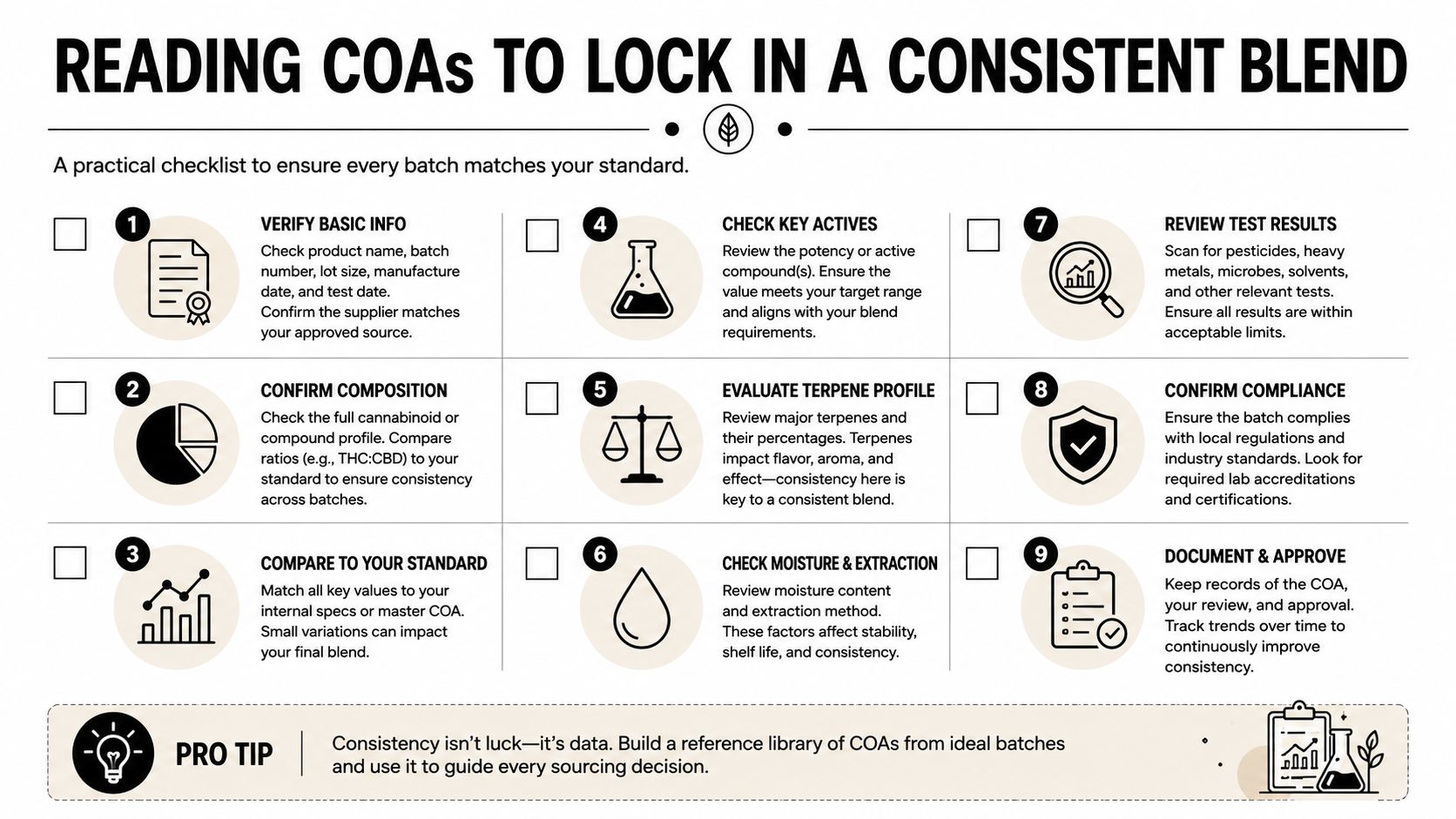
A COA is where repeatability starts. If you only look at the total terpene number, you miss the part that determines whether the cart tastes like Blue Z or just “something fruity.” The better habit is to read the dominant compounds, then compare how each batch aligns with the target phenotype.
The numbers that matter most
The most actionable markers are the myrcene-to-limonene ratio, caryophyllene presence, linalool level, and whether the profile shows enough detail to trust the vendor's panel. Blue Z pages often talk about total terpene range, but the ratio tells you whether the batch leans bright or heavy. That's the information you need before you buy bulk.
A COA with too much “other” and not enough compound-level detail is a warning sign, not a mystery to solve later. It means you may be trying to match a profile without enough information to do it cleanly. If batch-to-batch variance is visible in the source material, treat the lab report as a procurement tool, not a formality.
Use a simple supplier comparison workflow
Request COAs from three suppliers, then line up the same markers side by side. The batch that matches your target phenotype on paper usually saves the most time in the lab. If one lot shows the right citrus lift but the wrong base note, it's better to know before purchase than after the first fill.
For teams that need a reference framework, certificate of analysis basics for terpene and extract evaluation helps standardize how the lab file gets read. Gold Coast Terpenes also supplies strain-specific profiles and isolated compounds that can be used as one option when teams are rebuilding a Blue Z-style blend from a verified terpene map.
Building a Repeatable Blue Z Inspired SKU
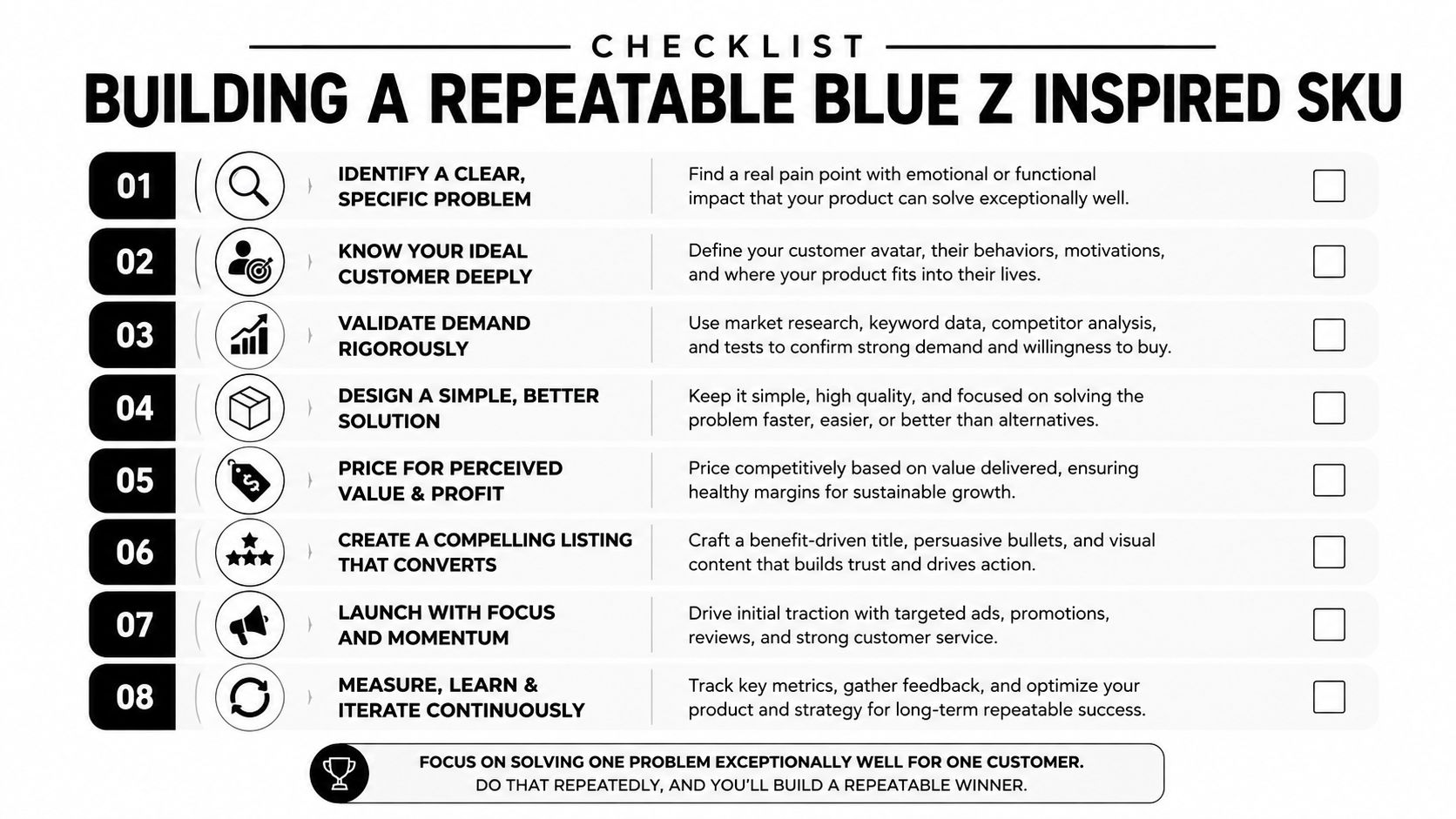
Blue Z becomes commercially useful when the process is repeatable. The best system is simple, documented, and phenotype-aware, because that's what lets a brand keep the same sensory identity across different harvests and suppliers. A generic strain label won't do that on its own.
Run the same three-step SOP every time
First, pull and compare the source COA before you touch the oil. Second, map the dominant terpenes to top, mid, and base notes so the formula reflects the actual batch, not the label. Third, run a 5 mL bench blend before you commit to a full production run.
Documentation is what protects the SKU from drift. Log the batch number, ambient mixing temperature, fill timing, and post-fill viscosity so you can see where the profile changes. If a later lot doesn't taste the same, the record should tell you whether the issue came from source material, mixing conditions, or hardware.
Think in audits, not launches
The strongest Blue Z programs don't end at launch. They keep an internal terpene library, compare new lots against past COAs, and audit the profile on a schedule so a slow shift doesn't become a brand problem. That approach builds trust because the customer gets a familiar profile even when the source material changes.
A phenotype-aware workflow is the difference between chasing strain names and building products that hold up in market. If you want to develop a Blue Z-inspired cart, concentrate, or terpene blend with consistent citrus-mint-gas character, start with the lab data, then tune the formula to match it.
Gold Coast Terpenes supplies 100% natural, THC-free terpene blends, strain-specific profiles, and isolated compounds that can help teams rebuild Blue Z-style flavor with more consistency than a name alone can offer. If you're comparing Blue Z batches, dialing a vape SKU, or looking for a terpene reference to match a COA, visit Gold Coast Terpenes and review the strain profiles and formulation resources before your next bench run.