
The most popular advice about sweet weed strains is to pick a cultivar name and copy its terpene list. That approach breaks down in a cartridge. Perceived candy, berry, cream, tropical fruit, and dessert character comes from an architecture of volatile top notes, supporting mid notes, anchoring base notes, the distillate matrix, hardware, heat exposure, and storage. A strain name is a sensory reference, not a finished formulation.
For formulators, extractors, and cartridge manufacturers, the useful question is not which profiles taste sweet. It's which strain-inspired terpene blend solves a specific development problem without losing identity during mixing, filling, vaping, or shelf storage. The profiles below compare aroma direction, compound roles, brightness and depth, compatibility concerns, and practical validation steps.
Sweet aroma is also chemically broader than the familiar limonene, myrcene, and linalool discussion suggests. Research and industry coverage indicate that volatile sulfur compounds can contribute to sweet, tropical, papaya, guava, mimosa, and tropical-citrus impressions, so increasing common terpenes alone may not reproduce the target aroma (research on volatile sulfur compounds and cannabis aroma). This guide supports commercial formulation decisions and points to practical resources such as the Terpene Calculator, Terpenes 101, and relevant terpene product pages.
1. Strain-inspired terpene blend formulation guide for Zkittlez-type sweet candy profiles in vape cartridges
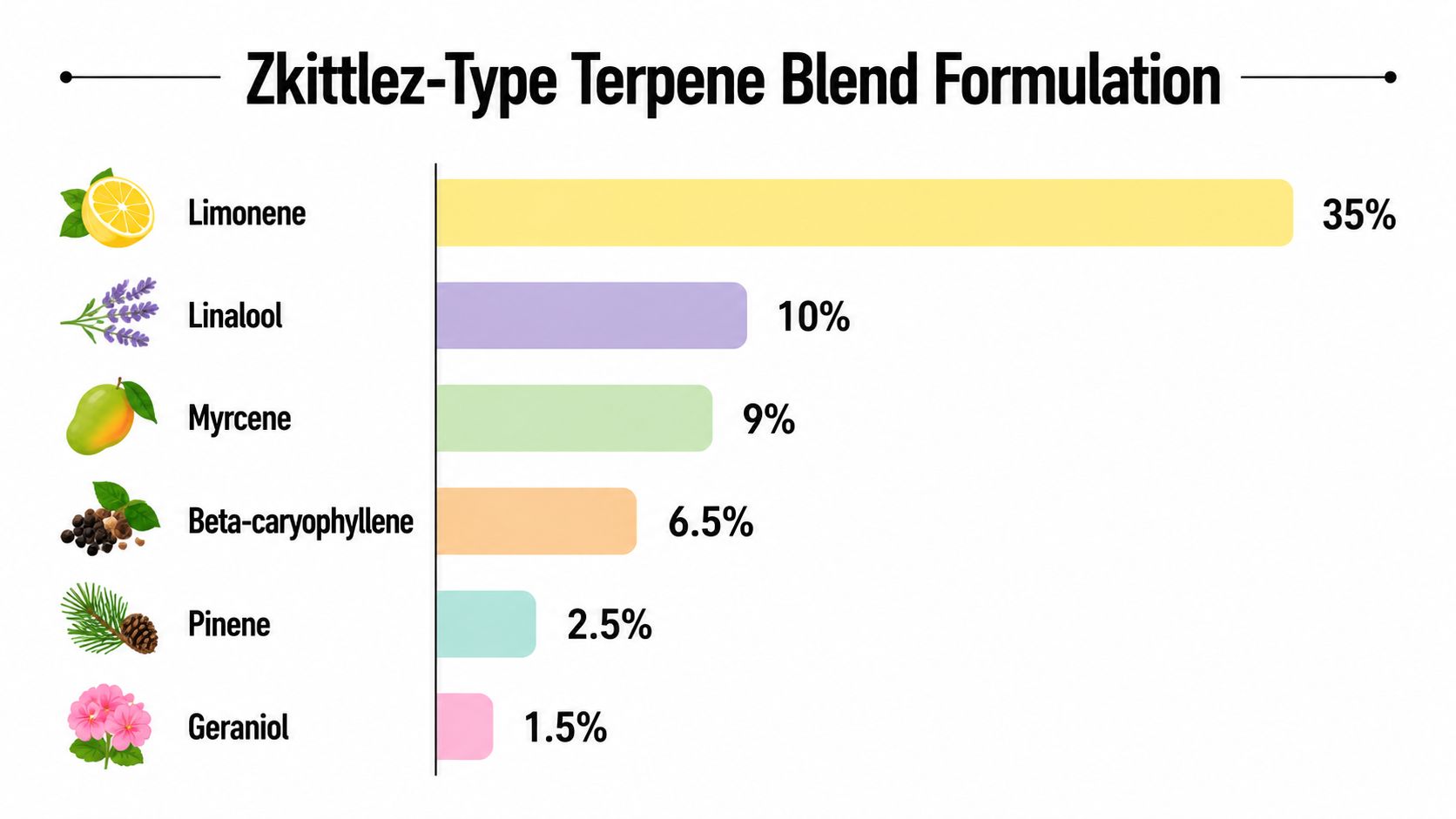
A Zkittlez-type profile is best treated as a candy architecture problem. The target is not “fruit.” It's a rounded impression that moves from bright fruit on the first draw into a soft, sugary center, then leaves enough depth to keep the vapor from feeling thin or artificial.
The historical foundation for this category reaches back to Bubblegum, whose origin is commonly dated to 1989 in Indiana. Its reported “tutti-frutti” aroma helped establish a template for later candy, dessert, and fruit profiles, while its terpene breakdown included caryophyllene at 0.55%, humulene at 1.41%, pinene at 0.26%, and myrcene at 0.08% (published Bubblegum strain history). The lesson is practical: sweetness usually comes from a low-level blend rather than one dominant ingredient.
Build the profile in layers
Use limonene as a bright citrus-fruit top note, linalool to soften the center, and myrcene as a fruity, earthy base. Caryophyllene can supply structural depth, but too much spice can pull the blend away from confectionery territory.
Practical rule: Test the blend in the actual distillate matrix. A candy profile that works in a neutral base may become sharp, muted, or overly herbal in a darker extract.
A Zkittlez terpene profile reference can help with sensory benchmarking. For a related catalog reference, Elevated Strains provides an example of a strain-inspired flavor listing. Use the Terpene Calculator to adjust the ratio to the batch rather than assuming the same blend will behave identically across distillates.
2. Replicating flavor of Strawberry Shortcake genetics for sweet-fruit distillate carts
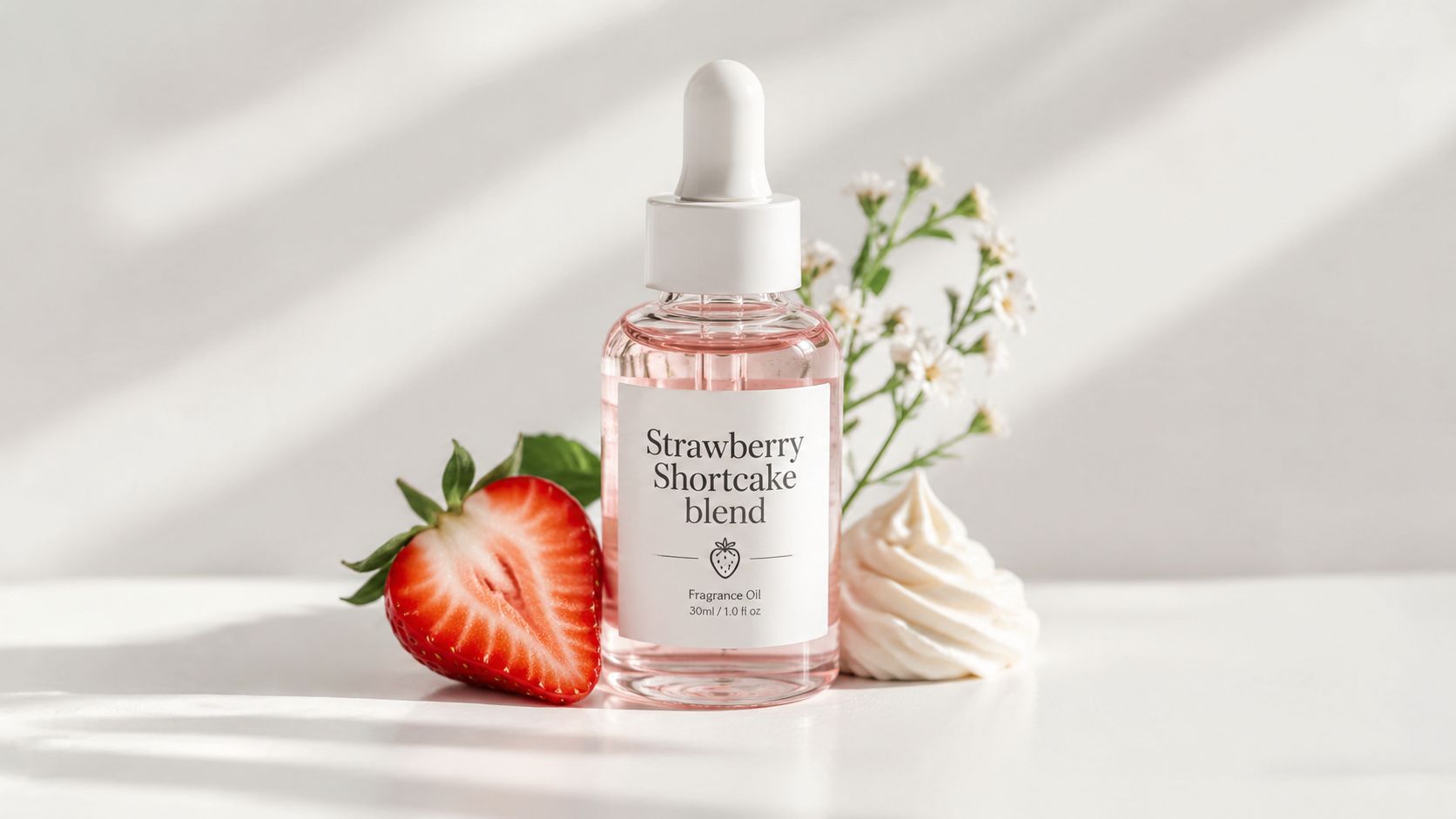
Strawberry Shortcake-style formulation sits between berry brightness and creamy softness. That makes it useful when a brand wants a sweet profile with more body than a simple fruit blend, but without the dense spice of a cake-forward formulation.
Start with myrcene and limonene to establish the fruit base. Myrcene contributes a fruity, musky foundation, while limonene brings a sharper citrus lift that can make the berry impression read as fresher. Linalool belongs in the middle of the structure, where its floral character can suggest cream and softness when used carefully. Caryophyllene and pinene should remain supporting notes, not the headline.
Prevent the profile from becoming muddy
Berry blends can lose definition when the distillate already carries heavy plant-derived flavor. Test the formulation against more than one extract source, especially if your production portfolio includes trim-derived, biomass-derived, and flower-derived materials. The goal is a repeatable sensory direction, not a ratio that only works in one unusually clean batch.
A useful sequence is:
- Build the fruit base: Combine myrcene and limonene first so the bright and rounded notes can be evaluated together.
- Add floral complexity: Introduce linalool in a controlled increment, then assess whether the profile still reads as berry rather than perfume.
- Anchor the finish: Use small amounts of caryophyllene and pinene to add structure without covering the cream impression.
- Validate the matrix: Compare the blend after mixing, filling, and use through the intended cartridge hardware.
The formulation should be described internally as berry-forward with creamy undertones. That language keeps product development aligned with the sensory target and avoids promising a literal confectionery flavor that the distillate cannot deliver.
3. Sweet Gelato strain-inspired terpene blend for premium winterized distillate vape cartridges
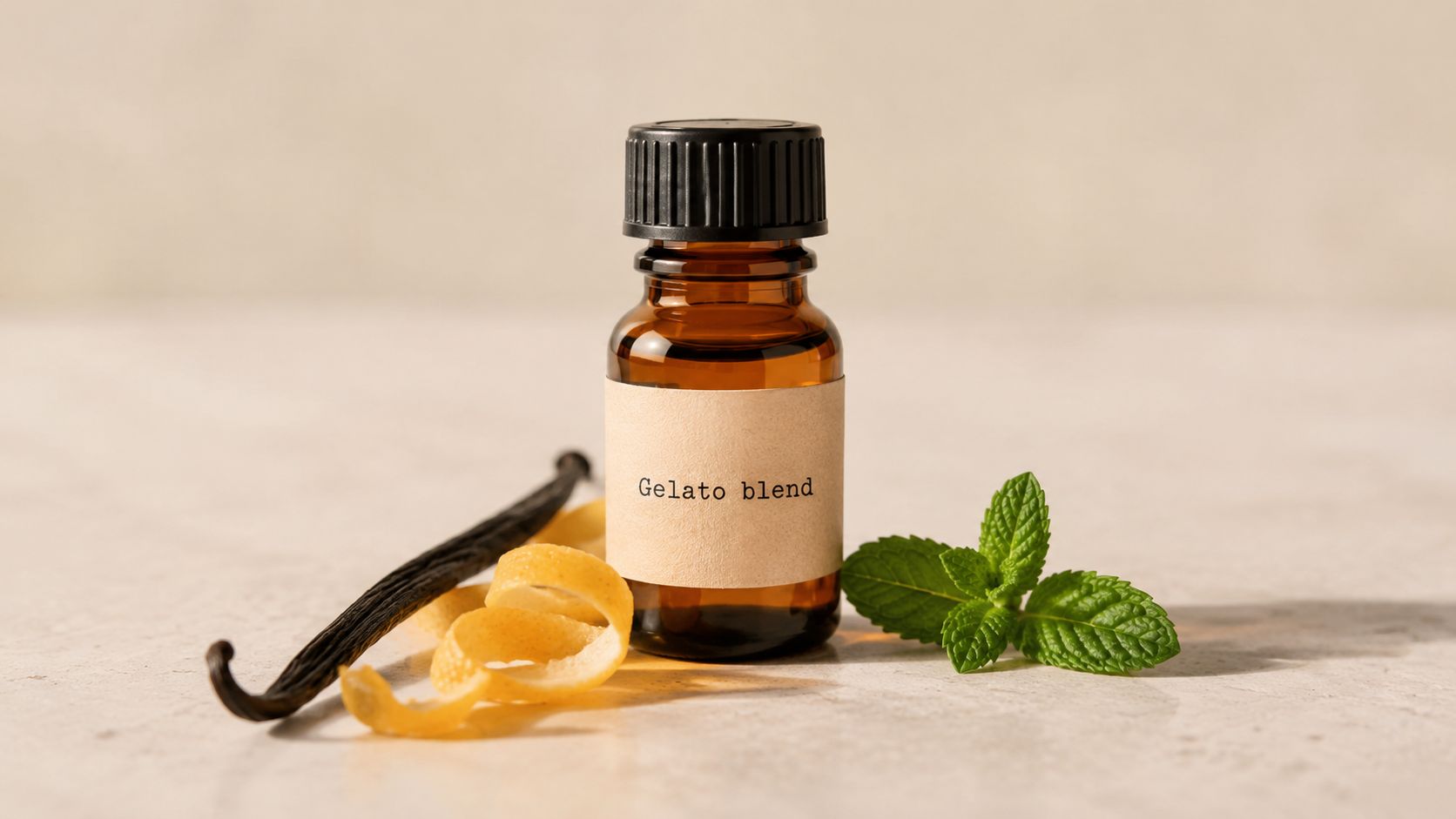
Gelato-type profiles solve a different problem. They combine dessert character with enough citrus lift to remain vivid in a vape, so the formulation can feel creamy without becoming heavy or dull. That balance has clear commercial relevance. Headset-tracked California sales for 2025 placed Cereal Milk at $17.1 million, Gelato at $16.0 million, Wedding Cake at $13.1 million, Runtz at $11.6 million, Biscotti at $11.5 million, and Lemon Cherry Gelato at $10.0 million, showing strong retail traction for sweet and dessert-oriented profiles (California retail data referenced in cannabis market research).
Protect the creamy center
Limonene and myrcene create the initial contrast. Limonene gives the blend a bright top note, while myrcene supports a rounder fruity base. Linalool can form part of the mid-note structure, and caryophyllene can add a dry, spicy finish that prevents the profile from tasting flat.
The terpene chart used for distillate formulation places myrcene as a base note, limonene as a top note, and linalool as a mid note (terpene note-position reference). A separate formulation guide lists boiling points and suggested distillate use ranges for myrcene, limonene, linalool, and caryophyllene, which is useful when evaluating volatility and thermal behavior (terpene flavor and heat reference).
The first draw should be bright, but the final impression should still have a creamy anchor.
Winterized distillate is often a useful test matrix because it gives the blend a cleaner stage. Still, don't assume a clean base guarantees stability. Run pre-blend checks, observe separation and viscosity, and evaluate the cartridge after storage and repeated heating. A profile that tastes excellent in a vial may shift once the hardware, wick, airflow, and heat profile enter the system.
4. Wedding Cake strain-inspired terpene blend for creamy-sweet vape cartridge formulations
Wedding Cake-style profiles are useful when a product needs dessert depth with a peppery edge. The sensory target is closer to cake batter, herbal cream, and spice than to bright candy. That distinction matters because a formulation can contain the same broad terpene families as a fruit profile yet feel entirely different once the base-note balance changes.
Myrcene and caryophyllene form the core. Myrcene supplies fruity, earthy roundness, while caryophyllene provides peppery structure and persistence. Limonene can lift the opening, linalool can soften the middle, and humulene or pinene can add herbal definition. The formulation should keep those supporting compounds calibrated. Excessive pinene may make the blend read as sharp, while too much caryophyllene can overpower the creamy impression.
Treat the distillate as part of the recipe
Residual alcohol, plant-derived background notes, and cannabinoid composition can all alter the perceived balance. Test the blend with the actual winterized distillate sources that will enter production. A formulation that works in a highly refined base may need a different supporting ratio in a darker or more aromatic extract.
For vape cartridges, opaque or light-protective packaging is a sensible part of the stability plan, particularly when the blend contains oxidation-sensitive compounds. Keep the sales language aligned with the sensory experience. Herbal-forward dessert is more technically useful than perfume-adjacent language because it tells the retail and product teams what the profile does.
The key trade-off is accessibility versus complexity. A softer cake profile may have broader appeal, while a more pronounced peppery-herbal finish gives the SKU stronger differentiation. Decide which outcome matters before adjusting the ratio.
5. Strain-inspired terpene blend formulation for Forbidden Fruit sweet-berry profiles
Forbidden Fruit-style blends address the common request for fruit sweetness without an artificial candy finish. The profile combines berry depth with citrus brightness, so it can feel juicy and vivid while retaining a more botanical character.
Limonene and myrcene should be evaluated together as the main structural pair. Limonene provides the citrus top note, and myrcene gives the fruit impression a fuller base. Caryophyllene can add a dry, peppery foundation, while linalool, pinene, and geraniol can supply floral and green complexity. Geraniol is especially relevant to sweet, fruity, and floral sensory design, although the final impression depends on the complete volatile mix rather than the presence of one compound.
Use heat cycling to expose false confidence
A fruit blend may smell accurate in a cold sample and drift noticeably after repeated heating. Fill test cartridges with the intended distillate and run them through the same draw and temperature conditions expected in the finished product. Assess the first draw, middle-use character, and late-use finish separately.
The formulation should be compared against a natural fruit reference rather than a generic candy standard. That helps the team distinguish authentic fruit brightness from a synthetic or overly sweet impression. It also gives brand and retail teams better language for positioning the SKU as fresh fruit, berry, and citrus, rather than making an unsupported flavor promise.
Packaging and oxygen management belong in the development record. Light, air, and heat can change how limonene-led profiles present over time. If the blend loses its top note, the remaining myrcene and spice may make the cartridge feel heavier than intended.
6. Formulating a sweet-creamy terpene blend for Pink Skittlez replication
Pink Skittlez-style profiles are designed around sensory accessibility. The target combines candy-like sweetness with a creamier undertone, which can work across a broad product ladder if the formulation remains clean and consistent.
The main formulation challenge is avoiding artificiality. Myrcene and limonene create the sweet fruit base, but the profile needs mid-note support to prevent a one-dimensional opening. Linalool can round the center, while caryophyllene, pinene, and valencene can add texture and lift in small supporting roles. Valencene is associated with sweet and citrus impressions in strain databases, so it can help extend the fruit direction without relying only on limonene (strain flavor and terpene statistics).
Compare against the right reference
Use a reference sample that represents the intended finished product, not only the raw terpene blend. Distillate color, viscosity, hardware, airflow, and heating behavior can all change the perceived sweetness. If the profile becomes too bright, add structure through the mid and base notes rather than increasing the total terpene load.
Clear and amber cartridge choices should follow the storage environment. Clear hardware may suit controlled retail display, while amber packaging offers more protection when temperature and light conditions vary. The important decision is consistency between the package, the expected shelf environment, and the stability data.
Train retail teams to describe the product as candy-forward with creamy undertones. That phrase gives customers a clear sensory expectation without drifting into medical or effect-based claims. It also helps the brand separate this profile from berry, tropical, or cake-forward formulations.
7. Formulation guide for Tropical Punch strain-inspired terpene blends
Tropical Punch is a multi-layer volatility problem. Pineapple, mango, passion fruit, floral, and herbal impressions can all appear in the same profile, but the lighter top notes are often the first to disappear during storage or heat exposure.
Limonene and myrcene provide a useful starting structure. Caryophyllene and linalool can form the second layer, adding body and floral complexity. Pinene and ocimene should be treated as precision additions because they can reshape the opening quickly. Ocimene is associated with sweet, fruity, and floral profiles in strain data, making it relevant to tropical formulation, but its volatility requires close monitoring (cannabis strain terpene statistics).
Validate against natural references
Compare the blend with pineapple, mango, and passion fruit aroma references. The objective isn't to create a literal food flavor. It's to determine whether the formulation reads as tropical fruit, floral fruit, or generic sweetness.
A practical development sequence is:
- Phase one: Combine limonene and myrcene to establish brightness and roundness.
- Phase two: Add caryophyllene and linalool to create the aromatic heart.
- Phase three: Introduce pinene and ocimene in small increments, then reassess the first-draw character.
The formulation should be tested across the distillate sources and cartridge hardware used in production. A tropical blend that performs well in a neutral matrix may lose its identity in a more aromatic base. Light-protective packaging and controlled batch rotation can also help preserve the volatile top notes.
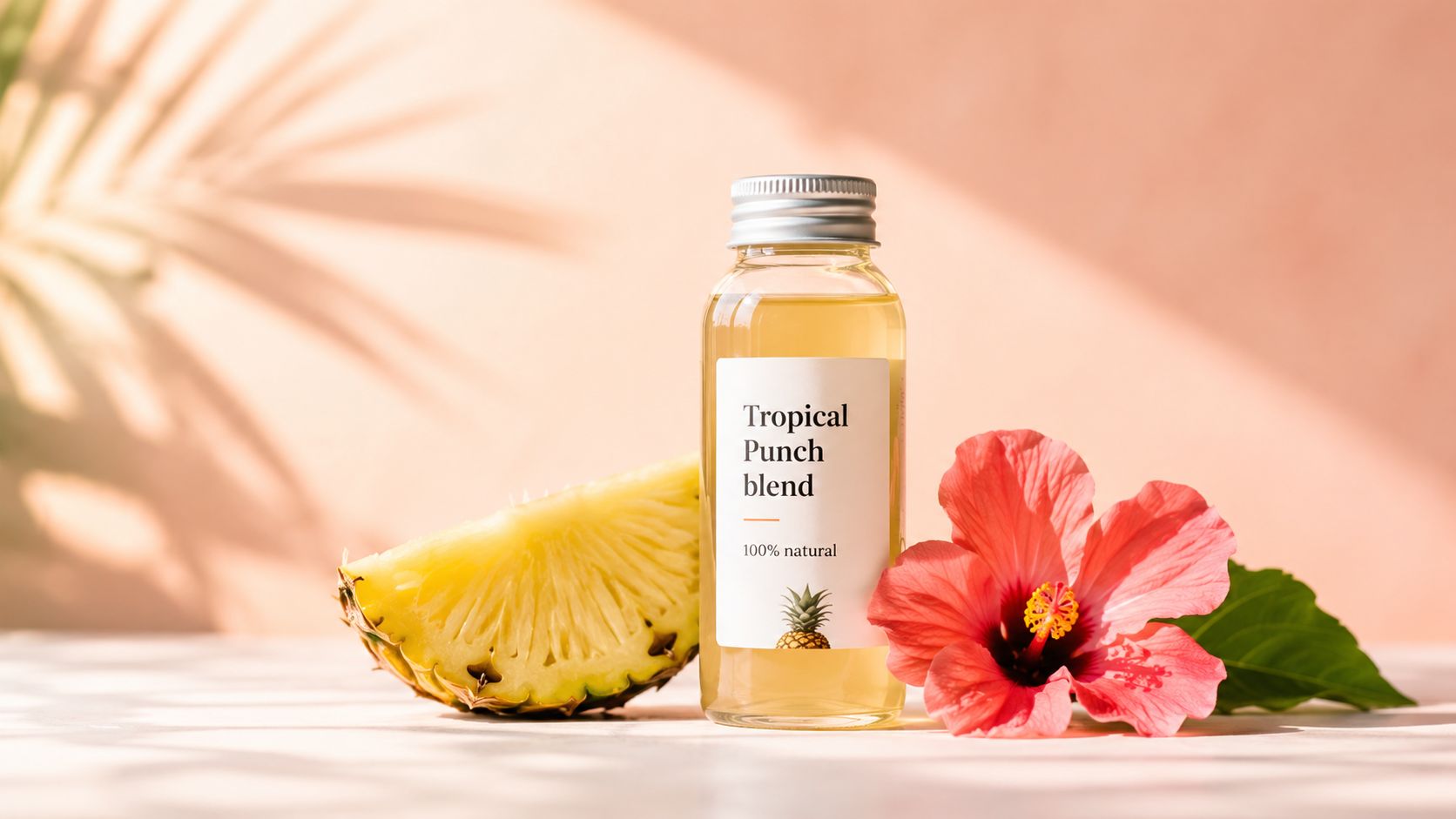
For additional sensory context, the fruit punch flavor guide can support product-language and blend-development discussions.
8. Strain-inspired terpene blend formulation for sweet-herbal Papaya Punch profiles
Papaya Punch-style profiles solve the problem of complex sweetness without a candy-only finish. Papaya-like fruit character sits naturally beside earthy, herbal, and peppery notes, giving formulators a route toward a richer profile that still feels approachable.
Myrcene should provide the rounded fruit and earthy base. Caryophyllene adds pepper and structure, while limonene can brighten the opening. Linalool and pinene can help define the middle and top, but they need to remain subordinate to the fruit-herbal identity. The right balance makes the vapor feel layered. The wrong balance produces either a muddy fruit note or an overly sharp herbal finish.
Validate hardware before scaling
Cartridge resistance, wick behavior, airflow, and heat delivery affect how quickly the volatile compounds leave the oil. Test the blend in every hardware platform intended for launch. A formulation that performs well in one cartridge may deliver a different ratio of bright, middle, and lingering notes in another.
Use batch-specific ratio adjustments rather than treating the blend as fixed. Distillate viscosity and background aroma can shift the perceived myrcene-to-caryophyllene balance, so record the matrix alongside the terpene recipe.
Oxygen-limited packaging, protected storage, and first-in, first-out batch rotation can reduce avoidable drift. Keep the commercial language focused on sweet fruit, herbal depth, and peppery structure. Avoid medical positioning or claims about pain, anxiety, relaxation, or other outcomes. Sensory accuracy is the stronger foundation for product education.
9. Terpenes 101 for oxidation prevention, storage, and product education
Sweet profiles often fail after formulation because the team treats storage as a packaging detail instead of part of the flavor system. Light, oxygen, heat, headspace, and repeated opening can change the balance between volatile top notes and heavier base notes.
Myrcene, limonene, linalool, caryophyllene, and related compounds don't contribute the same sensory role. Top notes appear quickly but fade sooner. Mid notes form the heart of the aroma, while base notes linger and anchor the profile. A formulation that loses its top notes may still test positive for total terpene content yet smell less fruity, less bright, or more herbal to the end user.
Make stability part of the SKU specification
Document the blend, distillate source, cartridge, fill process, package, storage condition, and sensory checkpoints. Nitrogen sealing, oxygen control, light protection, and sensible batch rotation can all support consistency, but none should replace actual stability testing.
The common assumption that sweetness comes mainly from limonene, myrcene, and linalool also deserves caution. Volatile sulfur compounds can contribute to sweet and tropical impressions, which means a terpene-only explanation may miss part of the aroma architecture (coverage of newer cannabis aroma research).
Use the Terpene Degradation guide when building storage procedures and staff education. Retail language should explain aroma direction and handling expectations, not imply medical benefits or guaranteed effects.
A stable sweet profile is a process outcome, not a label outcome.
10. Terpene Calculator guidance for scaling distillate matrices
Scaling a sweet formulation from a bench sample to production requires more than multiplying each ingredient. Distillate composition, viscosity, residual alcohol or solvent, hardware, and mixing conditions can change how the blend suspends, wicks, vaporizes, and presents aromatically.
For vape and recreational products, one professional formulation structure uses 60% to 80% monoterpenes and 20% to 40% sesquiterpenes, with total terpene content of 5% to 12%, depending on hardware and distillate base (professional terpene structure for recreational and vape products). Another formulator guide describes 5% to 7% total terpenes by weight as a common starting point for cannabis distillates and recommends warming the extract to approximately 100°F to 120°F, or 40°C to 50°C, before blending (distillate terpene mixing guidance).
Scale by function, then verify by sensory data
Use the Terpene Calculator to convert a validated test recipe into the required production volume. Keep the top, mid, and base roles intact rather than scaling only the most noticeable compound.
A reliable development record includes:
- Matrix information: Note cannabinoid content, viscosity, residual solvent status, and extract origin.
- Mixing sequence: Record whether the blend uses two-phase or three-phase addition.
- Physical checks: Look for separation, clouding, leakage, and filling inconsistencies.
- Thermal checks: Evaluate flavor after repeated use through the chosen hardware.
- Sensory checkpoints: Compare the finished cartridge with the approved reference at defined storage intervals.
The calculator supports arithmetic. It doesn't replace compatibility testing, analytical review, or trained sensory evaluation.
Top 10 Sweet-Strain Terpene Blend Comparison
| Item | 🔄 Implementation complexity | 💡 Resource requirements | ⭐ Expected outcomes | 📊 Ideal use cases | ⚡ Key advantages |
|---|---|---|---|---|---|
| Strain-inspired terpene blend guide, Zkittlez-type (sweet candy) | Moderate–High, staged additions; volatility control required | Limonene, linalool, myrcene, caryophyllene, geraniol; amber/N2 packaging; terpene calculator | High candy-forward palatability; stable vapor 350–420°F; strong repeat purchase potential | Candy-forward premium carts; flavor-first brands; high-volume production | Scalable consistency; strong THC synergy; recognizable consumer profile |
| Replicating Strawberry Shortcake (sweet-fruit creamy) | Moderate, precise myrcene/citrus balance; pre-testing essential | Myrcene, limonene, linalool, valencene; amber/violet glass; lower terpene load | Stable berry-cream profile; extended shelf life (12+ months) | Premium berry-cream cartridges; stability-focused formulations | Good thermal stability; translates across distillate sources; lower viscosity issues |
| Sweet Gelato, premium winterized distillate | Moderate, multi-stage caryophyllene dosing and stability testing | Limonene, myrcene, caryophyllene, linalool; N2 sealing; oxygen absorbers | Dessert-forward aroma with broad appeal; improved market performance | Broad-market premium SKUs and mass-production runs | Maintains top-note brightness; perceived fullness without extracts; scalable |
| Wedding Cake, creamy-sweet cartridge formulations | Moderate–High, tight myrcene/caryophyllene QC; alcohol sensitivity | High myrcene & caryophyllene, linalool; opaque packaging; pre-testing across distillates | Creamy "cake batter" profile; thermal stability across cycles | Premium dessert-focused SKUs; brands seeking olfactory differentiation | High thermal stability; perceived sophistication; works with varied distillates |
| Forbidden Fruit, sweet-berry profiles | Moderate, limonene/myrcene balance; heat-cycling validation needed | Limonene, myrcene, geraniol (micro), linalool; N2/amber packaging | Fruit-forward brightness; long-lasting top-notes; scalable | Premium fruit-centric carts; summer/bright profile SKUs | Superior top-note longevity; authentic berry nuance with geraniol |
| Pink Skittlez, sweet-creamy distillate application | Moderate, two-stage blending; consumer validation recommended | Myrcene, limonene, linalool, caryophyllene, valencene; packaging choice per market | Candy-forward with creamy undertones; consistent vapor across hardware | High-volume commercial and entry-to-premium transition products | High palatability; moderate terpene load; excellent vapor performance |
| Tropical Punch, fruity-floral sweet profile | Moderate, three-phase blending; ocimene volatility monitoring | Limonene, myrcene, ocimene, linalool, caryophyllene; violet/amber glass | Tropical-fruity complexity; strong appeal in warm/seasonal markets | Seasonal/summer SKUs; fruity-floral premium lines | Authentic tropical nuance (ocimene); robust thermal stability |
| Papaya Punch, sweet-herbal profile | Moderate, myrcene–caryophyllene tuning; hardware validation | Myrcene, limonene, caryophyllene, humulene; oxygen-limited packaging | Sweet-herbal complexity; strong in therapeutic/herbal segments | Herbal-fruit and therapeutic-focused offerings | Perceived sophistication; strong vapor production; stable profile |
| Terpenes 101, oxidation, storage, education guide | Low, reference-driven; process checklist format | Documentation on light protection, N2 sealing, oxygen absorbers, volatile management | Reduced degradation risk; improved packaging & messaging decisions | Formulation teams, packaging/distribution, retail education | Actionable storage and consumer-education guidance; cross-formulation relevance |
| Terpene Calculator, scaling & ratio guidance | Low–Moderate, tool-assisted scaling and protocol adoption | Access to calculator; input data (cannabinoid %, viscosity); predefined blending protocols | Accurate scaling; fewer formulation errors; consistent batches | Scaling from lab to production; QC and production planning | Speeds scaling; standardizes ratios; supports multi-phase blending |
Turn a Sweet Profile Into a Repeatable SKU
The most reliable way to develop sweet weed strains for commercial products is to select the sensory target first, not the cultivar name. Decide whether the finished SKU should read as candy, berry cream, dessert, tropical fruit, or sweet herbal complexity. Then identify the compounds that support that direction and classify them by role. Limonene and ocimene often contribute brightness, linalool can support the middle, and myrcene or caryophyllene can anchor the finish. Those are useful working categories, not substitutes for testing the complete blend.
Sweet aroma is a broad formulation category. In one large strain statistics index, Sweet appears as the most frequent flavor note with 33,303 recorded strains, ahead of Citrus at 17,311 and Berry at 16,592 (strain flavor statistics). The same dataset associates terpinolene with 26,027 strains, valencene with 19,448, geraniol with 17,146, and ocimene with 17,099. That breadth explains why “sweet” can describe very different products. A candy profile, a tropical profile, and a creamy dessert profile may overlap in consumer language while requiring different top, mid, and base-note structures.
Consumer perception also isn't determined by strain names alone. Research links labels associated with Sativa-like or sweet aromas to perceptions of potency and quality, while terpene-functional preferences in medical-use surveys clustered around profiles containing myrcene, caryophyllene, and CBD for different desired outcomes (terpene genotype and consumer perception research). For commercial teams, the practical lesson is to communicate aroma clearly and avoid medical claims. A sensory description should tell the buyer what the cartridge smells and tastes like, not promise a physiological result.
Use a repeatable validation sequence
Start with a small blend in the intended distillate. Evaluate viscosity, homogeneity, fill behavior, leakage, and initial aroma before committing to a larger batch. A common starting point for distillate is 5% to 7% total terpenes by weight, while broader professional guidance places vape formulations at 5% to 12%, depending on the base and hardware (distillate mixing guidance, vape terpene structure guidance). Treat those ranges as formulation references, not automatic specifications.
Then test the blend through the actual cartridge. Check the first draw, the middle of the fill, and the late-use finish. Monitor whether bright top notes disappear, whether the base becomes too heavy, and whether the distillate changes viscosity or wicking behavior. Heat cycling, storage, and packaging should be part of the same development plan.
Use the Terpene Calculator for ratio and batch scaling, and consult Terpenes 101 for handling, oxidation prevention, and storage practices. When a profile needs finer adjustment, isolated compounds and strain-inspired blends can help separate a citrus top note from a creamy middle or a peppery base.
The final production document should record the winning terpene ratio, distillate matrix, mixing temperature, mixing sequence, hardware, package, storage conditions, sensory reference, and approval checkpoints. That documentation turns a good flavor into a repeatable SKU and gives the next production team a clear path to reproduce it accurately.
Gold Coast Terpenes offers natural terpene blends, strain-specific profiles, and isolated compounds for cartridges, concentrates, and product formulation. Visit Gold Coast Terpenes to compare sweet-profile components and use formulation resources when developing or refining your next distillate SKU.