
A strain's reputation is a weak starting point for a commercial formulation. The so-called worst weed strains may be poorly received because of cultivation quality, phenotype variation, storage, device temperature, or an unbalanced terpene profile, not because the genetics are unusable. Even historical potency changes distort comparisons. Federal monitoring recorded average THC potency at 3.96% in 1995, compared with 16.14% in 2022, so older “weak” reputations often reflect a very different product baseline (NIDA monitoring data).
A formulator should isolate the criticized trait, identify its likely note tier and volatility behavior, then decide whether to correct, soften, or replace it. The useful audit covers top, mid, and base notes, carrier compatibility, vapor testing, shelf-life validation, minor compounds, and lot consistency. It also points toward practical resources for terpene products, terpene education, and commercial formulation work rather than a recreational popularity ranking.
1. Overweighting Top Notes Without Balancing Mid and Base Notes
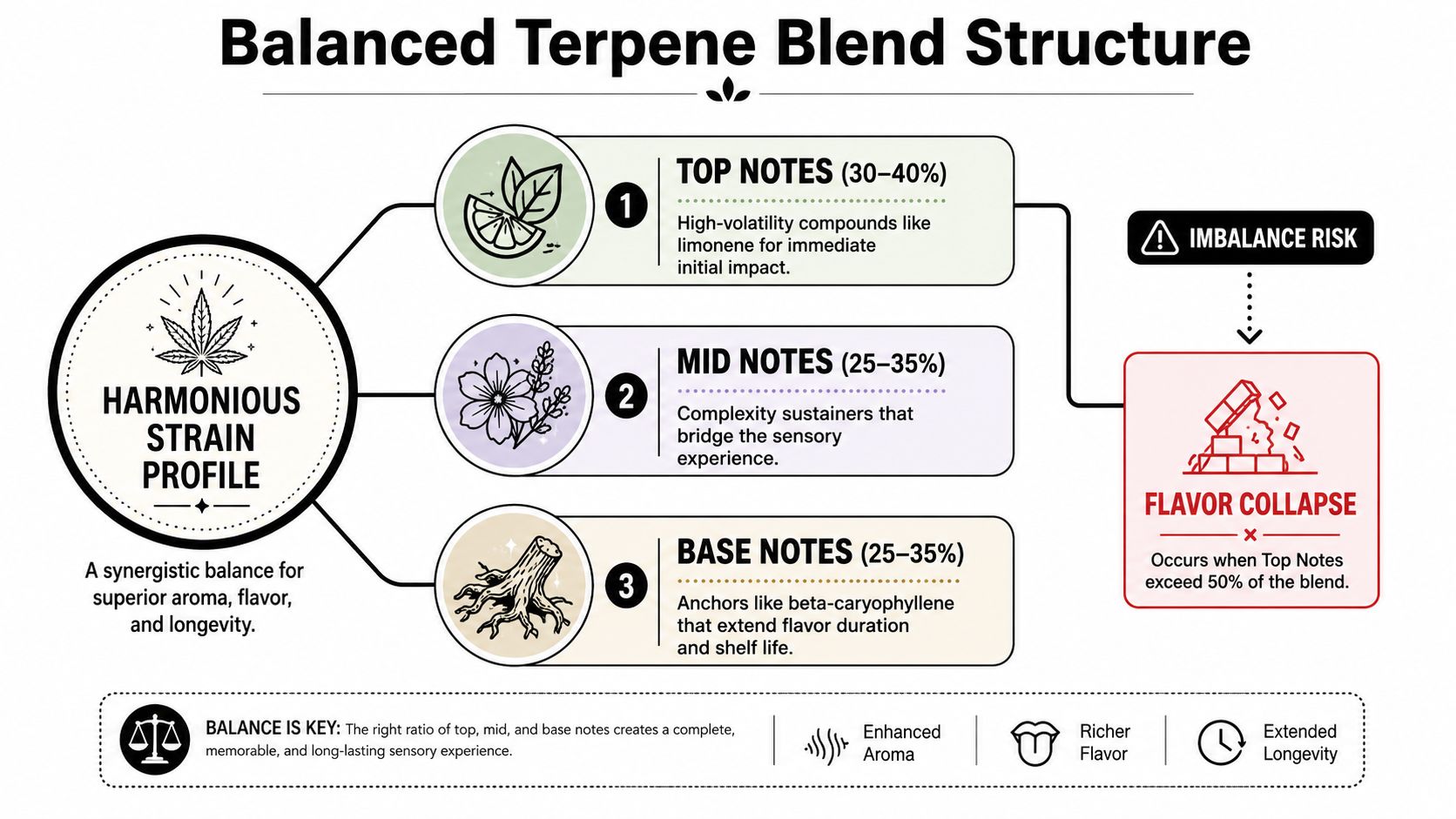
A bright first inhale can hide a weak formulation. High-volatility compounds such as limonene, pinene, and myrcene create immediate impact, but a blend built around them may peak quickly and then lose its identity. The result smells impressive in the vial, yet tastes thin or repetitive in a cartridge.
Top notes provide the opening impression. Mid notes carry the center of the profile, while base notes create depth and a persistent finish. Gold Coast Terpenes' terpene flavor chart describes limonene as a top note, linalool and beta-caryophyllene as mid notes, and myrcene as a base note. That framework is more useful than treating every terpene as an interchangeable flavor ingredient.
A budget manufacturer might push limonene to make a citrus profile feel louder, while omitting a caryophyllene anchor. Another common error is building an herbal blend around an excessive myrcene load without enough linalool or humulene to shape the finish. A Green Crack-inspired profile made only from pinene and limonene can miss the more complex character associated with terpinolene.
Build the blend in layers
Use a three-tier design rather than adding dominant compounds until the aroma feels loud. A citrus-forward strain-inspired terpene blend generally benefits from at least one woody or spicy mid-to-base element, such as beta-caryophyllene, humulene, or linalool. Don't treat a strong opening as proof of authenticity. Test the finished cartridge after filling and again during storage, because the balance can change as volatile compounds leave the oil.
2. Ignoring Solubility and Carrier Compatibility
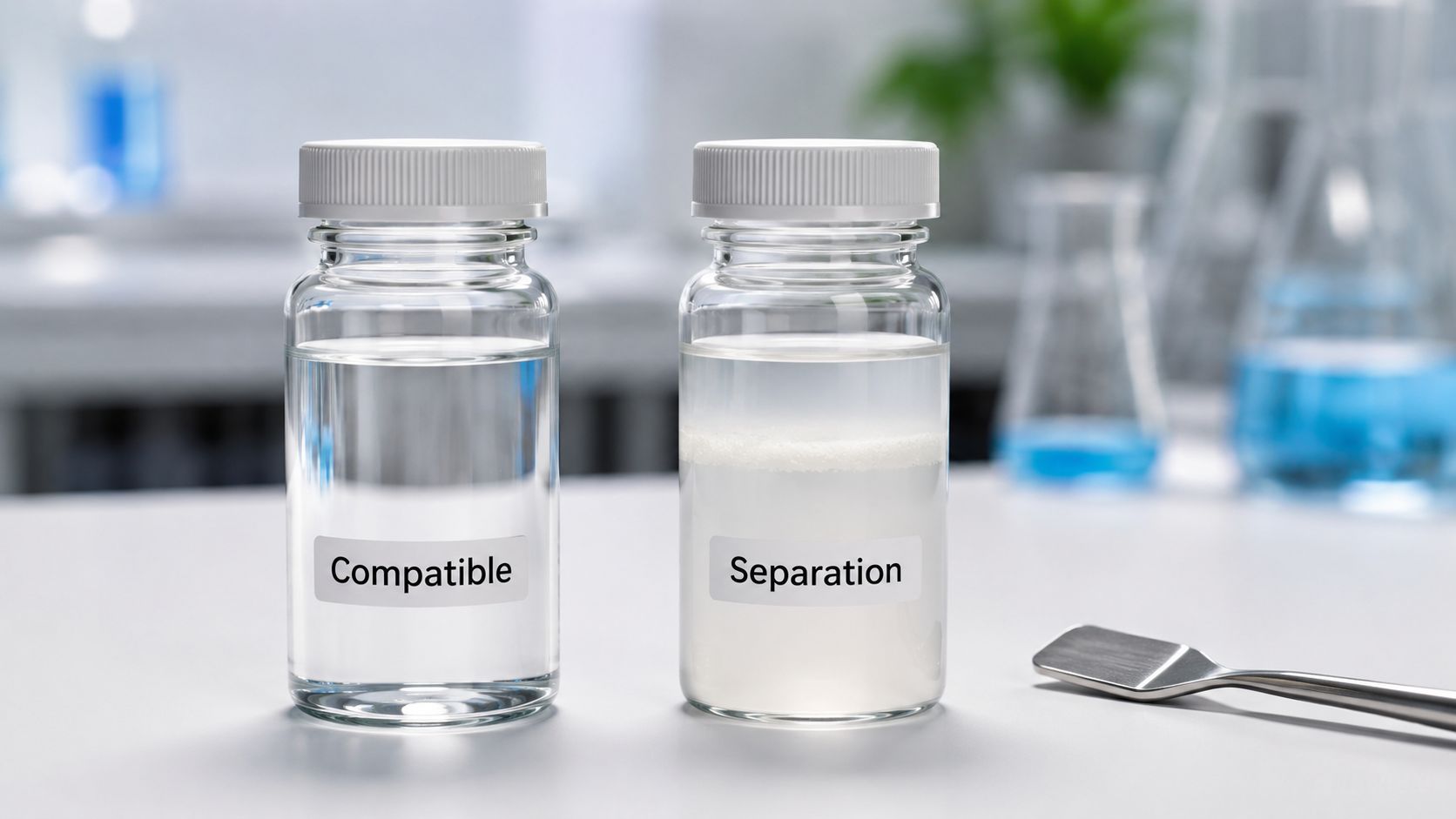
A flavor can be chemically appealing and still fail as a cart formulation. Terpenes must integrate consistently with the distillate and any diluent. If they don't, the batch may show layering, uneven flavor delivery, viscosity problems, or inconsistent performance from one draw to the next.
This risk becomes more visible with polar components such as linalool, especially when a formulator combines them with a lipophilic distillate without testing the complete system. The same concern applies when MCT, VG, or PG enters the formulation. Testing a terpene blend in isolation says very little about how distillate, terpenes, and carrier will behave together.
A DIY manufacturer might combine a Blue Dream-inspired blend with crude distillate and no diluent, then discover separation during storage. A producer using a rare-monoterpene profile in an MCT-heavy system may see a similar incompatibility. These failures often appear after filling, when correction is expensive.
Practical rule: Treat distillate, terpene blend, and carrier as one formulation system, not three independent ingredients.
Validate before scaling
Start with a small bench batch and inspect it at room temperature and high temperature. Record clarity, layering, viscosity, and aroma uniformity. Gold Coast Terpenes' guide to thinning distillate for cartridges provides a useful reference point for cartridge preparation, but every oil and hardware combination still needs its own compatibility review.
Don't add a solvent or carrier merely to force a blend into solution. Confirm that the ingredient is permitted for the intended product, review its safety documentation, and verify that the finished formula remains stable in the selected hardware.
3. Relying on Aroma Matching Without Validating Vapor Chemistry
A room-temperature aroma isn't the same product experience as vapor. A formulator can match a flower sample's headspace with high confidence and still produce a cartridge that tastes harsh, sour, grassy, or musty. Heating changes which compounds reach the consumer first and how the profile is perceived.
An OG Kush-inspired blend built around myrcene and caryophyllene may smell convincing in a vial but turn heavy or musty in hardware. A citrus blend driven too aggressively by limonene may smell bright on a blotter and taste sharp in a high-power device. A nose-matched Forbidden Fruit profile can also lose its fruit character when the formula relies on compounds that don't translate well through the coil.
Approve the vapor, not the vial
Vapor-first formulation reverses the usual workflow. Begin with compounds that provide a stable, recognizable vapor profile, then add static aroma elements carefully. Caryophyllene, humulene, and linalool can provide more dependable structural anchors than relying on myrcene or pinene alone, but the result still depends on concentration, oil matrix, hardware, and operating temperature.
Test the blend in the actual cartridge, not only in a glass vial. Use multiple device settings when the hardware allows it, and document the first draw, mid-session character, finish, and any burnt or chemical notes. A strain-inspired terpene blend is approved only when its vapor behavior matches the intended product experience.
The peer-reviewed analysis of medicinal cannabis chemotypes is also a useful reminder that traditional sativa, indica, and hybrid labels don't reliably predict terpene structure or effect. For formulation, chemical and sensory validation matter more than the name printed on the label.
4. Failing to Account for Volatility in Cart Shelf Life
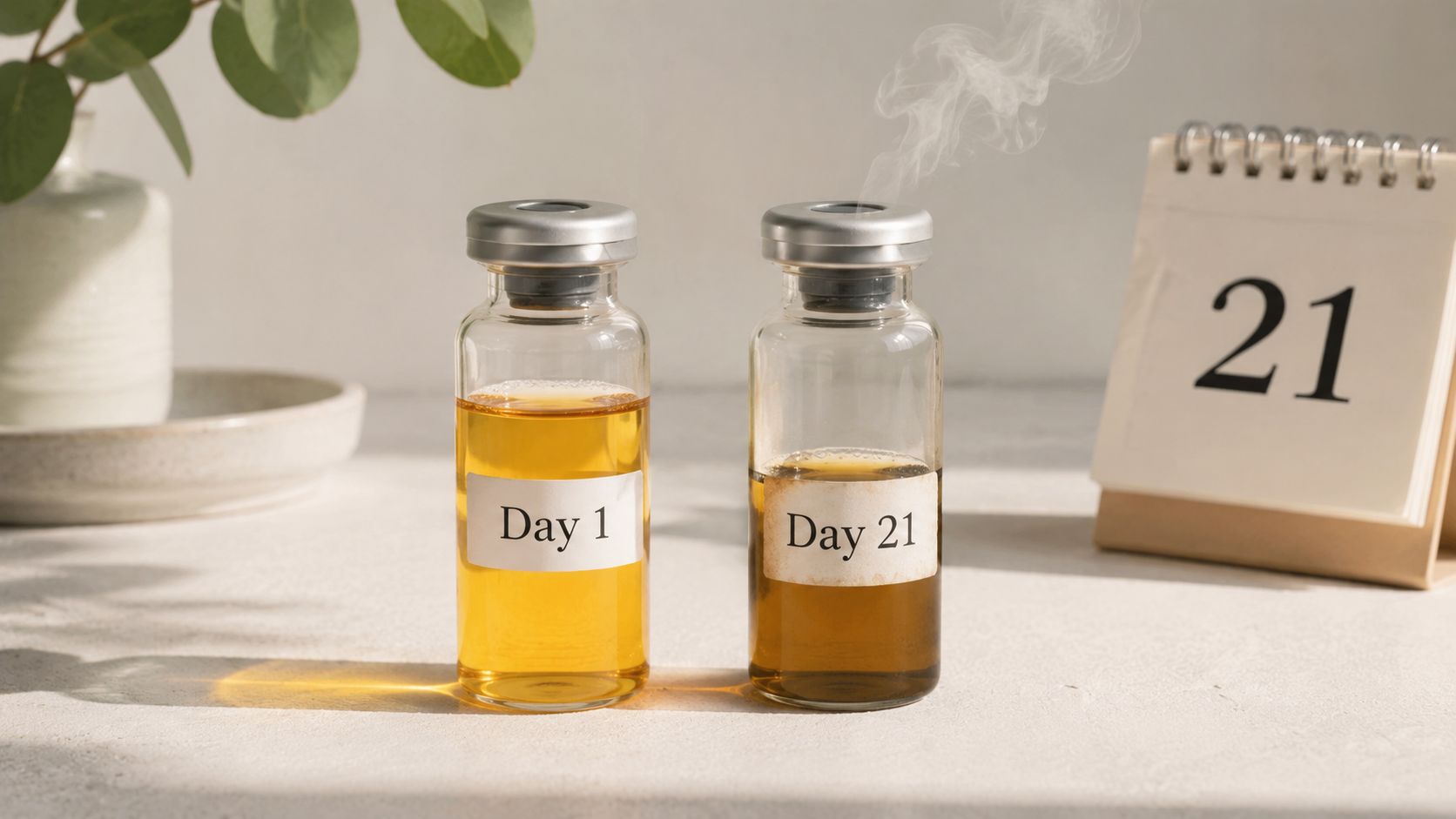
A fresh cartridge can pass sensory approval and still fail by the time it reaches the customer. Limonene and pinene are more volatile than heavier profile anchors, so a blend that starts bright and balanced may become flatter, more herbal, or more woody as storage continues. Heat, light, oxygen, headspace, and closure quality all influence that shift.
This is why a Green Crack-inspired cart with a sharp pinene opening may lose its lift during retail storage. A citrus-forward formula that depends almost entirely on limonene can also lose brightness and expose less desirable underlying notes. Day-one approval doesn't establish shelf-life performance.
Test the aging curve
Plan a stability study that reflects the supply chain rather than relying on a single retention sample. Hold filled cartridges under representative storage conditions, then document aroma, vapor flavor, color, leakage, viscosity, and hardware function at scheduled intervals. Gold Coast Terpenes' guide to the boiling point of terpenes can help teams think about volatility, but boiling point alone doesn't predict finished-cart behavior.
Use a layered profile with slower, anchoring compounds instead of trying to preserve a bright top note by increasing its initial concentration. Minimize unnecessary headspace, use reliable seals, and consider opaque or UV-blocking components where appropriate. The goal isn't to freeze the day-one aroma. It's to make the expected flavor evolution acceptable and repeatable.
5. Chasing a Bad Reputation Without Fixing the Defect
Some profiles become associated with harshness, grass, musk, or an overly herbal finish. Replicating the odor without diagnosing the complaint can turn a recognizable strain-inspired product into a deliberate reproduction of its flaws. That's especially risky in white-label work, where one inherited formula may pass from brand to brand without anyone understanding its chemistry.
The negative trait may come from imbalance, poor post-harvest handling, degradation, or the interaction between oil and hardware. A harsh result isn't automatically evidence of excessive caryophyllene, just as an herbal result isn't automatically caused by myrcene. Independent profiling has shown sharp differences in terpene composition between samples, including substantial variation in beta-myrcene abundance (GC×GC-TOFMS profiling).
Use inspired-by-but-improved development
Start with the sensory complaint. Ask whether the target should preserve the pine, fruit, spice, or earth while reducing the abrasive finish. Then create side-by-side prototypes, such as the original odor match, a softened version, and a profile that replaces the suspected problem compound with a compatible alternative.
Consumer feedback and cultivator feedback can help identify what people dislike, but neither replaces chemical review or cartridge testing. A Blue Dream-inspired formula that amplifies pinene because a poor-quality flower sample smelled piney may move farther from the expected profile, not closer. The right commercial decision is often to preserve the recognizable architecture while correcting the defect.
6. Underestimating Minor Terpenes and Authenticity
Major terpenes establish a profile's broad direction, but minor compounds often supply the details that make it recognizable. A formula using only myrcene, limonene, pinene, and caryophyllene may identify as “fruity,” “citrusy,” or “earthy” without resembling the intended strain-inspired target.
Blue Dream, OG Kush, and Forbidden Fruit examples illustrate the problem. Removing linalool, humulene, terpinolene, or ocimene can flatten the aroma and make several unrelated products smell interchangeable. This shortcut often appears during scale-up, when a manufacturer reduces the number of ingredients to simplify purchasing or batching.
Build complexity with control
A practical formulation guide should distinguish between major drivers and supporting compounds. Use a small number of dominant terpenes to establish the profile, then add minor layers deliberately. A mixing calculator can model how a small addition changes the finished blend, which is safer than adjusting by smell alone.
The guide to terpene interaction and the entourage effect offers background for thinking about layered profiles, but formulators should avoid presenting terpene composition as a guaranteed medical or pharmacological outcome. A 140-sample German market analysis found that terpene profiles varied widely across traditional labels and didn't correlate statistically with genetic profile or estimated pharmacological effect (PubMed study). That supports a chemistry-led approach, not blind trust in strain names.
Run blind sensory comparisons with and without the minor layer. If the full blend doesn't improve recognition, the issue may be the selected compounds, their ratios, the carrier, or the hardware rather than the concept of complexity itself.
7. Neglecting Quality Control Across Terpene Lots
A formulation is only as consistent as its incoming materials. Limonene from one supplier may present a different sharpness than limonene from another, and a premade blend can shift with source, extraction method, storage, or age. Without lot-level controls, a formula that performed well during development may taste different in the next production run.
That variation creates more than a sensory problem. Unverified materials can introduce unknown compounds, contamination concerns, or documentation gaps. A white-label operation sourcing from multiple vendors may struggle to explain why the same SKU tastes different across batches.
Make every lot traceable
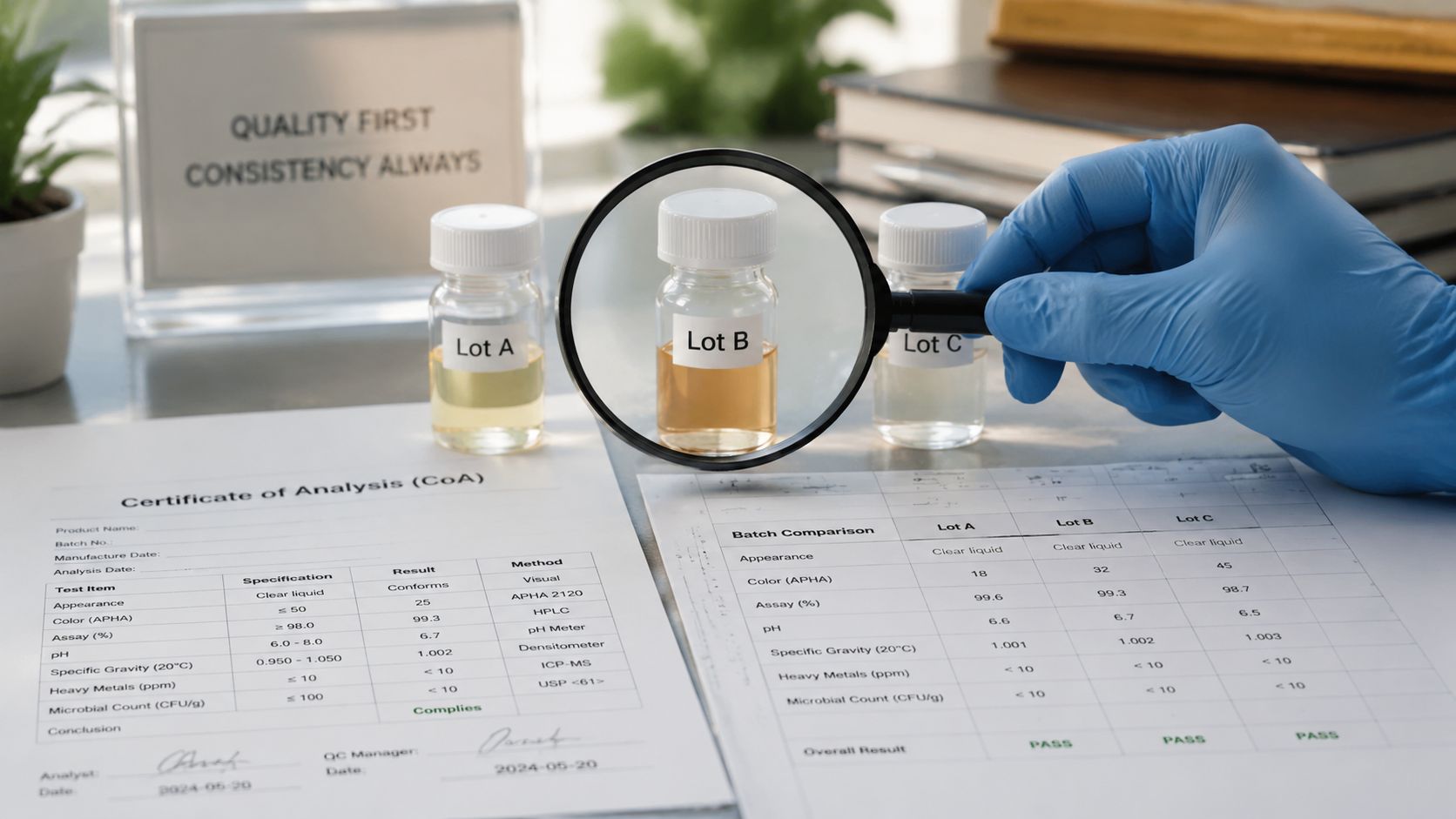
Incoming inspection should connect the material to the finished product. Require a current certificate of analysis, review identity and purity data, and evaluate relevant residual solvent, microbial, and contaminant documentation for the product category and jurisdiction. GC-MS analysis and sensory review can help confirm that a delivery matches the approved reference.
Maintain sealed reference samples from accepted lots and compare new deliveries against them. Record supplier, lot number, storage conditions, blend version, and finished SKU in the batch record. A quarterly blind comparison between retained product and new production can reveal drift before customer complaints become the first signal.
A reliable formula needs a material standard, not just a recipe.
Use storage controls that protect volatile materials from unnecessary heat, light, oxygen, and vibration. Gold Coast Terpenes identifies its products as SC Lab-tested and offers safety documents and formulation resources, but each manufacturer remains responsible for reviewing documentation against its own specification, process, hardware, and regulatory requirements.
7-Point Comparison: Worst Weed Strain Pitfalls
| Pitfall | Complexity 🔄 | Resources ⚡ | Expected impact 📊 | Ideal use / When to avoid ⭐ | Key advantage / Tip 💡 |
|---|---|---|---|---|---|
| Overweighting Top Notes Without Balancing Mid and Base Notes | Moderate, requires formulation balancing across volatility tiers | Low ingredient cost but needs modest QC (short-term sensory & shelf checks) | Front-loaded flavor that collapses in 2–3 puffs; reduced shelf life and entourage effect | Avoid for strain-accurate or premium carts; only acceptable for cheap, short-use samples | Initial impression strong; tip: allocate 30–40% top / 25–35% mid / 25–35% base and anchor with caryophyllene/humulene; test at days 3/7/14 |
| Ignoring Terpene Solubility and Carrier Compatibility | High, requires three-component compatibility testing (distillate + terpene + diluent) | Moderate–high: small-batch trials, solvents (PG/EtOH), mixing validation equipment | Separation, clouding, clogged coils, inconsistent dosing, high waste/batch rejection | Never for distillate carts without validation; acceptable only for exploratory trials | Early QC catches issues; tip: test 5–10 mL batches, add polar solvent if >15% terpenes, validate at room temp and 40°C for 7 days |
| Relying on Aroma Matching Without Validating Vapor Phase Chemistry | High, needs thermal degradation knowledge and vapor testing | High: vaporization rigs, sensory panels, thermal stability data | Bench aroma ≠ vapor flavor; harsh or off-flavors when heated; costly reformulation | Only OK in ideation; must validate before scale or marketing claims | Cheap for initial screening; tip: validate at 350/380/410°F and prioritize vapor-stable anchors (caryophyllene, humulene, linalool) |
| Failing to Account for Terpene Volatility Differential in Shelf Life Planning | Moderate, requires shelf-life study design and volatility modeling | Moderate–high: stability chambers, extended QC timelines, packaging trials | Profile drifts over weeks (top notes evaporate), consumer complaints, returns | Avoid for products with multi-week shelf life; acceptable for same-day or immediate-use formats | Detectable via shelf testing; tip: test at 70/80/90°F up to 28 days, pre-weight volatiles and use UV-blocking/low-headspace cartridges |
| Chasing "Worst Strain" Profiles Without Understanding Underlying Deficiencies | Low–Moderate, easy to copy but requires forensic analysis to correct flaws | Low if copying; higher if researching genetics, feedback, and reformulation | Perpetuates harsh/undesirable traits; poor repeat purchase and brand damage | Avoid when consumer preference and brand reputation matter; only for niche authenticity requests | Lower dev cost short-term; tip: research strain history and consumer feedback and pursue "inspired-by-but-improved" formulations |
| Underestimating Role of Minor and Trace Terpenes in Authenticity | Moderate, more complex supply chain and micro-dosing precision | Moderate: additional minor terpene sourcing, small-percentage blending, sensory testing | Flat/generic profiles; loss of nuance and reduced entourage perception | Avoid for premium/strain-accurate SKUs; may be acceptable for low-cost, undifferentiated lines | Adds authenticity for modest cost; tip: include 5–7 terpenes with 3–4 minors at 1–5% (prioritize linalool, humulene, terpinolene) |
| Neglecting Quality Control and Batch Standardization Across Terpene Lots | High, requires formal QC, traceability, and supplier management | High: GC‑MS, CoAs, storage monitoring, documented incoming inspection | Batch-to-batch variability, regulatory risk, recalls, lost accounts | Never for regulated commercial production; only a risky shortcut to save lead time | Short-term savings risky long-term; tip: require CoAs, run GC‑MS on every lot, keep frozen reference samples and record lot traceability |
Turn a Bad Reputation Into a Better Profile
The phrase worst weed strains becomes useful only after you translate it into a measurable formulation problem. A criticized profile may be too sharp because its top notes dominate, unstable because volatile compounds escape, harsh because the vapor phase changes, inconsistent because the terpene lot shifted, or generic because minor compounds were removed. Each diagnosis leads to a different correction.
Start by defining the unwanted sensory trait in plain language. Record whether the complaint is citrus harshness, pine overload, grassy aroma, musk, weak finish, poor vapor translation, separation, or batch drift. Then map the likely source across six areas:
- Note balance: Check whether the top, mid, and base structure supports the intended profile.
- Carrier compatibility: Test the complete distillate, terpene, and diluent system before scaling.
- Thermal behavior: Approve the formulation in finished cartridges rather than relying on vial aroma.
- Volatility: Compare day-one flavor with documented storage checkpoints and realistic temperature exposure.
- Minor-compound coverage: Restore the supporting compounds that give the profile its identity.
- Lot control: Tie incoming material data and retained references to every finished batch.
A strong formulation process doesn't attempt to reproduce every flaw in a low-rated flower sample. It builds an inspired-by-but-improved blend, preserving the recognizable fruit, spice, pine, floral, or earthy character while correcting the factor that made the source perform poorly. That approach is more defensible for strain replication, private-label development, and new vape SKUs.
Keep the validation practical. Use small compatibility batches, actual cartridge sensory review, documented shelf-life checks, lot traceability, and supplier safety-document review. Also remember that strain labels are imperfect shorthand. Research on medicinal cannabis flowers found substantial terpene heterogeneity across sativa, indica, and hybrid labels, with individual terpene clusters offering a more useful basis for predictable product selection (study details).
For the next prototype, choose a defined target, select the note architecture, create a controlled blend, and test it in the intended oil and hardware. Gold Coast Terpenes offers strain-inspired profiles, isolated compounds, a terpene calculator, safety resources, and guides for terpenes for distillate. Those resources can support a more disciplined path from flavor reference to production-ready formulation.
Gold Coast Terpenes offers natural strain-inspired blends, isolated compounds, formulation guides, and tools for manufacturers working with cartridges, concentrates, and distillate. Visit Gold Coast Terpenes to compare terpene profiles, review safety resources, and develop a better-controlled version of the profile your customers currently reject.