
Most lemon blends fail for the same reason. Formulators chase a high limonene number and call it a day, then wonder why the result smells thin, sharp, or more like generic citrus than fresh peel. A real lemon terpene profile is built from ratios, not a headline percentage, and that's where most of the work starts.
Why Limonene Percentage Alone Does Not Make a Lemon Profile
A lemon terpene profile is not just limonene with a lemon label on it. The first mistake is treating citrus aroma like a single-molecule formula, when the published chemistry shows lemon is usually a multi-compound blend centered on limonene but shaped by smaller amounts of pinene and terpinene-family compounds, plus other supporting markers that change the finish and the lift. In other words, two blends can carry the same limonene load and still land in very different sensory places. A GC-MS review of lemon oils and cultivars makes that clear by showing limonene as the dominant terpene, but never the only one that matters.
That's why buyers and formulators need to read the whole chromatogram, not just the largest peak. A product can be limonene-heavy and still miss the peel-bright, slightly green, slightly candy edge that people expect from real lemon. If the supporting structure is missing, the aroma often comes off flat, one-dimensional, or harsh after the first hit.
Practical rule: If the report only tells you limonene is high, you still don't know whether the profile will read as lemon peel, lemon candy, or generic citrus.
A strong lemon SKU should be evaluated by its supporting terpenes, not by limonene alone. For a quick comparison of how formulators think about limonene against other citrus-supporting compounds, see this internal guide on limonene vs myrcene.
Reading a Lemon Chemotype on a GC-MS Report
A GC-MS report tells you whether the blend is lemon-forward or only citrus-branded. The useful markers are the same ones that keep showing up in citrus chemistry, limonene, β-pinene, γ-terpinene, sabinene, α-pinene, p-mentha-3,8-diene, and terpinolene. A modern analysis of Citrus limon pericarp oil identified 45 volatile constituents accounting for 99.7% of the total essential oil, with limonene at 60.7%, β-pinene at 12.6%, and γ-terpinene at 10.3% as the three largest components (study).
What the numbers usually mean
Peel oil and leaf oil do not smell the same, and the report usually shows why. In authentic Citrus limon pericarp oil, published compositions around 69.9 to 70.4% limonene are paired with p-mentha-3,8-diene (18.0%), β-pinene (11.2%), and γ-terpinene (8.21%) (benchmark report). Leaf oil shifts toward a greener frame with sabinene (15.9%), citronellal (11.6%), and lower limonene at 31.5% in the same source.
A second literature profile also shows how variable lemon chemistry can be by plant part and extraction method, with limonene at 53.56%, γ-terpinene at 12.42%, sabinene at 6.72%, and neryl acetate at 5.73% in fresh lemon juice (supporting study). That variability is the whole point. A lab report is not just a certificate, it is a map of where the aroma will land.
| Lemon Chemotype Markers at a Glance | Pericarp oil range | Leaf oil range | Sensory role |
|---|---|---|---|
| Limonene | 69.9 to 70.4% in peel profiles, or 60.7% in one modern analysis | 31.5% in leaf oil | Bright citrus core |
| p-mentha-3,8-diene | 18.0% | Not highlighted as a main leaf marker in the cited benchmark | Zesty top support |
| β-pinene | 11.2% to 12.6% in peel-focused reports | Lower in the benchmarked leaf balance | Sharpens peel lift |
| γ-terpinene | 8.21% to 10.3% | Lower in the benchmarked leaf balance | Soft citrus body |
| Sabinene | Lower in peel-focused reports | 15.9% | Green, herbal edge |
| Citronellal | Not a key peel marker in the benchmarked report | 11.6% | Green, floral-herbal turn |
| α-pinene | Included among common lemon monoterpenes | Part of the leaf-side shift in broader citrus work | Crispens the top note |
A quick QC shortcut helps. A peel-bright profile usually shows strong limonene with pinene and terpinene support, while a green or herbal profile leans harder on sabinene and citronellal. For a deeper reading method, pair the chromatogram with lab report interpretation.
Top, Mid, and Base Note Roles in a Lemon Blend
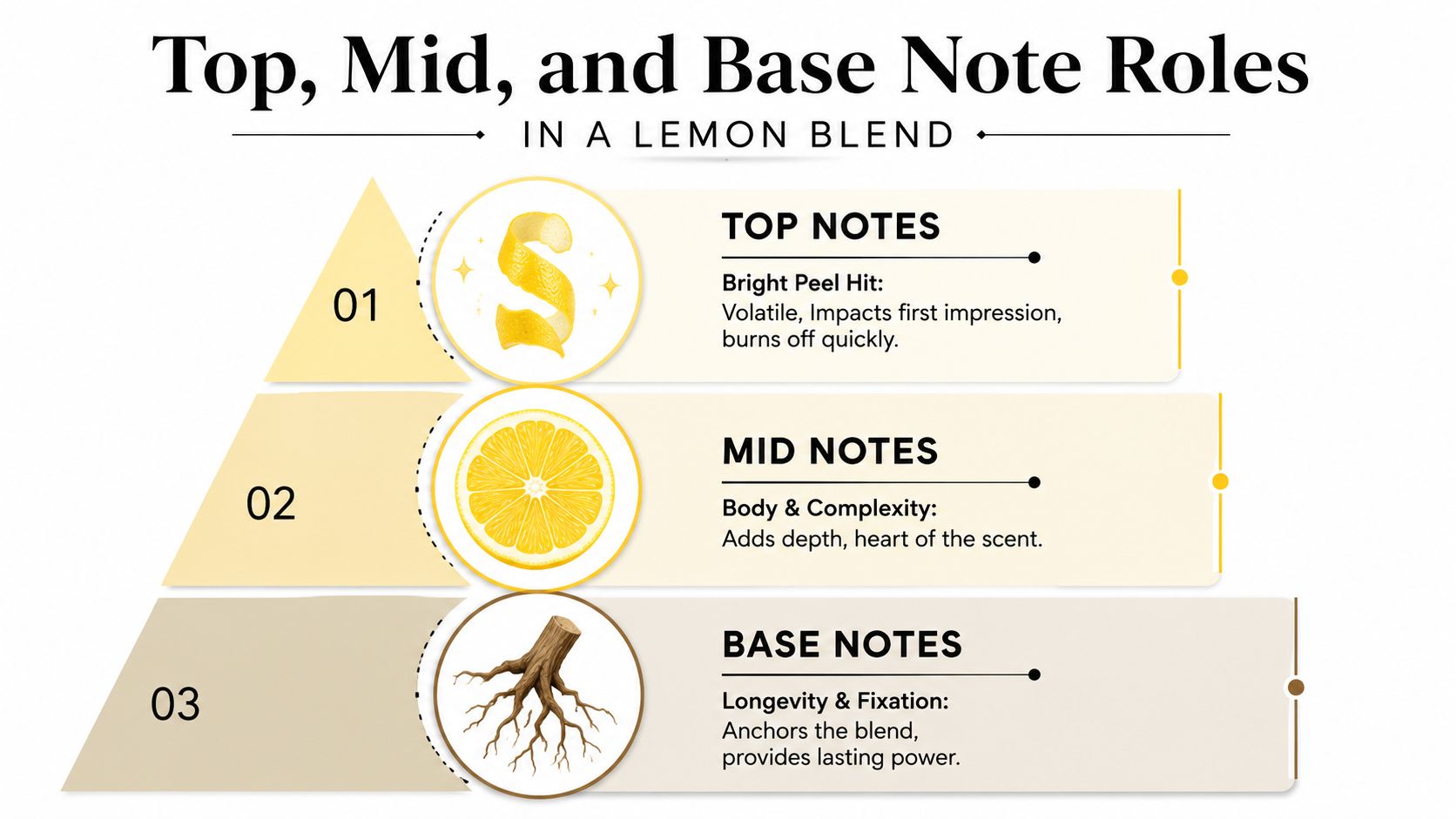
A lemon blend works best when each note layer has a job. Top notes give the first peel hit, mid notes hold the citrus body together, and base notes keep the profile from collapsing into flat limonene or sharp oxidation. If you only push the top, the blend flashes bright and disappears. If you build the middle and bottom, the lemon note reads longer and more believable.
What each layer does in practice
Top notes are the most volatile compounds in the stack. In lemon work, α-pinene and sabinene are useful brighteners because they add lift and a crisp edge without turning the profile into a sweet candy note. The result is a cleaner first impression, especially in cartridges where the opening puff matters most.
Mid notes are where the body lives. γ-terpinene is useful here because it rounds the scent and keeps the lemon from feeling too piercing. That's the difference between a profile that smells like a harsh rind scrape and one that reads as a full citrus accord.
Base notes are the quiet stabilizers. A small amount of β-caryophyllene or humulene can help anchor the blend so the citrus top doesn't disappear instantly. They don't make the profile smell like pepper or hops when used lightly, but they do help the blend feel finished.
A useful way to think about it is this, the top note sells the label, the mid note sells the aroma, and the base note protects the finish. That's why a lemon formula with no base support often feels exciting for a minute and then hollow. A well-structured accord keeps the lemon from drifting into stale citrus once it's heated.
Formulator's note: If the blend smells great in the jar but falls apart on the coil, the problem usually isn't “not enough limonene.” It's missing support in the mid and base layers.
Building a Lemon Profile for Cartridges and Distillate
For vape cartridges and distillate systems, the target isn't just aroma on paper, it's how the profile survives mixing, filling, and heat. A practical starting point is to keep limonene dominant, support it with β-pinene and γ-terpinene, and leave a small fraction for a stabilizing base. That's the shape that usually produces a lemon peel read instead of a flat citrus spray.
A workable first-pass structure
For THC distillate, CBD distillate, live resin, or HTE inputs, the order of operations matters more than people admit. Warm the oil enough to lower viscosity, blend the terpene phase slowly, and avoid aggressive mixing that can shock volatile notes out of the tank. If the formula is for a cartridge, the final sensory result depends on how evenly the oil wets the hardware and how much headspace oxygen you leave behind.
A common commercial target for total terpene load in carts is about 5 to 12% by weight, while higher-viscosity distillate systems usually need less to stay stable and avoid an over-thinned finish. That number is a practical formulation range, not a universal rule, and the hardware matters. Wider wicks, tighter airflow, and different carrier systems can all change how quickly a lemon note fades or burns.
Here's the build logic I'd use on a first pass:
- Limonene as the lead: make it the main citrus signal, because it carries the recognizable peel lift.
- β-Pinene as the brightener: adds a sharper citrus-wood edge, which helps the note feel less sugary.
- γ-Terpinene as the body note: rounds the center and keeps the blend from feeling thin.
- A small base fraction: use it to improve staying power and reduce oxidation-driven harshness.
If you're working on a premium SKU, bias the ratio toward flavor accuracy and a more authentic peel character. If you're making a fast-turn disposable, you may lean slightly more toward immediate citrus impact, because the first puff often matters most in that format. For a practical mixing workflow, the internal how-to-mix distillate with terpenes resource fits well here.
Three Build Styles for Different Product Goals
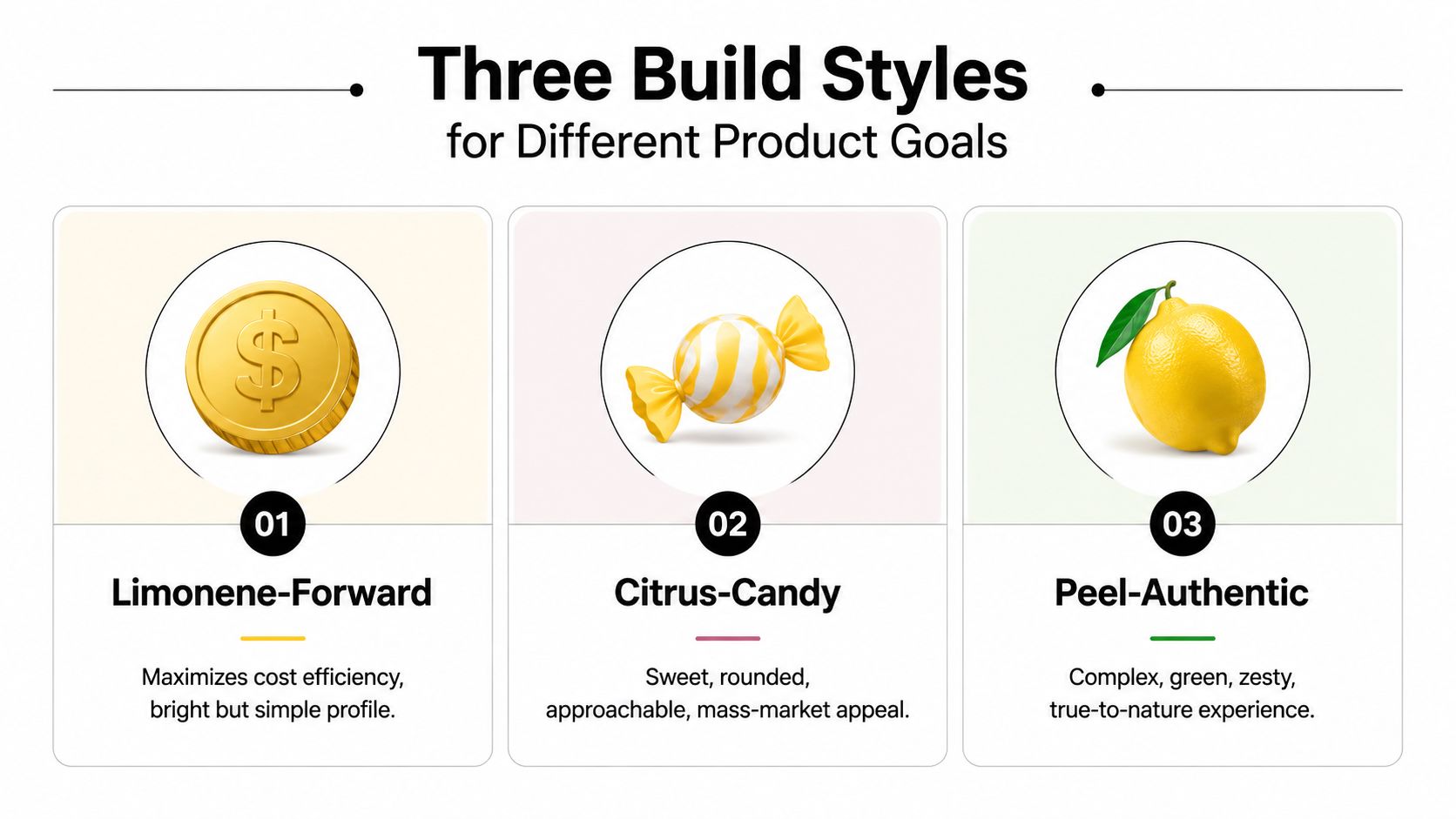
Not every lemon SKU should smell the same. A cost-efficient lemon, a citrus-candy profile, and a peel-authentic blend can all be valid, but they solve different commercial problems. The wrong mistake is trying to make one profile do all three jobs.
Limonene-forward
This is the simplest build. It leans hard on limonene for an immediate citrus label read, keeps the formula straightforward, and usually costs less to assemble. The trade-off is obvious. It can come off flat, and it often gives you the weakest long-term complexity.
Citrus-candy
This style is softer and more approachable. It uses supporting notes to round the edges, so the aroma reads sweeter and smoother, especially in disposable vapes where the goal is easy mass-market appeal. If the account wants a more consumer-friendly lemon, this is often the safer lane.
Peel-authentic
This is the closest to a true fruit-peel impression. It mirrors a real Citrus limon peel pattern more closely by keeping limonene dominant but not isolated, with pinene and terpinene support doing the heavy lifting around it. The result is brighter, greener, and more layered, which is why it tends to work better for premium carts and live-resin replications.
Decision rule: Choose limonene-forward for speed and cost, citrus-candy for broad appeal, and peel-authentic when the brand needs the profile to feel botanically believable.
A useful way to select a build is to ask what the SKU is supposed to do after fill. If it only needs a loud first impression, the simple route may be enough. If the buyer is comparing it to fresh peel or a strain-inspired target, the more complex build usually wins.
Stability, Oxidation, and Storage for Lemon-Heavy Blends
Lemon blends drift fast when they're exposed to air, heat, and light. d-Limonene is widely used as a flavoring substance and is estimated by JECFA/FEMA to have dietary intake around 0.2 to 2 mg/kg body weight/day, but it's also documented as a skin irritant and sensitizer and the NIH review lists it as Group 3, not classifiable as carcinogenic to humans (source). For formulators, that means the same molecule that gives you loud citrus can also become a quality and handling problem when it oxidizes.
What oxidation does to the profile
Oxidized limonene can move into harsher territory and flatten the fresh top note. In practical product terms, that means the profile can start clean in the lab, then lose its peel character and pick up a stale edge after storage or repeated heating. That's why lemon-heavy formulas deserve more stability attention than many teams give them.
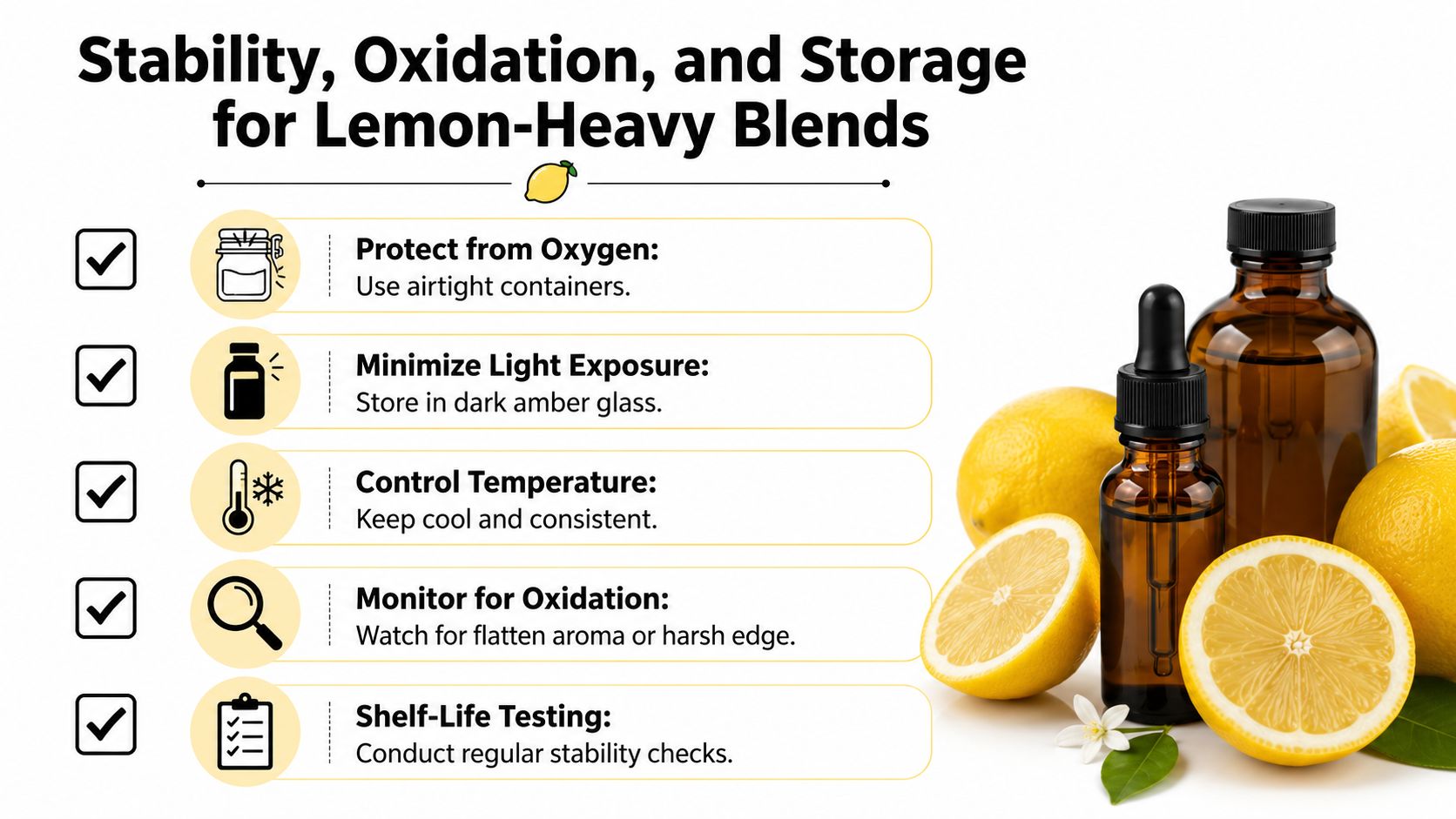
The control stack is straightforward. Use airtight headspace management, keep the blend in dark amber glass or properly lined cartridges, and store it cool and consistent rather than letting temperature swing. If your process allows it, reduce oxygen exposure during fill by using inert headspace gas, and validate the result with accelerated aging plus post-fill vapor testing.
A few shop-floor habits matter more than brand language:
- Seal early: don't leave open terpene vessels sitting on the bench.
- Protect from light: clear bottles make a lemon profile age faster than you think.
- Watch the smell curve: flattening aroma and a harsher edge are early warnings.
- Test after fill: a profile that tastes right on day one can drift after hardware interaction.
The biggest mistake is treating lemon like a static flavor. It isn't. It's a moving target that changes with oxygen, light, and heat, especially in cartridge formats where the user is repeatedly re-exposing the oil to thermal stress.
Safety, Regulatory, and Carrier Compatibility Notes
Limonene-heavy blends are easy to sell on aroma and easy to mishandle in production. The safety baseline is simple. d-Limonene can irritate skin and can sensitize some users, so blending SOPs should assume splash exposure is a real issue, not an edge case. The MSDS reference for limonene is worth keeping in the QA folder when a co-packer asks for handling guidance.
Carrier compatibility also deserves a hard look. Terpenes can behave differently in winterized inputs, hydrocarbon-extracted material, and thicker distillates, so a formula that looks stable in one matrix may separate or mute in another. That's especially true if the terpene load is pushed too hard for the hardware.
What to brief a QA reviewer
- Dermal handling: keep gloves, splash control, and cleanup procedures in place during blending.
- Labeling discipline: don't overstate effect claims, keep language tied to aroma and formulation.
- Batch compatibility: test the same blend in each carrier system before scaling.
- Residual interactions: check how the terpenes behave with the oil after fill, not just before.
High citrus impact is useful, but it's never free. If the handling is sloppy, limonene-heavy blends can create both sensory and safety problems in the same batch.
For brands, the practical takeaway is to treat limonene as a high-impact input that needs documentation, not a casual flavor shot. That keeps the formula cleaner, the blend easier to defend, and the handoff to manufacturing much smoother. If you're shopping for terpene inputs or reviewing formulation options, Gold Coast Terpenes is one supplier that offers terpene blends and isolated compounds for cartridge and concentrate work.
Troubleshooting When a Lemon Profile Comes Back Flat
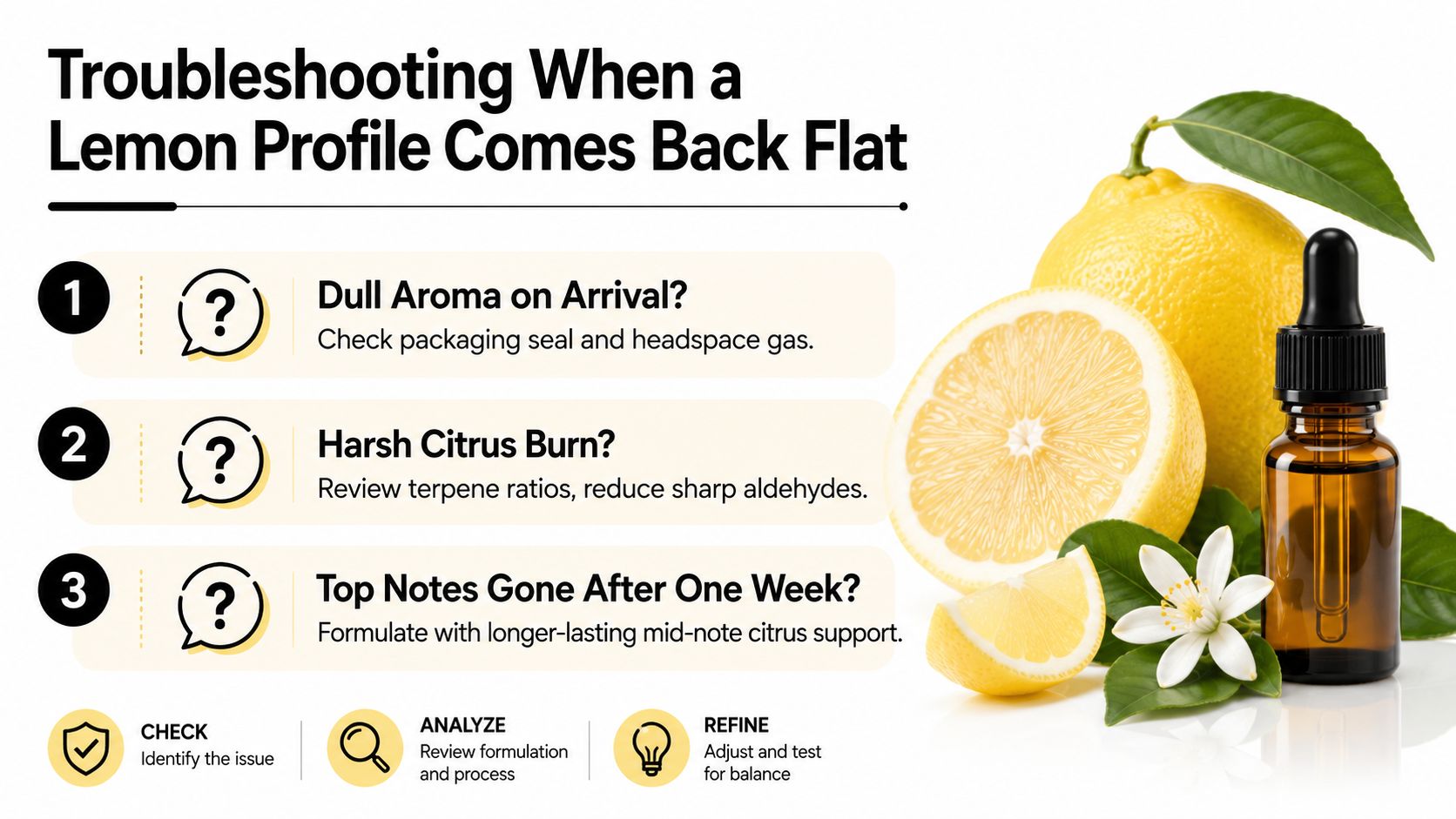
A flat lemon profile usually comes down to one of four problems, packaging, ratio, hardware, or oxidation. The fastest way to debug it is to match the smell complaint to the stage where the profile broke.
- Dull aroma on arrival? Check the package seal and the headspace gas first. If the opening smell is weak, the loss likely happened before the customer ever touched it.
- Harsh citrus burn? Revisit the ratio and reduce overly sharp supporting notes. Too much top-note aggression can read as peel at first and sting on the backend.
- Top notes gone after one week? Push more mid-note citrus support into the formula. A little extra body often keeps the lemon from collapsing into generic sweetness.
- Smells like orange instead of lemon? The supporting terpenes are probably pulling the profile in the wrong direction. Re-check the chromatogram against the target chemotype, not the name on the jar.
The important habit is to troubleshoot from the back end forward. If the profile changed after fill, the problem may be heat, oxygen, or a hardware mismatch rather than the original formula. If it smelled wrong from the start, the ratio probably missed the peel-bright target.
A good lemon blend should be repeatable, but not simplistic. Keep the target chemotype, the note balance, and the storage controls in the same review sheet, and you'll waste far less time rebuilding formulas from scratch.
If you're building a new lemon terpene profile for carts, distillate, or strain-inspired replication, reach out to Gold Coast Terpenes to compare terpene blends, isolates, and formulation inputs against your target chromatogram before you scale the batch.