
You're usually staring at a tray of kief that looked clean ten minutes ago, then realizing the next batch of oil won't hit the flavor target because the prep step got too hot, too uneven, or both. This is a key challenge with how to decarb kief for product work. It's not just about activation, it's about creating a controlled base that still has enough aromatic character left to support a precise rebuild in the final formula.
For extractors, formulators, and brand owners, the decarb step is where product quality either starts to lock in or starts to drift. A sloppy heat curve can leave you with inconsistent activation, scorched aroma, and a weaker platform for later terpene reintroduction. A disciplined process gives you something much more useful, a neutral, activated material that can be tuned for strain-inspired terpene blends, replicating flavor of a target profile, and cleaner formulating for vape cartridges. For a foundational overview of decarboxylation terminology, see Gold Coast Terpenes' decarb guide.
Why Precision Decarboxylation Is Critical for Formulation
A bad decarb does not always look bad at first. The tray can come out evenly colored, the room can smell fine, and the batch can still miss the target once it gets blended into oil. Formulators feel that mistake later, when the finished cart comes back with muted top notes, flattened mid notes, or a profile that no longer matches the intended blend.
The reason is simple, decarboxylation is a pre-formulation step, not a standalone finish line. You are not only activating cannabinoids, you are setting the aromatic baseline for everything that follows. If the base material has already lost too many volatiles, terpene reintroduction has less to work with, and sometimes it never fully restores the original profile. For a general reference on the chemistry behind decarb, this primer from Gold Coast Terpenes gives a useful starting point.
What gets lost when heat is sloppy
Terpenes behave like delicate spice notes in a blend. The lighter top notes disappear first, while the heavier base notes can survive a bit more abuse, which means poor heat control changes the whole balance of the future formula. Once that balance is gone, later blending can only approximate the profile, not recreate it.
Practical rule: treat the decarb tray like the first draft of the final product. If it smells burnt or looks patchy, the formulation already has a handicap.
That is why the best operators focus on clean activation with minimal terpene loss. The goal is a ready base, not a toasted one. If the material is being prepared for cartridge work, that clean slate matters even more, because later terpene additions are only as faithful as the oil underneath them.
Understanding the Decarb Reaction Variables
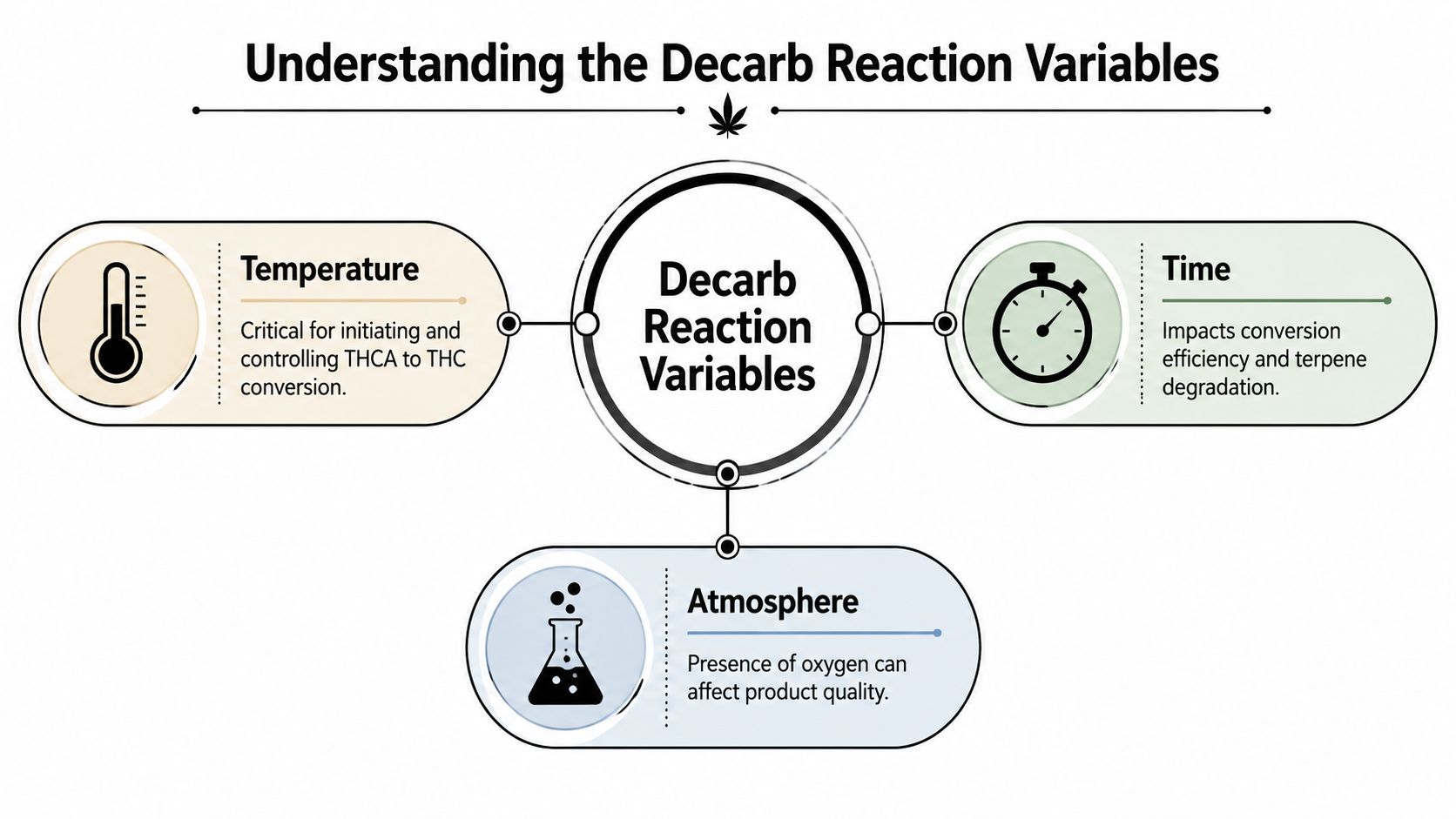
Temperature sets the ceiling
A tray of kief can look unchanged while the chemistry is already drifting. Temperature decides whether you activate cannabinoids cleanly or burn off the aromatic fraction that will be harder to recover later.
A practical baseline many formulators use is 240°F (115°C) for about 25–30 minutes in a conventional oven, with the kief spread thin and usually covered to reduce overheating and uneven heating, according to Mission Dispensaries. The same source also notes a wider working window, 220–250°F (104–121°C) for 7–60 minutes, which reflects how much decarb depends on material density, tray load, and heat transfer rather than a single fixed recipe. For a broader look at the lowest-temperature side of the decision tree, Gold Coast Terpenes' lowest-temp decarb guide is useful context.
The practical takeaway is simple. Heat has to be high enough to drive the reaction, but low and even enough to keep the aromatic portion of the lot intact. A flat, controlled profile gives you a better base for later formulation than a sharp spike.
Time controls the trade-off
Time is where operators often overcorrect. Short cycles leave the material under-activated, while long exposure pushes the lot into unnecessary heat stress, and that is where more delicate aromatic compounds start to suffer. The process rewards patience and consistency more than speed.
Practical rule: prioritize uniformity over urgency. A steadier cycle is easier to repeat than a hot cycle that leaves part of the tray overdone and part of it underdone.
The trade-off matters because decarb is not just about reaching activation. It is about reaching it without stripping the material so hard that terpene reintroduction later has a weaker base to work from.
Atmosphere affects quality too
Atmosphere shapes how the material behaves under heat. Oxygen, airflow, and direct oven exposure can all influence how quickly the sample ages in the tray, especially when the load is thin and the surface area is high. A covered tray or a more sealed setup helps buffer the kief from direct exposure and can reduce the risk of hotspots.
That matters because the best outcome for formulation is a clean, activated base with as much of the original aromatic character intact as possible. If the room smells louder than the finished material should, too much of the wrong fraction has already left the tray.
For cartridge work and other terpene-corrected products, that matters twice. The decarb step sets the starting point for every later addition, so the cleaner that step is, the more precise the final blend can be.
A Comparative Analysis of Decarboxylation Methods
| Method | Temp Precision | Terpene Preservation | Scalability | Initial Cost |
|---|---|---|---|---|
| Conventional Oven | Moderate | Moderate | Good for small to mid batches | Low |
| Sous-Vide | High | High | Good for controlled batches | Moderate |
| Vacuum Oven | Very high | Very high | Strong for production workflows | High |
| Slow Cooker | Low | Low | Limited for precise formulation | Low |
A conventional oven is still the most accessible route, which is why many extraction teams start there. It works as a practical baseline, and it can produce serviceable material if the tray stays thin, the heat is monitored, and the timing is disciplined. The weak point is control, because household ovens drift enough that two batches treated the same way can still come out differently.
Sous-vide shifts the process toward consistency. The water bath cushions temperature swings, so the operator gets a more repeatable result with less risk of scorching. That matters when the input lot is expensive or terpene-forward, because the goal is to preserve as much of the original profile as possible before terpene reintroduction in the final formula. For a practical industry perspective on that method, Gold Coast Terpenes' sous-vide decarb guide is useful.
Vacuum ovens sit at the top end of control because they reduce atmospheric pressure and give the formulator another variable to manage. That matters when aroma retention is a priority and the batch has to support premium cart development. The trade-off is cost and operational complexity, but that is often acceptable when the finished SKU needs tight sensory repeatability.
Slow cookers are the least precise option in this comparison. They may work for rough experimentation, but they are a poor fit for cannabis product formulation when aroma fidelity and batch consistency matter. If the goal is a clean base for later terpene addition, loose heating usually starts the process in the wrong place.
Executing a Flawless Oven Decarboxylation Protocol
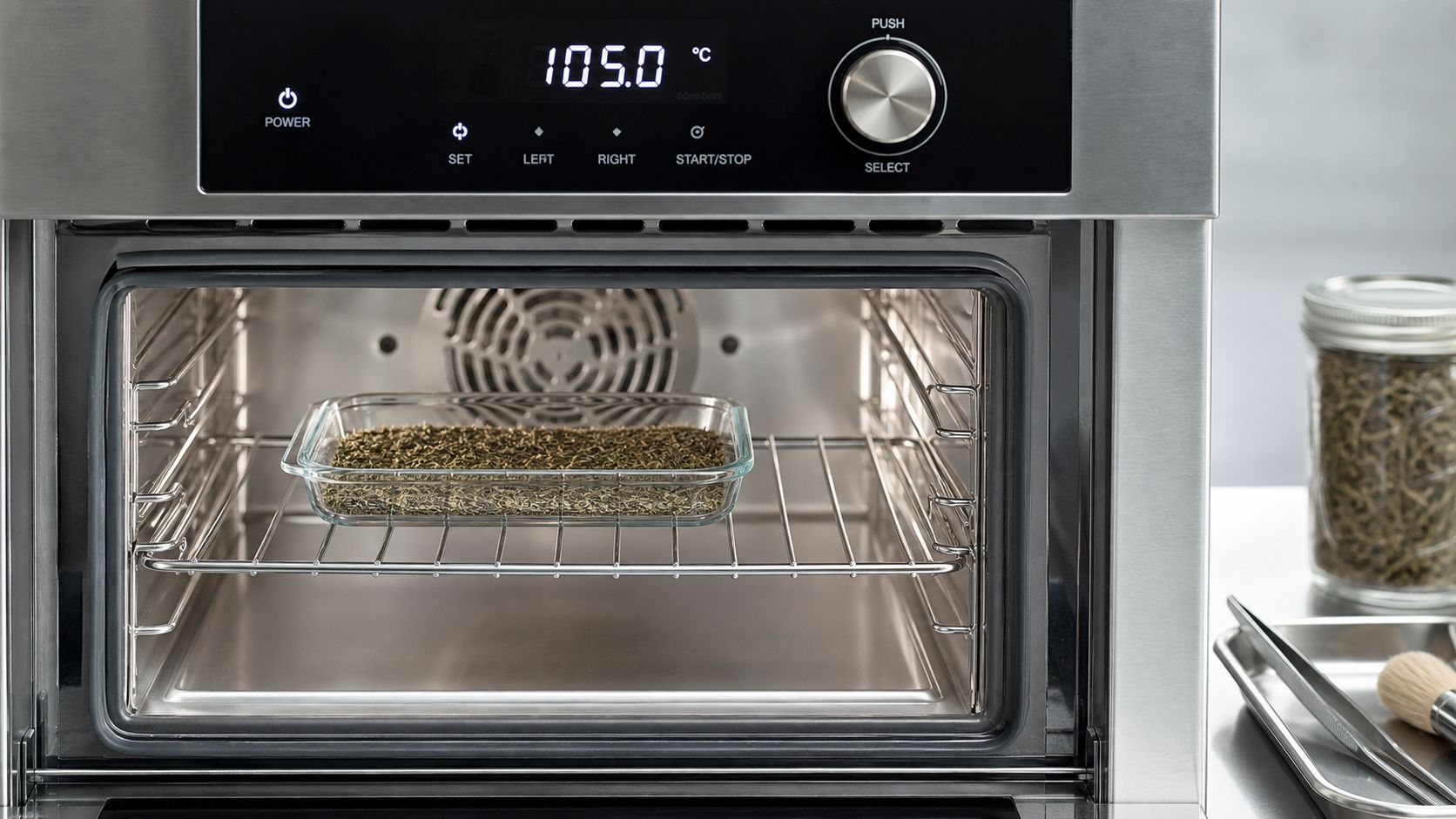
A clean oven workflow starts before the tray goes in. Preheat the oven and verify the chamber temperature with an external thermometer, because household readouts often drift and that drift can change the result batch to batch. The practical lesson from CBD Oracle's kief decarb recipe is simple, a few degrees of error can push the material from properly activated into overheated at the edges.
Spread the kief in a thin, even layer on parchment. Thick spots slow heat transfer, so the outer material can finish before the center has fully decarbed. If the kief is clumped, break it up first. The goal is uniform exposure, because a mound traps heat and makes the batch harder to control.
Watch the tray, not just the clock. Properly decarbed kief is usually described as slightly golden brown with a toasted aroma, not a burnt one, and that sensory cue matters because it reflects whether the batch stayed within a usable heat window. A tray can still look acceptable while carrying a harsh note that will show up later in the final product, especially if the material is headed for a cartridge base that needs a clean terpene reintroduction step.
A stable process often looks like this in practice:
- Prep the tray with parchment and a thin layer of kief.
- Verify oven temperature with an external thermometer.
- Heat with restraint and avoid opening the oven repeatedly.
- Check the color and aroma at the end of the cycle.
- Cool before handling so you don't volatilize more aroma during transfer.
Midway through the cycle, patience matters. If the oven is cycling hard, moving the tray around usually creates more inconsistency than control.
For a visual reference, use the embedded video below after you've reviewed the basic tray setup.
Advanced Techniques for Maximum Terpene Retention
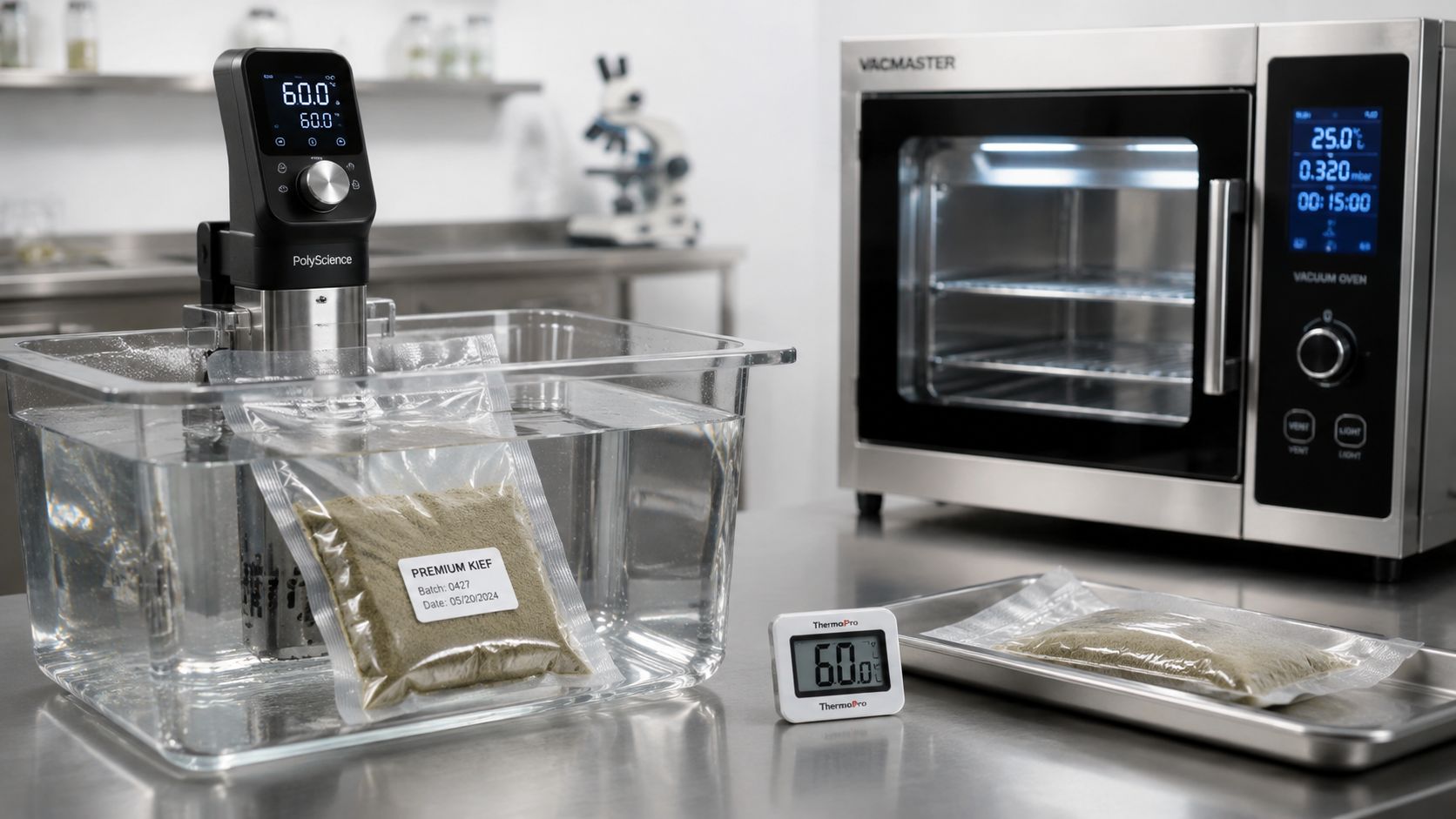
A batch can look fully ready and still lose the part formulators care about most, the volatile fraction that gives the finished oil its lift. If the goal is a strain-inspired terpene blend that still reads as the original material after blending, the decarb step has to leave a clean base, not a scorched one. That is why serious brands move beyond a basic oven. They want tighter control over heat exposure, and they want it without beating up the aroma profile before reintroduction begins.
Sous-vide gives that control in a practical way. The sealed environment and water bath keep the thermal load steady, so the material is less likely to see the hot and cold swings that show up in a household oven. For terpene-forward work, that steadier transfer helps protect the material from uneven dry heat and leaves a more usable starting point for later flavor correction.
Vacuum ovens add another layer of control by changing the pressure environment. Lower pressure lets formulators work with more restrained heat exposure, which can help preserve the character that would otherwise flatten out during processing. In practice, that difference shows up later, when the finished material still has some structure instead of reading as one-dimensional.
A premium formulation does not need the hottest process. It needs the process that leaves the most useful base material behind.
If you are deciding where equipment money should go, think about the downstream work. A better decarb leaves more of the original terpene architecture intact, so the reintroduction step does less repair and more fine tuning. That makes blending easier to dial in, especially when the target profile depends on distinct top, mid, and base notes landing in the right order.
For a lower-oxygen approach to this workflow, the Gold Coast Terpenes sous-vide decarb resource is a useful reference to keep in the workflow library.
Formulating Vape Cartridges with Decarbed Kief
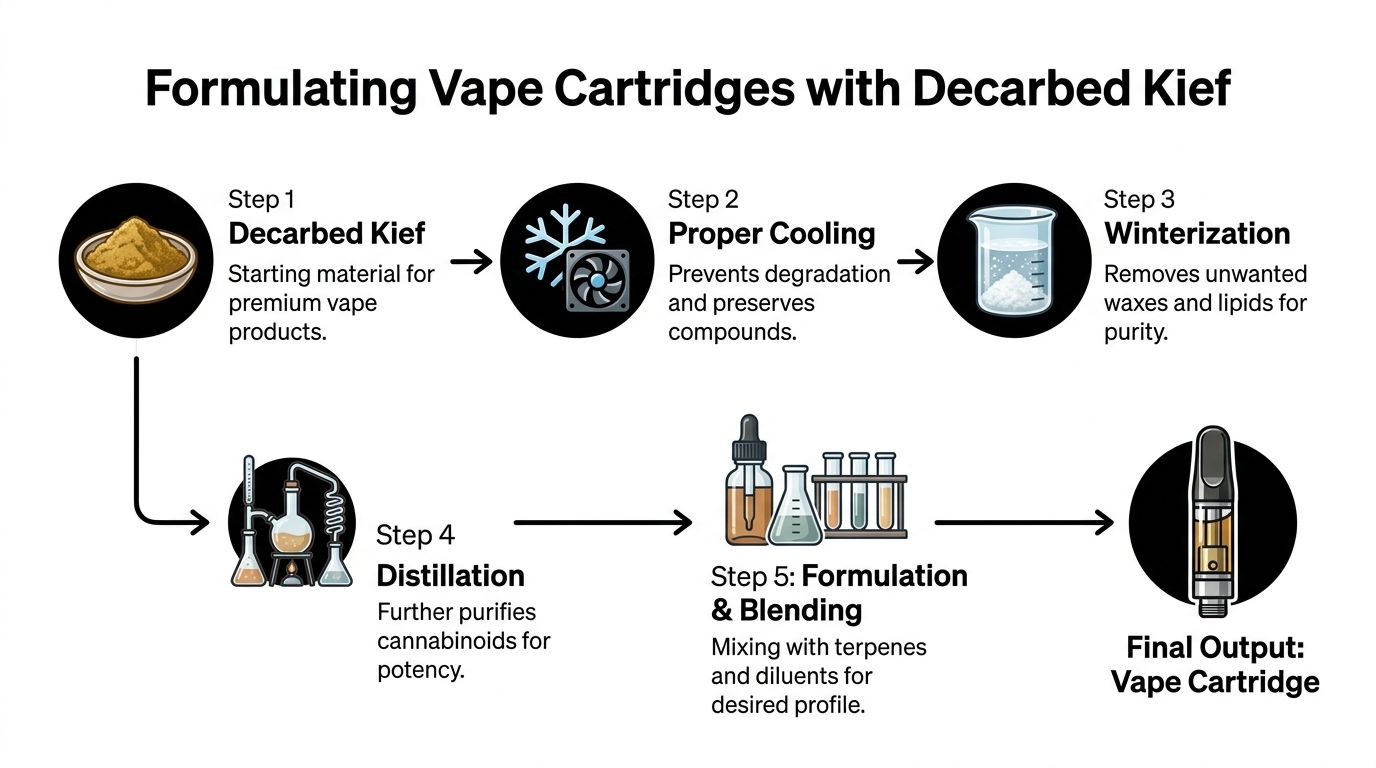
Once the kief is decarbed, the work shifts from heat management to formulation discipline. Let the material cool completely before storage or transfer, then keep it away from unnecessary air exposure. If the target is cartridge production, the next steps usually involve further purification and blending, because decarbed kief is a starting material, not a finished vape base.
Hardware compatibility sets the ceiling for terpene reintroduction. A cartridge terpene guide places the working range at 5% to 10% by weight, with 5% to 8% described as the practical sweet spot and 10% treated as an upper limit. Going past that point can create harsh flavor, excessively low viscosity, and leakage, according to Gold Coast Terpenes' cartridge terpene guide. In other words, the terpene load has to match the cart hardware, not just the flavor target.
The blend itself benefits from controlled heat and staged addition. Warm the distillate enough to lower viscosity, then introduce the decarbed input and homogenize fully before adding terpenes in small passes. A distillate formulation guide recommends heating oil to 60-65°C before terpene addition, since that range improves flow while staying below terpene flash points reported at 160-180°C. The same guide notes that ceramic cell cartridges can typically handle 8% to 12%, while cotton wick systems perform better at 5% to 8%, which makes hardware choice part of the recipe. See Gold Coast Terpenes' distillate formulation guide for that reference point, and keep how to decarb cart oil in the workflow library if you need a cartridge-focused decarb reference.
Small adjustments usually produce the cleanest result. A workflow guide recommends adding terpenes in 0.5% to 1% increments after each homogenization pass, weighing every component by mass, documenting lot numbers, and testing the finished mix in the intended cartridge because vial aroma doesn't predict vapor performance well enough. That matters when the goal is to keep the top note alive through the first pull, not just make the jar smell correct, as noted in Gold Coast Terpenes' formulation workflow guide.
For formulators building around commercial flavor libraries, terpene blends and isolates from Gold Coast Terpenes can serve as one input option among others when dialing in top, mid, and base note structure.