
A lot of teams start looking up how to make terpenes after the same problem shows up twice. The first batch tastes right. The second batch is close but thinner on the top end. The third batch smells acceptable in the drum and dull in the cartridge. At that point, the issue isn't branding. It's process control.
For cannabis product formulation, terpene production isn't a hobbyist extraction exercise. It sits right in the middle of flavor accuracy, batch consistency, strain-inspired blend development, and finished product performance for vape cartridges and distillates. If you're building repeatable SKUs, you need more than fragrant oil. You need a controlled input with known composition, stable handling, and a blending strategy that survives filling, storage, and use.
That's why the main question behind how to make terpenes is usually broader. Should you manufacture them in-house, recover them during extraction, isolate and blend them, or buy finished fractions and focus your team on final formulation?
Beyond Sourcing The Case for In-House Terpene Production
Third-party sourcing works until it doesn't. A supplier changes feedstock. A profile lands a little heavier on citrus than expected. A replacement lot looks similar on paper but behaves differently in a warm cart. When your brand promise depends on flavor fidelity, that variability becomes a production problem.
Most public content on terpenes still focuses on cultivation. It explains how growers preserve aroma in the plant, but it usually stops short of the part that matters to extractors and formulators: manufacturing terpene ingredients for cartridges and concentrates. Collective Elevation's discussion of terpene preservation and post-harvest handling points directly at that gap.
Why brands bring terpene work inside
In-house terpene production gives a manufacturer control in places that purchased blends can't fully solve.
- Profile ownership means your team can build a strain-inspired terpene blend around your hardware, distillate base, and target sensory outcome.
- Loss control matters because volatile compounds don't disappear at one dramatic step. Operators lose them during warm transfers, long hold times, aggressive purge conditions, and loose storage discipline.
- Faster iteration helps when you're replicating flavor of a successful batch and need to adjust one note, not replace the whole formula.
Practical rule: If flavor is one of your main differentiators, terpene work belongs in the same quality system as extraction and formulation.
There's also an IP angle. Once a lab can recover, test, and rebalance fractions, the terpene profile for vape cartridges becomes a proprietary manufacturing asset instead of a purchased commodity. That doesn't mean every business should build a full terpene lab. It means the decision deserves the same financial and operational review you'd give to distillation, winterization, or filling automation.
What in-house production actually changes
Making terpenes for cannabis product formulation changes how you think about the production line.
You stop asking whether a blend smells good in the bottle. You start asking whether the top notes survive contact with warm equipment, whether the middle notes anchor the profile in distillate, and whether the base notes carry enough structure after filling. That's a very different standard.
For some operators, in-house terpene recovery is the right move because it tightens control over raw materials and lets them create profiles no outside catalog offers. For others, the smarter path is to understand the process sufficiently to decide which steps to own and which to outsource.
Choosing Your Terpene Extraction Method
A formulation team usually feels this decision at the filling line, not at the extractor. The cart tastes bright in the sample vial, then comes across flat after blending, warming, and storage. In commercial production, extraction method is less about what smells best at collection and more about what still performs after the full manufacturing process.
Method choice sets your ceiling for purity, repeatability, and labor. It also affects whether in-house terpene production will save money or just add one more difficult process step to manage. For vape and concentrate manufacturers, that trade-off matters more than lab novelty.
The main commercial options
Teams building terpene inputs for distillate or strain-inspired cartridge profiles usually compare four paths.
| Method | Initial Cost | Selectivity / Purity | Scalability | Best For |
|---|---|---|---|---|
| Steam distillation | Moderate | Good for certain fractions, but heat-sensitive compounds can shift | Moderate | Labs isolating aromatic fractions with standard equipment |
| Hydrocarbon or ethanol extraction | Moderate to high | Strong recovery potential, but cleanup and solvent handling matter | High | Extractors already running solvent-based operations |
| Supercritical CO2 | High | High control over fractionation when run well | High | Facilities prioritizing selective recovery and process repeatability |
| Cold pressing | Lower for suitable botanicals | Limited for cannabis-style profile replication | Limited | Citrus-heavy botanical terpene inputs rather than full cannabis-style manufacturing |
No method wins on every variable. If a facility values low capex and familiar equipment, steam may be enough. If the business needs high throughput and close integration with existing extraction infrastructure, solvent systems usually make more operational sense. If the target is fraction control and standardized runs across batches, CO2 earns a serious look. Cold pressing is narrower, but still useful for specific botanical inputs.
Steam distillation is simple on paper and unforgiving in practice
Steam distillation stays popular because the equipment is understandable and the separation step is straightforward. It can produce clean aromatic fractions if the operator controls temperature tightly and keeps the run gentle.
The trade-off is heat exposure. Push the process too hard and the profile shifts fast. Light volatiles disappear first, then the resulting fraction starts reading broad and dull instead of precise. That may be acceptable for some botanical ingredients. It is a problem if the finished product depends on sharp top notes surviving formulation.
For commercial teams, steam works best as a controlled recovery tool, not as a one-size-fits-all answer for premium vape profiles.
Solvent extraction fits real production, but only with disciplined cold handling
Hydrocarbon and ethanol systems make sense for companies that already run solvent-based extraction. They fit existing workflows, operators know the hardware, and the process can scale.
They also create one of the most common terpene losses in manufacturing. The system captures aromatics efficiently, then warm vessels, long residence time, or slow downstream handling strip away the compounds the lab was trying to preserve. In practice, cold handling and short contact time do more for terpene quality than aggressive extraction.
That is why experienced labs treat terpene recovery as a speed-and-temperature problem as much as an extraction problem. A cold solvent workflow discussed in this low-temperature terpene extraction workflow reflects the same pattern many production teams see firsthand. Brief, cold processing preserves more of the profile. Extra exposure usually does the opposite.
For terpene retention, cold and fast usually beats warm and exhaustive.
Ethanol adds another business consideration. It is accessible and scalable, but cleanup can become the hidden cost if the goal is a formulation-ready terpene fraction rather than a broad aromatic pull. Hydrocarbon can deliver strong results, but the process window is narrow and operator discipline matters every day, not just during process development.
CO2 gives control, at a price
Supercritical CO2 appeals to operators who want cleaner fractionation logic and stronger batch-to-batch control. For facilities with trained staff, validated SOPs, and routine analytical review, it can be a very good manufacturing tool.
It is also expensive to buy, slower to optimize, and easy to overestimate. CO2 rarely solves terpene production in one pass. The better commercial use case is selective collection of fractions that will later be tested, adjusted, and blended into a final formulation input. That extra work is not a flaw. It is how many stable commercial profiles are built.
For a company deciding whether to make or buy terpenes, CO2 often makes sense only when the volume is there and the business needs proprietary profiles badly enough to justify the capital and development time.
Cold pressing is useful, but specialized
Cold pressing has a place in terpene manufacturing for citrus and other suitable botanicals. It does not give most cannabis product manufacturers what they need for full profile replication in vapes or concentrates.
The limitation is range. Cannabis-style profile work usually requires more selective recovery and more post-extraction balancing than cold pressing can provide by itself. It is better viewed as one ingredient path, not a primary production strategy for cartridge terpene systems.
For background on how these methods developed in commercial production, the evolution of terpene extraction techniques gives useful historical context.
What usually works in commercial manufacturing
The best answer is often a hybrid process tied to the product spec.
A lab may recover delicate fractions under cold conditions, collect heavier aromatics through distillation or CO2, then rebuild the final profile through blending and analytical verification. That approach takes more work, but it reflects the practicalities of making terpenes for formulation use at scale. Commercial teams are not chasing a nice-smelling jar. They are building an ingredient that has to survive mixing, filling, and shelf life with the same result every time.
Essential Lab Safety and Equipment Requirements
A terpene run can go sideways long before QC catches it. The batch still smells good, but the top notes are already gone because transfer lines ran warm, the receiving vessel had too much headspace, or an operator treated a volatile fraction like any other extract. In commercial production, safety and product protection are tied together. The same discipline that prevents injuries also protects yield, aroma fidelity, and batch-to-batch consistency.
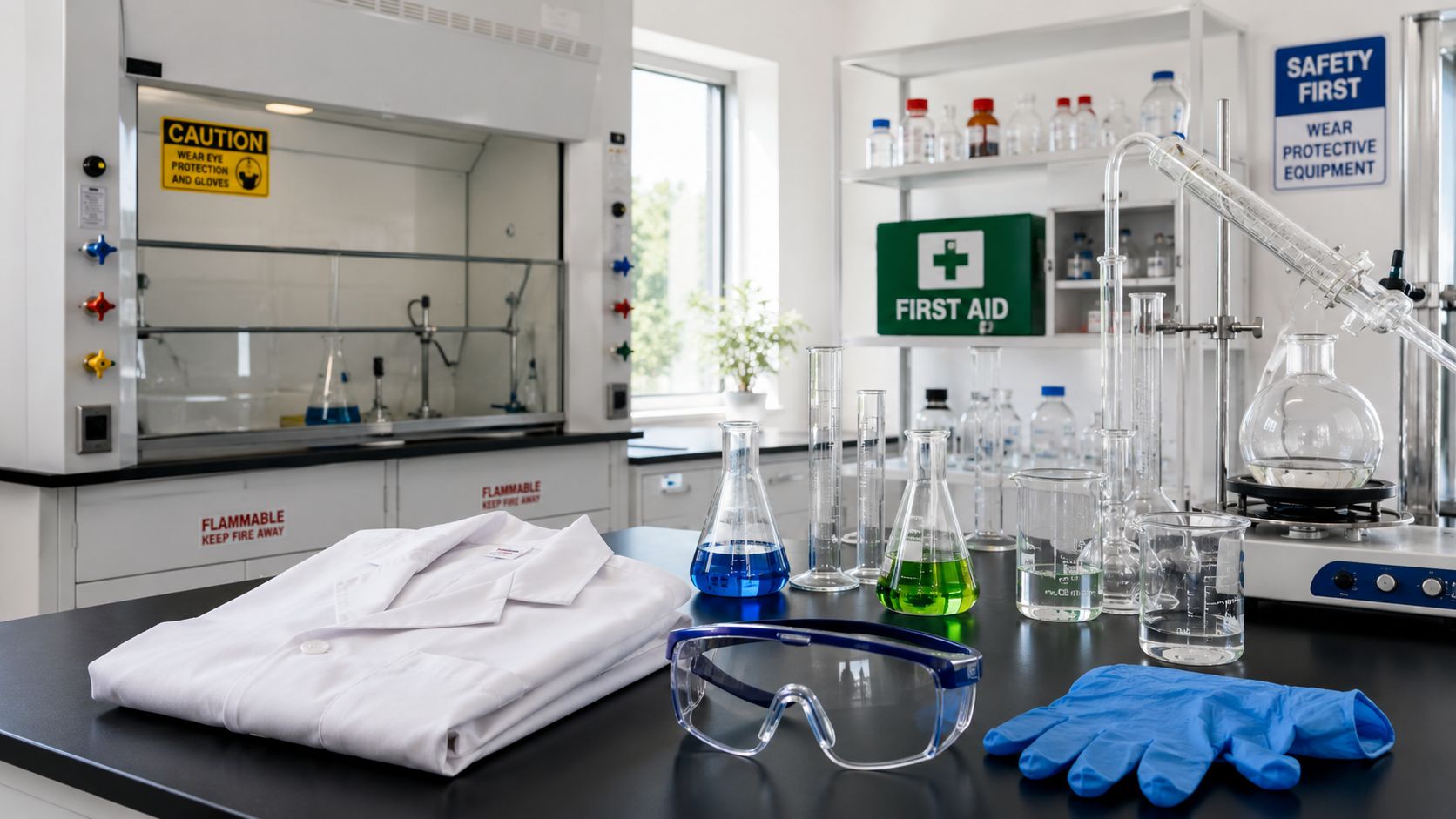
The room matters as much as the extractor
Commercial terpene work starts with the room. Ventilation, airflow, zoning, and storage layout determine whether the process stays controlled under real production pressure. If a lab uses flammable solvents or runs heated and vacuum-assisted equipment, the facility has to be designed for that duty, not adapted from a general bench space.
Good labs separate raw material intake, extraction, solvent recovery, post-processing, and packaged storage. That cuts down cross-contamination, reduces handling errors, and keeps one rushed task from disrupting the whole run. It also makes investigations easier when a batch drifts off spec.
PPE still matters, but it has to match the process.
- Eye protection for splash, pressure release, and broken glass.
- Chemical-compatible gloves selected for the solvent or cleaning agent in use.
- Protective garments that keep minor incidents off skin and street clothes.
- Respiratory protection, if needed, based on the room design and exposure risk, not guesswork.
Documentation gets neglected until something goes wrong. Operators handling aromatic concentrates, solvents, and isolates should have current SDS records at the point of use. This guide to why safety data sheets matter in terpene operations is a useful reminder that training, hazard communication, and compliance belong in the same operating system.
The equipment list that actually determines outcomes
New producers usually budget for the extractor first. The support equipment often decides whether the output is stable enough for vape and concentrate formulation.
A workable setup usually includes chillers, cold storage, vacuum hardware sized for the actual load, fraction collection glassware or vessels, sealed transfer tools, and storage containers that minimize oxygen exposure. Skimp on any of those and the lab pays for it later in oxidation, off-notes, or inconsistent blends.
Steam distillation needs tighter thermal discipline than many operators expect. Heat load, residence time, condenser performance, and vacuum control all affect whether delicate compounds survive the run in usable condition. If the process cannot hold temperatures low and stable where needed, the result is often a flatter profile that requires more rebuilding during formulation.
A quick visual refresher on general lab setup and handling is useful here:
The mistake that causes the most batch loss
Routine sloppiness causes more losses than dramatic incidents.
A vessel sits half-capped. A transfer waits on the bench because another line needs attention first. A vacuum pump runs hotter than expected and nobody logs it. Cold fractions stay out too long during weighing and blending. None of that looks serious in the moment. In aggregate, it is how labs lose the bright fraction they worked hard to recover.
That is the practical standard for deciding whether to make terpenes in-house. If the business cannot maintain controlled rooms, trained operators, calibrated support equipment, and disciplined handling every day, buying a tested terpene ingredient is often the cheaper decision.
Purity Testing and Quality Control with GC/MS
Extraction gives you aromatic material. GC-MS tells you whether you made something usable.
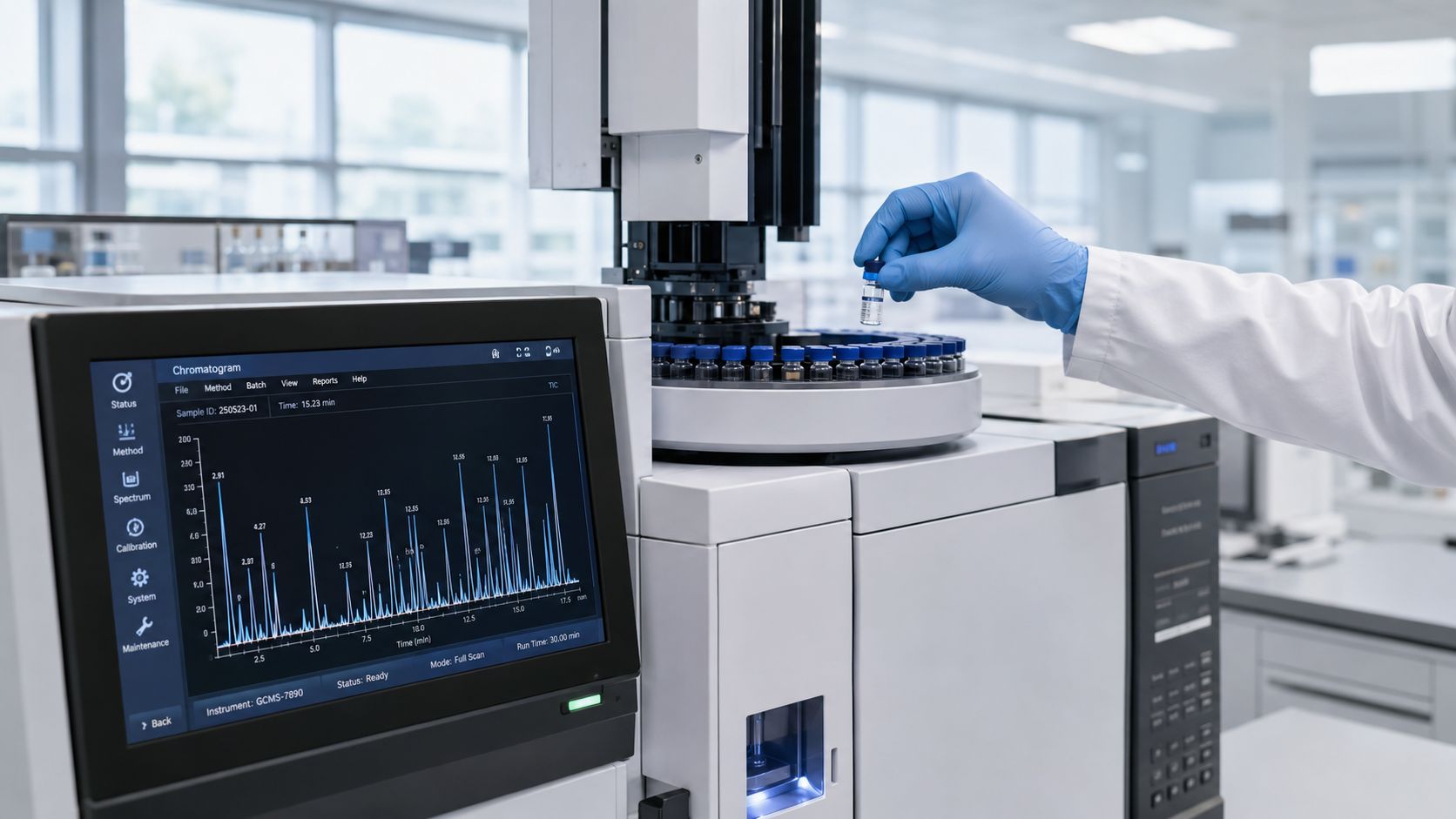
For commercial terpene production, GC-MS isn't a nice add-on. It's the point where aroma becomes data. Modern terpene testing relies on gas chromatography-mass spectrometry as the dominant analytical method, with one review reporting intra-day variation below 8.1%, inter-day variation below 10.7%, and relative standard deviations under 3%, which is why the method supports standardized characterization for consistent formulation, as outlined in this GC-MS terpene testing review.
What a chromatogram actually tells a formulator
A useful GC-MS report does more than confirm that terpenes are present. It helps you answer formulation questions:
- Which compounds dominate the profile instead of just seeming dominant by smell.
- Whether the top end is missing after extraction or post-processing.
- Whether cleanup was successful enough for downstream use.
- Whether one batch matches another closely enough to keep a SKU consistent.
That matters because sensory evaluation alone can mislead you. A warm sample can overstate one note. Oxidation can hide another. Distillate compatibility can make a profile behave differently than it smells neat.
How labs use the data in practice
A strong QC workflow compares three things. The raw extracted fraction, the post-processed fraction, and the final formulated mixture. That sequence tells you where the drift happened.
If the extracted fraction looks balanced but the final blend feels hollow, the problem may be handling or incorporation. If the extracted material already lacks light aromatics, the problem started at the process level.
The best formulation teams don't use GC-MS to admire the profile. They use it to catch where the profile changed.
For teams building a formulation guide for in-house work, this chromatography testing resource is a relevant companion to lab SOP development.
Purity is only half the job
A clean report doesn't guarantee a good product. It only tells you the material is understood. The next challenge is using that information to build a terpene profile for vape cartridges or distillate that survives manufacturing.
That's where note structure, total loading, and hardware compatibility start to matter more than the romance of extraction.
Formulating for Vape Cartridges and Distillates
A terpene blend can smell excellent in the beaker and still fail in a cartridge. The usual failure points show up after filling. The oil wicks poorly, the first few pulls taste sharp, or the profile drifts after a week on the shelf. Commercial formulation work is about preventing those failures while keeping the product consistent from lot to lot.
For vape carts and terpene-cut distillates, loading rate is only one variable. The harder part is matching aroma, viscosity, thermal behavior, and hardware tolerance at the same time. A blend that performs well in a ceramic cart may behave differently in a cotton wick system. A profile that reads bright in bulk can flatten once it is diluted into cannabinoids and exposed to heat during filling.
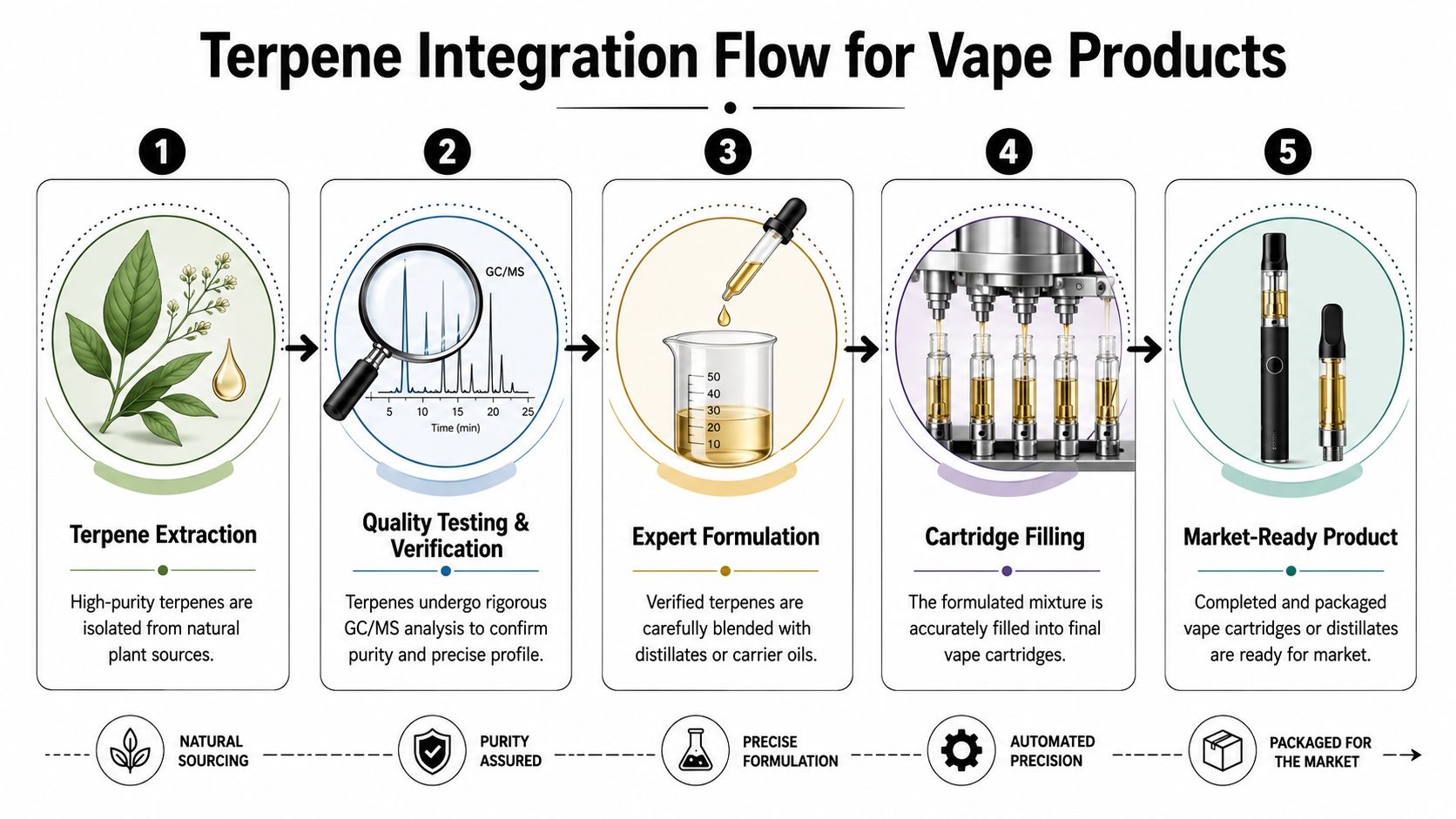
Build the profile for performance, not just aroma
Good vape formulations need structure.
- Top notes drive the first impression. They are also the easiest compounds to lose during warm handling, open transfers, or slow filling runs.
- Mid notes carry the identity of the profile. If this layer is weak, the blend smells generic once it is in oil.
- Base notes add weight and persistence. They help the profile hold together after packaging and through normal storage.
Labs that are new to formulation often overbuild the top end because it smells exciting in a sample cup. In production, that choice can backfire. Heat and oxidation strip off the bright fraction first, leaving a cart that tastes thinner than the original blend suggested. Strong commercial formulas usually keep the top note restrained and let the middle do more of the work.
A production workflow that holds up
A practical formulation process starts with the SKU brief. Decide whether the product needs a strain-style profile, a broader flavor direction, or a corrective terpene layer for neutral distillate. That decision changes the blend architecture and the acceptable trade-offs.
Then run small controlled trials under repeatable conditions. Keep the vessel, temperature, agitation, and hold time consistent. Evaluate the blend neat, then in the cannabinoid matrix, then again after it sits. Freshly mixed oil often gives a false read.
Teams that need a reference for incorporation, loading strategy, and mixing order can use this guide on how to use terpenes in finished formulations.
The last step is the one that separates R&D from manufacturing. Lock the process, not just the percentages. Addition order, bulk temperature, and storage conditions can shift the final profile enough to create complaints even when the formula sheet looks identical.
Hybrid sourcing often makes better business sense
Full in-house production is not always the smartest formulation strategy. Many commercial teams recover or build one signature fraction internally, then buy isolates or support blends to finish the profile. That approach keeps a proprietary element in the product without forcing the lab to manufacture every component at commercial spec.
I have seen that model work well when a company has one note it can make better than the market offers, usually a distinctive middle fraction, but does not yet have the equipment, staffing, or throughput to produce a full catalog of stable inputs. In that case, using standardized components from suppliers such as Gold Coast Terpenes can shorten development time and reduce batch variation while preserving the part of the formulation that differentiates the brand.
A cartridge formula usually fails from imbalance, not from lack of intensity.
The Verdict When to Make vs When to Buy Terpenes
The make-versus-buy decision usually comes down to what kind of company you're building. Not what sounds impressive. Not what looks vertically integrated on a pitch deck. What your operation can execute consistently.
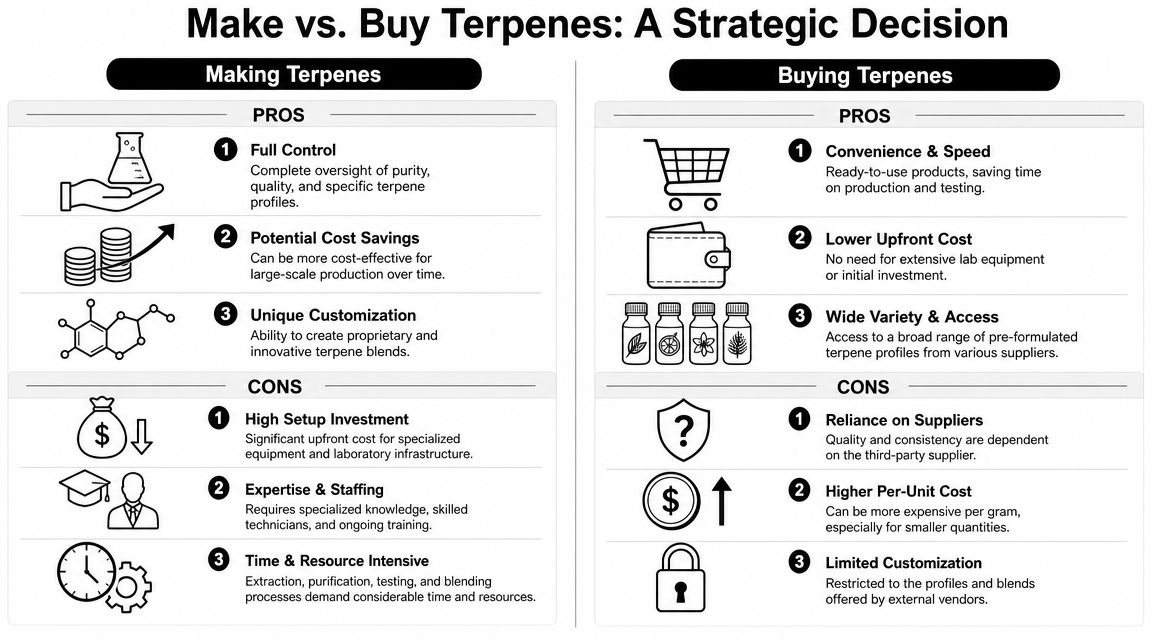
Make terpenes when control is the point
In-house production makes sense when terpene work is central to your margin, your product identity, or your process advantage.
That often fits teams that:
- Need proprietary profiles for brand differentiation and don't want a catalog blend that competitors can also buy.
- Already run serious extraction infrastructure and can add terpene recovery, handling, and testing without building an entirely new competency from scratch.
- Have analytical discipline to verify fractions, compare batches, and correct drift instead of guessing by aroma.
The upside is real. You gain control over flavor architecture, process timing, and profile development. You also inherit the burden of training, SOPs, maintenance, and QC accountability.
Buy terpenes when speed and consistency matter more
Buying is usually the better decision when the business needs dependable inputs faster than it needs another technical department.
That fits teams that want to:
- Launch and iterate quickly without delaying products for extraction development.
- Reduce operational complexity in already busy labs.
- Focus on final formulation for distillate, concentrates, and cartridges rather than on upstream isolation.
Purchased terpenes also make sense when your internal team can formulate well but doesn't need to own extraction to create strong products. That's especially true for brands working on replicating flavor of known profiles or building a terpene profile for vape cartridges from tested components.
The practical middle ground
A lot of advanced operators end up in the middle.
They buy some components, recover others, and reserve in-house effort for the part of the profile that creates actual differentiation. That approach keeps capital and staffing in check while still protecting flavor IP where it matters.
If you're deciding how to make terpenes for commercial use, use a stricter standard than “can we do it?” Ask whether your team can recover them cleanly, test them correctly, store them properly, and formulate them repeatedly under production conditions. If the answer is incomplete, buying is often the more disciplined choice.
If you need consistent terpene inputs for cartridges, concentrates, or custom cannabis product formulation, Gold Coast Terpenes offers natural blends, isolates, and formulation resources that can support strain-inspired development without requiring you to build every part of the manufacturing stack in-house.