
A lot of terpene loss doesn’t happen in the mixer. It happens earlier, in storage, while inventory sits between receiving, batching, QC, and production. You open a profile you planned to use in a flagship cart run, and the top note is already flatter than the retained standard. The blend still smells familiar, but not identical. That’s where consistency starts to slip.
For formulators, terpene storage isn’t a housekeeping topic. It’s process control. If your Blue Dream-inspired SKU lands one way in January and a little duller in March, the market won’t care whether the drift came from the terpene supplier, your distillate, or the way your team stored opened bottles. They’ll only notice that the product they liked last time doesn’t taste the same now.
That problem gets worse because formulation-stage guidance is still thin. Existing industry content gives far more attention to storing pure terpenes than to what happens after they’re mixed into carriers, distillates, or finished products. One source notes that terpenes remained stable in MCT formulations while olive oil saw significant degradation after 15-30 days in that context, but there still isn’t a systematic comparison of common formulation matrices for commercial shelf-life planning, as noted by Holland Green Science on preserving terpenes in cannabis oil extraction. That gap is exactly why storage discipline for pure terpene inventory matters so much. If your starting input has already drifted, every downstream shelf-life decision gets harder.
Why Terpene Storage Is Crucial for Product Consistency
In production, terpenes are high-value sensory actives. They aren’t just flavor additives. They define whether a strain-inspired terpene blend hits the same top note, mid note, and finish every time you formulate for vape cartridges or for distillate.
Small storage mistakes become commercial problems
A muted batch creates a chain reaction. Operators compensate by adjusting inclusion rates. QC spends time debating whether the issue is oxidation, contamination, or normal lot variation. Finished goods move forward with subtle differences, and now your retained samples no longer line up cleanly.
That creates real cost even before any product is rejected:
- Wasted formulation time: Teams rework blends that were fine on day one but drifted in storage.
- Strain replication errors: A profile meant to open bright and volatile can collapse into a heavier, less defined aroma.
- Inventory shrink through quality loss: Material may still be usable, but no longer suitable for your highest-margin SKU.
- Brand inconsistency: Repeat buyers notice when the same product tastes looser batch to batch.
Operational view: Storage failure is usually recorded as a flavor problem, but it starts as an inventory management problem.
This is why SOPs matter more than generic advice like “keep it cool and dark.” A serious formulation guide for cannabis product formulation has to define what container you use, how full it should be, when you open it, how long it stays out, and who handles it.
Purity and storage work together
Good storage can’t rescue poor inputs. But even excellent inputs won’t stay excellent if your process exposes them to air, light, and heat every day. Teams that care about repeatable flavor accuracy should treat incoming terpene inventory the same way they treat other critical raw materials: controlled environment, restricted handling, traceable labels, and clear retirement criteria.
A useful companion read is this piece on why purity matters in terpene quality standards. Purity and preservation are linked. If you’re trying to build a repeatable strain-inspired terpene blend, both have to be managed together.
The Three Enemies of Terpene Preservation
Most storage failures come from the same three sources. Oxygen, light, and heat. If you control those, you control most of the avoidable drift in terpene inventory.
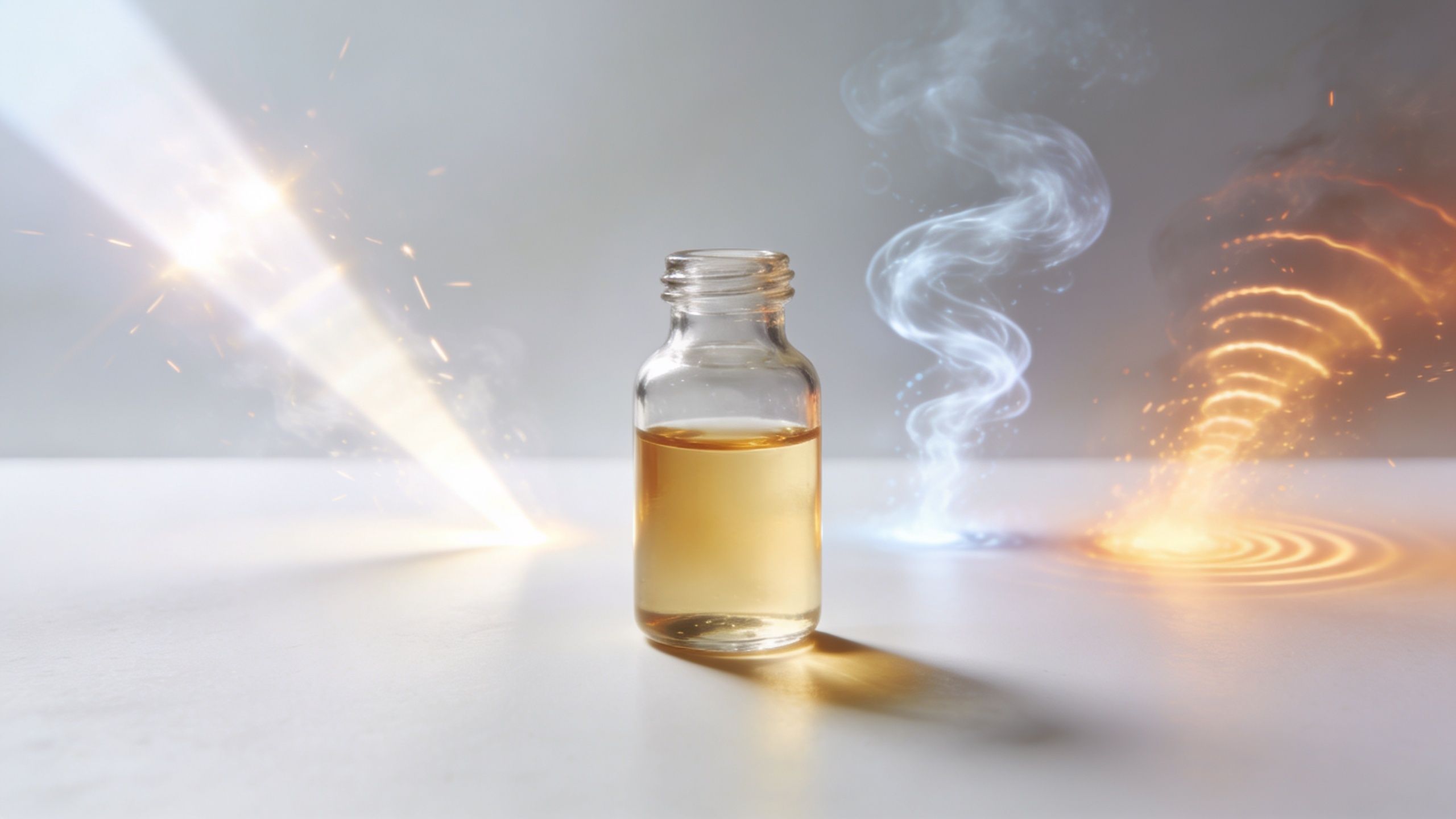
Oxidation from air exposure
Every time a bottle is opened, oxygen enters the headspace. That matters because many of the most expressive compounds in a blend are also the easiest to damage. In practical terms, oxidation strips brightness first. Your citrus, pine, and fresh volatile lift starts fading before the heavier base notes do.
That’s why a once-sharp profile can start reading broad, dull, or slightly stale even when the bottle still looks fine. For teams replicating flavor of a known strain, this is a problem because top notes create the first impression and anchor authenticity.
A controlled terpene preservation experiment found that 31% can evaporate from cannabis flower after just one week if not stored properly, and that humidity-controlled storage retained 30% more beta-Myrcene, 20% more limonene, and 13.5% more terpenes overall than the control, according to Boveda’s terpene preservation experiment. Different formats behave differently, but the storage lesson is the same. Environmental exposure moves fast.
Photodegradation from light
Light damage is easy to underestimate because it doesn’t feel active. There’s no obvious spill, leak, or handling error. The bottles just sit there on a shelf. But UV exposure pushes chemical breakdown, especially in delicate aromatic fractions.
Clear containers are one of the most common weak points in small and mid-scale operations. They make inventory easy to identify, but they also make degradation easier. Even if direct sun never hits the bottle, repeated exposure to ambient light is still unnecessary risk.
Light protection isn’t cosmetic. If the bottle lets in UV, you’re running a degradation test every day it sits on the shelf.
For a deeper look at how storage conditions change aroma behavior, this article on how environmental factors influence flavor through terpene transformation is worth reviewing.
Thermal stress from heat and fluctuation
Heat speeds everything up. Volatile compounds evaporate faster. Oxidation accelerates. Repeated warming and cooling adds more stress than many teams realize, especially in production spaces where storage sits near filling equipment, windows, ovens, or general HVAC swings.
In formulation, note structure matters. Top notes are usually the first to disappear, mid notes start losing definition after that, and base notes can remain long enough to make the profile seem “mostly okay” when it really isn’t. That’s how a blend loses shape without becoming obviously unusable.
What each enemy does to a profile
- Air exposure: Mutes brightness and shortens the clean opening of a blend.
- Light exposure: Breaks down delicate aromatic compounds and flattens complexity.
- Heat exposure: Speeds evaporation and makes every other degradation pathway worse.
If you’re building terpene profile for vape cartridges, those losses show up quickly in sensory review. A cart can still pass a basic smell check while missing the exact opening note that made the SKU distinct.
Mastering Temperature Light and Oxygen Control
Storage works when the environment is boring. Stable temperature. Minimal light. Minimal oxygen. The best SOPs remove variability rather than trying to monitor their way out of it.
Temperature needs a defined operating range
For day-to-day storage, 60-70°F (15-21°C) is the practical range tied to preserving terpene potency for 18-24 months, and refrigeration at 35-40°F (2-4°C) can extend shelf life by 2-3 times, according to Terpene Belt Farms on preserving terpenes. That same source notes some volatile monoterpenes begin dissipating at 100°F (37°C).
Those numbers matter because many production rooms creep hotter than operators think, especially during active runs. If you store terpene inventory near filling lines or warm equipment, you may be exposing your most volatile fractions every day without calling it a storage issue.
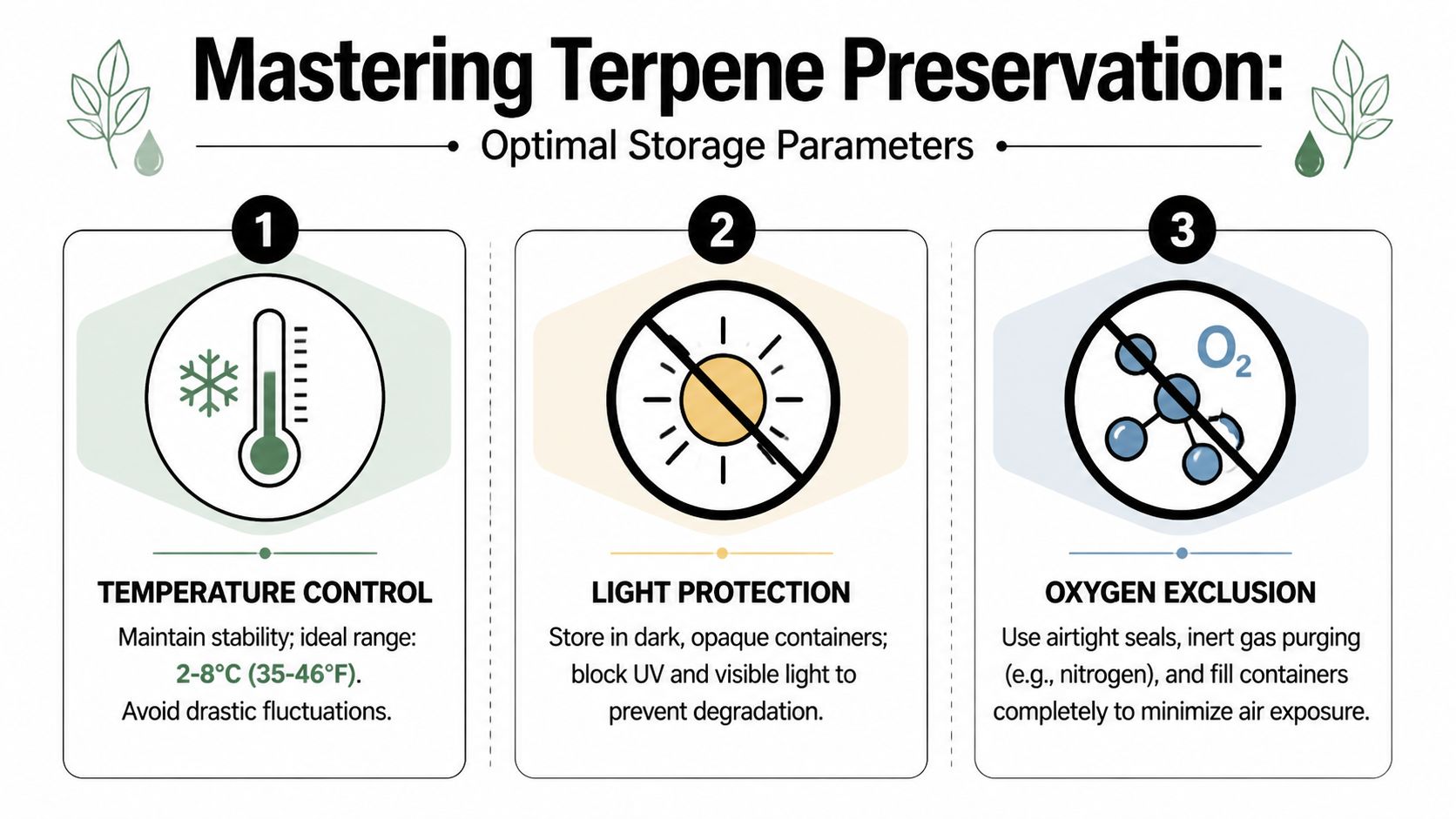
Light and oxygen are packaging problems first
Teams often treat oxidation and light exposure as chemistry problems. In practice, they’re usually packaging and handling problems. If the bottle is too large for the remaining volume, headspace grows. If the container is clear, light gets in. If operators keep opening a master stock bottle for small pulls, oxygen exposure accumulates.
For anyone formulating strain-inspired blends, that cumulative exposure is what turns a clean SOP into an inconsistent one.
Bench rule: The less air above the liquid and the less light through the container wall, the better your odds of preserving the original profile.
A useful reference for understanding volatility is this guide to the boiling point of terpenes. It helps explain why gentle room conditions still matter long before you ever heat a formulation.
Quick reference for production teams
| Degradation Factor | Problem Caused | Primary Solution |
|---|---|---|
| Oxygen | Oxidation, muted top notes, faster potency drift | Use airtight containers and reduce headspace |
| Light | Photodegradation and flatter aroma definition | Use opaque or amber UV-blocking storage |
| Heat | Faster evaporation and chemical instability | Hold inventory in a stable cool environment |
Day-to-day control points
- Set a real storage zone: Use a dedicated cabinet, cold room, or lab refrigerator instead of general production shelving.
- Avoid temperature swings: Don’t store near windows, doors, ovens, hot plates, or filling equipment.
- Right-size the bottle: Move material into smaller vessels as inventory is consumed so headspace doesn’t keep increasing.
- Keep exposure brief: Pull what production needs, then return the container immediately.
This is the practical core of how to store terpenes for cannabis product formulation. Protect the environment first, then protect the material from people.
Choosing the Right Containers and Storage Environment
Container choice decides whether your SOP is working before anyone even opens a cap. For terpene inventory, the vessel isn’t neutral. It either protects the profile or becomes another source of contamination and loss.
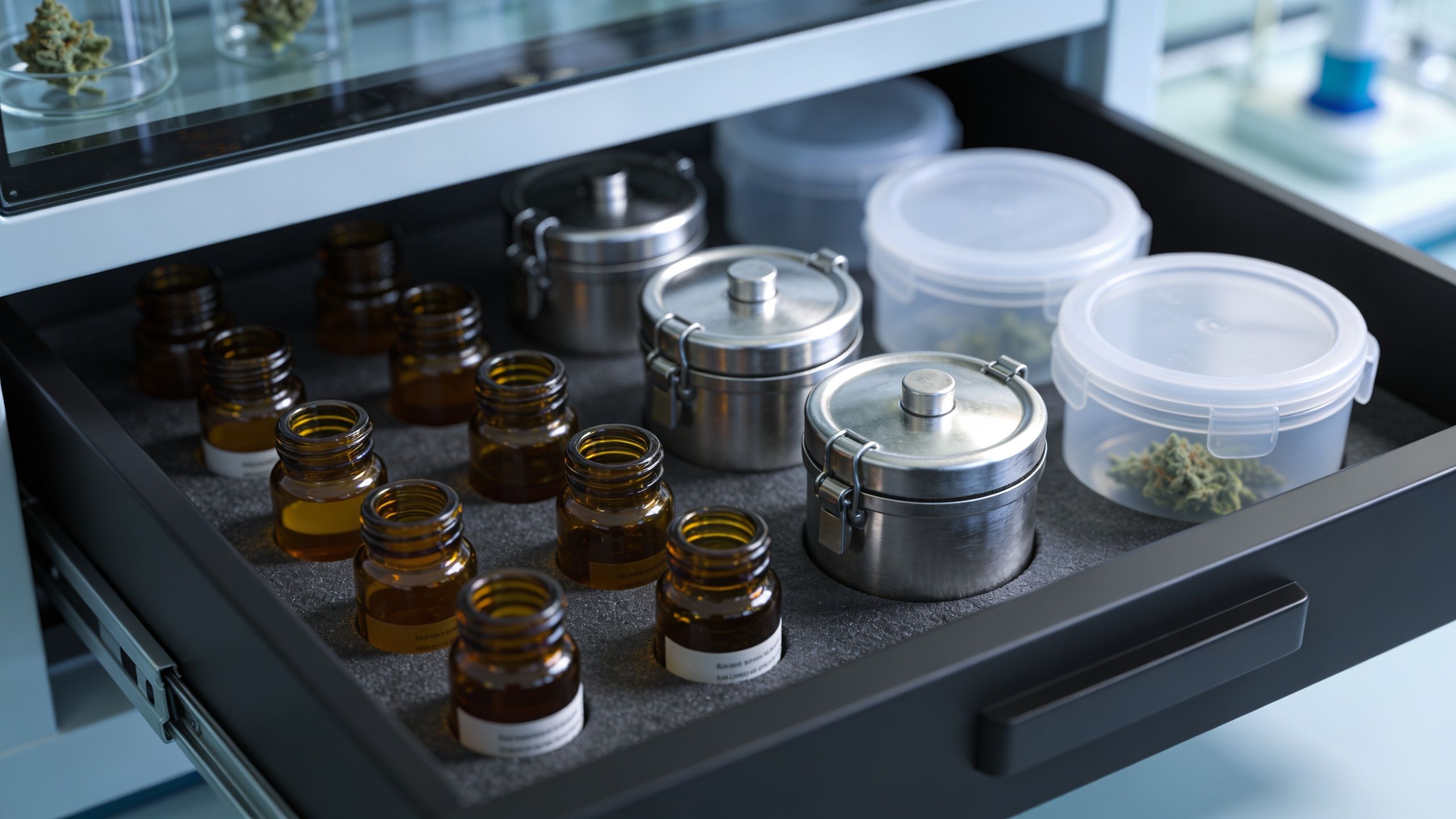
Glass is the working standard
For professional use, airtight, UV-blocking glass containers filled to 90-95% capacity are the strongest default because they reduce headspace oxygen. The reason that matters is straightforward. Excess oxygen in the container can reduce potency by 20-30% within 6 months, based on the storage guidance published by Bucanna Labs on storing terpenes.
Amber glass works well because it solves two problems at once. It’s non-reactive, and it helps block light. Borosilicate glass is especially useful in labs and production environments because it handles repeated use and cleaning better than cheaper glass.
Plastic is convenient and expensive in the wrong way
Plastic often shows up because it’s cheap, light, and already in the building. For terpene inventory, those benefits don’t hold up. The same Bucanna guidance warns that plastic containers can cause up to 25% profile alteration in 3 months due to leaching.
That’s a major issue for anyone replicating flavor of a known cultivar or maintaining a precise terpene profile for distillate. Even if the alteration is subtle, subtle is enough to move a commercial blend off target.
Practical container choices
- Best default: Amber or opaque glass with an airtight seal.
- Useful for secondary bulk protection: High-barrier bags or secondary packaging when paired with oxygen control.
- Avoid for primary storage: Most plastics, especially for long holds or repeated opening.
- Use caution with metal: If it isn’t clearly non-reactive and appropriate for contact, don’t assume it’s safe for terpene contact.
If a container can change the profile before you ever formulate with it, it isn’t cheaper. It just hides the cost until later.
The cap and storage location matter too
A good bottle with a weak closure still fails. Caps need tight seals and chemically resistant liners. In practice, many teams standardize around liner materials that hold up to aggressive aromatic compounds better than generic inserts.
The storage environment should be controlled the same way. A dedicated refrigerator or stable cool cabinet beats a shared breakroom fridge every time. Door shelves are especially poor because they warm and cool constantly with each opening.
For a related handling discussion, this article on how to use terp pearls is useful because it reinforces the same larger lesson. Material compatibility matters. Surfaces, tools, and contact conditions all influence how well volatile compounds hold up in real use.
A quick visual walkthrough can help when training new staff:
Operational Best Practices for Handling and Labeling
Good storage hardware won’t save a bad handling routine. Most terpene damage in active production happens in small repeated events. A bottle sits open while someone answers a question. Cold material gets opened too early and pulls in moisture. One pipette gets reused across multiple profiles because the operator is moving fast.
That’s why handling SOPs need to be simple enough to follow every time.
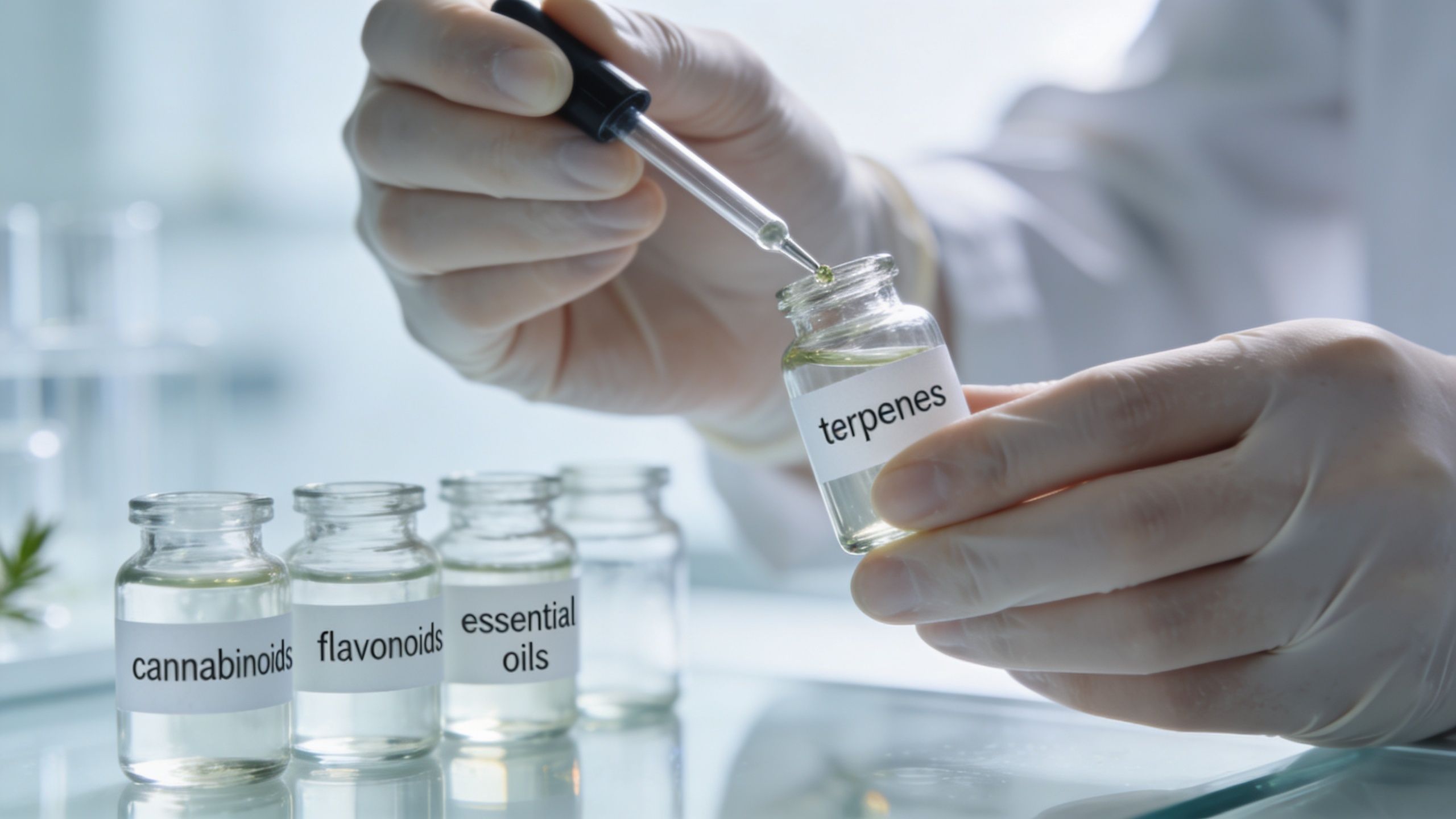
Open cold inventory the right way
If terpenes come out of refrigerated storage, let the sealed container come toward room temperature before opening it. Opening too early creates condensation risk. Once water gets involved, you’ve added another variable that doesn’t belong in a precision aromatic ingredient.
For teams running a formulation guide for vape cartridges, this one habit prevents a lot of avoidable headaches. The goal is to keep the bottle environment stable until the contents are ready to handle.
Use master stock and working stock
One of the most practical SOP upgrades is splitting inventory into a master stock bottle and smaller working stock bottles. The large bottle stays sealed as much as possible. Production pulls come from the smaller bottle.
That reduces repeated oxygen exposure on your best-protected inventory. It also gives QC a cleaner reference point if a working bottle starts showing drift.
A handling SOP that holds up on busy days
- Retrieve only what the run needs: Don’t stage multiple bottles unless they’re required for the batch.
- Allow sealed cold bottles to temper before opening: This lowers condensation risk.
- Dispense quickly and close immediately: Don’t leave a cap off while setting up other materials.
- Use dedicated clean glass tools: Separate pipettes or transfer tools by profile whenever possible.
- Return material to controlled storage immediately: Bench time should be short.
The easiest way to protect a profile is to reduce how often humans interact with the master bottle.
Label for traceability, not just identification
A label that only says “Limonene” or “Blue Dream” isn’t enough in a commercial setting. Operators need to know what it is, when it arrived, when it was first opened, and how it connects to incoming documentation and finished batches.
A practical terpene label should include:
- Profile or isolate name: The exact material identity used in formulation.
- Supplier lot number: Needed for traceability and investigations.
- Date received: Helps inventory rotation.
- Date opened: Critical for managing active shelf life after first exposure.
- Storage condition notes: Useful when certain materials are held separately.
Keep strain-inspired profiles segregated during use
Cross-contact isn’t only a warehouse problem. It also happens on the bench. If your team is building multiple SKUs in one day, profile carryover from tools, gloves, liners, or open vessels can create sensory noise that’s hard to track later.
That matters most for top-note-heavy blends. Those profiles reveal contamination faster because small aromatic carryover changes the opening impression immediately. In a commercial review, that can look like poor strain replication when the actual cause was handling discipline.
Advanced Storage for Bulk Inventory and Strain Libraries
Large operations face a different problem. It’s not just how to store terpenes in one bottle. It’s how to manage dozens of profiles, bulk reserve inventory, and archived strain references without letting the library contaminate itself.
Segregation protects the whole library
Strains and isolates should be stored in individual airtight glass jars and kept segregated. That isn’t overkill. According to Medical Terpenes on proper terpene storage, mixed storage can alter sensory profiles by 15-20% within 1 month through cross-contamination.
For a strain library, that means one loud profile can slowly distort nearby materials. Delicate fruit-forward profiles are especially vulnerable when they share storage space with sharper, more aggressive aromatic profiles.
Bulk packaging needs secondary protection
For larger reserves, secondary packaging becomes part of the SOP. The same Medical Terpenes guidance recommends vacuum-sealed, nitrogen-blanketed secondary packaging for bulk storage, and says containers should only be opened after 30-60 minutes of gradual warming to avoid condensation.
That approach works because it reduces oxygen in the package and prevents abrupt environmental change during handling. For reserve stock that won’t be used daily, this is often the difference between an archive and a slowly declining backup.
What a strain-library SOP usually includes
- Dedicated shelves or bins by profile family: Keeps high-impact aromas from crowding delicate ones.
- Archive units separate from daily-use units: Protects reference stock from unnecessary handling.
- Controlled warming before opening cold bulk packs: Prevents condensation and handling mistakes.
- Periodic sensory review or analytical review: Confirms whether your storage environment is preserving what you intend.
Bulk terpene storage is inventory management and sensory quality control at the same time. Treating it as only one or the other usually leads to drift.
Shelf life should be proven in your facility
Published guidance is useful, but every operation should establish its own real shelf-life behavior. Storage room traffic, bottle size, handling frequency, and climate stability all change outcomes. The most disciplined manufacturers build internal retention checks into their QC calendar and compare aged stock against retained references before a problem reaches production.
That’s the payoff. Better storage doesn’t just preserve material. It protects SKU consistency, reduces avoidable reformulation, and gives your team more confidence when scaling a strain-inspired terpene blend across multiple runs.
If you’re developing a terpene profile for vape cartridges, refining a strain-inspired terpene blend, or building a tighter formulation guide for cannabis product formulation, Gold Coast Terpenes offers strain-specific blends, isolates, and formulation resources built for commercial use. Their catalog and technical tools can help you source consistent aromatic inputs while tightening the process around flavor replication, batch control, and product development.