
Most advice on trichomes when to harvest is built for growers trying to finish a crop. That advice is often too blunt for extractors, formulators, and brand teams. If your job is to deliver the same bright citrus top note, the same dense gas-heavy base, or the same balanced cannabinoid feel across repeat SKUs, harvest timing isn't the end of cultivation. It's the start of formulation.
The usual conversation asks, “Is the plant ready?” The better commercial question is, “Ready for what?” A crop cut for flower jars may be wrong for a terpene-forward vape cartridge. A crop left longer for a heavier profile may be exactly right for a sleep-positioned concentrate. Once you frame harvest this way, trichome maturity stops being a general grow metric and becomes a raw-material specification.
Why Generic Harvest Timing Fails Product Formulation
The generic rule says to wait until trichomes turn cloudy and a portion becomes amber. That isn't wrong. It's just incomplete. Formulators don't buy “ready.” They buy input material that either supports a target profile or fights it.
A bright, strain-inspired terpene blend for vape cartridges depends on what survived from the plant into extraction. A heavier, more body-weighted profile depends on a different maturity point. If the harvest team and formulation team aren't working from the same target, you get mismatch at every stage. The extract may test fine and still fail the sensory brief.
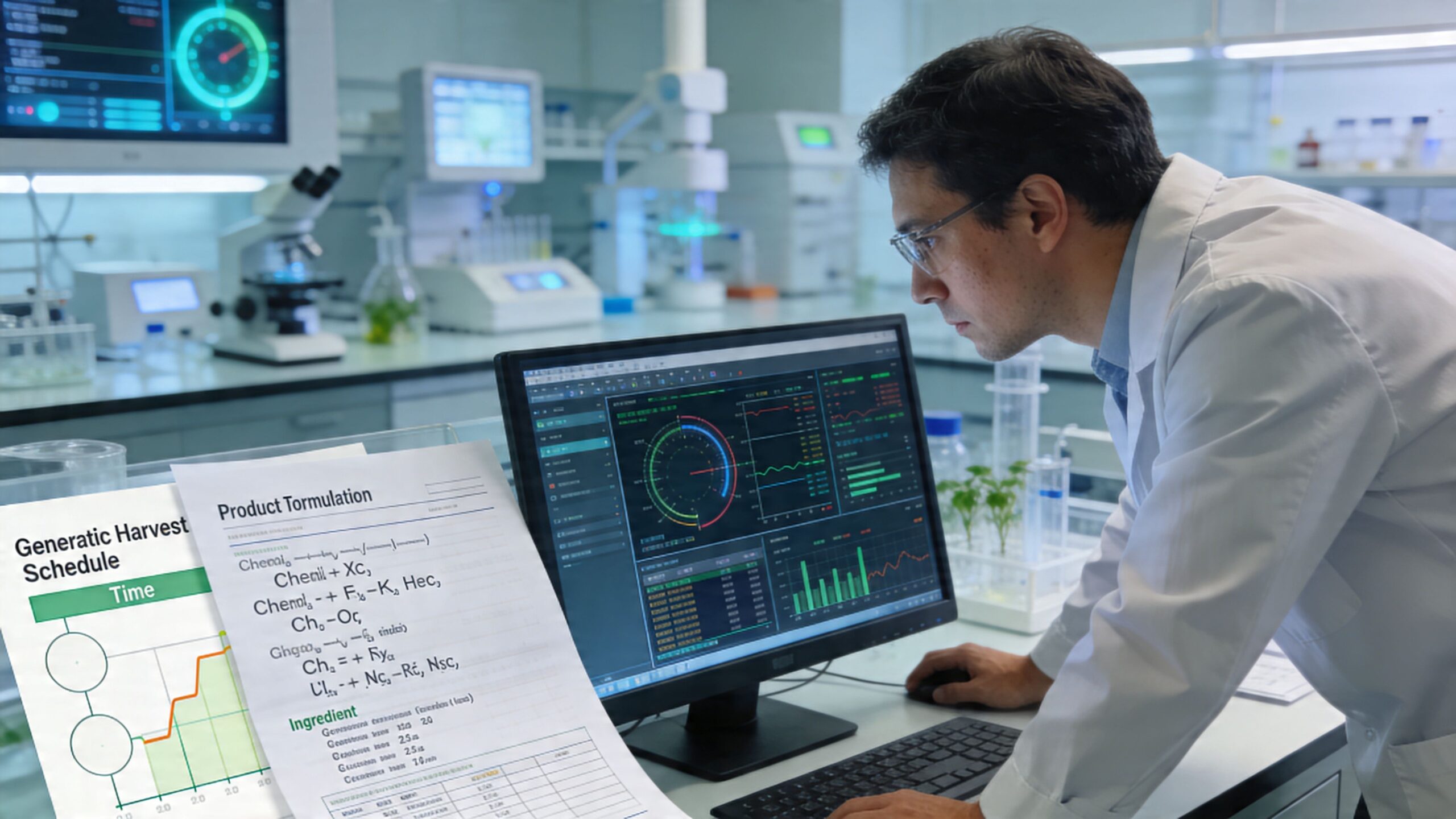
Harvest timing is a formulation input
The core mistake is treating harvest as an agricultural checkpoint instead of a formulation control point. The resin glands you're inspecting hold the compounds that shape finished flavor, aroma, and performance. If you cut too early, you don't just lose maturity. You alter the entire starting balance of cannabinoids and terpenes.
That matters most when you're building products that need repeatability:
- For distillate enhancement: You need base material that won't force excessive correction later.
- For strain-inspired terpene blend work: You need a harvest window that preserves recognizable top notes.
- For cannabis product formulation: You need a predictable sensory direction before post-processing starts.
Early harvests with mostly clear to milky trichomes can preserve volatile terpenes such as limonene and myrcene, while amber-heavy harvests risk 20-30% terpene loss from degradation, and recent lab data also indicates 15-25% higher monoterpene retention in earlier harvests, according to the data summarized in this discussion of harvest timing and terpene retention.
Practical rule: If your team wants a lively, high-definition aroma in the final oil, don't let a generic “wait a little longer” habit make the decision for you.
Why growers and formulators often want different things
A grower may look for maturity, density, and a broad peak window. A formulator is usually chasing a narrower objective. The target might be a citrus-forward top note for a daytime cartridge, a rounded dessert profile for a disposable, or a deeper peppery finish for a concentrate line.
Those targets create real trade-offs:
- Earlier cuts can protect delicate aromatic material that gives a formula lift and separation.
- Later cuts can push the profile toward heavier effects and a different sensory weight.
- Overripe material can flatten what should have been distinct and layered.
This is why generic guidance fails commercial product development. It treats all outcomes as interchangeable. They aren't.
A crop intended for high-THCA concentrate isn't judged the same way as biomass intended for a calming formula. A formulation guide for replicating flavor of a cultivar in oil should start with the harvest brief, not with post-extraction correction.
The SKU starts in the field or room
When teams ask why one batch of extract needed more adjustment than another, the answer is often visible before the first pass of extraction. Trichome maturity sets the direction. Extraction and terpene addition refine it. They don't magically restore what was never captured.
The most useful way to think about trichomes when to harvest is as a language shared between cultivation and manufacturing. Instead of saying “cut next week,” specify the intended commercial outcome. Tie harvest to the profile the finished product needs to hit.
For a deeper visual refresher on resin development itself, this guide to trichomes on weed is useful background. But for product teams, the key move is operational. Turn trichome maturity into a raw-material spec, and batch consistency gets much easier to protect.
The Formulator's Toolkit for Trichome Inspection
A loupe helps with spot checks. For commercial harvest timing, I want a record the cultivation lead, extractor, and product team can all review without arguing over memory.
The goal is simple. A maturity call made on Tuesday should still hold up on harvest day, and it should explain why a lot was assigned to one SKU instead of another.
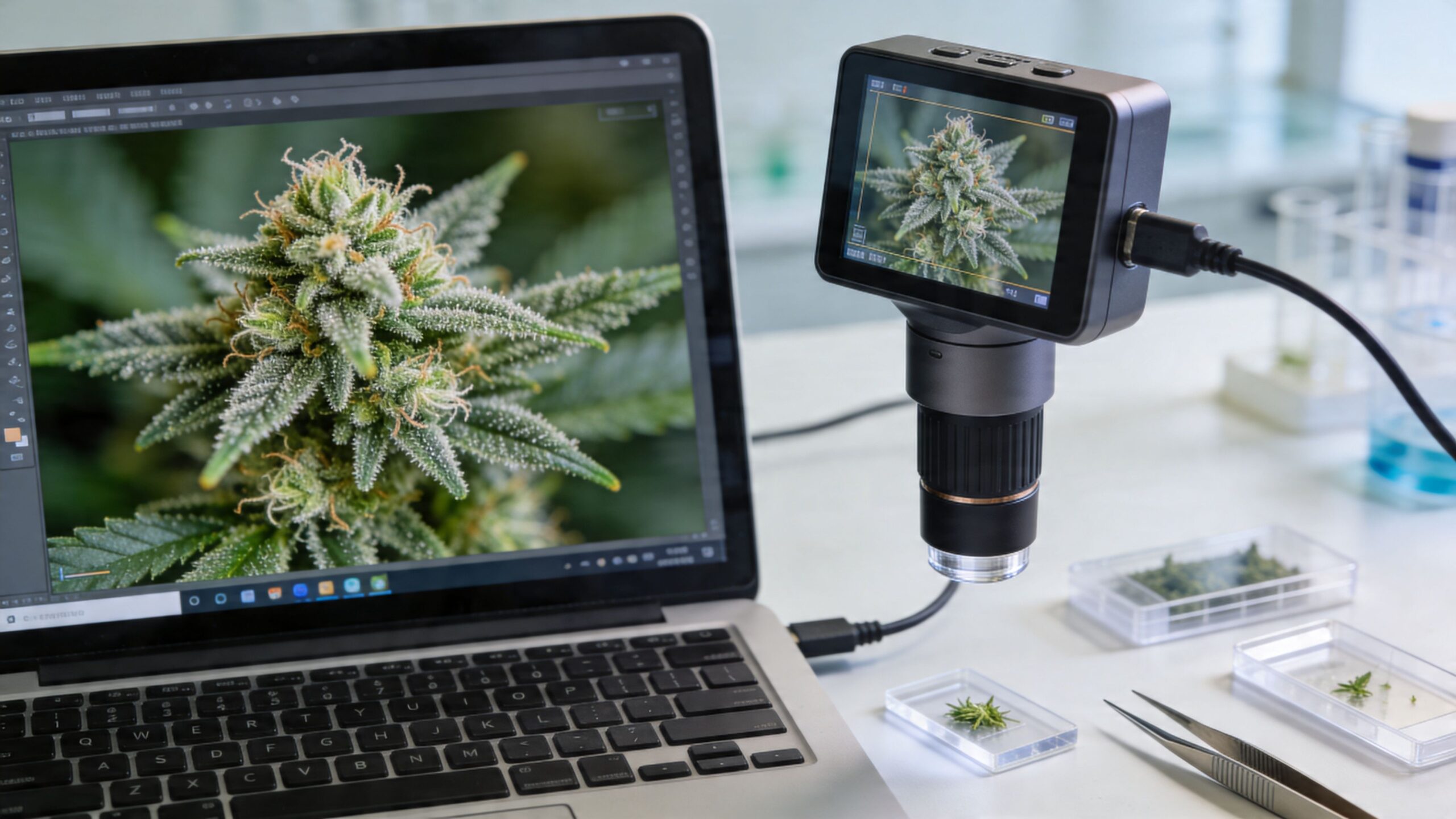
Build around records, not quick impressions
Inspection starts with magnification, but the tool choice matters less than the recordkeeping around it. A useful setup usually includes a jeweler’s loupe for fast checks, a digital microscope for image capture, and a shared archive tied to cultivar, room, canopy zone, and date.
That archive does real work. Trichome color shifts are gradual, and teams often remember them poorly. Side by side images from the same plant over several days make maturity drift obvious, which is exactly what a formulator needs when trying to preserve a repeatable terpene expression.
I also want the file structure to match downstream decisions. If an extractor needs material with a brighter top note profile, they should be able to pull up the inspection set and see what was approved, not rely on a note that says "close" or "mostly ready."
A practical SOP usually includes:
Fixed sampling points
Tag top, middle, and lower bud sites before the harvest window opens.Neutral lighting
Inspect under white light. Colored fixture output can shift how clear, cloudy, and amber heads appear.Standard file names
Use cultivar, plant or bench ID, canopy zone, and date in every image name.Defined counting rules
Count gland heads on flower tissue, not general frostiness or resin on sugar leaves.
Sample the plant the way the plant will be sold
Single-cola checks create bad records. Tops often mature ahead of the rest of the plant, and sugar leaves often read ahead of the calyx surface that matters more for harvest timing.
Commercial lots need representative sampling because commercial lots get blended, extracted, and standardized. If the bottom half of the biomass is behind the top, that gap shows up later in flavor, color, and how much correction the batch needs after extraction.
For teams that need a shared visual standard, this trichome color chart for staff calibration and harvest reviews gives cultivation and post-harvest teams a common reference point.
The point of inspection is to produce a harvest record that supports the product brief.
Later in the workflow, video can help align teams on what they should be seeing under magnification:
Turn inspection into a formulation input
"Mostly cloudy" is too vague for a production environment. The record should show the observed ratio range, where the sample came from, and what the lot is intended to become.
That changes how teams talk about harvest. Instead of asking whether the crop is ready in a general sense, ask whether this maturity state fits live resin, cured extract, premium flower, or a formula that will need a heavier sensory profile.
A usable inspection record answers a few direct questions fast:
- What finished product or SKU is this lot meant for
- Which canopy zones were sampled
- Were flower sites and not just sugar leaves inspected
- Was the harvest call made for inhalable flower, extraction, or a specific formulation target
- Would a staged harvest produce better raw material fit across more than one product line
Digital microscopy earns its place here because it gives operations a reference library. Over time, that library becomes more valuable than generic harvest advice. Teams can compare current lots against prior lots that produced the desired terpene profile, flavor carry-through, and post-extraction behavior.
Decoding Trichome Ratios for Product Development
Generic harvest advice breaks down as soon as the crop has a defined commercial destination. A room harvested for "peak ripeness" can still be wrong for a vape line that needs bright carry-through, a distillate input that needs a clean cannabinoid base, or a heavier extract meant to hold deeper resin character after processing.
For formulation, trichome ratios matter because they set the correction burden later. Cut too early and the lot often arrives thin, green, and incomplete. Cut too late and the top end of the aroma profile can collapse into a narrower, heavier expression that limits what the extractor can preserve and what the formulator can realistically rebuild.
Start with the SKU target
The practical question is simple. Which maturity window gives the finished product the best starting chemistry and the least artificial fixing later?
I use trichome ratios as a routing tool. A lot with mostly cloudy heads and low amber content usually gives more flexibility for bright inhalable products. A lot with a larger amber share can be the better fit for formulations built around density, longer finish, and stronger base-note presence. The point is not to chase a universal "ideal" harvest state. The point is to match raw material to the product brief before the cut.
That mindset changes the role of inspection. Trichome reading stops being a grow-room ritual and becomes an upstream formulation control.
Ratio targets by product intent
The table below translates visual maturity into product-development use cases. These are operating ranges, not laws. The right call still depends on cultivar behavior, extraction method, and how much native terpene fidelity the finished SKU needs to keep.
| Product Goal | Target Profile | Trichome Ratio (Cloudy/Amber/Clear %) | Dominant Terpene Goal |
|---|---|---|---|
| Uplifting formulation guide for vape cartridges | Energetic, brighter, more cerebral expression | 70-80% cloudy, less than 10% amber, remaining clear | Preserve brighter top notes such as citrus and light fruit character |
| Balanced strain-inspired terpene blend | Mixed euphoria and body balance | 70-90% cloudy and 10-30% amber | Hold a broad, rounded aroma with both top and mid-note presence |
| High-THCA material for distillate | Maximum potency with minimal sedative shift | 85-90% cloudy and 5-10% amber | Keep terpene structure suitable for later reintroduction and profile matching |
| Early balanced harvest consideration | Usable but still cautionary decision point | 50% cloudy, 25% amber, 25% clear | Avoid premature cuts that flatten both flavor and effect development |
| Sedative concentrate or evening-positioned SKU | Heavier body-led profile | 30-50% amber with cloudy dominant remainder | Support deeper, weightier notes over bright top-note emphasis |
Those ranges are useful because they give operations, extraction, and formulation a shared language. They also support staged harvesting. One lot does not have to feed every SKU equally well.
How ratios affect terpene architecture after extraction
Trichome maturity changes more than perceived potency. It changes the shape of the aroma package that survives harvest, washing, curing, or extraction.
Lower amber lots generally give a cleaner path for preserving volatile top notes. That matters for carts, live products, and any formulation brief that depends on recognizable citrus, tropical fruit, floral lift, or sharp varietal detail. Teams trying to preserve that character usually get better consistency by pairing the harvest window with cultivation practices that support volatile retention in the first place, such as the methods covered in these ways to improve terpene levels before harvest.
As amber increases, the profile often shifts toward weight and persistence. Earth, spice, resin, musk, and heavier gas notes tend to integrate more easily into evening-positioned concentrates and broader-bodied oils. That can be an advantage. It can also be a liability if the product brief calls for freshness, lift, or precise flavor replication across batches.
A harvest call that looks slightly late in the cultivation room may be exactly right for a formulation brief built around a dense, slow, evening profile.
What works in production
What works is assigning product destination before harvest, then selecting the maturity window that gives extraction and formulation the best native input. What fails is cutting an entire room on one schedule and expecting post-harvest sorting to create premium flower, bright vape oil, neutral distillate feedstock, and sedative concentrate from materially different chemistry.
Cultivar behavior matters here, but the operational principle stays the same. If staged harvesting is possible, use it. Take earlier material for SKUs that need cleaner lift and later material for SKUs that benefit from more settled weight.
For teams searching trichomes when to harvest, the useful answer is rarely a single number. The useful answer is the ratio range that produces a repeatable terpene and cannabinoid profile for the exact product being manufactured.
Advanced Variables Cultivar and Terpene Preservation
Uniform trichome ratios do not create uniform inputs. Two lots can show a similar cloudy-to-amber balance and still behave very differently in extraction, terpene recovery, and flavor replication. For formulation teams, that gap is where margin gets lost.
The reason is simple. Cultivar expression and terpene fragility set the ultimate harvest target. Trichome color is still the field signal, but it has to be interpreted through the product brief and the way that specific cultivar holds or sheds aromatic detail near the finish line.
Cultivar type changes the harvest target
Broad cultivar categories still matter, but not in the simplistic way growers often use them. I do not treat "indica," "sativa," or "hybrid" as a harvest answer. I treat them as a warning that the same trichome ratio can produce a different post-extraction result.
Some lots carry bright citrus, thin floral notes, or sharp tropical top notes that fall apart quickly if the plant is left to settle too long. Other lots keep their identity deeper into maturity and gain useful body without losing definition. Alchimia notes the same general pattern in its strain-specific trichome ripeness guide, along with the practical need to sample multiple canopy positions because ripeness does not progress evenly across the plant.
That changes the harvest brief in production:
- Indica-leaning lots often deliver enough depth and body before late amber development becomes necessary.
- Sativa-leaning lots can need more finish time if the target product requires less edge and more aromatic roundness.
- Hybrids require actual lot history. Phenotype expression can shift the useful window enough to make generic timing unreliable.
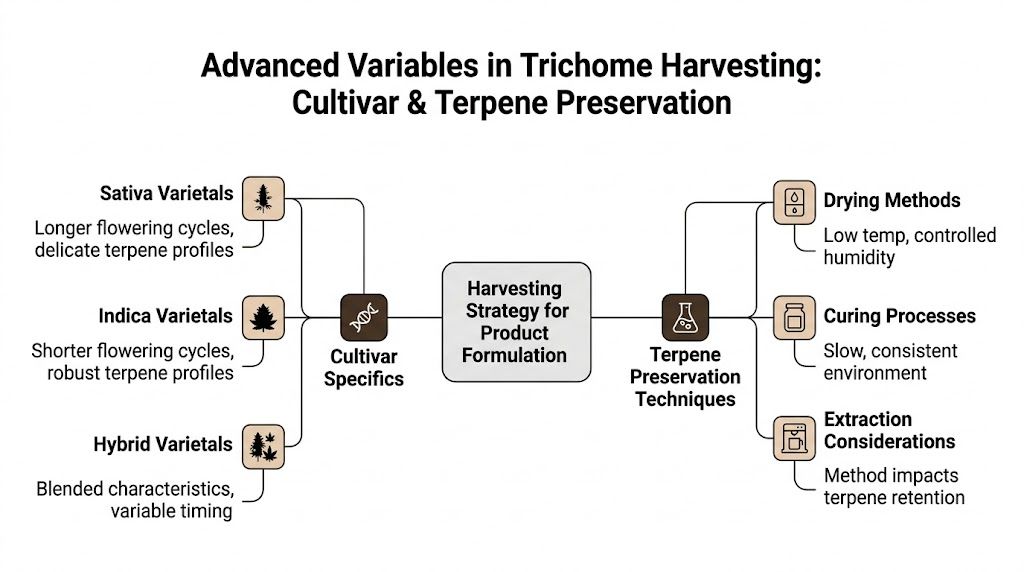
Terpene preservation starts before the cut
Teams often talk about terpene preservation as a drying or extraction problem. In commercial formulation, it starts with the harvest call itself. If the lot is cut after the top-note fraction has already softened, no extraction technique will fully restore that missing shape.
I track harvest timing against three aroma layers because they survive processing differently and contribute different value to the final SKU.
| Terpene role | What you're trying to preserve | Harvest implication |
|---|---|---|
| Top notes | Bright citrus, floral lift, volatile freshness | Cut before late maturity flattens the opening if the SKU depends on a lively first impression |
| Mid notes | Cultivar identity, sweetness, herbal center | Hold long enough to develop recognizable character, but not so long that the profile turns muddy |
| Base notes | Spice, earth, gas, dense body | Later maturity can add weight, though too much can blur separation and reduce flavor precision |
That framework matters most in products that need repeatable native character, especially live resin lines, strain-forward carts, and terpene-rich bulk oil sold into branded manufacturing.
Cultivation practices affect how much terpene material is available to preserve in the first place. For cultivation-side context, see ways to increase terpene levels in marijuana plants.
Environmental drift changes the commercial result
Late-cycle environment changes can move a cultivar out of its useful formulation window faster than the calendar suggests. Heat, cold, humidity swings, and uneven light exposure all change how quickly heads mature and how stable the aroma remains.
The operational mistake is treating the harvest date as fixed once the room is close. Commercial teams get better consistency by reviewing the lot every day near the target window, checking more than one canopy tier, and comparing the current expression to the product specification, not just to the previous run's schedule.
A lot that looked perfect three days ago can lose the sharpness needed for a bright vape formula. A lot that seemed slightly early can be exactly right for a flower SKU where freshness and articulation matter more than extra weight.
Use staged harvest when the plant gives you two products
Uneven maturity can be useful. Tops and lowers often present different formulation opportunities, especially in cultivars with strong vertical variation or in rooms where light distribution creates a split finish.
A staged harvest lets the business separate material by commercial destination instead of averaging everything into one compromised input. Earlier-cut fractions can feed SKUs that need cleaner lift, sharper cultivar identity, or more volatile aroma retention. Later fractions can support denser oils, evening-positioned concentrates, or products where heavier base notes are an advantage.
That is how I prefer to use trichome variation in production. Not as a cultivation flaw to hide, but as a formulation tool that creates better native inputs before extraction ever starts.
Post-Harvest Handling to Preserve Your Target Profile
A well-timed cut does not guarantee a usable formulation input. I have seen batches hit the right trichome window, then lose their market value in drying, binning, and transfer because the post-harvest plan was generic while the product brief was specific.
For B2B production, the post-harvest phase is part of formulation control. If the goal is a bright live profile, a neutral extraction base, or a cultivar-faithful vape oil, the handling method has to match that target from the first tote to final intake.
Match handling to destination
Material for extraction and material for premium flower should not move through the same workflow by default. Flower programs can tolerate some process choices that extraction programs cannot. Extraction input is less forgiving because small losses in volatile aroma, lot identity, or resin integrity tend to show up later as flatter oil, weaker cultivar recognition, or more corrective terpene work.
That matters most when the harvest was intentionally timed for a narrow profile. As noted earlier, a tighter trichome target for concentrate production only pays off if the lot stays chemically and sensorially intact after the cut.
What protects the profile after the cut
The teams that preserve profile best are usually disciplined in ordinary ways, not fancy ones. They reduce contact, reduce delay, and keep the lot identity attached to the material the whole time.
Handle the plant gently during bucking and transfer
Broken heads, compressed flower, and warm piles all reduce the quality of the starting input.Keep lots separated by formulation intent
Do not merge early, bright material with later, heavier material just because both came from the same room.Shorten the time between harvest and the next controlled step
Long staging periods create more room for temperature drift, aroma loss, and labeling errors.Carry harvest notes into post-harvest records
If the cultivation team cut a lot for a specific sensory brief, extraction and formulation need that context at intake.
Teams revising SOPs can use this practical guide on how to dry and cure pot without flattening the profile as a reference.
Drying and curing either preserve separation or erase it
Drying is where a lot either keeps its note separation or starts to collapse into a simpler, duller version of itself. That trade-off matters more in commercial formulation than many cultivation teams expect. Once the sharper top notes fade and the middle of the profile muddies, the extractor still gets oil, but not the same oil the trichomes promised at harvest.
Here is the operating lens I use with production teams:
| If your priority is | Protect this | Avoid this |
|---|---|---|
| Replicating flavor of a cultivar for vape cartridges | Native aroma detail and clear note separation | Rough transfers, mixed bins, and rushed drying |
| Building a clean base for distillate enhancement | Consistent input with predictable sensory load | Lot drift, poor labeling, and variable hold times |
| Creating a heavier finished profile | Preservation of deeper notes without cooking off the rest | Assuming a later harvest excuses sloppy post-harvest control |
Post-harvest handling determines whether the extractor receives a formulation-grade input or a compromised agricultural commodity.
If a batch loses some of its original shape, formulation can still correct part of the gap. A strain-inspired blend can rebuild missing fruit, gas, or floral character well enough for a commercial SKU. That works best as refinement, not rescue. The cheaper move is preserving the target profile before drying strips it out.
Conclusion From Harvest Strategy to Formulation Reality
For product teams, trichomes when to harvest isn't a grow-room trivia question. It's one of the clearest levers you have over final product character. The harvest window sets the chemical and sensory direction. Everything after that either preserves it, sharpens it, or tries to recover what was lost.
The biggest shift is mental. Stop treating harvest as a generic maturity event. Treat it as a formulation specification. A brighter profile, a neutral high-THCA base, and a heavier evening-style concentrate should not all start from the same trichome target. Once cultivation, extraction, and formulation agree on that, consistency improves because the raw material is finally aligned with the SKU.
This approach also makes batch variation easier to manage. Not every room finishes the same. Not every cultivar responds the same. Not every lot carries the exact aromatic detail you wanted. But if your team tracks trichome maturity with intent, documents the lot properly, and handles the post-harvest phase carefully, you start with a much stronger foundation.
And when cultivation reality doesn't perfectly match the sensory brief, precision terpene blending becomes the cleanest way to standardize, correct, or extend the profile. That's where formulation stops being reactive and becomes controlled.
If you're building repeatable vape, concentrate, or distillate products, Gold Coast Terpenes gives formulators practical tools to close the gap between harvest variability and finished-SKU consistency. Their catalog includes strain-specific profiles, isolates for top/mid/base note control, and formulation resources that support terpene profile work for vape cartridges, for distillate, and for cannabis product formulation.