
As a formulator, you're constantly navigating market demands. When a client asks for a product inspired by "sativa for anxiety and depression," they're not really asking for a botanical classification. They're asking for a specific effect: something uplifting, mood-elevating, and focusing. The 'sativa' or 'indica' tag is a consumer shorthand; it's a botanical footnote that tells us nothing about a product's chemical composition or its resulting functional experience.
For product developers, the true opportunity lies in understanding and engineering the chemical fingerprint—the precise combination of terpenes and cannabinoids that produces a desired outcome.
Rethinking Sativa: A Shift to Chemical Formulation
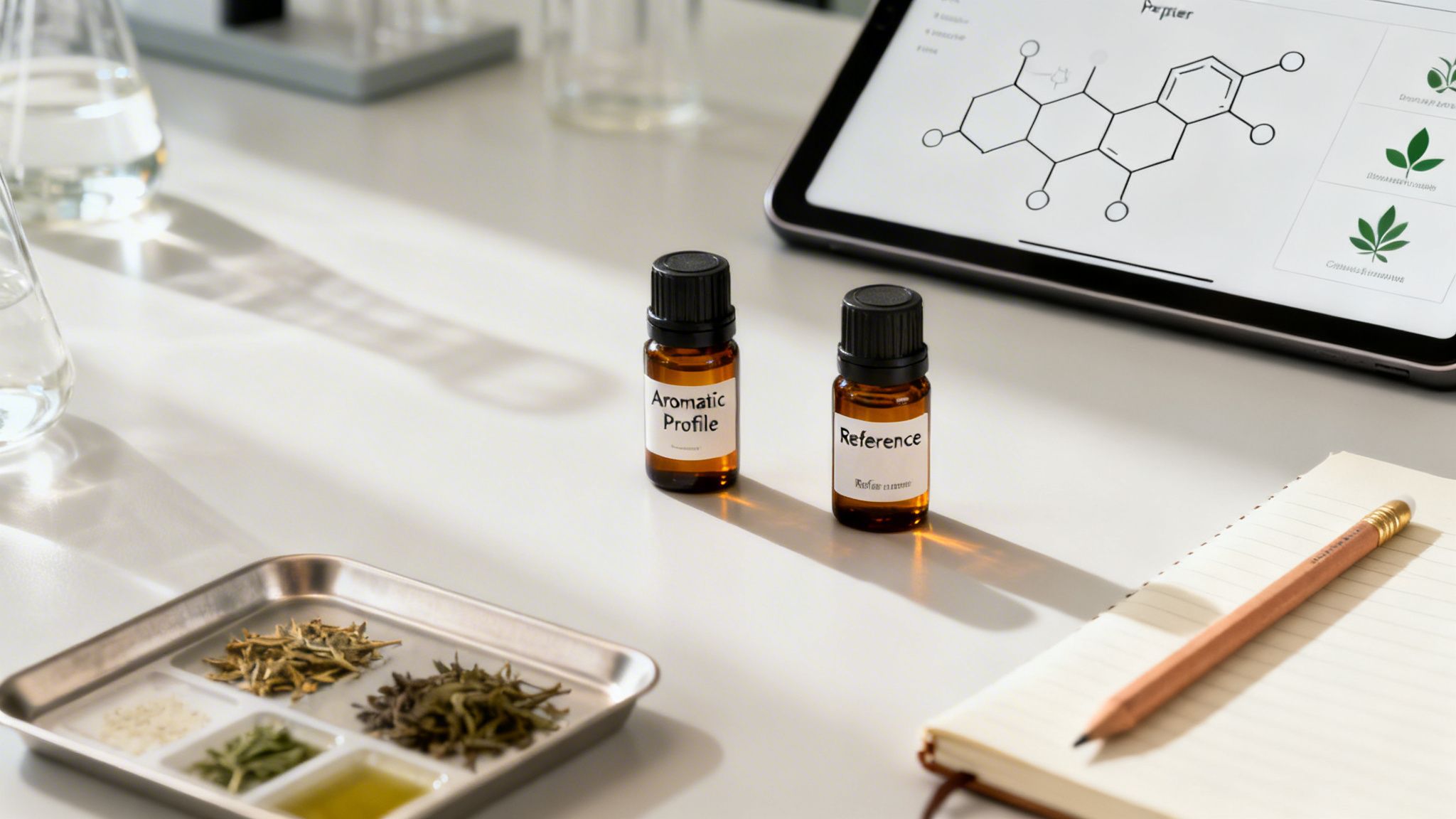
For anyone developing cannabis products, moving past the sativa vs. indica mindset is critical for achieving consistency and quality. Brands have historically leaned on these labels as a simple guide: sativa for "energy," indica for "relaxation." But for a formulator, this is an unacceptable oversimplification.
The final effect is dictated by the specific chemovar. Two different cultivars, both marketed as “sativa,” can deliver wildly different experiences because their terpene and cannabinoid ratios are worlds apart. For any brand building a reputation on reliability, that level of inconsistency is a liability.
Formulating with Precision, Not Plant Names
This is where leading brands are focusing their efforts. Instead of chasing a particular "sativa" cultivar, formulators are engineering effects from the ground up with precision-blended terpenes. This approach replaces botanical unpredictability with absolute control over a product's aroma, flavor, and function.
This guide is for manufacturers, extractors, and brand owners dedicated to creating dependable effects for vape cartridges, tinctures, and edibles. We will break down how to translate the sought-after "uplifting" sativa-like experience into a replicable formula for your distillate.
The core principle is simple: you are not just replicating a plant; you are engineering a predictable sensory and functional experience. This shift from botanical sourcing to chemical formulation is what separates amateur products from professional, market-leading brands.
By mastering key terpenes like Limonene, Pinene, and Beta-Caryophyllene, you can consistently craft products that deliver the bright, focused, and inspiring effects your market demands. It’s a data-driven method that ensures your formulations work as intended, batch after batch. While consumer terms persist, you can learn more about why their uses and benefits differ so drastically based on their chemical composition.
Ultimately, the relevant question isn’t whether sativa is "good" for a particular mood. The question for us is: which specific chemical profiles can we build to create the uplifting and mood-supporting effects consumers seek?
Looking Beyond the Label: What Data Says About Uplifting Blends
Relying on anecdotal feedback and marketing labels is a shaky foundation for building a product line. To gain a competitive edge, you must analyze the data. The opportunity isn't in just applying a "sativa" label to your vape cartridge; it's in understanding why certain profiles perform well and translating that knowledge into a precise, repeatable formulation.
When consumers report positive outcomes with a specific strain, they provide a valuable clue. The key is to look past the strain name and analyze its chemical fingerprint. This data-backed approach allows you to engineer blends that consistently deliver a specific experience.
Turning User Data into a Formulation Strategy
The market is filled with vague claims. Real-world evidence, however, offers a clearer playbook. When researchers study how people use cannabis for mood, they uncover patterns that are incredibly valuable for any formulator. These studies connect a product's chemical profile to its real-world effects.
A detailed 2022 study tracking 976 cannabis use sessions for depressive symptoms found that what users identified as "sativa-dominant" strains were perceived as significantly more effective than CBD-dominant ones. The data showed a mean difference of 1.83 (95% CI 0.68–2.99, P_adj = 0.028) in perceived efficacy. The sativa-dominant group reported an efficacy estimate of 3.329, showing a clear preference for these types of profiles. You can access the full research paper for a deeper dive into these findings.
This is a key commercial insight. It strongly suggests that a specific combination of cannabinoids and terpenes—the kind often found in cultivars labeled as sativas—is what resonates with consumers looking for a mood-enhancing effect. Your job as a formulator is to deconstruct that winning recipe.
For a product developer, this data is gold. It confirms that a certain type of chemical profile is what people feel works best. The next step is to break down that profile, isolate its key components, and then build it back up in a controlled, scalable way for your own distillates and vape carts.
Finding the Aromatic Drivers for Vape Cartridges
If the data points to "sativa-like" profiles, the next question is: what's in them? Specifically, which terpenes are responsible for the characteristic effects? More often than not, the answer involves a handful of aromatic compounds known for their bright, invigorating aromas.
- Limonene: With its unmistakable citrus scent, this terpene is a major component in strains described as uplifting.
- Pinene: Known for its sharp, fresh-pine aroma, pinene is another key compound often associated with focus and alertness.
- Terpinolene: This terpene is more complex—floral, herbal, and slightly fruity—and frequently appears in profiles reported as energizing.
By identifying these terpenes as common denominators in successful products, you can move beyond broad categories. Instead of formulating a generic "sativa" blend, you can create a "Limonene-Dominant Uplifting Blend" or a "Pinene-Forward Focus Formula." This specificity not only improves product consistency but also provides a stronger narrative for marketing and brand identity.
This approach gives you everything you need to create a powerful, data-backed strain-inspired terpene blend for your distillate. You can refine your formulas further by exploring the top 8 terpenes for stress relief, which often share components with uplifting profiles. By combining scientific evidence with strategic terpene selection, you can create products that stand out in a competitive market.
The Role of Terpenes in Crafting Uplifting Effects

Here, true product formulation begins. By moving past the "sativa" label, you can approach terpene selection with the precision of a perfumer crafting a fragrance or a flavorist balancing a complex profile. The objective is not merely a pleasant scent; it's the creation of a deliberate, multi-layered experience engineered to guide the user toward a specific functional outcome.
A successful "uplifting" blend is not a random mix of aromatic oils. It is built with purpose, using terpenes as distinct top, mid, and base notes. Each layer plays a vital role in the final profile, from the initial aromatic impression to the lasting character of the product. This architectural approach is crucial for any formulator looking to create a genuinely effective "focus" or "creative" blend for vape cartridges or other cannabis product formulations.
Building Your Blend with Aromatic Notes
Thinking in terms of top, mid, and base notes provides a practical framework for creating blends with both aromatic depth and functional consistency. It prevents a profile from feeling flat or one-dimensional.
- Top Notes: These are the bright, volatile compounds perceived first. They are sharp, immediate, and establish the initial tone for the experience.
- Mid Notes: As top notes dissipate, the mid notes emerge. They form the "heart" of the profile, adding body and complexity that connect the bright opening to the deep finish.
- Base Notes: These are the heavy, less volatile molecules that provide the foundation. They anchor the blend, add richness, and create a lasting aroma.
This structured approach helps you shift from asking "is sativa good for anxiety and depression?" to asking the much more useful question: "Which combination of terpenes will create the bright, focused experience my customers are looking for?"
The Key Players in an Uplifting Profile
While countless terpenes exist, a few consistently appear in profiles associated with alertness and positive mood. Understanding their individual roles is the first step toward building your own effective, proprietary blend.
Here’s a breakdown of the most common terpenes for formulating an energetic or mood-boosting effect, organized by their role as aromatic notes.
Key Terpene Roles for Formulating 'Uplifting' Effects
| Terpene | Aromatic Profile | Formulation Role (Note) | Associated Experience |
|---|---|---|---|
| Limonene | Zesty, bright citrus (lemon, orange) | Top Note | Energizing, mood-lifting |
| Pinene | Sharp, crisp pine and fresh forest | Top/Mid Note | Focus, alertness, clarity |
| Terpinolene | Complex floral, fruity, and herbal | Mid Note | Creative, dreamy, cerebral |
| Beta-Caryophyllene | Warm, spicy, peppery (clove, black pepper) | Base Note | Grounding, calming, full-bodied |
Each of these terpenes contributes uniquely to the blend. How you combine them determines the final character and function of your vape blend.
Limonene (Top Note)
As the quintessential top note, Limonene delivers an unmistakable burst of citrus. Its zesty, clean aroma is instantly energizing and often associated with clarity and a brighter mood. In a formulation, it provides the initial "lift" that defines many classic sativa-type profiles.
Pinene (Top/Mid Note)
Both Alpha-Pinene and Beta-Pinene offer a crisp, refreshing pine aroma that cuts through heavier scents. It functions beautifully as a high top note and as a bridge to the mid-range, contributing to a feeling of sharp focus. Pinene and Limonene are a classic pairing for creating a vibrant, clean introduction.
Terpinolene (Mid Note)
More complex than others, Terpinolene is a perfect mid note. It has a multi-faceted aroma with hints of flowers, fruit, and herbs. In an uplifting blend, Terpinolene adds a layer of sophistication that prevents the profile from being a simple citrus blast.
By layering these bright and volatile top and mid notes, you create the immediate sensory cues for an "uplifting" experience. The initial clean, sharp aromas set the user's expectation for the focused, energetic effect to come. You can learn more about this powerful connection by exploring how terpenes affect the brain.
Beta-Caryophyllene (Base Note)
Every great blend needs an anchor, and Beta-Caryophyllene is ideal for this role. With its warm, spicy, and peppery aroma, it’s a classic base note that grounds the brighter top notes. It adds a rich, full-bodied finish that gives the blend depth and staying power, ensuring the experience feels complete rather than fleeting.
Mastering the interplay between these key terpenes allows you to engineer a precise and repeatable experience. You can formulate a strain-inspired terpene blend for vape cartridges that is not just a copy of a plant, but a refined product designed for a specific purpose—turning a simple distillate into a premium, functional offering.
A Step-by-Step Guide to Formulating an Uplifting Terpene Profile
Now we move from theory to practical application. This section outlines how to build a terpene blend designed to deliver an uplifting, energizing experience for vape cartridges and other infused products.
This process is akin to flavor chemistry. You must balance bright, zesty top notes (like Limonene) with deeper, earthier base notes (like Caryophyllene) to create a stable, aromatic, and memorable product. Let's walk through how to translate a concept into a finished vape formula that is replicable at scale.
Step 1: Start with a Target Recipe
A formulation blueprint is essential for consistency. Before mixing, you need a clear recipe that defines your target ratios.
Let's work with a hypothetical blend called "Creative Focus." The goal is to create a bright, cerebral profile that remains well-grounded. This profile leans heavily on Limonene for the initial energy, with Pinene to sharpen focus and a solid base of Beta-Caryophyllene to prevent it from feeling overly stimulating.
Target Profile: "Creative Focus"
- Primary Isolates:
- Limonene: 45%
- Beta-Caryophyllene: 20%
- Alpha-Pinene: 15%
- Secondary Isolates:
- Myrcene: 10%
- Terpinolene: 5%
- Humulene: 5%
This is your starting point. You can tweak these percentages in subsequent batches to perfect the aroma and effect, ultimately developing a proprietary signature profile.
Step 2: Select High-Quality Terpene Isolates
The quality of your final product is entirely dependent on the quality of your raw materials. Always source terpene isolates from a reputable supplier who provides a Certificate of Analysis (CoA) for every compound. The CoA is your proof of purity and your insurance against contaminants.
For our "Creative Focus" blend, you will need to procure these six isolates:
- Limonene: The driver of the uplifting effect.
- Beta-Caryophyllene: Our grounding, spicy base note.
- Alpha-Pinene: Adds a clean, sharp, focused characteristic.
- Myrcene: Brings a touch of sweetness and rounds out the blend.
- Terpinolene: Lends unique floral complexity.
- Humulene: Works with Caryophyllene to add earthy depth.
With these individual isolates, you are in complete control of the final experience.
Step 3: Use a Mixing Calculator for Precision
Professional formulation demands precision and consistency. A terpene mixing calculator is a non-negotiable tool. These calculators allow you to input the total mass of your distillate and your target terpene percentage (typically 4-10% for vape applications).
Using our example, assume you're working with 100 grams of distillate and want to infuse the "Creative Focus" blend at a 7% concentration.
- Calculate total terpene volume: 100g (distillate) * 0.07 (7%) = 7g of total terpenes needed.
- Calculate the weight for each isolate:
- Limonene: 7g * 0.45 = 3.15g
- Beta-Caryophyllene: 7g * 0.20 = 1.40g
- Alpha-Pinene: 7g * 0.15 = 1.05g
- Myrcene: 7g * 0.10 = 0.70g
- Terpinolene: 7g * 0.05 = 0.35g
- Humulene: 7g * 0.05 = 0.35g
A digital scale accurate to at least two decimal places is required to weigh each isolate precisely. For a more detailed look at the blending process and safety, review our guide on how to properly use terpenes in your formulations.
Step 4: Follow Safety Protocols for Mixing
Now, assemble the final product. Safety is paramount. Terpenes are concentrated compounds, so work in a well-ventilated area and wear appropriate personal protective equipment (PPE), including gloves and safety glasses.
- Warm the Distillate: Gently heat your winterized distillate to 100-140°F (38-60°C). This lowers its viscosity for easier mixing.
- Combine the Terpenes: In a separate glass beaker, accurately weigh and combine your six terpene isolates according to your calculations. Stir to create your master blend.
- Add Terpenes to Distillate: Slowly pour the terpene blend into the warm distillate while stirring continuously.
- Homogenize: Continue stirring for several minutes until the mixture is completely blended, appearing as a clear, consistent solution with no streaks or oil separation.
Following these methodical steps is what distinguishes professional formulation. It allows you to create a superior custom strain-inspired terpene blend for vape cartridges that is reliable and scalable, enabling true product innovation.
How to Market Your Uplifting Blends Compliantly
You’ve formulated the perfect uplifting blend. Now, how do you market it without crossing regulatory lines? This is a critical step in protecting your brand and ensuring legal compliance.
The solution is to shift your language from medical claims to experiential descriptions.
Building Your Compliant Vocabulary
You cannot state that your product "treats depression" or "cures anxiety." These are explicit medical claims that invite regulatory scrutiny. Instead, use words that suggest a feeling, mood, or experience.
This approach not only ensures compliance but also helps build a more sophisticated brand identity.
Examples of effect-based, compliant language:
- Bright & Inspiring: Evokes optimism and creativity.
- Creative Clarity: Suggests a mental state conducive to focus and productivity.
- Uplifting & Energetic: Directly describes the functional effect without making a medical promise.
- Focus & Zesty: Connects a mental benefit to a sensory cue from the aroma.
The goal is to describe the feeling and the function. For instance, instead of making a claim, you could describe your blend as "featuring zesty, citrus-forward notes for a bright and inspiring experience." You have communicated its purpose while remaining compliant.
This is why accurate formulation is so important. Your marketing language must be an honest reflection of the product's design.
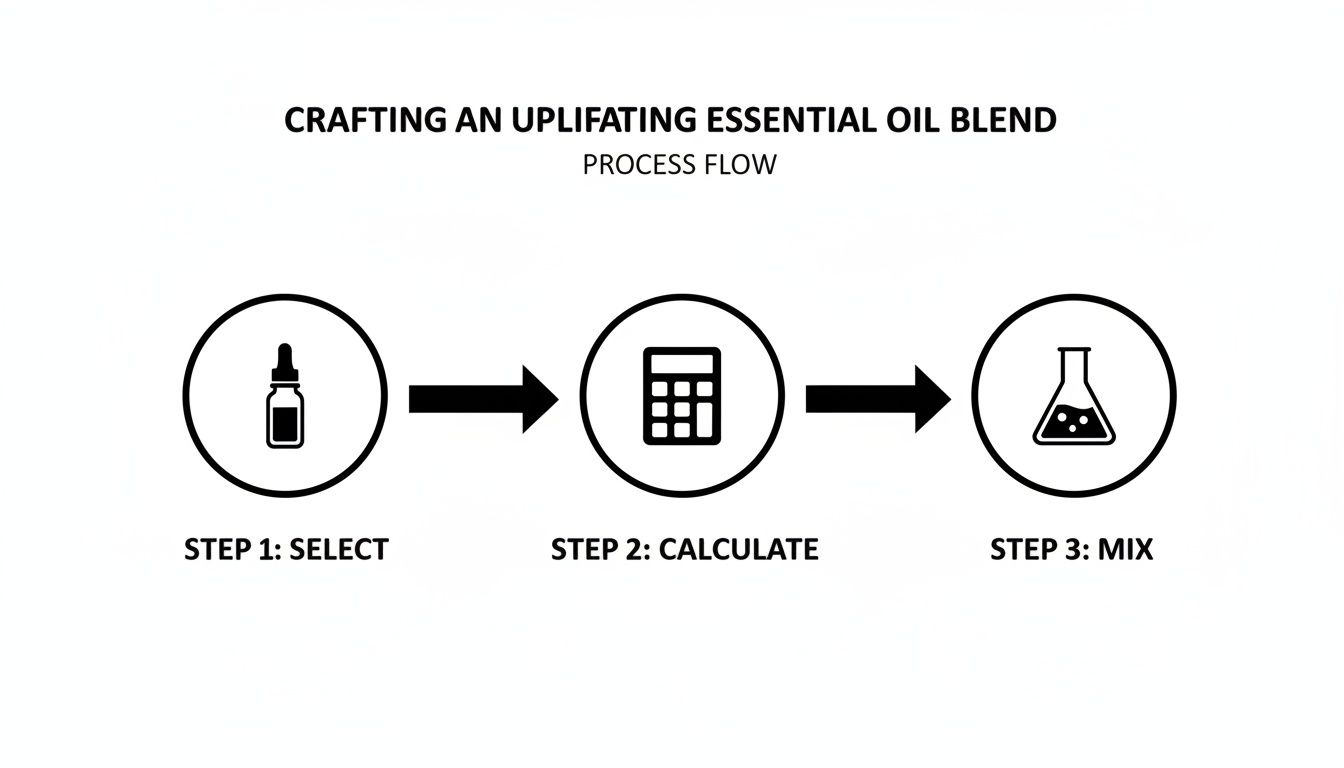
Every step in your process—from isolate selection to the final mix—is an opportunity to ensure your product delivers on the "bright and inspiring" experience you intend to market.
Transparency as a Marketing Tool
Careful wording is your first line of defense, but radical transparency builds lasting trust. In an industry with variable quality standards, demonstrating complete transparency is a powerful differentiator.
Treat your product documentation as a key marketing asset.
- QR Codes: Place a QR code on all packaging linking directly to the product’s lab report. This offers immediate proof of purity and potency.
- Certificates of Analysis (CoAs): Feature CoAs prominently on your website, ensuring they show testing for pesticides, heavy metals, and residual solvents.
- List Your Terpenes: Go beyond vague terms like "botanical terpenes." List the top 3-5 terpenes in your blend on the package or product page. This educates consumers and highlights the deliberate nature of your cannabis product formulation.
When you combine smart, effect-based language with total transparency, you create a brand that is not just legally sound—it’s credible. You are offering a reliable, meticulously crafted experience. This is how you address consumer interest in products for mood—by demonstrating how you've built a product designed for that specific, uplifting effect.
If you're ready to start formulating, our comprehensive terpene guides have the information you need on isolate selection.
Your Top Formulation Questions, Answered
When creating mood-focused vape products, many questions arise. The key takeaway is to move beyond the "sativa for anxiety" paradigm and focus on the science of terpenes.
Here are answers to the most common questions from formulators to guide you from concept to a successful product.
Pre-Made Strain Profiles vs. Custom Blends
One of the first decisions is whether to use a pre-made strain profile or build your own from isolates. This depends entirely on your brand strategy and goals.
- Pre-made Strain Profiles: Using a well-known profile like our Blue Dream Terpenes offers a fast track to market. It provides instant name recognition and significantly reduces development time. If your goal is rapid market entry with a familiar consumer experience, this is your best option.
- Custom Blends: Creating a proprietary blend with individual isolates like Limonene and Pinene is about differentiation. This is how you create a signature effect that is 100% unique to your brand, building a distinct identity for the long term.
Consider whether your strategy prioritizes speed-to-market or long-term brand equity.
What Is the Ideal Terpene Percentage for Vape Distillate?
For vape cartridges, the optimal range is generally between 5% and 10% terpenes by weight. This should be treated as a starting point. We recommend beginning on the lower end—around 4-5%—when developing a new formula.
From there, you must test and refine. The viscosity of your distillate and the specific vape hardware used will significantly impact flavor and performance. An excessively high terpene concentration can result in a harsh taste and cartridge wicking issues.
A good terpene mixing calculator is essential here. It removes guesswork, ensures batch-to-batch consistency, and makes your formula scalable, transforming formulation from an art into a precise science.
Can I Market My Vape Cartridge as Helping Anxiety or Depression?
Absolutely not. This is a critical compliance issue. Making any direct or implied medical claim is a major risk that can lead to serious legal and financial consequences for your business.
Avoid words like "treats," "cures," "reduces," or "alleviates" in relation to any medical condition.
Instead, master the use of compliant, effect-based language. This protects your brand while clearly communicating the intended experience.
- DON'T SAY: "Reduces symptoms of depression."
- DO SAY: "Features an inspiring and bright aromatic profile."
- DON'T SAY: "A great sativa for anxiety."
- DO SAY: "Promotes a calm and focused state."
This is not about evasion; it's about responsible marketing. You are describing the mood and sensory experience your product is engineered to deliver, not positioning it as a medicine.
While you cannot make claims, it's valuable to understand the consumer interest driving this market. For example, a 2021 study in Frontiers in Psychiatry following 368 medical cannabis patients found that after initiating cannabis use, their self-reported anxiety and depression scores dropped significantly. Their odds of falling below the clinical cutoff for anxiety and depression increased by 14.07 and 6.47 times, respectively. You can discover more insights about these user-reported outcomes here.
This data underscores the significant market demand. It highlights the importance of formulating effective products and, just as crucially, marketing them compliantly. When you get the language right, you position your brand as a trustworthy expert that understands both the science and the regulatory landscape—the mark of a true professional.
Ready to create a precise, uplifting blend that sets your brand apart? Gold Coast Terpenes provides the lab-verified isolates and strain profiles you need for consistent, high-quality results. Shop our full collection today.