
The chemistry of terpenes all comes down to one simple building block: a five-carbon molecule called an isoprene unit. From this single Lego-like piece, nature has built an astonishing variety of compounds that dictate everything from a product's first scent to its shelf life in a vape cart. For the product formulator, this isn't abstract science—it's a blueprint for commercial success.
Why Terpene Chemistry Is Your Formulation Superpower
For a product formulator, extractor, or brand owner, getting a handle on terpene chemistry isn't just for a science quiz—it's your secret weapon. It gives you precise, repeatable control over every single product you make. This is how you move beyond just chasing strain names and start truly engineering the sensory experience required for successful cannabis product formulation.
Think of it as the difference between hoping a recipe turns out right and knowing exactly why each ingredient works. This control begins at the molecular level. Terpenes are organic hydrocarbons, and how they're classified is based entirely on how many isoprene units they contain. This simple fact directly influences their properties and, ultimately, how they’ll behave in your formulations for distillate or other concentrates.
From Molecular Structure to Product Behavior
The sheer number of terpenes is mind-boggling. As one of the largest classes of organic compounds found in nature, scientists estimate there are anywhere from 55,000 to over 200,000 distinct terpenes. Their structure, built from these isoprene (C5H8) units, creates different classes like monoterpenes (C10H16) and sesquiterpenes (C15H24).
This huge chemical library is what allows you to build incredibly precise profiles, whether you're replicating the flavor of a bright, citrusy cultivar or laying down the earthy, complex foundation of an OG Kush formulation.
At its core, terpene chemistry is a blueprint for formulation. Once you understand how a terpene's size and structure affect its volatility, solubility, and scent, you can stop reacting and start designing. This is how you build more consistent and successful product lines.
This knowledge empowers you to make smarter decisions on the bench. For instance, knowing that light, zippy monoterpenes deliver that initial burst of aroma but can degrade quickly tells you to handle them with care during mixing. On the flip side, understanding that heavier, more stable sesquiterpenes provide those lasting base notes lets you anchor your flavor profile for a richer, more complete experience in vape cartridges and other finished goods.
To make this even clearer, let's break down the main classes you'll be working with. Each one has distinct properties that will directly impact your final product, from its aroma profile to its stability over time.
Key Terpene Classes in Product Formulation
| Terpene Class | Isoprene Units | Molecular Formula Example | Key Characteristics for Formulation |
|---|---|---|---|
| Monoterpenes | 2 | C10H16 (Limonene, Pinene) | Highly volatile; create the bright "top notes" of an aroma. Prone to oxidation, requiring careful handling. |
| Sesquiterpenes | 3 | C15H24 (Caryophyllene, Humulene) | Less volatile, more stable; form the "middle" and "base notes." Provide depth and longevity to a flavor profile. |
| Diterpenes | 4 | C20H32 (Phytol) | Much heavier and less volatile; often contribute less to aroma but can influence viscosity and other physical properties. |
As you can see, simply knowing whether you're working with a monoterpene or a sesquiterpene gives you a massive head start in predicting how your blend will behave.
What This Means for Your Formulations
Ultimately, mastering terpene chemistry helps you solve the biggest challenges in product development:
- Flavor Accuracy: You can stop guessing and start building. Combine isolates and blends in the right ratios, guided by their chemical properties, to perfectly replicate a specific cultivar’s signature aroma.
- Product Stability: Say goodbye to off-flavors. By choosing terpenes and handling methods that account for their sensitivity to heat and air, you can prevent degradation and keep your products fresh.
- A Consistent Experience: Ensure every single batch delivers the exact same sensory profile your customers expect. Controlling the variables that chemistry reveals is the key to consistency.
By focusing on these fundamentals, you can elevate your formulation process from guesswork to a predictable science. For a great refresher on the basics, check out our complete guide on what terpenes really are. This practical knowledge is your most valuable tool for standing out.
Building Your Flavor Profile with Monoterpenes and Sesquiterpenes
When you’re formulating a flavor profile, you aren't just adding a single ingredient; you're building a complete sensory experience layer by layer. Your two most important building blocks for this are monoterpenes and sesquiterpenes. Understanding how they behave differently is the key to creating a profile that’s not only impressive on the first draw but also delivers a lasting, complete flavor.
The best way to think about them is like notes in perfumery. Monoterpenes are your bright "top notes" that hit you first, while sesquiterpenes are the deep "base notes" that provide a lasting foundation. A truly great formulation knows how to balance both.
Monoterpenes: The Bright, Initial Burst (Top Notes)
Monoterpenes are the sprinters of the terpene world. Made of just two isoprene units, these lighter C10 molecules are highly volatile, meaning they flash to vapor almost immediately at room temperature. This is exactly why they act as your top notes—they’re the first thing a customer smells and tastes.
Here are the essential monos every formulator has in their toolkit:
- Limonene: The source of that unmistakable sharp, fresh citrus pop. It's a must-have for any bright or uplifting profile.
- Pinene: Gives you that clean, crisp pine and herbal scent. It's the go-to for creating earthy, forest-floor aromas.
- Myrcene: This one is more complex, offering a musky, earthy aroma with a hint of fruit. It’s a workhorse that can help bridge your top and middle notes.
Because they have low boiling points, you have to handle these compounds with care. When you’re mixing, introduce monoterpenes at lower temperatures and minimize air exposure. If you don't, they'll just flash off or oxidize, and all that vibrant, upfront aroma will be gone before your product even ships.
Formulator's Insight: The real challenge with monoterpenes isn't just their aroma, it's their fragility. If you overheat them or mix too aggressively, they degrade, and you end up with a flat, boring product. A gentle touch and a controlled environment are non-negotiable for preserving these critical top notes.
Monoterpenes (C10H16) can make up a whopping 90% of many essential oils, which is why they drive the main scent in popular profiles. Their simple structure makes them highly soluble and impactful—a huge advantage when you're using individual isolates to build a specific experience from scratch.
Sesquiterpenes: The Deep, Lasting Foundation (Base Notes)
If monoterpenes are the first impression, sesquiterpenes are the rich conversation that follows. These are heavier molecules built from three isoprene units (C15), making them far less volatile and much more stable. This is what makes them the perfect base notes for your blend.
The diagram below shows you how both classes are built up from the same basic isoprene block.
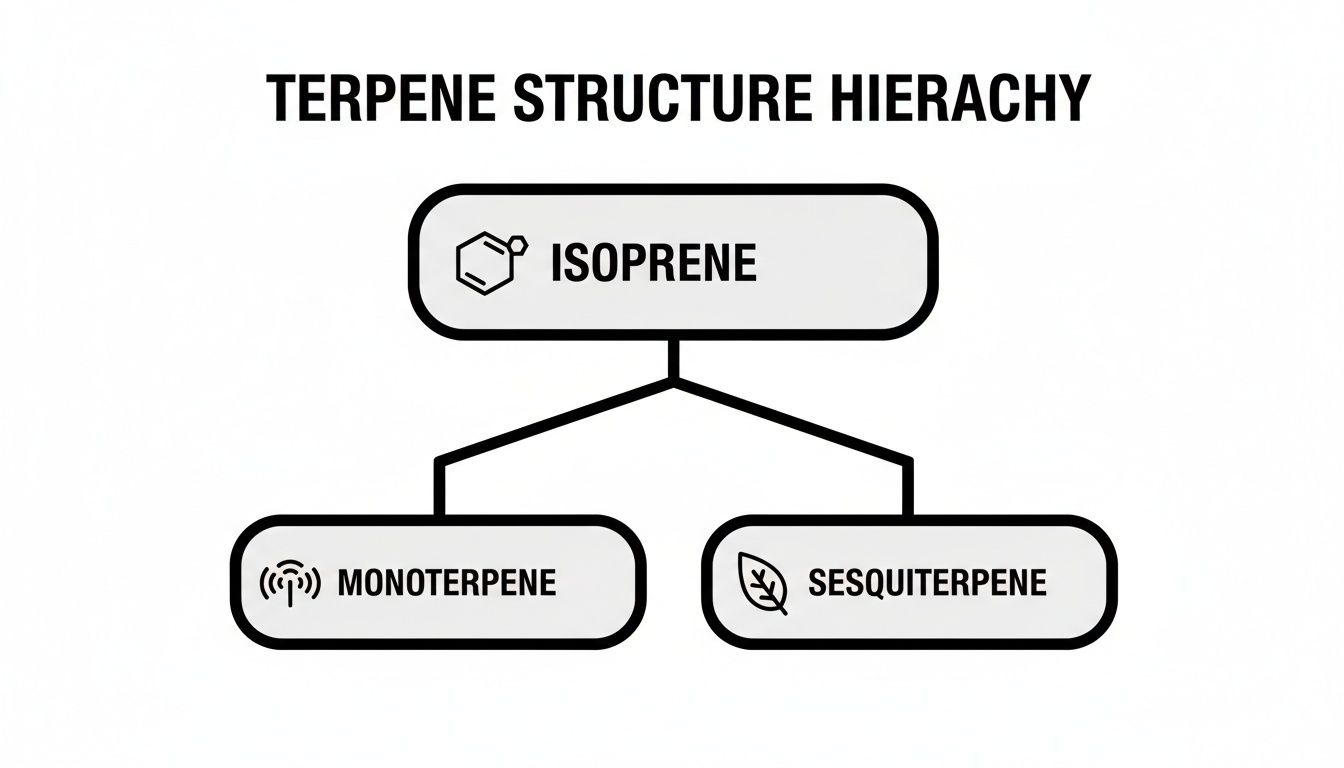
That extra isoprene unit is what gives sesquiterpenes their staying power. They provide the deep, complex aromas that stick around long after the initial hit.
Every formulator should have these essential sesquiterpenes on hand:
- Beta-Caryophyllene: This is your classic warm, spicy, and peppery note. It’s the backbone for creating those rich, gassy, or cookie-like profiles.
- Humulene: Delivers earthy, woody, and hoppy aromas. It works hand-in-hand with Caryophyllene to build a full-bodied flavor foundation.
- Bisabolol: A lighter, sweeter floral scent. It’s less in-your-face but adds a layer of sophisticated nuance to complex blends.
Their stability is a huge plus. They can handle more aggressive mixing and will remain in the final product long after the flighty monoterpenes have faded. A well-designed blend uses these heavier molecules to make sure the flavor profile doesn't just start strong but also finishes with a satisfying, memorable taste. If you want to explore beyond these two groups, you can check out our guide on understanding the different types of terpenes.
How Extraction Methods Alter Terpene Chemistry
A plant's terpene profile is a fleeting snapshot in time. From the moment of harvest, that delicate aromatic signature begins to change, and every step that follows—especially extraction—will fundamentally alter the chemistry you started with. If you're serious about cannabis product formulation, understanding how your extraction method impacts the final terpene profile is non-negotiable.
The unique scent of a living cultivar comes from its specific biosynthetic pathways. But the concentrate that ends up on your bench is a world away from that living flower. It’s been pushed, pulled, heated, and washed with solvents, and each of those processes leaves a mark on its chemical makeup.
The Impact of Solvents and Temperature
The two biggest factors influencing which terpenes survive the journey from plant to oil are your choice of solvent and the temperatures you use. Every method involves a trade-off between yield, purity, and terpene preservation, directly affecting the chemistry of terpenes in your final product.
Aggressive, high-heat methods are particularly brutal on volatile monoterpenes. These are the light, bright, aromatic compounds that give a cultivar its signature punch. They’re the first to degrade or boil away, leaving your extract smelling flat and one-dimensional.
Ever smelled a concentrate described as "dull" or "muted"? That’s a direct result of chemical degradation during processing. It’s a common manufacturing headache and the very reason precise terpene reintroduction exists—to bring that vibrancy back.
Take hydrocarbon extraction (BHO) for example. It's a non-polar process, fantastic for pulling cannabinoids and terpenes while leaving water-soluble gunk behind. When run cold, like in live resin production, it does a great job of preserving many of those volatile terpenes. But even the required vacuum purging can strip away the most delicate top notes if you’re not careful.
Common Extraction Methods and Their Terpene Effects
Different techniques give you vastly different starting points for formulation. Knowing what to expect from each one helps you anticipate what you’ll need to add back to hit your target profile.
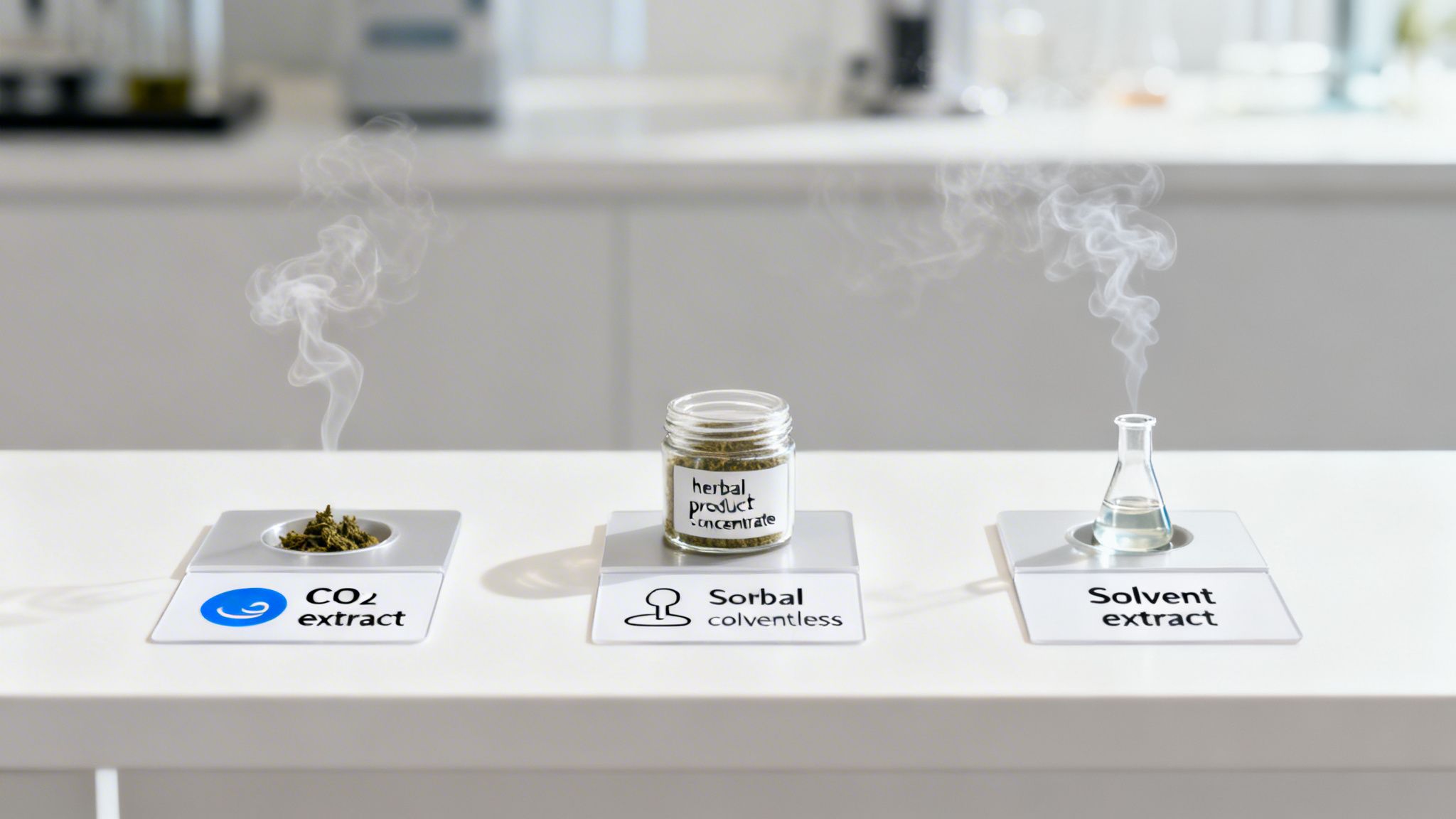
- Supercritical CO2 Extraction: This method is highly "tunable," meaning operators can dial in pressure and temperature to target specific compounds. While it’s great for creating high-purity distillate, the process often requires a separate, low-pressure "terpene pull" to capture the aromatics first. Even then, the resulting terpene fraction rarely matches the plant's original profile.
- Ethanol Extraction: As a polar solvent, ethanol is aggressive. It grabs cannabinoids and terpenes but also pulls water-soluble molecules like chlorophyll. Using cryogenic (freezing cold) ethanol helps, but the later refinement and solvent recovery steps almost always involve heat, which spells disaster for volatile terpenes.
- Solventless Extraction (Rosin): This popular method uses only heat and pressure. While you avoid solvents entirely, the direct heat is a double-edged sword. It can easily vaporize and destroy the most fragile monoterpenes, leaving you with a product heavy in durable sesquiterpenes but missing those signature bright top notes.
At the end of the day, no extraction process can perfectly preserve a living plant's terpene profile. This isn't a failure of technology; it's just a reality of chemical physics. This is exactly why formulating with a strain-inspired terpene blend is a cornerstone of creating consistent, high-quality products. By reintroducing a carefully crafted blend, you can restore that authentic, full-spectrum aroma and turn a decent extract into an exceptional finished product.
Protecting Your Product from Terpene Degradation
Consistency is everything. When a customer buys a vape cart in June, they expect it to taste exactly like the one they loved in April. If it doesn't, you’ve not only lost a sale—you’ve lost their trust. To prevent this, you have to get a handle on the chemistry of terpenes, because these sensitive molecules are easily damaged by heat, light, and air.
This isn't just about a flavor fading away. It's a full-on chemical change. Left unchecked, these reactions can twist your carefully crafted profile into something harsh and completely off-brand. It’s a fast track to unhappy customers and a damaged reputation.
Oxidation: The Silent Killer of Flavor
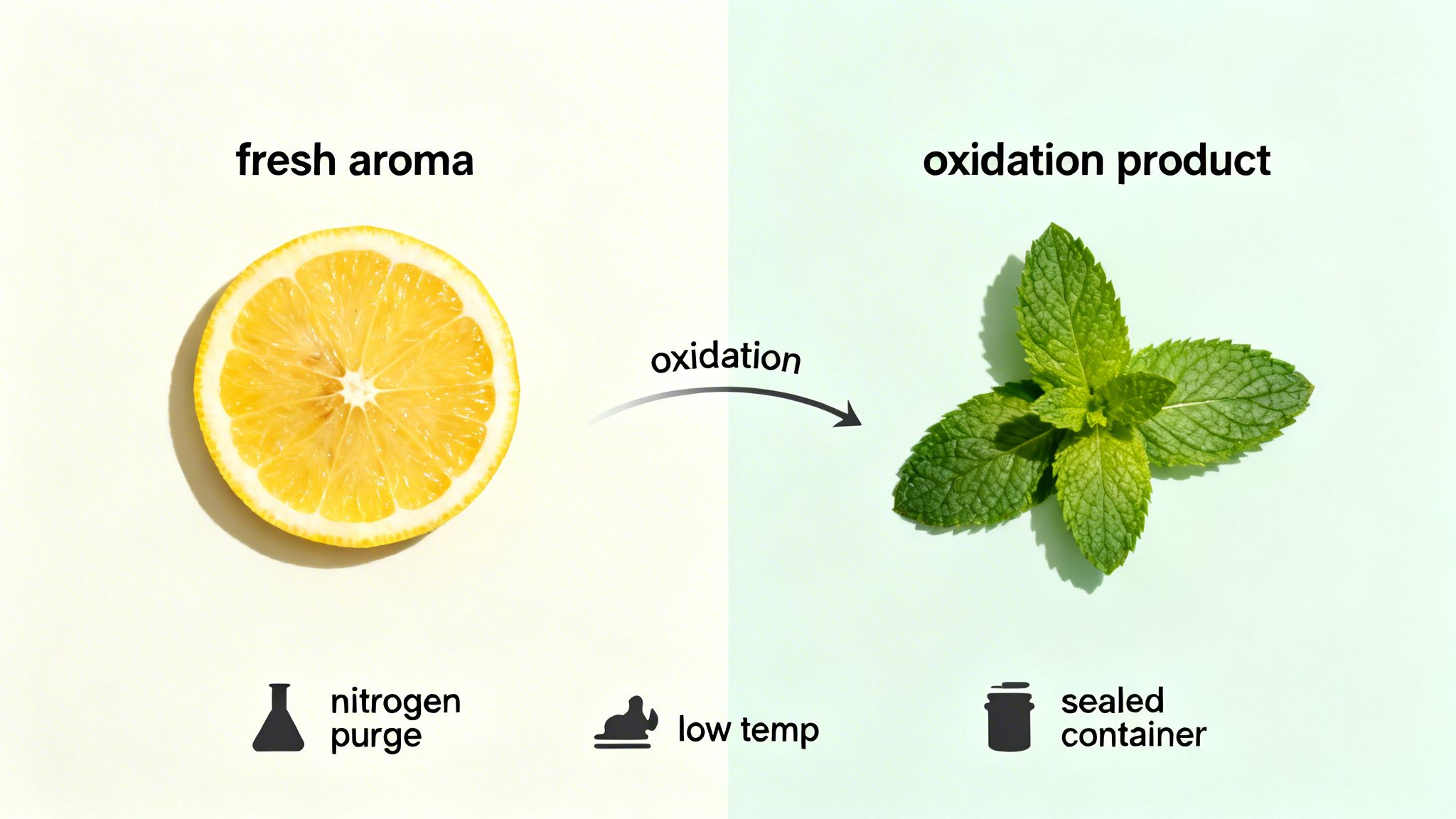
The biggest and most common enemy your terpenes will face is oxidation. It’s a simple reaction with oxygen in the air, and it’s especially rough on monoterpenes and their reactive double bonds. Those bright, fresh top notes are the first to go, breaking down into entirely new compounds with aromas you definitely didn't plan for.
Take Limonene, for example. We all know its bright, fresh citrus scent. But when it oxidizes, it can degrade into carvone—a compound that smells more like mint or even caraway. That one chemical shift is enough to ruin an entire batch of citrus-forward vape oil.
As a formulator, you have to see terpene degradation as a direct threat. An oxidized cart doesn't just taste wrong; it tells your customer that your quality control is sloppy. The goal is always to control every variable that could lead to that outcome.
Isomerization and Polymerization: Heat-Induced Headaches
After oxygen, heat is the next major culprit in terpene breakdown. Two reactions you really need to watch out for are isomerization and polymerization. Both can completely alter your product's flavor, aroma, and even its viscosity.
Isomerization: This is when heat forces a terpene molecule to literally rearrange itself into a different structure. Think of it as the same atoms playing musical chairs. For instance, alpha-Pinene can flip into camphene or even limonene when heated, throwing your terpene ratios completely out of whack.
Polymerization: When smaller terpene molecules are exposed to heat and light, they can start linking together to form big, heavy chains called polymers. This process not only kills the original aroma but also makes your oil thicker, which can lead to serious wicking problems in vape cartridges.
This means managing your temperatures is non-negotiable, from initial mixing all the way through storage and shipping. You’ll find more crucial temperature data in our guide to the boiling point of terpenes.
Actionable Strategies for Terpene Preservation
Simply starting with great terpenes isn't enough. You have to actively protect them from the moment they arrive to the moment your product is sealed.
1. Control Your Atmosphere
Oxygen is the enemy, so get it out of there. When mixing and filling, use an inert gas like nitrogen or argon to create a protective "blanket" over your oil. This physically blocks oxygen from ever touching your terpenes.
2. Choose Your Hardware Wisely
Not all cartridges are made equal. Go for hardware that minimizes headspace—that little pocket of air between the oil and the cap. Less air means less oxygen to cause problems while the product sits on a shelf.
3. Master Temperature Management
Always keep your raw terpenes and finished blends cool and in the dark. Airtight, amber glass containers are your best friend here. When you’re formulating, use the absolute lowest temperature you can get away with for a good mix. You don't want to accidentally "cook off" all those precious, volatile top notes you paid for.
By putting these straightforward steps into practice, you can dramatically improve the shelf life and consistency of your products. It’s how you ensure every customer gets to experience your formulation exactly as you intended.
Formulating for Specific Effects and Experiences
While flavor and aroma are primary drivers, a sophisticated formulation also accounts for the overall experience. This is where we move beyond sensory appeal and get into the chemistry of terpenes to guide functional outcomes. The “entourage effect” isn’t just a marketing buzzword; for a smart formulator, it’s a practical roadmap.
The concept is pretty straightforward: terpenes and cannabinoids work in synergy, influencing each other to produce a single, unified effect. Think of yourself as a conductor. You are intentionally selecting and balancing terpenes to create products that deliver on specific consumer expectations. This is how you build a predictable, repeatable experience that drives brand loyalty.
Strategic Terpene Selection for Experiential Design
Some terpenes are well-known for producing certain effects, making them essential tools of the trade. When you start thinking of them as functional ingredients, not just flavorings, you shift from guessing to deliberately designing your product’s profile.
- Limonene: This is your go-to for anything bright and energetic. Its sharp citrus aroma is a psychological shortcut for alertness. If you’re building a ‘Focus’ or ‘Energy’ blend, Limonene is the perfect top note to set the tone.
- Myrcene: On the opposite end of the spectrum, Myrcene is the foundation for relaxation. It’s the most common terpene in cannabis, found in nearly 50% of cultivars, and is a major player in the calming side of the entourage effect.
Both monoterpenes and sesquiterpenes are built to be effective modulators in any blend you create. If you want to dive deeper into these compounds, you can find a great list of the most common cannabis terpenes here.
A great formulator doesn’t just copy a strain’s GC-MS report. They understand the function of each major terpene in that profile and tweak the ratios to nail the intended experience, every single time. That consistency is what builds brand trust.
Beyond the Basics with Functional Terpenes
While Limonene and Myrcene are workhorses, other terpenes give you more subtle control over the final experience.
Take Beta-Caryophyllene. It’s special because it's also a cannabinoid that interacts directly with the body’s CB2 receptors. This gives it a functional power that goes far beyond its spicy, peppery scent, making it an incredible asset for blends aimed at physical comfort and well-being.
Then you have Pinene. It does more than just add a clean, pine scent. Formulators often use it in ‘Focus’ blends to promote a clear-headed feeling, helping to balance out the effects of other compounds. These aren't just flavor additives; they're active ingredients in your formulation strategy.
Turning Theory into Practice
To really nail these interactions, you need precision. This isn’t about just splashing in a few popular terpenes. It's about carefully constructing a balanced, synergistic profile where every single component has a job to do.
This is where a good terpene formulation calculator becomes your best friend. It helps you dial in your dilution ratios, ensuring your terpene blend is perfectly mixed into your cannabinoid base, whether you're working with distillate or another concentrate.
To help you get started, here's a simple table that connects common terpenes to their roles in a formulation.
Terpene Interactions for Formulation Strategy
| Terpene | Primary Aroma/Flavor | Typical Role in Formulation | Example Gold Coast Terpenes Profile |
|---|---|---|---|
| Myrcene | Earthy, musky, herbal | Foundation for relaxing, calming, or "Indica-style" effects. | OG Kush |
| Limonene | Bright citrus (lemon, orange) | Core of uplifting, energetic, or "Sativa-style" blends. | Super Lemon Haze |
| Beta-Caryophyllene | Spicy, peppery, woody | Adds a layer of physical comfort; great for wellness-focused blends. | GSC |
| Linalool | Floral, sweet, lavender | Used to promote tranquility and ease stress; a key "relax" component. | Zkittlez |
| Pinene | Sharp pine, fresh forest | Included to create a clear-headed, focused feeling; balances other effects. | Jack Herer |
Using this as a guide, you can start to see how different terpenes can be layered to create a truly unique and intentional experience. By mastering these chemical interactions, you're not just making a product—you're creating a reliable experience that helps you stand out in a very crowded market.
Putting Terpene Chemistry to Work
Knowing the science behind terpenes is great, but putting that knowledge to use on the production floor is what really counts. Let's walk through how to turn that complex chemistry into a real-world advantage for your products. This is where theory meets execution, helping you create a consistent, stable, and effective product every single time.
It all boils down to controlling your variables so you can scale with confidence. This journey begins with sourcing top-tier, lab-verified terpene blends and isolates. Think of these as your reliable building blocks. From there, it's all about mastering the hands-on techniques that protect these delicate compounds.
From Sourcing to Final QC
A great formulation isn't a single action; it's a sequence of carefully controlled steps. If you skip even one, you risk compromising the entire batch. Your day-to-day operations need to be built around precision, from the moment you handle your concentrate to the final quality check.
Here’s a practical workflow you can build right into your process:
Nail Your Dilution Ratios: First thing's first: you have to do the math. The right dilution ratio is completely dependent on your starting cannabinoid base. A thick, heavy distillate will need a different amount of terpenes than a looser live resin. For vape carts, a good starting point is usually between 5-10%, but you should always run small test batches before committing to a full run.
Get a Handle on Solubility: Not all concentrates play nicely with terpenes. You can run into solubility problems, especially if you’re trying to pack a high percentage of terpenes into a super-refined distillate. If you notice your blend getting cloudy or separating over time, you’ll need to either dial back your ratios or bring in a tool like our 100% plant-derived Terpene Diluent to help everything mix properly.
Master Your Homogenization: This part is absolutely non-negotiable. Terpenes and cannabinoid oils have different densities, and they will separate if you don't mix them thoroughly. The trick is gentle, consistent heat—never go above 150°F / 65°C—paired with low-shear mixing. This ensures you get a perfectly even blend, meaning every single drop of your oil delivers the same flavor and effect.
Finalizing Your Formulation
Once you have a perfectly homogenized blend, you’re in the home stretch. The last few steps are all about locking in that quality through proper packaging and final verification. This is how you protect your hard work and make sure the customer experience is exactly what you promised.
The biggest win when using precisely formulated terpene blends is predictability. You eliminate the natural guesswork that comes with raw extracts, giving you total control over the final aroma and taste. That’s what lets you scale up production without ever sacrificing consistency.
Think of final quality control as your last line of defense. Always set aside a sample from your finished batch and send it out for third-party lab testing. This doesn't just verify cannabinoid potency; it confirms your terpene profile is accurate and free of any contaminants. It's more than just a compliance step—it’s a powerful way to build trust with your customers.
By following this practical checklist—from careful calculations to final QC—you can translate the complex chemistry of terpenes into a simple, repeatable process. This methodical approach is what will set your brand apart. If you need a hand with the numbers, our terpene mixing guide is an essential tool for any formulator.
Frequently Asked Questions About Terpene Chemistry
Alright, we've covered a lot of the heavy science. Now, let's get practical and answer some of the most common questions that pop up when you're actually in the lab, working with these compounds. Think of this as a quick-reference guide to keep you on track.
What Is the Most Important Factor in Terpene Stability?
If you want to protect your terpenes, you have to control two things: temperature and oxygen exposure. Your biggest vulnerability lies with the monoterpenes—the very compounds that give your product those bright, signature top notes.
Their chemical structure is packed with reactive double bonds, making them prime targets for oxidation when exposed to air. On top of that, they have low boiling points. Heat them up too much, and they'll simply evaporate, taking your carefully crafted aroma with them. Always store terpenes in airtight, amber glass containers in a cool, dark spot. When mixing, use the absolute lowest heat possible and think about using an inert gas like nitrogen to push oxygen out of your vessel.
How Do I Choose the Right Terpene Percentage for Distillate?
This is where art meets science, but a great starting point for distillate vape carts is between 5% and 8% terpenes by weight. If you go much lower than 5%, the flavor can get lost. But push past 10-12%, and you risk a harsh, unpleasant taste and can even cause hardware problems like leaking because the oil becomes too thin.
Formulator's Tip: Never commit to a large batch without testing first. I always recommend mixing a few small test variations—say, at 5%, 7%, and 9%—and letting them steep for at least 24 hours. This lets the flavors meld and gives you a true sense of the final profile, helping you find that perfect sweet spot for your specific oil and cartridge choice.
Can I Mix Terpene Isolates to Create My Own Strain Profile?
You absolutely can, and many experienced formulators do this to develop one-of-a-kind products. By working with individual isolates like Limonene, Myrcene, and Beta-Caryophyllene, you get total creative control over the final aroma and effect.
However, building a profile from scratch is a lot harder than it looks. It demands a deep, practical knowledge of the chemistry of terpenes and how they play off one another. For most operations, using a professionally developed, strain-inspired terpene blend is the smarter, more scalable path. These blends are precisely balanced by experts to give you a consistent and authentic profile, every single time.
Ready to put these principles into practice? Gold Coast Terpenes provides the lab-verified, strain-specific terpene blends and isolates you need to formulate with confidence. Explore our full collection and elevate your products at https://www.goldcoastterpenes.com.