
For cannabis product formulators, the Rainbow Zkittlez profile is an aromatic blueprint for success. That signature sweet, fruit-forward profile is what today's market demands in vapes and concentrates, and a precise formulation can be a massive strategic win for any brand in the dessert-strain space. This guide provides the technical intelligence needed to deconstruct and accurately replicate the flavor of Rainbow Zkittlez for cannabis product formulation.
The Commercial Case for Formulating with the Rainbow Zkittlez Profile
The Rainbow Zkittlez profile didn't just appear—it capitalized on a market shift towards complex candy and dessert hybrids in the late 2010s. By 2021, products featuring this profile were staples in key markets like California and Michigan.
Market data reveals significant demand for products carrying its profile, particularly those with terpene totals exceeding 1.5% by weight. For product manufacturers, the message is clear: consumers actively seek this specific sensory experience. Delivering it consistently offers a significant market advantage. You can analyze market insights on its rapid rise to prominence to see the numbers.
This isn't about a fleeting trend; it's about a proven flavor model that drives sales. The "taste the rainbow" concept represents a specific set of technical challenges—and commercial opportunities—for product developers.
Why This Profile Matters in Product Formulation
To successfully replicate the Rainbow Zkittlez experience in a vape cartridge or concentrate, one must master its core sensory building blocks. Consumers expect a dynamic flavor that evolves from initial draw to finish, not a generic "fruit" note.
As a formulator, your objective is to construct a profile with distinct, recognizable layers:
- Vibrant Top Notes: An initial, attention-grabbing burst of zesty citrus and sweet berry.
- Aromatic Mid-Notes: A smooth transition into a deeper, complex fruit medley, featuring characteristic earthy grape notes.
- Subtle Base Notes: An underlying foundation that provides structure and a pleasant finish, preventing a thin or artificial taste.
The table below breaks down the primary sensory notes essential for capturing the essence of Rainbow Zkittlez in commercial products.
Rainbow Zkittlez Core Sensory Profile for Formulation
| Sensory Category | Dominant Notes | Formulation Goal |
|---|---|---|
| Top Notes | Sweet Berry, Grapefruit, Zesty Citrus | Create a bright, immediate fruit punch that defines the initial impression on inhale. |
| Mid-Notes | Mixed Tropical Fruit, Ripe Grape | Build a complex, candy-like body that provides depth and a smooth transition. |
| Base Notes | Subtle Earthy, Faint Floral | Anchor the sweetness with a natural foundation to ensure a full-bodied, authentic finish. |
Correctly layering these notes separates a forgettable product from one that builds brand loyalty.
The goal is not to mimic a flavor, but to construct a stable, consistent, and memorable sensory journey. A well-formulated Rainbow Zkittlez profile for distillate offers a competitive edge by delivering on the flavor promise the name implies, leading to greater brand loyalty and repeat purchases.
This guide provides the actionable intelligence needed to deconstruct and rebuild this iconic profile from the ground up.
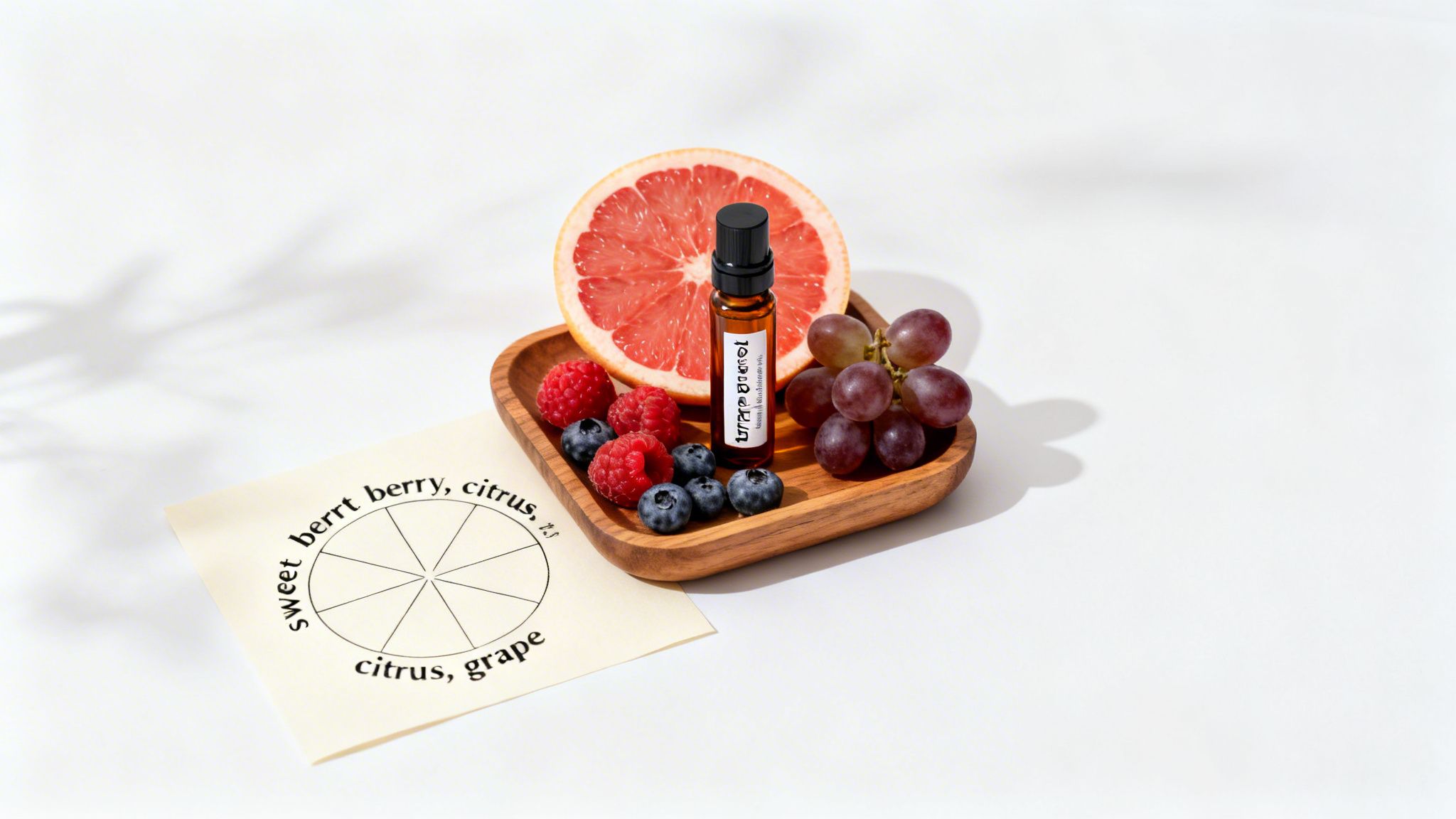
By understanding its market power and core sensory pillars, you establish the groundwork for the technical task ahead. Next, we'll detail how a precise Rainbow Zkittlez strain-inspired terpene blend from Gold Coast Terpenes enables the creation of high-performance, reliably flavored products.
Genetic Blueprint for Replicating the Flavor of Rainbow Zkittlez
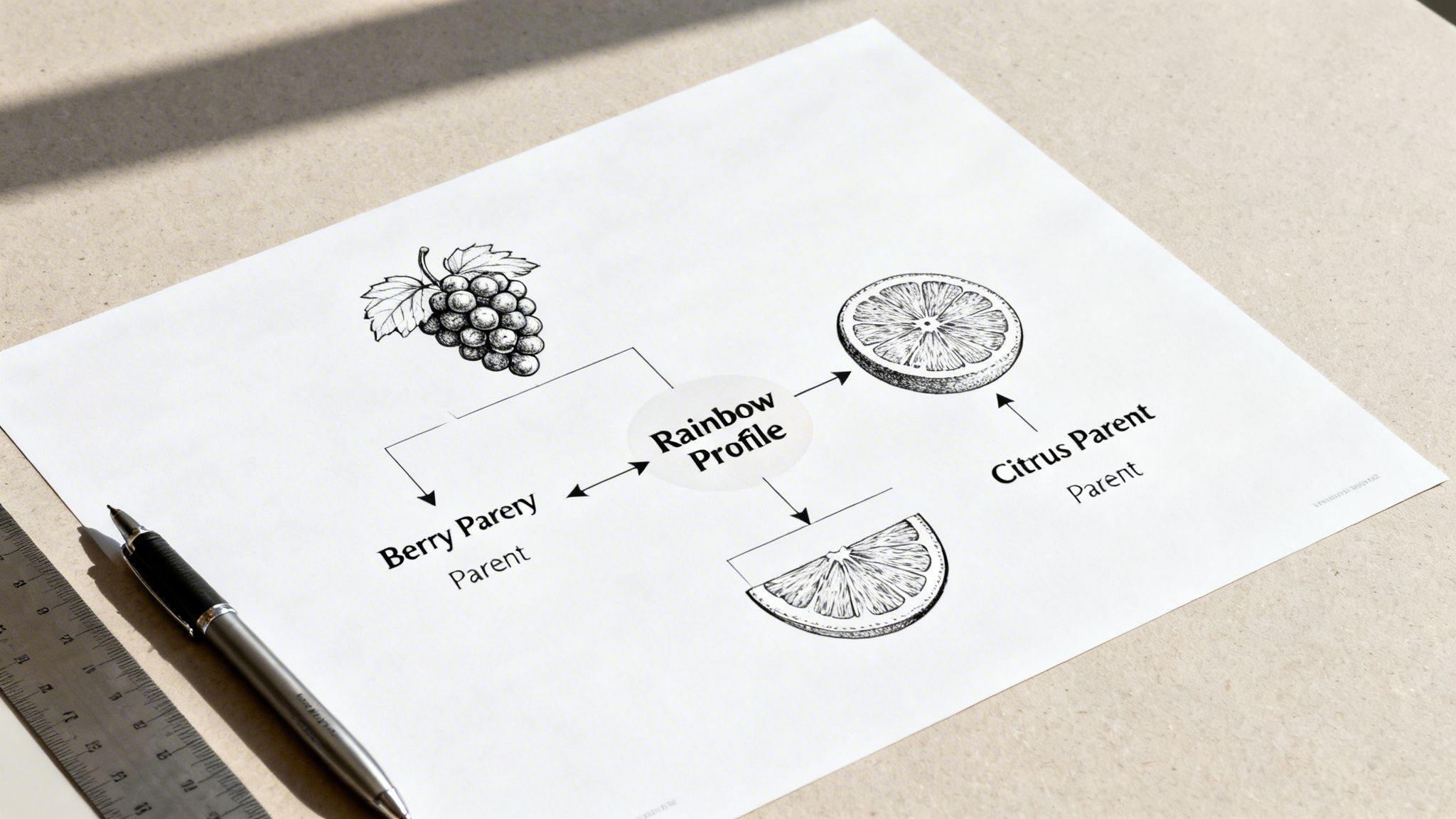
To create an authentic Rainbow Zkittlez product, a formulator must start with its genetic lineage. The "taste the rainbow" flavor is a complex harmony of aromatic compounds inherited from its parent cultivars. Deconstructing this lineage provides a practical roadmap for formulation.
The most critical component is its direct ancestor, Zkittlez. The Rainbow Zkittlez profile cannot be accurately replicated without first understanding Zkittlez. This strain's genetic background is a masterclass in breeding for a distinct flavor.
This history is an instruction manual. The parent strains contributed specific aromatic building blocks that interlock to create the final profile. For any formulator, this means building a blend with intention, layering specific notes to create a finished product that is greater than the sum of its parts.
The Zkittlez Foundation: A Three-Way Cross
Rainbow Zkittlez derives its signature character from the award-winning Zkittlez strain. Zkittlez itself is the product of a legendary three-way cross between Grape Ape, Grapefruit, and an unnamed third strain. This trio is the source of the unmistakable blend of sweet grape candy and sharp, tangy citrus. You can find even more detail on the Zkittlez genetic trio on strngseeds.com.
Each parent plays a specific role in the final terpene profile for Rainbow Zkittlez:
Grape Ape: This cultivar lays down the foundation. It is responsible for the deep, sweet berry and grape flavors that function as the base and mid-notes. This provides a rich body and prevents the profile from tasting thin or overly acidic.
Grapefruit: As a zesty Sativa, this parent delivers the bright, punchy citrus top notes. This is the initial aromatic wave that makes the profile feel vibrant and exciting.
The Mystery Indica: The third, undisclosed parent adds a crucial layer of complexity. It is the likely source of subtle, earthy undertones that balance the intense fruitiness and provide a more grounded, complete finish.
This deconstruction is critical for a product developer. You are not formulating a single "rainbow" flavoring; you are balancing distinct groups of terpenes to recreate a layered effect.
Formulator's Insight: View the parent strains as your ingredient list. Grape Ape contributes the rich, sweet foundation (Myrcene, Linalool), while Grapefruit provides sharp, volatile citrus top notes (Limonene). For an authentic profile that performs in a finished product, your blend must respect this structure.
Turning Genetics into a Formulation Strategy
Understanding this lineage allows for strategic formulation. A successful Rainbow Zkittlez profile must be built in distinct layers. This is critical when formulating products, as carrier oils and vape hardware can subtly alter flavor perception.
This genetic map also provides a troubleshooting guide. If a test batch seems flat, it likely requires an increase in citrusy top notes. If it tastes too sharp or synthetic, strengthening the berry and grape mid-notes may be necessary. A deep grasp of plant genetics is a professional advantage. For a refresher, our guide on critical differences in cannabis plant biology provides more context.
Using the strain's lineage as a guide enables smarter, more precise development decisions, resulting in a more authentic and commercially successful product. Next, we’ll dive into the specific terpenes that create these flavors.
Deconstructing the Rainbow Zkittlez Terpene Profile for Formulation
Accurate replication of the Rainbow Zkittlez experience requires a perfumer's approach to formulation. The signature flavor is a carefully balanced composition of dominant and secondary terpenes, each with a specific function.
The core of this profile is built upon three primary terpenes: Caryophyllene, Linalool, and Limonene. This trio establishes the strain's candy-like, fruit-forward sensory identity.
The Dominant Terpene Trio in Rainbow Zkittlez
Consider these three terpenes the non-negotiable pillars of the blend. Achieving their correct balance is crucial for an authentic profile, especially when formulating a Rainbow Zkittlez profile for distillate in vape cartridges.
Beta-Caryophyllene (Base Note): This is the spicy, peppery backbone. As a heavier sesquiterpene, Caryophyllene provides a deep, structural base. It adds a warm, complex finish that prevents the sweetness from feeling one-dimensional. In formulation, it also helps anchor more volatile top notes, improving flavor stability.
Linalool (Mid-Note): This terpene is the source of the "candy" characteristic. Linalool contributes a soft, sweet, floral character with fruit nuances that smooths the sharp edges of other terpenes. It is key to bridging the bright citrus top notes and the spicy base, creating the confectionary body.
Limonene (Top Note): As a zesty, energetic monoterpene, Limonene provides the initial attention-grabbing burst of citrus and fruit associated with the Zkittlez family. Its high volatility presents a formulation challenge; proper handling is critical to preserve this top note. For a deeper dive, review our guide to D-Limonene's benefits.
The Role of Secondary and Tertiary Terpenes
While the dominant trio defines the profile, secondary terpenes add essential nuance and authenticity. Though used in smaller concentrations, these compounds are vital for a well-rounded profile.
For a formulator, these minor terpenes are fine-tuning controls. They allow for subtle adjustments to the profile—enhancing earthiness or adding another layer of fruity complexity. This is what distinguishes a generic "fruit" flavor from a precise Rainbow Zkittlez replication.
Two of the most important supporting terpenes are Myrcene and Humulene.
Myrcene: This terpene introduces an earthy, musky, and subtly fruity note that grounds the profile's intense sweetness. It enhances the grape and berry undertones, making them feel more like ripe, natural fruit rather than an artificial flavoring.
Humulene: As a structural analog of Caryophyllene, Humulene adds a woody, earthy, and slightly spicy character. It works in concert with Caryophyllene to build a more complex and robust base, ensuring the finish is clean and sophisticated.
By understanding how each of these terpenes—dominant and secondary—contributes to the final flavor, a formulator can move from mixing ingredients to designing a complete sensory experience.
Formulation Guide for Rainbow Zkittlez Vape Cartridges
Replicating the true Rainbow Zkittlez experience in a vape cartridge is a test of formulation skill. It requires a precise balance of chemistry and technique. This step-by-step formulation guide for Rainbow Zkittlez covers starting ratios, temperature control, and mixing protocols to ensure your final product performs as intended.
Establish Starting Ratios
The terpene concentration is fundamental. Too low, and the flavor is weak; too high, and the product becomes harsh and thin, compromising both flavor and hardware function.
For most THC or CBD distillates, the optimal terpene concentration is 5% to 7% by total weight. This range delivers a full-flavored, aromatic experience without overpowering the cannabinoid base or negatively impacting viscosity.
When developing a new batch:
- Start Low: Begin with a small test batch at a 5% concentration to establish a safe, effective baseline.
- Increment Up: If the flavor lacks intensity, increase the ratio in 0.5% increments. Avoid large jumps.
- Evaluate and Document: At each stage, record sensory data (flavor, aroma) and physical properties (viscosity). This data is invaluable for scaling production.
Master Temperature Control and Mixing
A common formulation error is "scalding" terpenes with excessive heat. The bright, candy-like notes that define Rainbow Zkittlez are highly volatile and the first to degrade.
To protect the profile, maintain strict temperature discipline. Gently heat the distillate only until it is fluid enough for mixing—ideally between 120–140°F (50–60°C). Remove the distillate from the heat source before adding the terpene blend.
Critical Insight: Never add terpenes to oil that is still on a hot plate. This action effectively boils off the most delicate top-note compounds like Limonene, permanently damaging the vibrancy of the flavor profile.
Proper mixing is equally critical. Product separation (layering of oil and terpenes) is almost always due to incomplete homogenization. Use a magnetic stirrer or overhead mixer to create a uniform blend. A thorough mix, which may take 5-15 minutes depending on batch size, is essential for product stability and a consistent consumer experience.
This diagram illustrates how aroma notes combine to build the final experience.
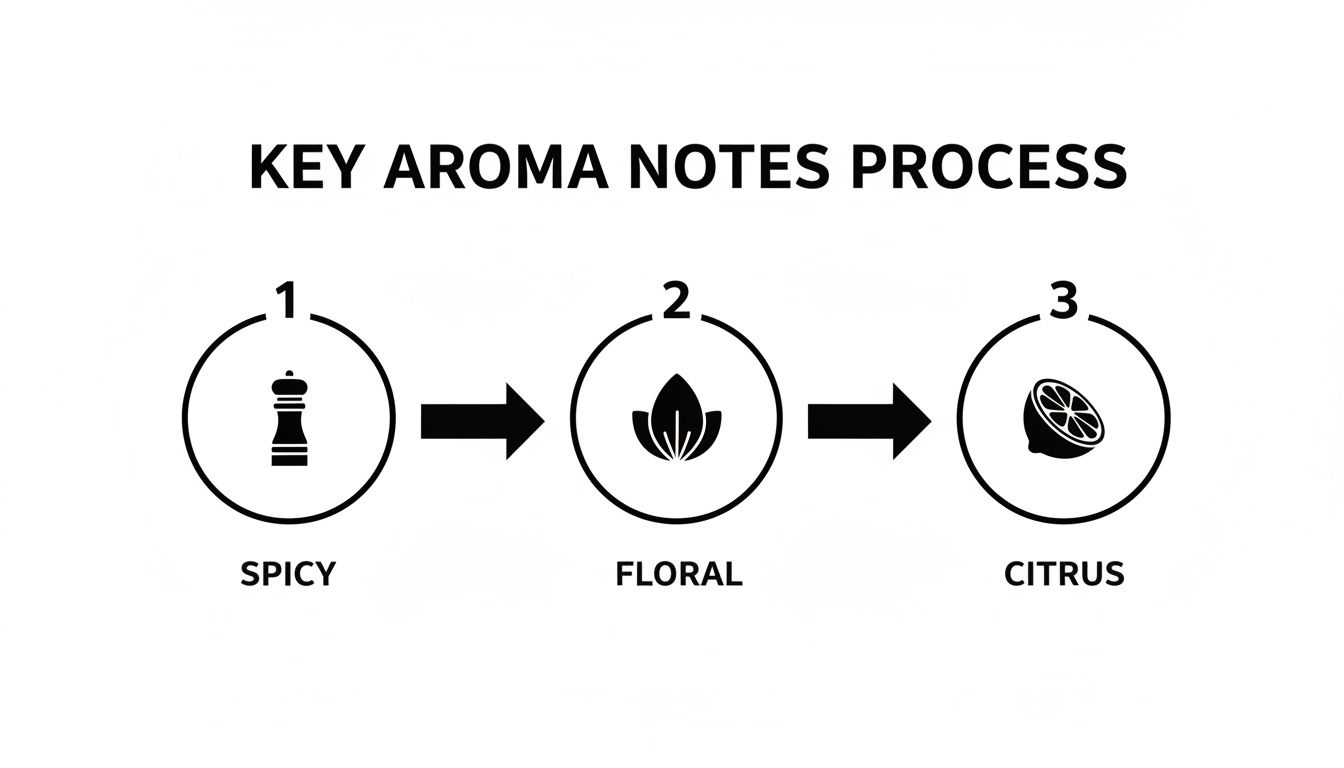
The formulation builds from a spicy foundation to a floral body, capped by a bright, citrusy finish.
Applying Top, Mid, and Base Note Theory in Practice
A successful Rainbow Zkittlez vape is defined by how its flavor unfolds. Applying the perfumery concepts of top, mid, and base notes elevates the product.
- Top Notes (Limonene, etc.): The most volatile compounds, creating the initial burst of bright citrus and sweet fruit. This is the critical first impression.
- Mid-Notes (Linalool, etc.): As the oil is heated, these notes emerge, forming the heart of the flavor—the rich, candy-like grape and mixed berry character.
- Base Notes (Caryophyllene, Humulene): The heaviest compounds that provide a lingering finish. The subtle spicy and earthy undertones anchor the sweetness and add complexity.
Building a profile from individual isolates offers maximum control but requires significant R&D. For most brands prioritizing consistency and speed-to-market, a professionally developed, strain-specific terpene blend is the more efficient solution. These blends are pre-balanced to ensure all notes are present in the correct proportions for a reliable and authentic result.
This table outlines key technical parameters for formulating with our Rainbow Zkittlez blend.
Rainbow Zkittlez Formulation Parameters for Distillate
| Parameter | Recommended Range | Rationale & Best Practices |
|---|---|---|
| Terpene Ratio | 5% – 7% by weight | 5% is a safe start. Increase for more intensity, but test in 0.5% increments to avoid harshness. |
| Mixing Temperature | 120–140°F (50–60°C) | Heat distillate only until fluid. Remove from heat before adding terpenes to prevent degradation of top notes. |
| Mixing Time | 5 – 15 minutes | Use a magnetic or overhead stirrer. Ensure a uniform mix to prevent separation and ensure batch consistency. |
| Steeping/Homogenization | 24 – 48 hours (optional) | After mixing, allow the sealed batch to rest at room temperature. This allows the blend to fully homogenize and the flavor profile to mature. |
Following these guidelines will enable the production of a stable, flavorful, and authentic product. The cannabis market is rich with complex genetics; familiarity with different profiles is essential for innovation. For another example, explore our guide on the Sour Diesel strain and its characteristics.
Why the Zkittlez Legacy Drives Commercial Success
The commercial potential of a Rainbow Zkittlez formulation is directly tied to its heritage. The market excitement for this profile is a direct result of its lineage from Zkittlez, one of the most famous flavor strains. For product developers, this family history is a built-in marketing advantage.
A cultivar's collection of awards is a clear indicator of proven market demand. By accurately replicating that winning profile, a brand can leverage existing consumer affinity.
The Power of an Award-Winning Pedigree
The original Zkittlez established a new benchmark for flavor. Its extensive list of awards created a powerful reputation that now benefits its entire genetic line, including Rainbow Zkittlez. This legacy is a valuable marketing tool for formulators.
The original Zkittlez won first place at the 2015 Cannabis Cup in San Francisco, placing its unique flavor profile on the map. Subsequently, its breeders, 3rd Gen Family, accumulated 38 total awards, cementing the Zkittlez genetics as the gold standard for terpene-forward cannabis. As detailed in this look into the history of Zkittlez on CannabisNow.com, this track record proves a massive appetite for complex, candy-like flavors.
This history created a pre-sold audience. Customers already recognize, trust, and actively seek the "Zkittlez" name and the fruity experience it represents.
Turning Legacy into a Formulation Strategy
For a product manufacturer, this history is a strategic asset. You are not just selling a "fruity vape"; you are delivering a specific, sought-after experience validated by over a decade of market success and industry accolades.
Choosing a high-quality Rainbow Zkittlez strain-inspired terpene blend is a direct path to meeting this built-in demand. It provides the confidence to launch a product for a well-defined customer segment already searching for that exact profile.
When you formulate with a profile that honors this award-winning lineage, you are leveraging years of brand-building accomplished by the strain itself. A precise blend validates your product's quality and assures customers they are receiving the authentic experience they expect.
This approach reduces product development risk. Instead of speculating on a new flavor concept, you are investing in a proven winner.
A Shortcut to a Winning Product
The ultimate goal is to create a commercially successful product. The Zkittlez legacy provides a clear roadmap. An authentic profile is not just about good flavor; it is a sound business decision that enhances marketability from day one.
Using a premium, accurate terpene profile for vape cartridges is the most efficient way to deliver on the promise of the Rainbow Zkittlez name. It builds immediate consumer trust and fosters repeat business through consistent, predictable quality. For more on achieving this consistency, our resources on terpene formulation for cannabis products provide essential technical guidance.
Common Questions for Formulating with Rainbow Zkittlez Terpenes
This section addresses the most common technical challenges formulators encounter when working with the Rainbow Zkittlez profile. Use this as a troubleshooting guide to refine your product.
What is the optimal terpene percentage for vape cartridges?
For most THC or CBD distillates, a concentration of 5% to 7% terpenes by total weight is the ideal starting range. This provides robust flavor and aroma without causing harshness or compromising the oil's viscosity for proper hardware function.
A methodical approach is recommended: begin with a small test batch at 5%. If greater intensity is desired, increase the concentration in 0.5% increments until the optimal balance of flavor and vapor smoothness is achieved. It is strongly advised to remain below 10% to avoid creating a thin, harsh product prone to wicking issues. A digital scale is essential for ensuring repeatable results.
How do I prevent the bright candy notes from degrading?
The signature "candy" characteristic of Rainbow Zkittlez is derived from highly volatile monoterpenes like Limonene. These compounds are extremely sensitive to heat. Protecting them is critical for maintaining the profile's authentic character.
The single most important factor is temperature control. The target mixing temperature is 120–140°F (50–60°C). Heat the distillate only until it reaches a workable viscosity, then remove it from the heat source before introducing the terpene blend. Adding terpenes while the oil is still being actively heated will "cook off" these delicate top notes, irreversibly damaging the profile. After mixing, cap and seal the product promptly to prevent evaporative loss.
Mastering low-temperature mixing ensures the end-user experiences the full aromatic journey, from the initial burst of fruity candy to the deeper, lingering notes. This is a key differentiator between a standard product and a premium one.
Can this terpene profile be used in products other than vapes?
Yes. While ideal for vape cartridges, the versatile Rainbow Zkittlez profile is highly effective in other applications where a vibrant, candy-like flavor is desired.
Other successful applications include:
- Concentrates: An excellent method for reintroducing the aromatic profile stripped during hydrocarbon extraction processes (e.g., shatter, budder, wax).
- Tinctures: A small amount can effectively mask the earthy flavor of carrier oils in sublingual products.
- Edibles: In gummies, hard candies, or baked goods, this profile adds a complex fruit flavor that surpasses generic additives.
Note that usage rates vary significantly by application. For example, edibles may only require a concentration of 0.1% to 0.5%, far less than for an inhalable product. Always conduct R&D to determine the optimal ratio for your specific formulation.
Why is my finished Rainbow Zkittlez vape oil separating?
The observation of distinct layers of oil and terpenes (phase separation) is almost always caused by incomplete homogenization. This indicates that the terpenes and cannabinoid oil were not mixed thoroughly enough to form a stable solution.
The solution is straightforward: gently reheat the batch to the safe mixing range of 120–140°F (50–60°C). Once the oil is fluid, resume mixing with a magnetic stirrer or overhead mixer until the solution is perfectly clear and uniform, with no visible streaks or swirls. This may take 5 to 15 minutes depending on batch size. A fully homogenized, stable mixture is non-negotiable for product consistency and quality control.
For professional formulators dedicated to creating top-tier products, sourcing consistent, high-quality terpene profiles is paramount. At Gold Coast Terpenes, we provide lab-verified, strain-specific blends and isolates engineered for precision and reliability.
[Explore our full range of terpene solutions at https://www.goldcoastterpenes.com and elevate your next formulation.]