
For cannabis product formulators, a terpene temp chart is a foundational tool for precision manufacturing. It dictates the temperatures for mixing, homogenizing, and filling vape cartridges—critical steps where flavor is either preserved or destroyed. Mastering this data directly impacts product quality, consistency, and profitability.
Why a Terpene Temp Chart Is Essential for Formulators
For professionals formulating with cannabinoids, precise temperature control is not a "best practice"—it's a critical process parameter that directly affects the bottom line. A terpene temp chart is the technical roadmap separating a premium, stable vape cartridge from one that tastes burnt, loses flavor integrity, or delivers an inconsistent experience. Utilizing this data is how you protect your investment in both terpene isolates and cannabis distillates.
This guide serves as a technical reference for mastering the science behind flavor and aroma formulation. By moving beyond generic temperature settings to understand how each terpene reacts to heat, formulators can mitigate costly degradation. The objective is to ensure the final product’s sensory profile aligns perfectly with the formulation design.
Protecting Your Raw Material Investment
When working with volatile aromatic compounds like terpenes, every degree matters. For instance, a sensitive monoterpene such as Limonene can degrade by 15-25% within hours if exposed to temperatures above 100°F (38°C) during storage or processing. This degradation not only eliminates the bright, citrus notes crucial for many strain profiles but also compromises the overall intended effect. In a competitive market, such precision is non-negotiable.
The global terpenes market is projected to grow from $1.45 billion in 2024 to over $2.43 billion by 2032, driven by demand for sophisticated, reliable products. Your ability to manage temperature is a significant competitive advantage.
Key Benefits for Product Development
Correctly implementing a terpene temp chart solves common production challenges and enhances brand reputation.
- Ensuring Flavor Integrity: Avoids scorching delicate top notes, preserving the full, complex aroma of the blend.
- Achieving Consistency: Guarantees every batch delivers the same flavor profile, which is essential for building brand trust and customer loyalty.
- Maximizing ROI: Prevents financial losses from expensive terpene isolates and blends evaporating or undergoing chemical breakdown.
- Improving Product Stability: Helps formulate products that maintain their intended flavor and aroma long after leaving the manufacturing facility.
Mastering the information in this guide will enable you to create predictable, high-quality products that stand out. While temperature is a critical variable, a deeper knowledge of cannabis science can also inspire new formulation concepts. In that context, our guide on the differences between male and female plants may offer valuable insights.
Understanding Terpene Volatility and Boiling Points

Before consulting a terpene temp chart, it is essential to understand volatility. For a formulator working with distillate, concentrates, or other base oils, a terpene's boiling point is more than just a number—it is a critical indicator of its stability and behavior during production and end-use. This knowledge transforms a simple chart into a powerful tool for designing superior products.
At its core, terpene behavior relates to molecular weight and chemical structure. Terpenes are primarily categorized as monoterpenes and sesquiterpenes, and their structural differences have a massive impact on your final product.
Monoterpenes vs. Sesquiterpenes in Formulation
For any formulator aiming to create consistent and memorable flavor profiles, understanding the distinction between these two main classes is non-negotiable. Their unique properties dictate handling procedures during heating, mixing, and homogenization.
- Monoterpenes: These are light, low-molecular-weight compounds. Common examples include Pinene, Limonene, and Myrcene, all with relatively low boiling points. They are extremely volatile, meaning they evaporate rapidly when exposed to heat. This makes them ideal top notes, delivering the initial burst of bright aroma in a vape cartridge or dab.
- Sesquiterpenes: These are heavier, more robust molecules like Beta-Caryophyllene and Humulene. With higher molecular weights and lower volatility, they are far more resistant to heat. They function as mid and base notes, providing a blend with its lasting character and deep, complex undertones.
This distinction explains why a poorly executed mixing process often yields a product with a flat aroma, devoid of its bright, fruity, or piney top notes. Those delicate monoterpenes were almost certainly degraded by excessive heat applied too early in the process.
Formulation Insight: Building a terpene blend is analogous to constructing a pyramid. The base is formed from heavy, stable sesquiterpenes that can withstand mixing into hot, viscous distillate. The apex consists of fragile, aromatic monoterpenes, which should be introduced at the last possible moment and at the lowest workable temperature.
Mastering this is the secret to layering flavors that have an impactful sensory profile. A detailed terpene temp chart provides the specific boiling points needed to execute this strategy, ensuring you don't destroy your most expensive and delicate aromatic compounds.
This level of control is crucial for formulators replicating complex profiles, like those in our library of strain-specific terpene blends. Whether you're aiming for the signature citrus of a Haze or the deep funk of an OG, you must know which terpenes to protect. For instance, preserving Limonene is paramount when crafting authentic citrus notes, a topic covered in our guide to D-Limonene's characteristics.
A Practical Terpene Temperature and Formulation Guide
This section serves as a practical reference for the production floor. It is a straightforward terpene temp chart designed for the realities of mixing, formulating, and testing vape hardware. It includes not just boiling points but also aroma profiles and their roles in a blend—transforming a list of numbers into a powerful tool for crafting exceptional flavors for vape cartridges and other cannabis products.
How to Use This Terpene Temp Chart in Formulation
Reference any terpene to instantly identify its heat sensitivity and aromatic contribution. For example, if you are building a blend around Limonene, the chart indicates its 176°C (349°F) boiling point. Exceeding this temperature during mixing will degrade the bright, citrusy top notes you are aiming for.
Conversely, a terpene like Linalool, with its higher boiling point of 198°C (388°F), is more durable. This makes it an excellent floral mid-note that can tolerate more heat during homogenization.
The "Formulation Note" column is your key to building layered, sophisticated aromas.
- Top Notes: The most volatile terpenes. Add them last, at the lowest possible temperature, to preserve their delicate scent.
- Mid Notes: The heart of the blend. These are more resilient and bridge the top and base notes.
- Base Notes: The heavy hitters. With high boiling points and low volatility, they form the flavor foundation and can be mixed in earlier when your concentrate is hotter.
Following this structure is how you transition from a simple flavor to a complex, strain-specific profile that doesn't fade.
Master Terpene Boiling Point & Formulation Chart
Here is the data needed to begin formulating at a professional level. Boiling points are provided in both Fahrenheit and Celsius to ensure team-wide alignment. This chart details the most common terpenes used in product development.
| Terpene Isolate | Boiling Point (°F) | Boiling Point (°C) | Aroma Profile | Formulation Note (Top/Mid/Base) |
|---|---|---|---|---|
| Beta-Caryophyllene | 266°F | 130°C | Spicy, Peppery, Woody | Base |
| Myrcene | 334°F | 168°C | Earthy, Musky, Fruity | Mid/Base |
| Alpha-Pinene | 311°F | 155°C | Sharp Pine, Herbal | Top |
| Limonene | 349°F | 176°C | Citrus, Lemon, Orange | Top |
| Linalool | 388°F | 198°C | Floral, Lavender, Spice | Mid |
| Humulene | 225°F | 107°C | Hoppy, Earthy, Woody | Base |
| Terpinolene | 363°F | 184°C | Piney, Floral, Herbal | Top/Mid |
| Camphene | 318°F | 159°C | Damp Wood, Camphor | Mid |
| Ocimene | 122°F | 50°C | Sweet, Herbal, Woody | Top |
Treat this chart as your go-to reference for quality control. Maintaining these temperatures throughout your process protects your terpenes and ensures the final product tastes precisely as designed. For exceptionally pure ingredients for your next production run, explore our complete lineup of terpene isolates.
Detailed Profiles of Key Formulation Terpenes
A quick-reference terpene temp chart is useful for fast lookups, but mastering formulation requires a deeper understanding of how key terpenes behave under thermal stress. It's about more than boiling points; it’s about knowing their degradation risks and their function as top, mid, or base notes. This knowledge transforms a good formulation into a great one.
Let's analyze the most critical terpenes in product development, with practical advice for preserving their signature aromas. Nailing these details is what allows you to perfect a complex strain profile for distillate and ensure your final product delivers the intended sensory experience.
This chart illustrates how we classify terpenes as top, mid, and base notes when building a formulation.
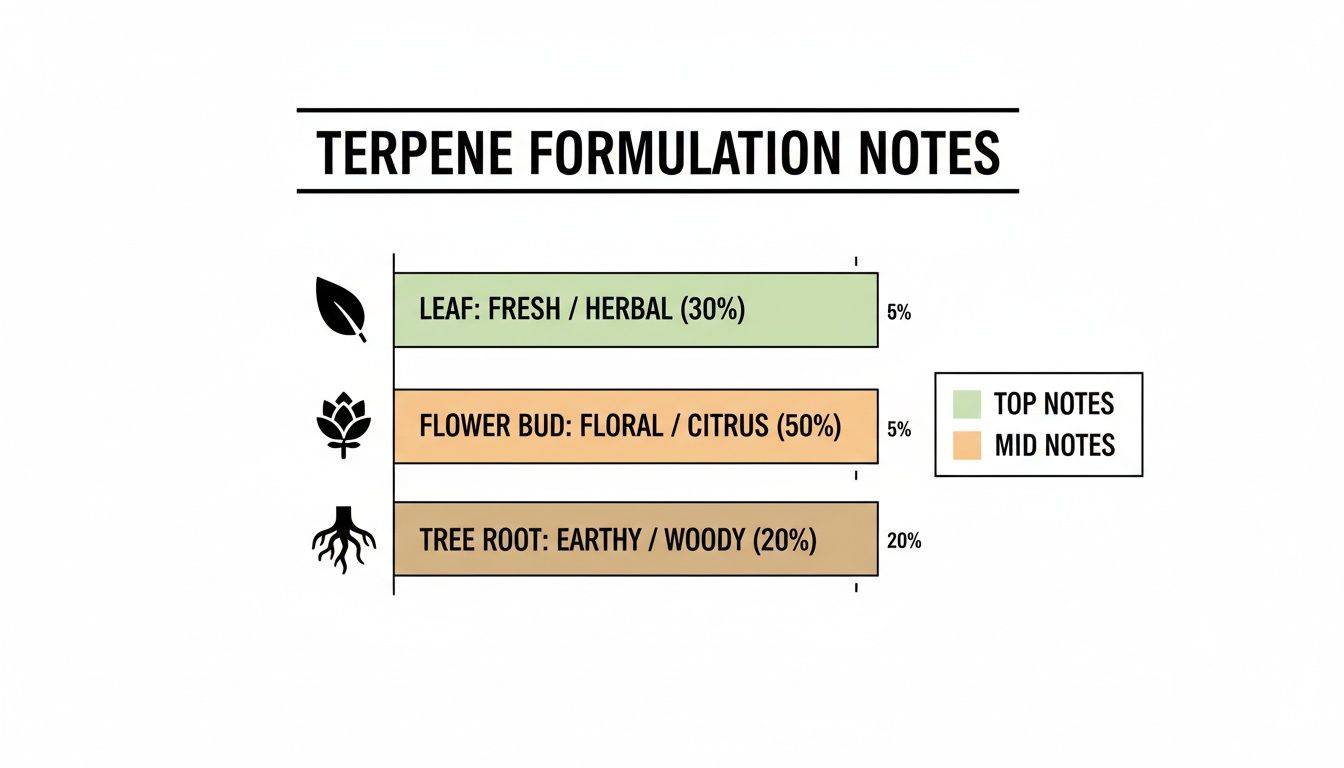
As shown, top notes are the most volatile, mid notes form the heart of the blend, and base notes provide a stable, lasting foundation.
Myrcene: The Versatile Mid-Note
Myrcene is one of the most important terpenes in cannabis formulation, known for its classic earthy, musky, and slightly fruity aroma. With a boiling point of 334°F (168°C), it possesses good stability, making it a solid mid-note that can also contribute weight to the blend's base.
Due to its resilience, Myrcene is more forgiving during homogenization than delicate top notes. However, prolonged heat exposure can mute its character, turning its pleasant earthiness into a bland, generic herbal scent. For optimal results, add Myrcene after heating your base oil but just before introducing highly volatile top notes.
Limonene: The Bright and Volatile Top-Note
Limonene is prized for its sharp, bright citrus kick, making it essential for any strain with a lemon, orange, or fruity profile. As a monoterpene with a boiling point of 349°F (176°C), it is incredibly volatile and known for "flashing off" during mixing.
Formulator's Tip: To prevent Limonene from volatizing, always add it at the very end of your process. Wait until the distillate has cooled to the lowest workable temperature, typically around 140–150°F (60–65°C). Then, stir gently; excessive agitation will accelerate evaporation.
Mishandling temperature is the primary reason many citrus-forward vapes have a weak, disappointing flavor. To learn more about this crucial isolate, you can explore our guide to D-Limonene's unique benefits and characteristics.
Beta-Caryophyllene: The Resilient Base Note
For creating a stable, long-lasting flavor foundation, Beta-Caryophyllene is a formulator's most reliable tool. It’s a heavier sesquiterpene, and while its boiling point is lower at 266°F (130°C), its high molecular weight gives it low volatility. It is remarkably heat-resistant, making it a perfect base note.
Its signature spicy, peppery, and woody aroma adds depth and complexity. Thanks to its stability, you can add Beta-Caryophyllene early in the mixing process when your distillate is hotter and more viscous. This ensures complete homogenization without risk of degradation. While it is heat-tolerant, do not overdo it—excessive temperatures can still render its peppery note harsh and overpowering.
Linalool: The Floral and Durable Mid-Note
Linalool contributes a sophisticated floral, lavender, and light spice aroma, adding wonderful complexity to many popular strain profiles. It has one of the higher boiling points among common terpenes at 388°F (198°C), giving it excellent thermal stability.
This durability allows for its introduction during the main homogenization phase with other mid-notes like Myrcene. It effectively bridges bright top notes and heavy base notes, rounding out the flavor so no single aroma dominates. Its resilience ensures its delicate floral character survives the production process intact.
Alpha-Pinene: The Sharp and Delicate Top-Note
Alpha-Pinene delivers the fresh, sharp scent of pine that defines many classic strains. Like Limonene, it's a highly volatile monoterpene with a boiling point of 311°F (155°C), placing it firmly in the "handle with care" category.
To prevent its crisp aroma from dissipating, you must treat it as a delicate top note. Add it during the final cooling stage of your mixing protocol alongside other sensitive monoterpenes. Its presence often provides the initial aromatic "lift" in a blend, so its preservation is critical for an authentic and layered experience.
How to Use Temperature Data When Formulating for Vape Cartridges
A detailed terpene temp chart is a map, but creating a superior vape cartridge is the journey. Translating that raw data into a stable, excellent-tasting product requires a methodical approach that respects the volatility of these aromatic compounds.
The primary objective during mixing is to reduce the distillate's viscosity just enough for complete terpene homogenization, but not so much that you degrade the flavor profile. Achieving this balance is the secret to a consistent product that won't degrade on the shelf.
Best Practices for Blending and Homogenization
Your mixing temperature is the most critical factor in protecting your terpene profile. While lab-specific SOPs vary, adhering to a proven temperature range is essential for quality control.
The industry standard is to heat distillate to 140–150°F (60–65°C). This temperature window is the optimal balance: warm enough to make thick distillate workable, but cool enough to prevent the immediate loss of volatile monoterpenes like Pinene and Limonene.
Pro Tip from the Lab Floor: Never add terpenes to cold distillate. This is a surefire way to achieve an uneven mixture, leading to "hot spots" of concentrated terpenes and visible separation in the final cartridges. Always ensure your base oil is fully heated and fluid before introducing any terpenes.
A Step-by-Step Mixing Guide for Distillate
For repeatable results, a structured process is necessary. This minimizes variability and protects your investment in high-quality distillate and terpenes.
- Heat Your Distillate: Gently warm the distillate in a suitable mixing vessel, preferably on a calibrated hot plate with a magnetic stirrer to ensure even heat distribution and prevent scorching.
- Monitor the Temperature: Use a calibrated infrared thermometer or thermocouple probe to monitor the temperature closely. Do not allow it to exceed 150°F (65°C).
- Add Terpenes Strategically: Once the distillate reaches the target temperature, slowly add your terpene blend. The optimal method is to create a small vortex with the stirrer and pour the terpenes directly into the center for instant, even dispersion.
- Homogenize Thoroughly: Continue stirring for a minimum of 15–20 minutes to ensure complete homogenization and prevent future separation issues.
How Hardware Selection Affects Flavor for Vape Cartridges
Your formulation work isn't finished once the cartridge is filled. The chosen hardware significantly impacts the final flavor experience, as different atomizers operate at different temperatures.
- Ceramic Coil Cartridges: Preferred by many formulators for their even heating at slightly lower temperatures. This is ideal for preserving delicate top notes. They can often accommodate higher terpene concentrations, sometimes up to 8-12%, without wicking issues.
- Wick and Coil Systems: Traditional setups can sometimes create localized "hot spots" on the coil, which can scorch sensitive terpenes and produce a harsh or burnt taste. These systems typically perform best with lower terpene ratios, around 5-8%.
Understanding these hardware differences is key when replicating the authentic flavor of a specific strain, a concept we explore in our guide on what makes the Sour Diesel profile unique.
As demand for precisely formulated products grows, getting this right is more important than ever. The global terpenes market is projected to hit $1,151.5 million by 2025, with North America leading the charge. Improper handling, such as storing finished cartridges above 85°F, can cause up to 20% evaporation of key terpenes like Myrcene. For any large-scale producer, mastering temperature control is directly tied to profitability.
Troubleshooting Common Temperature-Related Formulation Issues
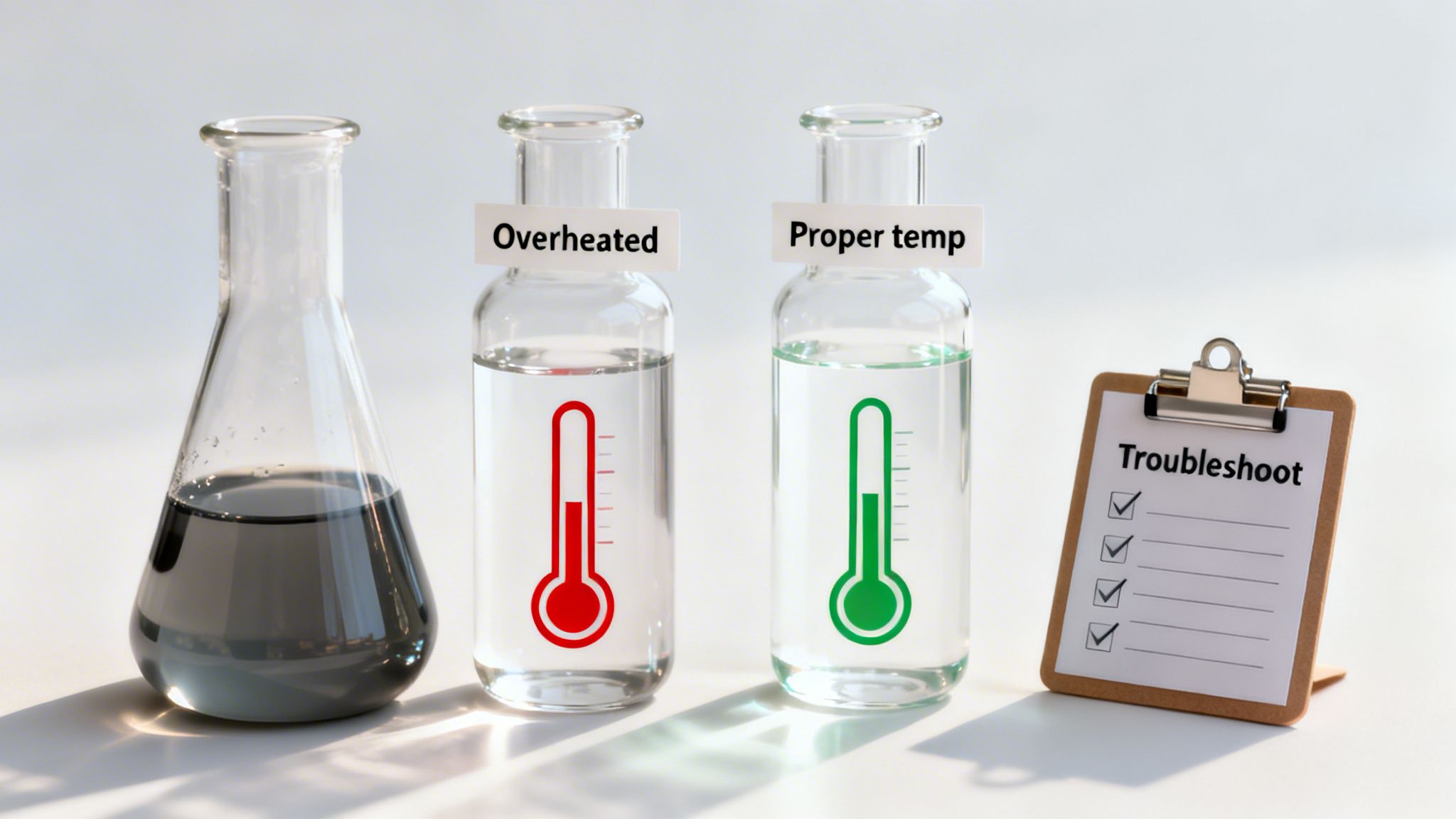
Even with calibrated equipment and a solid terpene temp chart, issues can arise. When a batch's sensory profile is off, temperature is almost always the primary suspect. This section is a field guide for diagnosing and resolving the most common temperature-related problems in vape formulation.
Every failed batch provides a learning opportunity. By connecting specific off-flavors to terpene degradation, you can rapidly diagnose and correct the issue, improving your process for all future production runs.
Problem: Vapes Taste Burnt, Harsh, or Peppery
This sharp, acrid note is one of the most common product complaints and a clear indicator of excessive heat exposure at some point in the process.
Likely Cause: You have likely overheated Beta-Caryophyllene or other sesquiterpenes. While Caryophyllene is a robust base note, excessive heat causes it to degrade into harsh-tasting compounds. This typically occurs when distillate is heated too rapidly or held above 150°F (65°C) for an extended period.
Actionable Solution:
- Calibrate Your Equipment: First, verify the accuracy of your hot plate and thermometers. It is not uncommon for equipment to have a variance of 10-20°F.
- Lower Your Mixing Temps: Reduce your target temperature to the lower end of the workable range, around 140°F (60°C).
- Shorten Your Mixing Time: If higher heat is unavoidable for highly viscous distillate, minimize the duration. The less time terpenes are exposed to high temperatures, the better.
Problem: Citrus and Fruit Flavors Are Weak or Missing
You formulate a blend with vibrant citrus top notes, but the final product is flat and one-dimensional. The zesty Limonene or sweet Terpinolene has vanished.
Likely Cause: Your volatile monoterpenes have "flashed off." Lighter terpenes like Limonene, Alpha-Pinene, and Ocimene have very low boiling points. Adding them to overly hot distillate or mixing too aggressively causes them to evaporate almost instantly.
Formulator’s Reality Check: Adding delicate top notes to distillate over 150°F is like trying to make a puddle on a hot skillet—they’re gone in a puff of steam. Your investment in premium terpenes literally vanishes into thin air.
Actionable Solution: Implement a staged mixing process. Heat your distillate and homogenize your heavier base and mid-note terpenes first. Allow the mixture to cool to the lowest workable temperature, then gently fold in your volatile top notes at the end. This technique is essential when using our detailed terpene formulation guides.
Problem: The Product Has a Chemical Off-Flavor
Sometimes the issue is not a burnt taste but a synthetic or chemical-like flavor not present in your original terpene blend.
Likely Cause: This indicates severe terpene degradation from prolonged heat exposure. When terpenes are held at high temperatures for too long, they don't just evaporate—their molecular structures can transform, creating entirely new and unpleasant compounds. This signals serious thermal damage across the entire profile.
Actionable Solution: Audit your entire heating process. Ensure distillate is not sitting on a hot plate for hours. For larger batches, consider using jacketed mixing vessels, which provide gentle, uniform heating and prevent hot spots. This level of control is crucial for consistently producing complex profiles like our strain-inspired terpene blends.
Once you've mastered basic troubleshooting, you can begin to elevate your product quality. For experienced formulators, this is where you can use a terpene temperature chart not just for reference, but as a blueprint for creating dynamic and complex flavors for vape cartridges.
A highly effective method is staged mixing. Instead of adding all terpenes at once, this process involves introducing different terpene groups at specific temperatures based on their volatility. For example, you might mix durable base notes like Beta-Caryophyllene at higher temperatures (~150°F / 65°C) and then fold in delicate top notes like Limonene as the mixture cools (below 140°F / 60°C).
Creating Layered and Evolving Flavors
The true craft of formulation lies in building a layered sensory experience. By strategically combining terpenes with different boiling points, you can design a flavor that evolves as the consumer vapes. This requires a firm grasp of how top, mid, and base notes interact at different atomizer temperatures.
- Initial Hit: This first impression is driven by your most volatile top notes. Preserving terpenes like Alpha-Pinene is essential for delivering that bright, authentic aroma on the first draw.
- Mid-Vape Character: As the coil heats, the mid-notes emerge. Terpenes like Linalool and Myrcene reveal the floral, fruity, or earthy heart of your blend.
- Lasting Finish: The experience concludes with the heavy base notes. These resilient sesquiterpenes provide a deep, lingering finish that adds sophistication.
This approach transforms a static flavor into a dynamic sensory journey.
Formulation Strategy: Consider using a durable, high-boiling-point isolate as a "shield." Adding a stable terpene like Geraniol (boiling point 446°F / 230°C) can act as a buffer, helping to protect more fragile compounds from degradation during quick bursts of heat from the atomizer.
Formulating with Alternative Diluents
Another advanced technique is to work with terpene-derived diluents that enable mixing at lower temperatures. Unlike older cutting agents, these specialized diluents are formulated to have a viscosity that works well with terpenes without requiring as much heat, naturally reducing the risk of evaporation.
By integrating these strategies into your process, you move beyond merely preventing flavor loss to actively designing how that flavor is expressed. This level of precision is required to create the nuanced profiles found in our Elevated Strains terpene line, developed specifically for formulators who demand a higher degree of control and quality.
Answering Your Top Questions About Terpene Temperatures
As you delve deeper into formulation, you'll encounter common challenges. Here are the questions we hear most frequently from formulators, with practical answers to help you navigate real-world production scenarios.
What Is the Best Temperature for Mixing Terpenes with Distillate?
The optimal range is between 140–150°F (60–65°C). This temperature range is a critical balance. It's warm enough to reduce the viscosity of thick distillate for even mixing, but cool enough to prevent the most volatile top notes like Pinene and Limonene from evaporating. Exceeding this range risks degrading the very flavors you aim to capture.
How Can I Prevent Flavor Loss During Homogenization?
The key is a staged mixing process. Instead of adding all terpenes simultaneously, layer them based on volatility.
A proven process:
- Heat your distillate to the target temperature, around 140°F.
- Add your more resilient base and mid-note terpenes (e.g., Myrcene, Beta-Caryophyllene), which can withstand the initial heat required for a smooth blend.
- Allow the mixture to cool slightly while remaining fluid.
- Finally, gently fold in your delicate top-note terpenes (e.g., Limonene, Ocimene) to minimize their heat exposure and preserve their fresh aroma.
Why Do My Vape Cartridges Taste Burnt or Peppery?
A harsh, peppery, or burnt flavor is almost always a sign of overheating. This typically occurs when heavier sesquiterpenes, particularly Beta-Caryophyllene, are degraded by excessive heat. While Beta-Caryophyllene is a stable base note, scorching it creates compounds with a sharp, unpleasant taste. If you encounter this, first verify your hot plate's calibration and ensure your mixing temperatures remain consistently within the safe zone.
In 2023, the global terpene market was valued at USD 862.6 million, with North America comprising about 34%. For formulators purchasing high-purity Beta-Caryophyllene at wholesale prices around $120 per kilogram, precise temperature control is not just about flavor—it's about protecting a significant financial investment. To see more on the industry's growth, you can explore detailed market statistics on wifitalents.com.
Can I Add Terpenes to Cold Distillate?
No. Never add terpenes to cold, viscous distillate. At room temperature, the oil is too thick for proper homogenization. This results in an uneven mixture with visible streaking, creating "hot spots" of over-concentrated flavor. This leads to inconsistent performance and hardware issues like leaky cartridges. Always ensure your distillate is properly heated and fluid before adding terpenes.
At Gold Coast Terpenes, we provide the lab-verified, strain-specific profiles and isolates you need to formulate with total confidence. Whether you are working with our classic strains or our innovative Elevated Strains, you can rely on our products for unmatched consistency and purity.