
Silver Haze is more than a legendary name; it’s a commercially proven blueprint for creating products that sell. Its unique blend of spicy, sweet, and citrus notes has maintained market relevance for decades. For formulators looking to develop new products, understanding how to replicate this profile is a strategic advantage.
Why Replicate the Silver Haze Profile in Your Products
When formulating a product, the goal is not merely to copy a popular strain. It is to capture the precise sensory experience and functional attributes that drive consumer loyalty. The Silver Haze profile is a masterclass in aromatic balance, engineered to deliver a clear, uplifting effect that has proven its commercial power.
By recreating this profile, you're leveraging decades of built-in market recognition and consumer trust. It’s a shortcut to product credibility.
To understand its success, one must examine its genetics. The strain's staying power comes from a trifecta: the spicy, cerebral character from Haze, the dense, resinous structure from Northern Lights, and the famously pungent and hardy nature of Skunk. This combination created a profile that was not just unique—it was remarkably consistent, cementing its status as a market staple.
A Legacy of Commercial Success
The commercial power of this strain profile is well-documented. Originally hitting the market as Super Silver Haze, it dominated the late 1990s. It secured first place at the High Times Cannabis Cup in 1997 and repeated the feat in 1998 and 1999. Historical industry data showed that demand for Cup-winning genetics like this increased by over 300% in the year following a major award. This made it an essential cultivar for operators from Amsterdam to California.
This history is a valuable marketing asset. When you accurately formulate a Silver Haze strain-inspired terpene blend, you are not just selling a flavor. You are connecting your product to a legacy of award-winning quality that resonates with discerning customers.
The Formulation Advantage
From a technical standpoint, the Silver Haze profile is a fantastic baseline for product development. Its primary aromatic components are well-understood, making it a reliable and scalable profile for diverse applications. For brands manufacturing vape cartridges or other distillate-based products, it offers significant benefits:
- Broad Market Appeal: The bright, energetic aroma appeals to a wide demographic, not just niche connoisseurs.
- Recognizable Flavor: Its signature spicy-citrus flavor is instantly identifiable, which helps build strong brand recall.
- Versatile Application: The profile is robust enough to perform well in distillates, live resins, and even edibles without becoming muddled.
The primary advantage of recreating a classic like Silver Haze is its predictability. You are building on a proven aromatic foundation, which enables the delivery of a consistent, high-quality experience that meets market expectations every time.
In this guide, we will deconstruct the specific terpenes and ratios required to master the Silver Haze terpene profile for cannabis product formulation. We'll provide the technical knowledge to move from concept to finished product. While the original plant genetics are complex, a basic grasp of concepts like the difference between male and female plants is fundamental knowledge for anyone in this industry.
Decoding the Silver Haze Terpene Profile
To accurately replicate the Silver Haze profile, one must adopt the mindset of a flavorist or perfumer. It is not about aggregating a list of terpenes; it is about understanding how they layer and interact to create the signature bright, spicy, and earthy aroma. This distinction separates a flat, uninspired product from one that truly captures the strain's essence.
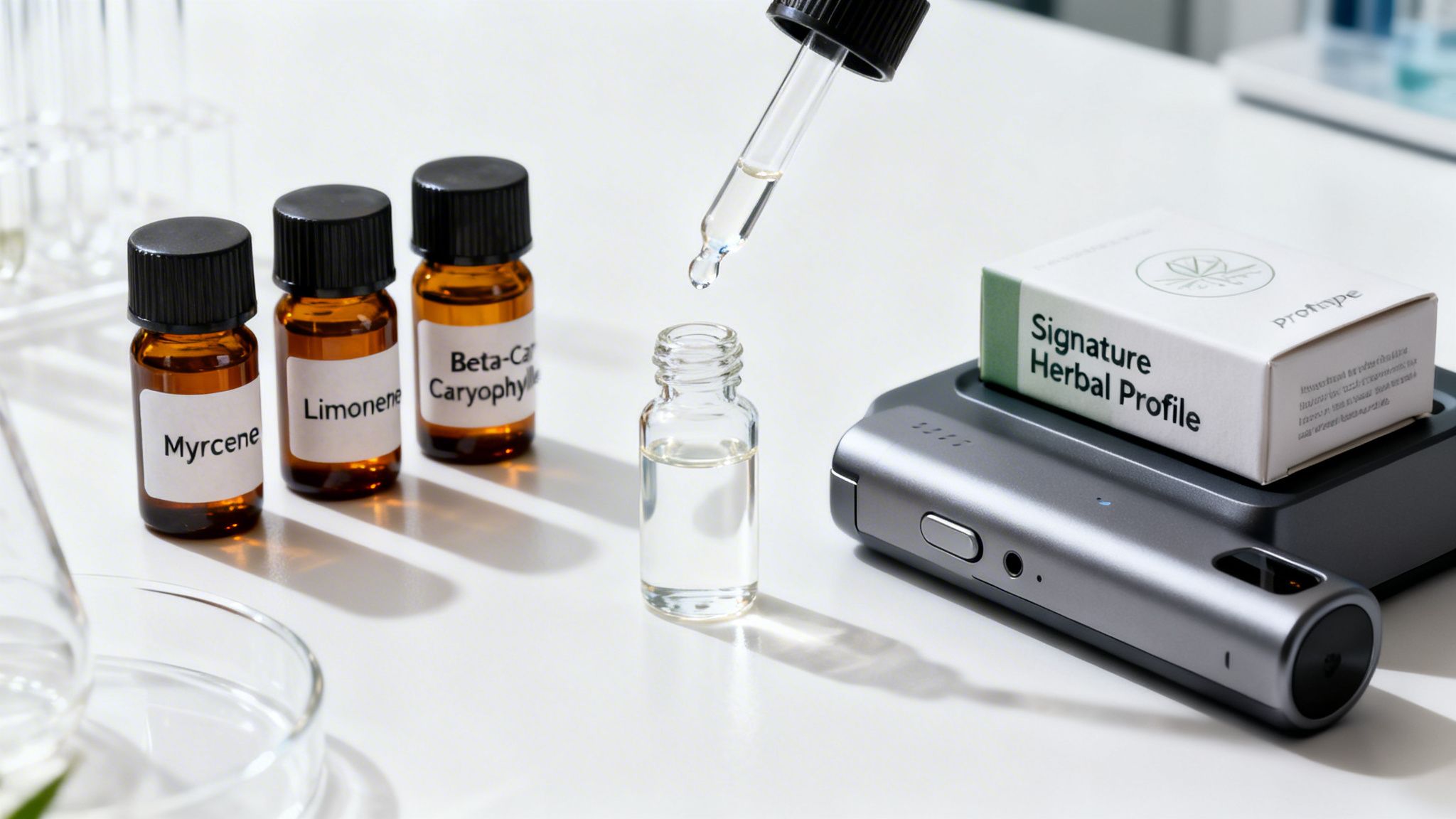
The sensory experience of Silver Haze is built around three core terpenes. They are the foundation of the entire profile. Achieving the correct balance of these three is the most critical step. The primary constituents are Myrcene, Limonene, and Beta-Caryophyllene.
The dynamic between them defines Silver Haze. The initial sharp, citrus note from Limonene is immediately followed by the warm, peppery spice of Caryophyllene. Underpinning it all, the subtle, musky character of Myrcene provides structure and depth. This balance is absolutely crucial when formulating a Silver Haze strain-inspired terpene blend for distillate.
The Three Pillars of the Profile
To build this profile from individual isolates, one must understand what each dominant terpene contributes. An incorrect ratio can result in a blend that is too peppery, too sweet, or lacks the classic Haze lift.
- Myrcene (Base Note): This is the workhorse of the blend. While not the most forward aroma, its earthy, slightly fruity foundation provides depth and prevents the sharper notes from becoming overly aggressive. It serves as the aromatic canvas. You can acquire high-purity Myrcene isolates to build this foundational layer with precision.
- Limonene (Top Note): This is the most prominent character. As the most volatile terpene in the mix, Limonene delivers the unmistakable sweet citrus introduction. It’s responsible for the fresh, energetic quality for which the Haze family is known. The key is to calibrate the concentration to capture an uplifting feel without veering into a synthetic, cleaning-product aroma.
- Beta-Caryophyllene (Mid-Note): This terpene provides the signature spice. Beta-Caryophyllene gives Silver Haze its peppery, funky character. It's the perfect bridge between the bright citrus of Limonene and the earthy base of Myrcene, adding a warm, woody complexity.
The secret to an authentic Silver Haze formulation is the ratio of these three terpenes. It’s a perfect example of aromatic synergy—the final blend is far greater than the sum of its parts.
Let's break down how these primary terpenes function within a formulation. The table below outlines their typical concentrations and their roles as top, middle, and base notes, which is critical for building a stable and authentic aroma.
Silver Haze Primary Terpene Composition and Roles
| Terpene | Typical Concentration | Aroma/Flavor Contribution | Note Classification |
|---|---|---|---|
| Myrcene | 0.5% – 1.5% | Earthy, musky, subtle fruit | Base Note |
| Limonene | 0.4% – 1.2% | Bright citrus, sweet lemon | Top Note |
| Beta-Caryophyllene | 0.3% – 0.8% | Peppery, spicy, woody | Mid-Note |
As shown, understanding each terpene's role as a "note" helps layer the aromas correctly, ensuring the bright top notes are perceived first, followed by the complex middle, and anchored by the lasting base.
Adding Nuance with Secondary Terpenes
While the main trio provides the core structure, the artistry in replicating the flavor of Silver Haze lies in the details. Secondary and tertiary terpenes add subtle, nuanced notes that make a blend feel authentic rather than generic.
Two of the most important secondary components are Pinene and Terpinolene. Pinene contributes a hint of fresh pine that complements the citrus and spice, adding a clean, crisp edge. Terpinolene is more complex, offering a multi-layered scent of lilac, apple, and herbs that rounds out the profile with a touch of floral sophistication. While difficult to identify individually, their absence would be immediately noticeable.
For a deeper understanding of how minor compounds can have such a significant impact, our guide on how terpenes work is an excellent resource. By understanding this aromatic hierarchy—from foundational base notes to subtle accents—you can build a Silver Haze profile that’s not just accurate, but exceptional.
How to Replicate the Silver Haze Flavor Profile
To successfully replicate the iconic Silver Haze profile, one must approach the task with the precision of a flavor chemist. The process requires two key elements: exceptionally pure terpene isolates and a clean, neutral base such as a well-winterized distillate. Simply combining terpenes without a clear methodology will result in a flat, generic product that misses the mark.
The key is to layer the aromatic notes with precision. The goal is to build the authentic sensory experience consumers expect from this profile. It's a step-by-step process, starting with foundational terpenes and carefully adding subtler ones to create a full-bodied, stable flavor.
Building the Foundation with Primary Terpenes
The core of any Silver Haze formulation is the correct balance between its three dominant terpenes: Myrcene, Limonene, and Caryophyllene. These are the pillars supporting the entire aromatic structure. The first priority is to lock in the ratios for these three, as they define the blend's character.
These percentages should be viewed as a starting point. Adjustments will likely be necessary based on your specific base oil and desired final profile, but this is a proven foundation.
- Myrcene (Base Note): Begin with Myrcene at 40-50% of your total terpene blend. This establishes the essential earthy, musky foundation, giving the profile its depth.
- Limonene (Top Note): Next, incorporate Limonene at 25-35% of the mix. This delivers the signature bright, sweet citrus note at the forefront of the experience. For more information on this compound, see our guide on the benefits and uses of D-Limonene.
- Caryophyllene (Mid-Note): Finally, add Caryophyllene to constitute 15-25% of the blend. It introduces the classic peppery, spicy character that bridges the citrus top notes and the earthy base.
This diagram illustrates how these primary terpenes form the core identity of the Silver Haze aroma.
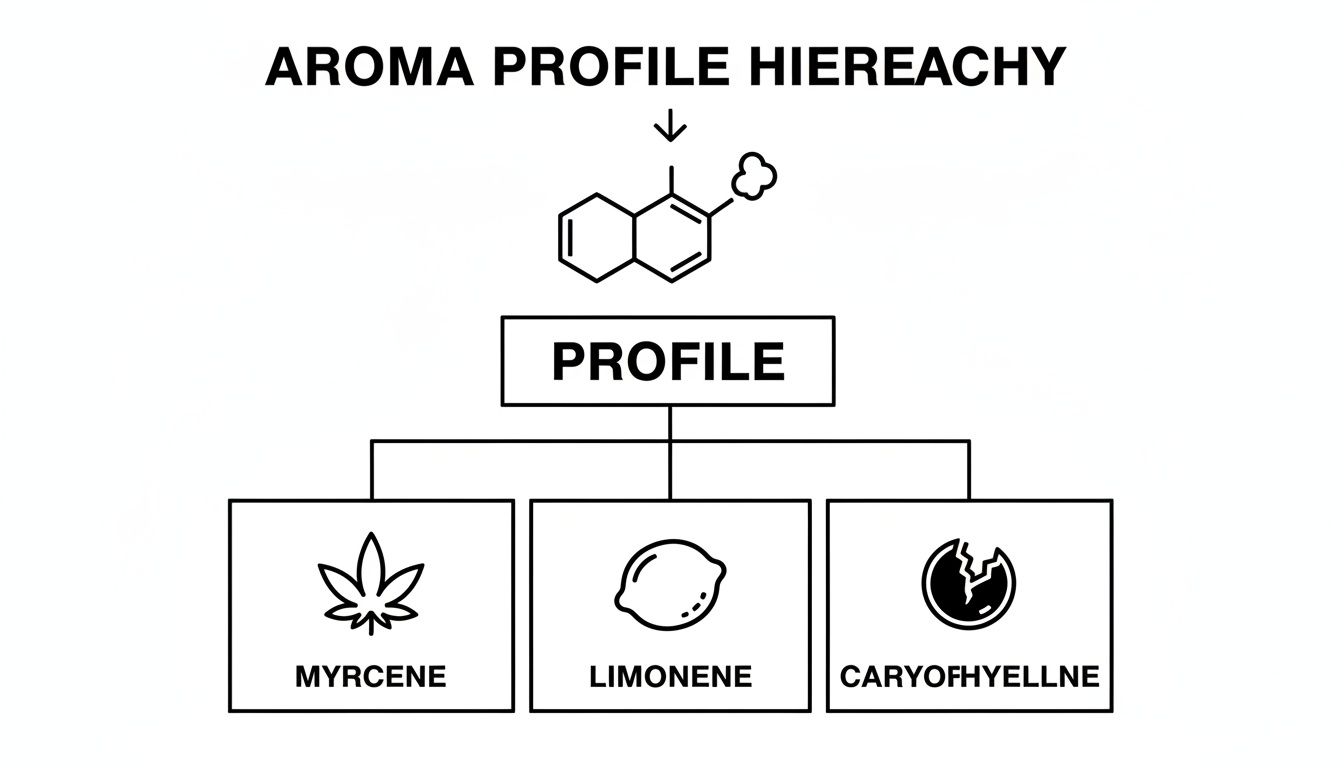
As shown, Myrcene, Limonene, and Caryophyllene are the primary building blocks of the Silver Haze experience, with each contributing a distinct and essential aromatic layer.
The Mixing and Homogenization Process
Once ratios are determined, the next critical step is mixing and homogenization. This should not be rushed. The objective is to achieve even distribution of terpenes throughout the base to guarantee consistent flavor and avoid "hot spots." An inconsistent mix leads to an inconsistent product.
For optimal results, use a magnetic stirrer and apply gentle heat. Only enough warmth to lower the viscosity of your distillate is needed, typically between 40-60°C (104-140°F). Excessive heat can degrade volatile terpenes like Limonene and compromise the entire flavor profile.
Formulator's Tip: After mixing, allow the blend to rest for at least 24 hours in a sealed, dark container. This "steeping" period allows the different terpene molecules to fully integrate with each other and the oil, resulting in a more cohesive and authentic final aroma.
Precision is non-negotiable. Whether measuring in grams or milliliters, use calibrated equipment for every isolate. By sourcing quality ingredients, establishing correct ratios, and using proper mixing techniques, you can successfully create a Silver Haze strain-inspired terpene blend for vape cartridges that does justice to the original.
Formulating for Vape Cartridges and Distillate
Incorporating the classic Silver Haze profile into a vape cartridge requires more than simply adding terpenes to an oil. When working with high-viscosity distillates and specific vape hardware, technical considerations are paramount to ensure flavor integrity, product stability, and a positive user experience. Every decision, from managing viscosity to selecting hardware, has a significant impact.
The first challenge is the viscosity of the base oil. Highly refined distillates are nearly solid at room temperature, making homogenous mixing difficult. If the final blend is too thick, it can cause dry hits; too thin, and it risks leakage.
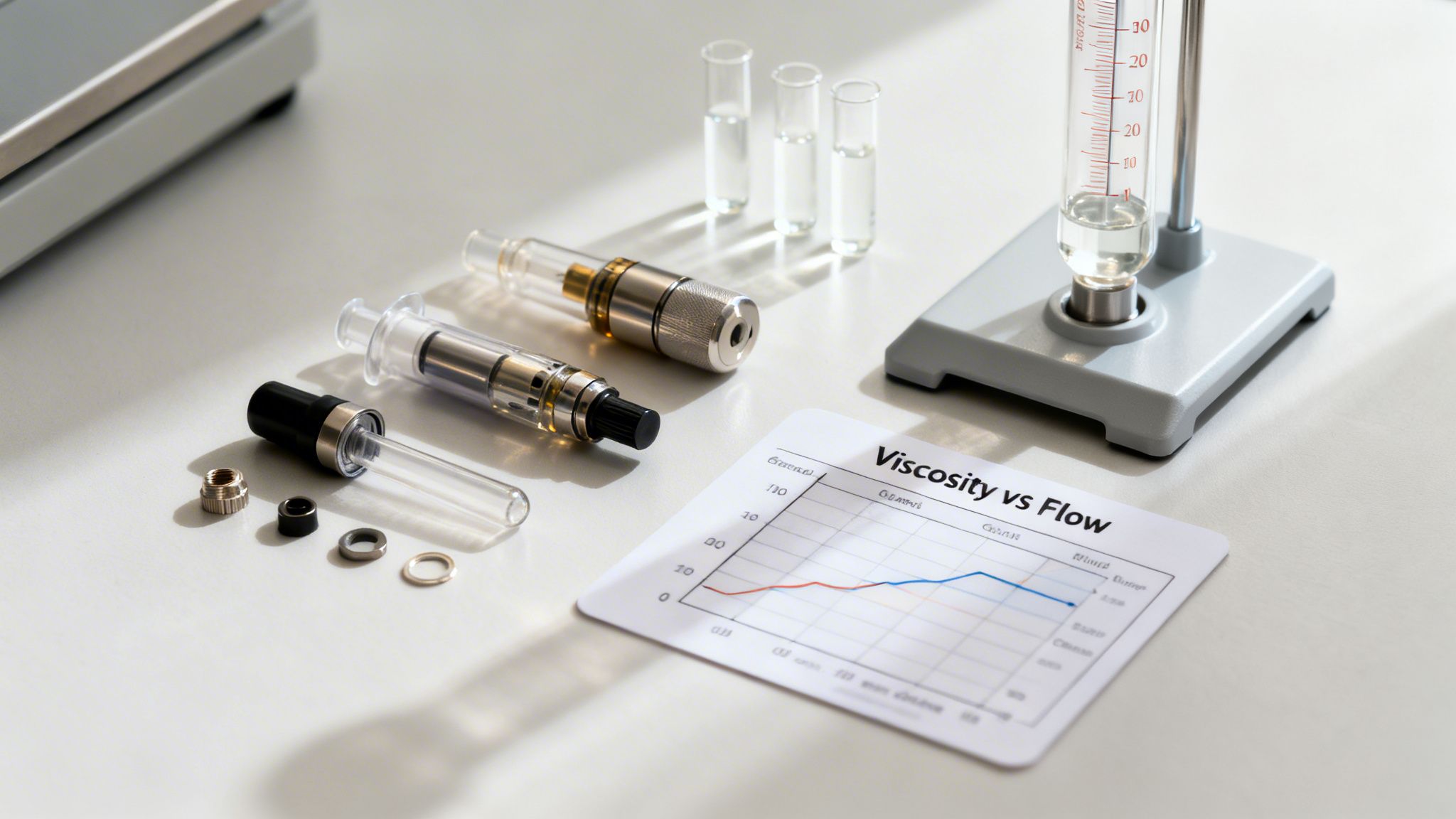
The ideal viscosity allows the oil to flow perfectly into the atomizer without overly diluting cannabinoids and terpenes. This is where ratios become critical—most formulators find success using between 5% and 8% terpenes by total weight.
Hardware Compatibility and Flavor Expression
The choice of hardware is as crucial as the formulation itself. Different atomizers heat terpenes differently, which can completely alter how a delicate profile like Silver Haze is perceived.
- Ceramic Coils: These are often preferred for flavor preservation. They heat evenly and at lower temperatures, which helps protect bright, volatile top notes like Limonene from thermal degradation. The result is a cleaner, more authentic flavor.
- Quartz Coils: These heat rapidly and can deliver a powerful initial flavor. However, the higher heat can sometimes mute the subtler spicy and earthy notes from Beta-Caryophyllene and Myrcene.
- Wick and Aperture Size: The intake hole size on a cartridge must be matched to the viscosity of the oil. A thinner oil (higher terpene percentage) requires smaller holes to prevent flooding the atomizer.
For a profile as bright and complex as Silver Haze, a high-quality ceramic cartridge is typically the best choice. It allows the full spectrum of citrus, spice, and earth to be expressed with each use.
Ensuring Stability and Shelf-Life
Just as a cultivator protects their crop, a formulator must protect the finished product. Terpenes are organic compounds that degrade when exposed to heat, light, and oxygen.
The signature citrus notes in Silver Haze, derived from Limonene, are especially fragile. Oxygen exposure can quickly turn the fresh lemon scent into something dull and unappealing. This makes proper handling and packaging essential.
To maintain formulation freshness and potency, adhere to these best practices:
- Use UV-Protected Packaging: Amber glass, opaque cartridges, and other light-blocking materials shield the blend from light degradation.
- Minimize Headspace: Less air in the final package is better. Fill cartridges fully and seal them promptly to limit oxygen exposure.
- Control Storage Temperature: Store terpenes and finished vape products in a cool, dark environment. This slows the natural degradation of volatile compounds.
Mastering these technical details ensures your Silver Haze product delivers a consistent, high-quality experience from the first use to the last. For insights into another classic, our guide on the Sour Diesel strain offers formulation tips for that profile as well.
Advanced Customization Techniques
Recreating a classic profile like Silver Haze is a solid commercial strategy, but true brand differentiation lies in innovation. Use the authentic Silver Haze profile as a foundation from which to build unique variations.
This is not about reinventing the profile, but about strategic modifications. By understanding each terpene's contribution, you can selectively adjust the blend to steer the aroma and effect in new directions, creating a family of products from a single core profile.
Creating Signature Haze Variants
The key is targeted terpene adjustments. By boosting specific isolates within your Silver Haze blend, you can craft distinct new experiences without developing new formulations from scratch.
Consider these starting points:
- Craft a 'Citrus Haze': For a sharper aromatic experience, increase the Limonene and add a small amount of Alpha-Pinene. This will push the bright, zesty notes to the forefront for a more energizing aroma.
- Formulate an 'Earthy Haze': For a more grounded profile, slightly increase the Myrcene. This dials back the sharp citrus and spice, emphasizing a richer, more full-bodied musky foundation.
- Introduce a 'Spiced Haze': Increase the Beta-Caryophyllene and consider adding a touch of Humulene. This amplifies the warmer, peppery, and woody notes, creating a more complex and robust profile.
When you master these small adjustments, you transition from replication to creation. You are no longer just selling a Silver Haze product; you are selling your interpretation of a classic. This provides a compelling reason for consumers to choose your brand.
Blending Profiles for Novel SKUs
Another advanced technique is to blend different strain profiles. Combining your perfected Silver Haze base with another well-known profile can create something entirely new and unexpected. This is where you can discover memorable flavor combinations that generate significant consumer interest.
The goal is to find profiles with complementary, rather than clashing, notes.
For instance, blending the spicy-citrus character of Silver Haze with the sweet, fruity profile of Gelato is a promising direction. Combining it with a Gelato-inspired terpene blend could introduce creamy berry notes that soften the sharp Haze spice, resulting in a novel "Hazeberry" or "Silver Gelato" SKU.
This approach opens up a world of possibilities for developing signature products unique to your brand. To acquire the high-quality building blocks for these projects, you can explore our full range of terpene isolates and find the precise compounds needed to bring your vision to life.
Quality Control and Marketing Your Finished Product
Once you have finalized your Silver Haze formulation, the process is not complete. The next crucial steps involve ensuring product consistency, safety, and effective market positioning.
Quality control protects your formulation integrity, and strategic marketing ensures it reaches its target audience. Without both, even the best blend can fail to gain market traction. This is where technical skill translates into commercial success.
Verifying Your Formulation with Lab Testing
Before any product is released, it must undergo rigorous lab testing. This is not merely a compliance step; it is a validation of quality. A third-party lab test confirms two critical elements: the accuracy of your terpene profile and the purity of your product.
The result is a Certificate of Analysis (COA), which serves as your product's official documentation. This document is proof of quality for distributors and end-users, demonstrating a commitment to safety and transparency.
For a Silver Haze strain-inspired terpene blend for distillate, your COA should clearly show:
- Terpene Potency and Purity: This confirms the exact percentages of key terpenes like Myrcene, Limonene, and Caryophyllene, verifying that your blend is true to the profile.
- Absence of Contaminants: It verifies that the product is free of residual solvents, pesticides, heavy metals, and microbes.
- Cannabinoid Profile: This section details the potency of your base concentrate and confirms it is free of unwanted cannabinoids.
A detailed COA transforms quality claims from marketing language into verifiable facts. It is one of the most powerful tools for building a reputation as a trustworthy, professional brand.
For a deeper understanding of the science behind what you're testing, our guide on how terpenes work is a valuable resource.
Positioning Your Product with Precision
When marketing your finished Silver Haze product, understand your audience. Your customers are likely knowledgeable enthusiasts, not novices. They appreciate nuance and detail, so generic marketing will not suffice. Your marketing language should be as carefully crafted as your formulation.
Avoid vague descriptions and be specific about the sensory experience your blend delivers. This elevates your product and speaks directly to a customer who understands quality.
Effective marketing language is:
- Descriptive: "A bright, citrus-forward profile with a warm, spicy finish."
- Evocative: "Crafted to deliver a clear, focused, and uplifting sensory experience."
- Technical (but accessible): "Features a dominant trio of Myrcene, Limonene, and Caryophyllene for an authentic Haze aroma."
This approach communicates the genuine value of your creation. By focusing on the details of flavor, aroma, and effect, you position your brand as an expert. This builds a strong identity that resonates with consumers who appreciate quality.
To ensure your product always starts with the best possible ingredients, explore our full line of terpene strain profiles.
Answering Your Top Questions
Let's address some of the most common questions our formulators and brand partners ask when working with the Silver Haze profile. These practical details are often critical to final product success.
What's the Sweet Spot for Terpenes in a Silver Haze Vape Cart?
When working with distillates, a general best practice is to stay between 5% and 8% terpenes by weight. For a profile as nuanced and aromatic as Silver Haze, we recommend starting at 6% as a reliable benchmark.
This concentration is typically sufficient to allow the classic citrus, spice, and earthy notes to express clearly without creating a harsh or overwhelming taste. Of course, you should always conduct small test batches. The optimal ratio depends on your specific hardware and base oil viscosity, so minor adjustments will ensure you achieve the best possible flavor and performance.
How Do I Keep Those Bright Citrus Notes from Fading?
This is an excellent question. The vibrant, citrus top notes in Silver Haze are primarily derived from Limonene, a volatile monoterpene. Without proper handling, it can degrade quickly when exposed to light, heat, or oxygen, leaving the final product with a flat taste.
Protecting this fresh aroma requires a proactive approach during production and packaging.
- Smart Packaging: Light is a primary degradation factor. Use opaque or UV-protected packaging for finished goods to prevent photodegradation.
- Cool & Dark Storage: Store both your raw terpene blends and your finished products in a cool, dark environment.
- Careful Production: Minimize heat exposure during mixing and ensure all containers are sealed tightly to exclude oxygen.
Following these steps will help preserve the bright, zesty character that defines the Silver Haze profile.
Can I Use This Profile in More Than Just Vapes?
Absolutely. The versatility of the Silver Haze terpene profile is a significant advantage. It is not limited to vape cartridges; it can be used to add authentic aroma and flavor to a wide range of products.
Consider applications in tinctures, edibles, and topicals. It performs especially well in edibles like gummies and beverages where its citrus notes can be highlighted. Remember to use food-grade terpenes and be prepared to adjust concentrations, as flavor is perceived very differently when ingested versus inhaled. For topicals, the profile adds an engaging aromatic element that enhances the user experience.
Ready to build products that stand out with one of the most iconic, award-winning profiles in the industry? Gold Coast Terpenes offers both a ready-to-use Silver Haze strain-inspired blend and all the individual isolates you need to dial in your own perfect formulation.
Shop the complete collection of terpene strain profiles and isolates today.