
A batch rarely fails all at once. More often, the warning signs show up in pieces. The first filled cartridge tastes a little flat. The next one feels sharper on the back end than the retained sample. A buyer compares the new lot to the last run and says the profile is close, but not right.
For a terpene formulator, that's the expensive moment. You're no longer talking about abstract quality. You're deciding whether to hold oil, rework a blend, relabel finished goods, or ship something that will come back as a customer complaint. In vape development, small formulation misses don't stay small for long.
That's why solid quality assurance processes matter so much in strain-inspired terpene blend work, formulation for vape cartridges, and flavor replication for distillate. If you want repeatable aroma, controlled harshness, and batch-to-batch consistency, QA has to start long before final testing.
The High Cost of Inconsistency in Formulation
A common failure looks like this. A team signs off on a promising bench sample for a strain-inspired terpene blend. The small jar smells bright, layered, and accurate. The profile hits the top notes quickly, the middle holds, and the base carries through on exhale. Then production scales it into a larger run for distillate, fills carts, and finds the finished batch tastes muted and slightly distorted.
At that point, everyone starts blaming the last step. Filling temperature. Hardware. Distillate color. Cart material. Sometimes those factors matter. But in practice, the root cause is often upstream. The incoming terpene lot wasn't checked tightly enough. The blend procedure left too much room for operator variation. The team approved a sensory target without setting a measurable release standard.
When that happens, the damage isn't limited to one batch. Sales loses confidence in the SKU. Operations loses time to rework. Brand managers stop trusting the formulation team's timelines. If the off-profile lot reaches the market, customers notice the inconsistency before anyone inside the company gets a neat report about it.
Practical rule: If a profile matters to your brand story, it needs a QA gate before blending, during blending, and before release.
This is why ingredient quality has to be part of the discussion from day one. If you're building any terpene profile for vape cartridges or cannabis product formulation, understanding terpene quality standards and why purity matters is not an academic exercise. It's basic loss prevention.
The strongest teams don't treat QA as a final inspection table. They use it as a control system that protects flavor accuracy, keeps formulations reproducible, and prevents a bad lot from becoming a brand problem.
The Foundation of a Modern Terpene QA System
A professional QA system is built on repeatability, not heroics. You don't want one skilled formulator saving every batch by instinct. You want a process that produces the same result even when different people, different lots, and different production days are involved.
A useful benchmark comes from outside cannabis. The ISO 9001 family, first published in 1987, is one of the defining milestones in modern quality management. ISO states that more than 1 million organizations in over 170 countries use ISO 9001-based systems, and the standard emphasizes repeatable process control, documentation, internal audits, and continual improvement rather than relying on end-product inspection alone (ISO quality assurance overview).
That framework translates cleanly to terpene work. A modern terpene QA system for formulating a strain-inspired terpene blend or replicating flavor of a reference profile should answer a few hard questions before production starts.
What a controlled system actually includes
A real system has structure:
- Defined specifications that describe what acceptable aroma, composition, and handling look like
- Documented methods for receiving, sampling, blending, holding, and releasing material
- Training records that show operators are following the same method, not personal habit
- Verification points that check whether the process stayed in control
- Corrective action when a deviation shows up
Smaller brands often slip. They assume quality means buying good inputs and running a final sensory check. That's not enough for cannabis product formulation at scale. Good ingredients help, but they don't replace process discipline.
Process control matters more than end-point confidence
In terpene formulation, end-point inspection has limits. A finished cart may smell correct in a quick sniff test and still perform poorly once filled, capped, aged, or heated. If the process leading up to that moment is loose, the final approval becomes guesswork.
A stronger model treats quality as something built into the workflow. That means setting controls at requirement definition, raw material approval, blend execution, and release review. It also means distinguishing QA from QC. QA sets the system that prevents defects. QC checks whether a specific batch meets the target.
A batch can pass a casual smell test and still fail the customer's expectation if the system behind it is unstable.
The mindset that scales
For terpene profile work, especially when you're formulating for vape cartridges or for distillate, the foundation comes down to four habits:
| Focus area | What good looks like in terpene formulation |
|---|---|
| Standards | Clear acceptance criteria for raw materials, blends, and finished applications |
| Documentation | Every step recorded in a way another trained person can repeat |
| Training | Operators follow the same sequence, timing, and handling rules |
| Improvement | Deviations trigger updates to the process, not just one-off fixes |
Teams that scale cleanly usually stop asking, “Did this batch come out okay?” and start asking, “Which part of our process made this outcome predictable?”
That shift is the foundation of quality assurance processes. In terpene formulation, it's the difference between occasional success and controlled consistency.
Core Components of a Terpene QA Program
Most terpene QA programs stand or fall on a few operational basics. Not glamorous basics. The kind that prevent profile drift, mislabeled lots, and avoidable rework.
The EPA's guidance on QA plans is a useful reference point here. It states that effective QA plans should include documented procedures, staff training, standardized sample collection and analysis, recordkeeping for traceability, and explicit data verification and validation, creating a closed-loop system where quality can be assessed and corrected (EPA quality assurance and quality control guidance).

In terpene work, that closed loop depends on four pillars.
SOPs that remove guesswork
A standard operating procedure should do more than tell staff to “blend carefully” or “inspect incoming material.” It should define the exact sequence that matters.
For example, an SOP for incoming terpene inspection should specify:
- Container check for seal condition, labeling, lot identity, and visible damage
- Hold status so material doesn't get used before review
- Sampling method for pulling a representative portion
- Sensory review process using a known reference and controlled environment
- Release decision with sign-off authority clearly assigned
Weak SOPs create hidden variation. One technician swirls a drum before sampling. Another doesn't. One evaluator warms a sample in hand. Another smells it cold. Over time, those small differences show up as inconsistent decisions.
Representative sampling that reflects the actual lot
Sampling is where many teams accidentally fool themselves. They pull from the easiest point, approve that sample, and assume the full container matches it.
For terpene materials, representative sampling matters because aroma expression can shift if contents weren't handled consistently before sampling or if only the top portion gets tested. A clean QA program defines how the lot is mixed, how the sample is taken, how the sample is labeled, and how retained samples are stored for later comparison.
If you're relying on analytical review, the method matters just as much as the number on the report. This is one reason formulators benefit from understanding how chromatography testing supports terpene verification. The test result is only useful if the sample itself represents the lot.
Third-party testing that confirms more than a headline profile
Third-party lab work should confirm identity and support purity review, but it shouldn't be treated as a magic shield. A COA can look polished and still leave important questions unanswered if you don't compare it to your internal specifications.
A practical review includes checking:
- Lot linkage between your received material and the lab document
- Method fit for the material and intended application
- Profile alignment with the expected aroma architecture
- Date relevance so you're not approving against stale paperwork
- Consistency with sensory review instead of accepting a mismatch
COA verification that uses judgment
A certificate of analysis is a decision tool, not a trophy. In strain replication and terpene profile for vape cartridges, you need to read the COA with formulation intent in mind.
A profile can be technically acceptable and still perform poorly in application. That usually happens when teams focus only on whether a few expected compounds appear on the sheet. They skip the harder question: does this lot support the target top, mid, and base note balance in the finished product?
If the COA says one thing and the sensory panel says another, don't force agreement. Investigate the gap.
A useful QA review compares the document, the retained reference, and the intended use. Material for a delicate fruit-forward formulation guide may need a different acceptance mindset than material meant to sit deeper in a heavier base profile for distillate.
The best terpene QA programs don't collect these pieces separately. They make SOPs, sampling, testing, and COA review work together as one release system.
Implementing Your QA Process Step by Step
A terpene QA system proves its value on the day a high-volume batch is due for filling, the schedule is tight, and something feels off in the drum you just received. If the process is clear, the batch stops, the lot stays in quarantine, and the team knows who reviews it. If the process is loose, that same lot can end up in a strain-match blend, into carts, and then into customer complaints.
The goal is simple. Build a release path that catches problems before they become rework, scrap, or brand damage.
Effective quality assurance processes work best when validation is built into the workflow early. Independent guidance on data quality assurance describes a lifecycle of rule definition, automated checks, continuous monitoring, and iterative improvement, with the practical benefit that early defect detection reduces the cost of downstream remediation (data quality assurance workflow guidance).
That principle fits terpene operations well, especially where small profile shifts can change how a vape cart presents in the first pull.
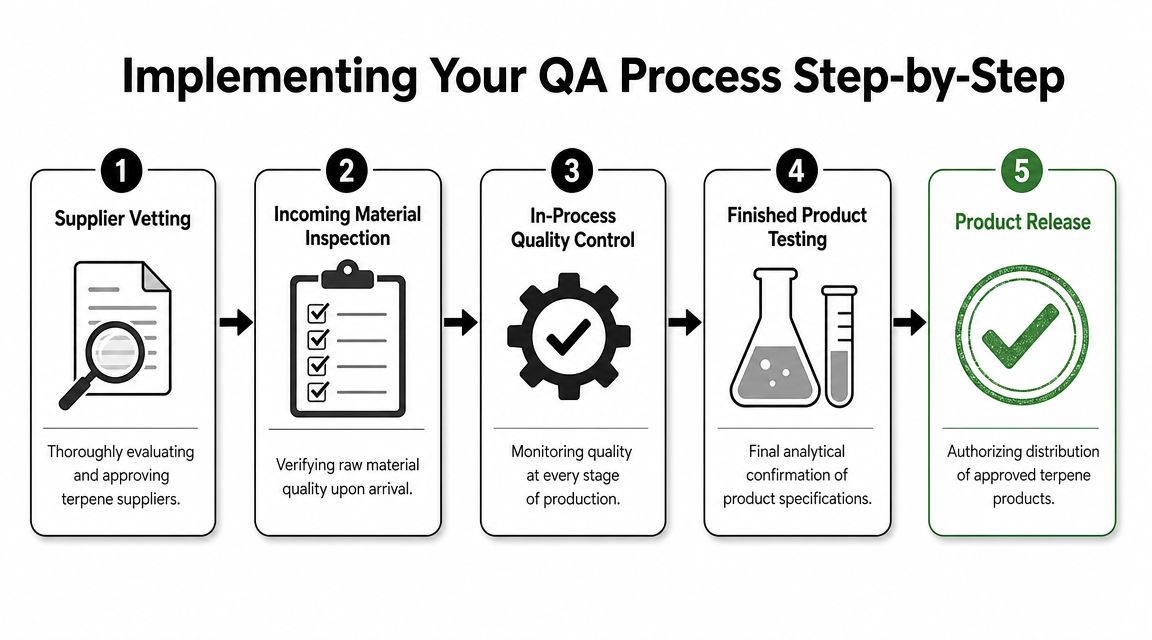
Start with supplier qualification
Supplier approval sets the ceiling for everything that follows. A skilled blending team cannot rescue a weak incoming material stream with paperwork alone.
For terpene formulation, qualification needs to answer a practical question. Can this supplier deliver material that performs consistently in your intended application, not just material that looks acceptable on a document?
Review items such as:
Identity and documentation
Confirm the supplier can provide consistent lot identification, specification sheets, and supporting records.Application fit
A material may be suitable for one use and wrong for another. Ask whether the supplier's material is intended for vape, concentrate, or broader flavor applications.Change communication
You need to know how the supplier handles revisions, substitutions, or process changes that could alter aroma expression.
A useful setup tool is a regulatory compliance checklist for terpene formulation workflows. It helps define approval criteria before material reaches production.
Quarantine and inspect incoming lots
Nothing should move from receiving straight into a blend room. Hold every incoming lot until the team confirms identity, paperwork, packaging condition, and fit for use.
At this stage, check:
- Packaging integrity so seals, labels, and containers match expectations
- Lot traceability linking received goods to purchase and testing documents
- Sensory alignment against approved references
- Sample retention for later comparison if a complaint or deviation appears
Quarantine can feel like lost time. It is far cheaper than discovering an off-note after a full production run of vape cartridges has been filled and distributed.
Here's a visual summary of the overall flow:
Build checks into blending, not after blending
Blending is where preventable errors become expensive. Wrong lot selection, an outdated formula version, a decimal error on a scale, or a changed mix order can all push a strain replication off target.
In-process control should cover formula verification, raw material confirmation, weighing review, mix order, and post-blend sensory review before anything is cleared for filling. For teams producing repeatable terpene profiles at scale, version control matters as much as sensory skill. If an operator scales from an unapproved worksheet or an old calculator file, batch consistency is already at risk.
Gold Coast Terpenes provides terpene formulation resources and blending tools that can support this stage, alongside internal SOPs and release controls.
Verify the finished application before release
A blend can smell correct neat and still fail in use. Heat, hardware, distillate interaction, and concentration all affect how the profile shows up in a finished cart.
Final verification should happen in the delivery format whenever possible.
A release review for vape cartridges should check:
| Release point | What to confirm |
|---|---|
| Formula match | Correct version, correct lot inputs, correct additions |
| Sensory result | Aroma and flavor match the approved target in application |
| Manufacturing record | No unresolved deviations, missing entries, or unclear edits |
| Hold and release status | Clear decision by authorized staff |
In terpene work, this last check protects both cost and reputation. A batch that is close but not right can still create returns, inconsistent strain expectations, and avoidable damage to customer trust.
Release rule: Never let schedule pressure replace a release decision. If the record is incomplete, the batch is incomplete.
A good system makes preventable mistakes hard to pass downstream. That is what keeps batch-to-batch consistency real instead of aspirational.
Mastering Documentation and Traceability
Many teams state their commitment to traceability. Fewer teams build records that can answer hard questions after a problem appears.
That matters because modern QA isn't defined by memory or good intentions. In formal quality systems for data and regulated environments, structured QA is built around governance, methodology, and data integrity, with auditable and repeatable checks on source and metadata. The practical lesson is clear: traceability is part of the system itself, not an afterthought (OSR guidance on formal QA checks and traceability).
For terpene formulation, that principle becomes very concrete. If a cart line develops an off-note, you need to know which terpene lots were used, who blended them, which formula version was active, what equipment was used, whether the scale was current, and what the retained sample smelled like at release.
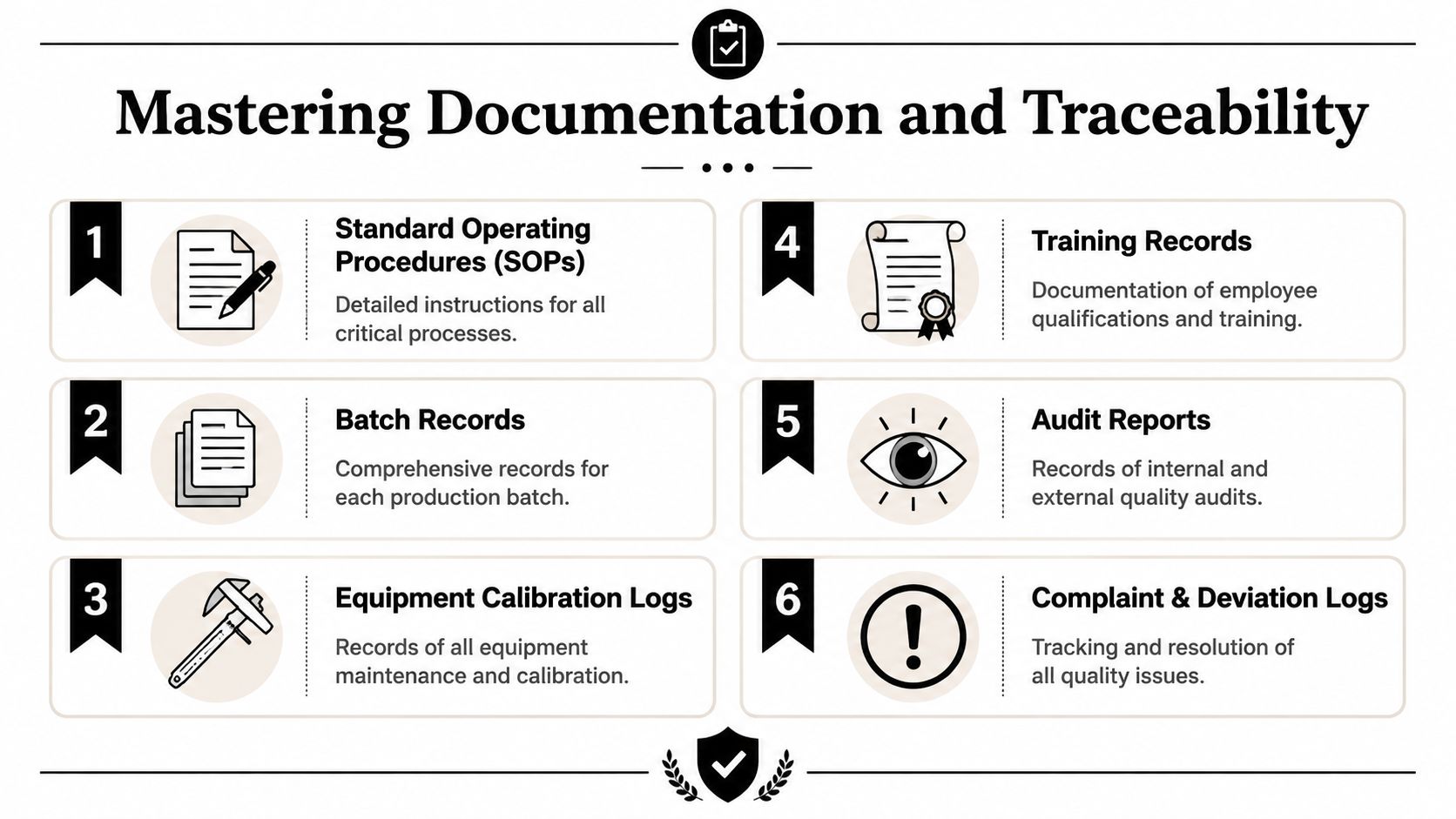
The records that actually protect you
The paperwork that matters most is usually straightforward:
- Batch manufacturing records that list formula version, lot numbers, weights, operators, dates, and sign-offs
- Cleaning logs showing when blending vessels, transfer tools, and contact surfaces were cleaned
- Calibration logs for balances, pipettes, and any critical measuring equipment
- Training records confirming who is qualified to receive, blend, inspect, and release
- Deviation and complaint logs that tie issues back to specific batches and actions taken
A good record is specific enough that another trained person could reconstruct what happened without asking the original operator.
What good documentation looks like
Weak records usually fail in predictable ways. They're missing lot numbers. Corrections are unclear. Someone initialed a step, but no one can tell what was verified. The form exists, but it doesn't support a real investigation.
Strong records have a few traits in common:
| Document type | Minimum useful content |
|---|---|
| Batch record | Formula ID, ingredient lots, weights, timestamps, operator and reviewer |
| Cleaning record | Equipment ID, cleaning method used, date, initials, verification |
| Calibration log | Instrument ID, check date, result, action if out of tolerance |
| Deviation log | What happened, affected lot, immediate containment, disposition |
Documentation should answer three questions fast: what was used, what was done, and who approved it.
Traceability also includes safety support
Another overlooked part of QA documentation is the file set around safe handling and informed use. In terpene operations, those records support training, storage practice, and incident response. A practical example is keeping current safety data sheet documentation and understanding why it matters as part of your supplier and raw material files.
Teams often think documentation slows them down. In reality, missing records slow them down more. A traceable system shortens investigations, supports partner confidence, and gives your brand a defensible answer when someone asks whether a lot was made under control.
Real-World QA for Cannabis Product Formulation
The most useful test of quality assurance processes is whether they hold up in actual formulation work. Two situations come up constantly. One is replicating flavor of a classic cultivar profile for distillate. The other is building a new flavor-forward profile for vape cartridges that doesn't have a legacy reference to lean on.
A key lesson from practical QA guidance is that systems fail when teams treat QA as late-stage testing. The higher-value move is building QA into upstream decision points such as requirements definition and supplier selection, so defects are prevented rather than just found later (upstream QA guidance for digital products).
Scenario one with a strain-inspired terpene blend
Take a team formulating an OG-style profile for distillate. They usually start with a sensory target. Resinous, citrus at the top, spice and earth in the middle, heavier grounding notes underneath. That target is useful, but it's still too loose for production.
The stronger approach is to define acceptance in layers:
- Top notes must open cleanly and consistently on first impression
- Mid notes must connect the opening to the body without collapsing
- Base notes must carry the profile through the finish without turning muddy
The failure point here is often ratio drift. A tiny shift in a high-impact top note can make the entire batch smell thinner. A small overstatement in a heavier component can flatten the profile and create a dull finish. QA prevents that by controlling lot approval, formula versioning, weighing accuracy, and in-application review before release.
If your team is building a terpene profile for cannabis product formulation from a known cultivar reference, don't approve the blend neat only. Approve it in the same matrix and hardware style you plan to sell.
Scenario two with a fruit-forward custom profile
Now take a different project. You're formulating a mango-citrus profile for vape cartridges. There's no famous strain benchmark, so some teams get less disciplined. That's a mistake.
Custom flavor work still needs:
- A written sensory brief that describes what should be dominant, supporting, and trailing
- A stability review to check whether the opening stays recognizable over time
- A packaging check to see whether the hardware changes the profile
- A release standard that compares the batch to the approved pilot
Top, mid, and base note thinking becomes useful. In a fruit-forward profile, the top note creates the first impression, the mid note gives body, and the base keeps the flavor from disappearing instantly. Without QA, teams often overbuild the top note because it smells exciting in a cup. Then the profile burns hot in application or falls apart after filling.
A profile that wins in a fresh bench sample can still fail in production if no one tested how it behaves in the finished format.
For strain replication and custom blend work alike, the practical goal is the same. Define the target clearly, lock the formula, control the process, and verify the result where the customer will experience it.
Building Your Brand on a Foundation of Quality
In terpene formulation, quality isn't a department that shows up at the end. It's the operating discipline that keeps your profile accurate, your batches consistent, and your release decisions defensible.
The companies that avoid expensive mistakes usually do a few things well. They define quality before production starts. They control raw material approval. They document what happened. They use traceability to investigate issues quickly instead of arguing about what probably happened.
That matters whether you're building a terpene profile for vape cartridges, working on a formulation guide for distillate, or replicating flavor of a known cultivar. Customers may never see your SOPs, batch records, or hold tags. They will notice inconsistency immediately.
A rock-solid QA system protects more than a batch. It protects the trust attached to the product name on the package.
If you're tightening your quality assurance processes for terpene blending, start with inputs you can document, trace, and formulate with confidence. Explore Gold Coast Terpenes for lab-verified terpene blends, isolates, and formulation resources that support consistent work in vape, concentrate, and cannabis product development.